
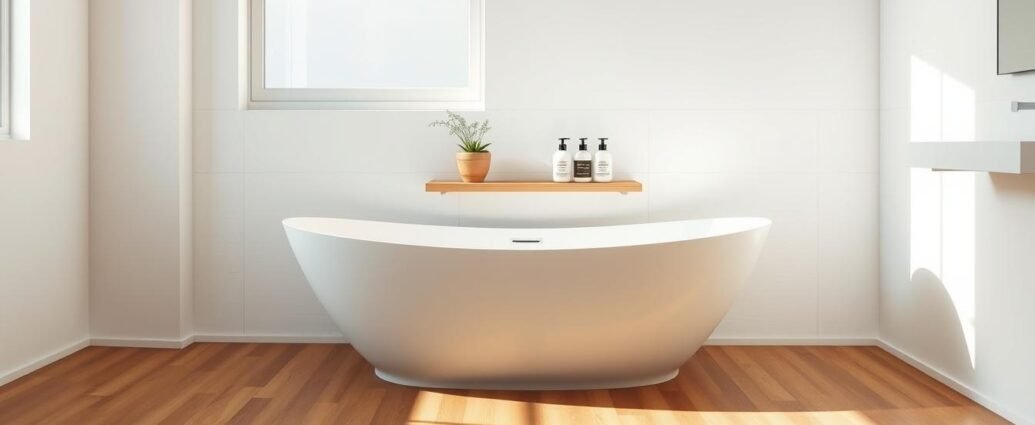
A minimalist bathroom isn’t a bathroom with nothing in it. It’s one where the things you reach for daily are easy to get to, and everything else has somewhere to live. That’s the whole reason these rooms feel calm, and it’s why the look works just as well in a rented 1970s bathroom as in a new build.
The calm comes from a few repeatable decisions: fewer materials, clear surfaces, and light in the right places. None of it requires a renovation, and most of it can happen over a weekend.
Below we cover the core principles first, then the specific decisions: fixtures, color, storage, glass, and lighting. All of it scales, so the same moves work in a large primary bath and in a powder room the size of a closet.
A pared-back bathroom only stays that way if everything has a home, so it’s worth reading this alongside our bathroom organization ideas — most of them cost nothing beyond an hour and a few baskets you probably already own.
Good design here isn’t about a cold, sterile room. It’s about keeping what you actually use, giving it a home, and letting the surfaces stay clear without any daily effort on your part. Clean lines, neutral colors, smart storage, and natural textures do the rest.
Every idea here comes with a low-cost version alongside the designer one, so nothing depends on a renovation budget.
Introduction to Minimalist Bathroom Design
Creating a sanctuary in your home starts with understanding the power of intentional design. We believe your personal space should reflect both beauty and purpose.
Understanding Minimalism in Bathrooms
This approach isn’t about rigid rules or cold aesthetics. Instead, it’s a flexible philosophy that adapts to various looks from modern to Scandinavian.
The core principles focus on clean lines, warm textures, and purposeful decor. Every element should serve a function while contributing to the overall harmony.
Today’s interpretation brings a layered, inviting warmth compared to past years. This reimagined take creates spaces that feel both serene and deeply comforting.
The Benefits of a Clutter-Free Space
Fewer things on the counter means less to pick up and move every time you wipe it down. That’s the practical case for a pared-back bathroom: it stays tidy with less work, not more.
There’s a visual case too. The eye reads an open surface as calm, which is most of what makes a hotel bathroom feel restful — not the marble, just the empty counter.
The result is a room that’s pleasant to walk into first thing in the morning and easy to reset at night in about a minute.
Key Principles of Minimalist Aesthetics
A handful of guidelines do most of the work in rooms that feel both beautiful and purposeful. Understanding why they work matters more than following them to the letter, so here’s the reasoning behind each one.
Clean lines form the backbone of this aesthetic approach. Straight edges and geometric shapes create visual clarity that feels both modern and sophisticated. This foundation makes your space appear organized and intentional.
Don’t underestimate the power of empty space. Leaving areas uncluttered actually makes rooms feel larger and more peaceful. This negative space gives your eyes places to rest and enhances the overall harmony.
A limited material palette is what creates cohesion. Pick two or three materials — say white tile, warm wood, and one metal finish — then repeat each of them in at least two places in the room. Repetition is what makes a space read as designed rather than assembled.
| Traditional Approach | Minimalist Principles | Resulting Benefit |
|---|---|---|
| Filling every available space | Embracing negative space | Enhanced sense of openness |
| Multiple competing materials | Limited, repeated materials | Visual harmony and flow |
| Ornate, detailed fixtures | Clean, geometric lines | Modern, sophisticated feel |
| Decorative-only elements | Purposeful, functional items | Practical beauty |
Every element should serve a real purpose while contributing to the overall aesthetic. Balance and proportion matter tremendously in creating relationships between different features that feel intentional rather than random.
By applying these key principles, you’ll create a design that feels timeless and perfectly suited to your daily life. The result is a space that works beautifully while bringing you genuine peace and satisfaction.
Inspiring “minimalist bathroom ideas” for a Clean and Fresh Look
Let’s explore how to achieve that clean, refreshing aesthetic you’ve been dreaming about. These approaches help create a space that feels both organized and deeply personal.
The beauty of these design concepts lies in their incredible versatility. Whether you’re working with a spacious master suite or a compact powder room, the principles adapt beautifully to your unique space.
Small changes get you most of the way to that streamlined look. A new faucet, or one well-placed shelf, changes how the room works every single morning.
| Traditional Approach | Streamlined Strategy | Key Benefit |
|---|---|---|
| Filling every surface | Keeping the items you use | Enhanced visual calm |
| Multiple color schemes | Cohesive neutral palette | Harmonious flow |
| Ornate decorative pieces | Purposeful functional elements | Practical beauty |
| Closed storage solutions | Open, accessible organization | Easier upkeep |
Start with one zone — the counter is the usual place — and live with it for a week before moving on. Notice what you actually like: maybe it’s the wood accents, maybe the plain square fixtures.
There’s no deadline here. Do one thing, see how it feels, then decide what’s next.
Utilizing Clean Lines & Simple Forms
Let’s dive into one of the most impactful elements for achieving that crisp, modern aesthetic. Clean lines and simple forms are the absolute backbone of this design philosophy.
When we talk about clean lines, we mean fixtures with straight edges and defined corners. This creates visual clarity that feels both sophisticated and refreshingly uncluttered.
Modern Fixtures and Sharp Angles
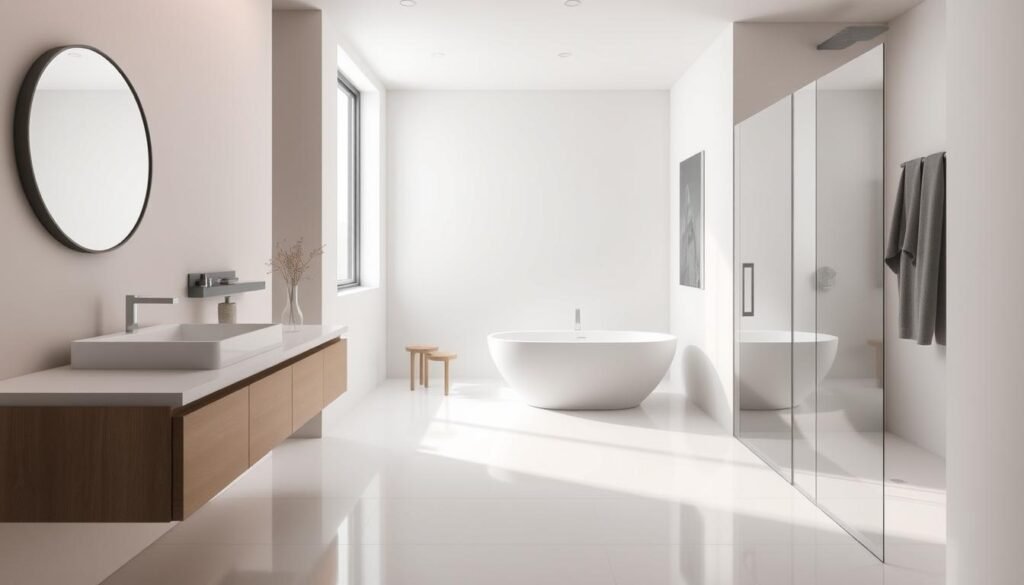
A good starting point is the sink. A pure white, squared-off model does a lot of work: the straight lines and sharp 90-degree corners read as modern without any other change to the room.
For smaller rooms, a compact square sink works beautifully. It provides function without eating up precious counter space. Larger bathrooms can accommodate a rectangular sink for more generous proportions.
This principle extends to other fixtures, too. Think angular faucets and geometric light fixtures. Each piece reinforces the cohesive aesthetic.
The beauty of simple forms is their timeless quality. Unlike trendy ornate pieces, clean-lined designs remain fresh and relevant for years to come.
Embracing a Neutral Color Palette
Color is the decision everything else sits on. The right palette gives you a calm, quiet foundation, and it’s the cheapest thing in this guide to change: a gallon of paint and an afternoon.
Loud hues or busy patterns can make your space feel less tranquil. They might even make smaller areas appear more cramped. Neutral tones are the go-to choice for good reason.
A neutral color palette creates an inoffensive atmosphere perfect for relaxation. It lets the focus fall naturally on your beautiful fixtures and lighting quality.
All-white approaches remain incredibly popular. White walls, ceilings, and floors make any room feel larger and brighter. The space looks cleaner and more functional for daily use.
A neutral palette also gives you room to change your mind later. Swap the towels, the bath mat and one framed print, and the room reads differently for under .
| Traditional Approach | Neutral Strategy | Key Advantage |
|---|---|---|
| Bold, contrasting colors | Cohesive neutral tones | Enhanced visual calm |
| Multiple pattern mixes | Subtle texture variations | Harmonious flow |
| Trend-driven color schemes | Timeless neutral foundation | Long-lasting appeal |
| Color-focused decor | Feature-focused design | Highlighted architecture |
Don’t think neutral means boring. You can create depth by layering different tones. Think warm beiges with crisp whites or soft grays with black accents.
A palette of white, black and antique gold reads as considered without much effort. Beige and white together feel serene and light if you want something quieter.
The beauty of this approach is that you won’t tire of it. Neutrals give you a backdrop that takes texture and natural materials well, and they don’t date the way a trend color does. If you’re picking finishes to go with them, our roundup of bathroom tile colors and finishes is a good next stop.
Integrating Warm Textures & Natural Elements
Let’s tackle one of the most common misconceptions about streamlined design – that it has to feel cold. Nothing could be further from the truth. The right natural touches create incredible warmth while maintaining that clean aesthetic you love.
Material choices are what separate a room that reads as calm from one that reads as clinical. The balance you’re after is crisp lines plus something organic to soften them.
Using Wood Paneling and Organic Materials
Wood instantly brings soulful character to any room. For your bathroom, choose durable varieties like teak or bamboo that handle moisture beautifully. These materials add natural warmth that synthetic options can’t match.
Consider a floating wood vanity or subtle paneling on one wall. Even small wood accents create big impact. The grain patterns and rich tones make your space feel grounded and luxurious.
Texture plays an equally important role in preventing flatness. Think beyond wood to stone tiles, woven baskets, or honed surfaces. These elements add depth without clutter.
White oak paired with travertine works particularly well. Natural materials give a plain room a warmth that paint alone can’t. If new surfaces aren’t in the cards, a teak bath mat, a wooden stool, or two woven baskets bring in the same texture for very little money — and they can move with you if you rent.
By thoughtfully layering these elements, you achieve the perfect balance. Your bathroom feels connected to nature while maintaining that clean, organized vibe you desire.
Clever Storage Solutions for a Tidy Space
Practical organization is the unsung hero of any well-designed personal retreat. We believe every item deserves a proper home to maintain that clean, serene atmosphere you love.
Medicine cabinets offer triple-duty functionality that’s hard to beat. They provide hidden storage, serve as your mirror, and contribute to that sleek aesthetic. Swapping a plain mirror for a wall-mounted cabinet gains you a shelf’s worth of storage without touching the floor plan.
Choosing a vanity with built-in cabinet storage works wonders for larger essentials. This approach keeps toiletries and cleaning supplies out of sight but within easy reach. The result? Countertops stay beautifully bare and clutter-free.
In a compact bathroom, work upward before you work outward. Two floating shelves above the toilet hold the overflow without eating any floor space. A cheap pack of over-the-door hooks gets towels and robes off the counter. And a small tray by the sink corrals the four things you use every morning, so they read as one object instead of six.
A wall-to-wall floating vanity in polished concrete is the showpiece version of this. Toiletries hide in a mirrored medicine cabinet above, which is what keeps the counter clear. When everything has a place, the daily tidy takes about a minute.
Enhancing Functionality with Minimalist Fixtures
Selecting the perfect fixtures is where practical beauty meets daily convenience in your design journey. These elements serve as the backbone of both style and function in your personal space.
Choosing the Right Sink, Bathtub, and Lighting
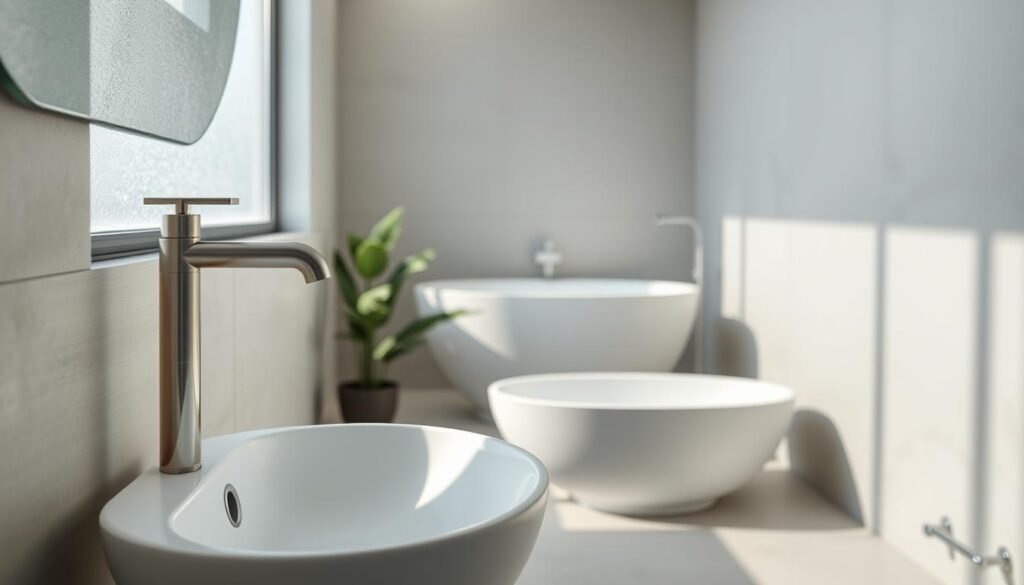
Updating focal points like plumbing or lighting makes a real difference. These swaps change the whole room without touching the tile or the layout, which is why they’re where we’d start.
When selecting your sink, consider squared-off or rectangular shapes with clean lines. You can choose between wall-mounted floating options, vessel styles, or integrated vanity sinks based on your storage needs.
Lighting plays a crucial role in creating the right atmosphere. Combine a statement pendant with delicate sconces flanking the vanity mirror. This approach provides both ambient glow and focused task illumination.
If your space includes a bathtub, it automatically becomes the focal point. For those who don’t take regular baths, consider replacing bulky tubs with sleek curbless showers. This change dramatically opens up the room.
Durable finishes like quartzite and ceramic tile are worth the extra money in a bathroom. These materials keep your space looking pristine with minimal maintenance compared to high-upkeep marble.
Don’t forget to play with geometric interest. Pairing a rectangular wood vanity with a round mirror and circular sink creates visual dynamism. Mixed metal finishes add subtle flair while maintaining that sophisticated, serene look.
Balancing Simplicity with Visual Interest
The trick is the balance between open space and a few things worth looking at. That balance is what keeps a pared-back room from tipping into sterile.
Today’s approach to clean design embraces a more layered, warm style. Your space can feel simplistic yet full of visual interest through intentional details and textures.
One effective way to add visual interest is incorporating a variety of shapes. Michelle Berwick Design brilliantly mixed hexagonal tiles with rectangular vanities and round mirrors. This creates geometric dynamism without clutter.
Sometimes the smallest gesture does the most. A vase of greenery and nothing else is often enough to lift the neutral tones in a whole bathroom. A single eucalyptus stem from the grocery store does the same thing for a few dollars.
Rather than filling every inch, pick one hero piece — a freestanding tub, a good mirror, one large plant — and keep everything around it plain. One thing to look at reads as intentional; five things read as busy.
You can absolutely incorporate art and decor without overwhelming the space. A single framed photograph adds personality while maintaining that clean aesthetic. The key is being selective: every element should serve a function or add beauty.
Smart Use of Glass and Large Format Tiles
When it comes to making your space feel larger and more inviting, glass and tile choices play a surprisingly important role. These materials work together to create that seamless, flowing aesthetic you’re after.
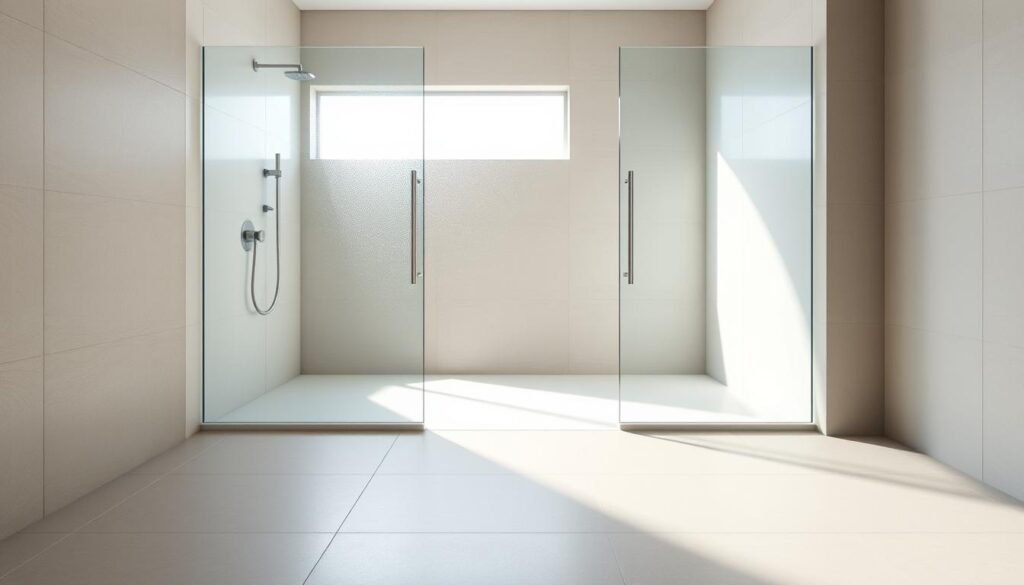
One switch does a lot here: replace shower curtains with glass enclosures. This instantly declutters your bathroom and opens up sight lines. For the ultimate minimal approach, consider a wet room with no enclosure at all.
Creating an Open and Airy Feel
If a completely open wet room feels too exposed, a frameless glass panel offers the perfect solution. It traps water and heat while allowing light to flow freely throughout the space.
Glass shower doors are far superior to traditional curtains. They don’t visually obstruct your bathroom, making even small areas appear significantly larger. The clean lines they add enhance your overall design aesthetic.
Large format tiles create incredible visual continuity. With fewer grout lines, they make floors and walls appear more seamless. Marble-effect tiles enhance that sense of flow particularly well, and porcelain versions cost a fraction of the real thing.
Consider matching your floor tiles to wall tiles for beautiful cohesion. Or mix formats—like slab tiles on walls with hexagonal tiles on floors—to add subtle pattern variation.
In bathrooms lacking natural light, combine glass with LED backlighting in shower niches. This creates ambient glow perfect for relaxing nighttime showers while adding luxurious functionality.
Incorporating Mixed Materials for Depth
Material mixing is the unsung hero that adds soul to your clean aesthetic. When working with neutral tones, different textures prevent your space from feeling flat or one-dimensional. This approach brings warmth and personality without clutter.
Stick to a limited palette of carefully chosen materials and repeat them throughout. Natural variations in stone veining or wood grain create organic depth. Think of it as a quiet study in restraint, where the materials themselves do the decorating.
Think about combining smooth marble with natural wood, or polished concrete with soft textiles. Concrete-effect tiles with black fixtures for contrast is one combination that works particularly well. All elements work together to create rich visual interest.
Two or three materials, each repeated a few times, is what makes a room read as layered rather than busy. If you want to carry the same approach through the rest of the house, our guide to minimalist home interior design walks through it room by room.
Small Moves That Make the Biggest Difference
A handful of changes do most of the work in a bathroom this size, and nearly all of them are small. Here’s where we’d start, and why each one earns its place.
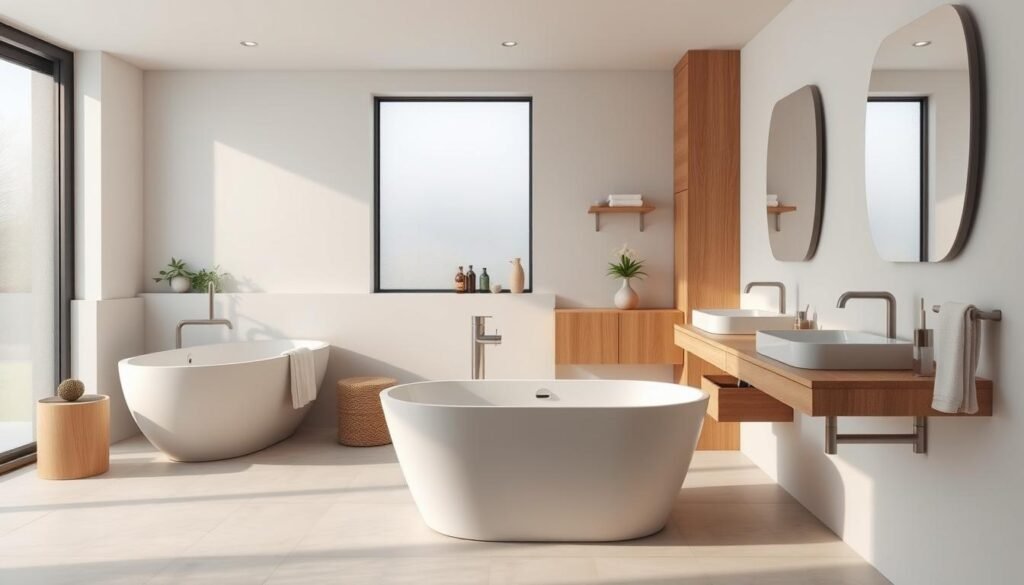
Focusing on Focal Point Upgrades
There is a simple strategy worth following here. Upgrading key focal points creates immediate impact without overwhelming your space — or your budget, since it means changing two or three things rather than everything.
Start with plumbing fixtures or lighting. These elements are surprisingly easy to update. Yet they make all the difference in completing your room’s look.
The vanity is usually the main focal point, so the mirror above it is the highest-impact single swap in the room. Measure the vanity first: a mirror roughly two-thirds to three-quarters of its width looks right, and anything much smaller reads as an afterthought.
Mixing Metals and Mirrored Finishes
Mixed metals add subtle flair. Think brushed gold faucets paired with chrome mirrors — sophistication without clutter, and it means you don’t have to replace everything at once to match.
Organic shapes are worth borrowing too. A simple gold or chrome mirror in an oval form softens a room full of right angles. This creates visual interest while maintaining clean lines.
Don’t overlook the practical touches. Invest in quality towels that complement your design. A smart wooden stool adds both function and style.
The no-budget version: clear everything off the counter and the back of the toilet, put it in a box, and go a week without it. An empty counter and a clean mirror do more for a small bathroom than any fixture swap, and they cost nothing — then bring back only what you actually reached for. For more inspiration on compact areas, explore our small bathroom design ideas.
Innovative Ideas for Small Bathroom Spaces
Working with limited square footage doesn’t mean sacrificing style—in fact, compact spaces can shine with the right design choices. We’ll show you how to maximize every inch while creating that open, airy feel you love.
Curbless Showers and Floating Sinks
Andra DelMonico suggests replacing shower curtains with glass enclosures for a cleaner look. For the ultimate approach, consider a wet room with no enclosure at all. If that feels too open, a frameless glass panel traps water without blocking light flow.
Floating sinks are perfect for tight areas. They free up valuable floor space, making the room feel more spacious. These fixtures also contribute to a sleek, modern aesthetic that works beautifully in compact layouts.
If you rarely take baths, removing a bulky tub can dramatically open up your space. Installing a curbless shower creates a seamless design that’s both functional and accessible. This approach is particularly effective in universal designs.
| Traditional Choice | Innovative Solution | Space Benefit |
|---|---|---|
| Built-in sink cabinet | Floating sink | Clears floor area |
| Shower curtain | Glass doors | Enhances light flow |
| Standard bathtub | Curbless shower | Creates openness |
| Closed storage | Vertical solutions | Maximizes utility |
The Home Consultant managed to fit both a walk-in shower and a soaking tub by treating the whole corner as a wet room. For more small bathrooms ideas, that roundup covers a lot of ground on space-saving layouts.
Creative Lighting Techniques to Enhance Minimalism
Lighting sets the atmosphere more than any other single choice in a bathroom. The right illumination is the difference between a room that’s merely functional and one that feels genuinely calm at seven in the morning.
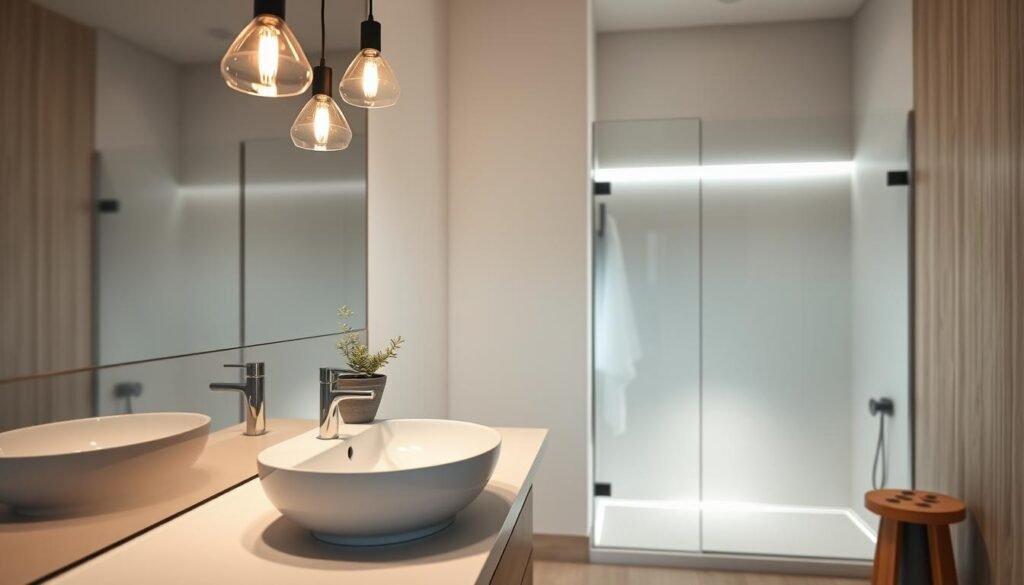
Task lighting around your vanity is absolutely essential for daily routines. Without proper illumination, you’ll find yourself standing in shadows when using the mirror. This makes grooming and self-care tasks much more difficult.
We recommend placing fixtures on either side of your mirror at eye level. This positioning eliminates unflattering shadows completely. A simple pendant paired with delicate sconces is a reliable combination.
Don’t rely solely on overhead fixtures—they rarely provide enough light. Instead, layer different types of illumination throughout your space. Combine ambient, task, and accent lighting for optimal results.
LED backlighting adds a glamorous touch to shower niches or vanity areas. This creates soothing ambient light perfect for evening relaxation. The gentle glow enhances your space without overwhelming it.
If your room has windows, maximize natural light whenever possible. Large glass elements flood the area with daylight, making even compact spaces feel open and airy. Thoughtful lighting choices ensure your personal sanctuary works beautifully day and night.
Conclusion
That’s the full set of minimalist bathroom ideas — enough to get a calm, easy-to-clean room without a renovation.
Remember that none of this is about a cold, empty room. It’s about keeping what you use and what you like, and giving the rest somewhere to go. Every principle here is working toward the same thing: a room that stays pleasant with very little upkeep.
The beauty of these concepts is their incredible flexibility. Whether you’re working with a spacious master suite or a compact powder room, these principles adapt beautifully to any space and budget.
There’s no need to do it all at once. Start with the one thing that bothers you most — the lighting, maybe, or the fact that everything lives on the counter — and let your own style show up in what you keep.
Pick one job this week: clear a surface, change the bulbs, hang the hooks. Your bathroom doesn’t have to be finished to feel better to walk into.

2 Comments