
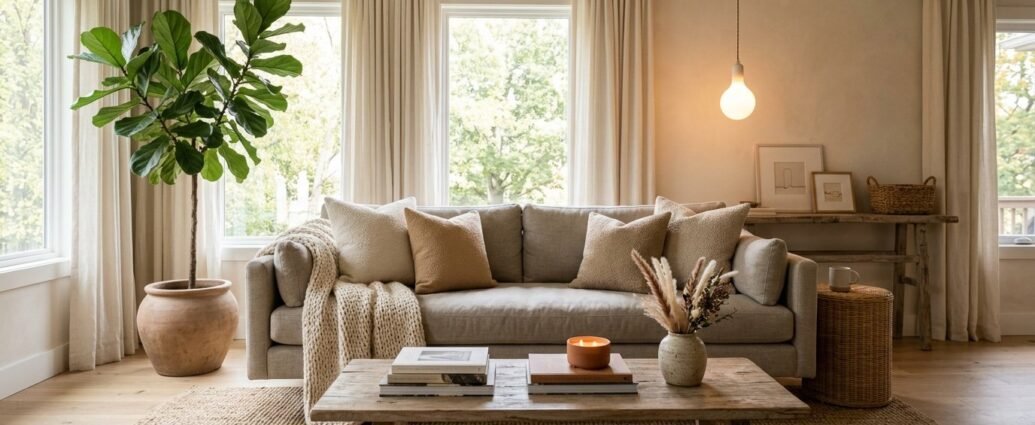
Do you ever scroll through Pinterest on a Sunday night, saving living room after living room, feeling that quiet ache of I want this — and then look up at your own family room and feel like the gap between the two is just… too big? Like the beautiful spaces belong to someone else’s life, someone with a bigger budget, a cleaner house, maybe even a more photogenic dog?
You are so not alone in that feeling. And here’s what I want you to know before we go any further: those rooms you’re saving? They’re more achievable than they look. We’re going to walk through 15 genuinely budget-friendly ways to refresh your family room — not a renovation, not a full re-buy, just intentional, beautiful changes that add up to a space that finally feels like you.
Key Takeaways
- Inexpensive family room updates can transform how a space feels without touching a single wall or hiring a contractor.
- Layering texture, light, and organic materials is the fastest way to get that warm, collected look you see on design accounts.
- Rearranging furniture costs nothing — but it can completely change the energy of a room.
- Secondhand, thrifted, and DIY elements add character that new-from-the-store pieces often can’t replicate.
- Small intentional choices — a new throw, a candle, a better lamp — compound into something that genuinely feels designed.
- Start with just two or three ideas and give yourself permission to enjoy the process slowly.
Why Inexpensive Family Room Updates Work Better Than You Think
There’s a myth that beautiful rooms require big budgets. I’ve been inside both: the heavily renovated showroom homes and the quietly styled spaces that someone built over time with thrift store hauls, patient layering, and a real eye for what felt right. Overwhelmingly, the second category feels better to be in.
The reason is simple: intentionality reads. When something is chosen because it actually means something — because it fits, because it works with the light, because you love it — that shows up in a room. A $12 candle in the right holder on the right surface tells more of a story than a $400 vase placed arbitrarily.
The Real Cost of a Room That Doesn’t Feel Right
We tolerate rooms we don’t love for way too long. The couch is fine. The lamp works. The rug is technically doing its job. But a room that doesn’t feel right is a low-grade daily drain — you don’t fully relax in it, you don’t want to spend time in it, and you definitely don’t feel proud to have people over. That cost is real, even if it doesn’t show up on a receipt.
The good news is that the fix doesn’t have to be expensive. It usually just has to be intentional. Let’s get into it.
How to Prioritize Your Budget Living Room Refresh
Before you spend a single dollar, do a slow walk through your family room and ask yourself what’s bothering you most. Is it the lighting? The clutter? The fact that nothing feels cohesive? Identifying the root problem helps you direct even a small budget toward the changes that will have the most impact. Make a list. Rank it. Then work through these 15 ideas and see which ones speak to your specific situation.
1. Rearrange Your Furniture (It Costs Exactly Nothing)
I cannot overstate how dramatically a furniture rearrangement can transform a room. This is always the first thing I do in a client’s home before we buy a single item. It costs nothing, takes an afternoon, and often reveals a completely different spatial dynamic that changes everything.
Break Free From the Walls
The most common living room mistake I see is furniture pushed against every wall, like the room is afraid of itself. Pull your sofa at least 12–18 inches away from the wall and float it toward the center of the room. This instantly makes the space feel more intentional, more European, more designed. It also creates a cozier conversational grouping.
Anchor With a Focal Point
Every room needs a focal point — a fireplace, a gallery wall, a large window. Arrange your seating to face and celebrate that focal point rather than pointing everything at the TV by default. If the TV is the focal point, that’s fine — just make sure the arrangement feels purposeful rather than accidental.
2. Layer Your Lighting for Instant Ambiance
If there’s one change I would make in almost every family room I’ve ever walked into, it’s the lighting. Overhead lighting alone — especially a single flush-mount fixture — flattens a room and kills atmosphere. The fix is layering, and it doesn’t have to cost much.
The Three-Layer Lighting Rule
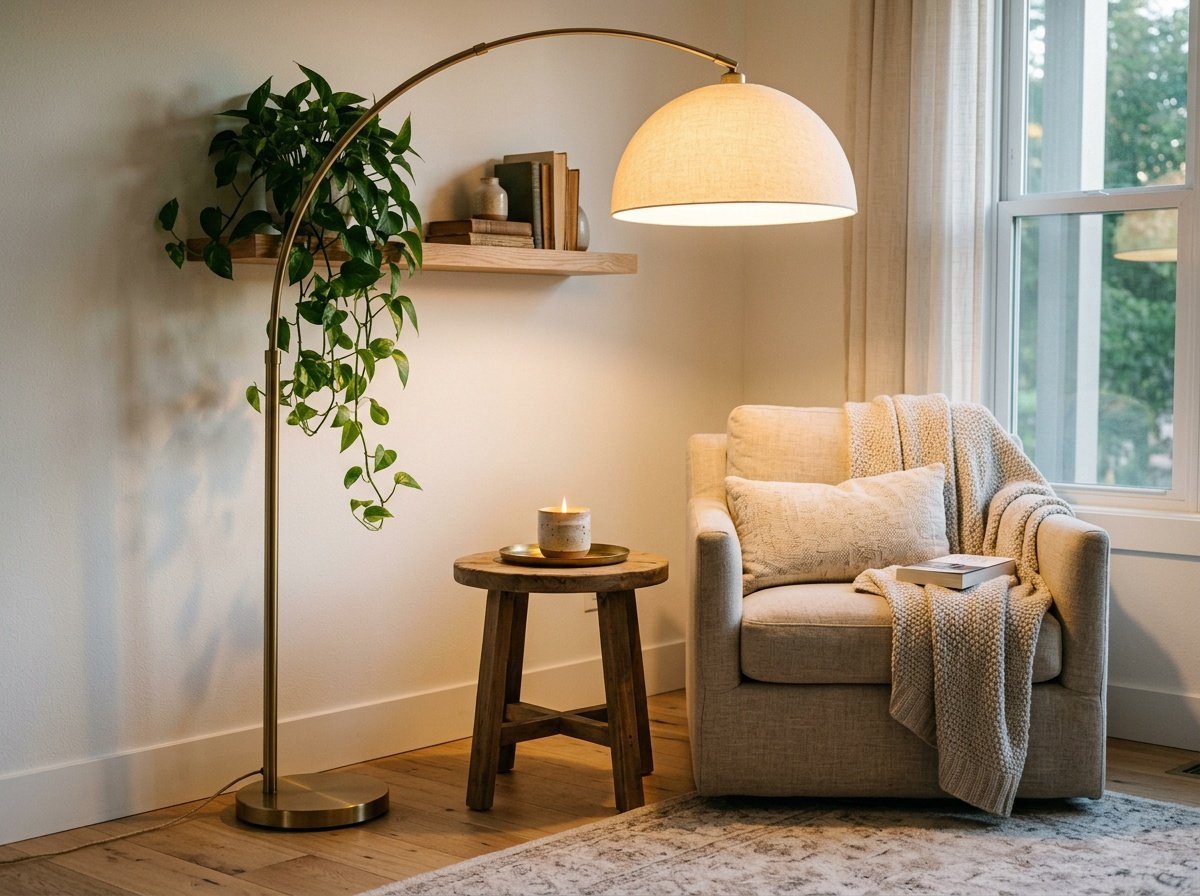
Ambient light (overhead), task light (reading lamps, table lamps), and accent light (candles, LED strips, decorative fixtures) work together to create depth and warmth. A room that relies only on the first layer will always feel institutional. Add even one table lamp and a cluster of candles and you’ll feel the shift immediately.
Swap Bulbs for Warm White Light
This is a $10–15 fix that makes an enormous difference. Replace any cool or daylight bulbs with warm white LED bulbs (2700K is the sweet spot). The light becomes golden, softer, more flattering — to you and to the room. Do this in every lamp and fixture in the space.
Add a Plug-In Sconce or Floor Lamp
You don’t need an electrician to add wall sconces — plug-in sconces exist and they look nearly identical to hardwired ones. A tall arc floor lamp in a dark corner does double duty as both a light source and a sculptural element. Both options run anywhere from $30 to $120 and the visual payoff is significant.
3. Introduce Texture Through Throws and Pillows
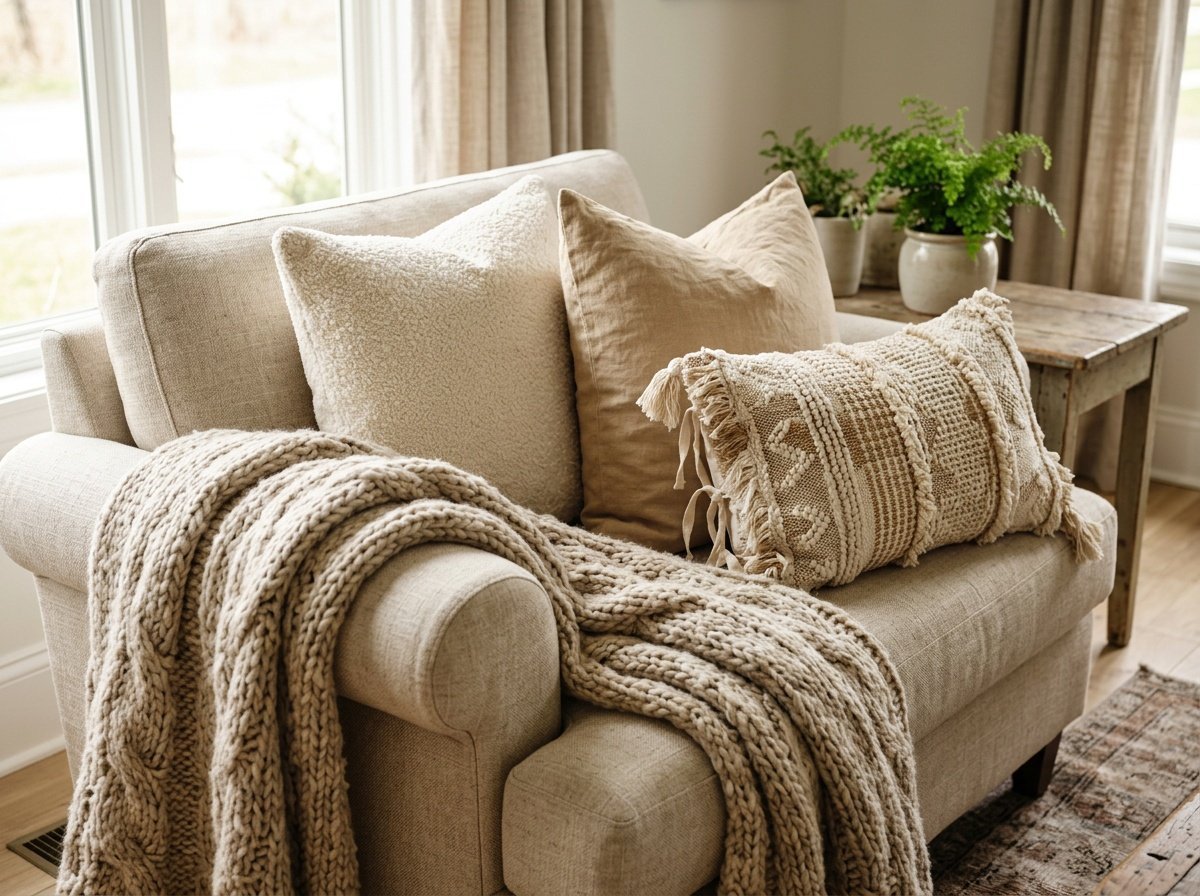
Texture is the secret language of cozy rooms. When you layer different tactile materials — nubby boucle, smooth linen, woven cotton, chunky knit — you create visual richness that makes a space feel collected rather than assembled. And pillows and throws are the most affordable way to do this.
The Pillow Formula That Actually Works
On a standard three-seat sofa, I like to use two large 22–24″ square pillows toward the outside, two 18″ squares inside those, and one lumbar pillow in the center. Vary the textures: a linen, a boucle, and maybe a woven or embroidered option. Keep the palette cohesive — two to three colors maximum — and the result looks effortlessly styled rather than random.
You don’t need to replace all your pillows at once. Start by adding one or two new textured covers in a complementary color and see how it shifts the room. Pillow covers from affordable retailers can run as low as $10–25 each.
Throw Placement That Looks Intentional
A casually draped throw over the arm of a sofa or the corner of a chair adds warmth without looking staged. Avoid perfectly folded throws — they read as hotel decor. Instead, drape loosely, let it fall naturally, and tuck one end slightly under a cushion. It should look like someone actually used it this morning.
4. Style Your Shelves Like a Designer
Shelves and bookcases are one of the most high-impact styling opportunities in any living room — and one of the most commonly overlooked. Whether you have built-ins, IKEA units, or a floating wall shelf, the principles are the same.
The Edit-First Approach
Before you add anything new, remove everything. Seriously — clear the shelves completely. Then look at what you have and only put back things you genuinely love or that serve a purpose. Editing is the most transformative step, and it’s free. Negative space on a shelf is not emptiness — it’s breathing room, and it makes everything else look more deliberate.
Mixing Books, Objects, and Organic Elements
The most visually interesting shelves mix vertical elements (stacked books, tall vases), horizontal elements (books laid flat as risers, small trays), and organic elements (a trailing plant, a piece of driftwood, a stone or ceramic object). The goal is rhythm — not symmetry. Let the eye travel a little. Use books turned spine-in for a softer, more editorial look if your current spines feel chaotic.
5. Bring in Plants and Greenery
Plants are one of the most powerful and affordable tools in a home stylist’s kit. They add life, color, air quality, and a sense of organic ease that no manufactured object can fully replicate. Even one well-placed plant can make a room feel more alive.
Low-Maintenance Options That Actually Thrive Indoors
If you’ve killed plants before, you are not a plant killer — you just haven’t found your plant yet. Pothos, snake plants, ZZ plants, and cast iron plants are genuinely hard to destroy and thrive in average indoor light conditions. A large fiddle leaf fig or bird of paradise makes a dramatic sculptural statement if you have a bright spot near a window.
Styling Tips for Maximum Impact
Vary your heights. A tall floor plant in one corner, a medium plant on a side table, and a small trailing plant on a shelf creates a layered, naturalistic feel. Don’t underestimate the power of a gorgeous pot — a terracotta or handmade ceramic planter elevates even the most basic plant into a design moment.
“The best-feeling rooms aren’t the most expensive ones — they’re the most intentional. And intention doesn’t have a price tag.”
6. Paint an Accent Wall or Try Limewash
Paint is still the single highest-return investment you can make in a room. One gallon covers roughly 350–400 square feet and costs $30–60. A single accent wall — or a limewash treatment on one surface — can completely reframe the entire room.
Choosing the Right Color for a Cozy Family Room
For a warm, organic feel, think clay tones, sage greens, warm taupes, and deep terracottas. These earthy, saturated hues feel grounded and calming without being heavy. If you’re nervous about color, start with a warm white on all four walls — it’s remarkable how much a the right warm neutral can transform a space, versus the stark cool whites that read flat under most lighting conditions.
The Limewash Trend Worth Knowing
Limewash paint creates a beautifully textured, aged, almost Mediterranean finish that looks incredibly expensive but is completely DIY-able. Brands like Portola Paints and Roman Clay by Backdrop have made it accessible and even beginner-friendly. It adds dimension and depth to a flat wall in a way that regular paint simply can’t.
7. Upgrade Your Window Treatments
Curtains are one of the most budget-friendly upgrades that people consistently underestimate. The right drapes don’t just frame a window — they change the proportions of the entire room. And the wrong ones (too short, too thin, wrong color) can drag an otherwise beautiful space down.
How to Hang Curtains for a Taller, More Dramatic Room
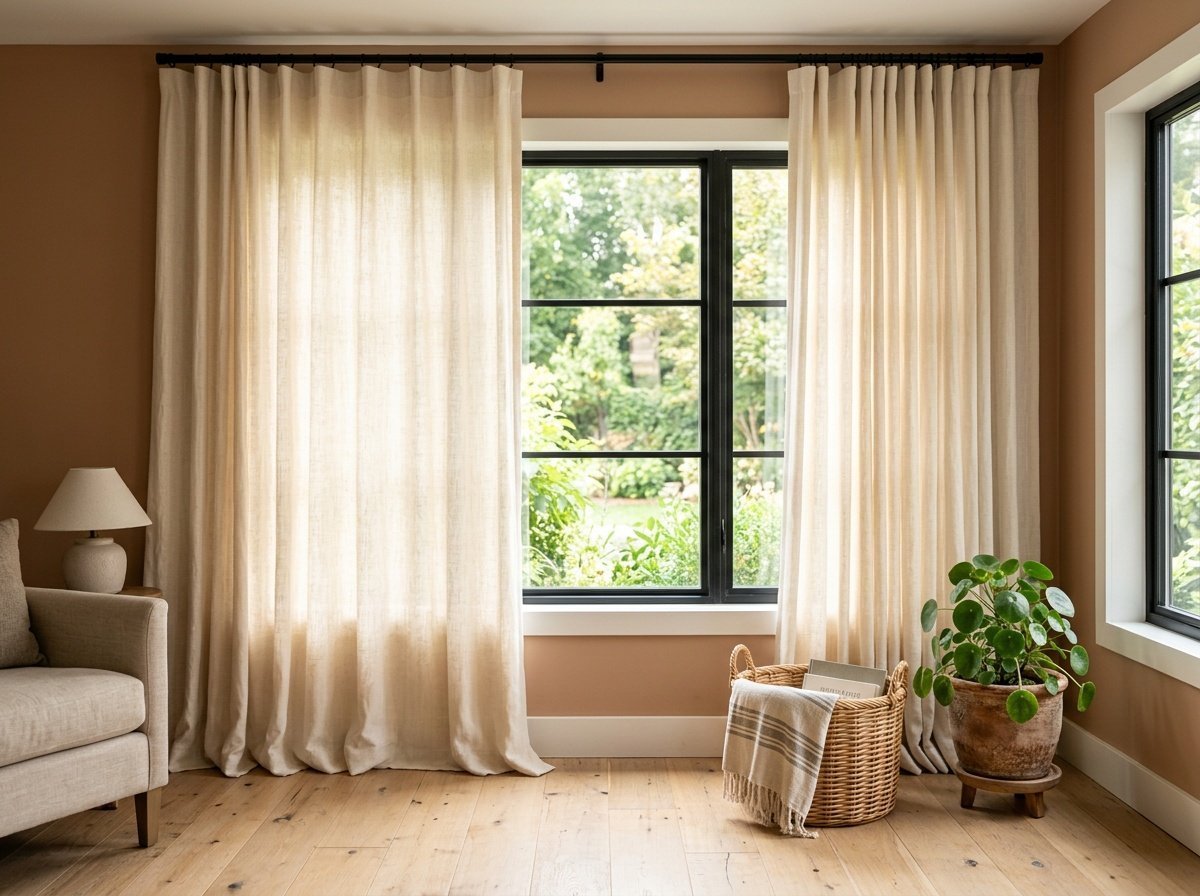
Always hang curtain rods close to the ceiling — not just above the window frame. This makes your ceilings look higher, your windows look larger, and the room feel more expansive. The rod should be as wide as possible, so when the curtains are open they don’t block any window glass. These two adjustments alone make a room feel completely different.
Affordable Curtain Options That Look Expensive
IKEA’s DYTÅG linen curtains and their MAJGULL blackout options are endlessly popular for good reason — they have a clean, airy, luxe look at a fraction of designer pricing. For a warmer, more layered feel, look for cotton-linen blends in natural, cream, or warm white tones. Avoid curtains that are too thin or too shiny — they read cheap immediately.
8. Add a Rug (or Layer Two)
A rug anchors a seating area and defines the space within a larger room. It’s also one of the most common mistakes in living rooms — either no rug at all, a rug that’s too small, or a rug placed so that only the front legs of the sofa touch it.
Getting the Size Right
For most living rooms, a 8×10 or 9×12 rug is the correct size. All four legs of your main seating pieces should sit fully on the rug, or at minimum, all front legs should be on it. A rug that’s too small floats in the middle of the room and looks accidental. When in doubt, size up.
The Layered Rug Look
Layering a smaller vintage or patterned rug over a larger natural fiber rug (jute, seagrass, sisal) is one of the most popular styling techniques right now — and for good reason. It adds depth, personality, and a beautifully eclectic feel. You can find vintage rugs on Etsy, Facebook Marketplace, or at estate sales for very reasonable prices.
9. Create a Curated Coffee Table Vignette
The coffee table is prime styling real estate. A beautifully arranged coffee table vignette pulls the whole seating area together and signals that the room was thought about. It doesn’t need to be complicated — in fact, simpler is almost always better.
The Vignette Formula
Layer your elements in different heights: a stack of two or three coffee table books as a base, a small object or sculptural piece on top (a sphere, a small ceramic, a candle), a low vessel with greenery or florals, and perhaps a small tray to corral it all. Leave breathing room — you don’t need to fill every inch of the table, and you do need to be able to set a drink down.
Shopping Your Own Home First
Before buying anything new for a vignette, walk through your house and gather objects. A candle from the bedroom, a small ceramic from the kitchen shelf, a book you love. Arrangements made from things you already own carry a warmth that newly purchased decor sometimes lacks. It’s a styling principle I come back to constantly.
10. Swap or Update Your Hardware and Small Details
This one is for the detail-oriented among you — the people who notice that the cabinet pulls are dated or the curtain rod finials feel wrong. Those micro-details matter more than you might think. They’re the design equivalent of good accessories on an outfit.
Cabinet Hardware and Furniture Pulls
Swapping the hardware on a media console, TV stand, or sideboard is a 20-minute project that can make a piece of furniture look entirely new. Brass and warm gold tones are having a long, beautiful moment and they pair beautifully with organic modern interiors. You can find beautiful options at hardware stores and home goods retailers for $3–8 per pull.
Curtain Rods, Hooks, and Brackets
Matching your curtain rod finish to your other metals in the room (lamp bases, picture frames, decorative objects) creates a sense of cohesion that reads as intentional design rather than happy accident. It’s a small change with an outsized visual effect.
11. Build a Gallery Wall With What You Already Have
A gallery wall doesn’t require buying new art. It requires curation. Pull together frames from around your house, mix in printed photos, a page torn from a beautiful magazine or art book, a child’s drawing matted in a simple frame — and you have something personal and layered that no store-bought art arrangement can replicate.
Gallery Wall Layout Tips
Lay everything out on the floor before you hammer a single nail. Play with the arrangement until it feels balanced — and then take a photo of it so you remember the layout when you move to the wall. Mix frame sizes and styles intentionally, but keep a unifying thread: similar tones, a shared mat color, or a consistent metal finish on the frames.
Affordable Art Sources Worth Bookmarking
Printable art from Etsy is one of the best-kept budget secrets in home styling — you can download high-resolution files for $2–8 and print them at a local print shop or even at home for a fraction of what framed art costs. Thrift stores are also consistently underestimated sources for interesting frames and occasionally genuine finds.
12. Add Scent as a Design Element
We don’t talk enough about scent as part of home design — but it’s one of the most powerful mood-setters in any space. Walking into a room that smells right is an immediate, visceral experience that bypasses all rational thought and goes straight to feeling.
Candles, Reed Diffusers, and Natural Options
A quality soy or beeswax candle in a beautiful vessel doubles as decor and scent. Warm, grounding scents — sandalwood, cedar, vanilla, amber, clove — are particularly well-suited to family rooms. Reed diffusers work well in spots where you can’t burn a candle, and dried botanicals like eucalyptus or lavender can subtly scent a room while adding a beautiful organic texture.
13. Declutter and Edit Ruthlessly
No amount of styling will overcome clutter. This is the hardest one for a lot of people — especially parents — because family rooms collect things. Toys, remotes, mail, chargers, school projects, yesterday’s coffee mug. A decluttered room, even with the same furniture and decor, feels fundamentally different.
The Surface Rule
As a starting exercise, clear every horizontal surface in your living room completely. Wipe them down. Then put back only what genuinely belongs there and adds to the room. Everything else gets a home elsewhere or gets donated. You’ll be amazed how much this one act changes the feel of the space — it’s free, it’s immediate, and it lasts if you build a habit around it.
Storage That Doubles as Decor
For the clutter that’s legitimate — blankets, kids’ stuff, everyday items — invest in storage that looks good. Woven baskets, linen bins, wooden trays with lids. Corralling mess into beautiful containers doesn’t eliminate it, but it absorbs it into the room’s aesthetic rather than fighting against it.
| Update | Estimated Cost | Time Required | Impact Level |
|---|---|---|---|
| Rearrange furniture | $0 | 2–3 hours | ⭐⭐⭐⭐⭐ |
| Swap lightbulbs to warm white | $10–20 | 30 minutes | ⭐⭐⭐⭐⭐ |
| Add throw pillows and a blanket | $30–80 | 1 hour | ⭐⭐⭐⭐ |
| Paint one wall or limewash | $30–80 | 4–6 hours | ⭐⭐⭐⭐⭐ |
| Hang curtains high and wide | $40–120 | 2–3 hours | ⭐⭐⭐⭐⭐ |
| Style shelves with edit-first method | $0–30 | 1–2 hours | ⭐⭐⭐⭐ |
| Add a floor plant | $20–60 | 30 minutes | ⭐⭐⭐⭐ |
| Gallery wall with existing frames | $0–40 | 3–4 hours | ⭐⭐⭐⭐ |
14. Introduce Organic Modern Materials
The organic modern aesthetic is one of the most enduring design directions right now — and for good reason. It balances clean, simple forms with natural, tactile materials in a way that feels both elevated and approachable. The good news is you don’t need to buy new furniture to introduce it.
Materials That Define the Look
Think linen, jute, rattan, reclaimed wood, stone, terracotta, and unglazed ceramics. Introduce these through small, affordable objects: a rattan tray, a linen pillow cover, a terracotta pot, a wooden bowl. Each addition nudges your room further toward that warm, organic quality without requiring a single large purchase.
The Neutral Palette That Pulls It Together
A layered neutral palette built on earthy tones — warm white, sand, flax, clay, soft stone — gives every organic element room to breathe. This isn’t about beige being boring. It’s about creating a calm backdrop that lets texture and form do the talking.
15. Add Personal Layers That Tell Your Story
This is the step that separates a room that looks good in photos from one that feels genuinely good to live in. Personal layers — objects with history, things you love, art that means something to you — are what make a space feel inhabited rather than staged.
What Belongs in a Family Room
Family photos styled beautifully (not in a row of mismatched frames), a book you’re actually reading on the coffee table, a blanket that your grandmother made, your kid’s best painting matted and framed as real art — these details create emotional resonance that no design formula can manufacture. They tell people who you are the moment they walk into the room.
The Balance Between Personal and Edited
The goal isn’t to put everything meaningful on display — that tips into clutter. The goal is to curate a few meaningful things and let them exist with intention. A single framed photo in a beautiful frame makes more of an emotional statement than a wall of 20 snapshots in mismatched frames. Edit with the same eye you’d use for any other design decision.
Frequently Asked Questions
What is the cheapest way to update a living room?
The cheapest updates are the ones that cost nothing: rearranging your furniture, decluttering surfaces, restyling your shelves, and editing what’s on display. After that, swapping lightbulbs to warm white, draping a new throw on your sofa, and adding a plant are all under $30 and make a meaningful visual difference. Start with the free changes first — you might be surprised how far they take you.
How do I make my family room look more expensive without spending much?
Lighting is the single biggest lever here. Warm-toned light from layered sources (table lamps, floor lamps, candles) makes everything look better instantly. Beyond that, hanging curtains high and wide, adding texture through pillows and throws, and keeping surfaces edited and intentional all read as considered design choices that elevate a room’s perceived quality significantly.
What is organic modern style in a living room?
Organic modern blends clean, minimal forms with natural, tactile materials and a warm neutral palette. Think linen sofas, jute rugs, rattan accents, wood tones, and earthy ceramics — all in a space that feels uncluttered but deeply warm. It’s one of the most livable aesthetics right now precisely because it manages to feel both calm and cozy at the same time.
How do I make my living room cozy on a tight budget?
Focus on sensory details: warm lighting, soft textures (throws, pillows, a rug underfoot), scent (a candle or diffuser), and greenery. These are the elements that make a room feel physically inviting rather than just visually pretty. A room can look great in a photo and feel nothing in person — prioritize how it feels to actually sit in it.
How do I start a DIY family room makeover without feeling overwhelmed?
Pick two or three ideas from a list like this one and start there. Don’t try to do everything at once — that’s how a refresh becomes a source of stress rather than joy. Give yourself permission to work through it slowly, over weeks or even months. The room will evolve with you, and that process of slow, intentional change is genuinely one of the most satisfying things about home styling.
Is it worth buying secondhand furniture for a living room refresh?
Absolutely — in fact, secondhand pieces often have more character and quality than new items at the same price point. Facebook Marketplace, estate sales, thrift stores, and Craigslist are all worth checking regularly. The key is patience: don’t settle for something that doesn’t feel right just because it’s cheap. The right secondhand piece at the right price is worth waiting for.
How do I choose a rug size for my living room?
A rug that’s too small is one of the most common living room mistakes. For most standard living rooms, an 8×10 or 9×12 rug is the correct starting point. At minimum, the front two legs of every seating piece should rest on the rug. Ideally, all four legs do. When in doubt, go up a size — a larger rug almost always looks better than a smaller one.
Here’s the thing I want you to hold onto as you close this tab and look around your living room: the most beautiful spaces I’ve ever been in weren’t the most expensive ones. They were the most intentional ones. Spaces where someone made real choices — about the light, the texture, the things on display — and let those choices accumulate slowly into something that genuinely felt like home.
You don’t need to do all 15 of these ideas. Pick two or three that resonate with where your room is right now, and give yourself permission to enjoy the process. Treat this refresh like a slow Sunday project, not a deadline. Rearrange a shelf. Swap the lightbulbs. Pull the sofa off the wall and see what happens. Your room is already more full of possibility than you think — and you are more than capable of seeing it. I’d love to see where you start: share your before-and-afters in the comments or tag @DesignAndDwelling on social — there is nothing I love more than watching a room find itself. ☕


2 Comments