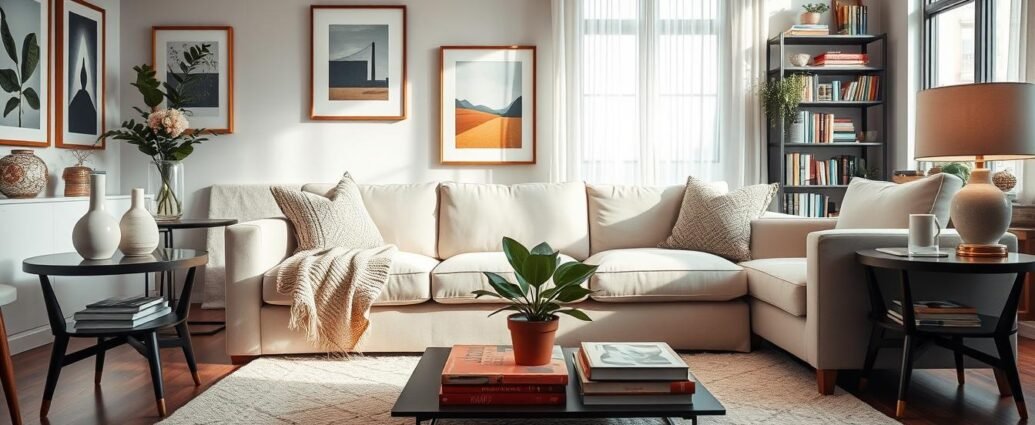
Do you ever walk into your main gathering area and feel a subtle sense of disappointment? That nagging feeling that something is just a little off? We’ve all been there, standing in the middle of our own four walls, wishing it felt more like us. It’s not about having a magazine-worthy mansion; it’s about creating a sanctuary that truly reflects your life and brings you joy.
We created this guide for that exact moment. This isn’t a complex rulebook filled with intimidating jargon. Think of it as your friendly, step-by-step checklist for turning that “meh” feeling into a proud “wow!” We’ll walk you through the simple yet powerful changes that make the biggest impact.
Whether you’re refreshing a cozy apartment or a spacious house, our approach is all about empowerment. We believe a beautiful and functional home is within everyone’s reach. Get ready to unlock the secrets that make a space feel polished, inviting, and perfectly you.
Key Takeaways
- This guide is designed to be a clear, manageable checklist, not an overwhelming design textbook.
- Address the common feeling that a space is “off” by focusing on impactful, achievable changes.
- Learn professional strategies for layout, lighting, and decor that work in any size area.
- The goal is to create a room that feels both stylish and authentically personal.
- Gain confidence to tackle your design challenges one simple step at a time.
Understanding Your Living Room Space
When your main relaxation zone doesn’t give you that ‘ahh’ feeling you’re hoping for? The secret often lies in truly understanding what you’re working with. This isn’t about major renovations—it’s about smart assessment!
Assessing Room Dimensions and Layout
Grab that tape measure! Knowing your exact dimensions prevents costly mistakes. Jot down the length, width, and ceiling height of your area.
Furniture scale matters tremendously. Oversized pieces overwhelm small spaces, while tiny items can make a large room feel empty. Your pieces should complement your room’s proportions perfectly.
Understanding traffic flow is crucial too. You want natural movement paths, not obstacle courses! This foundational step saves so much frustration later.
Identifying Focal Points and Existing Challenges
Walk around and spot your natural assets. A fireplace, large window, or built-in shelving can become wonderful focal points. Arrange seating to highlight these features.
Also note any quirks—awkward corners, low ceilings, or protruding walls. We’ll show you how to work with these characteristics, not against them. Even professional designers follow smart living room rules that start with this assessment phase.
Embrace what makes your space unique. Those challenging elements often become the most interesting parts of your design when handled creatively!
Defining Your Design Goals and Style
Before diving into furniture shopping or paint colors, let’s pause and define your vision. This clarity will guide every decision you make!
Ask yourself: what’s the main purpose of this space? Are you dreaming of cozy movie nights, elegant entertaining, or a multifunctional area that does it all? Your lifestyle should drive your design choices.
Think about your personal style preferences too. Do you love modern minimalism, cozy farmhouse vibes, or eclectic maximalism? There’s no right or wrong answer—this is about creating a space that feels authentically you.
Establishing a Budget and Priorities
Setting a realistic budget is super important. Here’s a secret: you don’t need to spend a fortune to create a beautiful living room! Many budget-friendly makeover tips can help you achieve high-end looks without breaking the bank.
Prioritize where to splurge and where to save. Invest in quality pieces like a sofa that’ll last for years. Find affordable accent pieces to complete the look.
Consider creating a mood board with inspiring images and samples. This visual reference keeps you on track. Remember, defining your goals now prevents impulse purchases later. Every piece should serve a purpose and fit your vision, following smart design principles.
Living Room Styling Tips: Creating a Focal Point
There’s a simple design principle that can transform any area from chaotic to cohesive in one step. A strong focal point gives your space immediate purpose and direction. It’s the anchor that everything else revolves around!
Think of it as the star of your show. This central feature draws the eye and creates a natural gathering spot. Whether you’re working with what you have or building from scratch, this concept works wonders.
Choosing a Statement Piece
Your focal point might already exist in your room. A beautiful fireplace or large picture window makes a perfect natural centerpiece. Arrange your seating to highlight these existing assets.
No built-in feature? No problem! You can create an amazing focal point with intentional choices. A large piece of art makes a dramatic statement. An accent wall in a bold color instantly commands attention.
Even floating shelves with carefully curated decor can become your room’s highlight. The key is choosing something with presence that reflects your personality.
| Focal Point Type | Best For | Cost Level | Visual Impact |
|---|---|---|---|
| Fireplace/Mantel | Traditional spaces | Existing feature | High – architectural |
| Large Artwork | Modern interiors | Medium investment | High – customizable |
| Accent Wall | Budget makeovers | Low cost | Medium – color focus |
| Gallery Wall | Personal expression | Variable | High – layered interest |
| Statement Lighting | Overhead emphasis | Medium investment | High – 3D element |
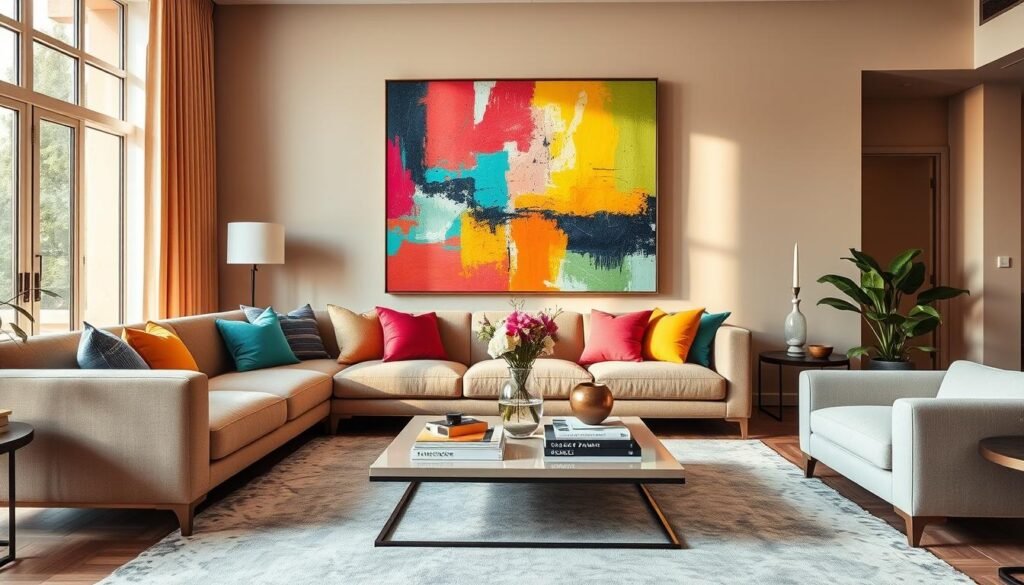
Once you’ve chosen your centerpiece, arrange furniture to complement it. Your sofa and chairs should face or frame this feature. This creates natural conversation areas and improves traffic flow.
Remember, your statement piece sets the tone. Everything else should support rather than compete with it. This single decision makes your entire space feel professionally designed and intentionally curated.
Rug Selection and Arrangement Strategies
One of the most transformative decisions you’ll make involves what goes under your feet. The right floor covering can completely change how your space feels and functions.
Determining the Appropriate Rug Size
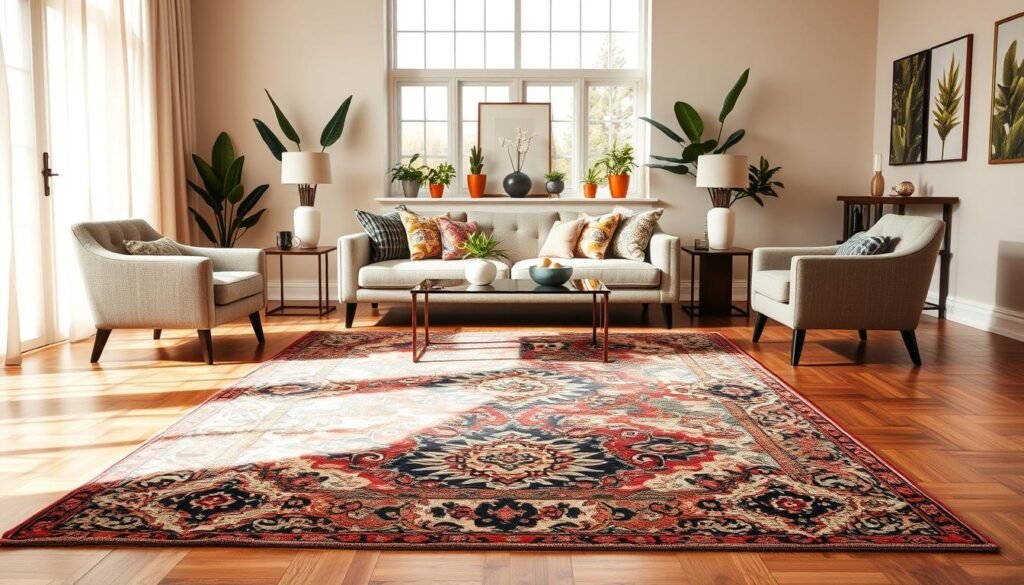
Getting the dimensions right is crucial for a polished look. Your rug should extend at least 6 inches beyond your sofa on both sides.
For most areas, 8’x10′ or 9’x12′ rugs work beautifully. This generous size creates a unified seating area that feels intentional.
Tips for Affordable Rug Shopping and Placement
We know large rugs can be pricey! Look for sales around Black Friday or explore discount retailers. You can find amazing deals with patience.
Position your rug to run the length of your sofa. Your coffee table should sit squarely on top for perfect balance.
Leave 18-24 inches of walkway space around furniture. This ensures your beautiful new rug enhances flow rather than blocking it.
Furniture Layout for Better Flow
What if we told you that the secret to perfect furniture flow goes against what most people instinctively do? Many homeowners push everything against the walls, thinking this creates more space. But this approach often creates awkward dead zones instead.
Floating Furniture for Open Space
Pulling your key pieces away from the walls—even just 6-12 inches—can work wonders. This technique defines zones and improves movement throughout your area. Your space will feel more open and intentional.
Try placing your sofa in the center with a console table behind it. This creates a subtle division between seating and walk-through areas. It’s one of those clever living room layout ideas that makes a big impact.
Balancing Seating Arrangements
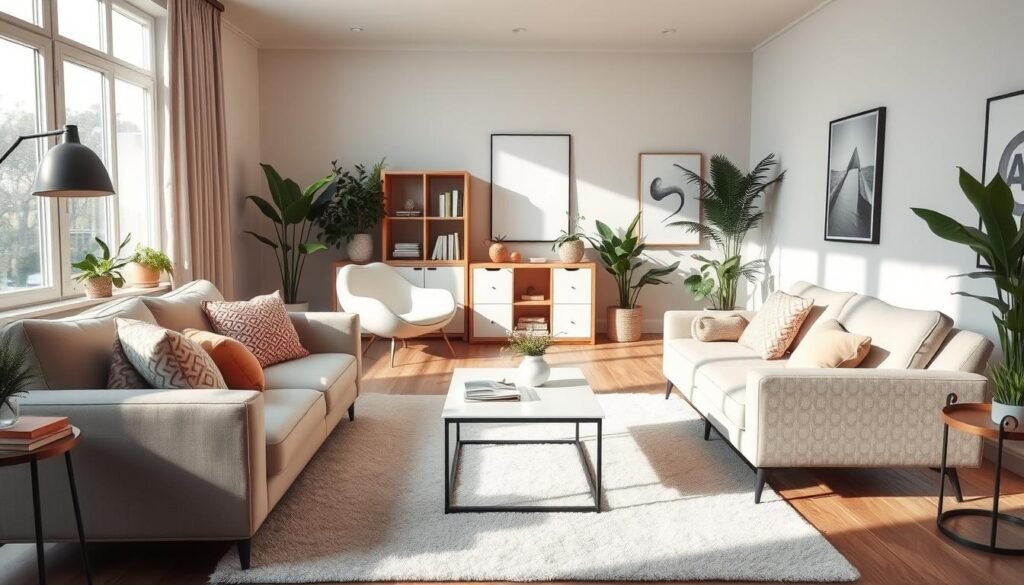
The scale of your furniture matters tremendously. Oversized pieces can overwhelm a small room, no matter how you arrange them. Choose items that match your room’s proportions perfectly.
Instead of a massive sectional, consider a loveseat with slim arms. Add a chaise lounge or armchair for extra seating. Create conversation-friendly groupings where people can talk comfortably.
Leave enough floor space for easy movement between pieces. This balance creates a functional, beautiful area that encourages gathering and relaxation. Your modern eclectic living room should feel both spacious and inviting.
Incorporating Decor for Balanced Visual Weight
Finding that perfect balance between personality and peace in your decor can feel like a tricky puzzle. We’ve all been there—surrounded by wonderful little treasures but feeling like our space looks too “bitsy” and chaotic.
The secret lies in varying the scale of your decorative pieces. Mix large statement items with medium accents and just a few smaller treasures. This creates visual harmony instead of frantic energy.
Styling Throws and Accent Pieces
If you love maximalist style, go for it! Just ensure you include different sizes and heights. This lets individual pieces shine rather than blending into visual noise.
For those preferring minimalism, give your favorite things breathing room. Less clutter means each piece gets proper attention. You’ll feel calmer too!
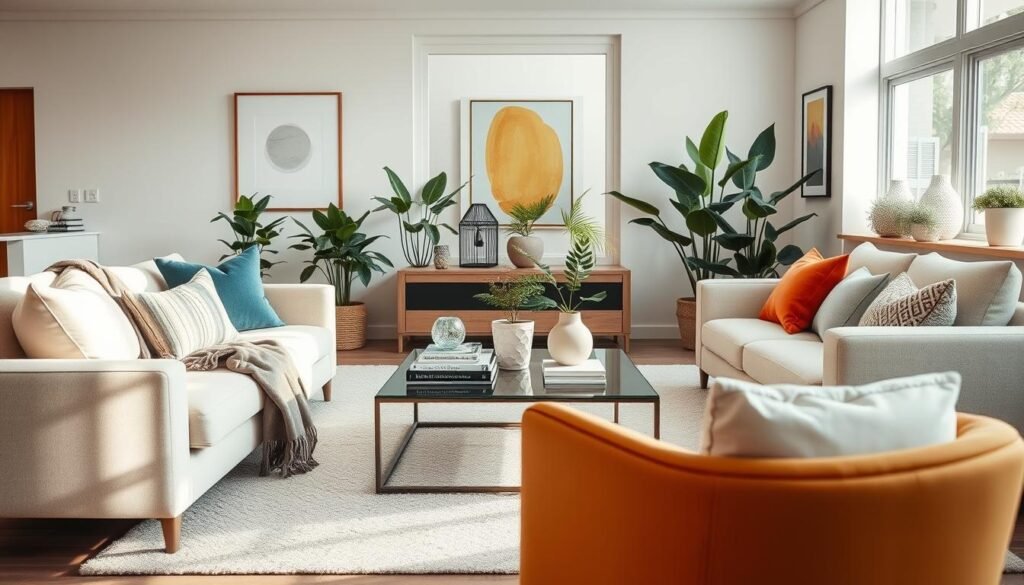
Here’s a game-changing tip: sprinkle black accents throughout your area. Use them in art, lamp bases, or small vases. These dark pieces add sophisticated contrast and ground your design perfectly.
| Decor Scale | Visual Impact | Best Placement | Room Feeling |
|---|---|---|---|
| Large Statement | High – focal point | Central walls, main surfaces | Bold & intentional |
| Medium Accent | Medium – supporting role | Side tables, shelves | Balanced & layered |
| Small Detail | Low – finishing touch | Grouped sparingly | Personal & curated |
Choose furniture with visible legs in light wood tones. These pieces have less visual weight since you can see the floor beneath them. Your space will feel more open and spacious.
Remember, balanced design creates happy spaces! When your decor has varied scales and thoughtful contrast, your area feels collected rather than cluttered.
Lighting Solutions for a Cozy Living Room
Lighting isn’t just about seeing clearly—it’s the secret ingredient that makes your area feel warm and inviting. The right setup can transform your space from flat and uninteresting to Instagram-worthy in minutes!
Layering Different Lighting Fixtures
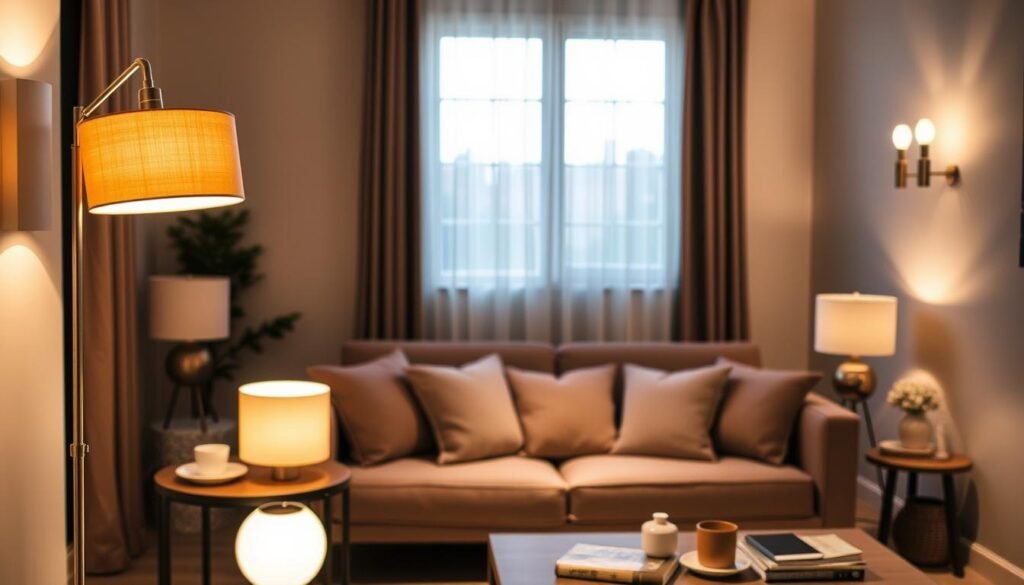
You absolutely need both a floor lamp and at least one table lamp. This creates proper balance and visual interest through varying heights. Your eye naturally travels around the room when you mix different styles.
Don’t go too matchy-matchy! Two identical tripod lamps will look boring. Instead, pair a tall modern floor lamp with a shorter traditional table lamp on your side table. This creates an eclectic, collected look that feels curated.
Having multiple lamps means you can turn off harsh overhead lighting in the evening. This creates a much cozier atmosphere and actually helps calm your nervous system as you wind down.
Optimizing Natural and Ambient Light
If you’re blessed with natural light streaming through windows, work with it! Use sheer curtains or light-filtering window treatments that let sunshine pour in while providing privacy.
Paint your walls in pale or neutral colors to maximize natural light. These shades bounce and reflect sunlight, making your living room feel brighter and more spacious.
Position your furniture to take advantage of natural light sources. Float your sofa near a window or place a reading chair where afternoon sun creates the perfect cozy spot.
Smart Storage and Multifunctional Furniture
Ever feel like your beautiful furniture is constantly fighting a losing battle against everyday clutter? We’ve got game-changing solutions that combine style with serious functionality. These clever pieces help you conquer the stuff that accumulates in your main gathering space.
The best storage solutions work double-duty without looking utilitarian. Think about how each item can serve multiple purposes while enhancing your decor.
Using Storage Ottomans and Nesting Tables
Storage ottomans are absolute heroes! They function as extra seating, footrests, and secret storage for blankets and remotes. Choose one that complements your coffee table for a coordinated look.
Nesting tables offer brilliant flexibility for smaller areas. Keep them tucked together most of the time, then pull them apart when you need extra surface space. They’re perfect as occasional side table surfaces for guests.
Don’t forget to look up! Wall-mounted shelves and tall bookcases maximize vertical space rather than floor area. They create display opportunities while storing essentials.
- Ottomans with hidden compartments
- Coffee tables with shelves or drawers
- Stylish baskets and decorative boxes
- Storage benches that provide seating
These multifunctional furniture choices help your living room stay organized and beautiful. You’ll love how everything has its place while maintaining that collected, intentional look you’ve worked so hard to achieve!
Integrating Color Palettes and Textures
Ready to discover the secret ingredient that can instantly transform your room’s entire mood? Color works like magic in your living room, creating different feelings and changing how your space appears.
Want an airy, open look? Light colors like soft neutrals and gentle pastels reflect light beautifully. They make wall surfaces seem to recede, creating that spacious feeling we all love.
Choosing Complementary Colors for an Airy Look
Here’s a pro trick: paint your ceiling the same hue as your walls or slightly lighter. This creates the illusion of height! Your room will feel more expansive immediately.
Love bold color? Go for it strategically! Deep navy or rich red adds drama when used in accent pieces. Test these shades with throw pillows or an area rug first.
In smaller areas, solid patterns work better than busy designs. Loud patterns can make your living room feel cramped. Calm hues create visual breathing room.
Don’t forget texture! Mixing different textures in similar colors adds incredible depth. Even a neutral design feels rich and layered this way. Choose colors that make you feel good when you enter your room.
Maximizing Small Living Room Layouts
Working with a compact area doesn’t mean sacrificing style or comfort. In fact, small rooms can feel incredibly cozy and intentional with the right approach. The key is smart scaling and strategic placement.
Every choice matters when square footage is limited. We’ll show you how to make your space feel larger and function beautifully.
Scaling Furniture to Fit Tight Spaces
The number one rule? Choose pieces that fit your room’s proportions. Skip the massive sectional and opt for a sleek loveseat with slim arms.
This creates visual lightness. Furniture with visible legs in light wood tones is your best friend. It allows you to see the floor, making the whole area feel more open.
Try the parallel structure trick. Place matching armchairs across from your main soating piece. Flank your sofa with identical side tables.
This creates a balanced, symmetrical arrangement that provides ample seating without looking cluttered.
- Define zones. If your space flows into a dining room, use an L-shaped sofa with its back facing out. This creates a natural border without blocking light.
- Embrace multifunction. Storage ottomans and nesting tables are essential. They give you the function you need without eating up precious square footage.
- Look up! Hang a mirror or a piece of art above low-profile furniture. This draws the eye upward, creating the illusion of height.
Don’t be afraid to use one bold thing. Just keep everything else simple so that special piece can shine. Remember to maintain clear walkways. A room that’s easy to move through will always feel more spacious.
Inspiration from Successful Living Room Designs
Sometimes the best way to learn is by seeing what works beautifully for others. Real-life transformations are incredibly powerful for sparking your own ideas. They show you what’s truly possible in spaces similar to your own.
Lessons Learned from Real-Life Makeovers
Professional designers dedicate their lives to mastering the tiny details that make a room feel just right. Their expertise can save you so much time and frustration. Think of a wonderfully decorated area like a beautifully directed movie.
It’s instantly engaging and impressive. Yet it’s also supremely functional for everyday life. Pay close attention to the “before” pictures in makeovers. Was the furniture scale wrong? Was there no clear focal point?
These common issues might sound very familiar! A skilled interior designer excels at pinpointing that vague “off” feeling. They know the strategic changes that make a huge difference.
| Designer Approach | Common Problem Solved | Key Lesson |
|---|---|---|
| Maximalist Layering | Space feels cold or empty | Texture and personal items add warmth |
| Minimalist Editing | Area feels cluttered or chaotic | Fewer, more intentional pieces create calm |
| Eclectic Mixing | Style feels generic or boring | Combining different eras adds personality |
Draw ideas from various design styles and different interior professionals. You might adore the cozy layers of one space and the clean lines of another. The goal is to gather inspiration you can adapt.
The most successful spaces truly reflect the people who live in them. Use what you see as a starting place. Then make it work for your own home, lifestyle, and budget. The best design is one that works for your real life!
Conclusion
You’ve reached the finish line with a complete toolkit for making your space truly shine! We’ve walked through every essential step—from smart furniture arrangement to lighting that creates the perfect mood.
The best part? You don’t need to tackle everything at once. Pick one area that bothers you most and start there. Maybe it’s finally getting that properly sized rug or adding a floor lamp.
Remember, creating a living room you love is a journey. It’s okay to make changes gradually. Your living space should welcome you home and reflect your personality perfectly.
We challenge you to try one idea this week. See what a difference it makes in how your place looks and feels! Don’t be afraid to experiment along the way.
Now go transform your living room into the beautiful, functional environment it deserves to be. You’ve got this!