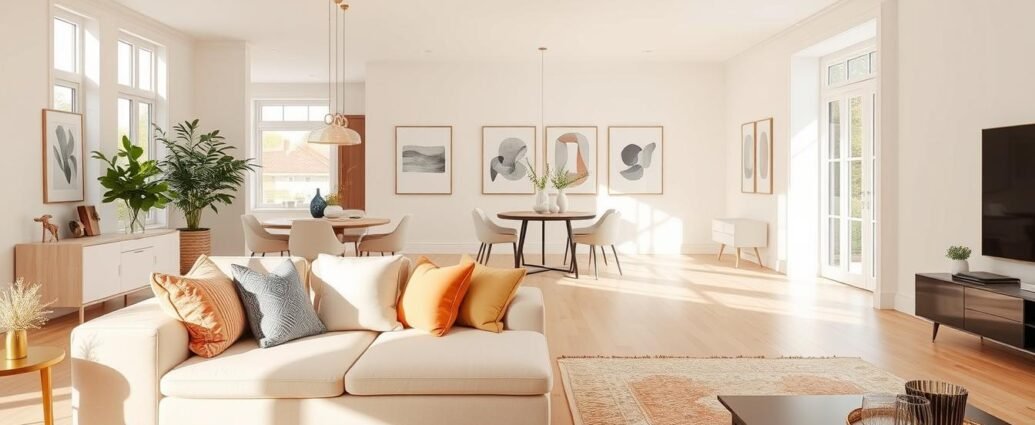
Do you ever walk into a room and feel like it doesn’t quite sound like you? That’s a common feeling, and it usually isn’t a sign that anything is wrong with your home. More often it means the room grew by accident — a hand-me-down sofa here, a lamp bought in a hurry there — and nobody has yet had the chance to make a deliberate decision about it.
Styling is really just a series of small, deliberate decisions. It doesn’t require a renovation budget, a big room, or permission from a landlord. Most of what follows can be done in an afternoon with things you already own, and where something costs money, we’ve noted what the free version looks like.
This guide covers the three levers that change a room fastest — colour, light, and the objects you put on surfaces — and then how to plan a space around the way you actually live in it. For more about how we approach this, visit our about page.
Key Takeaways
- Colour, light, and accessories change a room faster and more cheaply than furniture does.
- You can shift a whole palette by painting one piece of furniture rather than four walls.
- Rooms work best when they’re planned around your real routines, not an idealised version of them.
- Restraint reads as considered; filling every surface rarely does.
- Every idea here has a no-cost version, so a rental or a tight month is no barrier.
Start with what the room is actually for
Before choosing anything, spend ten minutes watching how the room gets used. Where do people put their keys down? Which chair does everyone actually sit in? Where does the light land at four in the afternoon?
This costs nothing, and it’s the step most often skipped. A room that fights your habits will always feel slightly wrong, no matter how well it photographs. A room that supports them feels calm even when it’s a bit shabby around the edges.
Write down two or three things the room genuinely needs to do — somewhere to drop a bag, somewhere to read, somewhere to eat without moving a laptop first. Every decision after this gets easier, because now you have something to test it against. That’s why the same styling advice works in a studio flat and a four-bedroom house: the method is the same, only the list changes.
Seasonal refresh: colour, light, and accessories
Welcoming a new season into your home doesn’t require an overhaul. As the light outside changes, small adjustments inside keep a room feeling in step with it — and these are the cheapest changes available to you. Warmer months in particular reward a lighter hand: fewer heavy textiles, more open window, more air around the objects you keep out.
Shift the colour without repainting the room
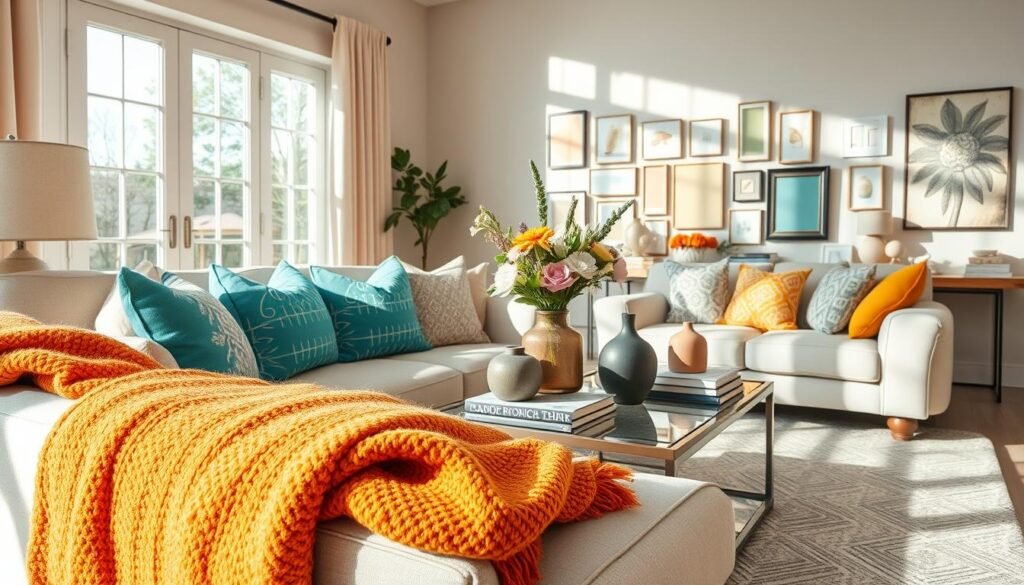
You don’t need to repaint every wall to change a palette. Painting a single piece of furniture — a chair, a set of shelves, the inside of a bookcase, even just the legs of a side table — introduces a new colour at a scale your eye reads as intentional. A sample pot costs very little and usually covers a small piece with paint left over.
Cool colours like blues and greens read as fresh, and they’re forgiving in rooms that take a lot of afternoon sun. Warmer pinks are more grown-up than they sound, particularly in a muted, dusty version. A deeper grey makes a steady backdrop that lets brighter objects do the talking rather than competing with them.
Free version: group the things you already own by colour. Pull every green object in the house onto one shelf and you get an accent’s worth of impact for nothing — and you find out whether you actually like living with green before you buy any paint.
| Colour Application | Effort Level | Visual Impact |
|---|---|---|
| Accent Wall | Medium | High |
| Painted Furniture | Low | Medium-High |
| New Cushions & Art | Very Low | Medium |
| Regrouping What You Own | Very Low | Low-Medium |
Let accessories do the quick work
Accessories are the fastest lever you have. New cushion covers, a different throw, or one vase in an unexpected colour will change how a room reads within minutes, and none of it is permanent.
Choose pieces that connect to something already in the room rather than pieces you like in isolation. A cushion picking up the colour of a book spine or the edge of a rug looks considered; the same cushion chosen on its own in a shop often looks added on.
Free version: swap cushions and throws between rooms. A blanket that has lived on the same bed for two years looks completely new on the sofa, and moving it costs nothing but the walk down the hall.
Bring in natural light and a bit of scent
Open the curtains properly — far enough that the fabric clears the window frame rather than sitting over the edges of the glass. Most rooms lose a surprising amount of daylight to curtains parked across the window instead of on the wall beside it. This is free and takes a second.
Then clean the inside of the glass, move anything tall off the windowsill, and hang a mirror on the wall opposite the window if you have one spare. Fresh flowers and scented candles are lovely when they’re in budget; a bowl of citrus peel, a sprig of rosemary, or an open window on a warm evening does a similar job for nothing. Our guide to fresh spring home refreshes has more on lighting and atmosphere.
Designing rooms around how you actually live
Once the quick levers are pulled, the next gain comes from layout — and layout is mostly about being honest. A room planned around the evenings you actually have will serve you better than one planned around the evenings you’d like to be having.
Making one area work for more than one thing
In a lot of homes the kitchen carries the heaviest load: breakfast, homework, laundry sorting, and dinner with friends, often within the same twelve hours. Storage is what makes that possible. A drawer that holds the homework things and closes at six o’clock does more for the room than any decorative object will.
If you’re planning a build or a renovation, a butler’s pantry or a mud room takes the daily mess out of sight. If you’re not — and most of us aren’t — the same principle scales down almost perfectly: a lidded basket by the door, a shelf inside an existing cupboard, or a tray that gathers the day’s clutter and can be carried out of the room in one movement.
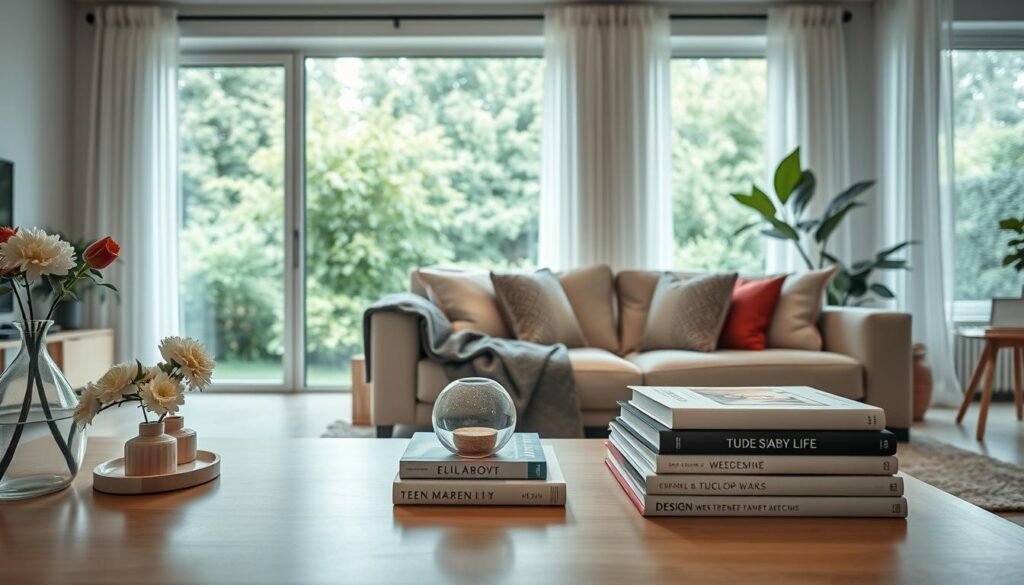
Households sharing space across generations, or just across very different schedules, tend to want more than one place to sit rather than one large, perfect room. Two modest zones usually beat one grand one. A reading chair in a bedroom corner counts as a zone.
Layout: flow matters more than floor area
Flexible planning has become more useful than square footage. A smaller floorplan with clear routes between zones will feel bigger than a larger one you have to squeeze around.
Walk your usual path through the room and notice where you turn sideways or step around something. Moving one piece of furniture thirty centimetres is free and fixes it surprisingly often. In open-plan spaces, keep the run between the kitchen, the table, and the seating clear — that’s the route that gets used most when you have people over, and it’s the one that decides whether hosting feels relaxed.
Restraint over over-decoration
The most common styling mistake is decorating a room too literally: kitchen signs in the kitchen, nautical everything in a bathroom. It reads as a caption rather than a room.
Let materials and texture carry the character instead — a wooden board, a linen curtain, a ceramic bowl someone actually made, a basket that shows its weave. Deeper, slightly muted colours tend to age better than bright primaries. And leave some surfaces empty, because negative space is what makes the objects you did choose look chosen.
| Space Type | Family Needs | Couple Needs |
|---|---|---|
| Kitchen Area | Homework station + meal prep | Entertaining hub |
| Living Room | Multiple zones for different activities | Open flow for gatherings |
| Bedroom Layout | Ample storage for family organisation | Relaxation-focused design |
For more on blending styles without the result feeling scattered, see our guide to modern eclectic living rooms.
Putting it together
None of this needs to happen at once. Pick the room that bothers you most, spend ten minutes watching how it gets used, and then pull one lever — open the curtains fully, regroup what’s on the shelves, move one chair. Live with it for a week before doing anything else.
Good rooms balance consistency with personality. A palette that runs quietly through the house holds it together, while each room still gets to have its own character. If you’re choosing colours for the cooler months, the warm, earthy shades in our cozy autumn paint collection are a forgiving place to start.
Above all, your home is allowed to change slowly. It should evolve as your life does, and there’s no version of it that’s finished. Trust what you actually enjoy living with over what looks correct in a photograph, and the room will look after itself.