
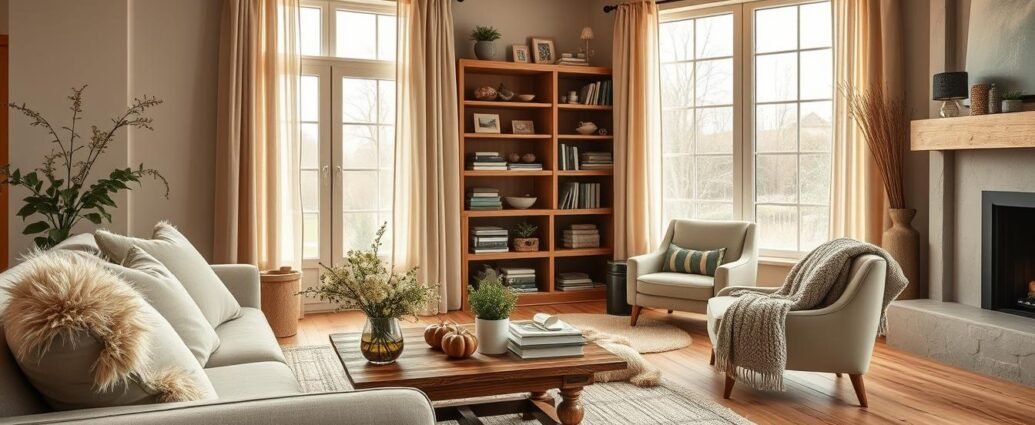
Cottage style has a reputation for being fussy — florals, frills, every surface covered. The modern version keeps the warmth and drops the clutter, and that is the appeal: a room that feels settled and comfortable without feeling like a museum of small objects.
This guide covers what actually makes the look work — the materials, the colors, the lighting, and the handful of pairings that do most of the heavy lifting — plus a room-by-room set of ideas you can start with this weekend. Almost none of it needs a renovation, and a good deal of it is cheaper secondhand than new.
Key Takeaways
- Natural material you can see does most of the work — wood, stone, linen, wool. Texture matters more here than pattern.
- A muted base of cream, soft grey or sage makes a small room read as larger, and lets wood tones show rather than compete.
- Lamps beat overhead lights. Two or three warm, low light sources change a room more than new furniture does.
- The modern half comes from restraint: gentle curves instead of carving, an edited shelf instead of a full one.
- Most pieces that read as cottage are old, so secondhand is usually both cheaper and better suited than new.
- It works in a rental and in a small flat — nothing here depends on beams, an arch or a fireplace.
What Makes a Room Read as Modern Cottage
Traditional cottage interiors were built around what people had: wood that was local, textiles that were mended, furniture that stayed for generations. The warmth came from use rather than from a scheme. The modern version borrows that warmth and leaves behind the parts that make a room feel heavy — the dark fabrics, the full shelves, the carved detail on everything.
The Three Things Doing the Work
Strip the style back and it rests on three decisions, roughly in this order of importance:
- One natural material somewhere you can see it. A wood floor, a wood table, a stone hearth, a wool throw. One real material anchors a room; without it, a muted palette just reads as beige.
- Warm, low light from more than one point. Overhead light flattens texture, and texture is the thing this style depends on. Lamps at eye level and below bring it back.
- Empty space you left on purpose. Cottage rooms look full in photographs because the few things in them are grouped together. The bare space around a group is what makes it read as a choice rather than an accident.
Everything else — the shiplap, the arched doorway, the open shelf of white jugs — is decoration sitting on top of those three. That is worth knowing if you rent, because all three are moveable.
Where It Differs From Farmhouse
These two names get used interchangeably and they are not the same thing. Farmhouse leans on contrast: black against white, hard lines, industrial metal, graphic lettering. Cottage leans on softness — gentle curves, tone-on-tone color, pattern that looks faded rather than printed. If a room feels crisp, it is reading farmhouse. If it feels worn-in, it is reading cottage. Knowing which one you are after saves a lot of returned purchases.
Defining the Modern Cottage Aesthetic
Have you ever wondered how to capture that cozy, timeless feeling while keeping your space fresh and current? This design style achieves exactly that balance. It’s about honoring heritage while embracing today’s living needs.
We love how this approach creates rooms that feel both historic and happening. The magic lies in subtle refinements rather than complete overhauls.
Characteristic Features and Design Style
You’ll notice this look favors restrained whimsy over ornate details. Furniture keeps gentle curves but loses excessive carving. Think simple elegance rather than fussy decoration.
Each piece serves a purpose while adding warmth. Quality matters more than quantity here. This creates a wonderful sense of intentional living.
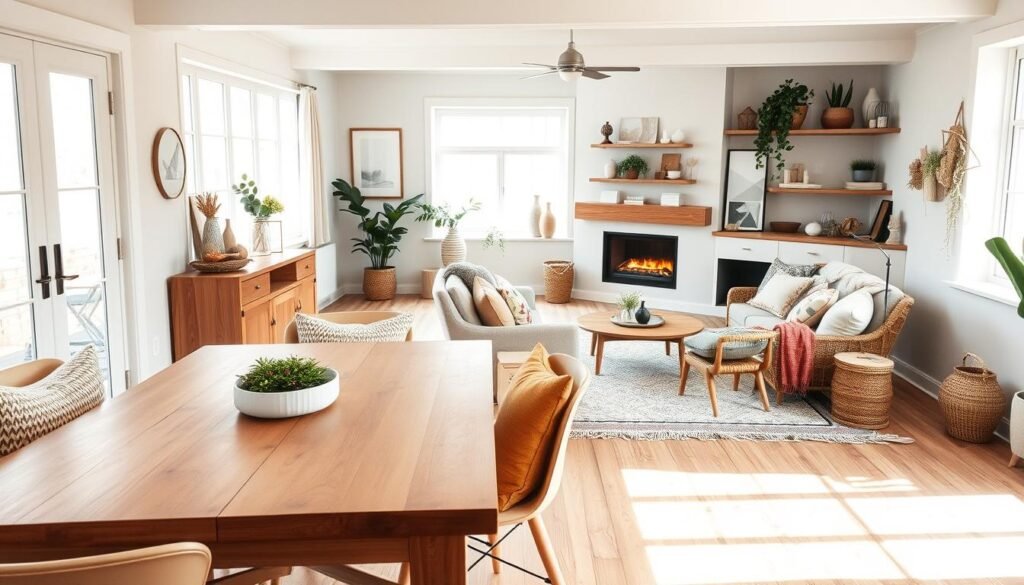
The features work together harmoniously. Soft textiles meet clean lines. Natural materials blend with light color schemes. Decorilla has a set of before-and-after modern cottage makeovers that show the balance clearly.
Historical Inspirations and Contemporary Adaptations
This aesthetic draws from charming European country homes. English and French cottages provide the foundational charm. But the style updates these traditions for today’s lifestyles.
Historical principles meet modern functionality. The soul remains intact while the execution evolves. This creates spaces that feel both rooted and relevant.
Many find inspiration in minimalist bungalow design essentials when adapting this look. The focus stays on comfort and character above all else.
| Traditional Cottage | Modern Cottage | Key Differences |
|---|---|---|
| Ornate carvings | Subtle curves | Simplified detailing |
| Dark, heavy fabrics | Light, airy textiles | Brighter color palettes |
| Cluttered collections | Purposeful decor | Intentional editing |
| Formal arrangements | Relaxed layouts | Contemporary flow |
Key Elements of Modern Cottage Interiors
What truly makes a space feel both grounded and graceful? It’s all about the materials and architectural features you choose. These elements work together to create that special atmosphere we love.
Natural Materials and Texture
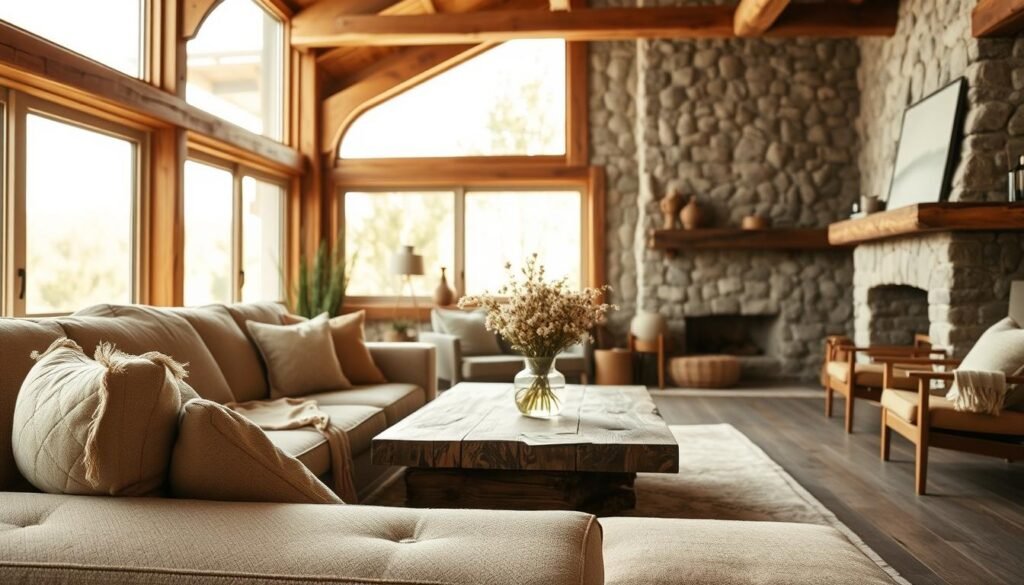
We believe in starting with what nature provides. Think rich wood floors, natural stone accents, and soft linen textiles. These materials bring instant warmth and character to any room.
Texture layering is your secret weapon. Combine smooth surfaces with rough ones. Try a jute rug under a velvet chair. This creates depth and visual interest.
Tip: if you are only going to layer one thing, make it the floor. A flat-weave or jute rug under a soft chair does more for a room than any number of cushions, and a secondhand one costs a fraction of new.
Architectural Details: Beams, Stone, and Arched Doorways
Exposed beams on the ceiling make a dramatic statement. They add rustic charm while defining your space. A stone fireplace becomes the heart of the room.
Arched doorways create flow and elegance. They soften the design and make rooms feel more connected. These architectural elements are hallmarks of the style.
| Material Type | Best Uses | Visual Effect |
|---|---|---|
| Reclaimed Wood | Floors, Beams, Furniture | Adds character and history |
| Natural Stone | Fireplaces, Accent Walls | Creates organic texture |
| Textile Blends | Upholstery, Window Treatments | Softens hard surfaces |
When you master these organic modern design elements, your home will feel both timeless and fresh. The right combination of tones and colors enhances every feature.
Fusion of Vintage and Modern Touches
What if your favorite family treasures could shine alongside today’s sleek designs? This beautiful balance creates spaces that feel both personal and polished. The fusion of old and new gives your home soul and sophistication.
Incorporating Antique Accents and Heirlooms
We love how vintage items bring character to any room. A weathered picture frame or distressed dresser tells a story. These pieces add warmth that new furniture often lacks.
Remember the golden rule: less is more. Choose a few special vintage items rather than crowding your space. Let each piece make its own statement.
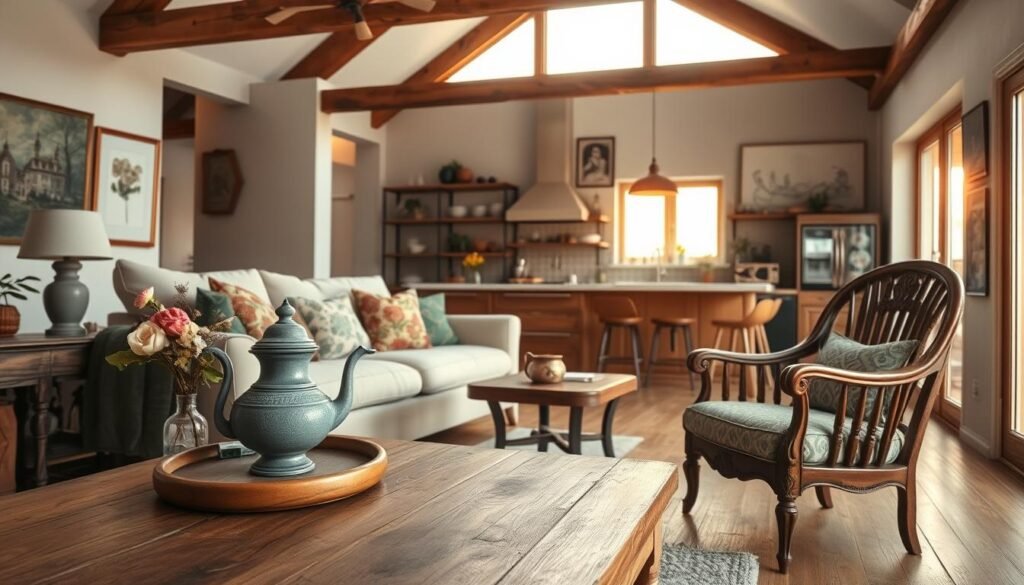
Think about using a family heirloom as a bathroom vanity. Or try a vintage-style faucet in the kitchen. These small swaps add character without overwhelming the room.
Maintaining Clean Modern Lines
The modern part of this style comes from clean, simple lines. Architectural details like shiplap or board and batten create a neutral backdrop. This allows your vintage finds to truly stand out.
Your furniture should have crisp, classic shapes. This contrast creates visual interest and depth. It’s what defines the modern cottage style we adore.
| Vintage Element | Modern Counterpart | Design Effect |
|---|---|---|
| Distressed wood dresser | Sleek metal legs | Creates balanced contrast |
| Ornate picture frame | Minimalist wall color | Highlights the vintage piece |
| Family heirloom quilt | Simple bed frame | Adds warmth to clean lines |
This approach works beautifully when you’re trying to create your dream modern eclectic living. The key is finding that perfect balance where every piece feels intentional.
Color Palettes and Lighting Techniques for Cozy Spaces
Have you ever noticed how the right colors and lighting can completely change how a room feels? These two elements work together to create that welcoming feel we all crave. Getting them right makes your space instantly more inviting.
Using Neutral and Muted Shades Effectively
The ideal color palette for this style features soft, muted tones. Think creamy whites, gentle grays, and soothing sage greens. These colors create a calm backdrop that makes any room feel larger.
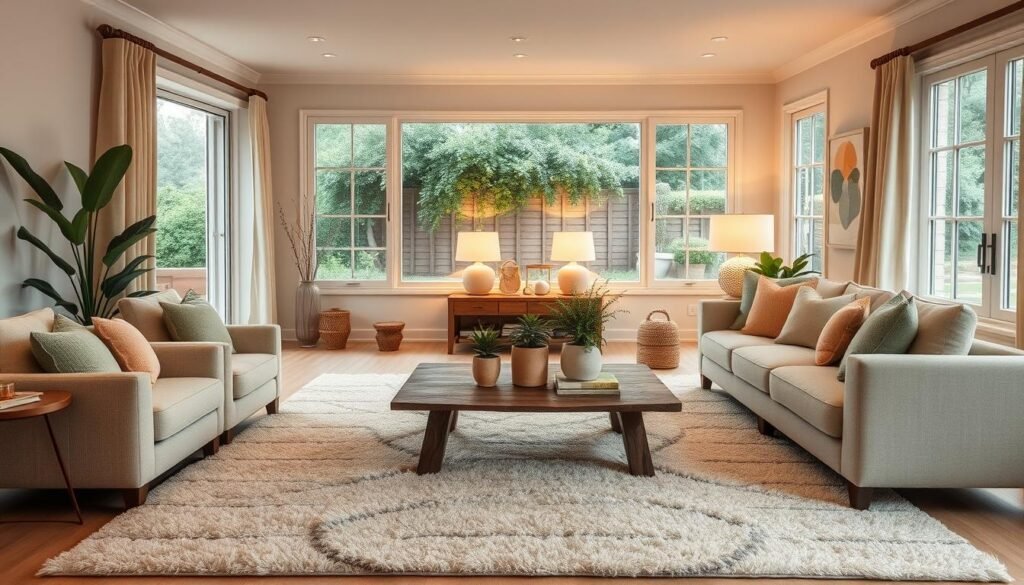
You can add visual interest through subtle patterns and accessories. Try faded blues or olive greens in throw pillows or artwork. This approach keeps your palette serene while adding personality.
Layered Lighting for Warm Ambiance
Proper light is essential for creating warmth. We recommend using multiple light sources throughout your living area. This technique adds depth and flexibility to your cottage interior.
Combine overhead fixtures with table and floor lamps. Warm bulbs and dimmer switches help you control the mood. You can create different atmospheres for various times of day.
| Lighting Type | Best Placement | Mood Created |
|---|---|---|
| Overhead Fixtures | Center of room | General illumination |
| Table Lamps | Side tables, consoles | Intimate, task lighting |
| Floor Lamps | Corners, reading nooks | Ambient, accent lighting |
When your color palette and lighting work together, they enhance natural materials beautifully. The right combination makes your entire cottage design feel cohesive and intentional.
Cottage Interior Design Ideas, Room by Room
The principles above hold everywhere, but what you reach for first is different in each room. Here is where we would start, with the cheapest version of each idea sitting right beside it.
Living Room
Pull the sofa off the wall by even a few inches and put a lamp beside or behind it. A room lit from three low points instead of one ceiling fixture is the biggest single change available here, and it costs whatever a secondhand lamp costs. Then layer the floor: a flat-weave or jute rug under a soft chair gives you the rough-against-smooth contrast the whole style runs on.
For a mantel or a shelf, group things in threes and leave the rest of the surface bare — a jug, a short stack of books, something green.
Free option: clear one surface completely, then put back three things. Cut a branch or a handful of whatever is growing outside for the jug. Most rooms improve more from that than from anything you could order.
Kitchen
Open shelving is the cottage kitchen signal, and you do not have to take cabinet doors off to get it — one shelf on a bare stretch of wall holds enough. Put plain cream or white ceramics on it, mismatched on purpose. Thrift shelves are full of them for a dollar or two each, and mismatched reads as collected while a matching set reads as bought.
Then swap one thing you handle every day for a wood or ceramic version: a wooden spoon crock, a stoneware butter dish, a bread board left out on the counter. Small, visible, warm.
Free option: take everything off the counters except what you genuinely use daily and move the rest into a basket in a cupboard. Cottage kitchens look busy in photographs, but the working surfaces in them are clear.
Bedroom
Linen, or something that behaves like it. Washed linen and cotton wrinkle, and the wrinkle is the point — crisp, pressed bedding fights this style rather than serving it. A secondhand linen tablecloth makes a convincing coverlet, and old cotton sheets soften with every wash instead of wearing out.
Keep the light low and to the side: a pair of small lamps on the nightstands, warm bulbs, and no overhead light at all if you can avoid it.
Free option: swap your bedding for the oldest, softest set you own and iron none of it. Lean a picture against the wall on a chest rather than hanging it — propped art is a cottage habit, and it costs no nail holes, which matters if you rent.
Bathroom
This is the easiest room to shift, because nearly everything in it can be changed without tools. A wooden stool beside the bath to hold a towel, a basket for the spares, one small framed picture on a wall that usually holds nothing but a mirror. Decant the plastic bottles into a couple of refillable glass or ceramic ones and the whole room settles down.
Free option: move the towels out of the cupboard and onto an open shelf or a hook, folded roughly rather than neatly. Visible textiles are what keep a hard, tiled room from reading cold.
Entry, Hallway or Landing
Cottage style is at its best in the small leftover spaces, because it asks for so little floor. A hook rail, a basket on the ground for shoes, one small picture, and a mat with some texture to it. If there is room for a chair nobody will ever sit on, put one there — a wooden chair in a hallway is cottage shorthand and it reads immediately.
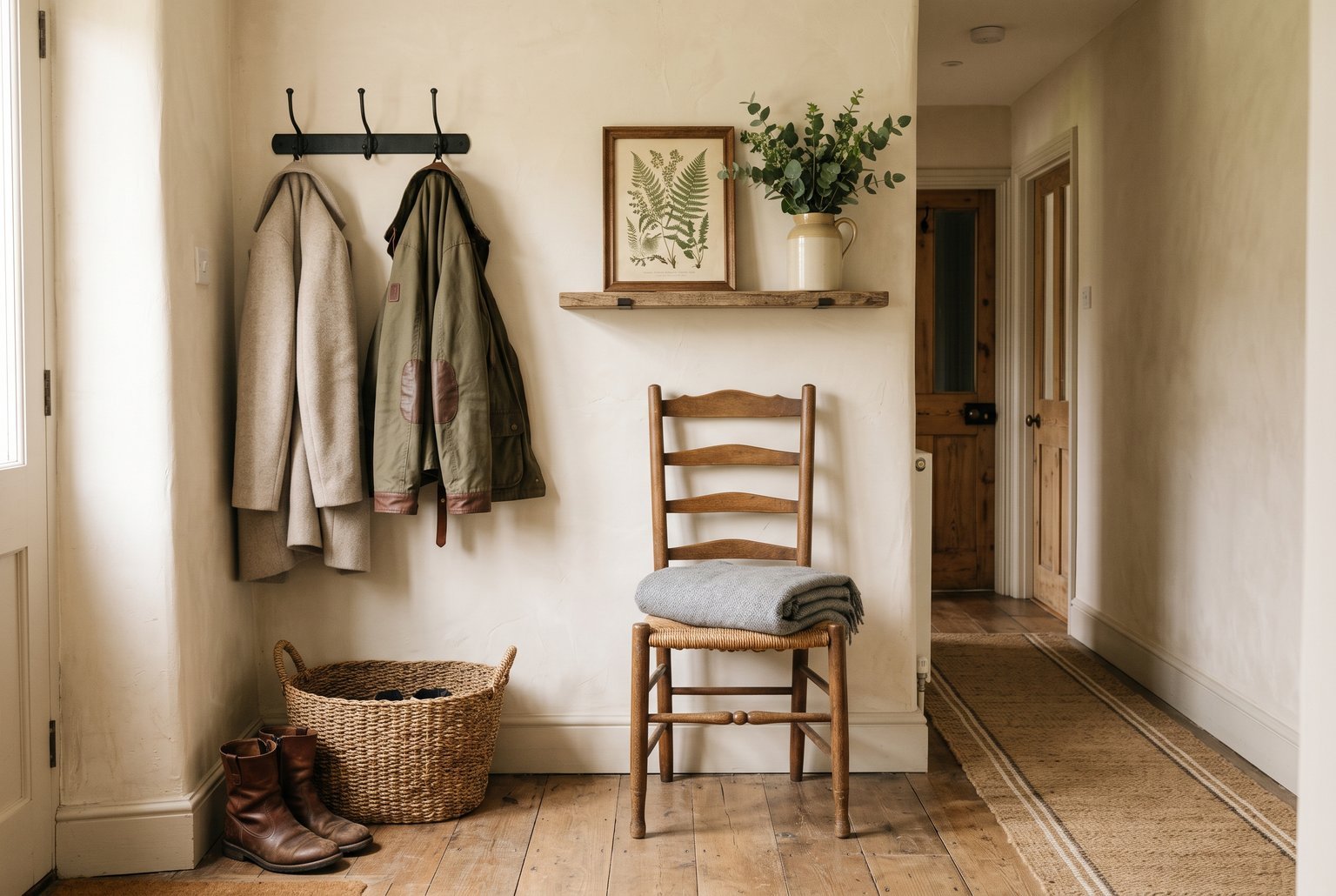
Free option: hang only the coats you actually wear this month on a rail you already own, and move the rest out of sight. An entry holding four coats instead of eleven feels looked after.
Rented Rooms and Small Flats
Nothing in this style needs a structural change, which is why it suits a rental so well. Skip the beams, the arch and the fireplace — those are the decoration layer, and they are the expensive, permanent part. What you keep is the material, the lamp and the empty space, and all three travel with you to the next place. Lean art rather than hanging it, choose freestanding shelves over fixed ones, and if you spend on anything, spend it on lamps.
Practical Design Tips for Your Modern Cottage Interiors
Ready to make your living space work harder without losing any of its warmth? These are the practical choices that keep a home good-looking and easy to live in day to day.
Furniture Selection That Balances Style and Functionality
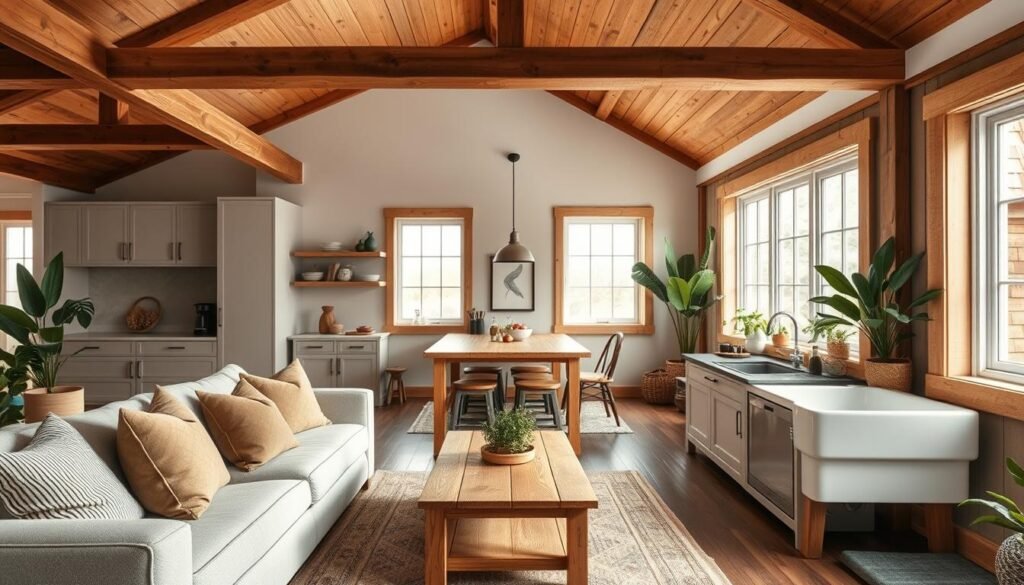
Choose furniture that serves real purposes while looking beautiful. A rustic wooden coffee table pairs wonderfully with a plush sofa in your living room. These pieces create instant warmth.
Multifunctional pieces earn their place in a small space. Ottomans with hidden storage or extendable dining tables maximize your room’s potential. This approach works especially well in the kitchen where every inch counts.
Smart Storage and Decluttering Ideas
Create cozy nooks throughout your house for relaxation spots. A reading corner with a comfortable chair makes your home feel welcoming. Window seats filled with pillows become favorite retreats.
Bring nature indoors with houseplants and fresh flowers. Even a small herb garden in your kitchen adds life and color. Personalize your decor with meaningful artwork and family photos.
Smart storage solutions maintain that serene feel. Use decorative boxes and stylish baskets to hide everyday things. Regular decluttering keeps your cottage interior peaceful and inviting.
Getting the Look Secondhand (and for Almost Nothing)
Most of what makes this style work is old, and old is cheap. The pieces that read as cottage are the ones with a bit of wear on them, which means a thrift shop, an estate sale or a curbside find will often serve you better than a new order.
What to look for, in rough order of how much difference it makes:
- Solid wood, any condition. A scratched oak side table is still solid oak. Wear is the point here, so you can skip the refinishing entirely.
- Plain white or cream ceramics. Thrift shelves are full of them, usually a dollar or two each, and a row of mismatched jugs on an open shelf is the look.
- Linen and cotton in neutral colors. Old tablecloths and curtain panels cut down into cushion covers. With hemming tape and an afternoon, the cost is close to nothing.
- Baskets. Any size, any weave. They solve the storage problem and add the texture at the same time.
The free version: take everything off one surface, a mantel or a coffee table, and put back only three things. Cottage rooms read as full but never crowded, and the difference is usually editing rather than buying. A jug of whatever is growing outside costs nothing and does more than most of what you could order.
If your budget stretches further, spend it on lighting before furniture. A pair of warm table lamps changes a room more than a new sofa does, and good lamps are the one thing that is genuinely hard to find secondhand.
Conclusion
The modern cottage style comes down to a set of small decisions: natural materials over synthetic ones, a few good vintage pieces rather than many, warm lamplight instead of overhead glare, and enough empty space that the things you love get noticed.
None of it depends on a big budget or a renovation. Start with one surface and one lamp, add a secondhand wood piece when you find the right one, and let the room fill in slowly. That collected-over-time quality is the whole point of the look, and it is the one thing no single purchase can buy.


2 Comments