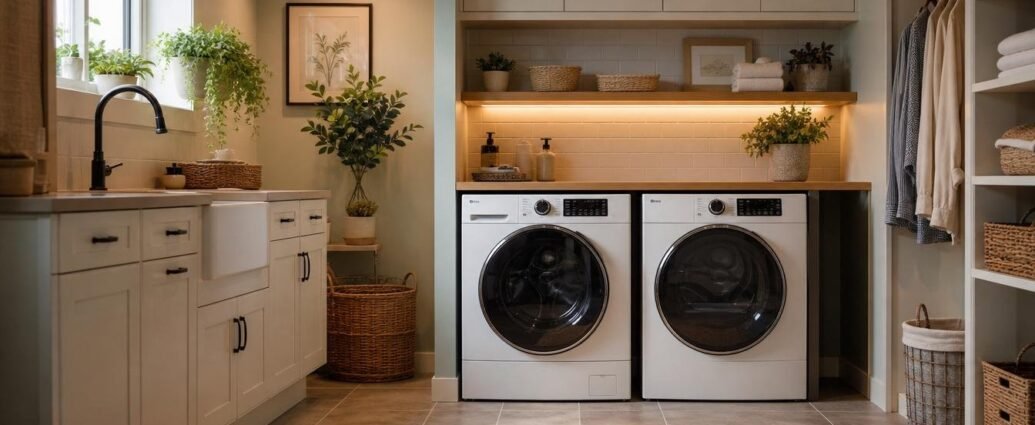
Do you ever dread walking into your basement laundry room — that dim, slightly damp corridor where clean clothes somehow feel less clean just from existing there? Maybe the concrete walls stare back at you under a single flickering bulb, and the whole space feels more like a penalty box than a functional part of your home.
You’re not alone in this, and more importantly — you don’t have to settle for it. In this guide, we’re walking through everything you need to take your basement laundry area from a forgotten utility corner to a clean, organized, and genuinely pleasant space to spend a few minutes every week. No luxury renovation budget required.
Key Takeaways
- Light, reflective paint colors are the fastest way to visually brighten a low-light basement laundry room.
- Open shelving and wall-mounted storage maximize limited square footage without major construction.
- Moisture-resistant flooring options like peel-and-stick vinyl, epoxy paint, and interlocking tiles are affordable and durable.
- Swapping overhead lighting and adding plug-in under-shelf lights can change the room’s feel for under $150.
- Most of these basement laundry room ideas can be completed in a single weekend with basic tools.
- A realistic DIY makeover budget runs $300–$900 depending on scope, with serious impact at every price point.
- If the basement is unfinished, paint the block and the exposed joists rather than drywalling or dropping a ceiling — it costs less, keeps the pipes reachable, and does not trap damp.
Why Your Basement Laundry Room Deserves a Real Makeover
Let’s be honest: the basement laundry room is one of the most used and most ignored spaces in the average home. We haul baskets up and down stairs multiple times a week, yet we rarely stop to think about whether the space actually supports that routine.
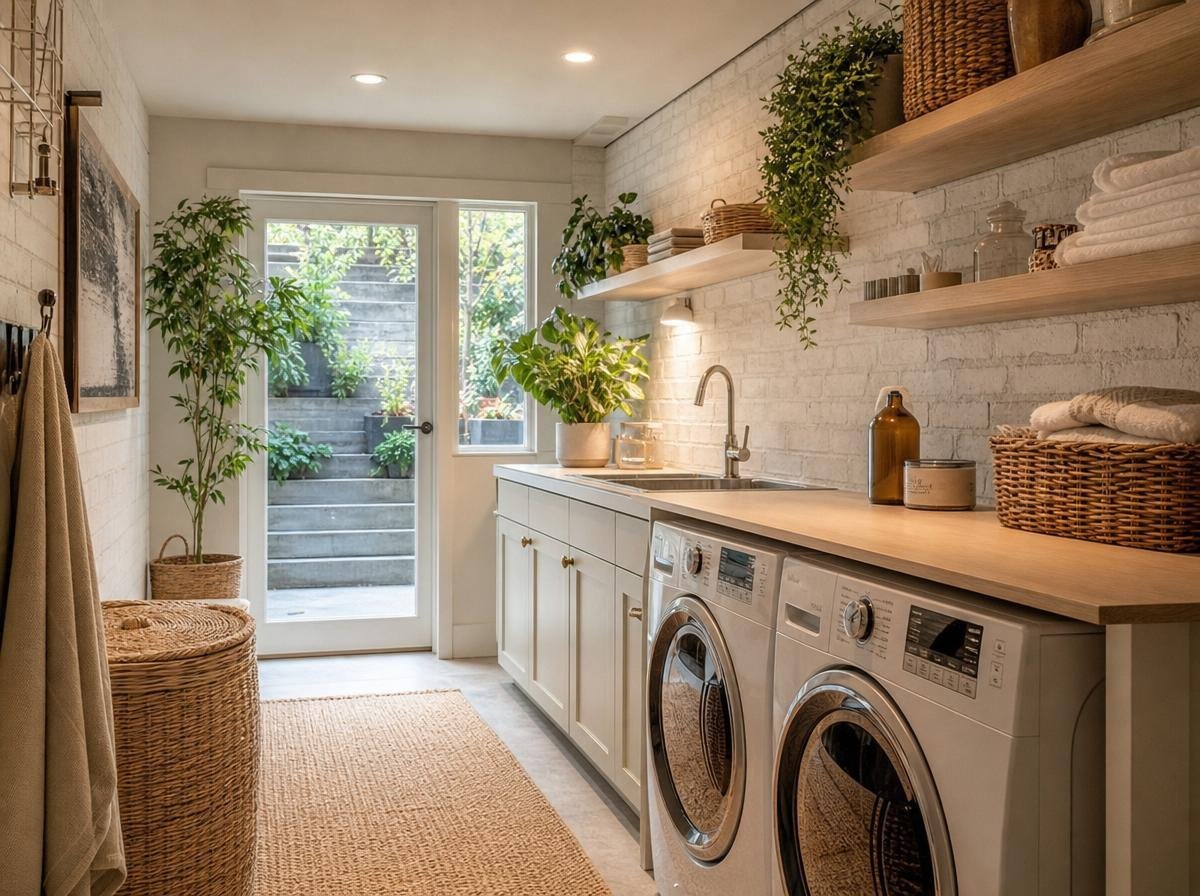
The Psychological Weight of an Ugly Utility Room
Most of us already know how it feels to walk into a cluttered, dim room. A disorganized laundry room doesn’t just look bad — it makes a mundane chore feel heavier than it needs to be. When the space is chaotic, we avoid it, things pile up, and the cycle continues.
Think about how different it feels to fold laundry in a bright, organized space versus a dim concrete cave. The task is the same. The experience is not.
The Untapped Potential of Basement Utility Space
Basement laundry areas often have more square footage than we realize, plus exposed ceiling height, plumbing already in place, and walls just waiting for a coat of paint. If you’ve read through our low ceiling basement ideas that actually work, you already know that basements have more design potential than they get credit for.
Even a 10×10 utility room can feel intentional and calm with the right interventions. That’s the goal here — not perfection, but intention.
Choosing the Right Paint Colors for a Basement Laundry Room
Paint is almost always the first move in any room refresh, and in a basement laundry room, it does double duty: brightening the space and making concrete or drywall surfaces feel finished and clean. Color selection here is genuinely different from choosing paint for a main-floor room with natural light.
Why Light Reflectance Value (LRV) Matters Most
Light Reflectance Value (LRV) is a measurement of how much light a color reflects, on a scale of 0 (pure black) to 100 (pure white). In low-light basement spaces, you want to prioritize colors with an LRV of 75 or higher to maximize the brightness from your artificial lighting. This is one of the most overlooked factors in basement paint selection.
Pure white can sometimes feel cold and institutional in a basement — I’d lean toward warm whites, soft creams, or pale greige tones that reflect light while still feeling livable. Think Benjamin Moore’s White Dove (OC-17), Sherwin-Williams Alabaster (SW 7008), or Pale Oak (OC-20) for a barely-there warmth.
Basement Laundry Room Paint Color Ideas by Mood
If you want something beyond white, soft sage greens and muted dusty blues read beautifully under warm LED lighting and give the room a calm, almost spa-like quality — particularly fitting for a space that’s about cleaning and refreshing. These softer tones have been dominating wellness-centered interiors for a reason.
Whatever color you choose, finish matters too. A satin or eggshell finish is ideal for basement laundry rooms: easier to wipe clean than matte, but without the glare of semi-gloss. And don’t forget the ceiling — painting it the same color as the walls (or one shade lighter) is an old painter’s trick that makes a low space feel more cohesive and intentional.
Accent Wall and Two-Tone Options
If full painting feels like a big commitment, a painted accent wall behind the washer and dryer creates instant visual impact with minimal effort. You could also try a two-tone approach — a deeper, grounded tone on the lower half of the wall with a brighter shade above, separated by a simple chair rail or strip of trim. It adds a layer of architectural interest to an otherwise plain space.
Lighting Upgrades That Actually Brighten the Space
No paint color in the world can compensate for poor lighting. In a basement laundry room without windows, your light sources are everything. The good news: you don’t need an electrician for most of these upgrades.
Replacing Overhead Fluorescent Fixtures
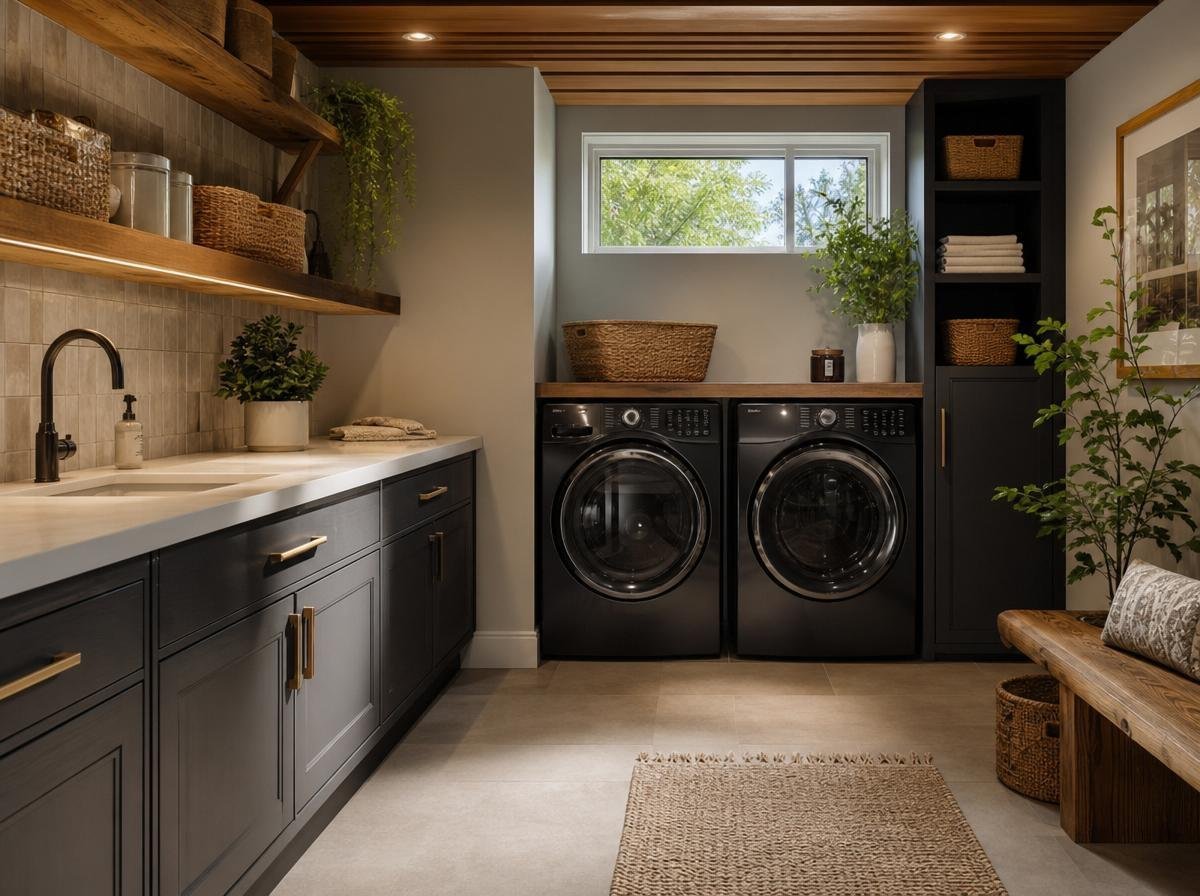
Most basement utility rooms come with a single overhead fluorescent strip light — functional, technically, but harsh and unflattering. Replacing it with a flush-mount LED shop light or a surface-mounted LED fixture is usually a straightforward swap that anyone comfortable with basic electrical can handle. Look for fixtures with a color temperature of 3000K–3500K (warm white to neutral white) rather than the blue-cast 5000K+ daylight bulbs. The difference is immediately noticeable.
A good LED shop light runs $30–$60 and can typically be hardwired or plugged into an existing outlet. If you’re looking for inspiration on how lighting changes utility spaces, our guide to garage workshop setup, workbenches, storage, and lighting has some transferable ideas worth browsing.
Under-Shelf and Task Lighting
Plug-in LED under-cabinet lights make a real difference in a basement laundry room. They’re inexpensive ($15–$40 for a set), require zero wiring, and can be mounted beneath open shelves to illuminate the folding counter or sorting area below. Motion-activated versions are particularly handy — you walk in, light turns on, and you’re not fumbling for switches.
A simple plug-in Edison bulb pendant above a folding station or utility sink adds both function and personality. It sounds small, but a single warm pendant makes the space feel considered rather than functional-by-default.
Mirrors and Reflective Surfaces
This one surprises people: a large mirror or even a row of smaller mirrors on one wall essentially doubles your light by bouncing it back across the room. It also makes the space feel bigger, which is almost always welcome in a basement. You don’t need anything precious — a frameless mirror from a home improvement store works just as well and tends to fit the utilitarian aesthetic of the space.
Open Shelving and Storage Solutions for Laundry Organization
Once the light and color are addressed, storage is where the change really takes shape. A well-organized basement laundry room feels fundamentally different from one where detergent bottles are balanced on top of the dryer and clean clothes are draped over every available surface.
DIY Open Shelving Above the Washer and Dryer
Floating shelves installed above your machines are one of the highest-impact, lowest-cost upgrades you can make. A set of 12-inch deep floating shelves in white or natural wood runs $30–$80 and can hold everything from detergent and fabric softener to clean towels and spare hangers. The key is keeping them organized with matching containers — clear bins, labeled baskets, or simple glass jars bring cohesion to a practical display.
If you’re handy with a drill and level, this is a weekend-morning project. Anchor into studs where possible, or use proper wall anchors in concrete block walls (a masonry bit and the right toggle bolts make all the difference).
Freestanding Utility Shelving for Deeper Storage
For items that don’t need to be within arm’s reach — bulk supplies, seasonal items, cleaning equipment — a freestanding wire or solid-panel utility shelf unit provides serious storage capacity without any installation. These run $40–$120 depending on size and material, and they’re adjustable as your needs change.
The same principles that make garage organization work apply here: group like items together, use vertical space, and keep frequently used items at eye level. It sounds simple because it is — and it works.
Cabinetry Options for a More Finished Look
If you want the laundry room to feel closer to a finished room than a utility closet, upper cabinets with doors are worth considering. Stock cabinets from home improvement stores start around $60–$150 per unit and can be installed with a friend and an afternoon. Closed cabinet fronts hide visual clutter instantly, which is particularly valuable if the laundry room connects to or is visible from another living area.
For a middle-ground look, consider open lower shelving with upper closed cabinets — it gives you accessibility for daily supplies while concealing the less-photogenic extras above.
Flooring Options That Handle Basement Moisture
Basement floors present a specific challenge: moisture. Whether from humidity, the occasional splash from the utility sink, or the simple reality of water being nearby at all times, your flooring needs to be able to handle it without warping, growing mold, or becoming a slip hazard.
Peel-and-Stick Vinyl Tile: The Weekend Warrior’s Best Friend
Peel-and-stick vinyl tiles are one of the most accessible basement flooring upgrades available. They’re waterproof, relatively durable, and at $1–$3 per square foot, even a small laundry room floor can be redone for under $75. The installation is genuinely DIY-friendly — clean the concrete, ensure it’s level, peel, and press. No adhesive, no special tools required.
Stick to neutral tones — white, light gray, or a subtle wood-look plank — to visually expand the space and complement the rest of your color choices.
Interlocking Foam or Rubber Tiles
If you’re standing at the machines for long stretches, interlocking anti-fatigue tiles add cushioning and warmth to a concrete floor without any permanent installation. They’re removable, easy to clean, and come in a range of colors. Not the most polished look, but genuinely functional — and occasionally a practical choice wins over an aesthetic one.
Epoxy Floor Paint for a Seamless, Clean Finish
For the most durable and professional-looking result, epoxy floor coating applied directly to concrete creates a seamless, moisture-resistant, and easy-to-clean surface. It’s more effort to apply than peel-and-stick — you’ll need to prep and etch the concrete first — but the finished look is significantly more polished. We’ve covered the full process in our DIY epoxy garage floor step-by-step guide, and the same process translates almost directly to a laundry room floor.
Expect to spend $80–$150 on materials and a full weekend on the project, including prep and cure time. The result lasts years.
Tip: Before you commit to epoxy, tape a two-foot square of plastic sheeting flat to the bare concrete, sealing all four edges, and leave it for 24 hours. If there’s moisture beaded underneath when you lift it, the slab is still passing damp through and epoxy will eventually lift off it — go with interlocking tiles or peel-and-stick instead. The test costs nothing but a strip of tape, and it saves you a wasted weekend.
Unfinished Basement Laundry Room Ideas (When You’re Not Finishing the Basement)
Everything above assumes you want the room to end up looking finished. Plenty of basements never will be. The walls are bare block, the ceiling is open joists with the house’s plumbing running through it, and the floor is the slab it was poured as. That is the normal condition for a basement laundry area, not a failure of one — and almost none of the work in this guide needs drywall first. A couple of the best moves actually depend on leaving the structure exposed.
Bare Block Walls: Paint Them Rather Than Cover Them
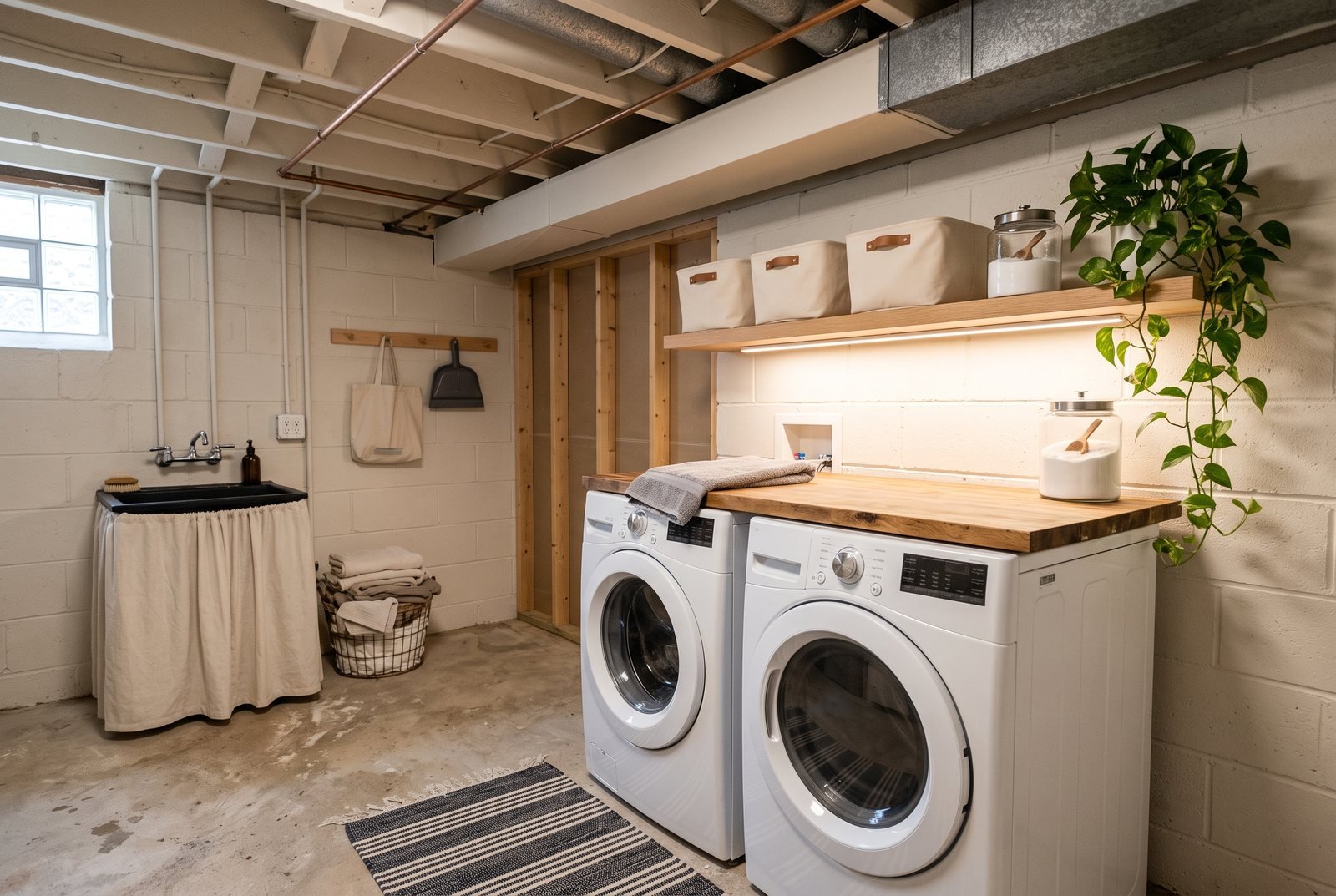
Concrete block takes paint well, and painting it directly is both the cheapest option and usually the right one. A masonry primer followed by two coats of a light satin wall paint covers the grey, brightens the room, and leaves the block’s texture visible — which reads as honest rather than unfinished. Buy more paint than the square footage suggests, because block drinks it, and use a thick-nap roller so the mortar joints actually get covered instead of staying grey.
The reason to think twice about furring out and drywalling is moisture. A basement wall that passes damp through will trap it behind a stud wall, where you cannot see it and it has nowhere to dry. Paint plus a dehumidifier handles that situation better, because everything stays visible. Run the plastic-sheet test from the flooring section on a wall as well as the floor — if moisture beads behind the plastic, that is a damp problem to solve first, not something to build over.
Free option: before buying anything, wash the block down with warm water and a stiff brush and let it dry fully. Dust and the chalky white bloom that masonry throws off both sit on the surface and read as grime. A lot of basement walls look considerably better clean — and they need to be clean before any paint goes on anyway.
Exposed Joists, Ducts and Pipes Overhead
The standard advice here is a drop ceiling, and for a laundry area we would usually argue against it. It costs real money, it takes several inches off a ceiling that is probably already low, and it hides the shutoff valves and cleanouts you want to reach in a hurry.
Painting the whole cavity a single color is the alternative, and it works better than it sounds. Joists, subfloor, ducts, pipes and wiring in one shade stop reading as separate pieces of clutter and start reading as one surface, and the eye travels straight past them. A white or pale warm grey keeps the room bright. A deep charcoal does the opposite — the ceiling recedes and the light stays down on the folding surface, which suits a working room. Either way, borrow or hire a sprayer if you can. Rolling a hundred joist faces by hand is the part people abandon halfway through.
Tip: mask sprinkler heads before you spray, and leave the gas shutoff tag, the water main label and anything written on the electrical panel unpainted and readable. They are the things someone needs at speed one day.
Free option: spend twenty minutes tidying what is already up there. Gather loose cable runs against a joist with the clips or ties you probably have in a drawer, and take down whatever has been stored on top of the ductwork. A tidy exposed ceiling looks deliberate. A messy one is what people usually mean when they say the basement feels grim.
Living With a Concrete Floor
You do not have to cover a slab to make it work. A clear or tinted concrete sealer costs less than any flooring, goes on with a roller in an afternoon, and does the two things that matter most down here: it stops the slab shedding fine grey dust over everything, and it makes spills wipeable instead of soaking in.
Leave the floor drain clear. It is a large part of why a basement is a sensible place for a washing machine, and covering it with tile, a mat or a storage bin is the kind of decision that gets expensive the first time a hose fitting lets go. Same thinking applies to leaving a few inches behind the machines so the hoses are not kinked against the wall.
Where you actually stand — in front of the machines, and at whatever you fold on — is worth something softer than bare slab. A rubber-backed washable runner or an anti-fatigue mat makes a real difference to a chore you do standing up, and both lift straight out when you need to see the floor underneath.
Free option: move whatever is currently living on the floor onto a shelf or into one corner, then sweep. A concrete floor you can see the edges of reads as a room. One with boxes drifting across it reads as storage that happens to contain a washing machine.
Making It Feel Like a Room Without Finishing One
The change that does the most in an unfinished basement is deciding where the laundry area ends. A basement is usually one large undivided space, so the laundry corner bleeds into the storage, the furnace and whatever else lives down there. Give it a boundary — a mat that marks the floor, one light that belongs to that corner rather than to the whole basement, and a defined surface to fold on — and it starts to feel like somewhere you go, instead of somewhere you pass through.
If you are renting, or the basement is shared, stay with the reversible things: the mat, a plug-in light, a freestanding shelf unit, a few containers. None of it needs permission, all of it leaves with you, and together it covers most of the difference anyway.
Weekend DIY Project Ideas for Your Laundry Room Makeover
One of the things I love most about a basement laundry room refresh is that the scale is manageable. Unlike a full kitchen renovation or a living room overhaul, most of these upgrades can genuinely be completed in a single weekend — sometimes a single Saturday afternoon.
Build a Folding Station Counter
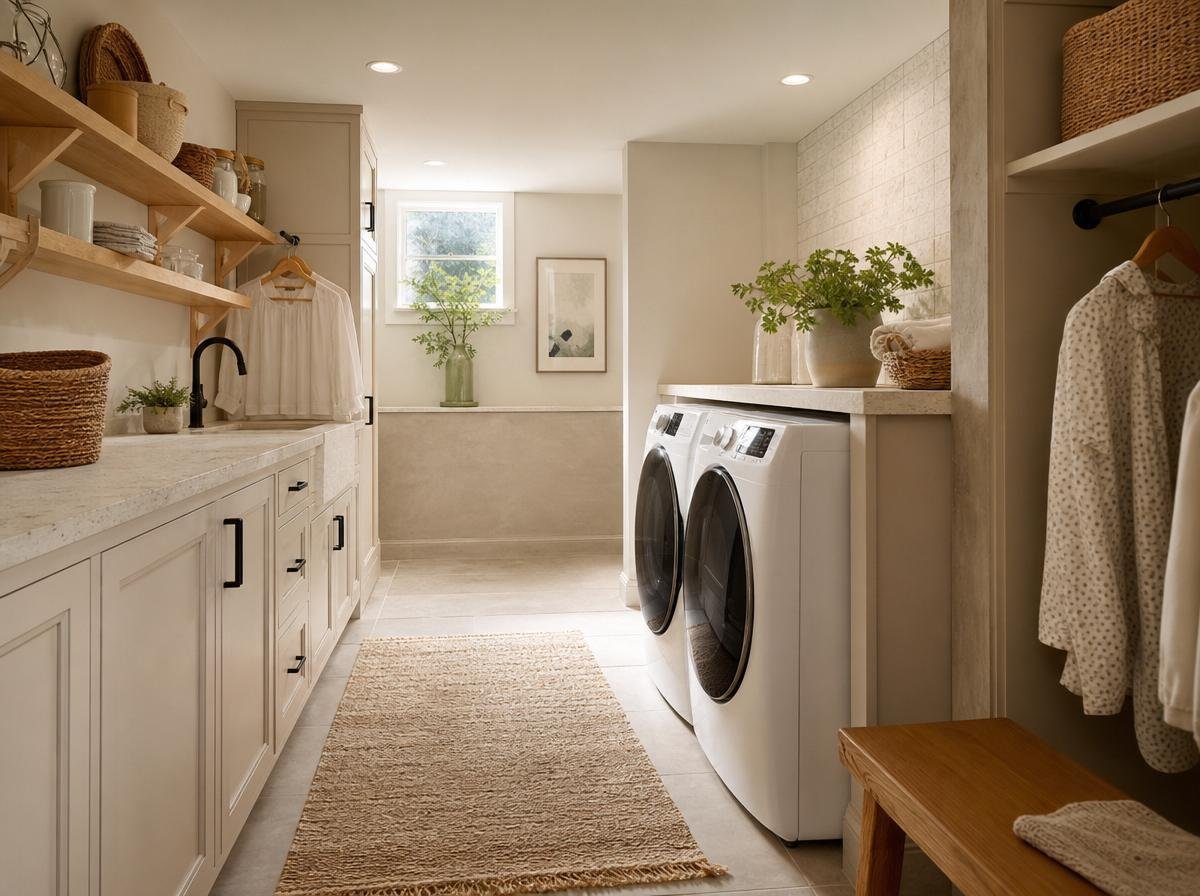
If your washer and dryer sit side by side, a simple butcher block or melamine panel cut to width and rested on top creates an instant folding station. Secure it with L-brackets underneath and you have a proper counter that makes laundry sorting feel less like a floor sport. Butcher block offcuts or remnant laminate countertop sections from hardware stores often cost $30–$80 for a short section.
This single upgrade — a real, defined surface for folding — changes the functional experience of the room more than almost any other single intervention.
Install a Hanging Rod or Drying Station
A ceiling-mounted or wall-mounted hanging rod for air-drying clothes or hanging items straight from the dryer is one of those solutions so obvious it’s easy to overlook. A simple tension rod between two walls, a ceiling-mounted pull-down drying rack, or even a length of galvanized pipe fitted with flanges makes a big practical difference for about $20–$50.
Add a Utility Sink Surround or Skirt
If you have an exposed utility sink, a simple wood frame or fabric skirt around the base instantly tidies the area and hides cleaning supplies or extra storage beneath. A gathered curtain panel on a tension rod takes about twenty minutes and costs almost nothing. For a more finished look, a simple plywood frame painted to match the walls adds structure without major construction.
Label Everything and Invest in Matching Containers
This one sounds almost too simple, but it’s remarkable how much visual noise a shelf full of mismatched detergent bottles and random boxes creates. Decanting supplies into clear or matching containers — glass jars, white dispensers, labeled bins — brings immediate visual calm. It’s the same principle behind why a simple inexpensive family room update like cohesive throw pillows changes the entire feeling of a space. Unity reads as intention.
Budget Breakdown: What a Basement Laundry Room Makeover Really Costs
Let’s talk numbers, because I know budgets are real and planning is everything. Here’s a realistic breakdown for three tiers of laundry room makeover, all DIY-executed.
| Project Element | Budget Tier ($200–$400) | Mid Tier ($400–$650) | Full Refresh ($650–$950) |
|---|---|---|---|
| Paint (walls + ceiling) | $30–$50 | $30–$50 | $50–$80 |
| Flooring | $40–$75 (peel-and-stick) | $80–$120 (vinyl plank) | $100–$180 (epoxy or LVP) |
| Lighting | $30–$60 (LED shop light) | $60–$100 (fixture + under-shelf) | $100–$200 (multiple sources) |
| Shelving and Storage | $40–$80 (floating shelves) | $80–$150 (shelving + bins) | $150–$300 (cabinets + shelving) |
| Folding Station / Accessories | $20–$50 | $50–$100 | $80–$150 |
| Estimated Total | $160–$315 | $300–$520 | $480–$910 |
The budget tier alone — paint, peel-and-stick tile, a new light fixture, and a couple of floating shelves — is genuinely enough to make the room feel dramatically different. You don’t need to do everything at once. Pick the two upgrades that will have the most impact on how you use and feel in the space, and start there.
Finishing Touches That Make It Feel Intentional
The difference between a “we fixed it up” utility room and a space that feels genuinely designed often comes down to the small moments — the details that signal care and intention without requiring a large investment.
Add a Small Rug or Runner
A washable cotton or rubber-backed runner in front of the machines adds warmth, color, and a layer of texture that immediately softens the utilitarian feel of the space. Keep it machine washable, obviously — and opt for a pattern or stripe that adds visual interest without overwhelming a small space.
Bring in a Small Plant or Two
Even in a low-light basement, certain plants thrive: pothos, snake plants, and ZZ plants all handle low light well and require minimal care. A single plant on a shelf adds life — literally — to a space that otherwise exists in pure function mode. It’s a small thing, but small things compound.
Wall Art or a Simple Print
A framed print, a vintage laundry sign, or even a piece of simple typography art on the wall signals that this is a considered space, not an afterthought. You don’t need to fill every wall — one or two thoughtful pieces are enough. If you’re curious about how to use art in unexpected spaces, our ideas for styling a gallery wall translate to any room in the house, including utilitarian ones.
A Hook Strip or Pegboard Wall
A simple row of hooks or a small section of pegboard near the door gives you a home for reusable shopping bags, lint rollers, and anything else that tends to drift onto flat surfaces. It’s the same philosophy that makes a no-renovation garage mudroom entry zone work so well — designated spots for everything eliminate the slow accumulation of clutter.
Frequently Asked Questions
What is the best paint color for a dark basement laundry room?
Warm whites and soft off-whites with a high LRV (75+) are typically the best choice for dark basement laundry rooms. Colors like Benjamin Moore White Dove, Sherwin-Williams Alabaster, or similar soft creams reflect the most artificial light while still feeling warm and livable rather than clinical. Pair with warm-toned LED bulbs for best results.
How do I make a basement laundry room feel bigger?
Use light, reflective paint on walls and ceiling, add mirrors to bounce light across the room, choose light-toned flooring, and keep shelving open rather than fully enclosed where possible. Vertical shelving draws the eye upward and makes ceilings feel higher. Our guide to low ceiling basement ideas has additional strategies worth exploring.
Is it worth finishing a basement laundry room?
Absolutely — even a semi-finish with paint, lighting, and basic storage makes the space meaningfully more pleasant to use and can add perceived value to your home. A full basement finish is a larger project, but even targeted laundry room upgrades deliver a high return on investment relative to their cost. You can explore the broader scope in our complete basement finishing guide.
What flooring is best for a basement laundry room?
Moisture-resistant options are essential. Peel-and-stick vinyl tiles, luxury vinyl plank (LVP), epoxy floor paint, or interlocking rubber tiles all handle the humidity and occasional splashes that come with a laundry environment. Avoid hardwood, laminate, or cork — all are vulnerable to moisture damage in a basement setting.
How much does it cost to renovate a basement laundry room on a DIY budget?
A meaningful DIY laundry room refresh can be accomplished for $200–$500 at the budget level, covering paint, peel-and-stick flooring, a new light fixture, and basic shelving. A more comprehensive update including cabinetry, epoxy flooring, and multiple lighting sources typically runs $600–$950. Most of the work can be done in one to two weekends.
Can I add a laundry room to an unfinished basement?
Yes, if you already have a washer and dryer in the basement utility area, the work involves finishing the surrounding space rather than adding new plumbing. Paint the concrete walls and ceiling, address the floor, add shelving and lighting, and the space goes from unfinished to functional and attractive. If you’re starting completely from scratch with plumbing, that’s a larger project requiring professional help.
What type of lighting works best in a windowless basement laundry room?
LED fixtures with a color temperature between 3000K and 3500K (warm white to neutral white) provide the most flattering and functional light in a windowless basement. Layer your sources — overhead for general illumination, under-shelf for task lighting, and consider a plug-in pendant for a warmer ambient layer. Avoid cold daylight bulbs (5000K+) which can feel harsh and institutional.
Your basement laundry room doesn’t have to be the part of your home you apologize for when people come over — or the space you rush through with your eyes down. With a weekend of focused effort and a realistic budget, it can become one of those rooms that quietly makes your everyday life better. Start with paint and light, build from there, and give yourself permission to make even a utility space feel like it belongs to you. That’s what intentional design is really about. If you’re looking for more ways to make every corner of your home work harder, browse through Design and Dwelling for project guides, styling ideas, and practical inspiration at every budget level.
If your basement laundry zone is also short on square footage, my full roundup of small laundry room ideas covers stacking, drying space that disappears, and budget-by-budget weekend plans.