
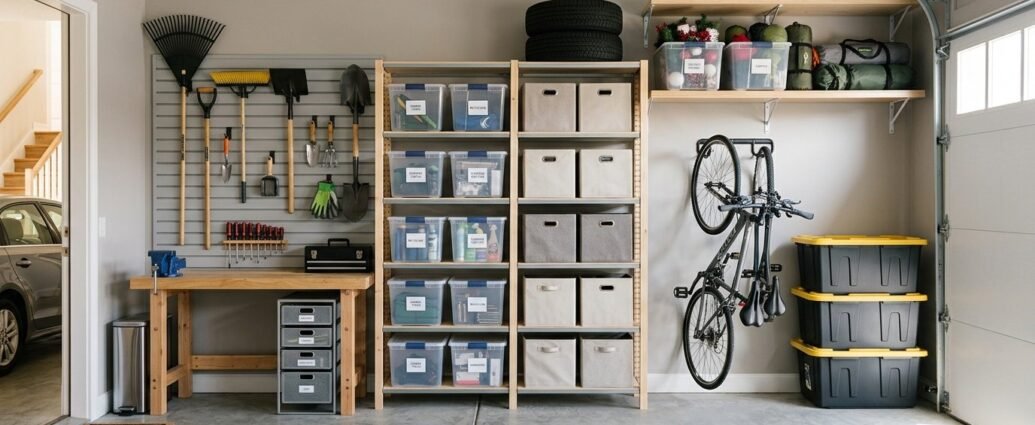
Do you ever open your garage door and immediately feel that familiar wave of dread — the kind that makes you close it again and pretend the chaos inside doesn’t exist? You’re not alone, and that feeling isn’t a reflection of who you are. It’s just a sign that this space has been working against you instead of for you.
In this guide, we’re going to walk through everything you need to know about garage organization ideas that actually stick — from mapping out functional zones to choosing the right wall systems, overhead racks, and cabinet solutions. Whether you have a weekend to spare or just a few hours here and there, you’ll leave with a clear plan and the confidence to finally transform that forgotten space.
Wall systems are where a lot of that plan lives or dies, so if you want to compare options before buying anything, we’ve put together a full breakdown of the best garage wall storage systems — slatwall, pegboard, track and cabinets — with honest notes on what each one costs and what it actually holds well.
Key Takeaways
- Zone planning is the foundation of any successful garage makeover — group items by use, not by habit.
- Wall storage systems dramatically increase usable space without eating into floor area.
- Overhead ceiling racks are ideal for bulky, infrequently accessed seasonal items.
- Cabinet solutions keep hazardous items secured and give your garage a finished, polished look.
- A simple two-day weekend project plan can take your garage from overwhelmed to organized.
- Before you buy a single shelf, do a full purge — decluttering is step one, always.
Why Your Garage Deserves a Real Design Plan
We tend to treat the garage as the home’s catch-all — the room where things go when we don’t know where else to put them. But when we start thinking of it as a functional extension of our living space, everything changes. A well-organized garage isn’t just tidy; it actively supports your lifestyle.
The True Cost of Garage Chaos
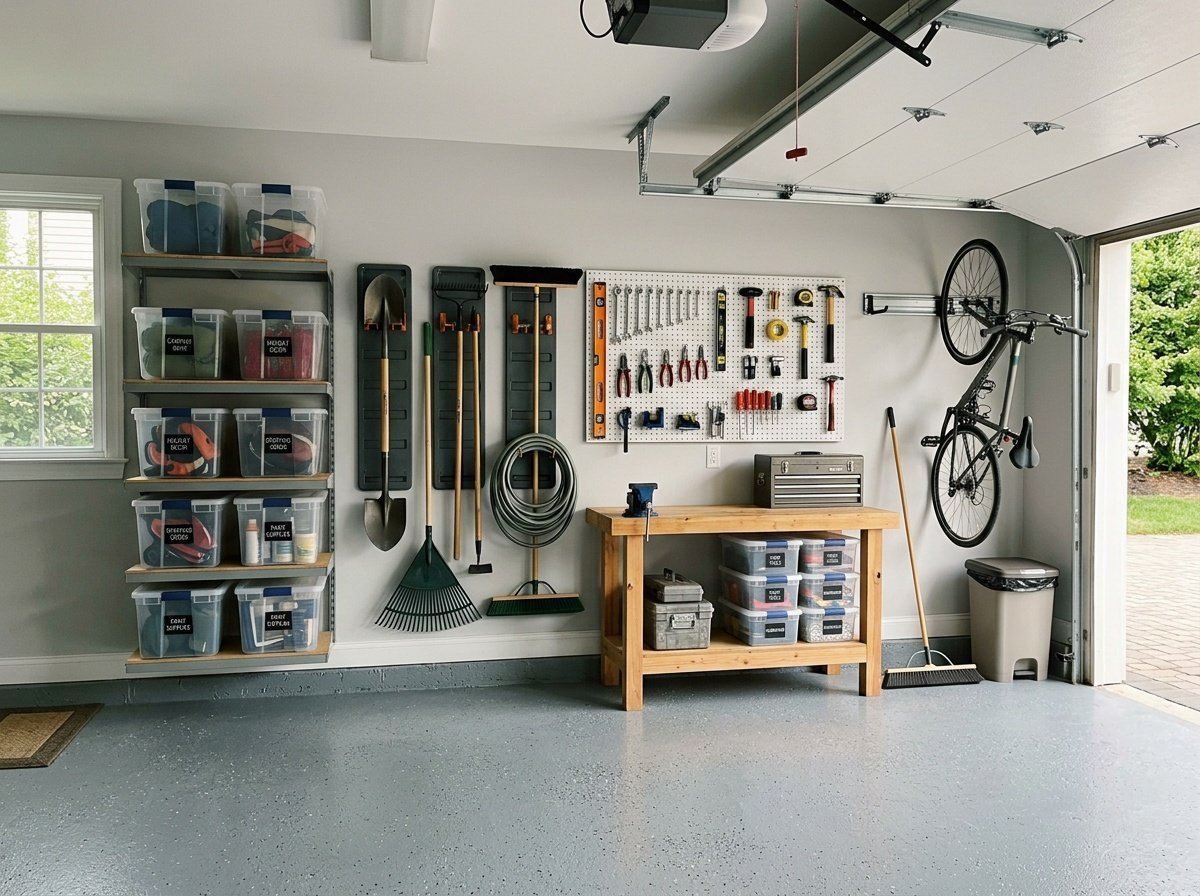
Beyond the visual stress, a disorganized garage costs you real time. Studies show the average person spends up to 10 minutes searching for a misplaced item in a cluttered space — multiply that across a year and you’ve lost entire days. When tools are buried under sports gear and seasonal bins are stacked in front of the car, frustration becomes a daily ritual.
The good news is that most garages have far more usable space than they appear to. The walls, the ceiling, and even the back of the door are all untapped real estate waiting to be claimed.
Setting Realistic Expectations
A garage organization project doesn’t have to happen all at once, and it doesn’t have to be expensive. Some of the most effective garage storage solutions cost under $50. The key is having a plan before you buy anything. Think about how you actually use the space — not how you wish you used it.
If your family plays soccer in the fall and skis in the winter, your storage needs are seasonal and require flexibility. If you’re a weekend woodworker, tool accessibility is your top priority. Knowing your lifestyle shapes every decision that follows.
Zone Planning: The Heart of How to Organize a Garage
If there’s one concept I come back to again and again in every organizational project — from closets to kitchens to garages — it’s zone planning. The idea is simple: group items by activity category and give each category its own dedicated area. When everything has a home, it actually goes back there.
The Four Core Garage Zones
For most households, a garage can be broken into four primary zones. You may not need all four, or you might need to add one specific to your family. Start here and adjust:
- Tools & Workshop: Hand tools, power tools, hardware, and workbench area. Ideally positioned near an outlet with good task lighting.
- Sports & Recreation: Bikes, balls, helmets, rackets, camping gear. Needs to be accessible, especially for kids. Wall hooks and freestanding racks work beautifully here.
- Seasonal Storage: Holiday decor, off-season clothing, garden supplies. These items are accessed infrequently, making them ideal for overhead storage or high shelves.
- Car Care: Motor oil, tire inflators, car wash supplies, jumper cables. Keep this zone near the vehicle for obvious convenience.
Once you identify your zones, sketch them onto a rough floor plan — even a napkin sketch works. This keeps your shopping and installation intentional rather than reactive.
Mapping Your Space Before Anything Else
Measure your garage walls, note where the door swings, and mark any outlets or water spigots. These architectural details determine where each zone lives. A tool zone near an outlet is practical. Seasonal storage near the back wall or ceiling makes sense. Car care near the garage door keeps things logical.
This step also helps you calculate how much shelving, how many hooks, and what size cabinet you’ll need — saving you from the maddening cycle of buying the wrong thing and returning it twice.
Wall Storage Systems That Do the Heavy Lifting
Once your zones are mapped, your walls become your greatest asset. Vertical storage is a game-changer in any garage because it moves clutter off the floor and puts everything at eye level — which means you can actually find what you’re looking for. Let’s talk about the main systems worth considering.
Slatwall Panels
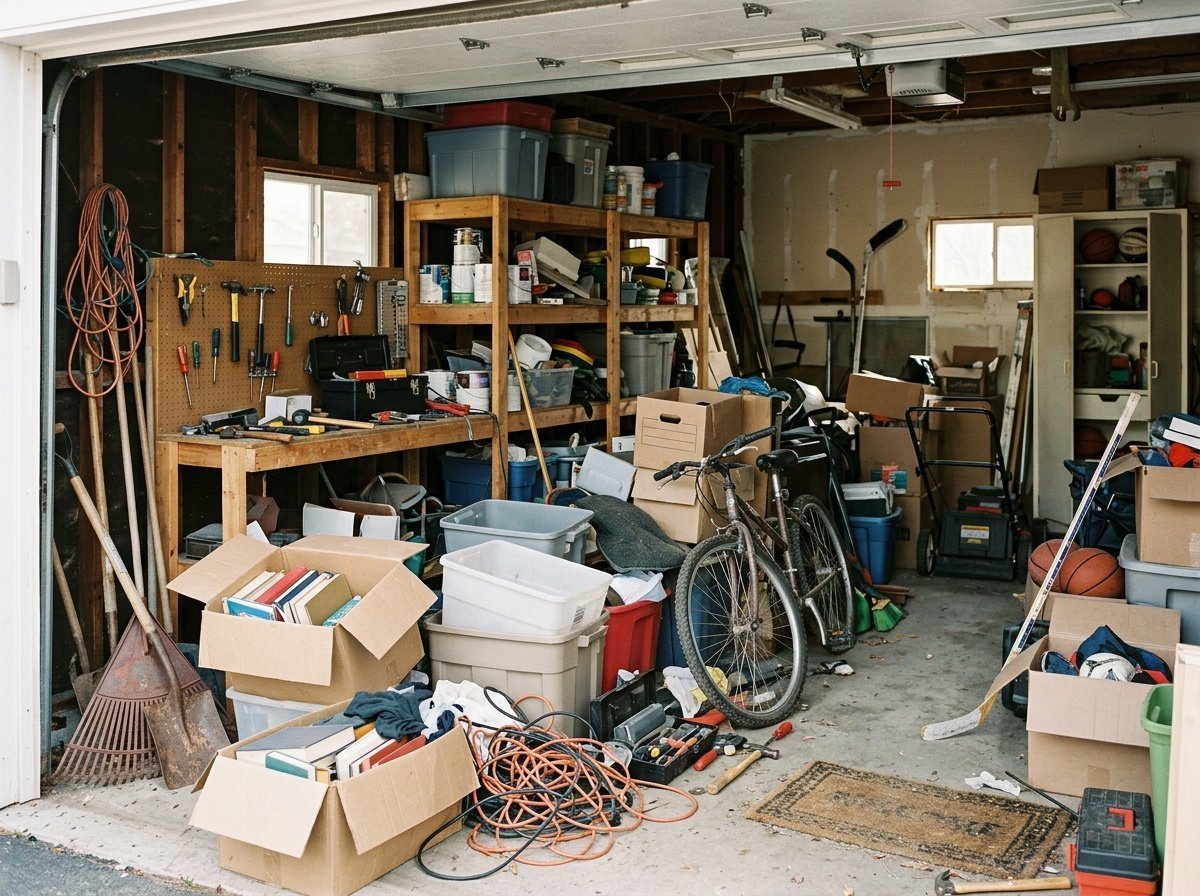
Slatwall is one of the most versatile wall storage options available. Panels install directly onto wall studs and accept a wide range of interchangeable hooks, bins, shelves, and baskets. The beauty of slatwall is its flexibility — rearrange your accessories as your storage needs evolve without patching a single hole.
It comes in PVC or MDF, with PVC being the more moisture-resistant choice for garages. A full wall of slatwall can run $150–$400 depending on size and brand, and it dramatically transforms the look of the space while doing serious functional work.
French Cleat Systems
If you love a DIY project, French cleats are the workshop world’s best-kept secret. You cut boards at a 45-degree angle and mount alternating strips on the wall and on custom tool holders — creating an infinitely configurable system that holds everything from hand saws to coffee mugs.
The upfront material cost is minimal (a sheet of plywood and some hardware), and the result looks intentional and crafted. This is especially popular in tool zones where customization matters most.
Pegboard Panels
The classic for good reason. Pegboard is affordable, widely available, and endlessly configurable with hooks and bins. It’s best suited for lighter tools — screwdrivers, pliers, paintbrushes — and works beautifully as an accent wall in the workshop zone.
Pair it with a coat of paint in a muted sage or charcoal and it goes from purely utilitarian to surprisingly stylish. Small upgrades like this are exactly what I talk about when I say a garage can feel like an intentional extension of your home rather than an afterthought.
Overhead Ceiling Racks for Seasonal and Bulky Items
One of the most underused areas in any garage is directly above your head. Overhead ceiling racks are the unsung heroes of garage storage — they get seasonal bins, camping gear, and rarely used equipment completely out of your daily workflow while keeping them accessible when needed.
Choosing the Right Ceiling Rack
Look for ceiling-mounted platforms that hang from adjustable straps and bolt into joists. Most hold between 250–600 lbs, which is more than enough for holiday bins and sleeping bags. Measure your ceiling height carefully — you’ll want at least 8 feet of clearance to use the system comfortably.
Brands like Fleximounts and Racor offer solid, affordable options in the $80–$200 range. For heavier loads or larger garages, a professional installation is worth considering for safety.
What Belongs on Ceiling Racks
Not everything should live overhead. Reserve this space for items you access less than a few times per year:
- Holiday decor bins (clearly labeled, please)
- Off-season gear like sleds, inflatables, or camping tents
- Spare lumber or large flat items
- Luggage and travel bags
Avoid storing anything heavy that requires frequent lifting above shoulder height — that’s a recipe for a strained back and a frustrating retrieval process.
Cabinet Solutions for a Clean, Finished Look
Garage cabinets are where function meets that satisfying sense of visual order. They conceal clutter, protect supplies from dust and moisture, and give the garage the kind of finished, intentional look that feels surprisingly close to a real room. And just like the inexpensive family room updates I often recommend, the right cabinet choice doesn’t have to break the budget.
Freestanding vs. Wall-Mounted Cabinets
| Type | Best For | Avg. Cost | Pros |
|---|---|---|---|
| Freestanding Metal Cabinets | Heavy tools, car care supplies | $100–$400 | Durable, portable, no installation |
| Wall-Mounted Cabinets | Keeping floors clear, hazardous items | $150–$600 | Space-efficient, lockable options available |
| Modular Cabinet Systems | Full garage makeovers | $500–$2,000+ | Fully customizable, high-end look |
| Repurposed Kitchen Cabinets | Budget-conscious projects | $0–$150 (secondhand) | Affordable, surprisingly stylish |
Locking Cabinets for Safety
If you have children, locking cabinets are non-negotiable for storing pesticides, motor fluids, power tool accessories, and any sharp implements. Wall-mounted locking cabinets keep these items at adult height and securely closed. It’s a small investment with an enormous peace-of-mind payoff.
The Weekend Project Plan: Your Two-Day Garage Makeover
Here’s where we make it real and actionable. A full garage makeover is absolutely achievable in a single weekend if you come prepared. I’ve walked clients through this process more times than I can count, and the key is front-loading the decision-making so Saturday morning you can hit the ground running.
“A garage transformation isn’t about buying the most expensive system — it’s about finally making a decision about where everything lives.”
Saturday: Purge, Sort, and Plan
- Empty everything out onto the driveway. Yes, everything. This is the only way to truly see what you have.
- Sort into four piles: Keep, Donate, Trash, and Relocate (items that don’t belong in the garage at all).
- Group your keeps by zone category — tools together, sports gear together, and so on.
- Sweep and clean the empty garage. Patch any wall damage and let everything dry before installing hardware.
- Install wall systems — slatwall, pegboard, or French cleats — while the floor is clear and you have full access.
Sunday: Install, Label, and Celebrate
- Mount ceiling racks first thing so you can store seasonal bins up high as you bring items back in.
- Position cabinets and load them with car care and hazardous supplies.
- Bring items back in zone by zone, hanging tools, loading bins, and arranging sports gear on hooks.
- Label everything. Bins, shelves, zones — labels are the secret weapon that keeps systems alive long-term.
- Step back. Take a photo. Feel genuinely proud of what you built.
Before and After: From Overwhelmed to Organized
Let me paint you a picture, because I think this is where most of us need the most encouragement. The typical “before” looks like this: a two-car garage that only fits one car because the other half is stacked floor to ceiling with mismatched bins, a broken exercise bike, three sets of golf clubs (for one person), and about six years’ worth of “I’ll deal with that later.” Sound familiar?
The Transformation
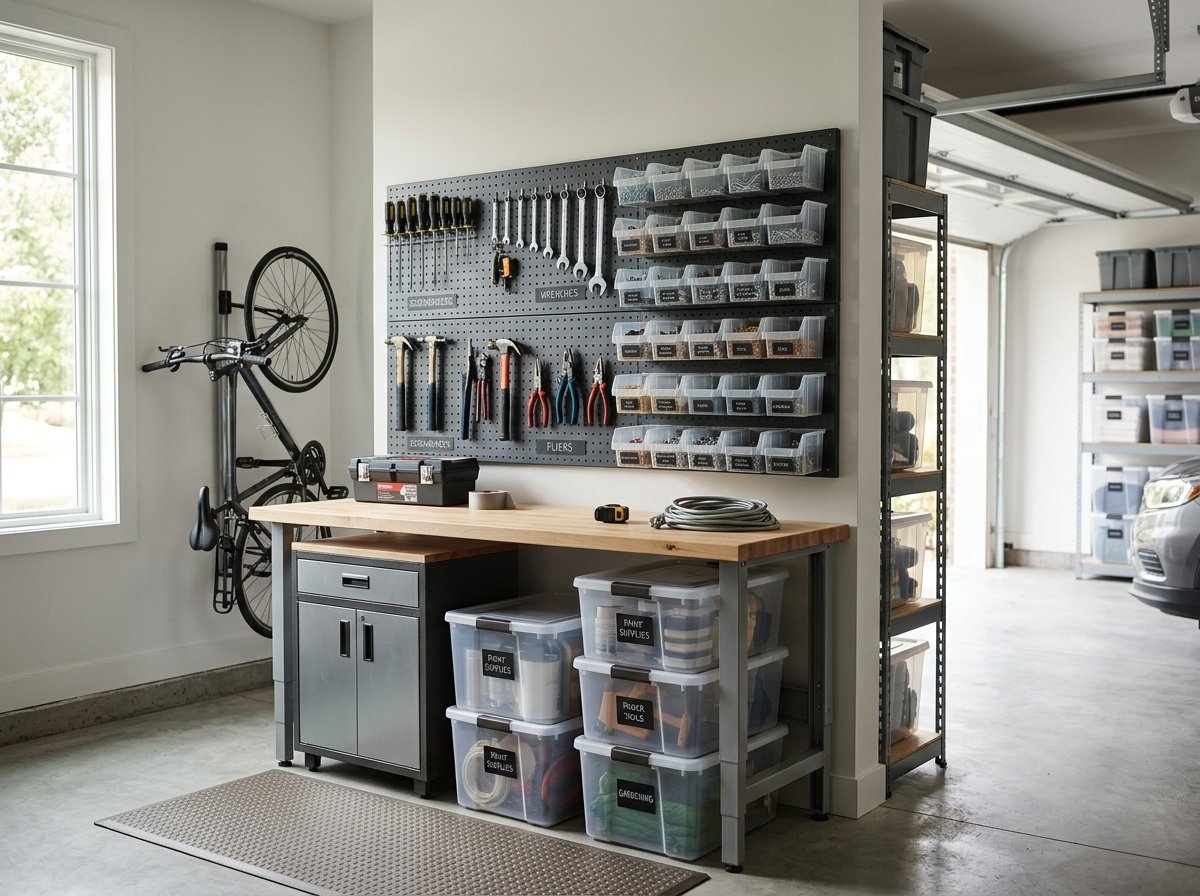
A garage like that changes completely on roughly $350 in materials — slatwall panels, a ceiling rack, two freestanding metal cabinets, and a set of labeled bins. Two cars fit comfortably again, there’s room for a dedicated workout corner with the (now repaired) bike, and a clean tool wall makes every Saturday project feel like a pleasure instead of a hunt. That’s a realistic outcome for one focused weekend, not a best-case fantasy.
The shift people describe afterward has less to do with the storage than with the relief. A garage that no longer has to be avoided stops producing that low-grade dread every time the door goes up. That’s the real power of an organized space — it doesn’t just look better, it feels better. It changes how you feel about coming home.
The Principles That Made It Work
No single product saved that garage. What saved it was the decision to stop treating it like a holding area and start treating it like a room with a purpose. Zone planning gave every item a home. Wall systems moved clutter vertical. Labels made the system self-maintaining. And a ruthless purge on day one meant there was simply less to manage. These principles work whether your budget is $100 or $1,000.
Budget-Friendly Swaps and Smart Shopping Tips
You don’t need a premium modular system to get an organized, beautiful-feeling garage. Some of the most satisfying transformations I’ve seen were built almost entirely from secondhand finds, DIY builds, and smart sourcing. The same philosophy I apply to budget-conscious home updates applies perfectly here.
Where to Save
- Repurposed kitchen cabinets from Facebook Marketplace or Habitat for Humanity ReStores are often $20–$50 each and look great in a garage.
- DIY French cleats cost a fraction of slatwall for a similar result if you’re comfortable with a saw.
- Clear bins from discount stores label beautifully and stack efficiently — no need for branded storage containers.
Where to Invest
- Quality ceiling racks — this is not the place to cut corners on load capacity.
- A solid workbench if you’re a frequent DIYer. It becomes the heart of your tool zone.
- Locking cabinets if children are in the home.
Frequently Asked Questions
How do I start organizing a garage when it feels completely overwhelming?
Start by pulling everything out onto the driveway — this single act forces you to make decisions about what stays and what goes. From there, sort into zones before putting anything back. Having a clear category system turns an overwhelming pile into a manageable sorting exercise. Give yourself permission to do it in stages if needed; even one completed zone feels like a win.
What is the most cost-effective garage storage solution for beginners?
A combination of pegboard (for tools) and heavy-duty freestanding wire shelves (for bins and gear) gives you the most storage per dollar. Both are available at any big-box hardware store for under $150 total. Add labeled clear bins and you have a genuinely functional system without spending on premium products.
How do I keep my garage organized after the initial cleanout?
The answer is almost always labels and zones. When every item has a designated spot and that spot is clearly marked, maintenance becomes automatic. Do a quick 15-minute reset every few months — especially after seasons change — to catch any drift before it becomes chaos again.
Are ceiling racks safe for a garage with low ceilings?
Most ceiling rack systems require a minimum of 8 feet of ceiling clearance to be practical and safe. If your ceiling is lower, wall-mounted shelving placed higher up (above 6 feet) can serve a similar purpose for seasonal items. Always bolt ceiling racks into joists — never just into drywall — and follow the manufacturer’s weight limits carefully.
What should I never store in a garage?
Avoid storing anything temperature-sensitive in an uninsulated garage — this includes wine, certain medications, canned food, and electronics. Propane tanks should be stored outside and away from the structure entirely. Important documents and photographs are also at risk in environments with humidity swings; keep those inside the home.
How do I organize a one-car garage with limited wall space?
Prioritize vertical storage — ceiling racks, tall freestanding shelving, and wall-mounted systems make the most of tight square footage. A single slatwall panel or pegboard section above the workbench can hold a surprising amount of tools. Zone planning becomes even more critical in a small garage, so every inch is used intentionally rather than accidentally.
Can I use regular household cabinets in my garage?
Yes, with some caveats. Wood cabinets work fine in insulated, climate-controlled garages but can warp or degrade in garages with significant humidity or temperature swings. If your garage is uninsulated, opt for metal or moisture-resistant materials. Repurposed kitchen cabinets are a popular and budget-friendly choice — just seal any exposed wood edges before installing.
Your garage has so much potential — I genuinely believe that. The fact that you’re here, reading this, means you’re already one step closer to the calm, functional space you’ve been imagining. Start with a zone plan, commit to the purge, and let the storage solutions follow the plan rather than drive it. And if part of you would rather the garage became a workspace than storage, I’ve compared a she shed versus a garage studio conversion on cost, timeline, and permits. If you’re looking for more inspiration on transforming the overlooked spaces in your home, the same thoughtful approach I use for interiors — like how I think about creating calming, intentional rooms — applies beautifully to a garage makeover too. You’ve got this. Go open that door. ☕


1 Comment