
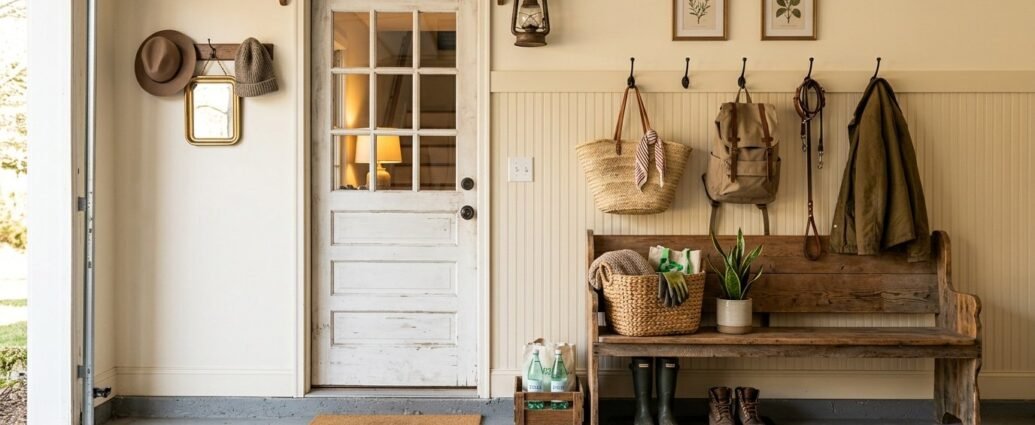
Do you ever walk through your garage door carrying groceries, a backpack, three water bottles, and a dog leash — only to dump everything in a pile on the floor because there’s simply nowhere else to put it? That chaotic entry moment is something so many of us live with daily, quietly convinced that a real solution requires a full renovation or a brand-new house.
The good news is, a hardworking, beautiful mudroom in garage entry zones is absolutely achievable without tearing out drywall or calling a contractor. In this post, we’re going to walk through practical, budget-friendly garage mudroom ideas that bring real order to your daily comings and goings — whether you’re working with a tight single-car garage or a generous two-car setup with room to dream.
Key Takeaways
- A garage mudroom can be created without major renovation using modular furniture and smart wall systems.
- Built-in-style cubbies, bench seating with storage, and hook rails are the foundation of any functional entry zone.
- Small-space solutions like slim shoe racks and floating shelves work well in single-car garages.
- Larger two-car garages can accommodate a dedicated mudroom wall with a utility sink for real laundry-room functionality.
- Cohesive finishes and simple styling elevate the look without a luxury price tag.
Why the Garage Entry Zone Deserves More Attention
The garage entry is one of the most-used thresholds in your entire home — often more than your front door. Yet it’s routinely treated as a catch-all afterthought, collecting everything from muddy cleats to Amazon packages. When we give this zone a real design intention, the payoff reaches every room in the house.
The Hidden Cost of a Chaotic Entry
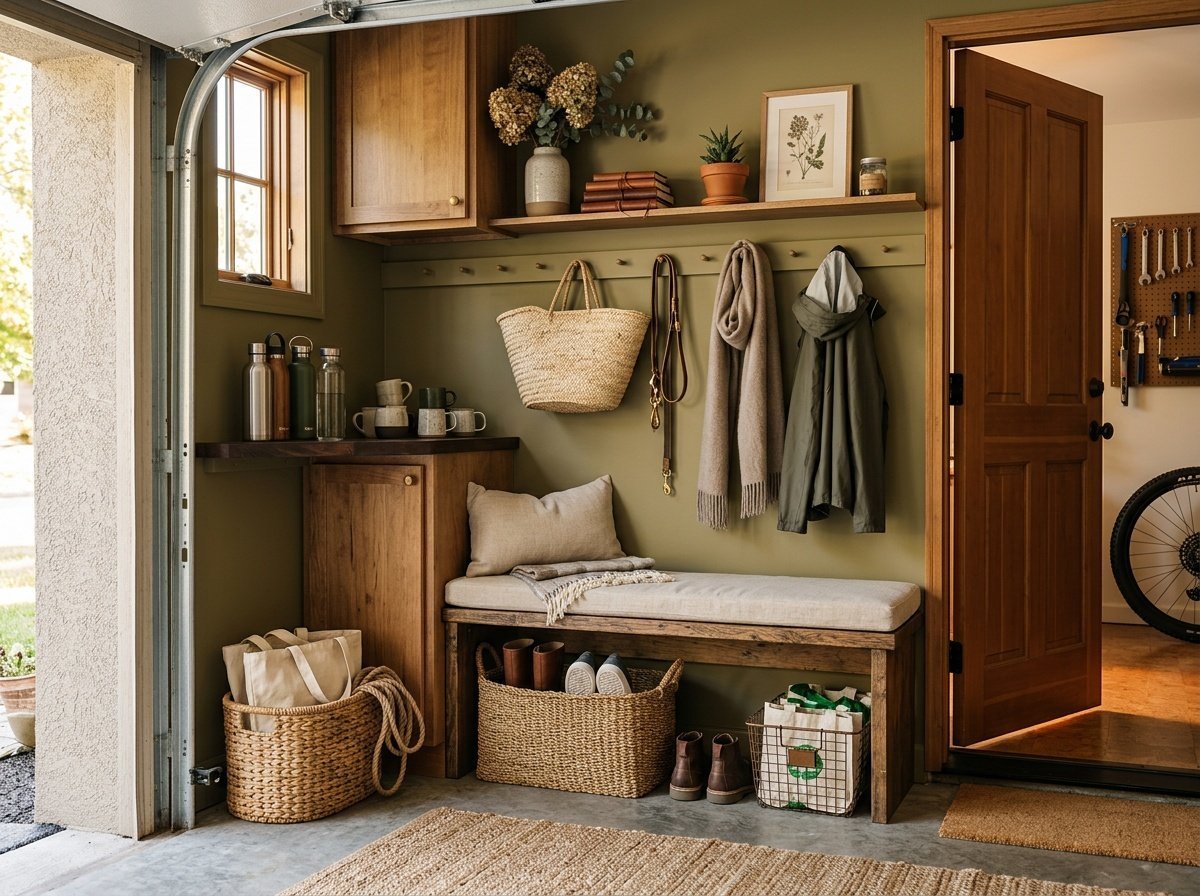
An unorganized garage entry doesn’t just look messy — it costs you time every single morning. Lost keys, wet shoes tracked inside, and misplaced sports gear add up to a low-grade daily stress that quietly drains your energy. A purposeful garage entry organization system eliminates that friction entirely.
Think of it this way: the five minutes you spend hunting for your gym bag before work is five minutes you could have spent on something that actually matters. Organization at the door is a form of self-care most people never consider.
Mudroom Functionality Without a Dedicated Room
A traditional mudroom is a dedicated room between the exterior and the living space. But the garage entry wall can serve that exact purpose functionally — a drop zone, a coat station, a shoe depot — without requiring a single square foot of additional floor space inside your home.
The key is designing vertically and intentionally. We’re going to treat the wall adjacent to your garage-to-house door like prime real estate, because that’s exactly what it is.
Garage Mudroom Ideas: Starting With the Right Layout
Before buying a single hook or shelf bracket, it helps to think through your entry zone’s specific constraints and habits. Layout planning is where most DIY mudrooms go wrong — people add pieces without a cohesive plan and end up with a wall that looks cluttered rather than curated.
Mapping Your Wall Space
Measure the wall beside your interior door carefully, noting any light switches, outlets, or obstructions. Even a 4-foot section of wall can hold a meaningful mudroom setup if it’s organized thoughtfully. Sketch out your zones: hooks up top, bench in the middle, shoes and storage at the bottom — the classic tri-zone layout that garage organization fundamentals consistently point back to.
If you have a corner near the door, even better. An L-shaped arrangement dramatically increases your storage capacity while keeping everything within arm’s reach as you walk in.
Understanding Your Family’s Actual Habits
The most beautiful mudroom in the world will fail if it doesn’t match how your family actually moves. Ask yourself: do the kids drop bags or hang them? Do shoes come off immediately or at the back door? Does sports gear need its own dedicated space? Designing around real behavior rather than aspirational behavior is the secret to a system that sticks.
I always recommend spending a week taking a mental inventory before committing to any layout. Watch where things land naturally. Then design the storage to meet those habits halfway.
Built-In Cubbies: The Backbone of Garage Cubby Storage
Garage cubby storage is arguably the single most impactful upgrade you can make to a garage entry zone. Cubbies give each family member a personal, dedicated space — and when everyone has their own zone, accountability for keeping it tidy actually increases.
DIY Built-In Look Without the Built-In Price
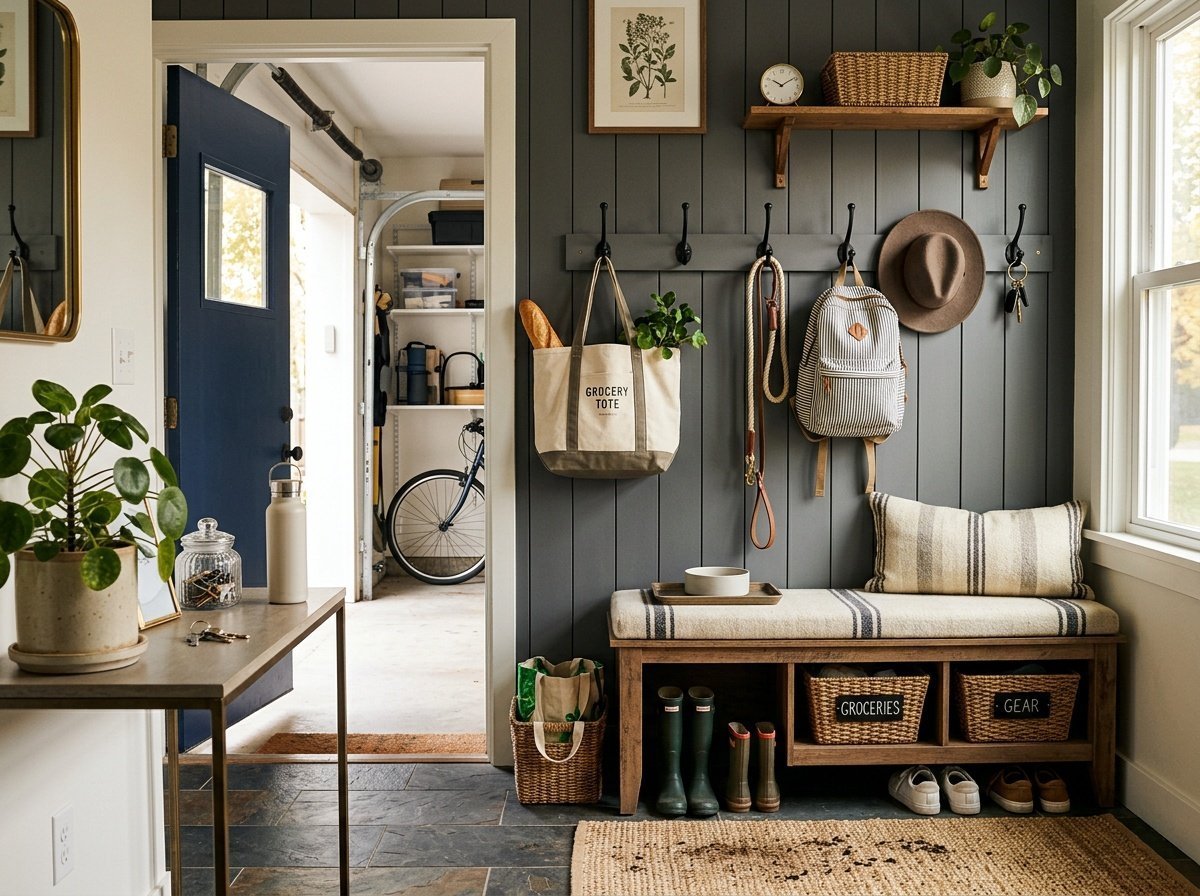
You don’t need a carpenter to achieve a built-in aesthetic. Modular cube storage units from IKEA, Target, or Home Depot can be anchored to the wall, painted to match your trim color, and topped with a plywood cap to look completely custom. Add face-frame molding at the front edges and you’ll have guests wondering who built your mudroom.
For a cohesive finish, paint the entire unit — cubbies and back panels — in a single warm white or soft greige. It reads as intentional rather than assembled, which makes all the difference visually.
How Many Cubbies Do You Actually Need
A good rule of thumb is one cubby per regular household member, plus one overflow cubby for guests and seasonal items. Each cubby should be wide enough to hold a backpack comfortably (at least 14–16 inches) and tall enough for a helmet or tote bag on top of folded items below.
- Single adult or couple: 2–3 cubbies total
- Family of four: 4–5 cubbies (include one for shared gear)
- Active family with sports gear: 5–6 cubbies plus dedicated wall hooks above
Adding Doors or Baskets to Cubbies
Open cubbies are accessible but can look busy if life gets hectic. Adding rattan or wicker baskets to the lower cubbies hides the visual noise while keeping things easy to grab. For upper cubbies, consider simple fabric bins in a neutral linen or canvas — they soften the space beautifully and add that layered, lived-in quality I love in organic modern interiors.
Cabinet doors are another option for a cleaner look, though they do add cost and require more precise installation. If you go that route, matte black hardware ties the whole unit into the garage’s more utilitarian aesthetic without feeling out of place.
Bench Seating With Storage: Form Meets Function
A mudroom bench is one of those pieces that seems simple until you have one — and then you can’t imagine life without it. It’s where you sit to pull off boots, where the toddler perches while you buckle tiny shoes, and where bags get dropped before being sorted into cubbies.
Choosing the Right Bench Style
For garage mudrooms, durability is non-negotiable. Look for benches with a solid wood or MDF construction rated for at least 300 lbs, with a sealed or painted finish that can handle wet gear and muddy hands. Upholstered benches look gorgeous but require either outdoor-grade fabric or the willingness to replace cushions every few years.
A flip-top storage bench — where the seat lifts to reveal a compartment inside — is my top recommendation for smaller garage entries. It handles seating and storage in a single footprint, which is invaluable in a tight space.
Building a DIY Storage Bench
If you enjoy a straightforward weekend project, building a simple storage bench from 2x4s and plywood is very achievable. The basic box form takes a single afternoon, and finishing it with paint and simple hardware elevates it completely. Pair this project with similar inexpensive home updates for a whole-house refresh that doesn’t break your budget.
Top the bench with a removable cushion covered in a wipeable indoor-outdoor fabric — something in a warm stripe or a subtle grid pattern adds visual interest while standing up to daily use.
Hook Rails and Wall Systems: Vertical Storage Done Right
Never underestimate a great hook. The right hook rail, mounted at the right height, solves more organizational problems than almost any other garage mudroom element. But hook placement and style matter more than most people realize.
Choosing the Right Hook System
Wall-mounted rail systems with interchangeable hooks, bins, and shelves — think IKEA SKÅDIS, Wall Control metal pegboard, or simple shaker peg rails — offer maximum flexibility as your needs change. For a warmer, more organic aesthetic, a painted wood shaker rail with simple brass or matte black hooks reads as intentionally designed rather than purely functional.
Mount your main coat and bag hooks at adult shoulder height (approximately 60–66 inches from the floor) and add a second lower row at 36–42 inches for kids’ backpacks and shorter family members. This small adjustment means everyone can actually use the system independently.
Specialty Hooks for Specific Needs
Not all hooks are created equal. Consider these specialty options based on your family’s gear:
- Double hooks: Ideal for layering a jacket over a bag in the same slot
- Bike hooks: Wall-mounted or ceiling-mounted for keeping bikes off the garage floor
- Leash and collar hooks: Small hooks at the door with a ledge for treats — a dog owner’s dream
- Sports equipment S-hooks: For helmets, rackets, and backpacks with loops
Shoe Racks and Footwear Storage Solutions
Shoes are the number one source of garage entry chaos for most families. Without a designated shoe system, they spread across the floor like a slow-motion avalanche. The right shoe storage transforms this completely — and it doesn’t have to consume half your garage.
Mudroom Shoe Rack Options by Space
| Solution | Best For | Space Required | Approx. Cost |
|---|---|---|---|
| Slim tiered shoe rack | Single-car garages, 1-2 people | 12–18″ deep | $25–$60 |
| Under-bench shoe cubbies | Families with bench seating | Under bench depth | $40–$100 |
| Built-in shoe cabinet | Two-car garages, larger families | 16–20″ deep | $150–$400+ |
| Wall-mounted angled shoe shelves | Space-saving, modern aesthetic | 6–8″ projection | $50–$120 |
| Deep boot tray with gravel | Wet climates, muddy households | Floor space only | $20–$45 |
Keeping Seasonal Footwear Under Control
Rotate seasonal shoes into labeled bins stored on higher garage shelving — winter boots during summer, sandals during winter. Only keep the current season’s footwear in your active mudroom zone. This one habit alone cuts shoe clutter by half for most families and is the kind of small system that genuinely changes daily life.
“A mudroom doesn’t have to be a room — it just has to be intentional. Even three feet of thoughtfully designed wall space can transform how your whole household moves.”
Adding a Small Utility Sink to Your Garage Mudroom
A utility sink in the garage mudroom zone is a true game-changer — especially for households with kids, pets, gardeners, or anyone who comes home with genuinely dirty hands. It keeps the mess out of your kitchen and bathrooms, and it makes the garage entry feel like a fully functional working zone rather than just a storage wall.
When a Utility Sink Makes Sense
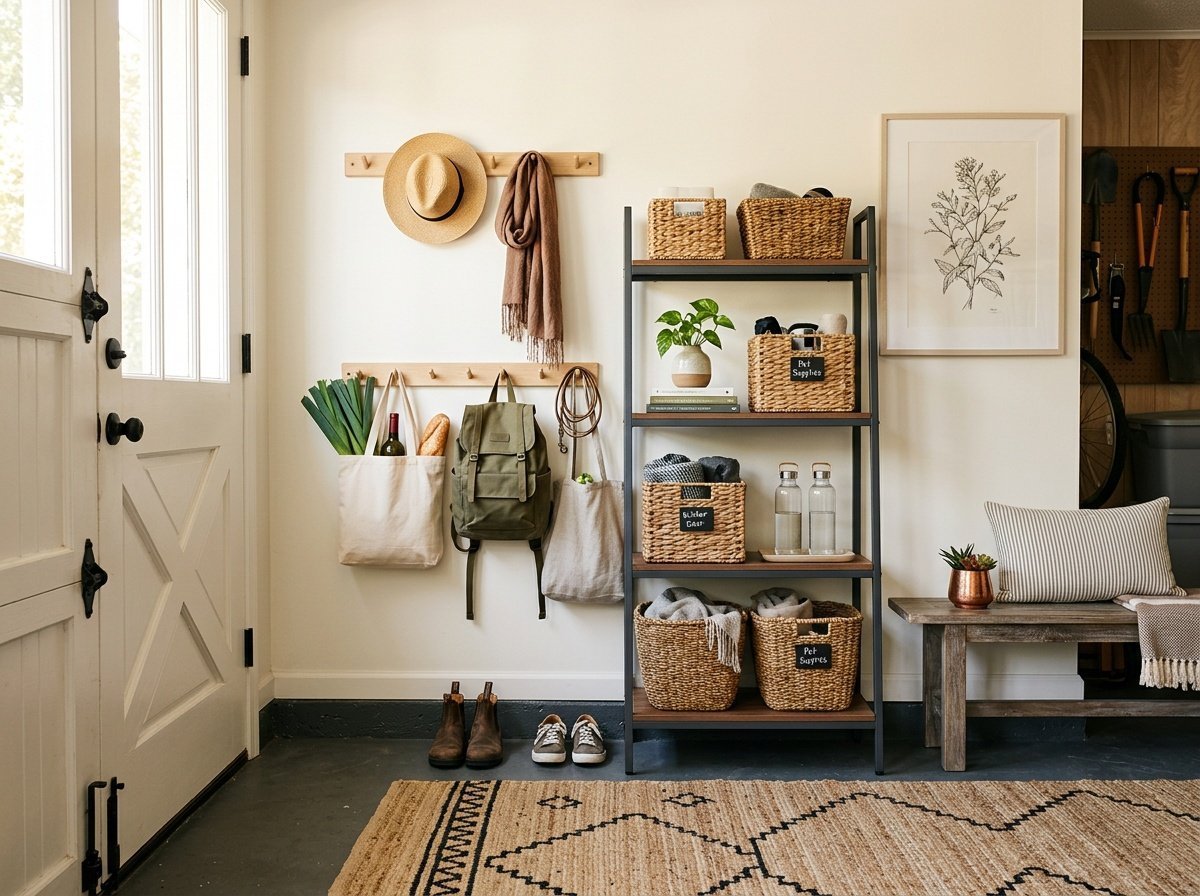
If your garage already has a water supply line nearby, adding a utility sink is a surprisingly manageable plumbing project for an experienced DIYer or a single-day job for a plumber. It makes the most sense in two-car garages with a dedicated mudroom wall, where there’s room to incorporate the sink into the overall cabinetry design without it feeling tacked on.
For smaller single-car garages, a utility sink can still work if mounted on a side wall — even a compact 18-inch laundry tub takes up minimal space and delivers enormous functionality. Look for models with built-in side ledges or mounting options for a soap dispenser and small brush.
Styling Your Utility Sink for a Finished Look
Utility sinks don’t have to look industrial and sterile. A freestanding laundry tub in matte white or dark slate, paired with a simple gooseneck faucet in matte black, looks intentional and elevated. Add open shelving above for cleaning supplies in matching canisters, and use a simple cotton curtain below the sink to hide plumbing while adding a soft textile moment.
The goal is to make it feel like a deliberate design choice rather than an afterthought — much like how thoughtful finishing details in spaces like well-designed basement entries can completely shift the feel of a utilitarian space.
Small vs. Large Garage: Mudroom Ideas for Every Space
The approach to a garage mudroom shifts meaningfully depending on how much square footage you’re working with. Let’s look at both scenarios honestly, so you can calibrate expectations and design for your actual space rather than someone else’s.
Single-Car Garage Mudroom Solutions
In a single-car garage, every inch of wall space near the entry door is precious. Prioritize a slim floating bench (16 inches deep maximum), a two-row hook rail above it, and wall-mounted angled shoe shelves that project only 6–8 inches from the wall. Skip the freestanding furniture — it eats floor space and makes the entry feel cramped.
A compact wall-mounted drop zone shelf with hooks below and a small basket above can replace a full cubby unit when space is truly tight. Think vertically, keep the palette simple, and resist the urge to over-stock the space. Edit ruthlessly — a small mudroom that’s easy to maintain beats an elaborate one that’s always messy.
Two-Car Garage: Designing a Dedicated Mudroom Wall
A two-car garage offers the opportunity to design a true dedicated mudroom wall — typically 8–12 feet wide — with full cubby units, a generous bench, a utility sink station, and even a small shelf for a potted plant or a battery-charging station. This is where you can bring in design details that make the space genuinely beautiful: shiplap paneling on the back wall, pendant lighting over the bench, warm wood accents mixed with painted cabinetry.
If you have this much space to work with, I’d encourage you to also consider the ceiling. Adding simple utility track lighting or even a small pendant over the bench zone makes the mudroom feel intentional from the moment you enter the garage. Good lighting is one of those inexpensive updates that genuinely transforms a space in ways no amount of furniture can replicate.
Finishing Touches That Elevate Your Mudroom Design Ideas
Once the functional bones are in place, the finishing layer is what takes a garage mudroom from organized to genuinely beautiful. These details are small in effort but significant in impact — the difference between a wall of storage and a space you actually enjoy walking into.
Paint and Paneling
Paint the mudroom wall (and the cubby unit, if you have one) in a coordinating color that bridges the interior of your home with the utility feel of the garage. Warm whites, soft greiges, and muted sage greens all work beautifully. Adding a simple shiplap or v-groove panel treatment to the lower third of the wall grounds the space and adds architectural interest without requiring significant work.
Small Styling Moments That Matter
Don’t underestimate the power of a single potted plant, a simple mirror above the bench, or a small wall calendar near the door. These human touches signal that the space was designed with care, not just assembled for function. A mirror near the exit is genuinely practical — it’s where you catch yourself before heading out — and it makes even a compact entry feel more spacious and considered.
A small chalkboard or whiteboard for notes, a hook for an umbrella, a charging cable tucked into a small wall-mounted box for your phone — these micro-details are what transform a storage wall into a living system that supports your daily life with quiet efficiency.
Frequently Asked Questions
Can I create a garage mudroom without any construction or major renovation?
Absolutely. Most of the garage mudroom elements covered in this post — modular cubbies, freestanding benches, wall-mounted hook rails, and shoe racks — require only basic tools and wall anchors. The goal is to use smart, modular systems that deliver a built-in look without the built-in cost or commitment. Even a half-day weekend project can produce a meaningful transformation.
What are the most essential elements of a functional mudroom in the garage?
If you can only do a few things, prioritize a bench (for sitting while removing shoes), hooks at two heights (for adults and kids), and a dedicated shoe storage solution. These three elements address the most common entry chaos points for most households. Everything else — cubbies, a utility sink, paneling — layers on top of this functional core.
How do I design a garage mudroom in a small single-car garage?
Focus on vertical storage and slim-profile furniture. A wall-mounted bench 16 inches deep, a double-row shaker peg rail, and wall-mounted angled shoe shelves give you full mudroom functionality without consuming floor space. Keep the color palette light and cohesive to make the compact zone feel intentional rather than cramped.
What should I consider before adding a utility sink to my garage mudroom?
First, check whether your garage has an existing water supply line and drain access nearby — this dramatically affects cost and complexity. If plumbing needs to be extended, factor in a plumber’s estimate before committing. Also consider how often you’d realistically use the sink: for households with kids, pets, or gardeners, it’s almost always worth the investment.
How do I keep a garage mudroom looking organized long-term?
Design the system to match your family’s actual habits from the start — assign specific hooks and cubbies to specific people, and rotate seasonal items to higher storage so active zones stay clear. A quick weekly reset (five minutes, nothing more) keeps things from devolving. The simpler the system, the more sustainable it is over time.
What’s the best flooring for a garage mudroom entry zone?
Sealed concrete is the most practical and durable option if your garage floor is already concrete — just add a large rubberized or indoor-outdoor rug under the bench for warmth and comfort. Interlocking rubber or foam tiles are another excellent option: they’re affordable, easy to install without adhesive, and provide cushioning underfoot. Avoid anything that traps moisture, like thick area rugs without a rubberized back.
How much does a garage mudroom makeover typically cost?
A DIY garage mudroom using modular furniture and basic hardware typically runs $200–$600 for most families, depending on the number of cubbies and the bench style chosen. A more elevated version with custom-look cabinetry, a utility sink, and decorative paneling can reach $800–$2,000+, still far below a full renovation. The biggest cost drivers are the bench, the cubby unit, and any plumbing work for a sink.
Designing a hardworking, beautiful garage entry zone is one of those home projects with one of the highest daily payoff-to-effort ratios you’ll find. You don’t need a big budget, a contractor, or a two-car garage to make it happen — you just need a clear plan and the intention to treat that entry wall with the respect it deserves. Start with the essentials, layer in the details over time, and watch how much calmer your whole household feels every time you come home. If you’re ready to keep the momentum going throughout your home, I’d love for you to explore more design ideas here on Design and Dwelling — because every room in your home deserves to feel this good. ☕


1 Comment