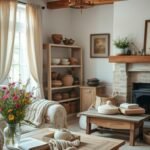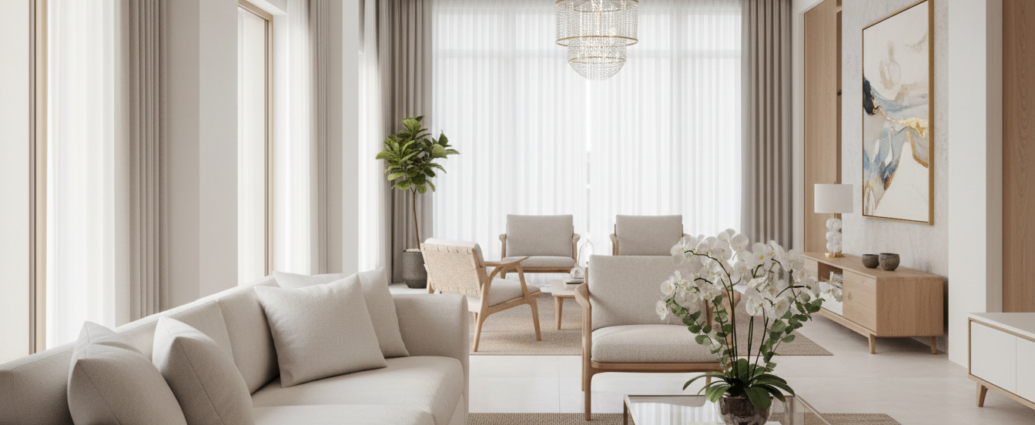
There is a version of a pared-back room that feels calm, and a version that feels like a waiting room. The difference is rarely how much came out. It is what was left in, and how good it is.
That is what we are looking at today: a home that reads as quiet without reading as empty. You get the ease of a simplified space alongside the texture and weight of materials you actually want to touch.
We think your interior should be both good-looking and genuinely livable, and that this is not a choice between simplicity and richness. Below we walk through how intentional choices and a focus on quality change the feel of a design — and what to do at every budget, including no budget at all.
Whether you are starting from scratch or just reworking one corner, this guide is the roadmap. For more inspiration, have a look at these living room ideas that balance the two.
Exploring Minimalism and Luxury in Interior Design
Looking at modern interiors, it is clear we have landed on a middle ground between restraint and abundance. That balance did not happen overnight — it is the result of decades of design history.
The Evolution of Minimalist Design and Its Influence
Minimalism took hold as a named movement in the 1960s and 70s, drawing on the earlier modernists — Ludwig Mies van der Rohe and his clean lines above all — and later on the concrete-and-daylight work of Tadao Ando.
This interior design movement was in part a reaction against heavily decorated periods like Baroque and Rococo. It offered a calm, intentional way of living that a lot of people found freeing.
Contemporary Trends from Global Design Hubs
By the 2010s, designers like Jonathan Adler had pushed maximalism back to the forefront — rich, personality-filled rooms that felt lived in rather than staged.
Today’s design hubs in New York, Dubai and Milan borrow from both. They build rooms with the calm sense of minimalism and the warmth of richer materials, and the two turn out not to be in conflict.
You do not have to pick a side between simplicity and opulence. What minimalism taught us about intentional living still applies; it just leaves room for a few things chosen because you love them.
Understanding the Core Principles of Minimalism
The useful part of minimalist design is that it creates order through intentional choices. Before adding anything richer, it helps to have these foundations in place.
Simplicity, Clean Lines, and Decluttering
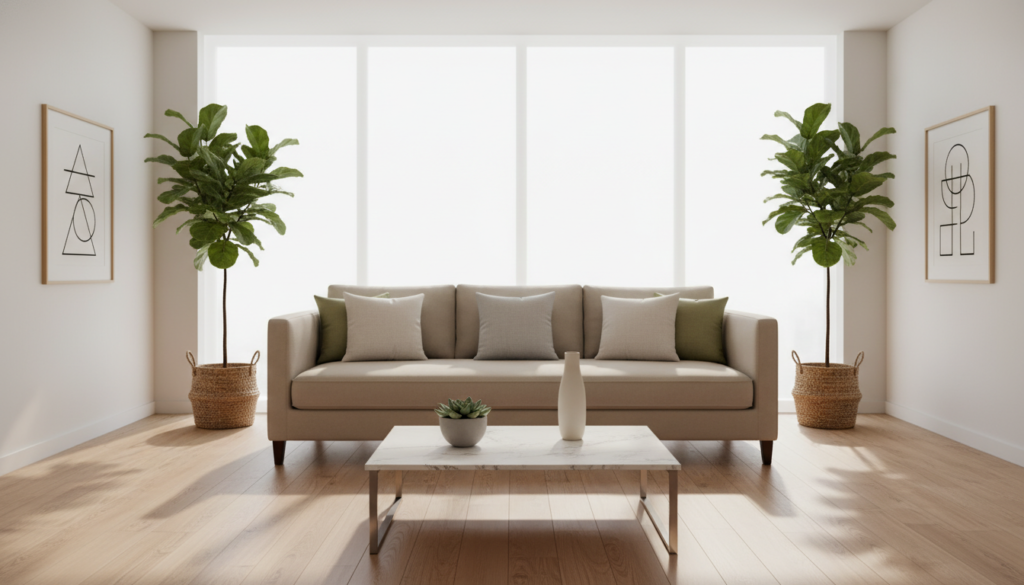
At its core this approach is about simplicity. Each item in the room should do a job or genuinely please you. Clearing the excess clutter makes room for whatever is left.
Clean lines do the visual work. Straight edges and simple geometry in your furniture give you a calm aesthetic that holds up over time.
Your eye gets somewhere to rest once the visual noise is gone. That is most of what makes a simple room feel restful rather than bare.
Functionality and the Use of a Neutral Color Palette
Function is not optional here. Each piece earns its place by being used. That is also the most space-efficient way to furnish a small space.
A neutral color palette gives you a canvas. Whites, soft grays and warm earth tones settle a room down and let everything else read clearly.
Purposeful functionality plus a calm color palette is a foundation that lasts, and it costs nothing but decisions.
Minimalism Meets Opulence: Designing Clean Spaces with Rich Details
This is the interesting part — adding richness without losing the calm you just built. It is a question of choosing few things well.
Choosing High-Quality Materials and Statement Pieces
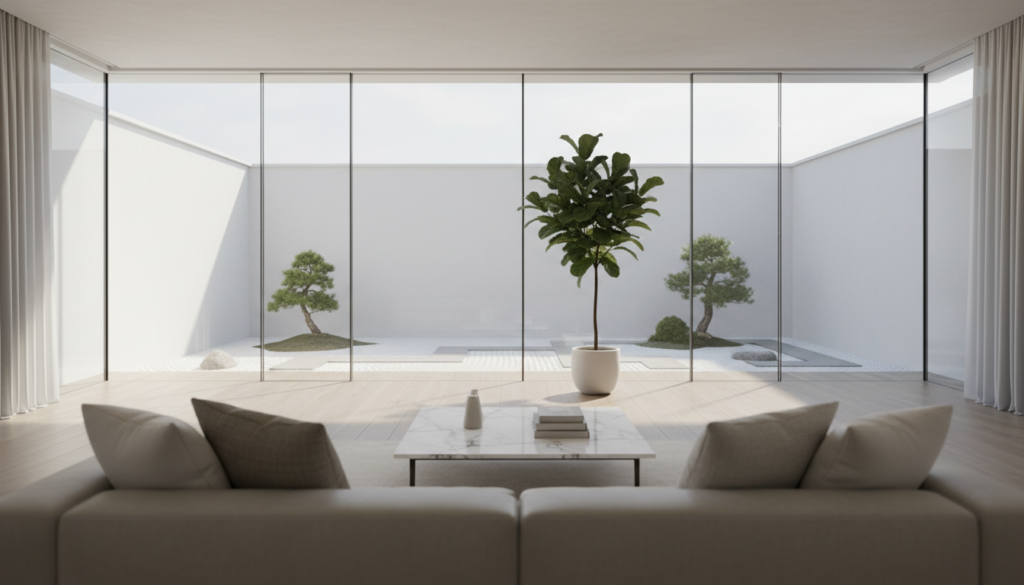
The trick is picking materials that carry themselves. Marble, solid walnut, good leather — they bring their own elegance and need no decoration on top.
Statement pieces should be fewer and bigger. One good light fixture or one oversized piece of art can carry a whole room, where five medium things cancel each other out.
No-budget version: the same logic works with what you already own. Pull everything off one surface, put back the two things you like most, and give them space. If you want texture without spending, a secondhand wool blanket, a clay pot from a garden centre, or a branch in a jug all read as warm and considered. Richness here is mostly about contrast and restraint, and neither of those has a price.
Balancing Rich Elements Without Overwhelming the Room
Restraint is what keeps the balance. Rather than filling every corner, place fewer, more deliberate things. That is what creates interest without clutter.
Each element should be carefully chosen to do something for the room, visually or practically. Done right, nothing feels crowded and the room still has character.
Quality beats quantity here, and quality does not have to mean expensive — it means well-made and well-suited. One good table beats five that nearly work.
Creating a Neutral, Inviting Color Palette
Color is the foundation everything else sits on. The right color palette sets the mood and gives you an atmosphere that is calm and still welcoming.
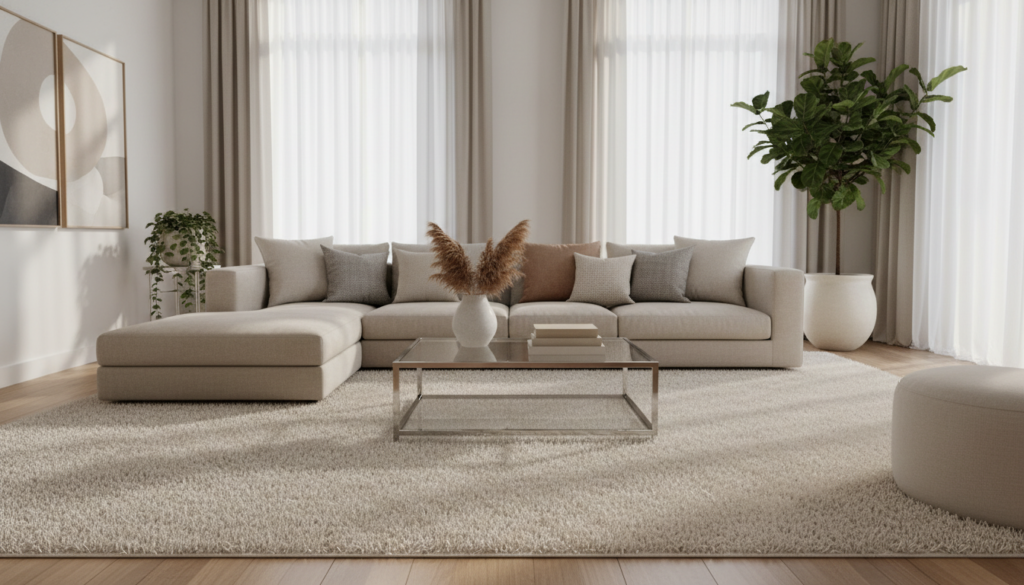
We like starting from a neutral color palette — soft whites, warm beiges, earthy tones. Those give you a clean base where texture can do the talking.
Selecting Subtle Accents and Strategic Pops of Color
A neutral color base leaves room for accents. Layer shades within the same palette first — ivory walls with taupe furniture, say. That gives depth while everything still agrees with itself.
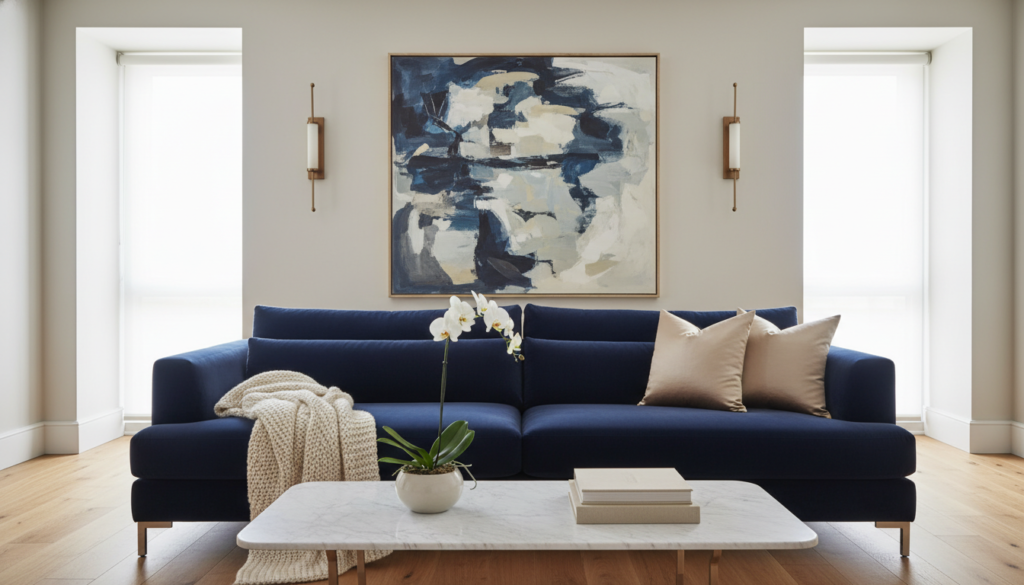
When you do add color, be deliberate. One jewel-toned cushion or a piece of art with muted tones adds personality without unsettling the space.
Metallic touches in brass or gold work the same way. They warm up a neutral color palette without reading as colorful, and they are one of the cheapest changes you can make — a swapped cabinet pull does more than it has any right to.
| Neutral Base Color | Subtle Layer Color | Strategic Pop Color | Best For Rooms With |
|---|---|---|---|
| Soft White | Warm Gray | Dusty Blue | Abundant Natural Light |
| Warm Beige | Cream | Sage Green | Cozy, Intimate Spaces |
| Light Taupe | Ivory | Terracotta | Modern Open Layouts |
| Pale Gray | Off-White | Deep Emerald | Formal Entertaining Areas |
This keeps the space feeling considered and still livable. For more on balancing simplicity with richness, there is a useful read on where restraint meets luxury in interior design.
The goal is an atmosphere that feels sophisticated and still like you. If you want the warmer end of this, our guide to calm, simple interiors covers it, and the same thinking applied to one room is in our minimalist living room ideas and our warm minimalist bedroom guide.
Balancing Textures, Lighting, and Focal Points
What actually makes a room feel both rich and peaceful is three things working together. When texture, lighting and focal points agree, the room comes alive.
Layering Lighting and Hiding Storage
Good lighting changes a room more than furniture does. Use more than one source: something ambient overhead, a floor lamp for reading, and a small accent light to make artwork read as a focal point.
No-budget version: most of the effect comes from where the light is and what color it is, not what the fixture cost. Move a lamp you already own to the far corner instead of beside the sofa, swap the bulbs to a warm 2700K, and put one on a cheap plug timer. Three dim pools of warm light at different heights will beat one bright ceiling fixture every time, for the price of two bulbs.
Storage is the other half. Built-in cabinets and closed drawers keep the lines clean while the clutter lives somewhere. A lidded basket does the same job for under twenty dollars.
| Lighting Type | Primary Function | Best Placement | Mood Created |
|---|---|---|---|
| Recessed Ceiling | Ambient Illumination | Throughout Room | Bright & Energizing |
| Statement Pendants | Focal Point | Above Table/Island | Dramatic & Artistic |
| Task Lamps | Focused Work Light | Desk/Reading Nook | Concentrated & Cozy |
| Accent Lighting | Highlight Features | Artwork/Texture Areas | Warm & Inviting |
Mixing Textures and Materials
Layering textures adds depth without adding clutter. Plush velvet against smooth leather. Wood-panelled walls against a glossy lacquered cabinet.
These details are what make a room feel touchable rather than photographed. The contrast between matte and shiny materials is doing most of the work, and it is just as available in a thrifted wool throw against a painted wall.
Practical Steps for a Clean, Rich-Feeling Room
Here is the hands-on version — a room that feels considered and completely livable, step by step.
Decluttering and Organizing, Room by Room
Start with clutter, one room at a time. For each thing, ask whether it does a job or whether you are glad it is there. That question alone clears most of a room.
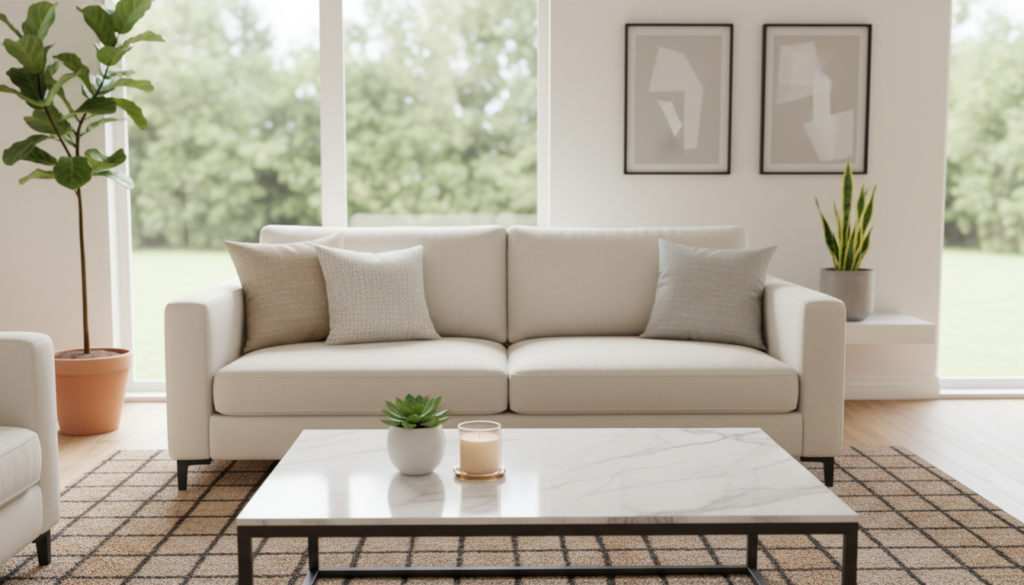
Then give the keepers a home. Built-in cabinets and closed organizers hold the essentials out of sight; a shelf with three baskets on it does the same thing for a fraction of the cost. Your living areas stay tidy and still work.
When buying furniture, go for fewer, better pieces at the right scale for the room. Oversized things eat a space faster than too many small ones.
Lay the room out with clear walkways and some breathing room. Leaving negative space between furniture groupings is what stops a room feeling crowded, and it is free.
Modular pieces are worth considering if your needs shift — they adapt without you buying again. Every choice should land somewhere between looking good and being comfortable to live with.
Conclusion
You have what you need to build a home that is calm and still has some richness in it. This part of interior design is not a rulebook; it is about rooms that feel like yours.
The good bit happens where clean lines meet a few details you chose on purpose. Lighting sets the mood, textures like velvet and wood add the depth, and each piece of furniture should earn its keep on looks and functionality both.
Restraint is the whole trick. Fewer, better, with space around it. This works in any room and at any budget — the version of it that costs nothing is clearing one surface and moving a lamp.
Start with one corner and see how it feels before you do anything else.