
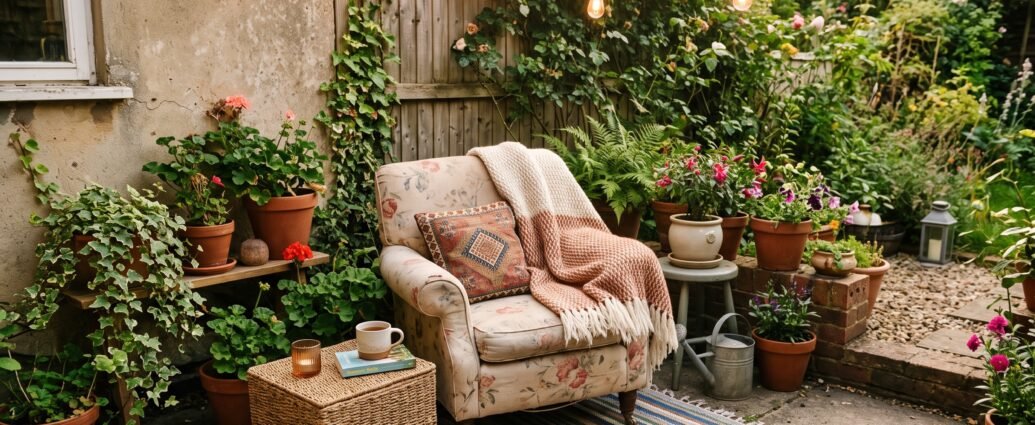
Some of the best patios I’ve ever worked on were the size of a bath mat.
You know the type: a slab of concrete off the back of a rental, maybe six feet square, with a downspout in one corner and a view of the neighbor’s recycling bins. Most people do nothing with a space like that but prop the screen door open and step over it on the way to the trash. They’ve decided, without really thinking it through, that it’s too small and too ugly to bother with.
Then somebody drags a kitchen chair out there with a cup of coffee and sits in the morning sun like it’s a café in Rome, and the whole thing reframes. The patio was never the problem. The imagination was.
Under sixty dollars is genuinely enough to turn a bath-mat slab into the spot somebody drinks their coffee every single morning. So if you’ve got a small patio, a balcony, or a concrete rectangle you’ve been ignoring, this one’s for you. Small is not the obstacle. Small is actually the easiest, cheapest place to make something feel really good — because there’s so little of it to fill.
Here’s everything I’ve learned the hard way about making a tiny outdoor space feel like a room, without spending real money.
Why a small patio is the easy one, not the hard one
I want to start here because the budget part gets so much easier once your head is in the right place.
A big backyard is expensive. It takes a lot of furniture, a lot of plants, and a lot of mistakes to make a wide-open space feel finished. A small patio is the opposite. One chair fills a quarter of it. Three plants read as a garden. A string of lights overhead turns the whole thing cozy in about ten minutes. The smallness that feels like a limitation is the exact reason you can pull this off for the price of a couple of takeout dinners.
The trick with any small outdoor space — the same as a small balcony or compact outdoor corner — is to stop trying to cram a backyard into it and instead build one good little zone. One place to sit. One thing growing. One source of soft light. Get those three working together and you have a room. Everything after that is a bonus.
Start by clearing it out (this part is free)
Before you buy a single thing, take everything off your patio. The hose, the empty pots, the bag of potting soil you’ve been meaning to use, the chair nobody sits in. All of it.
I know this sounds too obvious to count as a tip, but an empty space tells you the truth about what you’re working with. You’ll see how much room you actually have, where the light lands in the morning versus the evening, and which corner the wind cuts through. Sit out there at the time of day you’d most want to use it and notice. Is it a morning-coffee spot or an after-dinner spot? That one answer shapes every choice you make next, and it costs nothing but ten quiet minutes.
While everything’s pulled off, give the floor a real scrub. A bucket of warm water with a little dish soap and a stiff brush will take years of grime off concrete and make the whole space feel cared for before you’ve spent a dime. A clean slate genuinely changes how the area feels — and how motivated you are to keep going.
Define the floor and the space shrinks in the best way
Here’s the move that does the most for the least money: put something soft on the ground.
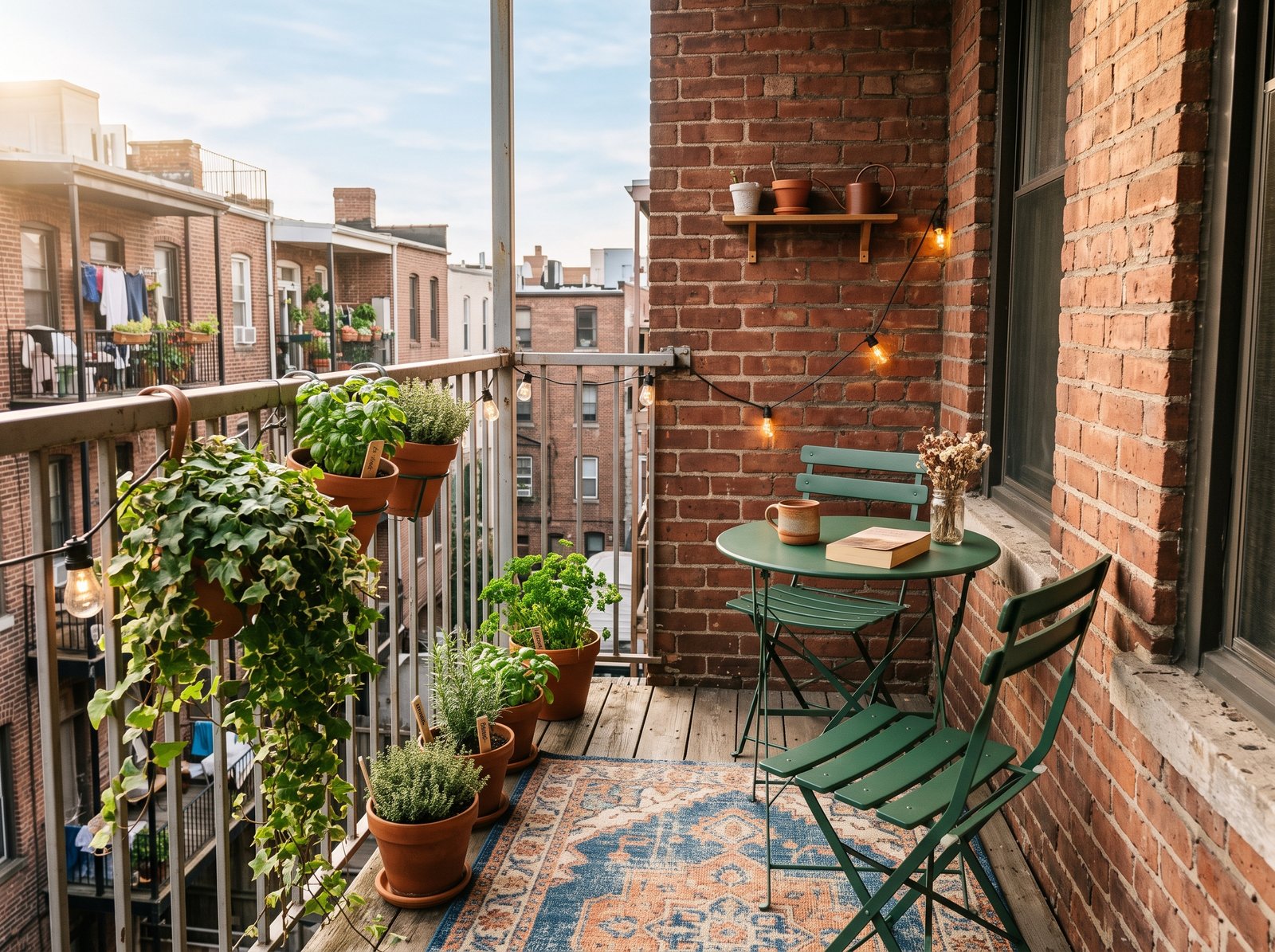
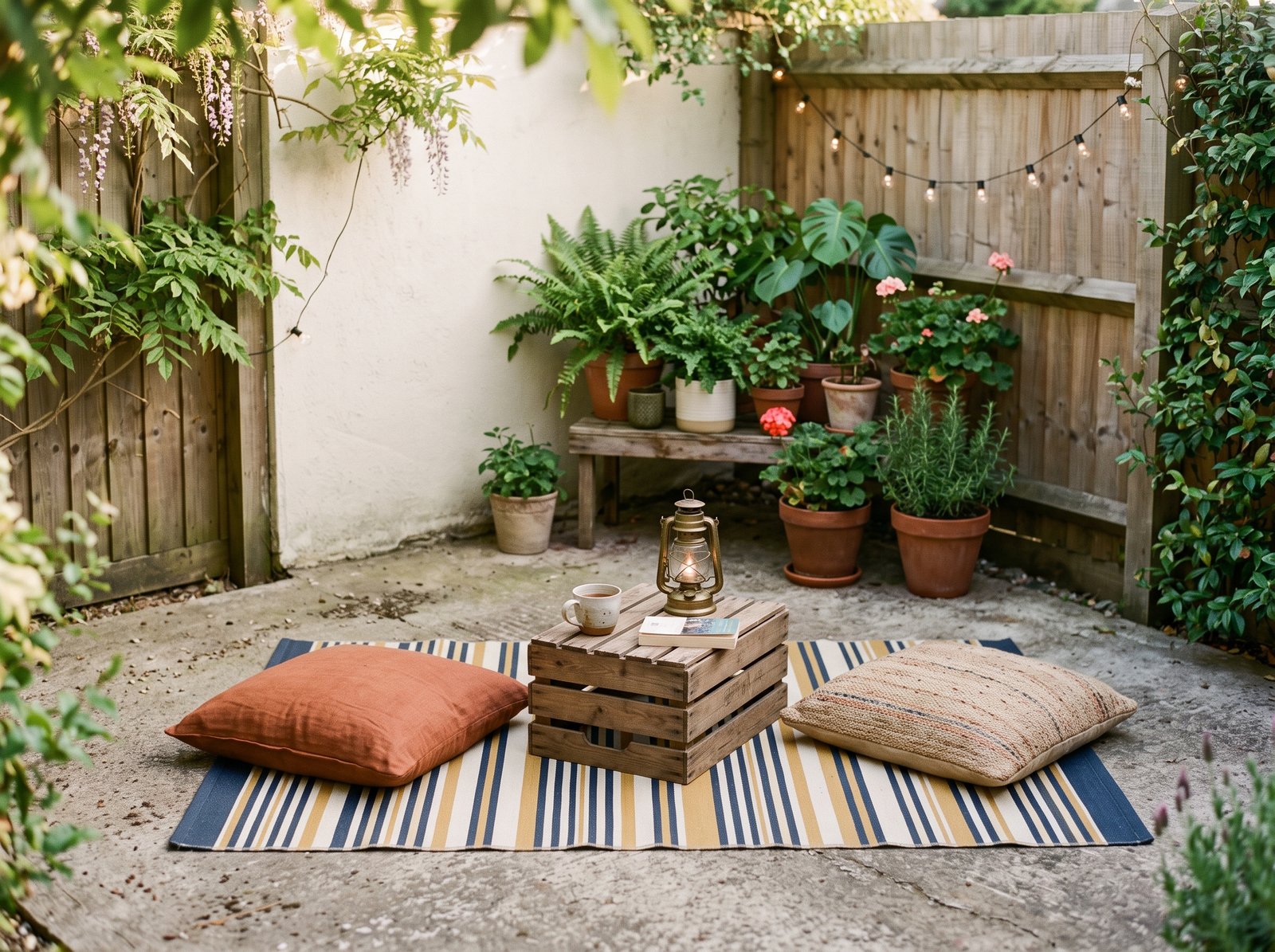
An outdoor rug, even a small and inexpensive one, draws a border around your seating and tells your eye “this is a room.” Without it, a patio chair on bare concrete looks like it’s waiting for a bus. With a rug under it, the same chair looks intentional, like you meant to sit there. It’s a little bit of magic for usually under thirty dollars, and you can find them at discount home stores, garden centers, and the big-box places all summer long.
No budget for a rug at all? An outdoor-safe mat, a flat-weave runner you already own and don’t mind getting weathered, or even a painted “rug” — a rectangle of exterior paint straight onto the concrete in a simple pattern — does the same job of grounding the space. The point isn’t the rug itself. It’s the edge it draws around your little zone.
One good seat beats five sad ones
The most common small-patio mistake I see is trying to seat six people on a space that comfortably holds two. You end up with a cramped ring of plastic chairs nobody enjoys, and no room to walk.
Be honest about how you actually use the space. For most small patios and balconies, the real answer is one or two people, most of the time. So buy for that. A single comfortable chair you love to sink into will get used a hundred times more than a matching set you’re always squeezing around. A folding bistro set — a little table and two chairs that tuck away — is the classic small-space answer for a reason, and you can often find one secondhand for the price of a new throw pillow.
Speaking of secondhand: this is where your budget breathes. Marketplace listings, thrift stores, estate sales, and the curb on bulk-trash day are full of metal and wood chairs that only need a wipe-down or a coat of spray paint. A rusty fifteen-dollar metal chair, a can of matte black outdoor spray paint, and an afternoon is one of the most reliable value swaps in outdoor decorating — it comes out looking like the best seat on the patio. If you want to go further, you can build simple patio pieces yourself — a low lounge from a few boards and a cushion goes a long way out there.
Make it comfortable with cushions and textiles
A chair is a place to sit. A chair with a cushion and a throw is a place to stay. Soft goods are what take a patio from functional to the spot you actually choose over the couch, and they’re some of the cheapest upgrades you can make.
Watch for end-of-season cushion sales — late summer is perfect timing, because stores start clearing outdoor goods just as you’ve still got months of warm evenings left. If you sew even a little, you can make your own outdoor cushion covers from canvas or a cheap painter’s drop cloth, which holds up to weather better than you’d think and costs a fraction of store-bought. A couple of pillows, a throw for cool nights, and you’ve got a spot people fight over.
One honest caveat: outdoor textiles live a hard life. Sun fades them and rain finds them. Keep a cheap storage bin or a bench with a lid nearby so you can toss cushions inside when the sky looks mean, and they’ll last years instead of one season.
Go up, because that’s where your space is
When the floor is small, the walls and the air above are where your real estate hides. This is the single most useful idea for tiny patios and balconies, so I’ll camp here a second.
Plants make an outdoor space feel alive, but pots on the ground eat the floor you need for your feet. So go vertical instead. A narrow tiered plant stand in a corner holds six plants in the footprint of one. A simple trellis against the wall gives climbing greenery somewhere to go. A row of pots hung on the railing or clipped to the fence puts your herbs at hand height and leaves the ground clear. A hanging basket or two adds a layer of green right at eye level where you’ll actually enjoy it.
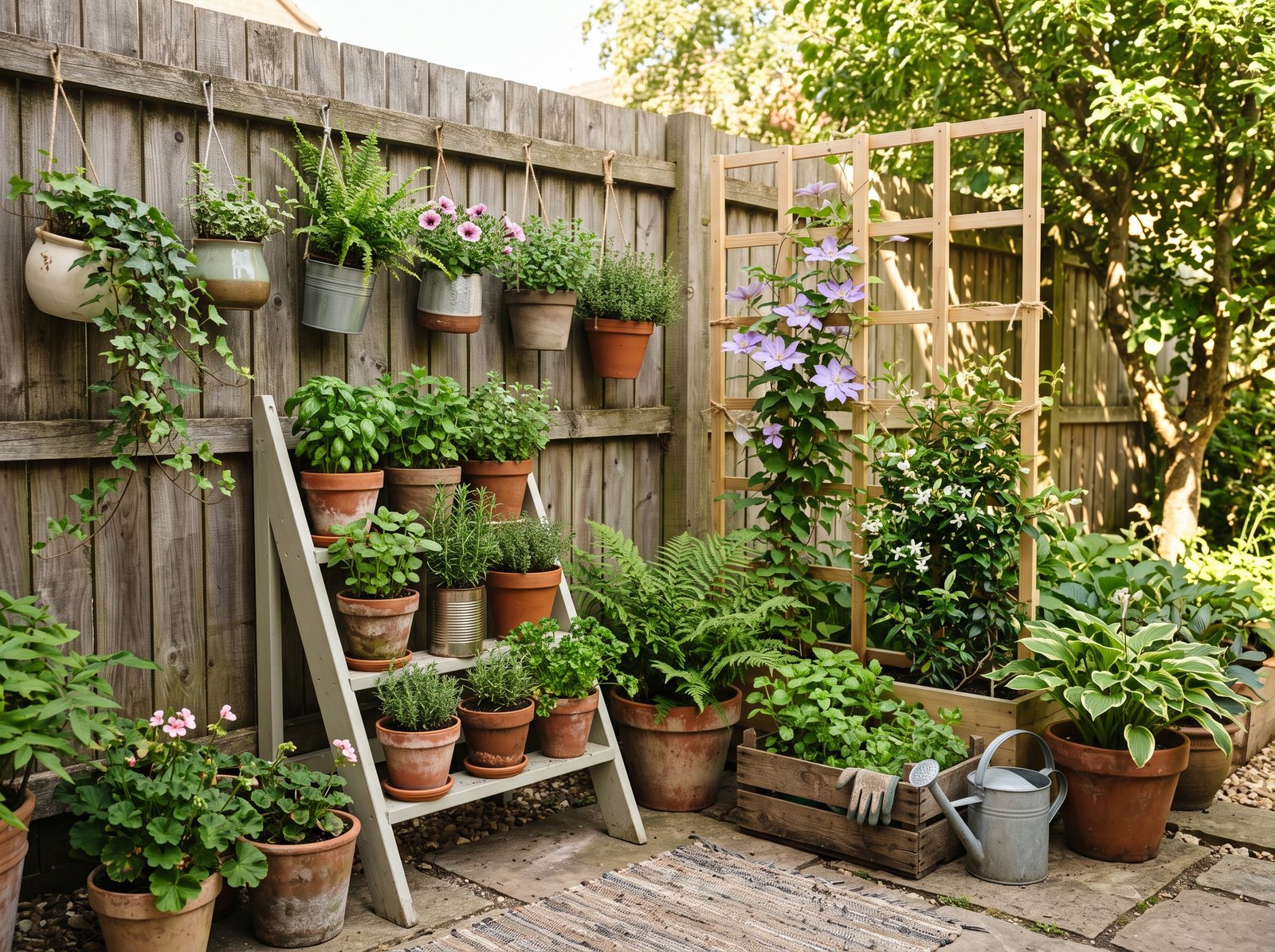
You do not need a nursery’s budget for this. Herbs from the grocery store, cuttings from a friend’s overgrown pots, and thrifted containers spray-painted to match will fill a vertical garden for almost nothing. Terracotta pots are cheap and they look better the more weathered they get. And if you want the lushness without the upkeep — say you travel, or you’re working with a shady corner where nothing thrives — a few good fake plants mixed in with the real ones is a perfectly fine, no-judgment move out here. Nobody’s inspecting your basil from the sidewalk.
Layer in soft light and the patio doubles its hours
Here’s the part people consistently underestimate: lighting is what turns a patio you use in the daytime into one you use at night, and it’s almost embarrassingly cheap to do.
A single strand of warm string lights, zigzagged overhead or run along the railing, changes everything once the sun drops. Suddenly the space feels intimate and finished, the recycling bins disappear into the dark, and you want to be out there. A basic strand of outdoor-rated lights runs about ten to twenty dollars, and solar versions skip the extension-cord problem entirely if you don’t have an outlet nearby.
Layer it. Overhead string lights for the glow, then a lantern or two on the table or floor for warmth at sitting height. You can make your own outdoor lanterns from jars and tea lights for next to nothing, or grab inexpensive flameless candles so you’re not fussing with matches every night. A handful of solar stake lights tucked among the plants adds a last soft layer for a few dollars more.
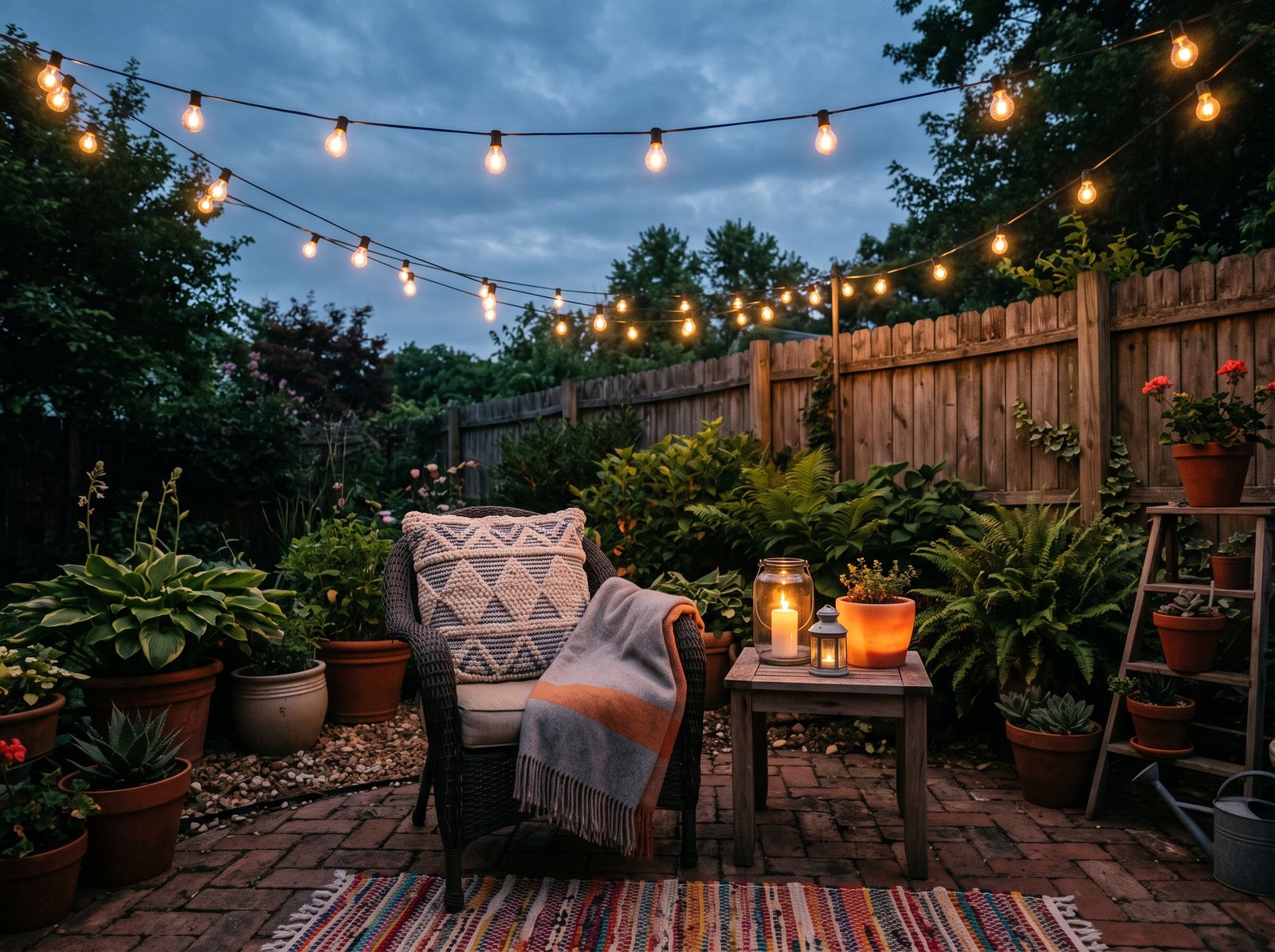
If your patio is more of a gathering spot, that same warm light is the backbone of easy summer backyard updates for hosting — and on a cooler night, a small tabletop fire bowl or a bit of fire-pit styling gives everyone a reason to linger.
Give it one small surface
You need somewhere to set a coffee, a book, a glass of wine. It does not need to be a real outdoor table, and on a small patio it shouldn’t be — a full dining set will swallow the whole space.
A little side table is plenty, and almost anything can be one. An overturned crate, a weatherproof garden stool, a thrifted metal stool, a tray balanced on a planter. A five-dollar wooden crate stood on its end holds up for a full summer and reads as deliberate, not improvised. If you do want to eat out there, that folding bistro set earns its keep again, or you can lean into the idea fully and style an outdoor dining corner that feels like a getaway without buying anything permanent. For a meal with friends, a quick summer tablescape made from what’s already in your cabinets dresses the whole thing up in five minutes.
A little privacy makes it feel like yours
If your patio looks straight at a neighbor’s window or a parking lot, a small screen of privacy is what finally makes you relax out there — and it doesn’t take a fence.
A tall potted plant or two in the sightline does a lot. An outdoor curtain panel hung from a tension rod or a cheap bamboo blind clipped to the railing softens the edges and gives you a sense of enclosure. Even a trellis with a climbing plant, doing double duty from the vertical-garden step above, screens a view while it grows. None of this has to be permanent, which matters if you’re renting — most of it comes right down when you move, and you take it to the next place.
What this actually costs
I want to put real numbers on this so “on a budget” isn’t a vague phrase.
You can do a genuinely lovely small patio for well under a hundred dollars if you’re patient and willing to thrift. A secondhand chair for ten or fifteen, a discount-store outdoor rug for twenty-five, a strand of string lights for fifteen, a few plants and thrifted pots for twenty, and a crate or stool you already own. That’s a real, comfortable, lit, green little room for around seventy dollars.
If you have nothing to spend this month, start with the three free moves: clear and scrub the space, drag out a chair you already own, and pull a plant from inside to live outside for the summer. Add the rug when you can, then the lights, then a cushion. The beauty of a small space is that each ten-dollar piece you add makes a visible difference, because there’s so little square footage for it to get lost in. The same instinct scales to the inside, too — if small-space living is your whole situation, the ideas behind designing compact rooms carry right out the back door.
And if your “small outdoor space” is really a whole little structure waiting to happen, that’s a different and wonderful project — here’s where I’d point you to she shed ideas for turning a backyard nook into a room of its own.
The whole point
Those bath-mat patios are the ones I think about every June, because they make the point better than any big renovation does: you don’t make a space lovely by spending money on it. You make it lovely by deciding it’s worth using, and then doing a few small, honest things to make sitting there feel good.
Clear it off. Put something soft on the floor. Find one chair you love. Grow something. Hang a little light. That’s a patio. The size of it was never the problem.
Go drag a chair outside and sit in your own space tonight. Tell me what you change first. — Quinn
Small patio questions, answered
How can I make my patio look nice on a budget?
Focus on three cheap, high-impact moves: ground the space with an inexpensive outdoor rug, add one comfortable chair (secondhand is your friend), and hang a strand of warm string lights for the evenings. Add a few thrifted potted plants and you have a finished little room for well under a hundred dollars.
What is the cheapest way to cover a patio floor?
An outdoor rug or mat is the most affordable way to define and soften a patio floor, often under thirty dollars. If you cannot spend anything, a deep scrub of the existing concrete, a flat-weave runner you already own, or a rug painted directly onto the slab with exterior paint all work to draw an edge around your seating zone.
How do I decorate a small patio or balcony with no money?
Start with what is free: clear and clean the space, bring out a chair you already own, and move a houseplant outside for the summer. Then add one inexpensive piece at a time, like a rug, then lights, then a cushion. On a small space, each small addition makes a big visible difference.
What furniture works best for a tiny patio?
A folding bistro set (a small table with two chairs that tuck away) or a single comfortable lounge chair beats a full matching set every time. Buy for how you actually use the space, usually one or two people, and choose pieces that fold or do double duty so you keep the floor clear.
How do I add plants to a small patio without losing floor space?
Go vertical. Use a tiered plant stand in a corner, a wall trellis for climbers, hanging baskets at eye level, and pots clipped to the railing or fence. This gives you a full, green garden feel while keeping the ground clear for your feet and your chair.


1 Comment