By Quinn Parker
I’ll be honest — the most under-used square footage on most properties isn’t inside the house at all. It’s the little shed at the back of the yard holding a broken patio heater, three half-empty paint cans, and a wheelbarrow that comes out maybe once a year. Drag all of it out, sweep the cobwebs, and stand in the empty middle of it, and the first thing you notice is that it’s quiet in a way the house never is. That’s usually the moment it clicks: nobody needs an addition or a renovation loan. There’s a whole little building back there, waiting.
If you’ve been circling the idea of a she shed — a backyard space that’s yours, for working or making or just sitting somewhere no one needs anything from you — this is the guide I’d hand a client on day one. We’ll cover what a she shed actually is, how to plan one without a contractor’s budget, and a long run of real, doable she shed ideas you can borrow. There’s a free version of almost everything here, promise.
First, what counts as a she shed?
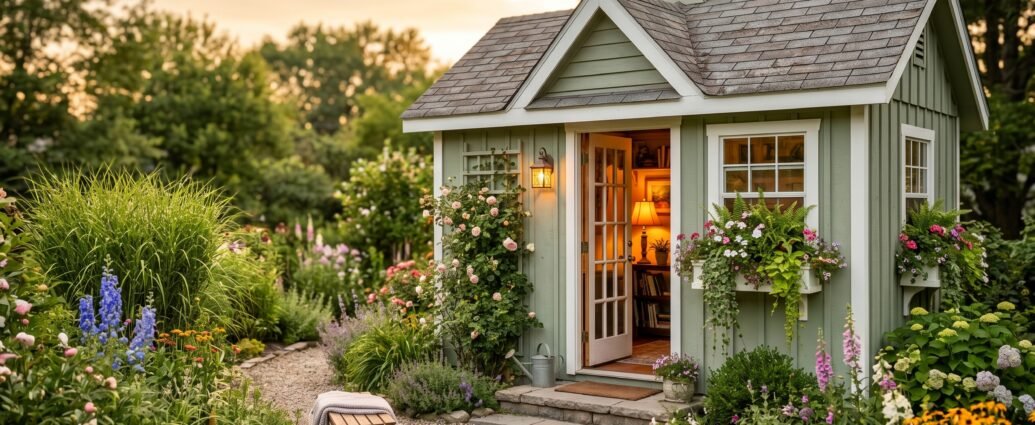
A she shed is just a small backyard building made into a room of your own — the backyard cousin of a man cave, minus the neon beer sign (unless that’s your thing — no judgment). It can be a brand-new prefab kit, a tired garden shed brought back to life, or a corner of the garage with a door of its own. The name matters less than the feeling: a separate, quiet space that’s yours to use however you like.
People build them for all sorts of reasons. A home office that isn’t the kitchen table. An art or craft studio where the mess can just stay out. A reading nook, a yoga room, a potting shed, a guest space, a spot to practice an instrument without an audience. The use you pick shapes everything else, so that’s where we’ll start.
How to plan a she shed (before you buy a single thing)
The fun part is the styling, but the part that saves you money and regret is the planning. Here’s the short version of what I’d think through first.
Pick the one main job
A she shed that tries to be an office and a studio and a guest room usually does none of them well. Decide on the primary use, build for that, and let everything else be a bonus. The ones that work commit early: a writing office that occasionally hosts a guest on an air mattress is still an office first, and that single decision makes every other choice easier.
Be honest about your budget tier
You can land a she shed almost anywhere on the price ladder, so it helps to know which rung you’re on:
- Free-to-low (under ~$300): Reclaim a shed you already have. Clean it out, patch and paint, and furnish it from what you own or find secondhand. This is where most people should start.
- Mid (~$1,000–$4,000): A solid secondhand shed or a basic prefab kit, plus simple insulation, a few finishes, and thrifted furniture.
- Splurge ($5,000+): A new prefab or custom build with proper electrical, insulation, flooring, and finishes. Lovely if you have it; absolutely not required.
For a deeper money plan, our guide to budget interior design for 2026 applies the same free/budget/splurge thinking room by room.
Check the boring-but-important stuff
Before you fall in love with a paint color, sort out the practical bones:
- Permits. Many areas let you build a small shed (often under 100–120 sq ft, but it varies a lot) without a permit — but anything with electrical or plumbing usually needs one. A five-minute call to your local building department now beats a fine later.
- Foundation and drainage. A level base — gravel pad, concrete blocks, or a small slab — keeps the floor dry and the door swinging true. Make sure water drains away from the shed.
- Power. A buried cable on its own circuit is the proper route (and an electrician’s job). On a budget, a heavy-duty outdoor-rated extension cord run safely, plus a portable power station, covers lights and a laptop.
- Insulation and weather. If you want to use it past one perfect season, plan for insulation, a draft-sealed door, and a small heat or cool source. More on year-round comfort below.
If you’re still weighing where to put your space, our she shed vs. garage studio conversion comparison walks through the trade-offs of building new versus converting what you’ve got.
She shed ideas by use
This is the heart of it. Find the job that sounds like you, then steal the details.
1. The backyard office
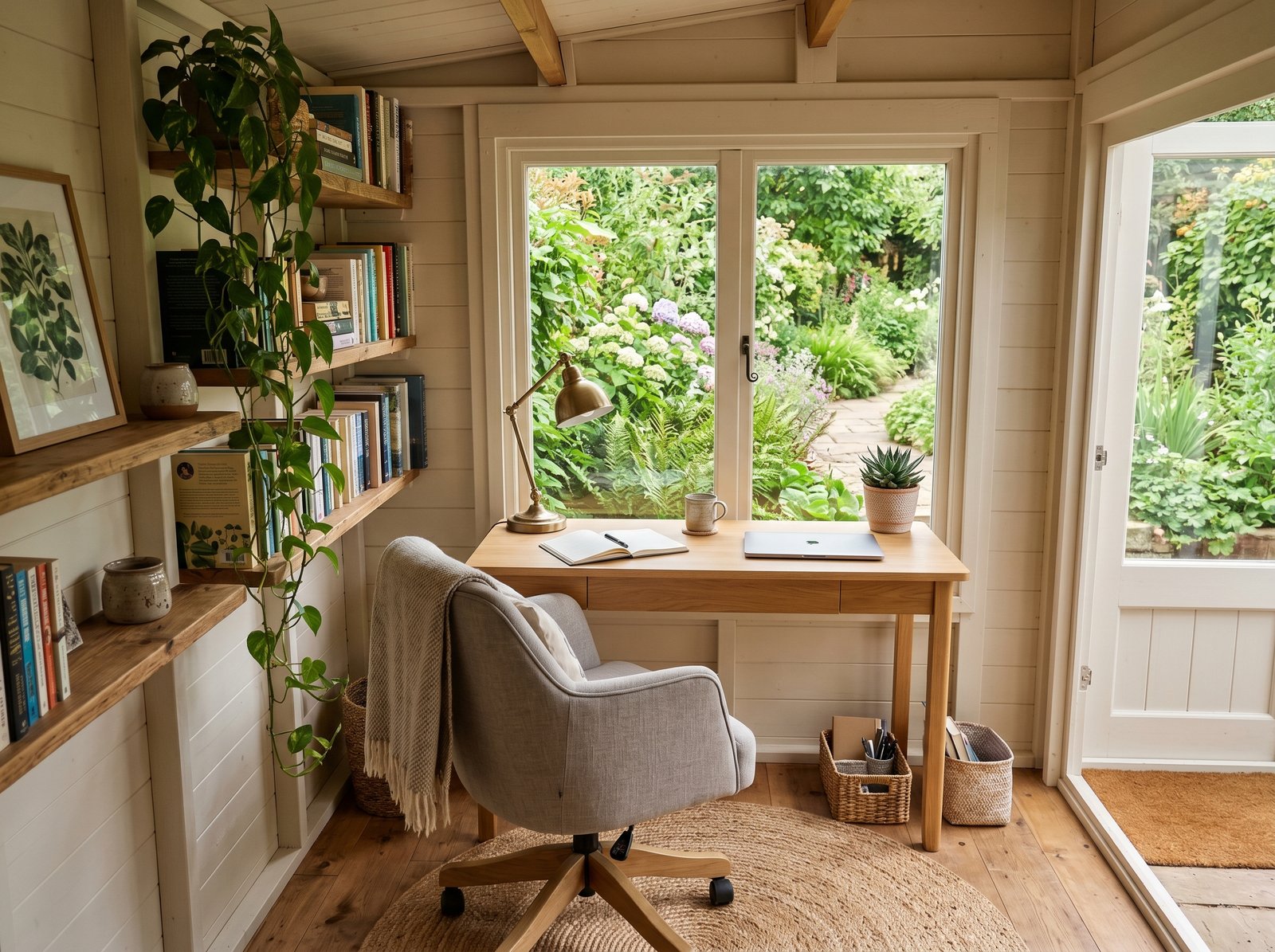
If you work from home, a she shed office is the upgrade that pays you back in focus. You need three things working together: a desk facing a window (daylight beats a wall), a genuinely supportive chair, and enough light for late afternoons. Add a shelf for the printer and a basket for cables so the floor stays clear.
A separate building also gives you the one thing the spare-bedroom desk never does — a door you can close at 5 p.m. For setup details that apply just as well out here, see our home office ideas for maximum productivity and these features for a better home office setup.
2. The art or craft studio
A studio shed is permission to leave the mess out. Put a wipeable worktable in the center so you can walk all the way around it, add wall storage for supplies (pegboard is cheap and endlessly rearrangeable), and prioritize bright, true-color light. A cheap roll of kraft paper taped down protects the floor and peels off when you’re done. For makers, our handmade home decor projects for every skill level are a happy way to break in a new studio.
3. The quiet reading nook or lounge
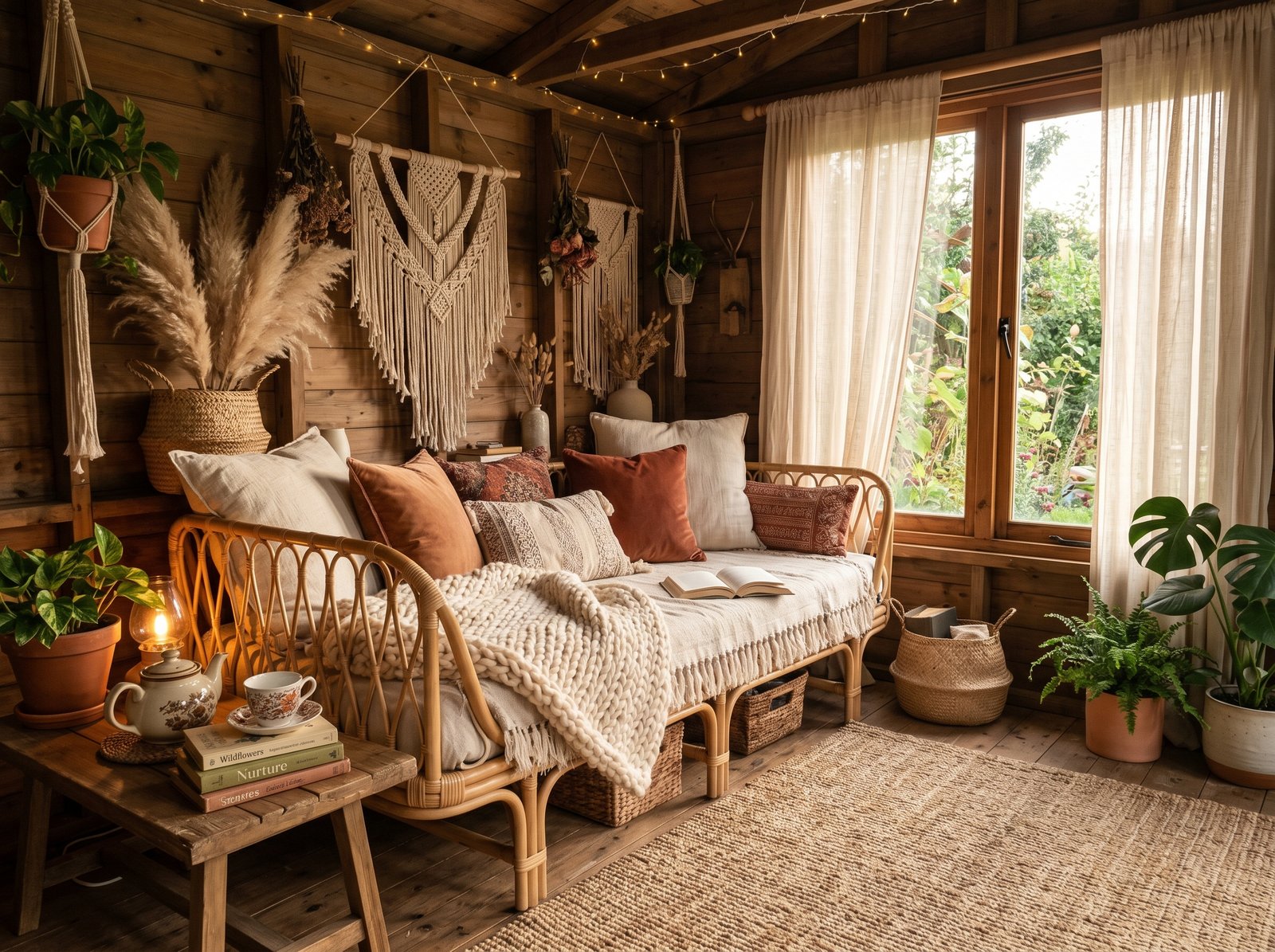
Sometimes the whole point is nothing productive at all. A reading shed wants a deep chair or a daybed, a side table for tea, a soft throw, and lighting you can dim. Layer in a rug and a few floor cushions and you’ve got the coziest seat on the property. A boho patio-lounge approach translates beautifully to an indoor shed lounge.
4. The yoga or meditation room
For movement and quiet, keep it spare on purpose: a clear floor, a good mat, a basket of blocks and bolsters, a speaker, and a single calming focal point — a plant, a piece of art, a view. The empty space is the design here. The grounded, natural-material palette of organic modern design suits this use perfectly.
5. The potting and garden shed
The original she shed. A potting bench at standing height, hooks for tools, a few shelves for terracotta pots, and a window for seedlings. Let it be a little weathered — this is the one room where a few dirt smudges are a feature, not a flaw.
6. The guest hideaway
With a daybed or a fold-out, a small side table, a lamp, and a basket of fresh linens, a she shed becomes a guest room your visitors will fight over. Add a mirror and a few hooks for bags and you’ve covered the basics. If insulation and power are sorted, this one earns its keep at the holidays.
She shed ideas by style
Whatever the use, the look is where it starts to feel like yours. A few directions that photograph well and, more importantly, feel good to sit in.
Boho and free-spirited
Layered textiles, warm earth tones, rattan and jute, plenty of plants, and a little macrame. It’s forgiving, secondhand-friendly, and cozy by nature — the easiest style to pull off on a budget. Borrow from our essential elements for a boho-chic home and these affordable boho decor finds you can snag online.
Organic modern and calm
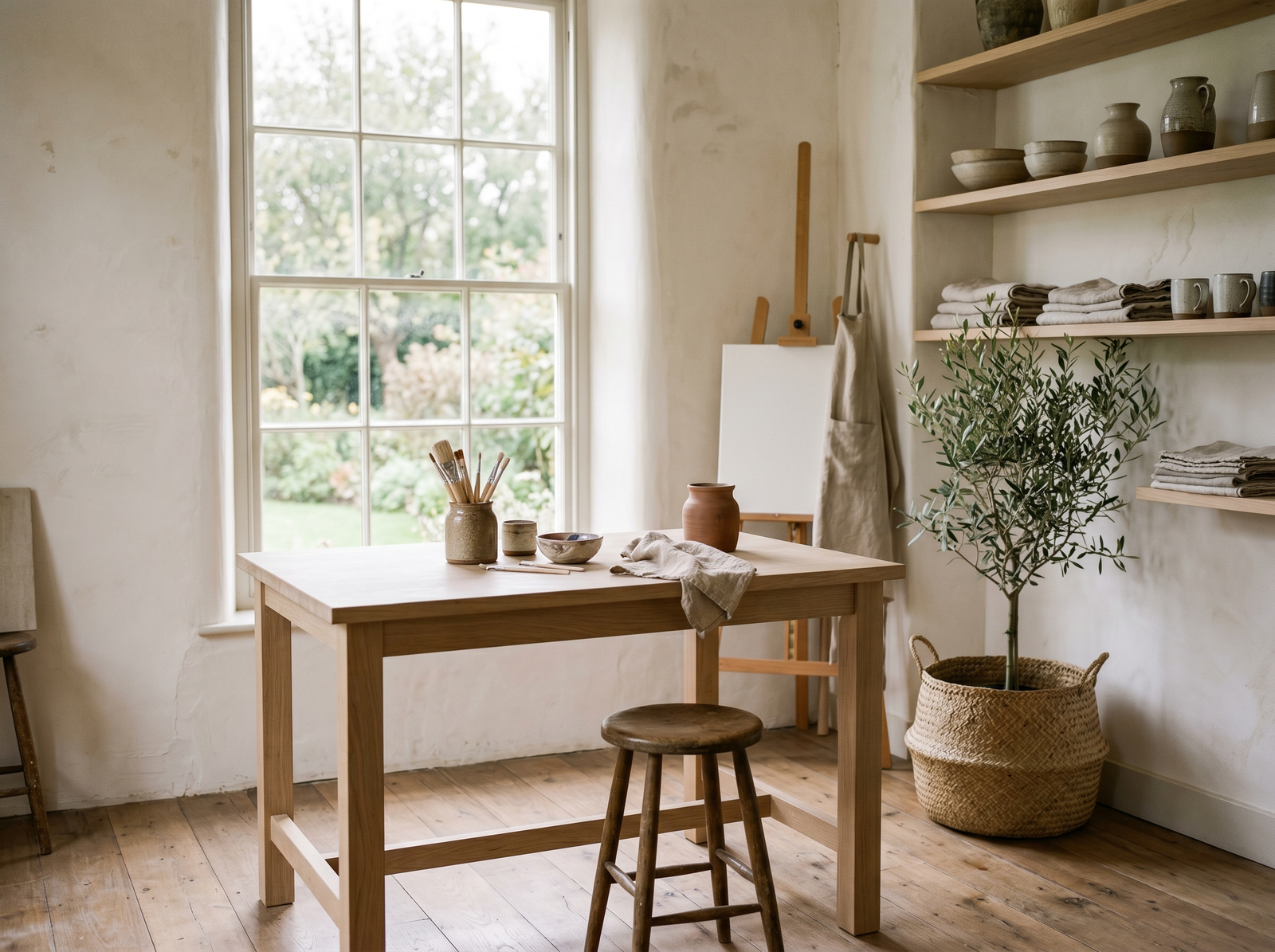
Warm whites, natural wood, linen, stoneware, and clean lines softened by texture. If boho feels busy to you, this is the quieter cousin. Our natural materials for an organic modern space and organic modern color palettes are a good map.
Cottage and garden-inspired
Painted shiplap, floral or gingham textiles, vintage finds, and a window full of plants. This leans into the storybook-shed-in-the-garden feeling, and it loves a thrifted, mismatched approach.
Small she shed? Make it feel bigger
Most she sheds are small — that’s the charm and the challenge. A few tricks that genuinely help:
- Hang a mirror opposite the window to bounce daylight and double the view.
- Go vertical. Floating shelves and wall hooks keep the floor — your most precious square footage — clear.
- Pick light, warm wall colors to push the walls back visually.
- Choose furniture that does two jobs: a storage ottoman, a daybed, a drop-leaf desk.
- Leave breathing room. One well-placed chair beats three crammed in.
Our full guide to styling small spaces without overcrowding goes deeper on every one of these.
Lighting, power, and that lived-in glow
Lighting is what turns a shed into a room. Layer three kinds if you can: a main overhead or a few clip lights for tasks, a warmer lamp or string lights for evenings, and natural light from a window or a skylight during the day. Warm bulbs (look for 2700K on the box) make even a plywood interior feel like somewhere you want to linger — it’s the cheapest upgrade with the biggest payoff.
No hardwiring? Battery-powered puck lights, rechargeable lamps, and solar string lights get you surprisingly far. A small portable power station will run a laptop, a fan, and lights for a full work session.
Heating, cooling, and year-round comfort
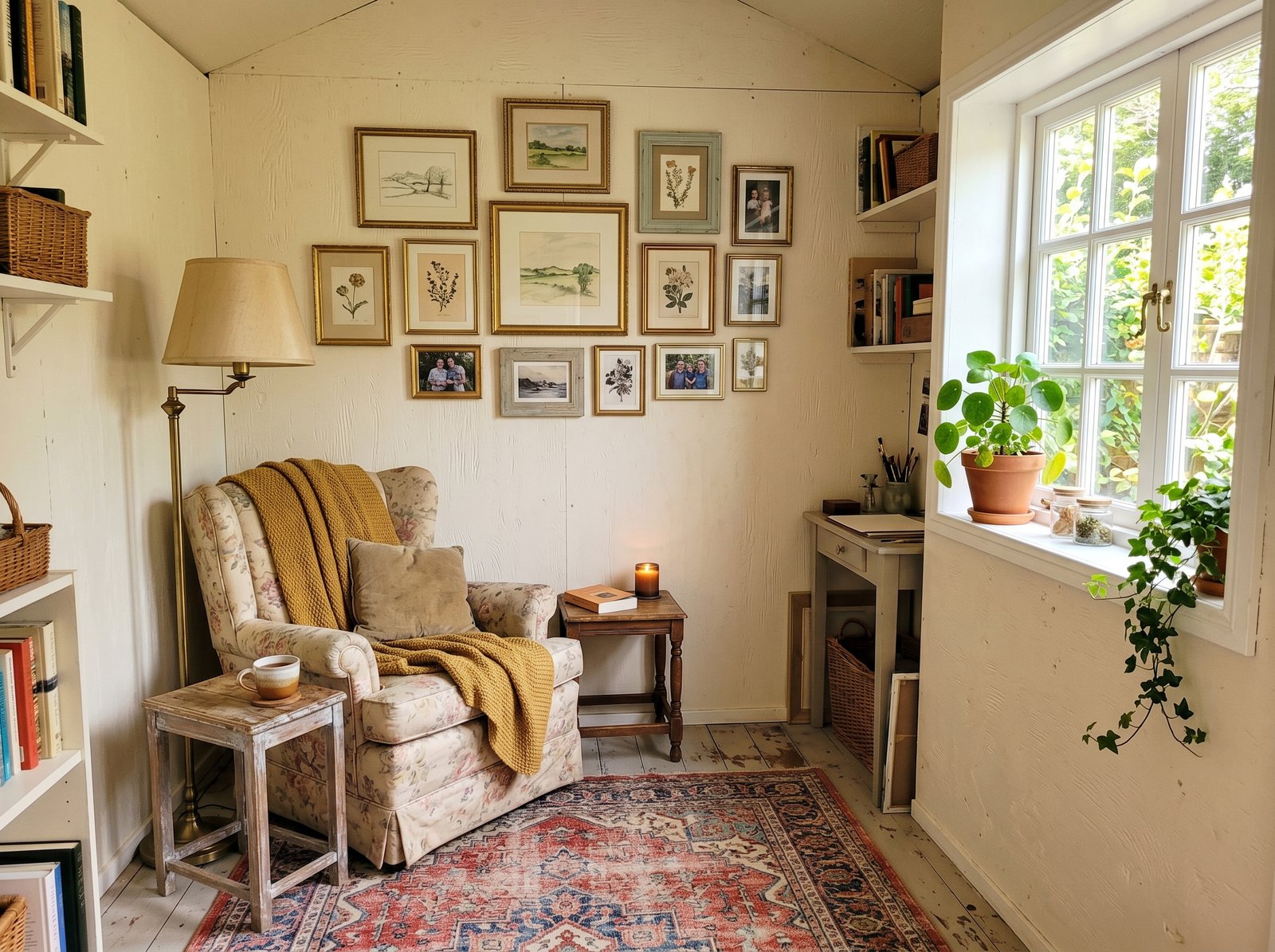
If you want your she shed to be a three-season-plus space and not a summer-only treat, comfort is worth the spend. Insulate the walls and ceiling, weather-strip the door, and add a rug over the floor for warmth underfoot. For heat, a small space heater or an electric oil-filled radiator works in an insulated shed; for cooling, a portable AC unit or even a good fan plus shade and cross-breeze. Crack a window or add a small vent to keep air moving and condensation down — a damp shed is an unhappy shed.
A realistic budget breakdown
Here’s roughly where the money goes, with a free-or-cheap option sitting alongside each splurge:
- The structure: Splurge on a new prefab; save by reclaiming a shed you have or buying one secondhand.
- Floor: Splurge on engineered wood or vinyl plank; save with a painted plywood floor and a big rug.
- Walls: Splurge on finished drywall; save by painting the existing wood or hanging inexpensive peel-and-stick paneling.
- Furniture: Splurge on one good chair; save by shopping your own house, marketplace listings, and thrift stores.
- Decor: Splurge on a statement light; save with plants, thrifted art, and textiles you already own.
A shed put together entirely from borrowed, thrifted, and already-owned pieces lands under $300 without much trouble. The point was never how much it costs. It’s having somewhere to go.
Two mistakes worth skipping
Two things I see go wrong constantly. First, buying a cute little woodstove-look heater before the shed is insulated — it does almost nothing against the drafts, and the money would have bought the insulation. Insulate first, decorate second. Second, cramming in a second chair “for guests” that ends up collecting laundry for a year. One chair, one job. These sheds get better the day something comes out, not the day something else gets added.
Your she shed, your rules
You don’t need a big yard, a big budget, or a free month to start. You need a corner of the backyard and a clear idea of the one thing you want from it. Sweep it out this weekend, drag in one chair and one lamp, and sit in it. The rest will tell you what it wants to be.
Go stand in your backyard and look at that shed a little differently. Tell me what you’d make it. — Quinn
Frequently asked questions
What is a she shed?
A she shed is a small backyard building turned into a personal room — an office, studio, lounge, or hideaway. It can be a new prefab kit, a converted garden shed, or any small outbuilding finished and furnished for one main use.
How much does a she shed cost?
Anywhere from under $300 to $10,000+. Reclaiming a shed you already own and furnishing it secondhand can cost almost nothing, a basic prefab kit with simple finishes runs roughly $1,000 to $4,000, and a new custom build with electrical and insulation starts around $5,000.
Do I need a permit for a she shed?
Often not for a small shed with no electrical or plumbing, but rules vary widely by location and size. Anything with wiring or plumbing usually does need a permit. Check with your local building department before you build.
How do I make a she shed usable year-round?
Insulate the walls and ceiling, weather-strip the door, add a rug, and include a small heat source for winter and a fan or portable AC for summer. Keep a window or vent for airflow to prevent condensation.
Can I build a she shed on a budget?
Yes. Start with a shed you already have, paint the interior, shop your own home and secondhand marketplaces for furniture, and lean on plants and textiles for warmth. A boho or cottage style hides a small budget especially well.