
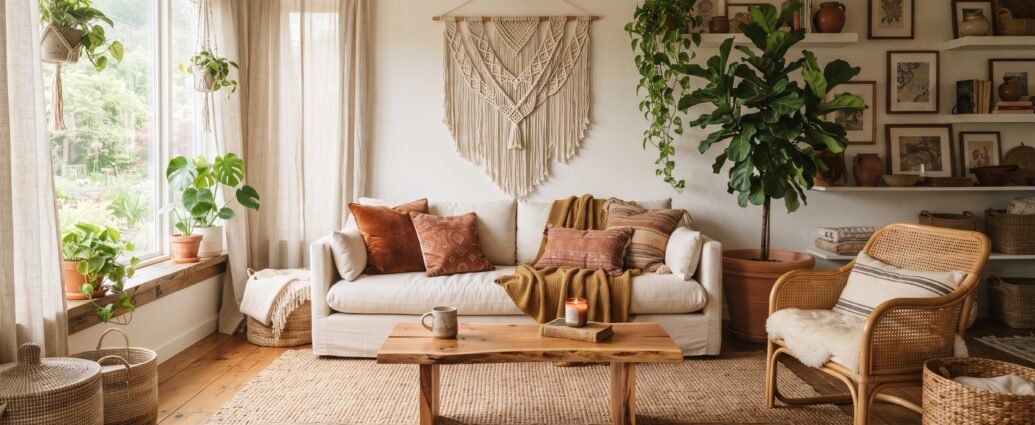
Boho decor is what happens when a home stops trying to be perfect and starts trying to be you. It’s layered, collected, and a little untamed — a mix of textures, plants, global finds, and pieces with a story, gathered over time rather than bought in a single afternoon. Done well, a boho room feels warm, lived-in, and impossible to replicate, because no two are ever the same.
It’s also one of the most forgiving styles to live with. There’s no single right way to do it, no rulebook demanding symmetry or a particular sofa. That freedom is what makes boho so beloved — and, at first, a little hard to pin down. This guide is your starting point: we’ll cover what boho decor actually is, the core elements that make it work, the palette and textures that tie it together, the main boho styles to know, and — most usefully — how to bring it into each room on any budget, with links to our detailed guides for every piece of the look.
Key Takeaways
- Boho decor is about collected, personal style — layered texture, natural materials, and pieces with meaning, not a matching set.
- Natural materials (rattan, jute, wood, clay) and plenty of greenery are the backbone of the look.
- A warm, earthy base plus a few bolder accents keeps a boho room rich rather than chaotic.
- Texture and layering — not just color — are what give boho its depth and coziness.
- It’s one of the most budget-friendly styles there is: thrifted, handmade, and DIY pieces are a feature, not a compromise.
What Boho Decor Really Is
“Boho” is short for bohemian — a style rooted in free-spirited, artistic living and a rejection of matching, catalog-perfect rooms. It grew out of the way artists, writers, and travelers actually furnished their homes: with what they loved and what they gathered, rather than a coordinated set delivered all at once. At its heart, boho decor is about self-expression. A boho home reflects the places you’ve been, the things you love, and the way you actually want to live — not a trend someone else set.
That freedom is exactly what makes it feel intimidating at first. Without a rulebook, where do you start? The reassuring answer is that boho does have a structure underneath the looseness — a handful of consistent elements that, once you recognize them, make the whole style click into place. Learn to see those elements and you can walk into any secondhand shop and know instantly which pieces will earn a spot in your home.
The Core Elements
Almost every boho room shares the same building blocks. Get these right and the rest is personal:
- Natural materials. Rattan, cane, jute, seagrass, raw wood, and terracotta give boho its earthy, tactile foundation. They bring the outside in and keep the look grounded.
- Layered textiles. Woven throws, fringed cushions, a stack of rugs, macrame, kilim, and plenty of pattern — layering is where the coziness comes from.
- Plants, and lots of them. Greenery is non-negotiable. Trailing pothos, a statement fiddle-leaf fig, a cluster of hanging planters — living things are what make the space feel alive.
- Vintage and handmade pieces. A thrifted mirror, a handwoven basket, a market find from your travels. Character beats newness every time, and a little wear only adds to the story.
- Warm, collected color. Earthy neutrals as a base, with jewel tones or terracotta coming through in the accents.
- Global and artisan touches. Moroccan poufs, block-printed textiles, handmade ceramics — pieces that feel made by a person, not a machine.
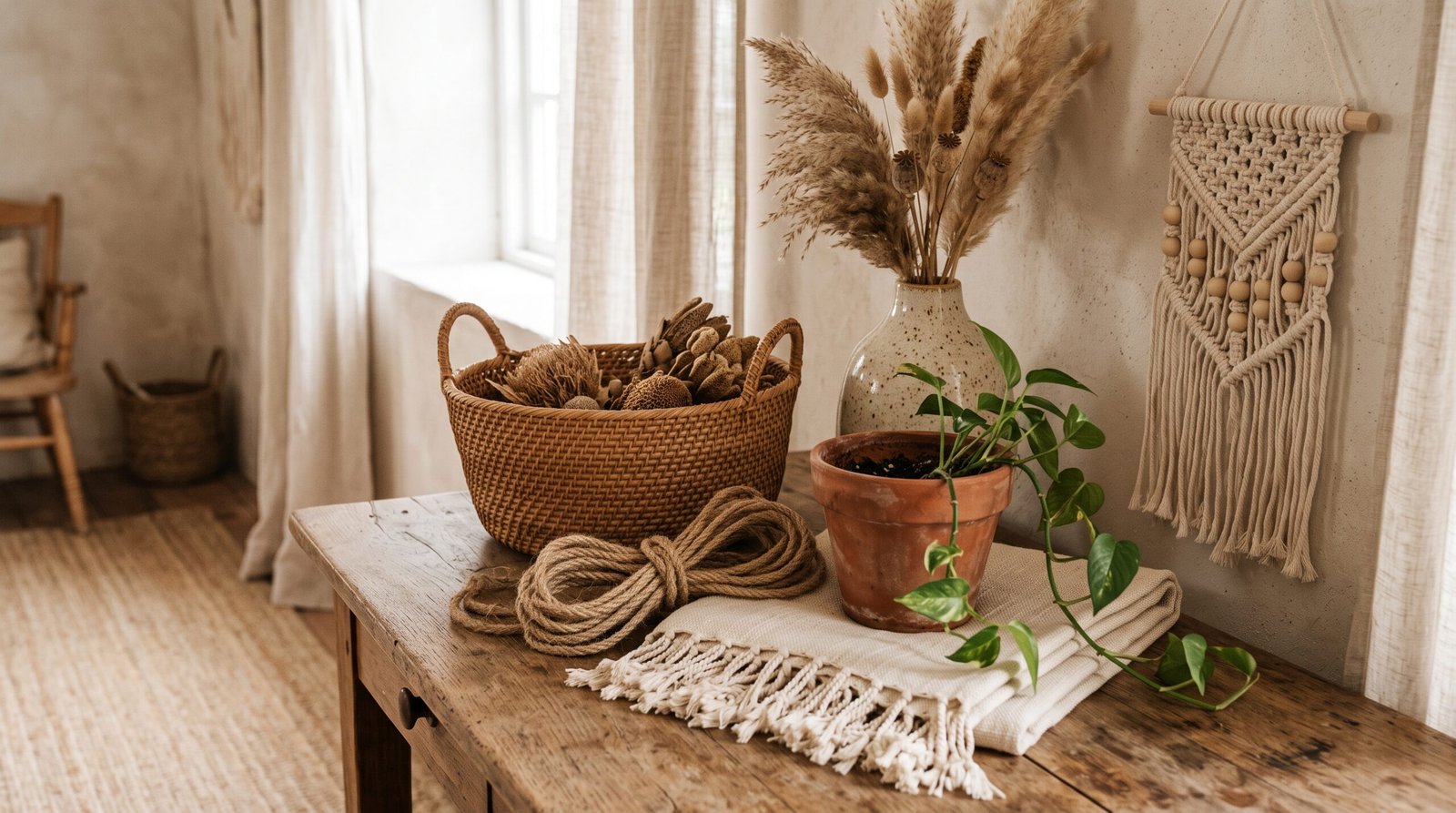
Those six are the whole framework — there’s no secret seventh element you’re missing. In practice it’s a useful diagnostic: when a boho room feels like it isn’t working, it’s almost always one of the six that’s absent rather than something you got wrong. Nine times out of ten it’s texture or plants, and both are fixable for nothing — a cutting from a friend, a blanket folded over the arm of the sofa.
Texture and Layering: The Heart of Boho
If there’s one thing that separates a boho room that works from one that feels flat, it’s texture. Because the palette leans neutral and earthy, boho relies on the hand-feel of a room — the mix of rough and smooth, soft and structured — to create the richness that pattern and color provide in other styles.
Think of it as building in layers. Start with a foundation (a large jute or sisal rug), then layer something softer and more decorative on top (a vintage kilim or a Moroccan runner). Do the same everywhere: a woven throw over a linen sofa, a nubby cushion against a smooth leather pouf, a chunky knit blanket beside a sleek ceramic lamp. Each contrast gives the eye something to notice and the hand something to reach for.
The same principle applies vertically. Vary the height of your plants, hang art and mirrors at different levels, and let a macrame piece or a tall dried arrangement draw the eye upward. A boho room should feel gathered from floor to ceiling, not staged on a single plane.
Building Your Boho Color Palette
Color is what keeps a layered, pattern-rich boho room from feeling like a jumble. The trick is to anchor everything in a warm base — sandy neutrals, warm whites, soft terracotta — and then let a few bolder shades come through in your textiles and accents. Because a shared color thread runs through the room, you can mix as many patterns as you like and it will still feel intentional.
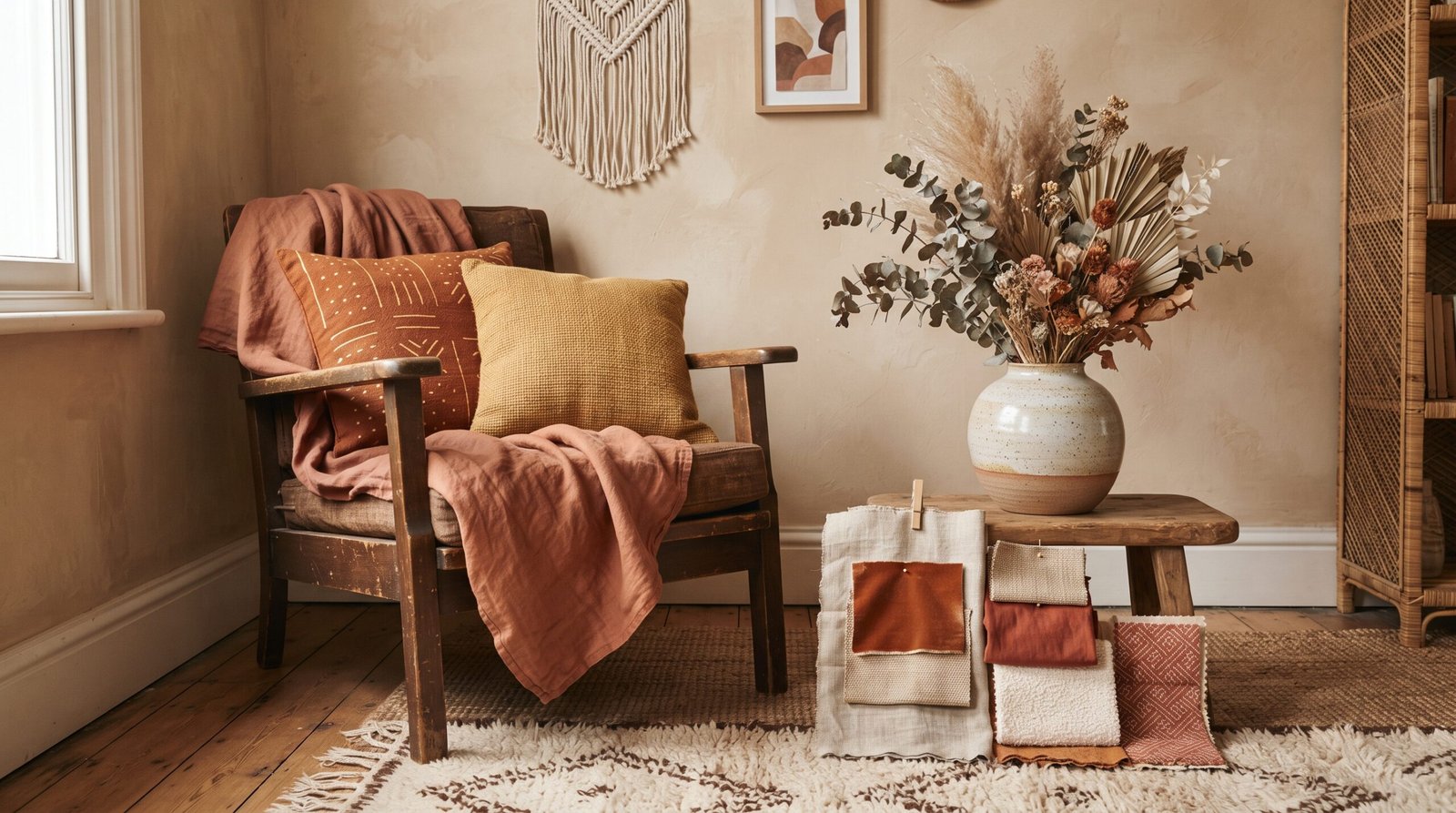
There’s no single “boho palette,” which is part of the fun. A desert scheme of clay, rust, and cream reads very differently from a jewel-toned mix of emerald, mustard, and plum — but both are unmistakably boho. Earthy warm neutrals tend to be the most versatile starting point because they let your collected pieces and greenery stand out. To find the mood that fits your space, explore our boho color palettes for any room, with ready-to-use combinations and easy ways to test a shade before you commit.
Boho Styles to Know
Boho isn’t one single look — it’s a family of related styles, and knowing which one you’re drawn to makes every decision easier. A few of the most popular:
- Boho-chic. The most polished, pulled-together version: still layered and collected, but edited, with a clear palette and a few refined anchor pieces. The easiest place to start if you want boho that reads intentional.
- Modern boho. Boho warmth crossed with clean lines — fewer pieces, more negative space, natural materials against a pared-back backdrop.
- Desert / Santa Fe boho. Sun-baked terracotta, clay, cream, and cactus greens, with plenty of leather, wood, and woven texture.
- Scandi-boho. The cozy minimalism of Scandinavian design softened with boho texture and greenery — light woods, warm neutrals, and just enough pattern.
Whichever direction you lean, the fundamentals stay the same — you’re just adjusting how much you edit and how bold you go. Our guide to the boho design trends for 2026 maps out where the style is headed if you want to see what’s fresh before you commit.
Boho Decor, Room by Room
The elements stay constant; how you apply them shifts with each space. Here’s how to bring boho style into the rooms where it makes the biggest difference.
Living Room
The living room is boho’s natural home — the place to go all-in on layered rugs, a low slouchy sofa piled with cushions, a rattan accent chair, trailing plants, and a gallery of collected art. Anchor the space with one large rug, then layer a smaller patterned one on top to define the seating area. Keep one warm base color running through it all so the layers feel gathered rather than cluttered, and leave a patch of open wall or floor here and there so the eye can rest. For a full walkthrough of the current look, see our guide to boho living room designs.
Bedroom
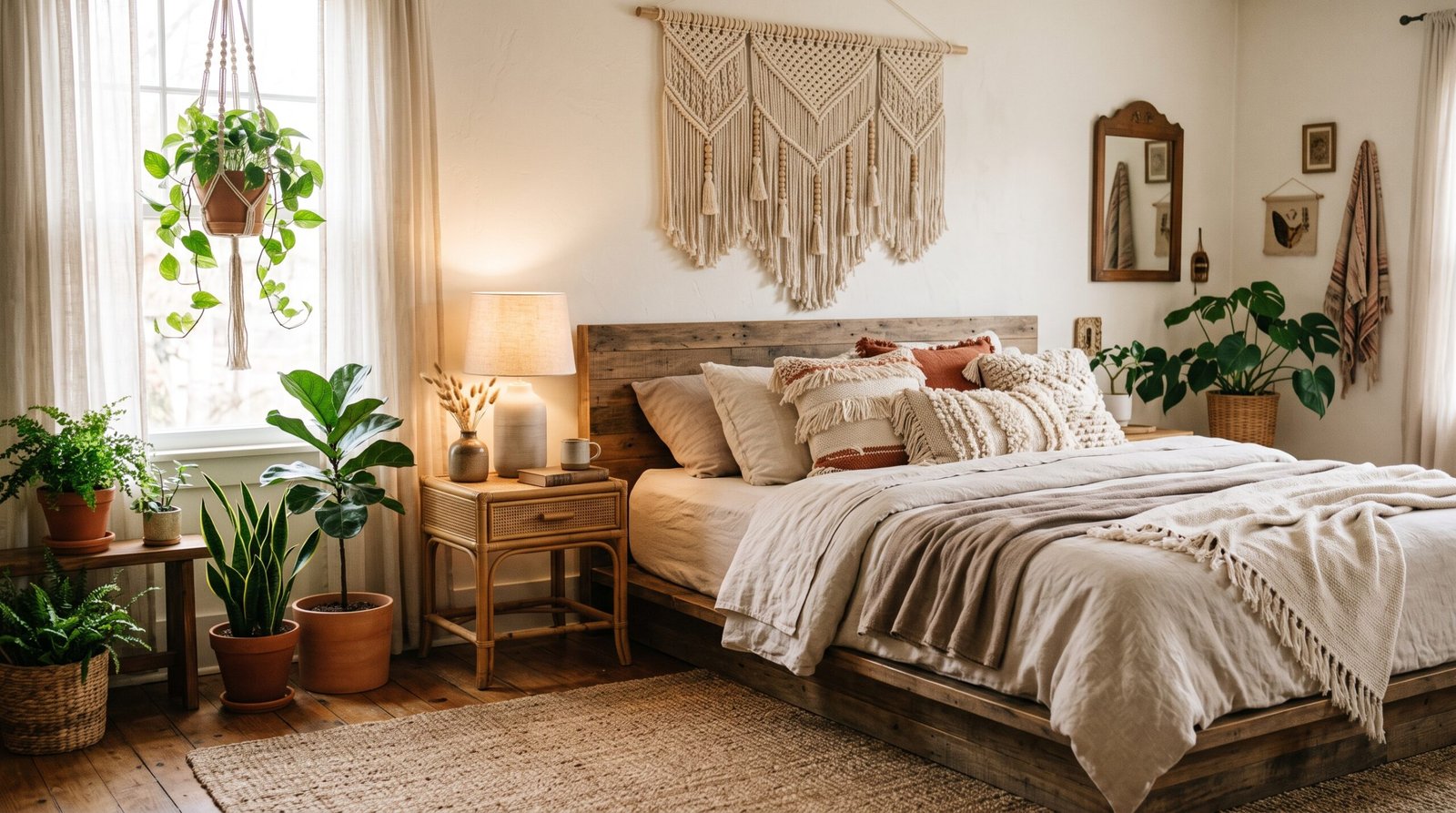
A boho bedroom is all about softness and retreat: layered natural bedding in cream and oatmeal, a macrame or woven wall hanging above the bed, warm bedside lighting, and a few plants to bring calm. Mix your textures generously — a linen duvet, a chunky knit throw, a fringed cushion or two — and keep the palette warm and quiet so the room actually helps you rest. It’s a space that rewards texture over polish. Our boho bedroom ideas show how to build a relaxed, layered retreat step by step, and if it’s the primary bedroom you’re working on, our guide to boho primary bedroom trends goes deeper on that one room.
Boho on a Budget
Here’s the best-kept secret of the whole style: boho is one of the most affordable looks you can create. Because it prizes collected, characterful, and handmade pieces over shiny new matching sets, thrift stores, flea markets, and secondhand marketplaces are your best friends — and the imperfections that come with them are exactly the point. A slightly worn rug, a chipped-but-charming vase, a mismatched set of frames: in boho, those read as character, not compromise.
A few budget-friendly moves that punch above their price: shop secondhand for rugs, baskets, and wood furniture; add plants (cuttings from friends cost nothing); swap in textured cushion covers rather than whole new cushions; and let one or two thrifted statement pieces do the heavy lifting. Our roundup of affordable boho decor finds gathers budget-friendly pieces you can order online, so you can build the style one considered piece at a time without overspending.
DIY Boho Projects
Nothing suits boho better than something you made yourself — a handmade piece carries the personal, one-of-a-kind character the whole style is built on. Simple projects like a macrame wall hanging, a painted terracotta planter, a no-sew fringed cushion, or a dried-flower arrangement add soul to a room for very little money, and they’re a big part of what makes a boho home feel like yours.
If you’re ready to make rather than buy, our DIY boho projects walk through easy, beginner-friendly makes that add a personal touch to any space.
Simple Styling Tips
Once the big pieces are in place, a few small habits make a boho room feel finished rather than fussy:
- Group in odd numbers. Threes and fives look more natural and collected than pairs.
- Give every busy element a calm neighbor. A patterned pillow next to a solid one, a full shelf beside a bare stretch of wall.
- Repeat a material. Echo one texture — rattan, brass, terracotta — in two or three spots so the room feels connected.
- Let plants trail and climb. Height and movement keep the look alive and a little wild.
- Edit as you go. Boho loves abundance, but every piece should still earn its place. If something isn’t adding warmth or meaning, let it go.
Common Mistakes to Avoid
- Buying a “boho set” all at once. The look depends on pieces collected over time. A matching bundle reads as staged, not soulful — add slowly and let the room grow.
- Skipping the color thread. Mixing patterns is the point, but without one shared base color the room tips from layered into chaotic.
- Forgetting the plants. Greenery is what makes boho feel alive. A room without it falls flat, no matter how good the textiles are.
- All pattern, no calm. Every busy element needs a little breathing room nearby — a plain wall, a solid cushion, a patch of open floor — so the eye can rest.
- One note of texture. If everything is soft, or everything is woven, the room reads flat. Contrast is what gives boho its depth.
How to Start
Don’t try to boho your whole home in a weekend. Pick one room — the living room or bedroom is usually the most rewarding — and begin with the bones: a warm base color, one or two natural-material anchors (a jute rug, a rattan chair), and a plant or two. Then layer in texture, pattern, and collected pieces slowly, keeping only what you genuinely love. Boho is a style you grow into, not one you finish. Let the first room teach you the feeling, then carry it through the rest of your home at your own pace.
Frequently Asked Questions
What exactly is boho decor?
Boho (short for bohemian) decor is a warm, collected, free-spirited style built on natural materials, layered textiles, plants, and vintage or handmade pieces. It prizes personal, gathered-over-time character over matching, catalog-perfect rooms — so no two boho spaces look alike.
Is boho decor expensive?
Not at all — it’s one of the most budget-friendly styles there is. Because boho values thrifted, handmade, and characterful pieces over new matching sets, secondhand shops, flea markets, and DIY projects are the ideal way to build the look affordably.
How do I make a boho room feel put-together instead of cluttered?
Anchor everything in one warm base color so your layers share a common thread, and give every busy, patterned element a little breathing room nearby — a plain wall, a solid cushion, or open floor. That balance is what separates layered from chaotic.
What colors work best for boho decor?
Start with a warm, earthy base — sandy neutrals, warm white, or soft terracotta — then add bolder accents like rust, mustard, emerald, or plum through textiles and art. There’s no single correct palette, which is part of boho’s appeal.
Which room should I start with?
The living room or bedroom is usually the most rewarding place to begin. Start with a warm base color and one or two natural-material anchors, add greenery, then layer in texture and collected pieces slowly rather than all at once.
Boho decor isn’t a checklist to complete — it’s a way of filling your home with the things you actually love, one collected piece at a time. Start with a single room, a warm palette, and a plant or two, and let the rest gather naturally. Working on a boho space of your own? Tell us about it in the comments — we’d love to help you get the look.
7 Comments