Remember that feeling when you first walked into your house? That spark of possibility? We believe your main living area should always feel that way. It’s the heartbeat of your home, the place where life happens. From quiet mornings with coffee to lively gatherings with friends, this space holds your story.
We know that designing this central spot can feel overwhelming. Where do you even begin? But think of it as a wonderful opportunity. Your living area is a blank canvas waiting for your personal touch. It’s all about creating an environment that feels authentically you.
This is where your guests get their first impression of your home. It sets the tone for everything. That’s why we’re so passionate about helping you get it right. You don’t need a big budget or design training. What helps most is a little inspiration and permission to try something, live with it a week, and change your mind.
Our guide is full of practical tips for reworking the room you already have. We’ll cover picking colors that suit your light, arranging furniture for both comfort and flow, and where it’s worth spending versus where a free fix does the same job. Let’s make a room you look forward to coming home to.
Key Takeaways
- Your main living area is the central hub of your home, setting the tone for daily life and guest impressions.
- Personalizing your space is key to making it feel warm, inviting, and truly reflective of your personality.
- Effective interior design balances beauty with everyday functionality and comfort.
- Small, thoughtful changes can have a massive impact on the overall feel of a room.
- You can make a real difference in how the room feels without a design background or an unlimited budget.
- This guide will provide easy-to-follow ideas to inspire your project, from start to finish.
Setting the Scene: An Introduction to Living Room Elegance
What takes an ordinary room and makes it feel calm, gathered, and genuinely lived in? It’s about creating an environment that feels intentional and cohesive from the moment you enter. True elegance welcomes you with open arms.
Forget the idea that sophistication means stiff formality. Modern elegance finds that perfect balance between refined style and genuine comfort. This is where your family actually wants to gather and create memories together.
Every beautiful interior begins with understanding your space. Consider the room’s dimensions, natural light patterns, and architectural features. Think about how you actually use the area day-to-day.
Your personal style should reflect your unique lifestyle. Whether you love casual movie nights or elegant entertaining, your design choices should support how you live. The mood you create matters deeply.
Do you prefer warm, cozy textures or clean, airy minimalism? Today’s interior design celebrates mixing traditional elegance with modern touches. You can blend vintage finds with contemporary pieces to create something uniquely yours.
As we explore different approaches, keep your personal vision front and center. The most successful rooms tell an authentic story about the people who inhabit them. Your space should feel like home.
How Mirrors Open Up a Room
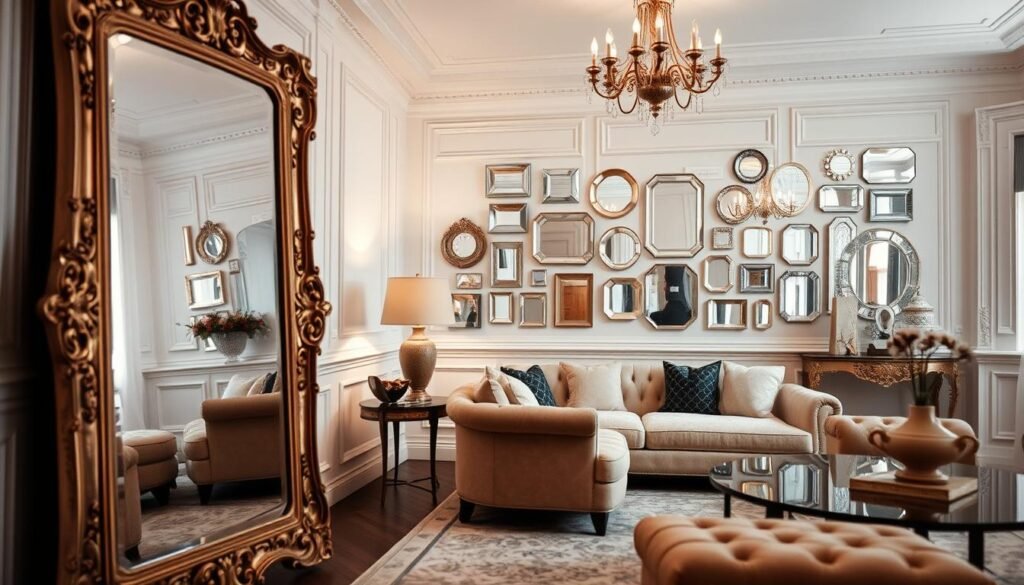
One of the most useful tools you have may already be hanging in your hallway. A mirror repeats whatever sits in front of it and bounces light back into the room, which is why a space with one well-placed mirror reads as larger than the same space without it. They’re not only for checking your reflection—they do real work on how a room feels.
Expanding Visual Space
If you’re working with limited square footage, here’s the move: hang a large mirror on the wall directly opposite your biggest window. It sends daylight back across the room and reads almost like a second window, so even a small area feels open and airy. No good window to face? Aim the mirror at your brightest lamp instead and you’ll get a softer version of the same effect.
Oversized mirrors also work as focal points on a feature wall, doing double duty as useful pieces and as art. A leaning floor mirror costs a fraction of a large framed painting, and thrift stores and marketplace listings are full of them for under fifty dollars. Floor-to-ceiling options stretch the room the most.
Modern Aesthetic Vibe
For a contemporary look, consider frameless mirrors with clean edges. Geometric shapes like hexagons add visual interest without overwhelming your design. These choices create that sleek, modern aesthetic vibe you’re after.
The key is balancing reflective elements with other textures. Mirrored furniture and metallic accents contribute to a light-filled atmosphere. Your space will feel sophisticated rather than cold—both visually spacious and warmly inviting.
A collection of smaller mirrors arranged artistically creates dimension throughout the room. This approach reflects light from multiple angles while adding personality to your interior design.
Art-Inspired Drawing Room Decoration Ideas
What if your favorite artwork became the blueprint for the whole room? Building a palette around one piece you already own gives the space a gallery-like feel, and it costs nothing to try: pull three colors out of the art, then look for those same three in the pillows, throws, and lampshades you already have before you buy anything new.
Highlighting a Focal Art Piece
Your statement artwork deserves center stage. Position it at eye level on a prominent wall where it commands attention. Proper lighting makes your piece truly shine.
Consider picture lights or subtle uplighting to enhance the visual impact. For cozy reading nooks, surround art with comfortable seating. This creates an intimate space where you can truly appreciate your collection.
Creating a Thematic Design
Building a room around a single pattern is one of the easiest ways to make choices feel settled. Pick a botanical wallpaper or a bold fabric first, then pull every other colour in the room from it. Peel-and-stick paper costs a fraction of traditional wallpaper and comes off cleanly, which matters if you rent.
Pull accent colors directly from your artwork. Echo these hues in textiles, accessories, and wall treatments. This creates harmony without feeling matchy-matchy.
Remember that art extends beyond paintings. Sculptures, photography, and textile art can all inspire your interior design. These elements bring incredible character to your space.
| Art Type | Design Approach | Room Impact |
|---|---|---|
| Large Painting | Build color palette around dominant hues | Creates cohesive, gallery-like feel |
| Sculpture | Use as centerpiece with strategic lighting | Adds dimensional interest and texture |
| Photography Collection | Create thematic wall arrangement | Establishes narrative and personal touch |
| Textile Art | Coordinate with upholstery and pillows | Adds warmth and tactile appeal |
Creative Lighting and Accent Fixtures
Lighting holds a secret power to redefine the entire character of your home’s central gathering spot. It’s not just about seeing clearly—it’s about creating mood and dimension that change with your needs throughout the day.
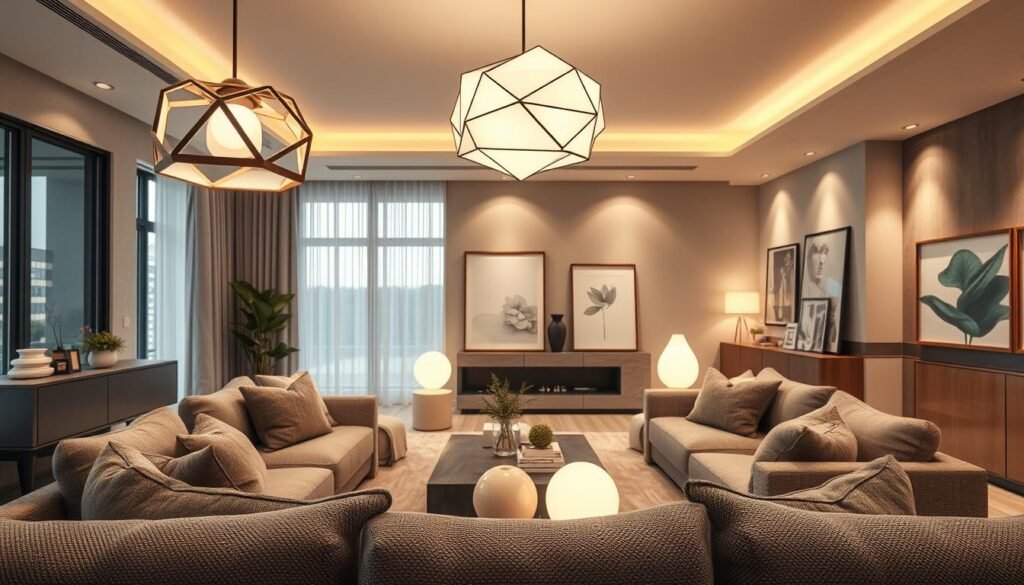
Innovative Fixture Ideas
Instead of one bright overhead light, layer different sources. A statement chandelier makes a gorgeous focal point. It draws eyes upward and highlights your ceiling beautifully.
In a room with a vaulted ceiling, long pendants hung low bring the height back down to human scale. You do not need new fixtures to test this — rehanging what you already own 12 inches lower, or adding a plug-in swag hook for around $15, gets you most of the way.
Balancing Light and Ambiance
Dimmer switches do more for a room than almost anything else at the price. If you rent and can’t rewire, a plug-in dimmer cord runs about fifteen dollars and works on any lamp. Either way, you can move from bright family time to soft evening light without changing a bulb. Mix fixture styles for a collected look that feels intentional.
Pair a modern chandelier with classic lamps. Test your paint and fabrics under both natural and artificial light. Colors can shift dramatically, affecting your entire design mood.
For more creative lighting solutions, remember that where you put a light changes how the whole room reads. Good lighting makes everything feel more inviting.
Fluid-Shaped Furnishings and Multi-Functional Furniture
Have you noticed how furniture is shedding its sharp edges? We’re embracing beautiful, flowing lines that turn functional pieces into sculptural art. This shift brings a wonderful sense of softness and movement to any living area.
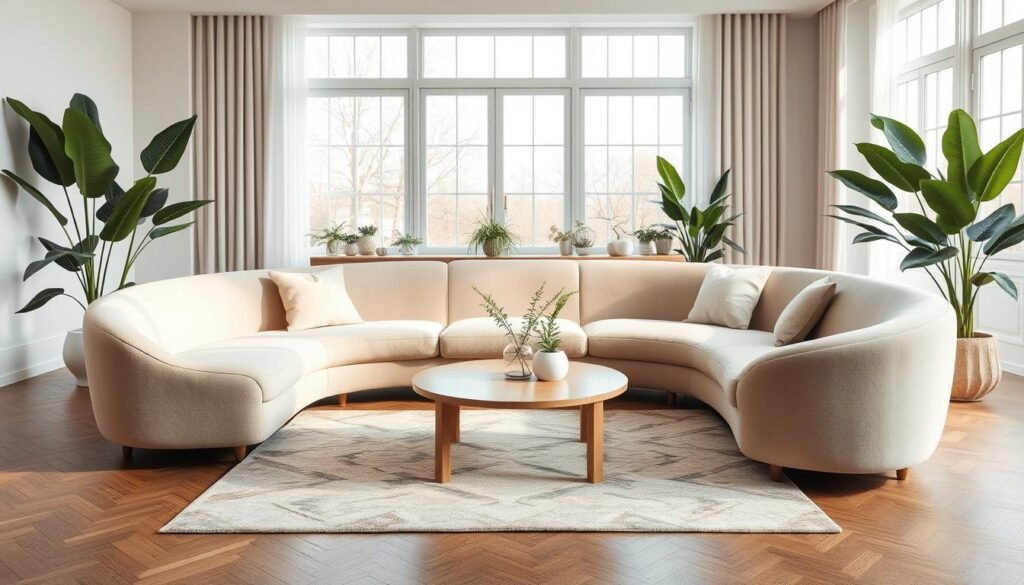
Curved seating, like a plush sectional or a rounded sofa, makes your space feel more open and inviting. There are no harsh corners to bump into, which is perfect for families or when hosting guests. Pair one curved sofa with a couple of rounded chairs and the whole seating group softens. If a new sofa is out of reach, a round side table or an oval mirror does a smaller version of the same job for very little.
Curved and Modern Pieces
The beauty of these organic shapes is their versatility. A curve turns people slightly toward each other, so conversation happens without anyone having to crane their neck. One curved piece can anchor your entire room layout.
Pair these fluid shapes with multi-functional furniture. Think storage ottomans that swallow blankets and remotes, or nesting tables that pull apart when company comes. Getting style and storage out of one footprint matters most when the room is small, and a secondhand trunk does the same job as a new storage ottoman for a quarter of the price.
For more inspiration on these latest curved organic furniture trends, remember that flexibility is key. Pieces on casters or modular furniture let you rearrange the space in a minute or two for any occasion.
| Furniture Type | Primary Benefit | Ideal For |
|---|---|---|
| Curved Sofa | Creates a focal point & improves flow | Conversation-heavy living rooms |
| Storage Ottoman | Dual-purpose seating and hidden storage | Maximizing small room functionality |
| Nesting Tables | Flexible surface space | Entertaining or adaptable design schemes |
Incorporating Nature and Lush Greenery
There’s a special energy that plants bring to indoor environments that nothing else can match. They purify your air while adding organic texture that manufactured decor simply can’t replicate. A few plants make a living area feel calmer and genuinely alive.
Bringing the Outdoors In
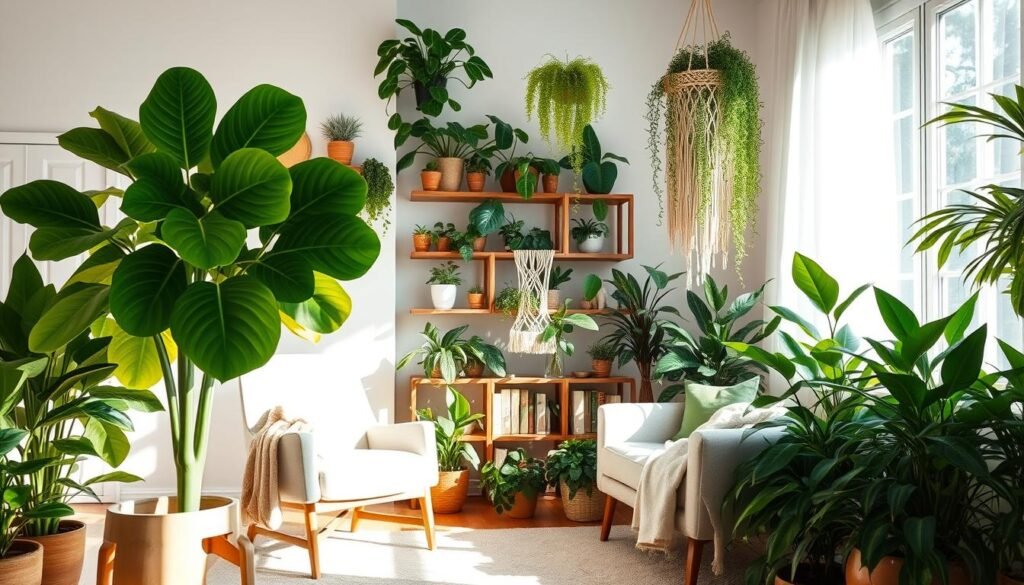
Start by looking at your blank walls and empty corners as opportunities. Layer plants at different heights to create depth and interest. Tall floor plants like fiddle-leaf figs make a strong statement, while mid-level plants on stands fill the space between floor and eye level. If a big nursery plant isn’t in the budget, a cutting from a friend’s pothos rooted in a jam jar costs nothing and fills a shelf within a few months.
Wooden plant stands and artistic pedestals turn simple greenery into intentional design elements. They add warmth and natural texture that complements your interior aesthetic perfectly. If you’re new to plant care, begin with low-maintenance varieties like pothos or snake plants.
Create a dramatic focal point with a living wall on one feature area. This vertical garden approach maximizes limited floor space while making a bold statement. Combine your plant collection with nature-inspired art and natural materials like rattan and jute.
This cohesive biophilic design makes your home feel like a peaceful sanctuary. Whether you prefer a single sculptural plant or a jungle bursting with foliage, there’s always a place for nature in your design vision. Your space will feel brighter and more vibrant with every leaf you add.
Unique Wall Treatments and Partitions
When it comes to defining your space, wall treatments and partitions can work absolute magic. They’re not just structural elements—they’re opportunities to create drama, define zones, and express your personal style.
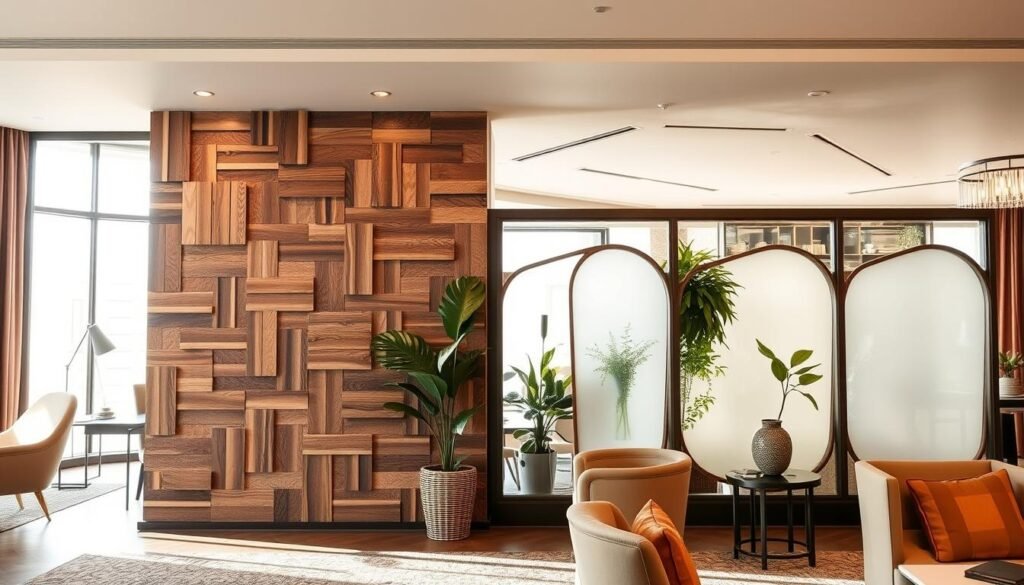
For open-concept areas, consider decorative partitions made from carved plywood or laminated screens. These beautiful additions create separation while maintaining visual flow. A wooden partition adds wonderful warmth to your space.
Accent Walls with Bold Colors
An accent wall instantly creates a focal point that draws the eye. Choose the wall behind your sofa or the one you see when entering. Make it special with bold paint or statement wallpaper.
Don’t shy away from vibrant hues. Deep jewel tones like emerald read as quiet and sophisticated. Warmer colors like terracotta bring energy. Either way, one painted wall costs about a gallon of paint and an afternoon, which is why it’s usually the first change we suggest.
Textured treatments using wood veneers or shiplap add incredible dimension. They create a look that’s both sophisticated and inviting. Balance bold walls with neutral furnishings for harmony.
For more on picking a wall and a color, see our guide to bold accent wall ideas. Your walls should work with your decor rather than compete with it, and the right treatment changes the mood of the whole room.
| Wall Treatment | Best For | Visual Impact |
|---|---|---|
| Bold Paint Accent | Creating focal points | Adds drama and depth |
| Wooden Partition | Open-concept spaces | Defines areas with warmth |
| Textured Wallpaper | Adding dimension | Creates tactile interest |
| Veneer Finishes | Sophisticated elegance | Adds cozy depth |
Showcasing Statement Pieces and Custom Art
Some design elements whisper, while others shout—statement pieces are the bold declarations that define your space. They’re the exclamation points in your design sentence that immediately communicate your personality.
One large piece can carry a whole room on its own. An oversized canvas or a single sculpture becomes the thing everything else arranges itself around, and it is often cheaper than filling the same wall with five smaller pieces.
Personalizing Your Space
Custom art adds that deeply personal touch mass-produced decor can’t replicate. Whether it’s a commissioned portrait or sculpture from your travels, these pieces tell your unique story.
Jewel-toned seating and one striking pendant give a room real character. If you are not ready to commit on furniture, start with a jewel-toned throw and two cushions and live with the colour for a week before you go further.
Don’t limit yourself to traditional artwork. An extraordinary vintage chandelier or heirloom furniture can serve as your anchor. The key is giving your showstopper breathing space to shine.
Personalizing your home with meaningful objects creates emotional connection. Display things that spark joy or represent your passions. If you’d rather make your statement piece than buy one, our boho decor room-by-room guide is full of handmade, low-cost ideas. Either way, giving the piece room to breathe is what makes it read as intentional.
Mixing Patterns, Textures, and Colors
Mixing patterns and textures is like cooking with spices—the right combination creates something extraordinary. This is where your design truly comes alive and feels uniquely yours.
The reliable version of this is to use several patterns but anchor them all in one consistent tone — a deep blue running through the curtains, a cushion and the rug, say. The result reads as collected rather than chaotic, and it works whether the pieces came from a showroom or a charity shop.
Bold versus Neutral Combinations
Start with a foundational neutral like your sofa or rug. Then layer in vibrant colors on smaller elements like pillows. This approach gives you the best of both worlds.
Keep larger investments in versatile neutral tones. Use bold fabrics for accent pieces you can change seasonally. This balance creates harmony in any living area.
Layering Textiles and Finishes
Textiles are your playground for experimentation. Mix smooth velvet with nubby linen for wonderful contrast. Add a chunky knit throw over leather seating.
Vary your finishes throughout the room. Combine matte and glossy surfaces. Mix warm woods with cool metals. These contrasts create depth in your interior.
The key is balance. If you go bold with patterns on your fabrics, keep walls neutral. This push-and-pull creates a sophisticated space that engages all the senses.
Functional Decor: Optimizing Seating and Storage
True design genius happens when beauty meets practicality in perfect harmony. Your living space should work as beautifully as it looks, serving your daily needs while maintaining its stylish appeal.
We believe every piece of furniture should earn its place by doing more than one job. That’s what keeps an interior adaptable as your life changes.
Innovative Storage Solutions
Modern cabinetry and minimalist storage systems keep your area feeling clean and organized. Sleek plywood cupboards and built-in shelving provide homes for everything from books to entertainment essentials.
Shelving above the windows is an underused trick. It uses vertical space most rooms waste and gives you somewhere to display things without eating into the floor. A single painted board on brackets runs about $25 and takes an afternoon.
For versatile seating, consider alternatives to traditional sofas. Aesthetic ottomans and colorful diwans offer flexible options that accommodate guests beautifully. These pieces provide extra seating when needed while maintaining your room‘s elegant flow.
The same thinking works in the rest of the house: a lidded bench by the door, a basket under the console. If you like the idea of fewer pieces doing more, our minimalist living room design ideas show how far a small, well-chosen set can go. Every piece should pull its weight for both your interior design vision and your practical needs.
Floor-to-ceiling units maximize storage in compact living areas. They create wonderful display spaces for your favorite items while keeping daily essentials neatly organized. This approach makes your entire room feel intentional and clutter-free.
Budget-Friendly and Secondhand Options
The secret to a room that looks like nobody else’s often lies in what other people passed on. A beautiful home doesn’t require an unlimited budget—some of the most characterful spaces we’ve seen are filled with pieces that were rescued and repurposed.
Start with what you already own. That tired dresser can look like a different piece under fresh paint. Those dated chairs could be beautiful reupholstered, and a staple gun plus two yards of fabric will cover most drop-in seat pads in an evening. Your grandmother’s side table may only need a sand and a coat of wax.
Incorporating Vintage Finds
A garden-cottage living room furnished entirely with secondhand finds is proof of how far this goes. The result was a space overflowing with charm that mass-produced furniture simply couldn’t deliver.
Thrift stores, estate sales, and antique shops are goldmines for unique pieces with history. Shopping secondhand is also sustainable, keeping good items out of landfills while giving your home individuality.
The key to successful thrift shopping is patience and vision. Look past ugly finishes to see good bones. Imagine pieces in different colors. Don’t be afraid of projects requiring a little DIY elbow grease.
Budget-friendly decor often means making small, impactful changes over time. Fresh paint, new pillows, updated curtains—these tweaks cost little but deliver major visual impact to your interior design.
Mixing vintage finds with a few new pieces gives you the layered look that comes from collecting over time rather than buying a whole room at once. A new sofa looks better, not worse, surrounded by older things with some history to them.
Modern Trends: drawing room decoration ideas for a Contemporary Look
The contemporary home is no longer about choosing one design direction—it’s about creating a personal blend that reflects how we actually live. Today’s most exciting living room designs embrace this beautiful flexibility.
We love how modern interior design allows you to mix and match elements that speak to your personality. Your space should feel both current and completely you.
Modern Minimalism Meets Eclectic Maximalism
Low-profile sofas and floor cushions create a relaxed, open feel perfect for casual family time. In Amanda and John Stark’s Hamptons home, an Azura marble fireplace wall flanked by facing sofas demonstrates this approach beautifully.
The magic happens when you blend clean lines with personal touches — the framed ticket stub next to the sculptural lamp is what keeps a modern room from feeling like a showroom.
Integrating Tech and Traditional Touches
Today’s living spaces seamlessly incorporate technology while maintaining warmth. Smart lighting and hidden charging stations work alongside traditional elements.
Pairing industrial materials with earthy tones — black metal against warm oak, say — keeps a room feeling current without pinning it to one particular year. This approach creates rooms that function beautifully for modern life.
| Design Approach | Key Elements | Room Impact |
|---|---|---|
| Minimalist Base | Clean lines, neutral palette | Creates calm, spacious foundation |
| Maximalist Accents | Bold patterns, personal collections | Adds personality and warmth |
| Tech Integration | Hidden systems, smart features | Enhances functionality seamlessly |
| Traditional Balance | Natural materials, classic pieces | Adds timeless character |
For more inspiration on creating cohesive spaces that flow together, explore these best living room ideas and warm minimalist bedroom ideas. The right blend creates a home that truly works for your lifestyle.
Conclusion
Designing a space you love isn’t about perfection; it’s about creating an environment that feels authentically you. We’ve explored so many inspiring approaches throughout this guide, and now comes the most rewarding part—making your living room uniquely yours.
Your home should reflect how you actually live. Whether you prefer bold colors or calming neutrals, your choices should support your daily life. Great interior design doesn’t require unlimited resources.
Some of the biggest changes come from the cheapest updates. Fresh paint, furniture moved to a different wall, and a few secondhand finds will change how the space feels. Don’t be afraid to experiment and change your mind over time.
Your room will evolve as your life changes. New pieces will find their place, and tweaking your design becomes part of the joy of homeownership. Start with one small change and build from there.
Before you know it, you’ll have created a living area that’s not just beautiful, but a true reflection of who you are. A place where wonderful memories are made every single day.