Do you ever walk into a room and feel it just doesn’t spark joy? We’ve been there too. That gap between the beautiful home you imagine and the reality you live in can be frustrating. But it doesn’t have to be.
This guide is your friendly companion on the journey to creating a space you adore. We believe making your house a home should feel exciting, not overwhelming. It’s about expressing your unique story, not following rigid rules.
Whether you’re starting with a blank canvas or giving a tired room a fresh look, we’re here to help. Our advice comes from real experience and proven design principles. We’ll share practical ideas that work for any budget and style.
Get ready to decorate with confidence and create a living environment that is both beautiful and deeply personal. Let’s begin this creative adventure together!
Key Takeaways
- Overcome the common frustration of ideas not translating into reality.
- Learn accessible principles to make smart design choices.
- Create a beautiful and functional living environment on any budget.
- Gain the confidence to refresh a room or start from scratch.
- Focus on making your space a personal reflection of your lifestyle.
- Transform your house into a home you truly love.
Understanding Your Decorating Vision
Before selecting a single paint swatch or piece of furniture, it’s crucial to pause and define your core decorating vision. This is your personal roadmap, ensuring every choice you make leads to a space that feels authentically you.
Establishing a Personal Style Statement
Your unique personal style is the North Star for every design decision. It’s not about fitting into one category. You might love modern minimalism and rustic charm equally! Blending these elements creates a home that tells your story.
Our tastes evolve as we grow. What you loved five years ago might not resonate today. That’s perfectly normal. Taking time for self-reflection helps you understand what colors, textures, and atmospheres truly make you comfortable.
Aligning Decor with Lifestyle and Needs
Your vision must support your actual life. A house with active kids has different needs than a quiet retreat. Your living space should work for your family and how you spend your time.
Think about how you use each room. Do you love entertaining people? Or do you crave a cozy nook for relaxation? When your vision is clear, shopping becomes focused and fun. You’ll know exactly what fits your aesthetic and supports your daily rhythm.
Finding Your Unique Decorating Style
Finding your unique aesthetic doesn’t require a design degree—just an open mind and willingness to explore what resonates with you. This journey is about uncovering the elements that make your heart sing!
How to Identify What You Love
Start by paying attention to what catches your eye. When browsing beautiful homes online or in magazines, save images that spark joy. Create a digital collection and look for common threads.
You might notice you’re drawn to certain colors, furniture types, or overall vibes. The key is recognizing patterns without forcing yourself into one category. Your personal style might blend modern minimalism with cozy textures!
Embracing Evolving Tastes
Your preferences will naturally change over time. That coastal theme you loved five years ago might not feel right today. This evolution is healthy—it shows you’re growing!
Fill your space with items you genuinely love rather than trendy pieces. Authentic choices create warmth that store-bought accessories can’t replicate. Taking time to understand your style now saves a lot of frustration later.
Every corner should tell your story through personal touches. This way of decorating creates a home that truly reflects who you are.
Expert Principles: tips for decorating your home
Good design isn’t just about how things look; it’s about how they make you feel and function. We believe the best approach blends expert principles with your personal needs. This creates a space that is both stunning and supportive of your daily life.
Incorporating Functional and Aesthetic Elements
A beautiful room that doesn’t work for you is a missed opportunity. The real magic happens when you balance visual appeal with practical needs. Think about how you move through a room and what you need to store.
Comfort is the most important element. Soft textures and practical layouts contribute directly to your well-being. Your home should be a sanctuary where everyone feels completely at ease.
| Functional Focus | Aesthetic Focus | Successful Blend |
|---|---|---|
| Easy traffic flow | Pleasing color palette | Furniture arranged for both movement and conversation |
| Adequate seating for guests | Interesting textures | Comfortable, stylish chairs that invite people to sit |
| Smart storage solutions | Artful accessories | Beautiful baskets or cabinets that hide clutter |
Balancing Color, Light, and Texture
These three elements work together like ingredients in a recipe. A room needs variety to feel engaging. Think of color for mood, light for atmosphere, and texture for depth.
Professional designers use scale and proportion to create harmony. Don’t be afraid to mix different types of materials. This thoughtful combination is the best way to make a space feel just right.
Setting the Tone with Entryways and Front Doors
Your front door is more than just an entry point—it’s the opening chapter of your home‘s story. This area creates that all-important first impression for anyone who visits. It gives a hint of the personality and style waiting inside.
Painting and Styling Your Front Door
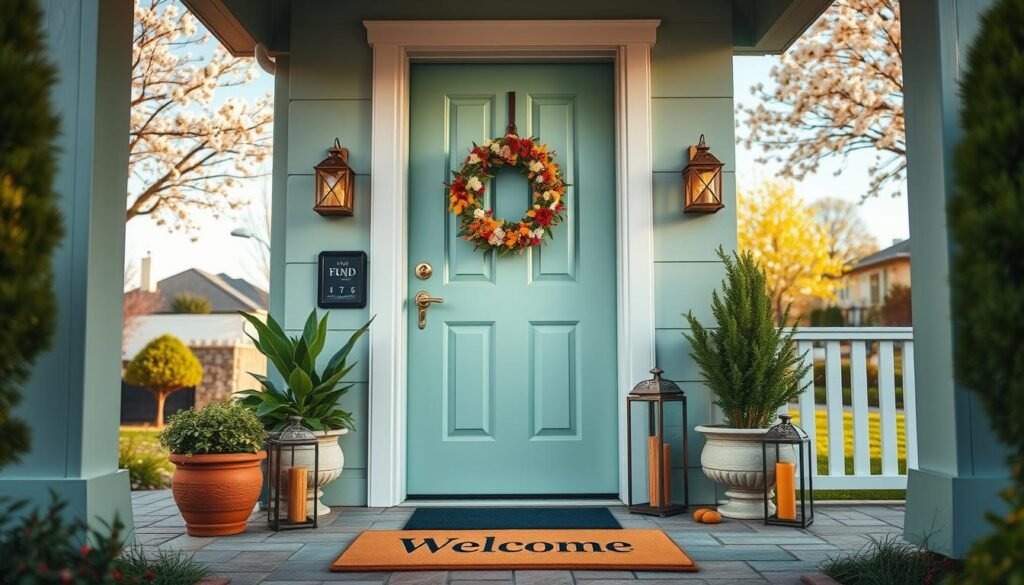
A fresh coat of paint is one of the easiest ways to make a dramatic impact. Stager Lara Allen-Brett advises, “Red is a lucky color in many cultures.” She notes that a red door historically meant “welcome.”
Other hues are also gaining favor. Christopher Breining points to orange and yellow. Both are linked to joy and warmth. A glossy, fun hue makes your house instantly more welcoming.
Don’t forget practical updates. An outdated screen door can ruin the look. Replace it with a modern storm door featuring full-length glass. This simple change elevates the entire entrance.
Creating an Inviting First Impression
Your goal is to make people feel excited to step inside. Think of your door as the welcoming handshake. Small enhancements create a big effect.
Update hardware, add a cheerful doormat, and include potted plants. Good lighting is essential for evening visitors. This is a powerful way to boost curb appeal.
For more entryway styling secrets, we have a great resource. Creating an inviting atmosphere starts right at your doorstep. It sets a positive tone for the entire experience.
Creating Warm and Inviting Living Spaces
Your living area naturally becomes the gathering spot where memories are made with loved ones. This central room deserves thoughtful planning to encourage connection and comfort.
Arranging Furniture for Connection
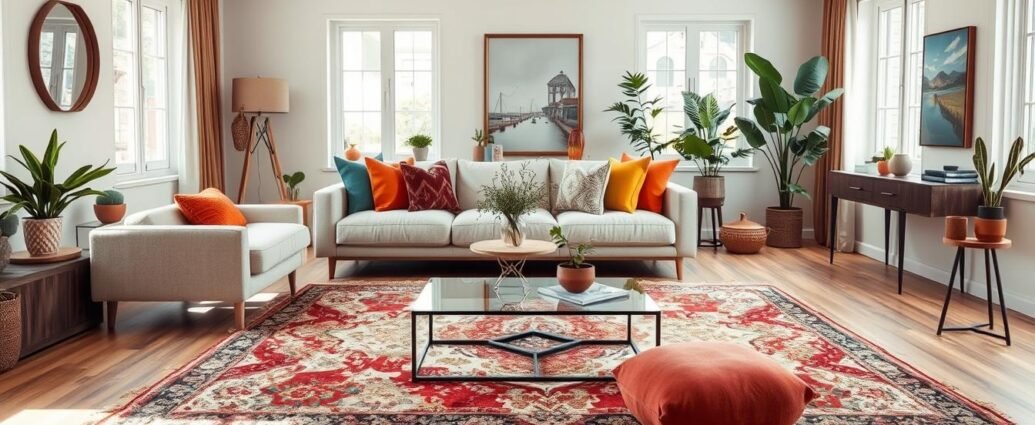
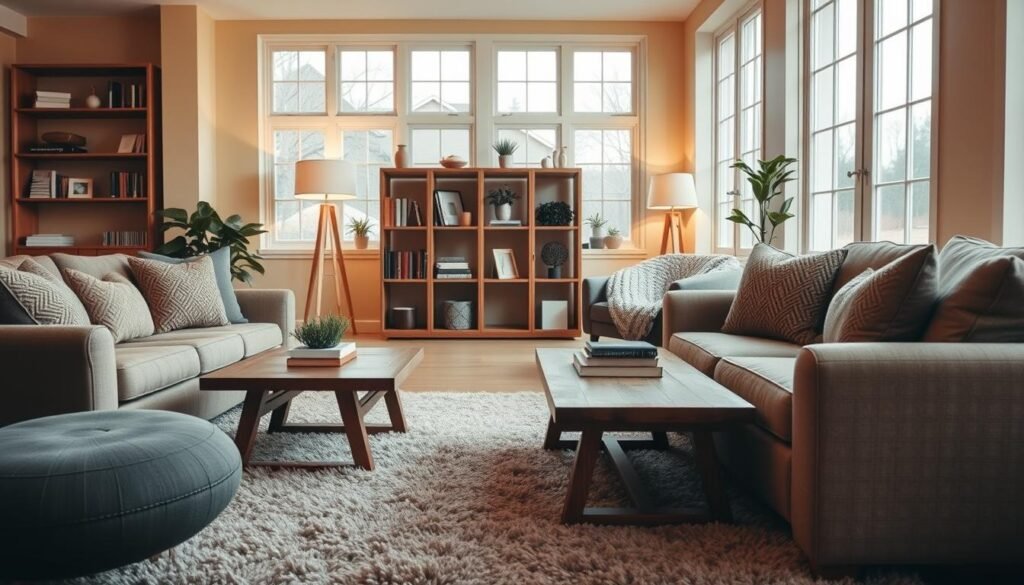
Dallas-based stager Michelle Lynne shares smart advice for your living room layout. “A conversation area that has a U-shape, with a sofa and two chairs facing each other at each end of the coffee table, or an H-shape, with a sofa directly across from two chairs and a coffee table in the middle, is ideal.”
Many people push all furniture against walls thinking it makes the room look bigger. “In reality, floating the furniture away from the walls makes the space feel larger,” Lynne explains. This creates more intentional conversation areas.
Marrying Old Family Heirlooms with Contemporary Pieces
Designer Maggie Clarke loves blending inherited furniture with modern elements. “When our clients hired us, they had a lot of inherited pieces from their family they wanted to incorporate,” she says. Clarke refinished a client’s grandmother’s dining table and side chairs to minimize red woodgrain tones.
“I love incorporating meaningful pieces into designs—it gives the space soul,” Clarke emphasizes. This mix creates rooms with depth and personality. Don’t dismiss family heirlooms—with creativity, they become treasured focal points.
For more inspiration on creating welcoming layouts, explore these living room arrangement ideas. Your space should reflect both style and the connections you cherish.
Brightening Your Home with Color and Lighting
The atmosphere of any room is deeply shaped by two key elements working in harmony. Color and lighting are powerful tools that create mood and visual impact. They work together to make your space feel inviting and alive.
Choosing a Cohesive Home Color Palette
Expert Christopher Breining advises a smart approach to paint. “You want to minimize jarring transitions,” he says. Stick to light, neutral colors like beige or gray on the first floor.
This creates a smooth flow between rooms. Neutral wall colors offer great flexibility. You can easily change accessories without a full repaint.
Painting two small adjacent rooms the same neutral color helps them feel larger. It’s an inexpensive way to make a big difference. If you love color but aren’t ready to commit, try an accent wall for contrast.
Layering Lighting for Ambience and Function
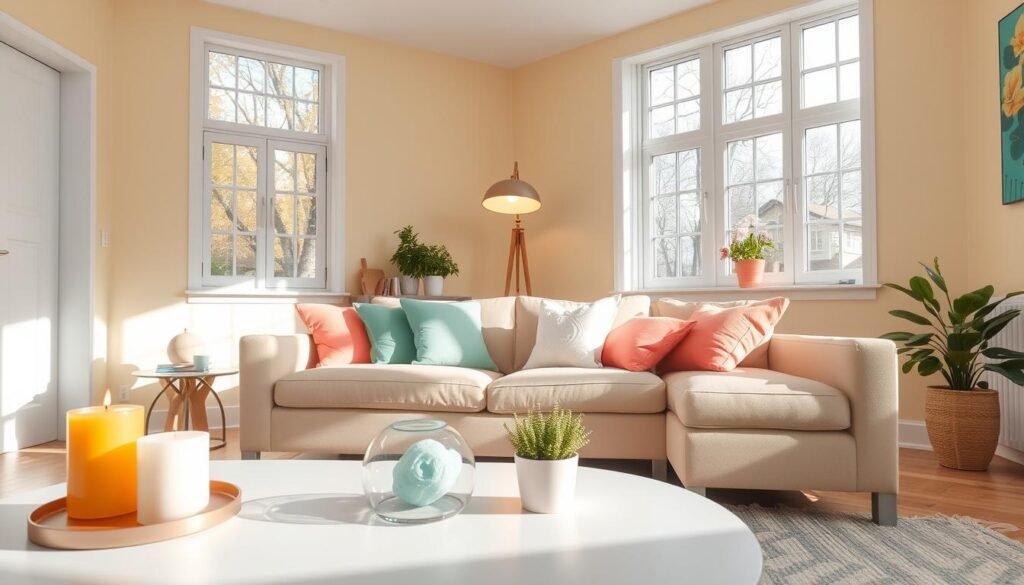
Lighting plays an essential role in setting your home‘s tone. Every room should have three types of light for optimal function and beauty.
Ambient lighting provides overall illumination from ceiling fixtures. Task lighting focuses on specific activities like reading. Accent lighting highlights features like artwork.
For a living room, aim for at least 3 watts per square foot. Breining shares a clever visual trick. “Placing a canister uplight in the corner casts a glow on the ceiling, making a room seem bigger.”
These changes offer a lot of impact without a full renovation. For more inspiration on creating beautiful atmospheres, explore this resource on harmonious design.
Furniture and Accessories: Creating Functional Spaces
When it comes to furnishing your rooms, the magic happens when you strategically blend investment pieces with affordable finds. This approach creates spaces that feel both polished and personal.
Mixing High-End Finds with Budget-Friendly Accessories
The High/Low strategy is a smart way to build your space. Invest in quality furniture that lasts—like a classic sofa or dining table. These key pieces become your foundation.
Then have fun with budget-friendly accessories! Throw pillows, artwork, and decorative items let you refresh your look without major expense. This mix gives you flexibility as your tastes evolve.
Anchoring Rugs, Tables, and Key Pieces
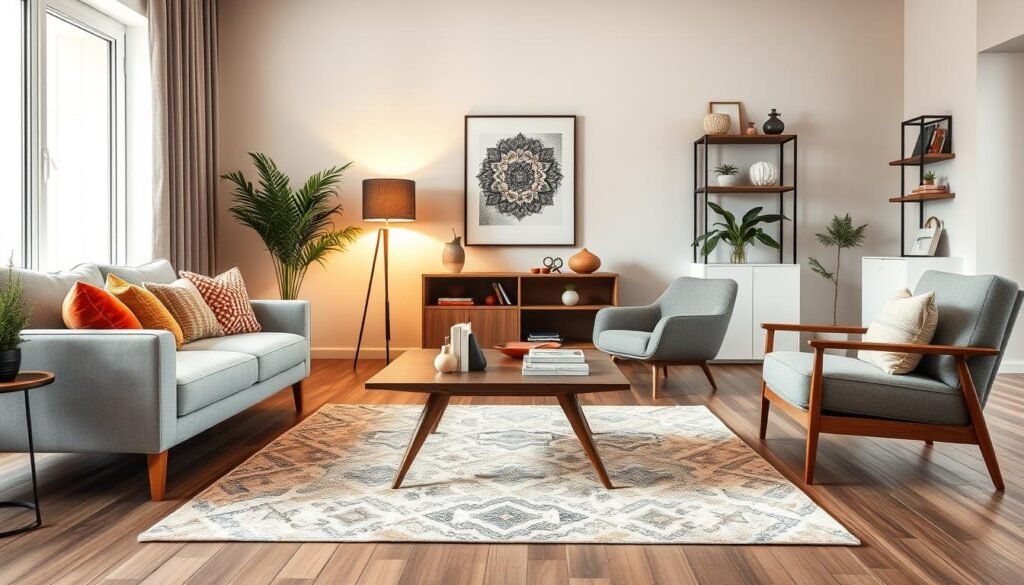
Proper placement makes all the difference. Designer Christopher Breining advises, “In a living room, all four legs of the sofa and chairs should fit on the rug—it should define the seating area.”
Even smaller spaces usually need an 8×10 or 9×12 rug. At minimum, the front legs should rest on it. This creates visual connection between furniture pieces.
The same principle applies to dining rooms. Your rug should extend beyond the table, allowing chairs to stay on it when pulled out. This thoughtful anchoring makes every area feel cohesive and intentional.
Clever DIY Techniques and Budget-Friendly Ideas
What if we told you that some of the most dramatic transformations in your living environment don’t require a contractor or a huge budget? Smart diy projects can completely refresh your space with impressive results.
Simple Projects to Transform Your Space
Christopher Breining shares brilliant ideas for outdated fixtures. “A 1980s brass chandelier can get a new lease on life with a quick coat of hammered-bronze spray paint,” he notes. This approach works for many dated things around your house.
Even tired kitchen cabinets benefit from white paint and new hardware. For countertops, Breining recommends Rust-Oleum Countertop Transformations. This product mimics stone, making Formica surfaces look fresh.
Small details make a big difference. Michelle Lynne emphasizes, “Nothing drags down a refreshed space like a dingy, almond-colored switch plate.” Updating these simple things creates cohesion.
Fort Design Studio showed creative thinking in a Texas home. They used a portable wooden island instead of built-in cabinetry. This unique solution warmed up the kitchen beautifully.
Smart organizational products can revolutionize daily life. Designer Hilary Colia installed a pullout Rev-A-Shelf spice drawer beside the range. This simple addition eliminated constant trips to the pantry.
These diy approaches prove that budget-friendly doesn’t mean cheap-looking. With the right ideas and a little time, you can achieve professional-quality transformations. Explore more weekend diy projects to continue your creative journey.
Personal Touches for a Signature Look
Nothing creates a more welcoming atmosphere than a home that genuinely reflects the people who inhabit it. When you walk into a space filled with meaningful items, you immediately feel connected to the stories they tell.
Using Artwork, Personal Items, and Mementos
Your living spaces should celebrate your journey. Family photos, travel souvenirs, and cherished collections add warmth that store-bought decor can’t replicate. These personal touches make every room feel uniquely yours.
Displaying meaningful items creates small vignettes throughout your home. Combine grandmother’s quilt with modern throw pillows. Mix children’s artwork with professional pieces. This blend tells your ongoing story.
“The most beautiful homes are those where every object has a story to tell.”
Proper placement makes all the difference. Hanging artwork at the right height transforms any wall. The center of each piece should sit at average eye level for your family.
| Wall Size | Best Approach | Spacing Guidelines |
|---|---|---|
| Large Wall | One oversized piece | Centered at 57-60 inches high |
| Medium Wall | Gallery grouping | 2-4 inches between items |
| Small Wall | Single statement piece | Proportional to wall size |
Take time to arrange your accent pieces thoughtfully. Your home should bring joy during quiet reading moments and lively gatherings alike. Every corner becomes a chapter in your life‘s story.
Smart Storage Solutions and Decluttering Strategies
The secret to maintaining a gorgeous home isn’t just about what you add—it’s about what you thoughtfully contain. Even beautifully arranged rooms need clever systems to stay functional and fresh over time.
Innovative Storage Ideas from Designers
Designer Adam Ben Wagner shares a brilliant approach to kitchen integration.
“I wanted the kitchen to feel incorporated into that space without sticking out like a typical kitchen,” he says. “I conceived of the cabinetry as full-height bookshelves and storage, reading more like an intimate library area.”
A cohesive wood stain across an open-concept floor plan ensures seamless transitions. This makes storage feel intentional rather than utilitarian.
Keeping Space Organized Without Sacrificing Style
The longer you live in a house, the less you notice accumulated clutter. Sometimes fresh eyes help—whether from a professional organizer or honest friend!
Christopher Breining suggests a DIY approach: whittle down shelf contents by 50%. Mix horizontal book stacks among vertical rows. Intersperse decorative objects like bowls for visual interest.
For entertaining families, designer Dane Austin offers a practical rule. Match your living room seating to your dining room chair count. This ensures you don’t over-invite beyond your home‘s capacity.
The best storage solutions become part of the room‘s design. Everything should have a designated place while maintaining aesthetic appeal. For more organization strategies that reduce stress, we’ve found helpful resources.
Balancing Modern Trends with Timeless Decor
How do you keep your space feeling fresh without chasing every fleeting trend? Many of us love current styles but want our homes to maintain their charm for years. The solution lies in smart blending rather than strict choosing.
Integrating Current Trends with Classic Design Elements
The 80/20 rule gives you a brilliant framework for mixing styles. Dedicate 80% of your space to one dominant style—your foundation. Use the remaining 20% for other types you love. This formula creates balance and prevents visual chaos.
This approach works every time because it’s been tested with amazing success. Your main style provides cohesion while smaller doses of contrast add excitement. Think of it as creating a collected look rather than a themed one.
Juxtaposition is a powerful way to create interest. Place a sleek modern coffee table beside a vintage armchair. The contrast highlights each piece’s unique qualities. But use this technique judiciously—overdoing it creates confusion.
Invest in classic design elements for major furniture and architectural features. Then have fun with trends in accessories and textiles. These smaller items are easier to update over time.
Timeless decor doesn’t mean boring. It means choosing quality pieces with enduring appeal. The best homes feel collected gradually rather than purchased all at once. This creates spaces with depth and staying power that you’ll love for years.
Conclusion
Congratulations on reaching the end of this guide! We hope you feel inspired and equipped to begin your creative adventure. Remember, making your home a reflection of you is a journey, not a race.
You now have a solid foundation. You understand how to blend styles, use color and light, and arrange a room for comfort. The best ideas often start small. Choose one project, like a unique DIY accent, to build momentum.
Your space should evolve with your life. Don’t fear mistakes—they are just learning opportunities. The goal is a living environment that brings you joy every single day.
You have the knowledge. Now, trust your instincts and create a home that is beautifully, authentically yours. Happy decorating!