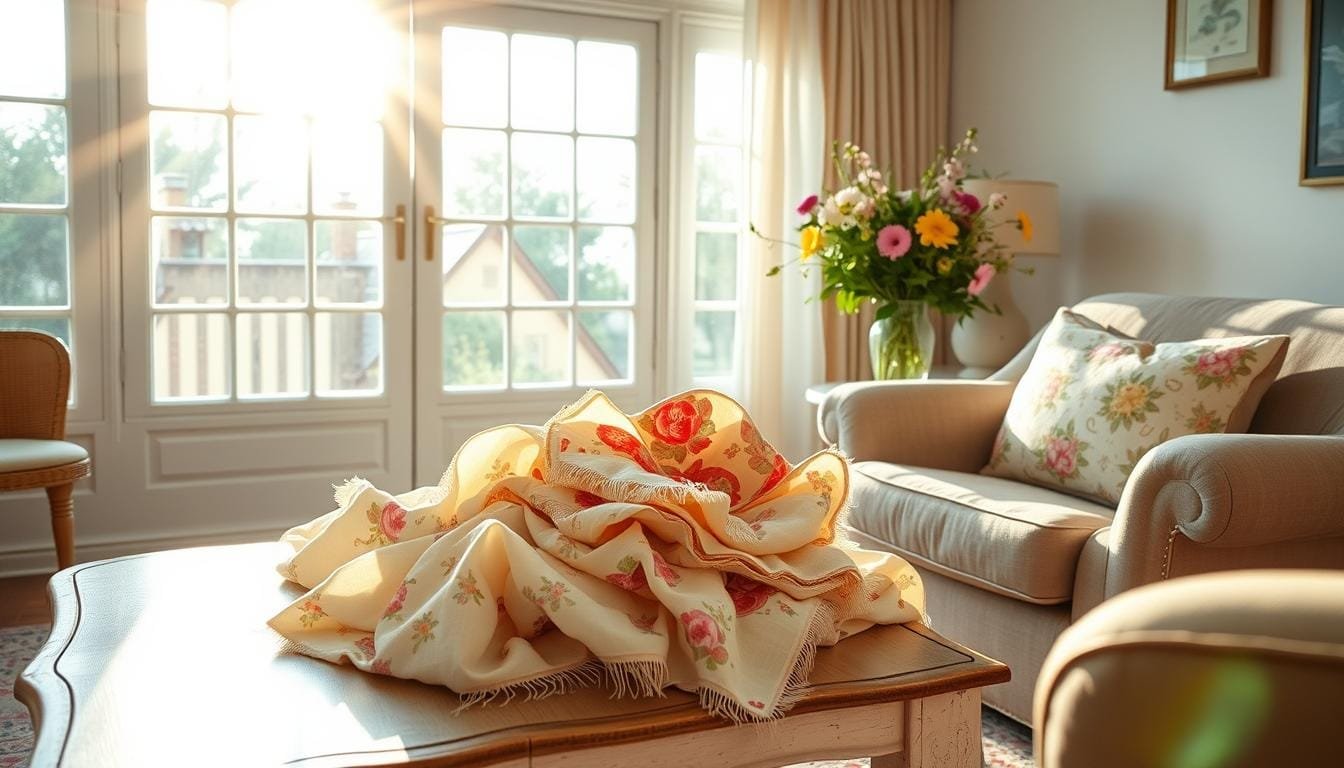
When the season turns, most of us feel like moving something around. The good news is that the brightest fabrics in the house are already yours, and they don’t have to go back in the storage bin come September.
We’ll show you how to give those summer textiles a second act that holds up through fall and winter. You don’t need to know how to sew, either. Nearly every project below has a no-sew version that relies on fabric glue, iron-on hem tape, or a well-placed knot. Check out our guide on DIY Easy No-Sew Fabric Pumpkins for Fall for some inspiration.
By repurposing fabric, you’ll not only reduce waste but also create unique decor that tells your personal story. By the end, you’ll look at those summer patterns differently, and probably at the contents of your linen cupboard too.
The Case for Giving Summer Fabric a Second Life
There’s a certain charm in giving seasonal fabrics a new purpose, so they stay part of your home all year. Keeping them in rotation holds onto your favorite summer memories while the rest of the room shifts with the seasons. Many summer fabrics feature timeless elements like florals and natural textures that can blend with your existing decor when repurposed thoughtfully.
By repurposing vintage and thrifted fabrics, you give them a second life, adding character to your space. This creative process becomes a relaxing outlet, giving you time to unwind while creating something beautiful for your living space, enhancing your decorating skills.
Why Repurpose Summer Fabrics?
Turning summer fabrics into decor is a sustainable, low-cost way to redecorate. When the budget is tight, reusing what you already own does more for a room than anything you could buy, and you end up with something nobody else has.
Environmental Benefits
Repurposing summer fabrics has a significant impact on the environment. By reusing existing materials, we reduce the demand for new, resource-intensive fabrics. This approach helps minimize textile waste, and it costs nothing to start, since the raw material is already sitting in your linen cupboard.
Cost-Effective Decorating
Repurposing summer fabrics is an excellent way to refresh your home decor without overspending. You can create beautiful, custom decor pieces at a fraction of the cost of buying new. By shopping at thrift stores or using remnants from fabric shops, you can find great materials for your projects. This approach allows you to stay within your budget while still achieving the look you want.
| Benefits | Environmental Impact | Cost Savings |
|---|---|---|
| Repurposing Summer Fabrics | Reduces textile waste | Saves money on new decor |
| Thrift Store Shopping | Encourages sustainable consumption | Offers affordable materials |
| Custom Decor | Promotes creative reuse | Eliminates need for expensive custom decor |
Repurposing summer fabrics is good for the environment and good for a room that should look like the people in it. So pull out those bright prints and start turning them into pieces that carry the season’s warmth right through the year.
Where to Find Summer Fabrics Worth Repurposing
Reworking a room with repurposed summer fabrics starts with knowing where to look. Whether you sew or not, fabric crafts are a favorite creative pastime for many crafters, and there are numerous inexpensive sources of fabric to explore.
Thrift Store Treasures
Thrift stores are a treasure trove for unique and affordable fabrics. You can find linens, clothing, and other textile items that can be repurposed into decorative pieces for your home.
Remnant Bins at Fabric Shops
Remnant bins at fabric shops are another excellent source of affordable fabric. You can find a variety of materials, from cotton to linen, at discounted prices.
Your Own Closet and Linen Cabinet
Before looking elsewhere, start by exploring your own closet and linen cabinet. Summer clothes you no longer wear, beach towels past their prime, or tablecloths that don’t match your current decor can be repurposed into new and exciting decor pieces.
Some ideas to get you started include:
- Repurposing summer dresses and shirts into smaller projects like pillow covers or wall hangings.
- Using beach towels and summer blankets to create cozy throw blankets or decorative accents.
- Giving new life to old tablecloths by turning them into napkin rings or mini table runners.
As you explore these sources, remember that the key to successful fabric repurposing is creativity and a willingness to see potential in unexpected places. By giving old fabrics a new life, you can create unique and meaningful decor pieces for your home while reducing waste.
| Source | Potential Fabrics | Project Ideas |
|---|---|---|
| Thrift Stores | Linens, clothing, vintage fabrics | Pillow covers, wall hangings, quilts |
| Remnant Bins | Cotton, linen, specialty fabrics | DIY curtains, table runners, fabric baskets |
| Your Own Closet | Old clothes, linens, towels | Upcycled clothing, rag rugs, memory quilts |
By exploring these sources and getting creative with your fabric choices, you can give your home a fresh new look while promoting sustainability.
No-Sew Wall Decor Projects
Wall projects are the friendliest place to start, because nothing has to hold up to washing or sitting on. Everything in this section is done with glue and a pair of scissors.
Fabric-Covered Picture Frames
Take the glass and backing out of a flat wooden or plastic frame. Lay the frame face down on the wrong side of your fabric patterns, trace around it leaving about an inch of extra fabric on every side, and cut. Run a thin line of craft glue along the front of the frame, then smooth the fabric down from the center outward so no air gets trapped. Snip a diagonal cut into each inner corner, fold the raw edges around to the back, and glue them down.
Nothing here is permanent, which is the point. When you want a different print, peel the fabric off and start again. Wide, flat frames are the easiest; ornate ones fight the fabric at every ridge.
Fabric Sun Catchers
Sheer summer fabrics glow when light passes through them, which is why they work better in a window than on a wall. Separate an embroidery hoop, lay a piece of voile, lightweight cotton, or an old scarf over the inner ring, and press the outer ring down over it. Tighten the screw a little, then pull the fabric taut in small increments, working your way around the hoop so the tension stays even. Trim the excess to about half an inch and glue it to the back of the ring.
Hang it with twine knotted around the hoop hardware. East-facing windows give you the warmest color in the morning; a west window will do the same in the evening.
Embroidery Hoop Art
Embroidery hoops provide an instant frame for your fabric, creating finished-looking wall art with minimal effort. You can showcase a specific motif or pattern from a larger piece of summer fabric, making it a unique piece of decor.
To add some variety, consider layering different fabrics within the same hoop or adding simple embellishments like buttons or small silk flowers. This technique works particularly well for creating an eclectic gallery wall that can be enjoyed in any season.
| Project | Materials Needed | Skill Level |
|---|---|---|
| Fabric-Covered Picture Frames | Fabric, Picture Frames, Glue | Easy |
| Fabric Sun Catchers | Fabric, Embroidery Hoops or Frames | Easy |
| Embroidery Hoop Art | Fabric, Embroidery Hoops | Easy |
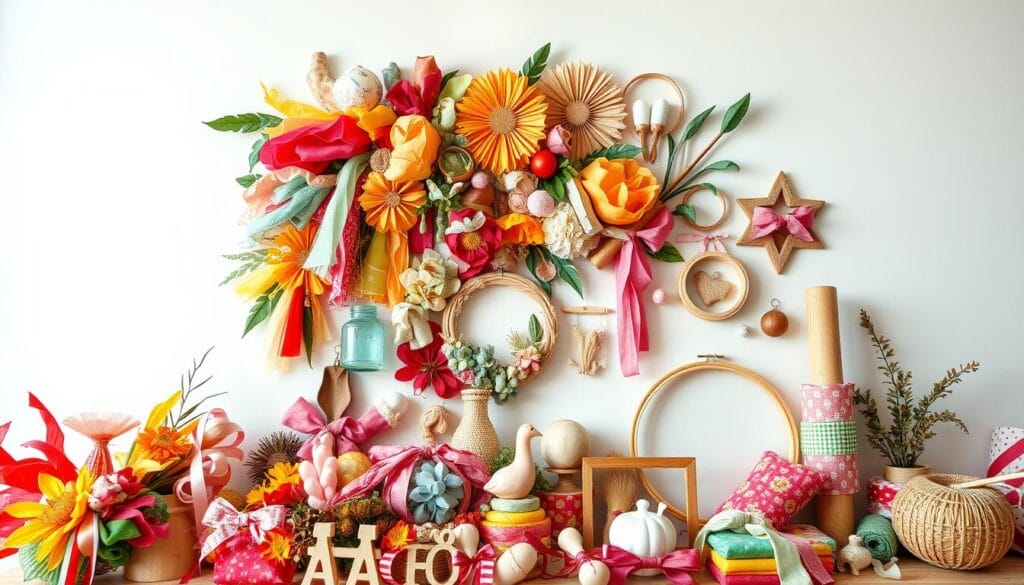
Turn Summer Textiles into Year-Round Pillows
Pillows are the easiest place to start, because a cover is really just a rectangle. They also give you the most change for the least work: swap four covers and a sofa reads differently from the doorway.
Simple No-Sew Pillow Covers
Measure your pillow form, then cut a piece of fabric roughly three times its width and about six inches longer than its height. Lay the fabric face down, set the pillow in the middle, and fold the two long sides over it so they overlap several inches in the back, the way you’d wrap a parcel. Tuck the raw ends in.
From there you have two finishes. Tie the loose corners into a knot at each end, which is the furoshiki method and comes apart in seconds for washing. Or press the back overlap closed with iron-on hem tape, which looks more like a store-bought cover and still needs no needle. Both hold up to daily use.
Lumbar Pillows from Scarves
Summer scarves are often the perfect size and shape for creating lumbar pillows. Silk and lightweight scarves feel lovely against a sofa arm, and secondhand ones cost a dollar or two. Ombré and gradient colors read as year-round rather than seasonal. Fold a long scarf in half around a lumbar form, line the hemmed edges up so they face outward, and close the two short sides with fabric glue or iron-on hem tape. Leave any fringe hanging past the seam instead of trimming it; it reads as a finished detail rather than a raw edge.
| Pillow Type | Fabric Choice | Decorative Element |
|---|---|---|
| Lumbar Pillow | Silk Scarf | Fringe |
| No-Sew Pillow | Cotton Fabric | Contrasting Edges |
| Round Pillow | Linen | Tassels |
By repurposing summer fabric, you can create unique and stylish pillows that bring warmth and coziness to your living spaces. These pillows can be used on beds, sofas, chairs, and even as decorative elements in entryways.
Repurpose Summer Fabrics into Year-Round Decor with These Table Accessories
As we transition from summer to other seasons, those vibrant summer fabrics can become table accessories that carry the warmth of the season into every meal. Small pieces work best here, since a table only needs one or two soft elements before it starts to feel busy.
Mini Table Runners
Cut a strip about 14 inches wide and long enough to hang four to six inches past each end of your table. Fold a half-inch hem along all four edges and press it flat with a warm iron. If you sew, run a straight stitch along the fold. If you don’t, lay a strip of iron-on hem tape inside the fold and press it again for ten seconds at a time until it sets. Cotton and linen hold a crease best; slippery synthetics will fight you.
Glue a length of pom-pom or grosgrain trim along the long edges to hide any wobble in your cutting line. It also gives the runner enough weight to lie flat.
Fabric-Wrapped Serving Trays
Cut fabric to the size of the tray’s inner base plus an inch on each side. Brush a thin, even coat of decoupage medium across the base, lay the fabric down, and smooth it from the middle outward with the edge of a credit card to push the air out. Let it dry, then seal the top with two more thin coats so spills wipe off instead of soaking in. If the tray has a lip, tuck the extra inch up the sides and hold it with decorative upholstery tacks. This craft takes about twenty minutes of work and a few hours of drying time, and it keeps a plain tray from scratching.
Napkin Rings from Fabric Scraps
Napkin rings are perfect small craft projects for the tiniest fabric scraps that might otherwise go to waste. Cut strips about an inch and a half wide and long enough to wrap a plain ring twice over. Dab glue on the inside of the ring, wind the strip around it at a slight angle so each pass overlaps the last, and glue the tail down on the inside where it won’t show. Plain wooden and metal rings turn up in thrift stores and craft-store clearance bins for pennies, and the same wrapping trick works on curtain tiebacks, drawer pulls, and plenty of other homemade decor for a cozy space.
| Project | Materials Needed | Skill Level |
|---|---|---|
| Mini Table Runners | Fabric, scissors, iron, iron-on hem tape (or needle and thread), trim | Easy |
| Fabric-Wrapped Serving Trays | Fabric scraps, serving tray, decoupage medium, brush, upholstery tacks | Moderate |
| Napkin Rings from Fabric Scraps | Fabric scraps, napkin rings, glue, scissors | Easy |
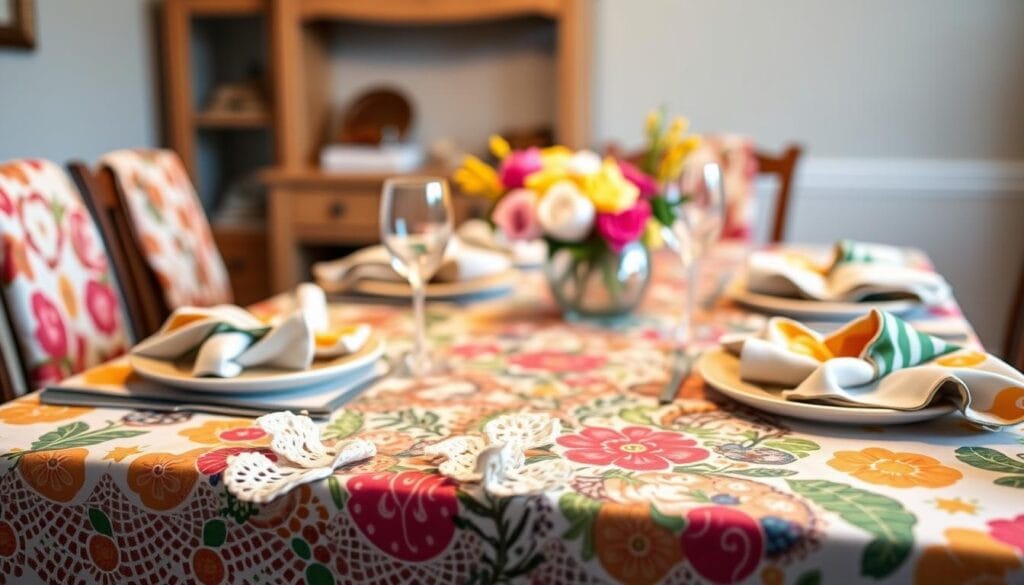
By repurposing your summer fabric, you can create beautiful and functional table accessories that will enhance your dining experience throughout the year.
Breathe New Life into Old Furniture
You can breathe new life into outdated furniture with a little creativity. This approach not only saves money but also reduces waste, aligning with sustainable living practices.
Reupholstered Chair Seats
Reupholstering a drop-in chair seat is a simple way to update dining or accent chairs, and it’s easier than it sounds. Turn the chair over, remove the four screws holding the seat pad, and lift the pad out. Lay your fabric face down, set the pad on top of it face down, and pull the fabric around to the back, stapling the middle of each side first and then working out toward the corners so the tension stays even. Fold the corners like you’d wrap a present, trim the excess, and screw the seat back in. One yard of fabric covers about four seats, so a remnant will do the whole set.
Fabric-Wrapped Drawer Fronts
Fabric-wrapped drawer fronts change the look of a piece without anything permanent, which matters a great deal if you rent. Cut the fabric to the drawer front plus an inch all around, spray the back of the fabric (not the wood) with repositionable adhesive, smooth it on, and tuck the edges around to the inside of the drawer face. It peels off cleanly. This adds an unexpected touch of color to plain dressers and nightstands. Using fabric in this way can unify mismatched furniture pieces.
Bathroom Ideas with Repurposed Fabrics
Bathrooms respond well to fabric because they’re small. One repurposed piece changes how the whole room reads, and it’s the cheapest square footage in the house to work on.
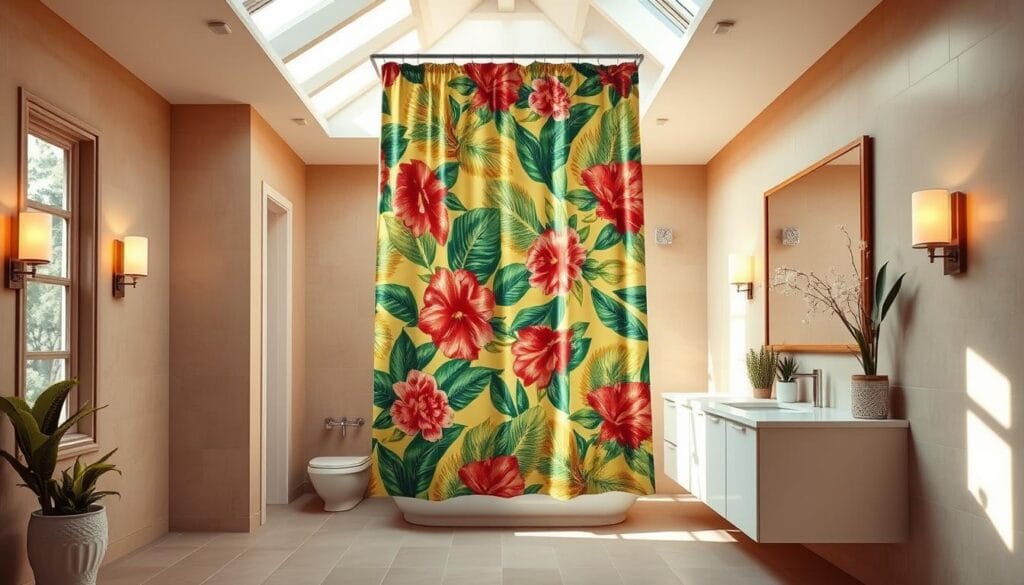
DIY Shower Curtains from Vintage Sheets
A flat sheet arrives already hemmed on all four sides, which does most of the work for you. Trim it to roughly 72 by 72 inches, fold the top edge down three inches, and press. Fix that fold with iron-on hem tape, then mark twelve evenly spaced points along it and set grommets, or skip the grommets and clip the top edge straight to the rod with curtain rings.
Hang it in front of an inexpensive plastic liner so the fabric never gets wet. That one step is what lets a delicate vintage sheet last for years in a bathroom.
Decorative Towel Accents
Adding decorative accents to plain towels is an easy way to incorporate summer patterns into your bathroom. Consider sewing a band of decorative fabric to the edges of solid-colored towels for a custom look. This technique allows you to salvage the best parts of damaged linens or use smaller fabric scraps. Decorated towels make thoughtful gift items that are both practical and personal.
- Use fabric glue designed for washable applications to attach decorative elements to your towels for a no-sew option.
- Salvage the best parts of damaged linens or use smaller fabric scraps that wouldn’t work for larger projects.
Kitchen Decor from Summer Fabrics
Breathe new life into your kitchen by repurposing summer fabrics into functional and stylish decor. You can create unique pieces that add a touch of personality to your kitchen.
Bowl Covers from Bandanas
A vintage bandana makes a good cover for rising dough or a picnic bowl. Lay it over the bowl, snap a wide rubber band around the rim to hold it, then tie a ribbon over the band so the elastic disappears. If you want one that stays put on its own, fold a half-inch casing around the edge, press it with hem tape, and thread a length of thin elastic through with a safety pin. This creative reuse keeps flies off the fruit and puts a little color on the counter.
Fabric-Lined Baskets
Lining plain baskets with summer fabric ties them to the rest of the room instead of leaving them looking like bare storage, and it lets them sit alongside your other decorative pieces without clashing. Cut a rectangle as long as the basket’s inside circumference and about four inches taller than its walls, fold it over the rim, and hold it in place with a few clothespins until you’re happy with the drape. Then glue or stitch the short ends together. The lining also keeps splinters off napkins and bread.
- Choose coordinating summer fabrics for a cohesive look.
- Use different patterns to create visual interest.
- Create reversible liners for a seasonal update.
| Project | Materials Needed | Skill Level |
|---|---|---|
| Bowl Covers | Bandanas, scissors, rubber band, ribbon | Easy |
| Fabric-Lined Baskets | Summer fabrics, baskets, scissors, glue | Moderate |
By incorporating repurposed summer fabrics into your kitchen decor, you can achieve a unique and stylish space that reflects your personality. Choose fabrics you actually like looking at, and enjoy the slow work of giving old materials a new job.
Nautical and Coastal Fabrics for Year-Round Charm
Nautical and coastal fabrics can add a touch of year-round charm to your home decor. We love using these fabrics to create decorative pieces that evoke the feeling of the sea.
Decorative Sailboats with Fabric Sails
Decorative sailboats are a delightful touch of nautical decor for your home throughout summer and even year-round. You can make them with a variety of items, as long as the wooden part can pass as a boat shape. The sails use ticking fabric or duck cloth, both of which turn up cheap in remnant bins. Cut two triangles, hem the long edge with glue so it doesn’t fray, and thread them onto a dowel with a few stitches or a dab of adhesive at the top and bottom.
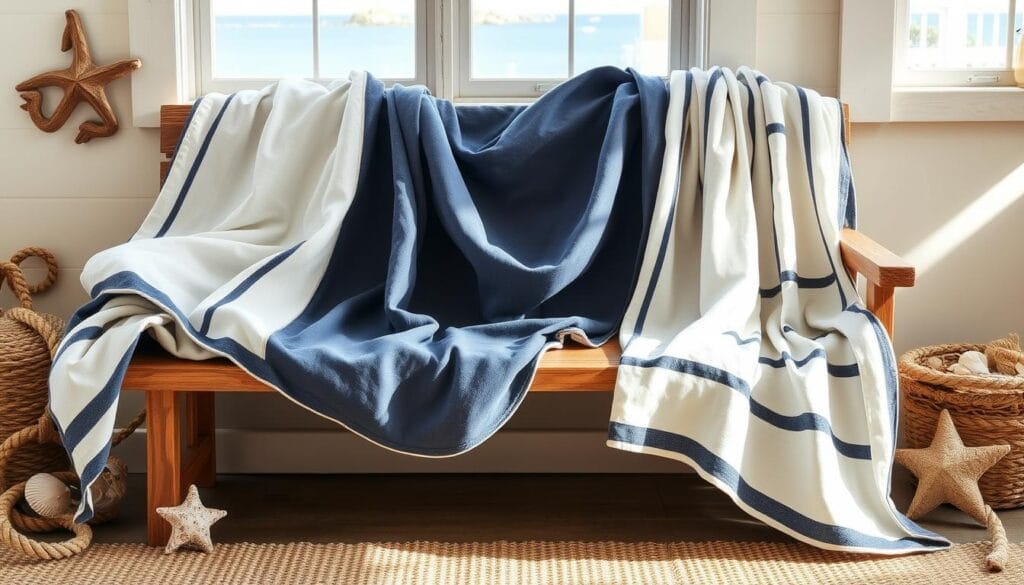
Maritime-Inspired Wall Hangings
Maritime-inspired wall hangings allow you to showcase larger pieces of nautical or coastal patterns in a way that feels intentional and styled rather than seasonally limited. To make one, fold the top edge of your fabric over a piece of driftwood or a slim rod, glue the fold down on the back so the rod is enclosed, and hang the whole thing from twine tied at each end. It takes ten minutes and reads as intentional rather than seasonal.
- Nautical signal flags and maritime patterns have a graphic quality that makes them particularly effective as wall art, adding bold visual interest to any space.
- The typically restrained color palette of maritime fabrics allows them to complement rather than compete with your existing decor style.
- These wall hangings can be easily changed or rotated with the seasons while maintaining elements of your coastal theme throughout the year.
| Nautical Decor Ideas | Materials Needed | Style Tips |
|---|---|---|
| Decorative Sailboats | Wooden boat shape, ticking fabric or duck cloth | Remnant bins are the cheapest source for small pieces. |
| Maritime Wall Hangings | Nautical or coastal fabrics, driftwood or decorative rods | Create a beachy look by using organic materials. |
For more inspiration on incorporating nautical decor into your home, check out this quaint nautical decor corner with a vintage wow factor.
Floral Patterns Beyond Summer
Incorporating floral patterns into your decor isn’t limited to summer. A floral print reads as summery mostly because of how we use it. Framed and hung on a wall in November, the same print reads as botanical art, which is why cutting a section out of a larger piece of fabric is such an easy win.
Fabric Flower Pins and Accessories
Cut three circles of increasing size from scraps, using a glass and a mug as templates. Stack them largest to smallest, gather the center with a few stitches or a dot of glue, and press a button down over the gathered point to hide it. Glue a pin back to the underside. Vintage fabric works particularly well here because the small scale suits an old print, and the pins make good gifts or trims for a plain hat.
Framed Fabric Botanical Prints
Framing floral fabrics creates beautiful botanical prints. This technique works particularly well with vintage fabrics featuring detailed floral illustrations. A gallery wall of framed fabric squares, each one a different bloom, looks deliberate rather than leftover. Matching frames from a discount shop pull the group together for very little money.
Practical Storage Solutions from Summer Textiles
By repurposing summer fabrics, you can create unique storage solutions that add a touch of personality to any room. These same materials turn into organizers that keep a room tidy and still feel warm, which is more than most plastic bins manage.
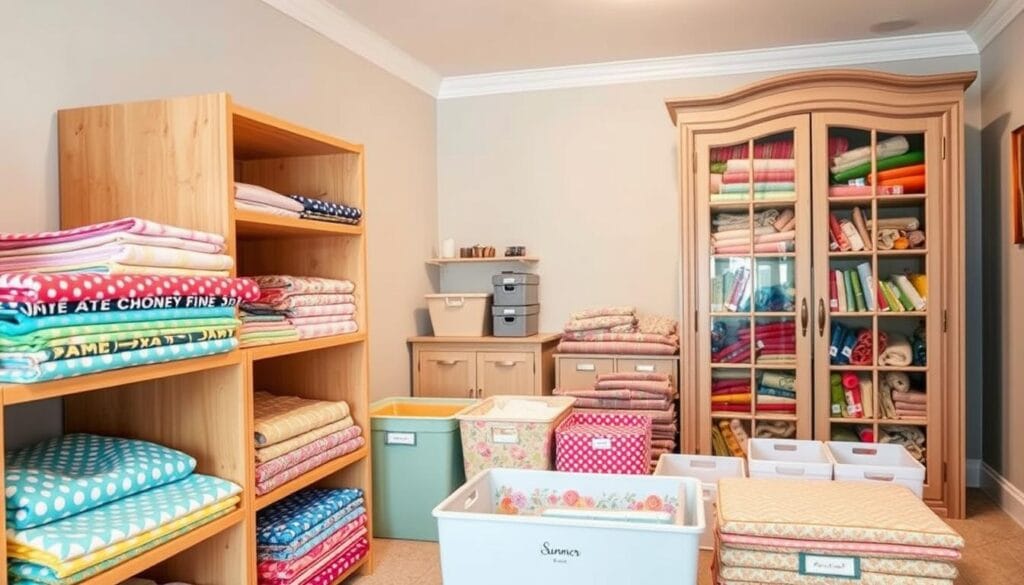
Fabric Bins and Organizers
The no-sew route starts with a shape you already have: a sturdy cardboard box or a plain bin you’re tired of looking at. Measure around the outside, cut fabric to that length with an inch of overlap plus an extra inch at the top and bottom, and glue it on one face at a time, smoothing as you go so it doesn’t pucker at the corners. Fold the extra over the rim and glue it down inside so the edge looks finished.
Heavier fabric holds its shape better. Canvas, denim cut from worn-out jeans, and upholstery remnants all work; quilting cotton will sag unless you back it. A strip of trim glued along the top rim covers the seam and hides an imperfect fold.
Hanging Wall Pockets
Hanging wall pockets are not only practical but also versatile. They can be used in various rooms, from entryways to bathrooms, to store mail, toiletries, or small plants. Start with a backing panel of heavy fabric, then glue or stitch a second rectangle across it about two-thirds of the way up, leaving the top edge open. Add vertical lines of glue or stitching to divide that band into separate pockets. Repeat down the panel for as many rows as you need, then fold the top of the backing over a dowel to hang it. Multi-pocket versions that mix several complementary prints make a thoughtful gift, and a thrifted decorative hook to hang them from adds character for a dollar or two.
Using summer fabric for these projects allows you to add a pop of color and texture to your storage solutions, making them both functional and aesthetically pleasing.
Seasonal Transitions: Adapting Summer Fabrics for Fall and Winter
We can give your summer fabrics a second life by incorporating them into your fall and winter home decor. As the seasons change, it’s easy to breathe new life into your summer fabrics by adapting them for the cooler months. This approach not only reduces waste but also adds a unique touch to your seasonal decor.
Layering with Heavier Textiles
One effective way to transition your summer fabrics is by layering them with heavier textiles. This technique allows you to incorporate your summer fabrics into your fall and winter decor seamlessly. For instance, you can layer a lightweight summer throw over a heavier blanket or vice versa, creating a cozy and inviting atmosphere in your living room.
Color Combinations for Cooler Months
Strategic color pairings play a crucial role in making your summer fabrics feel appropriate during the cooler months. Consider complementing your bright summer patterns with deeper versions of the same color family. A few brass, copper, or silver accents set next to a casual summer print push it toward something that feels right for the holidays, and thrifted candlesticks do the job as well as new ones. By understanding color theory, you can identify which summer fabric colors will transition most effectively through different seasonal palettes.
- Pair bright summer patterns with deeper versions of the same color family for fall and winter arrangements.
- Adjust the surrounding colors in a room by changing wall colors, artwork, or accessories to help summer fabrics blend seamlessly year-round.
- Understand color theory to identify which summer fabric colors will transition most effectively.
By implementing these strategies, you can enjoy your summer fabrics throughout the year, reducing the need for frequent purchases and creating a more sustainable approach to home decor.
Creating a Cohesive Look Throughout Your Home
As we repurpose summer fabrics into year-round decor, creating a cohesive look throughout our homes becomes a delightful challenge. To achieve this, we need to thoughtfully coordinate our repurposed pieces and mix patterns and textures in a way that feels intentional and designed.
Coordinating Repurposed Pieces
To coordinate repurposed pieces effectively, we should consider the overall aesthetic we want to achieve. We can start by selecting a few statement pieces made from vintage summer fabrics and then build our decor around them. This approach allows us to incorporate our favorite fabrics in creative ways, adding character to our homes.
Mixing Patterns and Textures
Mixing patterns and textures is what makes a room look pulled together rather than assembled. Combining different-sized patterns, one large, one medium, one small, gives the eye somewhere to rest between them. If you’d like a fuller walkthrough of pattern-heavy rooms, our boho decor room by room guide covers the same principle at greater length. Incorporating solid fabrics or textured neutrals alongside patterned summer textiles provides visual rest and helps patterned pieces stand out. For instance, pairing a vintage floral fabric with a contemporary geometric pattern can create a unique and captivating aesthetic.
- Skillful pattern mixing allows you to incorporate various summer fabrics in ways that feel intentional and designed.
- Incorporating vintage summer fabrics with contemporary patterns creates an eclectic, collected look.
Preserving Memories Through Fabric Repurposing
Preserving memories through fabric repurposing is a meaningful way to give new life to sentimental items. A worn quilt or a favorite dress can become something you see every day instead of something you keep meaning to sort out.
Family Heirlooms and Keepsakes
Look for items with sentimental value that you can’t part with but don’t use. Repurposing gives them new life and keeps those memories visible instead of folded away in a box. Start with the one thing you’d never throw out but never use: a grandmother’s apron, a wedding tablecloth, a child’s outgrown summer dress.
Photo Transfer Techniques on Fabric
Photo transfer techniques allow you to combine cherished images with beautiful summer fabrics, creating truly personalized decor items. You can transfer vacation photos onto coastal fabrics or garden images onto floral patterns for thematically cohesive memory pieces. This is a great way to generate new ideas for your home decor.
| Original Item | Repurposed Idea |
|---|---|
| Vintage Summer Dress | DIY Curtains or Pillow Covers using fabric |
| Summer Scarves | Table Runners or Wall Hangings |
| Family Photos | Photo Transfer onto Fabric for Personalized Decor |
Conclusion: Sustainable Style Through the Seasons
The art of repurposing summer fabrics reveals the potential for sustainable style that transcends seasons. By giving new life to existing materials, you not only reduce waste but also cultivate a more thoughtful approach to decorating your home. This creative process fosters a discerning eye for quality fabrics and sparks unique solutions. As you continue to explore fabric repurposing, you’ll discover the joy of creating meaningful, functional pieces from treasured fabrics, enriching your living space with personal touches.