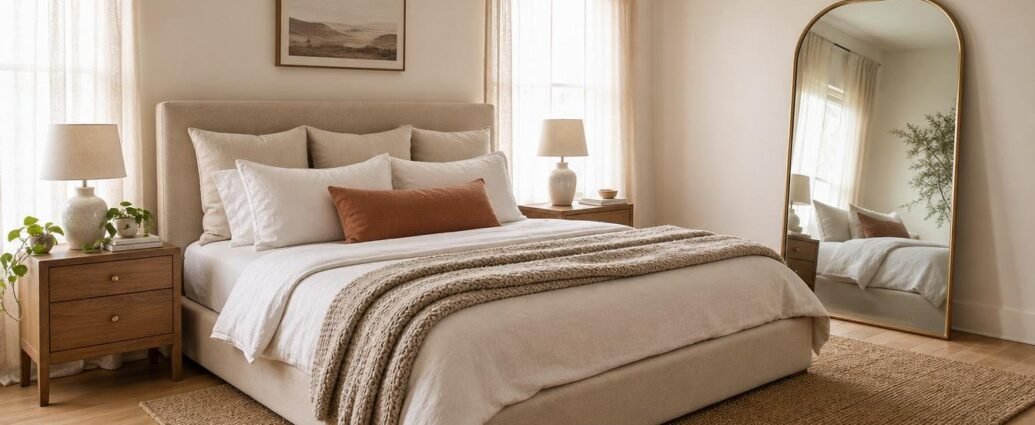
Do you ever set your alarm for the morning, climb into bed, look around your room, and feel absolutely nothing — not peace, not comfort, not even the faintest flicker of home? Maybe the walls feel blank, the bedding feels functional rather than beautiful, and the whole space just feels like a place you sleep rather than a place you truly rest. You deserve better than that.
The good news is that a bedroom transformation doesn’t have to cost thousands of dollars or require a contractor. We’re going to walk through the most impactful, budget-friendly updates you can make right now — changes that are rooted in styling principles rather than spending power, so you can wake up tomorrow in a room that actually feels like you. If the look you’re chasing is calm and pared back, start with our warm minimalist bedroom ideas and layer the budget swaps below on top.
Key Takeaways
- Swapping or layering your bedding is the single highest-impact, lowest-cost update you can make to a bedroom.
- Rearranging furniture costs nothing and can completely change the energy, flow, and perceived size of a room.
- Mirrors are one of the most powerful styling tools for renters — they add light, depth, and elegance without any permanent changes.
- Texture through throws, pillows, and rugs transforms a flat, lifeless room into something that feels warm and considered.
- Lighting swaps and small decorative additions (trays, books, plants) add the finishing layer that makes a room feel styled rather than just furnished.
- A full bedroom refresh using all these strategies can realistically be done for under $200 — sometimes far less.
Why Budget Bedroom Refresh Ideas Work Better Than You Think
There’s a persistent myth that beautiful interiors require big budgets, and it’s one I’ve spent years quietly dismantling with clients. The truth is that most of what makes a room feel expensive has almost nothing to do with price tags — it has everything to do with intention, proportion, and layering.
Styling Principles Are Free
The same design rules that guide a luxury hotel suite — visual balance, textural contrast, considered light — apply just as powerfully in a $600-a-month rental. Understanding visual weight, negative space, and tonal harmony costs absolutely nothing to learn and apply. Once you start seeing your room through a designer’s lens, even the furniture you already own starts to look different.
When I work with clients on a tight budget, the first thing I do is walk through their existing space and identify what’s already working. More often than not, the bones are fine. The problem is purely stylistic — things are arranged for convenience rather than beauty, and there’s no layering to speak of.
The $200 Benchmark Is Very Achievable
A bedroom makeover under $200 is genuinely realistic when you focus spending on a few high-leverage categories: bedding, one or two accent pieces, and perhaps a mirror or rug. Everything else — arrangement, editing, repurposing — is essentially free. The budget constraint is actually a gift in disguise, because it forces you to be thoughtful rather than reactive with your choices.
Think of it less like shopping and more like curation. You’re not filling a room; you’re composing one. And those are very different things.
Start With the Bed: Your Biggest Visual Statement
The bed is the undisputed anchor of any bedroom, taking up the most square footage and demanding the most visual attention the moment you walk through the door. Getting the bed right is step one — and honestly, it does about 60% of the heavy lifting all on its own.
How to Update Your Bedroom Cheaply With New Bedding
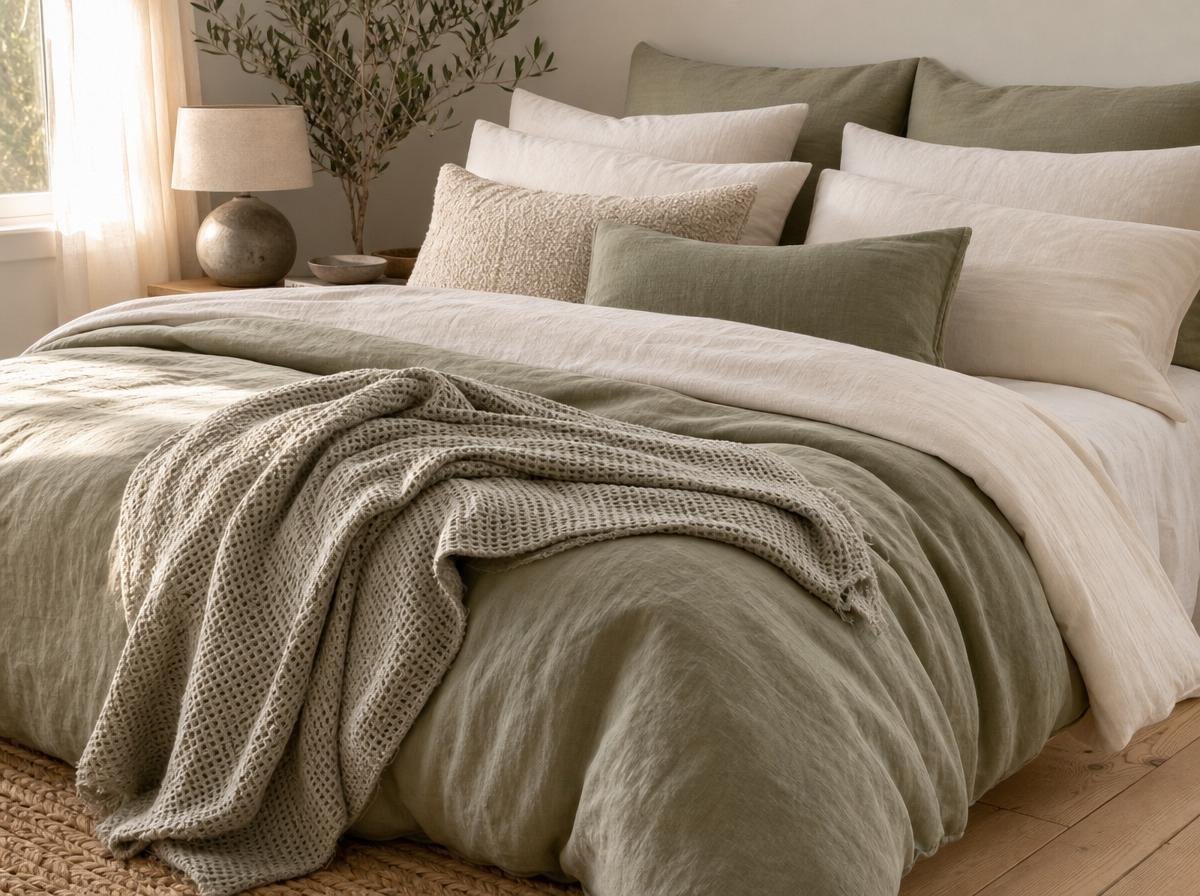
Knowing how to update your bedroom cheaply almost always starts here. A fresh set of bedding — even an affordable one — can completely transform the feel of a room. The key is choosing bedding that photographs beautifully and layers well, rather than defaulting to a matchy-matchy set that reads as flat and lifeless.
Look for linen, cotton-linen blends, or washed cotton in soft, neutral tones: warm white, oat, stone, dusty sage, or muted terracotta. These tones work with almost any wall color and have that effortlessly lived-in quality that feels expensive without being expensive. IKEA, Target’s Threshold line, and Amazon Basics linen-look options routinely deliver beautiful results for $40–$80.
The Art of the Layered Bed
A layered bed is what separates a styled bedroom from a basic one. You don’t need matching sets — you need visual depth. Here’s a simple formula that works every time:
- Start with a fitted sheet in a solid neutral.
- Add a flat sheet or lightweight blanket tucked loosely at the foot.
- Layer a duvet or comforter in a complementary tone or subtle texture.
- Add two Euro shams behind two standard pillowcases for height and structure.
- Finish with one or two decorative lumbar or throw pillows in a contrasting texture or muted pattern.
That five-step stack is the formula behind virtually every beautifully styled bed you’ve ever pinned. And with mixing and matching from what you already own, you might only need to buy one or two new pieces to get there. If you love bold, maximally layered aesthetics, my post on maximalist bedroom ideas goes much deeper on building visual richness through bedding and textiles.
Pillow Arrangement That Actually Works
Pillow arrangement is where most people go wrong — either too few pillows that look sparse, or too many that look chaotic. For a queen bed, aim for two Euro shams (26×26″), two standard shams, and one lumbar or accent pillow. For a king, scale up by one standard pair. The pyramid structure — tallest at back, shortest at front — creates instant visual order and that coveted hotel-bed effect.
Rearranging Furniture: The Zero-Dollar Transformation
Before you spend a single dollar, I want you to try something: move your bed. I know it sounds disruptive, but furniture arrangement is genuinely the most underestimated tool in the styling toolkit — and it costs absolutely nothing.
Finding the Right Bed Placement
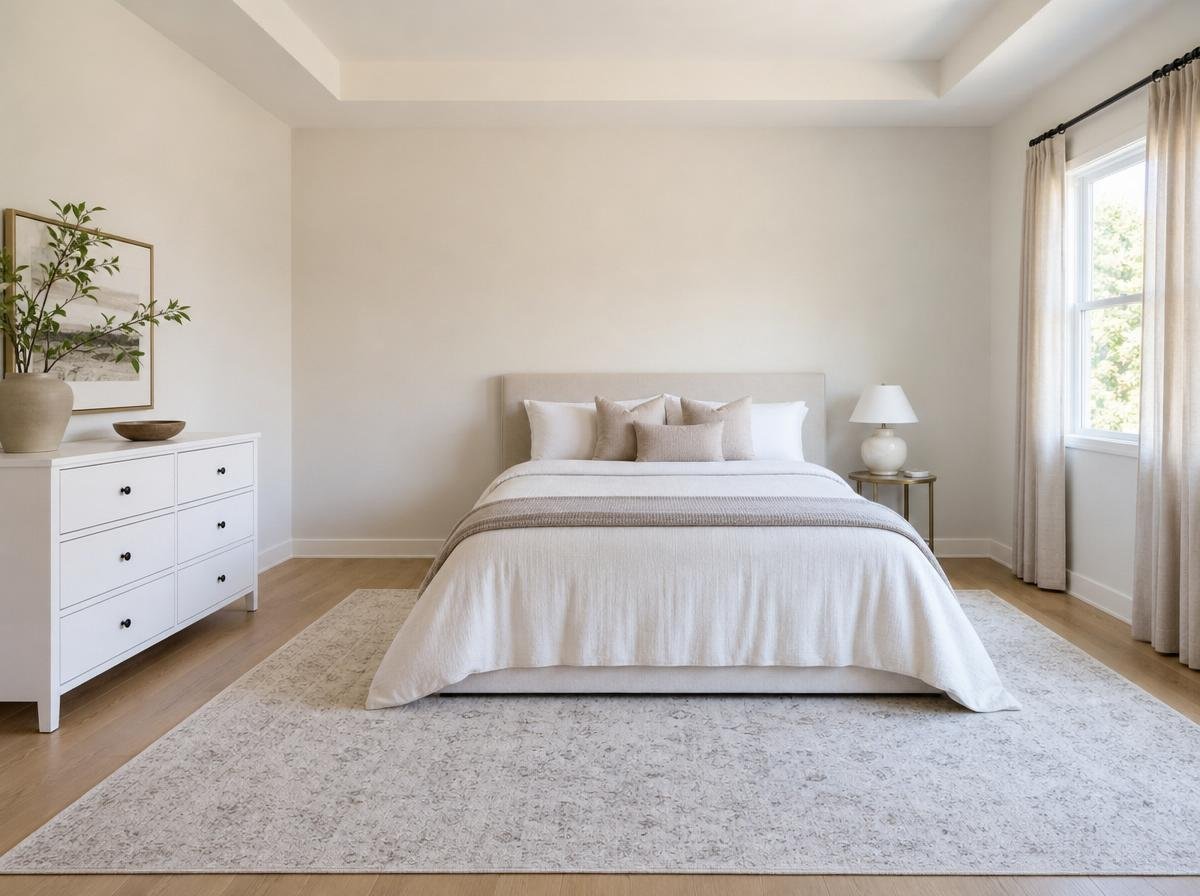
In most bedrooms, the bed should be placed against the wall that you see first when you enter the room — this creates a natural focal point and makes the space feel intentional. Ideally, you want to be able to access both sides of the bed, which promotes both practical comfort and visual balance. Avoid pushing one side flush against the wall unless the room truly forces it.
If your bedroom has a window, experiment with positioning the bed on the wall perpendicular to it rather than directly under it (which can create drafts and awkward light) or directly opposite (which can feel confrontational with sunlight in the morning). Natural light should flatter the bed, not blind you in it.
Creating Flow and Breathing Room
Visual breathing room — the concept of intentional empty space — is what makes a room feel calm rather than cluttered. Once you’ve moved the bed, assess what else is in the room. Dressers, nightstands, chairs: ask whether each piece is earning its place or just filling space. Sometimes removing one piece entirely (even just moving it to a closet temporarily) opens up the room dramatically.
Aim for at least 24–36 inches of clearance around the bed for comfortable movement. If your nightstands feel too bulky, swap them for something smaller — or try floating wall-mounted shelves as a renter-friendly alternative. A little editorial restraint goes a long way.
Balancing the Room Visually
Once the bed is settled, step back to the doorway and assess the visual balance of the room. Is one side of the room significantly heavier than the other? Use lamps, art, or plants on the lighter side to create equilibrium. Symmetry reads as calm and intentional; deliberate asymmetry (one lamp, one plant) can feel modern and collected. Both work — the key is that it looks considered rather than accidental.
Mirrors: The Renter’s Secret Weapon
If I could only recommend one purchase for a budget bedroom refresh, it would be a mirror. Nothing else comes close to the impact-per-dollar ratio of a well-placed mirror — it adds light, creates the illusion of depth, and brings an instant sense of elegance to almost any space.
Choosing the Right Mirror Style and Size
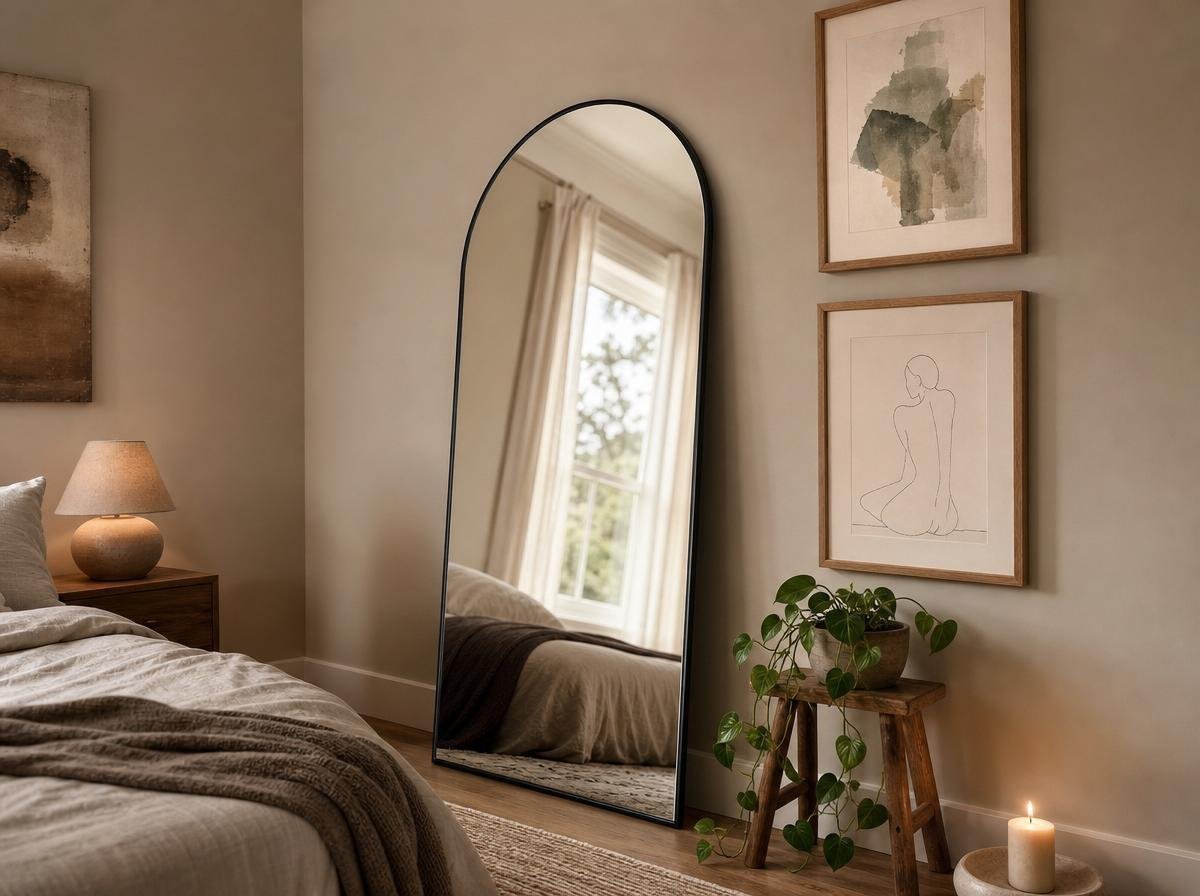
For bedrooms, a leaner mirror (a large floor-standing mirror propped against the wall) is ideal for renters because it requires zero hardware and makes a major visual statement. Look for arched mirrors, rounded rectangles, or simple straight-edge frames in warm metals, natural wood, or matte black. Sizes around 48–65 inches tall offer the best proportion for most bedrooms.
Budget-wise, you can find gorgeous leaner mirrors at IKEA (the HOVET and NISSEDAL are perennial favorites), TJ Maxx, HomeGoods, and Facebook Marketplace. Expect to spend $30–$80 for a piece that looks like it cost three times that. Vintage or secondhand mirrors with ornate frames can be even more beautiful — and often cheaper — than new options.
Strategic Mirror Placement for Maximum Light
Placement matters as much as the mirror itself. Position your mirror on a wall that’s perpendicular to your main light source (usually a window), so it bounces light across the room rather than just reflecting the wall behind it. In a north-facing bedroom with limited natural light, this trick can genuinely transform how bright and airy the space feels throughout the day.
Avoid placing a mirror directly opposite the bed if it makes you uncomfortable — some people find that disorienting. Instead, prop it in a corner, alongside a dresser, or near the entry so it catches light as you move through the space.
“A well-placed mirror doesn’t just reflect the room — it amplifies everything beautiful about it.”
Texture Through Throws and Pillows: The Layer That Changes Everything
Texture is the unsung hero of interior design. It’s what makes you feel a room before you consciously register it — that immediate sense of warmth or coldness, richness or blandness, comfort or sterility. And the beautiful thing about introducing texture through textiles is that it’s one of the most affordable upgrades you can make.
Choosing Throws That Do Double Duty
A throw blanket is styling gold. Draped casually over the foot of the bed, folded over the arm of a chair, or bunched loosely in a basket, a good throw adds instant warmth and dimension. Look for natural fiber options — chunky knit wool, waffle-weave cotton, or bouclé — in tones that complement your existing bedding palette without matching it exactly.
The best throws for budget shoppers: H&M Home, Target, and Amazon all carry genuinely beautiful options in the $25–$45 range. If you’re patient, thrift stores occasionally surface cashmere throws at a fraction of retail — and they look stunning.
Pillow Texture and Pattern Mixing
Once you have your bedding sorted, accent pillows are your tool for adding personality. The trick is to vary texture rather than just color: a linen pillow next to a velvet one next to a knitted cover creates visual richness that a matching set simply can’t replicate. Keep your tones within a cohesive range — warm neutrals, earthy mids, soft greens — and let the texture do the talking.
If you’re nervous about mixing patterns, start with one subtle pattern (a thin stripe, a tonal geometric, a simple jacquard) and keep everything else solid. For deeper confidence in pattern mixing, I’d recommend reading through how to mix patterns like a designer — it’s a complete guide to doing it without the room feeling chaotic.
Adding a Rug to Anchor the Space
If your bedroom has hard floors, a rug is one of the most transformative additions possible. It grounds the bed, adds warmth underfoot, and pulls the room’s color story together. For budget refreshes, look for flatweave cotton rugs, jute, or machine-washable options from Ruggable or Amazon — you can find stunning options in the $60–$120 range for a 5×8 or 8×10. Size up whenever you’re in doubt: a too-small rug is one of the most common styling mistakes I see.
Budget Bedroom Refresh Ideas for Lighting That Sets the Mood
Lighting is the layer most people skip on a budget refresh, and it’s a mistake — because lighting is what determines how your room feels at every hour of the day. Overhead fixtures in most bedrooms are harsh and unflattering. The fix is layering in warmer, lower, more intimate light sources.
Swap Bulbs Before Anything Else
The fastest and cheapest lighting upgrade: swap out any cool-toned bulbs (anything above 3000K) for warm white bulbs in the 2200–2700K range. This one change, which costs under $15, will make your entire bedroom feel warmer, softer, and more restful almost instantly. It’s the kind of difference that’s hard to articulate until you see it.
Add Layers With Lamps and Candles
Table lamps on nightstands are a classic for good reason — they provide the right kind of light (low, warm, intimate) for winding down at night. Look for secondhand bases at thrift stores and replace just the shade for a fresh look. Battery-operated puck lights or LED strip lights behind a headboard create beautiful ambient glow without any electrical work — a great renter solution.
Candles are also an underrated styling tool. A cluster of pillar candles on a tray, a tall taper in a simple holder, or a scented candle on the nightstand adds both warmth and sensory comfort. They’re finishing touches that cost $5–$20 and photograph beautifully.
| Lighting Source | Approx. Cost | Renter-Friendly? | Impact Level |
|---|---|---|---|
| Warm bulb swap | $10–$15 | Yes | High |
| Table lamp (thrifted) | $15–$40 | Yes | Very High |
| LED strip lights (behind headboard) | $15–$30 | Yes | Medium–High |
| Battery-operated sconces | $20–$50 | Yes | High |
| Candles and holders | $5–$20 | Yes | Medium |
Wall Styling Without Paint or Nails
Blank walls are one of the most common bedroom complaints I hear — and one of the easiest to solve, even in a rental where you can’t paint or put holes in the wall (or are nervous to). If you can paint, start there instead: a gallon costs less than most of the items in the table above, and our guide to bedroom color schemes for every style lays out twelve combinations with the budget way to trial each one.
Removable Wallpaper and Peel-and-Stick Options
Removable wallpaper has genuinely come of age. Brands like Chasing Paper, Tempaper, and Spoonflower offer beautiful patterns and textures that go up easily and come down without damage — and the effect is dramatic. Even a single accent wall behind the bed transforms the visual story of the whole room. Budget for $1.50–$4 per square foot depending on the brand and pattern.
If full wallpaper feels too bold, try a peel-and-stick mural — a large-format botanical print or abstract wash behind the bed works like a piece of oversized art and can be changed out seasonally.
Art, Prints, and Gallery Arrangements
Affordable art prints have never been more accessible. Etsy, Society6, and even standard photo printing services let you print beautiful artwork for under $20 — all you need is a decent frame from IKEA or a thrift store. One large-format piece above the bed reads as intentional and polished. A grouped arrangement of smaller frames creates a gallery wall effect that adds personality and depth.
For renters worried about holes: Command strips hold surprisingly well for lightweight frames, and there are also adhesive picture-hanging solutions rated for up to 16 pounds. Just make sure to follow the instructions for clean removal.
Decorative Elements That Read as Art
Think beyond traditional frames. A vintage mirror, a macramé wall hanging, a woven basket, or even a beautiful piece of fabric stretched over a canvas creates visual interest without requiring a gallery collection. The key is choosing one or two considered pieces rather than covering every surface — restraint reads as confidence in interior design.
Small Styling Details That Pull the Room Together
This is the layer where a room goes from looking refreshed to looking truly styled. It’s the finishing work — and it costs very little when you approach it thoughtfully.
Nightstand Styling
Your nightstand is a little stage. Style it with a lamp (the most important element), a small stack of books, something living (a plant, a bud vase with a single stem), and one personal object — a scented candle, a small bowl for jewelry. Odd numbers feel natural; too many items feel cluttered. Edit ruthlessly. This is also a great place to incorporate earthy tones and organic textures — the same calming color principles I explore when writing about calming, nature-inspired color schemes apply beautifully to bedroom vignettes.
Plants and Organic Elements
Living elements — plants, branches, dried botanicals — bring a room to life in a way that no object can replicate. You don’t need a green thumb or an expensive plant. A pothos in a simple pot costs $8 and trails beautifully. A few stems of dried pampas grass in a simple vase costs under $15 and lasts for years. These organic touches add warmth, movement, and a sense of care to the space.
Decluttering as a Design Move
The most underrated styling tip of all: edit what’s already there. Clutter doesn’t just look messy — it makes even the most beautiful room feel anxious and unsettled. Take everything off your surfaces, clean them, and then only put back what’s beautiful or purposeful. A cleared dresser top with two or three intentional objects looks infinitely more styled than one crowded with 15 things you haven’t looked at in months.
If you’re working through room-by-room decluttering and styling beyond just the bedroom, the same principles apply everywhere in the home. My roundup of inexpensive family room updates covers how to bring the same styling-first thinking into your living spaces.
Frequently Asked Questions
What are the best budget bedroom refresh ideas that make the biggest difference?
The highest-impact updates are bedding, lighting, and furniture arrangement — in that order. Fresh bedding immediately transforms how the bed looks and feels, warm lighting changes the entire atmosphere of the room, and rearranging furniture costs nothing but delivers a completely new spatial experience. Together, these three changes can make a room feel unrecognizable without touching the walls or floors.
How can I update my bedroom cheaply without buying much?
Start with what you already own. Rearrange furniture, edit your surfaces down to just the beautiful and useful, and restyle your bed with existing linens using the layered approach. Then if you have any budget at all, invest it in warm light bulbs first — at under $15, it’s the best-value purchase in a bedroom refresh. Swapping throw pillow covers (not whole pillows) is another low-cost trick that changes the look completely.
Can I do a bedroom makeover under $200?
Absolutely — and often for much less. A realistic $200 breakdown might look like this: $50 on new bedding or a duvet cover, $60 on a leaner mirror (thrifted or from IKEA), $30 on a throw blanket, $20 on two or three art prints plus frames, $15 on warm light bulbs, and $25 on a plant and simple vase. That covers all the major styling categories and leaves you with $0 in change — and a completely transformed room.
What should I focus on first in a bedroom refresh?
Always start with the bed. It’s the visual centerpiece of the room, and a styled, layered bed elevates everything around it. Once the bed looks intentional and beautiful, assess the lighting, then the walls, then the smaller styling details. Working from the largest element down to the smallest keeps you from getting overwhelmed and ensures your budget goes to the highest-impact places first.
Are there renter-friendly ways to make a bedroom look more designed?
Yes — many of the best ones! Leaner mirrors, removable wallpaper, Command strip art hanging, battery-operated sconces, and textile layering are all completely non-destructive and reversible. Rugs over hard floors and curtains hung from tension rods are also great options. The styling principles in this post are specifically designed to work within rental constraints — you’d be amazed what’s possible without a single nail hole or coat of paint.
How do I make a small bedroom feel bigger on a budget?
Focus on light and reflection. A large leaner mirror bouncing natural light across the room is your best friend. Keep the color palette light and cohesive — warm whites, soft neutrals — to avoid the visual contraction that darker tones can create. Choose furniture with legs rather than pieces that sit directly on the floor, which gives the room a sense of airiness. And ruthlessly edit clutter: a less-filled room always feels larger.
Where’s the best place to shop for affordable bedroom decor?
For new items: IKEA, Target’s Threshold and Studio McGee lines, H&M Home, and Amazon are consistently strong. For secondhand and vintage pieces — which often look more beautiful and cost far less — try Facebook Marketplace, Craigslist, local thrift stores, and estate sales. Some of the most stunning bedroom pieces I’ve ever styled came from a $4 thrift store find that just needed a new shade or a fresh coat of paint.
Your bedroom should be the most personal, most intentional room in your home — the place you begin and end every single day. It doesn’t take a renovation budget or a design degree to get there. It takes a clear eye, a willingness to rearrange and edit, and a few well-chosen additions that speak to who you are. Start with one thing today — the bed, the lighting, the mirror — and let the momentum carry you forward. I promise the room you’ve been imagining is closer than you think. 🌿