Remember that feeling of walking into a friend’s house and instantly feeling at ease? The space just works. It wraps you in comfort and reflects their unique personality. We believe your central gathering area should give you that same wonderful feeling every single day.
Maybe your setup has drifted a little. The furniture landed where it landed a few years ago, nothing has moved since, and the room works fine — it just doesn’t feel like much of anything. That happens in every house. Life changes, and rooms take a while to catch up.
The good news: giving your favorite room a fresh, personal look doesn’t take a big budget or a full overhaul. We’ve pulled together ideas from working designers, and we’ve flagged a free or low-cost version of nearly every one, because most of what makes a living room feel good comes down to arrangement and light rather than spending.
Key Takeaways
- Your living area is the heart of your home, a place for relaxation and making memories.
- Refreshing your space is possible on any budget with creative and practical decor ideas.
- Small changes, like new lighting or rearranged furniture, can change how a room feels.
- These concepts work for all aesthetics, from modern minimalist to cozy bohemian style.
- The goal is to create a living room that feels authentically you and enhances your daily life.
Embrace Secondhand Finds for Character and Charm
Have you ever discovered a piece of furniture that seemed to whisper stories from its past? That’s the magic of secondhand treasures. They bring personality and warmth that a new item can’t replicate, because the wear on them is real.
A garden cottage furnished entirely with vintage finds is proof you don’t need a big budget to put together a beautiful living room. Each piece adds to a look that reads as collected over time.
What to Look for in a Vintage Piece
Secondhand shopping goes better when you know what you’re looking at. Check that drawers slide, that joints are wood rather than staples and glue, and that an upholstered frame doesn’t wobble when you rock it. Scratches and worn edges are fine — that patina is the whole point, and it’s the part mass-produced furniture can’t fake.
Slow Decorating and Thrift Store Treasures
Slow decorating means buying on purpose instead of on impulse, and it’s the reason thrifted rooms tend to look personal rather than showroom-flat. Here’s a way to shop that keeps you from hauling home a pile of maybes:
- Write down the two or three things the room actually needs — a side table, a floor lamp, a mirror over the sofa.
- Measure the spot each one has to fill, and keep those numbers in your phone along with a photo of the room.
- Set a ceiling price per item before you leave the house.
- Check estate sales and Marketplace listings first, then thrift stores, then antique shops. Prices tend to climb in that order.
- Anything not on your list waits a week. If you still want it, go back for it.
The payoff is a living space built from pieces nobody else has, at a fraction of retail.
Change How the Room Feels with Better Lighting
Lighting does more for a space than almost anything else you can buy, and it’s usually the cheapest thing to change. The right mix turns a flat, overhead-lit box into the spot everyone drifts toward at night, because light is what tells your eye where to settle.
Eye-Catching Pendant Lights and Custom Fixtures
Lighting can do a great deal on its own. Eight-foot pendant lights hung to visually lower a soaring vaulted ceiling bring the room back down to a comfortable, human scale — and rehanging a fixture you already own costs nothing but an afternoon.
A striking multi-bulb fixture can become the statement piece of a whole living room on its own. Under a very tall ceiling, a pendant cluster fills the empty air overhead without closing the room in.
Balancing Natural and Ambient Lighting
Layer your light sources at three heights: one fixture overhead, a table lamp at seating level for reading, and a floor lamp in the darkest corner. Light coming from a single point on the ceiling is what makes a room feel flat and slightly institutional after dark. Light at different heights gives it depth.
If new fixtures aren’t in the budget, two cheap fixes do most of the work. Put every bulb in the room at the same warm color temperature, around 2700K, so the light stops looking patchy from lamp to lamp. Then hang a mirror on the wall opposite your biggest window to bounce daylight deeper into the living area. For more lighting ideas for living rooms, this guide is worth a look.
Accent Walls and Bold Color Hues
Color has this incredible power to instantly shift the mood of any environment. It’s amazing how one bold choice can completely redefine your space’s personality and energy.
Building an entire room around one bold botanical wallpaper sets the tone for everything else, which is the real argument for starting with a wall treatment you love: it makes every later decision easier, because you already know what the room is answering to.
Choosing a Relaxing yet Impactful Palette
Don’t shy away from rich, saturated hues. Bold walls balanced by neutral furnishings is the combination that keeps colour from overwhelming a room.
Choose a wall colour for how it makes you feel, not how it photographs. When the whole room carries one soft shade — walls, trim and ceiling together — it stops feeling like a colour choice and starts feeling like a mood. This approach creates a truly calming atmosphere.
Wallpaper has made a major comeback. It’s perfect for adding pattern and texture to one wall. This avoids overwhelming your entire living area.
A can of paint and a free weekend — call it $40 and an afternoon of taping — is the cheapest big change in this whole guide. If you want something more ambitious, an ombré wall whose colour shifts gradually from floor to ceiling gives a room a jewel-box glow.
The key is choosing colors that make you feel good. Your walls should reflect the mood you want to create in your space.
Design Around a Natural Focal Point
Some spaces have a built-in centerpiece that makes design decisions wonderfully straightforward. When your room already has a showstopping feature, the entire layout becomes more intuitive and cohesive.
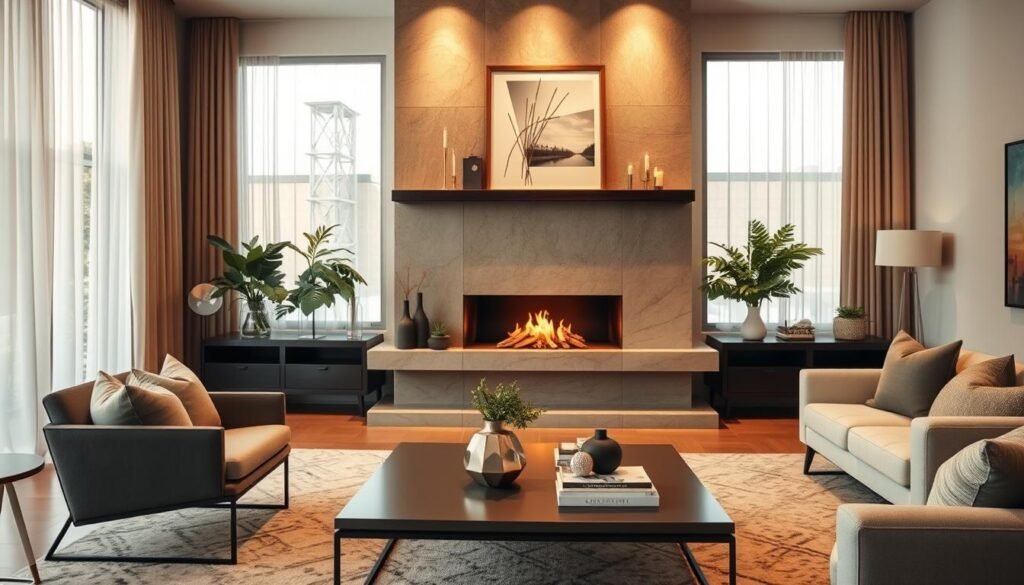
Showcasing the Fireplace as the Room’s Heart
If you have a beautiful historic fireplace, let it be where the room starts and ends — everything else answers to it.
A clean marble fireplace wall flanked by two facing sofas is the classic version, and it creates a natural conversation spot. That arrangement makes the fireplace the undeniable heart of the living area.
Even challenging layouts can work beautifully. In an extra-long living room, two separate conversation areas — each anchored around its own fireplace or its own rug — show that multiple focal points can coexist when they’re arranged with care.
For contemporary design, a steel double-height fireplace with hidden TV storage shows how a traditional element can become a bold statement piece. The key is embracing whatever style you have and making it the star.
Angle your seating toward the fireplace instead of lining it up flat against the walls. People talk more easily when chairs face each other at a slight angle, and the fireplace gives everything a reason to point the same direction. On the mantel, group a few objects you’ve collected over time in odd numbers, with one piece taller than the rest. A framed print leaned against the wall costs nothing and anchors the whole arrangement.
Lay Out a Bold Carpet for Visual Impact
The floor is the biggest uninterrupted surface in the room, which makes a rug the fastest way to set its tone. A bold rug becomes the artistic centerpiece that ties the whole living room together.
A carpet with a dramatic pattern can anchor a whole room on its own. Your floor covering is allowed to be the showstopper.
Mixing Patterns and Textures on the Floor
Don’t shy away from bold choices. A light-toned graphic rug balances dark wood paneling, which shows how much your floor treatment can do for colour balance across a room.
In industrial spaces, a wool or wool-silk rug softens hard surfaces. The right texture provides essential warmth underfoot.
Here’s the tip worth writing down: it’s a misconception that a smaller rug makes a room feel larger. Go bigger than feels natural. The front legs of every seat should land on the rug — usually an 8×10 in a standard seating area, 9×12 if the sofa is long. A too-small rug leaves the furniture looking like it’s floating in the middle of the floor. If a large wool rug is out of reach, buy a big jute or seagrass one and layer a smaller patterned rug on top; you get the scale for a fraction of the price.
Mix patterns confidently. Layer smaller rugs over natural fibers or let your floor design complement patterned upholstery. Your living space should reflect your unique personality from the ground up.
Create Conversation Areas with Flexible Furniture
Thoughtful furniture arrangement can turn one large area into two inviting conversation zones. It costs nothing to try, and it usually makes a room feel both more intimate and more usable.
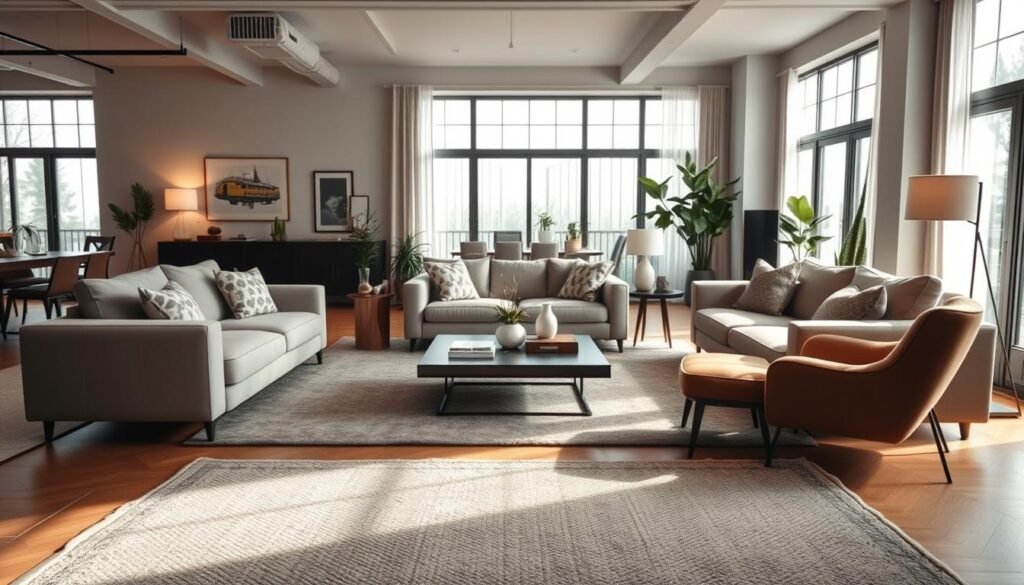
One reliable solution for a large room is to place two sofas back-to-back, creating two distinct seating areas out of a single space.
This designer zoning trick works wonders for flow and function. Your seating arrangement should encourage face-to-face connection rather than screen staring.
| Furniture Type | Flexibility Level | Best For | What to Watch For |
|---|---|---|---|
| Lightweight Chairs | High | Quick rearrangements | Too light and they slide on hard floors — add felt pads |
| Poufs & Benches | Very High | Extra guests & footrests | No back support, so not for long sits |
| Back-to-Back Sofas | Medium | Large room division | Needs roughly 18 in. of walkway behind each |
This works especially well in an extra-long living room: one area built around the sofa, another around a corner banquette or a pair of chairs at the far end.
Lean toward furniture you can move without help. A room that adapts between a quiet Tuesday and eight people over is worth more than one perfect arrangement you never change.
Consider traffic flow when arranging your pieces. Leave enough space for people to walk through without disrupting conversations.
The goal is creating an atmosphere where guests naturally want to gather and stay. Flexible furniture makes this possible for any occasion.
Mix Patterns for a Cohesive, Bold Look
What if we told you that combining different prints could actually make your space feel more cohesive and intentional? Pattern mixing might seem intimidating, but it’s one of the most effective ways to create a living room with serious personality and depth.
Blending Textiles and Prints Seamlessly
The version that reliably works is a deep-blue den: several patterns layered together, but every one of them kept inside a single colour family. The result reads as considered rather than chaotic, and the shared color is doing all of that work.
Repeating one print on both banquette seating and wall insets creates a custom look that reads as deliberate rather than accidental.
The rest is scale. A formula that reliably works: one large print (curtains or a rug), one medium (a chair or a few pillows), and one small or purely textural (a stripe, a check, a nubby weave), with at least one color shared across all three.
Maintaining a Unified Color Scheme
Pattern-mixing looks easy when the colors stay consistent throughout the room. Even traditional gingham works beautifully when tied to a consistent palette.
Remember that texture counts as pattern too. Mix nubby linens, smooth velvets, and woven materials. This adds visual interest even with solid colors.
Start small if you’re nervous. Add patterned throw pillows to a solid sofa. Layer a patterned rug under neutral furniture. Build confidence while creating your unique style.
Design a Laid-Back, Inviting Living Room Atmosphere
Gone are the days when your main gathering space needed to feel perfectly polished and untouchable. Today’s most cherished environments embrace comfort and casual elegance above formality.
Casual Seating Options and Swivel Chairs
Swivel chairs are the easiest way into this. They suit a room that hosts movie nights as readily as one that hosts dinner, and they cost less than reworking a seating plan.
Your living room doesn’t have to feel sophisticated all the time. Swivel chairs bring flexible fun to any seating arrangement. They let people easily turn toward conversations or the television without getting up.
Performance fabrics on sofas take practicality further. They clean up easily, which means you can actually use the furniture without holding your breath every time someone sits down with a glass of wine. A washable slipcover over what you already own does the same job for far less.
Comfort doesn’t mean sacrificing style. You can create visual interest through layered textures and subtle patterns rather than bold colour, which is the quieter route to the same result. The goal is a room where everyone feels immediately at ease and conversations flow naturally.
Modernize with Industrial and Contemporary Elements
Modern industrial design brings a fresh, sophisticated edge to any gathering area. It combines raw, honest materials with sleek, contemporary lines for a look that feels both current and timeless.
We love how this style creates a powerful statement. The key is balancing bold elements with comfort to ensure your space remains inviting.
Integrating Metal Accents and Curved Silhouettes
Think beyond rigid right angles. An asymmetric cocktail table and a curvy rug add organic flow to a room full of straight lines.
Rounded, generous furniture shapes give a soft, modern feel. These shapes break up harsh lines beautifully.
Metal accents are a hallmark of this design. Use them thoughtfully in light fixtures or table bases. This adds an industrial touch without feeling cold.
Balancing Hard and Soft Textures
The magic happens in the contrast. A wool and silk rug softens an industrial-leaning space, and a wool-blend rug from a big-box store does the same softening job for a lot less.
Pair concrete surfaces or exposed metal with plush rugs and velvet upholstery. This creates a room with incredible depth and warmth.
Earthy, muted tones in the furnishings balance industrial materials. This keeps the overall design approachable. Choosing the right inspiring color palettes is crucial for this balance.
| Industrial Element | Softening Counterpart | Budget Version |
|---|---|---|
| Metal Light Fixture | Velvet Armchair | A velvet cushion cover on the chair you own |
| Concrete Coffee Table | Plush Wool Rug | A wool-blend rug, or a sheepskin over one end |
| Angular Shelving | Cozy Throw Blankets | Two charity-shop throws in the same colour |
Remember, the goal is a living area that feels sophisticated yet utterly comfortable. Choose a few statement pieces, then layer in warmth.
Accessorize with Artwork and Statement Mirrors
Think of artwork and mirrors as the final layer that makes your space feel truly personal and complete. These elements are the jewelry of your room, injecting character and creating powerful focal points.
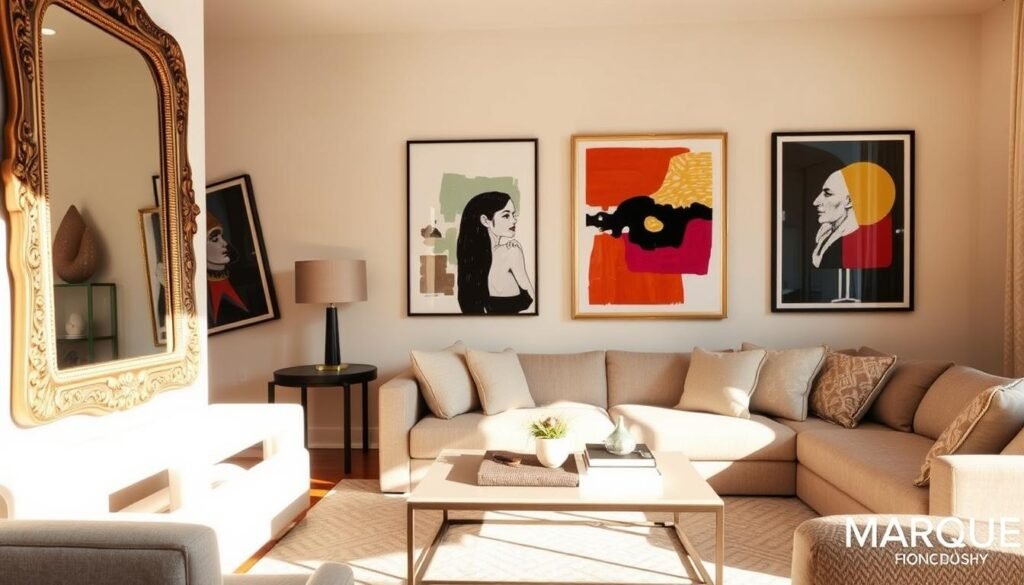
A single piece can define an entire area. One large sculptural artwork becomes the standout feature of a room, and everything else can then be quiet.
Building an entire room around one bold painting works the same way — a single statement piece sets the tone, and every later decision gets easier because you already know what the room is answering to.
Choosing Pieces that Reflect Your Personality
Your selections should feel authentically you. Don’t be afraid to choose artwork that speaks to your interests, whether abstract, vintage, or travel-inspired.
Statement mirrors are brilliant multitaskers: they create drama, bounce light, and make a room feel larger. A large charity-shop mirror repainted does all three.
Presentation matters too. Unframed or casually leaned art creates a brighter, more relaxed atmosphere than everything matched and hung in a grid — and it saves you the framing bill.
| Accessory Type | Primary Function | Budget Version |
|---|---|---|
| Large Artwork | Creates a focal point | An oversized print, or fabric stretched over a frame |
| Statement Mirror | Amplifies light & space | A secondhand mirror with the frame repainted |
| Gallery Wall | Personalizes a large wall | For gallery wall inspiration |
The beauty of these accessories is their flexibility. Experiment until your living area feels joyfully and uniquely yours.
Create Separation in Open Floor Plans
Ever walked through an open-concept space that felt both connected and distinctly zoned? That’s the magic of intentional separation. Open floor plans are fantastic for modern living, but they can feel chaotic without clear boundaries.
Wood slats between a kids’ play area and the main gathering space create separation without closing anything off. You get a hint of a boundary rather than a wall, and a slat screen built from furring strips is a weekend project. It maintains that airy, open feeling while giving each zone its own identity.
Furniture placement offers another smart way to define areas. A curved sofa with a console behind it separates living and dining spaces without building anything. Curved pieces naturally break up hard architectural angles.
Consider how your space flows to the outdoors too. An easy transition from the main room to a patio or garden makes both feel bigger, and it can be as simple as matching the flooring tone and keeping the sightline to the door clear.
| Separation Method | Best For | Rough Cost |
|---|---|---|
| Wood Slat Screens | Visual division without enclosure | $$ — or build one from furring strips |
| Curved Furniture | Natural flow between zones | $$$ — worth watching secondhand listings |
| Area Rugs | Defining specific functional spaces | $ — the cheapest way to zone a room |
| Different Flooring | Clear visual boundaries | $$$$ — renovation territory |
Area rugs are your secret weapon for anchoring different zones. A large rug under seating clearly marks that territory. Bookcases as room dividers work wonderfully too.
The goal is creating definition without sacrificing openness. You want distinct spaces that still feel connected. This allows easy movement throughout your entire floor plan while maintaining organization.
Incorporate Global Trends and Eclectic Touches
Your space can become a beautiful tapestry woven from global inspirations and personal treasures. This approach celebrates diversity in design by blending influences from around the world.
We love how this style creates a rich, layered environment that tells your unique story. It’s about mixing eras, origins, and cultures with confidence.
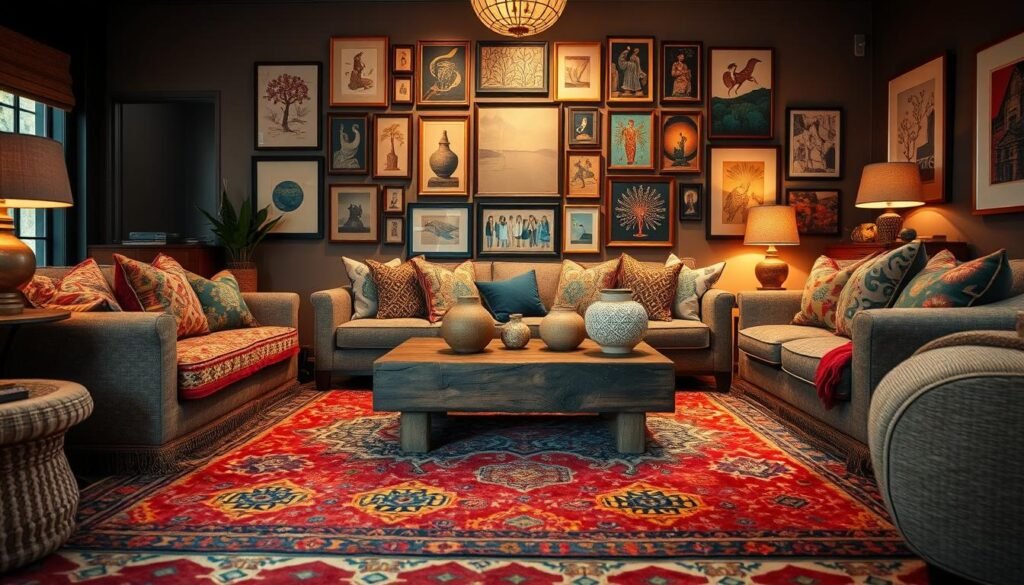
Adopting Bold Accents from International Designs
Pair a vintage sofa with a contemporary, rounded cocktail table and the contrast does the work — neither piece has to be expensive for the combination to look considered.
Vibrant purple walls set against flea-market finds and one carved animal sculpture make a bold living room that clearly belongs to somebody.
Handwoven African textiles mixed with European and contemporary pieces give a room a genuinely global feel. Buy these from sellers who name the maker and the region.
Using Mix-and-Match Decor Elements
The key is finding a common thread that ties different items together. This could be a consistent color palette or similar materials.
A collection of woven baskets hung as wall decor is one of the cheapest ways to do this. This brings texture and handcrafted beauty from various cultures into your space.
Shop ethically for internationally-inspired items or collect pieces during travels. Mix that Moroccan pouf with your midcentury chair confidently.
Your room should reflect your personal journey. Embrace diverse patterns, textures, and colors to create a space that feels authentically yours.
Optimize Storage with Multi-Functional Solutions
Let’s talk about one of the smartest design moves you can make—turning your storage solutions into beautiful, functional features. A clutter-free space feels more peaceful and looks more intentional.
Shelving installed above a window is one of the better small moves here. It uses often-wasted vertical space for display and storage, adding colour without creating clutter, and a painted board on two brackets costs about $25.
Choose furniture that works double-duty. Ottomans with hidden compartments and coffee tables with drawers are brilliant. They keep everyday items out of sight but within easy reach.
Even a major statement piece can be practical. A steel, double-height fireplace with a hidden compartment for the television is the ambitious version; a shallow cabinet built beside the chimney breast is the affordable one. This shows that functional design doesn’t have to be boring.
Built-in shelving along empty walls or flanking a fireplace offers tons of custom storage. It looks intentional, not like an afterthought. Think vertically with floor-to-ceiling bookcases to maximize your room.
Stylish baskets and decorative boxes are your best friends. They corral remotes and magazines while adding to your aesthetic. The goal is a system where everything has its place, making your living area both beautiful and utterly functional.
Implement Budget-Friendly Refresh Ideas
The changes that make the biggest difference are usually the cheap ones. You don’t need a big budget to make a room feel new — you need to change the things your eye lands on first, which are the lighting, the textiles, and where the furniture sits.
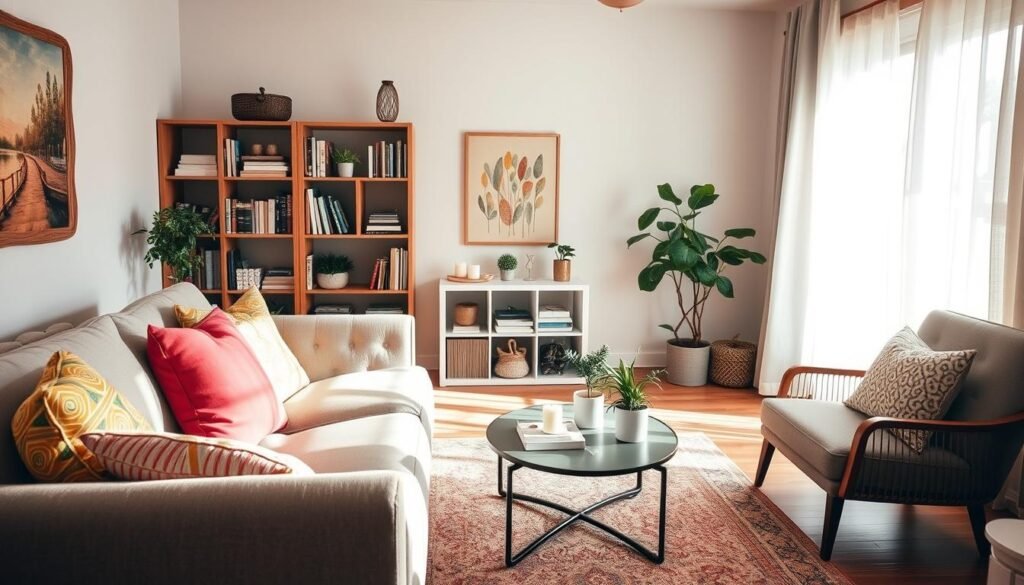
Anchor the room with pieces you won’t tire of, then let the cheap, changeable things carry the trend. Put your money into foundation items like a navy sectional with clean lines. Then have fun with pillows and benches you can easily switch out for a fresh look.
DIY Decor Tweaks and Seasonal Switch-Ups
We love the idea of seasonal decor swaps. When fall arrives, bring out chunky knit throws and warm-toned pillows. Transition to light linens and fresh colors when summer comes around.
New throw pillows are the cheapest way to update a sofa that’s seen a few years. Use an even number for a more traditional look, an odd number for a casual one, and buy covers rather than whole pillows so you can swap them by season and store them flat. Free version: shop the other rooms in your house and rotate what you already own.
Paint is your best friend for budget makeovers. A bold accent wall behind a simple sofa creates dramatic contrast for the price of a single tin. High-impact changes don’t require big budgets.
Rearranging the furniture costs nothing at all, and it’s worth doing before you buy anything: pull the seating a few inches off the walls, try the sofa on a different wall, and see what the room wants. Swapping art between rooms has the same effect for free. For more in this vein, our budget-friendly living room makeover tips go further on stretching a small budget.
Small changes stack up. New curtains, warmer bulbs, and clearing one surface you look at every day will do more for the room than most people expect, and none of it costs much.
Stylish Living Room Decor That Holds Up to Daily Life
The real test of a design is how it handles an ordinary Tuesday: homework on the coffee table, a laundry basket by the door, somebody eating on the sofa. These are the strategies designers use to keep a room looking good while it’s genuinely being used.
Applying Designer Tips on a Practical Budget
Style and practicality can coexist. Choosing performance fabric for a sofa gives you a room that withstands daily life without looking like it has given up.
Even if custom upholstery isn’t in your budget, you can find ready-made furniture with these durable materials. Planning ahead lets you achieve that designer-level functionality without the high price tag.
Highlighting Thrift Finds and Performance Fabrics
Layered textures are what make a comfortable room also an interesting one — a living room can feel as good as it looks and still invite you to put your feet up.
If you love coastal style, bring it indoors with shells you collected yourself and ocean-inspired artwork that reminds you of a particular place, rather than a generic beach.
Personalization is everything. Layer meaningful objects like travel trinkets and coffee table books that tell your unique story. Take your time implementing these changes—creating your ideal space is a journey, not a race.
Conclusion
The rooms that feel best are the ones that read as yours. We’ve covered everything from vintage finds to bold patterns, and any single one of them will change how your living room feels to sit in.
The key takeaway? Your space should reflect your unique personality and how you actually want to live. Trust your instincts—you know your home better than any editor or designer ever could.
Start with one or two ideas that speak to you. Move the furniture first, since that’s free, then add a single thing — a lamp, a rug, a pillow swap — and live with it a week before the next change. If square footage is the real constraint, our guide to maximizing space in a small living room pairs well with everything here.
Your living area is where memories are made and connections happen. It deserves to be a space that brings joy every day. Embrace the process and create an environment that feels authentically your style.