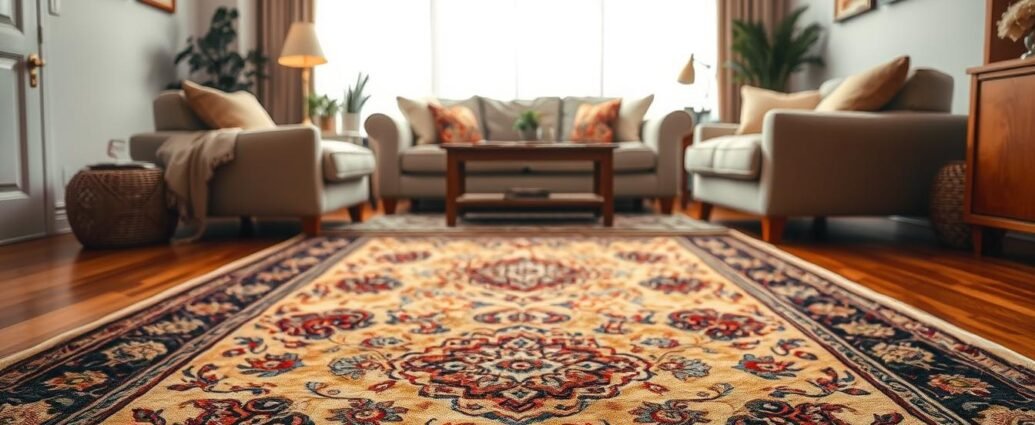
Remember walking into a room and feeling it was just… missing something? Often the thing missing is underfoot. A rug is the one piece of decor that sets the boundary of a room, softens the sound in it, and warms the floor — and it’s also the piece people most often buy wrong, usually by buying too small.
This is a guide to choosing one well. Design and Dwelling doesn’t sell rugs, so there’s nothing here we want you to buy. What follows is how the different constructions actually differ, roughly what each one costs and why, how to get the size right the first time, and how to find a good one for very little.
Key Takeaways
- Construction matters more than material: how a rug is made sets how long it lasts.
- Hand-knotted lasts decades and costs the most. Tufted is cheap and sheds.
- Most rooms need a bigger rug than people think. Front furniture legs should sit on it.
- Wool is forgiving, resilient and worth the extra over synthetics for a main room.
- Secondhand and vintage rugs are the best value in the category, by a wide margin.
- A rug pad is not optional — it doubles the life of whatever you put on top of it.
The Four Constructions, and What They Mean for You
Almost every rug you’ll see falls into one of four categories. Knowing which one you’re looking at tells you most of what you need to know about price, wear and whether it will still be good in ten years.
Hand-Knotted
Artisans tie each individual knot onto a warp by hand. It is slow — a large, finely knotted rug can take a weaver many months — and that labour is essentially the whole price. The payoff is real: a hand-knotted wool rug is the only construction that routinely survives generations of daily use, and it wears evenly rather than falling apart. Turn the rug over; if you can see the pattern clearly on the back, knot by knot, it’s hand-knotted.
Hand-Loomed and Flatweave
Woven on a loom rather than knotted, these produce a flatter, lighter textile. Kilims and dhurries live here. They cost considerably less than knotted rugs, have no pile to crush, and suit high-traffic hallways and under dining tables where crumbs need sweeping out. They’re less plush underfoot — which is what a rug pad is for.
Hand-Tufted
Yarn is punched through a backing cloth with a tufting gun and held in place with latex glue. This is the construction behind most affordable “handmade” rugs, and it’s worth being clear-eyed about: it looks good for a few years, sheds heavily at first, and the latex eventually dries out and crumbles. Fine for a guest room or a first apartment. Not an heirloom, whatever the listing says.
Machine-Made
Power-loomed, usually in polypropylene. Cheap, stain-resistant, washable, and genuinely the right answer for a playroom, a mudroom or a house with a new puppy. There’s no shame in it. Just don’t pay handmade prices for it — check the back for a uniform, glued-looking grid and a serged (machine-stitched) edge.
Quick Comparison
| Construction | Relative Cost | Realistic Lifespan | Best For |
|---|---|---|---|
| Hand-knotted | Highest | Decades, often generations | Living rooms, a piece you keep for life |
| Hand-loomed / flatweave | Middle | Many years | Hallways, under dining tables, layering |
| Hand-tufted | Lower | A few years before the backing goes | Guest rooms, short-term rentals |
| Machine-made | Lowest | Varies; often washable | Kids’ rooms, pets, entryways |
For a closer look at what goes into the weaving itself, this explainer on how area rugs are made is a useful companion.
Materials: What the Fibre Actually Does
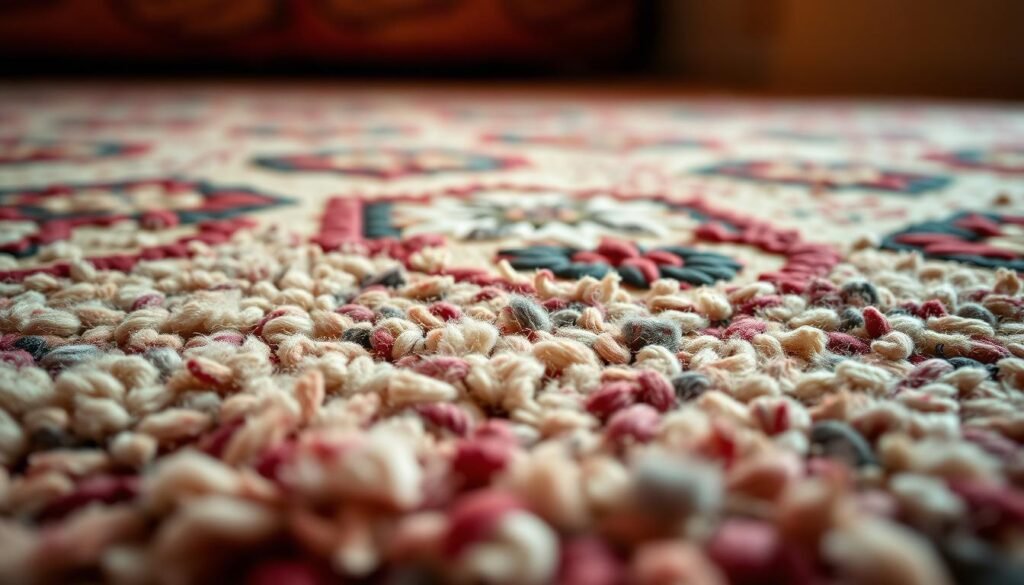
Wool is the default for good reason. It springs back after being crushed by furniture, resists dirt because of its natural lanolin, and hides everyday soiling better than any synthetic. It also takes dye beautifully. If you buy one good rug in your life, buy a wool one.
Silk catches light and allows very fine detail, which is why antique prayer rugs use it. It is also delicate, shows footprints, and does not belong anywhere people walk in shoes. Most rugs described as silk are viscose, which is wood pulp and behaves badly when wet — it will water-stain permanently from a spilled glass.
Cotton is soft, cheap and washable, and fades faster. Jute and sisal are hardwearing and inexpensive with a lovely rough texture, but they’re rough underfoot and stain if anything wet sits on them.
Colour and Pattern, Practically
A busy pattern in mid-tones hides more than a plain pale field will — which is why traditional rugs are patterned and why they end up in hallways. If you have pets, children or an entryway that catches winter grit, that is the whole argument. A pale, plain rug in a busy room is a decision to clean it constantly.
Beyond that, pattern choice is genuinely personal. Traditional motifs settle a modern room down; a simple geometric keeps a traditional room from feeling like a museum. If you want to bring more textile texture into the room around it, our guide to DIY fabric wall art covers doing it cheaply.
Getting the Size Right
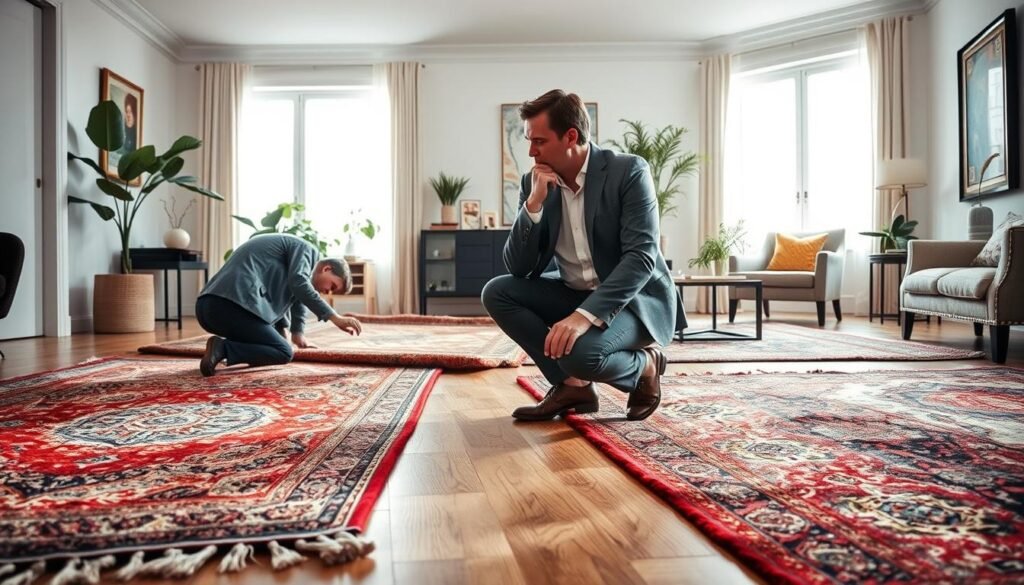
This is where most rug money gets wasted, so it’s worth being specific.
Living room: at minimum, the front legs of every seat in the arrangement should sit on the rug. A rug floating in the middle with all furniture off it makes the room look smaller and the rug look like a bath mat. If the budget won’t stretch to the right size, a large jute rug with a smaller wool one layered on top gets you there for less.
Dining room: measure the table and add roughly 60cm (24in) on every side, so chairs stay on the rug when pushed back. Flatweave here, always — chair legs catch in pile.
Bedroom: the goal is warm floor where your feet land. Either one large rug extending well past the sides of the bed, or two runners down each side, which costs far less and works just as well.
Test it first, free: mark the size out on the floor with painter’s tape and live with it for two days. It costs nothing and it has saved us from more than one expensive mistake.
Where to Find a Good One Cheaply
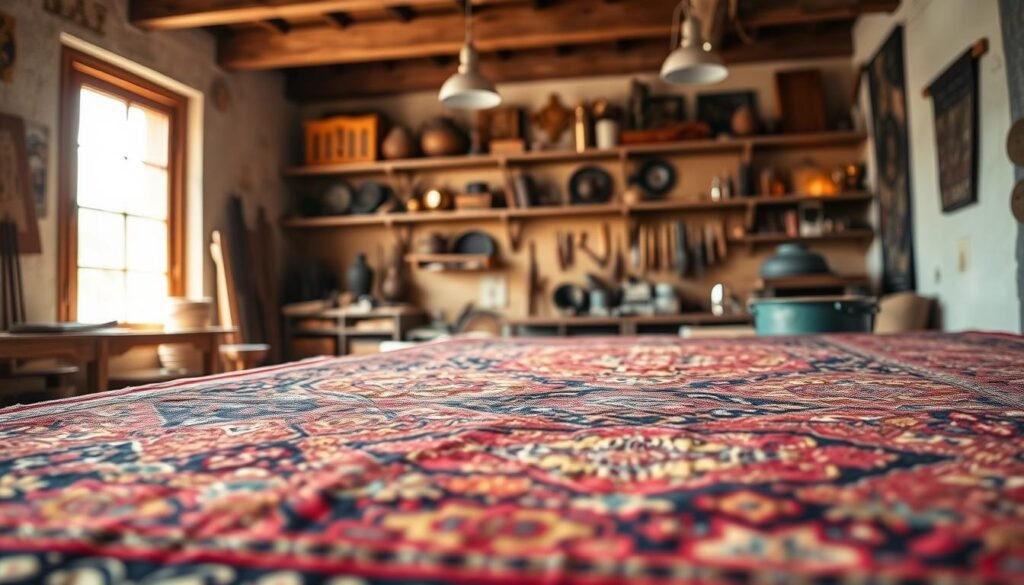
Rugs are the rare category where secondhand is straightforwardly better value than new. A worn vintage wool rug has already proved it can survive decades, and wear reads as character in a way it never does on a sofa.
Estate sales and auction houses are where the genuine bargains sit, because rugs are heavy, awkward to transport and rarely the lot people came for. Local classifieds are the next best thing — people moving house sell good rugs cheaply rather than pay to move them. Charity shops carry smaller pieces and runners.
Two checks before you hand over money for a used rug: fold a corner back and look for dry rot or a stiff, crackly backing, and put your nose to it — a mildew smell in the foundation never really comes out. Ordinary surface dirt, by contrast, is nothing; a professional wash costs a fraction of a new rug and often brings the colour back.
If none of that turns up anything, layering is the free-ish route: a cheap large natural-fibre rug underneath a smaller rug you already own reads as deliberate and covers the floor properly. Our guide to artisanal accents and DIY projects has more ways to add handmade texture without a big spend.
Care That Actually Extends the Life
Use a rug pad. It stops slipping, but more importantly it keeps grit from grinding against the foundation every time someone walks across — which is what actually kills rugs.
Vacuum regularly with the beater bar off or raised; a rotating brush tears at knotted pile and accelerates shedding. Blot spills immediately with a clean cloth rather than rubbing, and skip carpet shampoos on wool, which strip the lanolin that keeps it dirt-resistant. Rotate the rug end to end once or twice a year so sunlight and footfall wear it evenly. Professional cleaning every few years is worth it on anything hand-knotted.
Conclusion
The short version: work out the size before you look at anything, check the back to see what you’re really buying, and put the money into wool and construction rather than into pattern. Get those three right and a rug stops being decor and becomes the thing that holds a room together.
And if the budget isn’t there this year, tape out the size, layer what you own, and keep an eye on estate listings. The best rug in our own house cost less than the pad underneath it. For more of that approach, see our DIY farmhouse projects for adding rustic character on a budget.