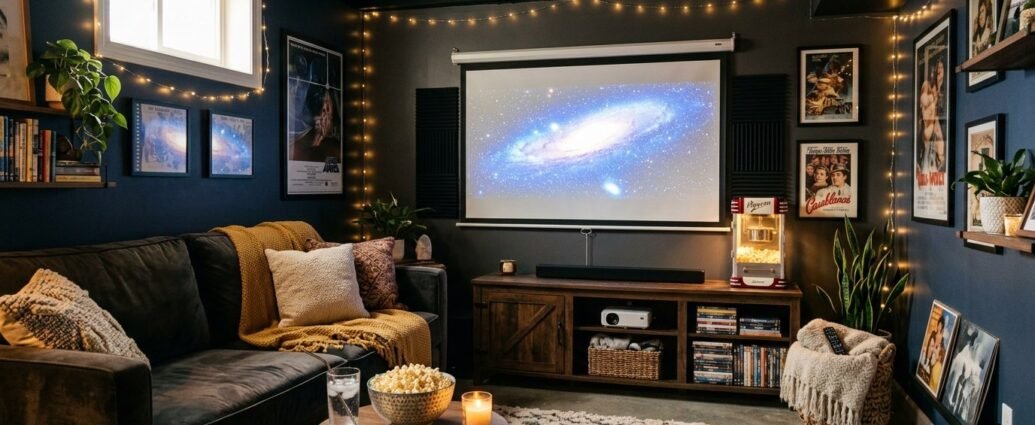
Do you ever close your eyes and picture it — the rumble of a movie score vibrating through your chest, the screen glowing in a perfectly darkened room, popcorn in hand, the whole world outside completely forgotten? That feeling isn’t reserved for a commercial cinema or a designer’s portfolio. It’s something you can build, right beneath your feet, in a basement that’s probably just collecting boxes right now.
In this guide, we’re going to walk through everything you need to create a truly immersive basement home theater — from the very first decisions about screens and projectors all the way through seating, acoustic treatment, lighting design, and soundproofing. Whether your budget is a lean $2,000 DIY weekend project or a full $15,000 pro-grade build, we’ve got a path for you.
Key Takeaways
- Projectors work best in rooms deeper than 12 feet; TVs are ideal for shorter spaces or brighter environments.
- Screen size should be matched to room depth using a simple viewing distance formula.
- Acoustic panels dramatically improve sound quality without a full structural renovation.
- Tiered seating with risers creates a true cinematic experience even in modest-sized basements.
- Bias lighting and LED strips reduce eye strain and enhance perceived image depth.
- Basic soundproofing — even budget-friendly options — makes a significant difference for the whole household.
Projector vs. TV: Choosing Your Basement Home Theater Display
This is always the first decision, and honestly, it sets the tone for everything else. Both options can look stunning — but they serve different rooms, budgets, and viewing habits in very different ways.
When a Projector Makes Sense
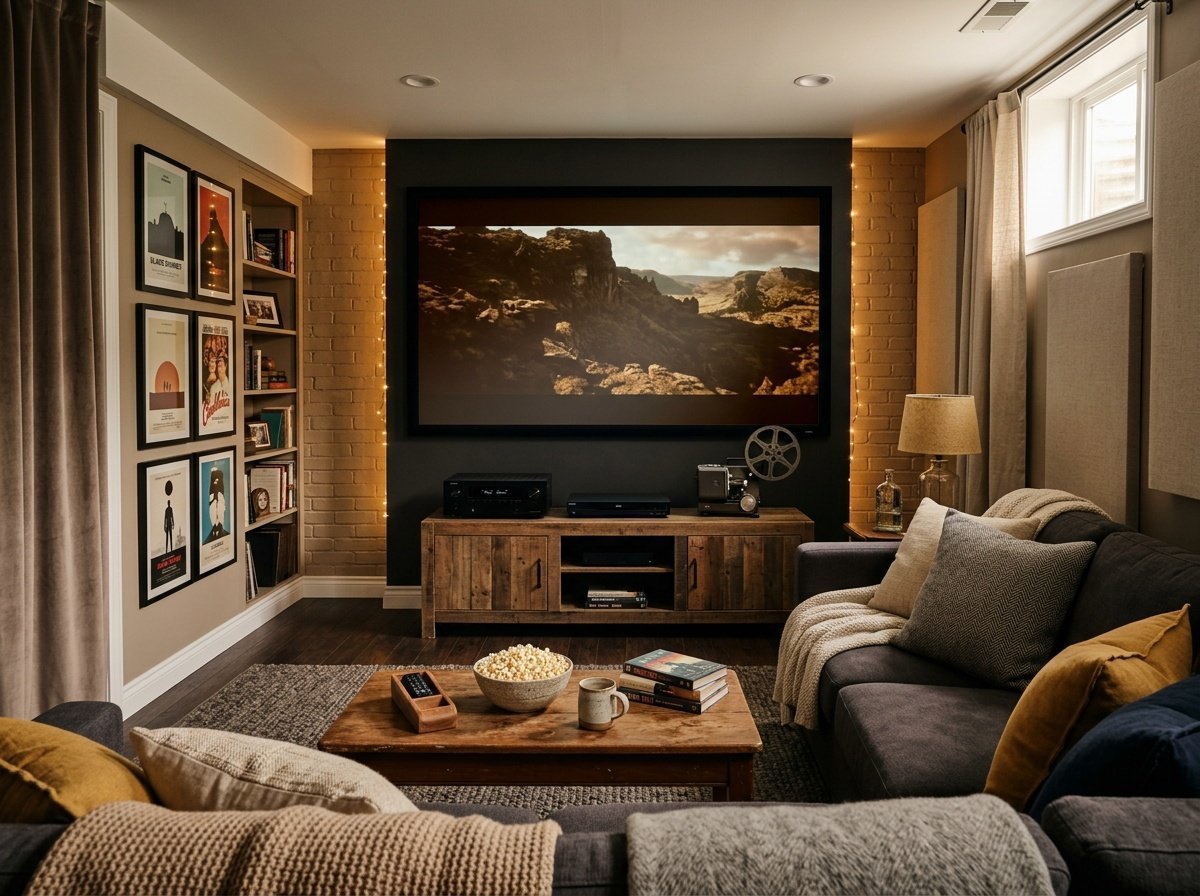
If your basement is at least 12 to 15 feet deep and you can achieve genuine darkness, a projector is the most cinematic choice available at any budget. A mid-range 4K laser projector (think Epson or BenQ models) can throw a 120-inch image for $1,200 to $2,500 — something no flat-panel TV can match at that scale without spending $10,000+.
The tradeoff is ambient light sensitivity. Projectors require a room you can truly darken. Basements, with their limited natural light, are actually ideal candidates for this. If your basement already has small or no windows, you’re working with a natural advantage.
When a Large-Format TV Is the Better Pick
For shorter rooms (under 12 feet), rooms with any persistent ambient light, or households that want the screen on casually throughout the day, a large 4K OLED or QLED TV in the 75–86 inch range is a more practical anchor. You’ll get perfect black levels, no lamp maintenance, and instant-on convenience.
Budget-wise, a quality 75-inch 4K TV runs $800 to $2,000 depending on the brand, which keeps the rest of your budget free for seating and acoustics. If you want to understand more about how lighting conditions affect display choices, our post on inexpensive family room updates that actually work touches on how ambient light interacts with screens in open living spaces — the same principles apply below grade.
Projector vs. TV Quick Comparison
| Factor | Projector | Large-Format TV |
|---|---|---|
| Ideal room depth | 12–20+ feet | 8–14 feet |
| Ambient light tolerance | Low | High |
| Max screen size | 120″–150″ | 75″–98″ |
| Entry-level cost | $600–$1,500 | $700–$2,000 |
| Installation complexity | Moderate (ceiling mount) | Simple (wall mount) |
| Maintenance | Lamp/filter replacement | Minimal |
Screen Sizing by Room Depth: Getting the Numbers Right
One of the most common mistakes I see in basement theater builds is choosing a screen size based on gut feeling rather than geometry. The result? Either a screen so large the front row strains their necks, or one so modest it loses the immersive “wow.” There’s a better way.
The Viewing Distance Formula
For 4K resolution content, the THX-recommended viewing distance is approximately 1.2 times the screen’s diagonal measurement. So if you’re working with a 15-foot room and plan to seat viewers about 12 feet from the screen, your ideal screen diagonal would be around 120 inches. For a 10-foot room with viewers at 8 feet, a 96-inch image is your sweet spot.
For regular 1080p content, multiply that distance by 1.5 to 2 times. The lower resolution means sitting too close reveals the pixel structure, so you’ll want a bit more breathing room between seat and screen.
Accounting for Low Ceilings
Many basements have ceilings in the 7 to 8.5 foot range, which affects both screen placement height and projector throw angle. If this is your situation, don’t worry — there are creative solutions, and I’d encourage you to explore our full guide on low ceiling basement ideas that actually work for inspiration on working vertically within tight constraints.
Generally, the bottom of your screen should sit no lower than 24 inches from the floor and no higher than your seated eye level plus about 15 degrees. In a low-ceiling basement, this often means your screen height is naturally limited to 50–60 inches tall — which guides you toward wider, more cinematic aspect ratios rather than taller screens.
Acoustic Panels: The Upgrade Most People Skip
Here’s something I’ll say plainly: acoustic treatment is probably the single highest-impact, most underestimated upgrade in any home theater. A great speaker system in an untreated concrete basement will sound thin, echoey, and fatiguing. The same system in a properly treated room sounds warm, full, and genuinely powerful.
Understanding Sound Absorption vs. Diffusion
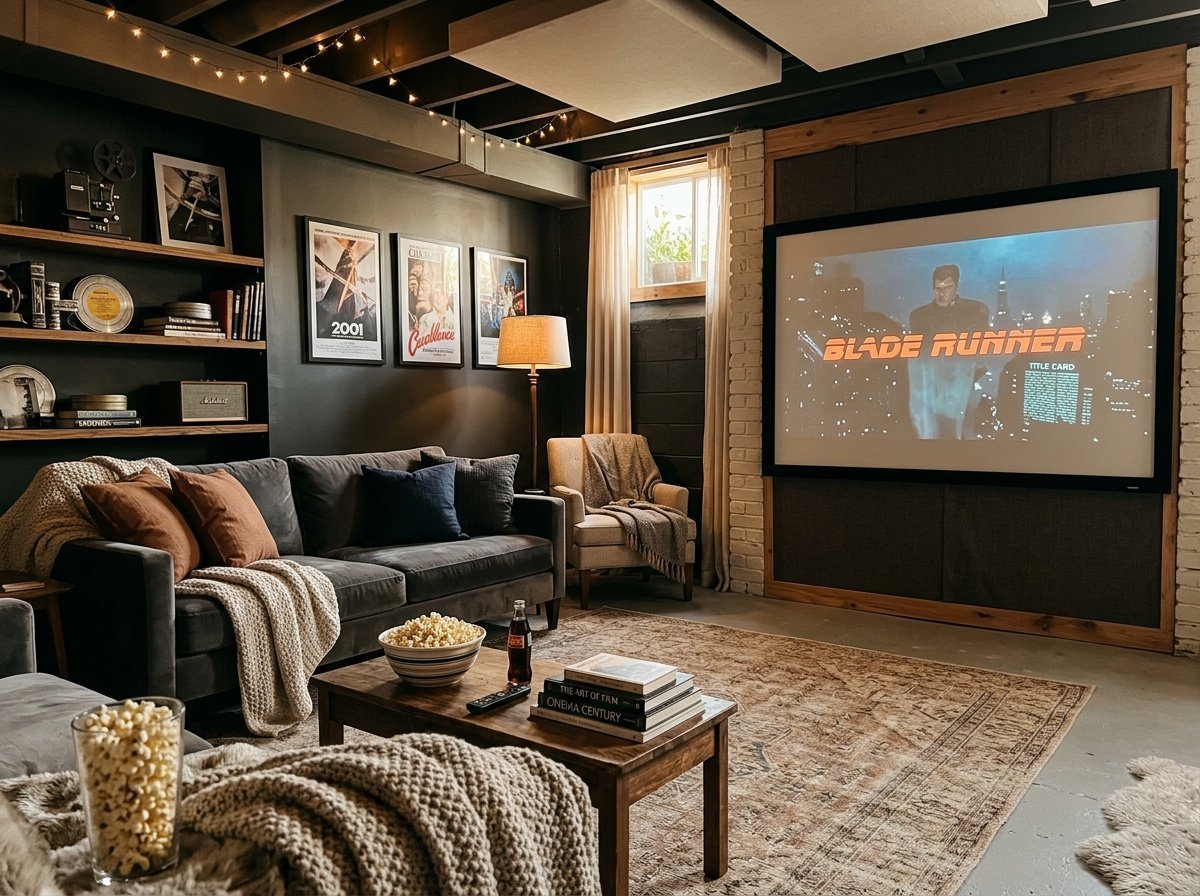
Acoustic panels primarily absorb mid-to-high frequency sound waves, preventing them from bouncing back to the listener as echo or flutter. These are your standard fabric-wrapped panels — typically 2 inches thick, made from rigid fiberglass or rockwool core, and placed at first-reflection points on the side walls and ceiling.
Diffusers scatter sound waves rather than absorbing them, maintaining a sense of liveliness and space in the room. A good basement theater uses a combination: absorption at the side walls and front, diffusion at the rear wall behind the back row of seats.
DIY Acoustic Panels on a Budget
Good news for the DIY-minded: building your own acoustic panels is genuinely straightforward. A 2×4-foot panel using a 2-inch rockwool core, wrapped in acoustically transparent fabric (burlap or linen work beautifully), costs about $25 to $40 per panel to make versus $80 to $150 per panel to buy pre-made. For an average basement theater, 8 to 12 panels is a solid starting point.
Place them at ear height on the first-reflection points — roughly one-third of the way from the screen on each side wall. Adding ceiling cloud panels above the primary seating area makes a dramatic difference, especially if your ceiling is hard drywall or concrete.
Bass Traps for the Low End
Corner bass traps address the low-frequency buildup that makes movie explosions sound muddy rather than impactful. Thick floor-to-ceiling rockwool panels placed in the room’s four vertical corners clean up the low end significantly. They can be built or purchased for $50 to $100 per corner — money very well spent.
Tiered Seating and Risers: The Cinema Experience at Home
Nothing communicates “home theater” quite like elevated rear seating. A riser platform — even just one step up — transforms a casual viewing room into something that genuinely feels like a private cinema. And it’s more achievable than most people think.
Designing Your Riser Platform
A standard riser platform sits 8 to 12 inches above the main floor. This height is enough to clear the sightlines over the front row while remaining comfortable with standard home theater seating. Build yours from 2×6 or 2×8 lumber framing covered with 3/4-inch plywood — the same basic construction as a platform bed frame, just wider and sturdier.
Carpet the surface and sides for both comfort and acoustic absorption. You can even build in under-riser storage for blankets, remotes, and gaming equipment — a practical bonus in any basement build.
Seating Options by Budget
Your seating choices range widely depending on your vision and budget:
- Budget ($200–$600 per seat): Recliner loveseats or modular sectional sofas with cup holders from retailers like Wayfair or Big Lots
- Mid-range ($600–$1,200 per seat): Dedicated home theater recliners from Seatcraft or Row One with power recline and LED base lighting
- Premium ($1,200+ per seat): Leather power-reclining theater chairs with tray tables, USB charging, and massage functions
For most basement builds, a first row of 2 to 3 loveseat recliners at floor level and a rear riser row of 2 to 3 additional seats creates a comfortable arrangement for 4 to 6 viewers — perfect for family movie nights or entertaining friends.
Blackout Solutions: Controlling Every Beam of Light
Light control isn’t just about pulling a curtain. In a basement home theater, it’s about engineering near-total darkness — and doing it in a way that still feels finished and intentional rather than cave-like.
Window Treatments for Basement Windows
Blackout roller shades are the most effective and least expensive solution for basement egress windows. Look for shades with side channels or recessed mounting brackets that prevent light bleed around the edges — a detail many homeowners miss. Cellular blackout shades add an extra layer of insulation, which is a bonus in a basement environment.
For a more polished look, layer the blackout shade behind a decorative curtain panel in a dark linen or velvet. The curtain doesn’t need to be functional — it just softens the window surround and contributes to the theater aesthetic.
Managing Light Leaks from Doors and Utilities
Door sweeps and foam weatherstripping around your theater room door prevent hallway light from spilling underneath. Paint interior walls in deep, light-absorbing tones — charcoal gray, near-black navy, or deep espresso — to eliminate any reflective surfaces that bounce projected light back as glare.
“The best home theater isn’t the one with the biggest screen — it’s the one where every design decision, from the darkest wall paint to the dimmest aisle light, makes the story feel closer.”
Lighting Design: Bias Lighting, LED Strips, and Ambiance
Here’s a truth that surprises most people: a great home theater isn’t completely dark. Strategic lighting placed carefully around the room actually enhances your experience rather than diminishing it.
Bias Lighting Behind Your Screen
Bias lighting — a soft glow of light placed behind the TV or screen — reduces the harsh contrast between a bright image and a pitch-dark wall. This measurably reduces eye strain during long viewing sessions and creates a perceived sense of deeper, richer image quality. LED strips set to a warm white (around 6500K) or synced to the screen content (via Govee or Philips Hue Sync) work beautifully here. Cost: $30 to $150 depending on the system.
Aisle and Step Lighting
Low-voltage LED strip lights tucked beneath riser platforms and along aisle edges serve both safety and ambiance. They provide just enough light for people to navigate without turning on overhead lights mid-movie. Warm amber LEDs (2700–3000K) work best — they’re dim enough not to distract but visible enough to be functional.
Overhead and Scene Lighting
Install dimmable recessed lighting on a smart switch or dedicated dimmer, grouped into zones: front of room, rear of room, and any wet bar or concession area. Being able to dial everything down to 10% for previews and back up for intermissions is a small luxury that makes the whole room feel professionally designed. Smart bulbs in a warm color temperature tie the whole lighting story together.
Soundproofing Basics: Keeping the Cinema Inside
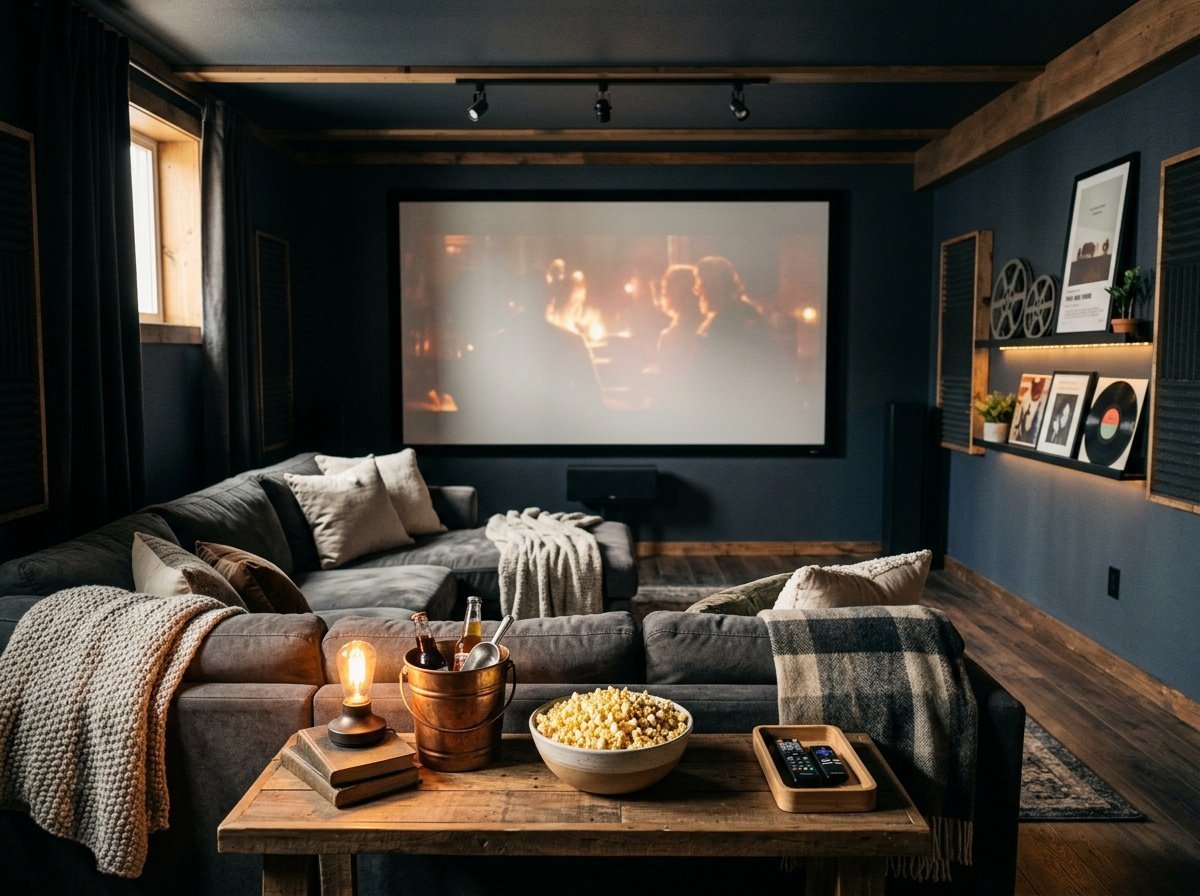
Soundproofing is different from acoustic treatment — and this distinction matters. Acoustic panels improve the sound inside the room. Soundproofing reduces how much sound travels between rooms, which is critical if you want to watch late-night action films without rattling your family upstairs.
Budget Soundproofing That Actually Helps
True soundproofing requires mass, decoupling, and absorption. Full structural soundproofing (resilient channels, double drywall, acoustic caulk) can add $3,000 to $8,000 to a build. But even on a tight budget, these steps make a real difference:
- Add mass-loaded vinyl (MLV) behind your drywall or directly over existing walls
- Use acoustic caulk around all electrical outlets, pipe penetrations, and wall edges
- Install a solid-core door with a door sweep and weatherstripping
- Add area rugs over concrete or hard floors to reduce impact transmission
Decoupling the Subwoofer
Your subwoofer is the primary source of structure-borne vibration — the kind that travels through joists and makes glasses rattle upstairs. Placing it on an isolation pad (a thick rubber or foam platform designed specifically for this) dramatically reduces the vibration transferred to the floor. Subwoofer isolation pads run $30 to $80 and are one of the highest-value soundproofing purchases you can make.
Budget Planning: From $2K DIY to $15K Pro Build
Let’s talk real numbers, because every basement theater article should be honest about what things actually cost. The good news is there’s a genuinely great version of this project at almost every budget level.
The $2,000–$4,000 DIY Build
At this budget, you’re making smart, deliberate choices across every category. A budget projector or 75-inch 4K TV ($700–$1,000), a 5.1 soundbar system ($300–$600), DIY acoustic panels ($200–$300), basic blackout shades ($100–$200), LED bias lighting ($50), a simple platform riser built from lumber ($150–$250), and a pair of reclining loveseats from a furniture discount store ($400–$800). This gets you a room that genuinely surprises people when they walk in.
The $5,000–$8,000 Mid-Range Build
Here you’re adding a quality 4K laser projector, a dedicated 5.1 or 7.1 speaker system with a proper AV receiver, purchased acoustic panels and corner bass traps, smart dimmable lighting throughout, a finished and carpeted riser platform, and dedicated home theater reclining chairs. This is the sweet spot for most homeowners — the gap between “nice” and “wow” closes fast in this range.
The $10,000–$15,000 Pro Build
At this level, you’re working with a custom-installed 4K laser projector with motorized screen, a full Dolby Atmos speaker array installed in the ceiling and walls, professional acoustic treatment including diffusion panels and fabric-wrapped wall systems, smart home integration, premium leather theater seating, and structural soundproofing. This is the version you save for, plan for, and — honestly — brag about just a little.
Frequently Asked Questions
What is the minimum basement size for a home theater?
A dedicated home theater works well in a space as small as 12 feet wide by 15 feet deep. Smaller than that and you’ll want to consider a media room setup rather than a full theater — think large TV, comfortable sofa, and quality soundbar without the tiered seating. Wider rooms give you more flexibility with speaker placement and seating width.
Do I need a permit to build a basement home theater?
Most cosmetic basement theater projects — adding acoustic panels, seating, paint, and lighting — don’t require permits. If you’re adding new electrical circuits, framing new walls, or making structural changes, you’ll likely need a permit depending on your municipality. Always check with your local building department before any structural work.
How do I choose between a soundbar and a full surround sound system?
A quality soundbar (especially a Dolby Atmos-enabled bar with a dedicated subwoofer) is an excellent starting point for a $2K to $4K build. It’s simple, clean, and sounds genuinely impressive. A full 5.1 or 7.1 speaker system with an AV receiver delivers a more enveloping, accurate surround experience, but requires more installation effort and budget. Most dedicated theaters eventually graduate to a full system.
Can I add a home theater to a basement with low ceilings?
Absolutely — low ceilings are one of the most common challenges in basement builds and they’re very workable. The main adjustments are limiting your screen height, avoiding raised platforms that would bring heads too close to the ceiling, and choosing flush or recessed lighting. For more creative ideas on working with limited vertical space, our guide to low ceiling basement ideas that actually work covers the full toolkit.
What wall color is best for a home theater?
Dark, matte-finish colors are best — charcoal gray, deep navy, near-black brown, or true black. Flat or matte paint sheens are essential because they absorb rather than reflect projected light or screen glare. Avoid anything with a satin or eggshell finish on the front walls especially. The ceiling should also be dark to prevent light scatter from the screen.
How much does it cost to soundproof a basement theater room?
Basic soundproofing measures — solid-core door, weatherstripping, mass-loaded vinyl, acoustic caulk, and area rugs — run $300 to $800 and make a noticeable difference. Full structural soundproofing with resilient channels, double drywall, and decoupled framing adds $3,000 to $8,000 depending on room size. Most homeowners find a middle-ground approach delivers strong results without the full structural investment.
Is a projector or a TV better for a basement home theater?
It genuinely depends on your room. Projectors deliver a larger, more cinematic image and excel in dark basement environments — but require controlled lighting. TVs are more versatile, instant-on, and handle ambient light far better. If your basement can achieve true darkness and is at least 12 feet deep, a projector is a magical choice. If you watch casually throughout the day or have a shorter room, a large 4K TV is the more practical and still impressive option.
Building your basement home theater is one of those projects that starts as a simple idea and quietly becomes one of the most-loved spaces in your home. I’ve watched clients who were hesitant about the cost or complexity walk into their finished room for the first time and immediately start planning their first movie night. That’s the thing about a space designed with intention — it gives back in ways that go beyond square footage or resale value. It becomes a place where time slows down, where the outside world falls away, and where your home does exactly what a home should: hold you in something that feels just right. Start with the pieces that fit your budget now, and build from there. The most important step is simply beginning. 🎬