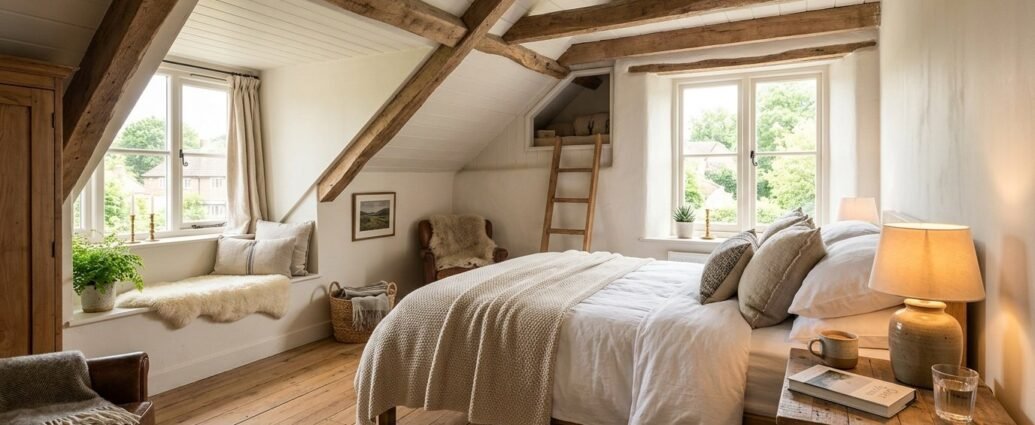
Have you ever climbed up into your attic and thought, this space could be something incredible? There’s something quietly magical about those tucked-away rooms under the roofline — the sloped ceilings, the hidden corners, the feeling of being cocooned just above the rest of the house.
An attic bedroom conversion is one of the most rewarding home projects you can take on, but it does come with its own set of considerations. Together we’ll walk through everything — from structural checks and insulation to skylights, low-ceiling furniture strategies, and the design details that make a small attic bedroom feel genuinely luxurious.
Key Takeaways
- Always confirm structural load-bearing capacity and ceiling height requirements before starting any attic conversion.
- Insulation is the single most impactful investment for year-round comfort in an attic bedroom.
- Skylights bring in diffused light without sacrificing wall space; dormers add both light and headroom.
- Low-profile furniture and built-in storage are your best allies in a sloped-ceiling room.
- Strategic lighting, mirrors, and a restrained color palette can make even a small attic bedroom feel spacious and luxurious.
Understanding the Structural Requirements to Convert an Attic to Bedroom
Before a single piece of furniture gets moved upstairs, the bones of your attic need a thorough assessment. This isn’t the most glamorous part of an attic bedroom conversion, but it’s absolutely the foundation everything else is built on — literally.
Load-Bearing Capacity and Floor Joists
Most attic floors are designed to hold storage weight, not the live load of people, furniture, and daily movement. A structural engineer or experienced contractor should evaluate your existing floor joists to determine whether they need to be sistered (reinforced with additional lumber) or replaced entirely. This step protects both your safety and your investment.
The general rule is that bedroom floor joists need to support at least 40 pounds per square foot of live load. If your current joists fall short, budgeting for this reinforcement upfront saves you from costly surprises mid-project.
Minimum Ceiling Height Requirements
Building codes in most regions require at least 7 feet 6 inches of ceiling height over a minimum floor area for a room to be classified as a legal bedroom. That doesn’t mean every inch of your attic needs to meet that height — typically at least half the floor area should clear the threshold.
Measure your ridge height carefully. If you’re close but not quite there, raising the roofline or adding a dormer might be worth exploring. These decisions affect your permit approval and your home’s resale value, so they’re worth getting right from the start.
Egress and Safety Codes
A bedroom also legally requires an egress window — an opening large enough for emergency exit or rescue access. A dormer window often solves both the egress and natural light problems in one move. Check with your local building department early, as requirements vary by municipality and can influence your entire design plan.
Insulation Strategies That Make Attic Bedrooms Comfortable Year-Round
Nothing ruins a beautiful attic bedroom faster than waking up sweating in July or shivering in January. Temperature regulation is the number one comfort challenge of any attic room, and the solution almost always comes back to insulation quality and placement.
Choosing the Right Insulation Type
Spray foam insulation is widely considered the gold standard for attic conversions because it creates an air-tight seal directly against the roof deck, eliminating the thermal bridging that causes temperature swings. It’s a higher upfront investment but pays back in energy savings and comfort for years.
Rigid foam board is a more budget-friendly option that still performs well when installed correctly between rafters. Many homeowners combine rigid foam with batt insulation to hit their target R-value. For most climates, aim for R-38 to R-60 in the roof assembly.
Ventilation and Moisture Control
Proper ventilation channels between your insulation and the roof deck prevent moisture buildup that leads to mold and rot. If you’re using a hot roof assembly (spray foam tight to the deck with no ventilation gap), make sure your contractor understands this approach fully — it requires specific materials and detailing.
A well-insulated attic bedroom also benefits from a dedicated HVAC zone or a mini-split system, since heat rises and attic rooms can run significantly warmer than the rest of the house. A mini-split offers both heating and cooling in one sleek, wall-mounted unit that works beautifully in low-ceiling spaces.
Skylights vs. Dormers: Choosing Your Natural Light Strategy
Natural light is what transforms an attic room from a cramped afterthought into a genuinely dreamy retreat. Your two primary options — skylights and dormers — each have real advantages, and the best choice depends on your budget, your roof structure, and how much headroom you’re working with.
The Case for Skylights in an Attic Bedroom Conversion
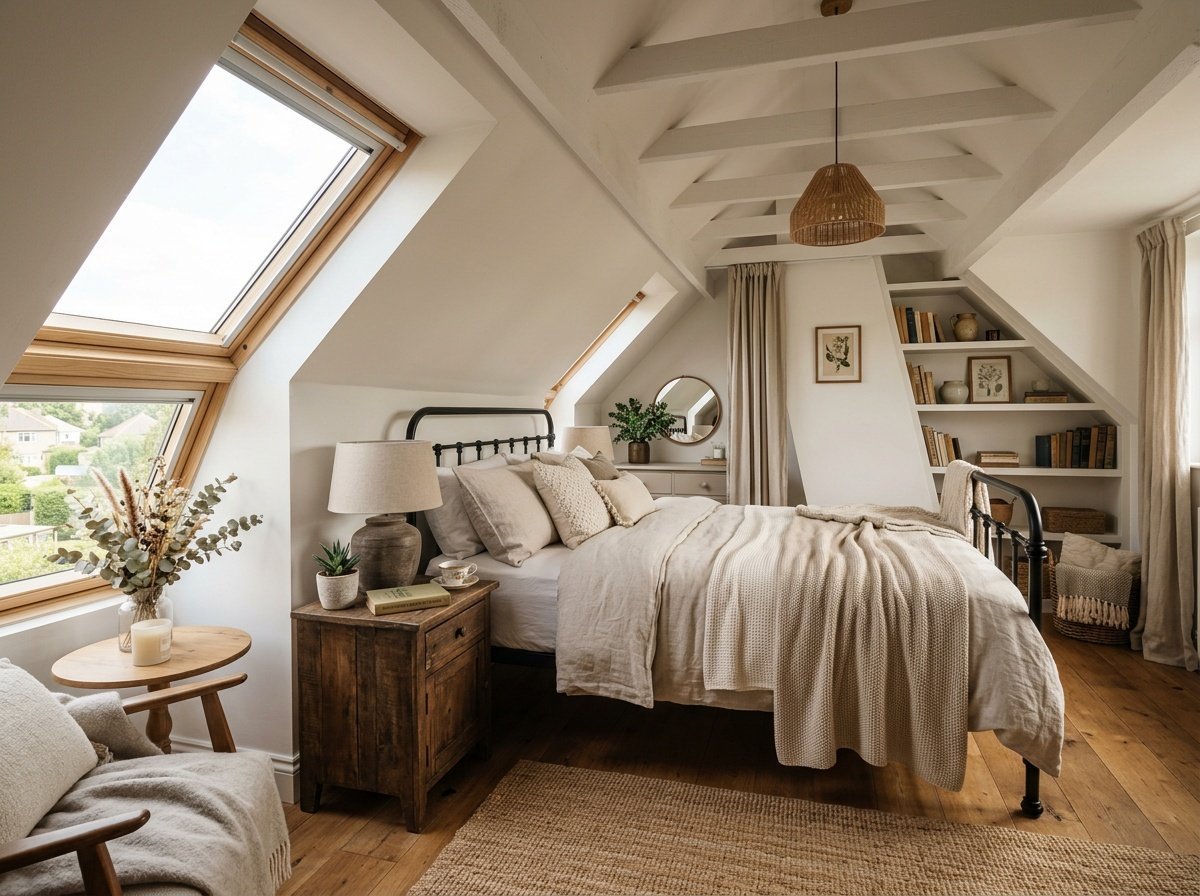
Skylights are the less invasive and more affordable option. They sit flush within the existing roofline, so there’s no structural modification to the roof’s footprint. A well-placed skylight pours generous light directly into the room and can create that soft, studio-style illumination that feels effortlessly beautiful at any hour of the day.
Operable skylights (ones that open) double as ventilation, which is a significant plus for attic temperature control. Look for solar-powered or manually operated venting skylights with built-in rain sensors — the functionality is worth every penny in a room that tends to trap heat.
Why Dormers Are Worth the Investment
Dormers are a bigger project but they deliver a bigger payoff. By extending the roofline outward and adding a vertical wall with a window, a dormer increases both usable headroom and square footage — two things an attic bedroom conversion desperately needs.
A shed dormer (a single, wide extension across the roofline) can dramatically open up an entire attic floor. A classic gable dormer adds more of a charming architectural detail and works beautifully in traditional or cottage-style homes. Either way, dormers meet egress requirements and bring in full, direct light rather than overhead-only illumination.
Combining Both for Maximum Effect
There’s no rule that says you have to choose just one. A dormer on the front or rear roofline combined with a skylight or two overhead creates a layered, light-filled room that genuinely rivals much larger spaces. If budget allows, this combination is my personal favorite approach for attic bedroom conversions.
| Feature | Skylight | Dormer |
|---|---|---|
| Cost | Lower ($1,000–$4,000 installed) | Higher ($8,000–$25,000+) |
| Headroom Added | None | Significant |
| Egress Compliant | Rarely | Yes (typically) |
| Structural Impact | Minimal | Moderate to significant |
| Light Quality | Overhead, diffused | Horizontal, natural |
| Ventilation Option | Yes (venting models) | Yes |
Smart Furniture Strategies for Low-Ceiling and Sloped-Ceiling Bedrooms
Working with a sloped ceiling bedroom is one of the most creatively interesting challenges in interior design. The angles and constraints that seem like obstacles are actually what give these rooms their character — you just need to know how to work with them rather than against them.
Embrace Low-Profile Furniture
This is the single most impactful furniture decision you’ll make. A low-profile platform bed tucked under the slope of the roof creates an intentional, nest-like sleeping nook that feels cozy rather than cramped. Pair it with low nightstands and you’ve got a cohesive, grounded look that suits the architecture perfectly.
Tall wardrobes and towering bookshelves are the enemy of a sloped ceiling room. Keep your vertical furniture pieces positioned along the highest wall (typically the ridge line) and reserve the lower-sloped areas for seating, storage ottomans, and anything you’d naturally sit or lie near. These are also practical principles explored in my post on low-ceiling basement design ideas — the same logic applies beautifully in an attic context.
Built-In Storage Under the Eaves
Built-in storage under the eaves is not just practical — it’s one of the defining design elements that elevates an attic room from a conversion to a considered space. Custom drawers, cubbies, or a window seat with hidden storage make use of every inch of awkward low-clearance space.
Even simple open shelving built into an eave nook can become a styled vignette for books, plants, and objects. These built-ins don’t always require a full carpentry budget — a skilled DIYer can create beautiful eave storage with basic materials and a weekend’s work.
Floating Desks and Foldable Pieces
For attic bedrooms that also serve as a home office or reading nook, a wall-mounted floating desk is ideal. It takes up zero floor space when not in use and can be positioned at exactly the right height for the slope of the wall. Foldable chairs, nesting side tables, and Murphy beds (for guest rooms) are all worth considering when square footage is at a premium.
Attic Room Ideas for Sloped Ceiling Design That Feels Intentional
The design choices you make in an attic bedroom need to work with the architecture, not pretend it isn’t there. These rooms have a natural intimacy and texture that flat-ceiling rooms simply can’t replicate — lean into that.
Expose the Beams and Rafters
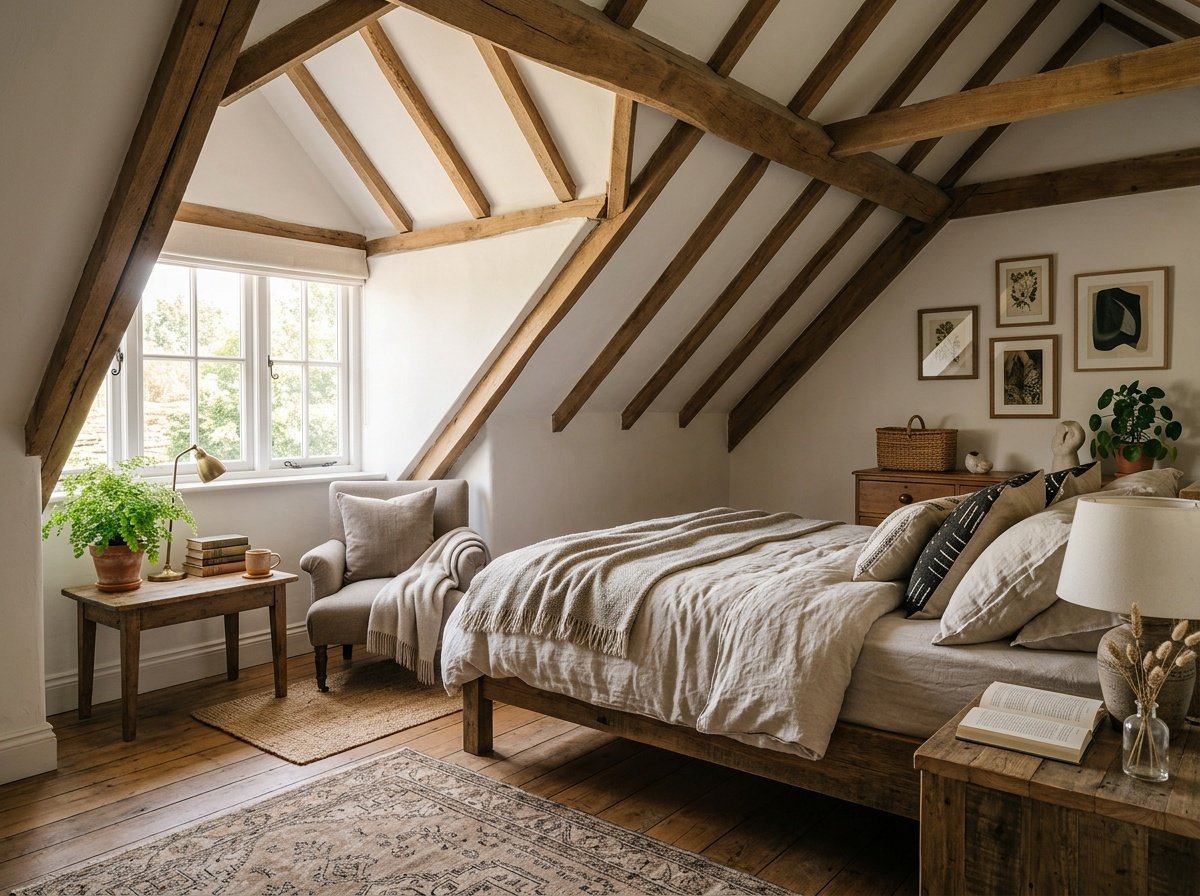
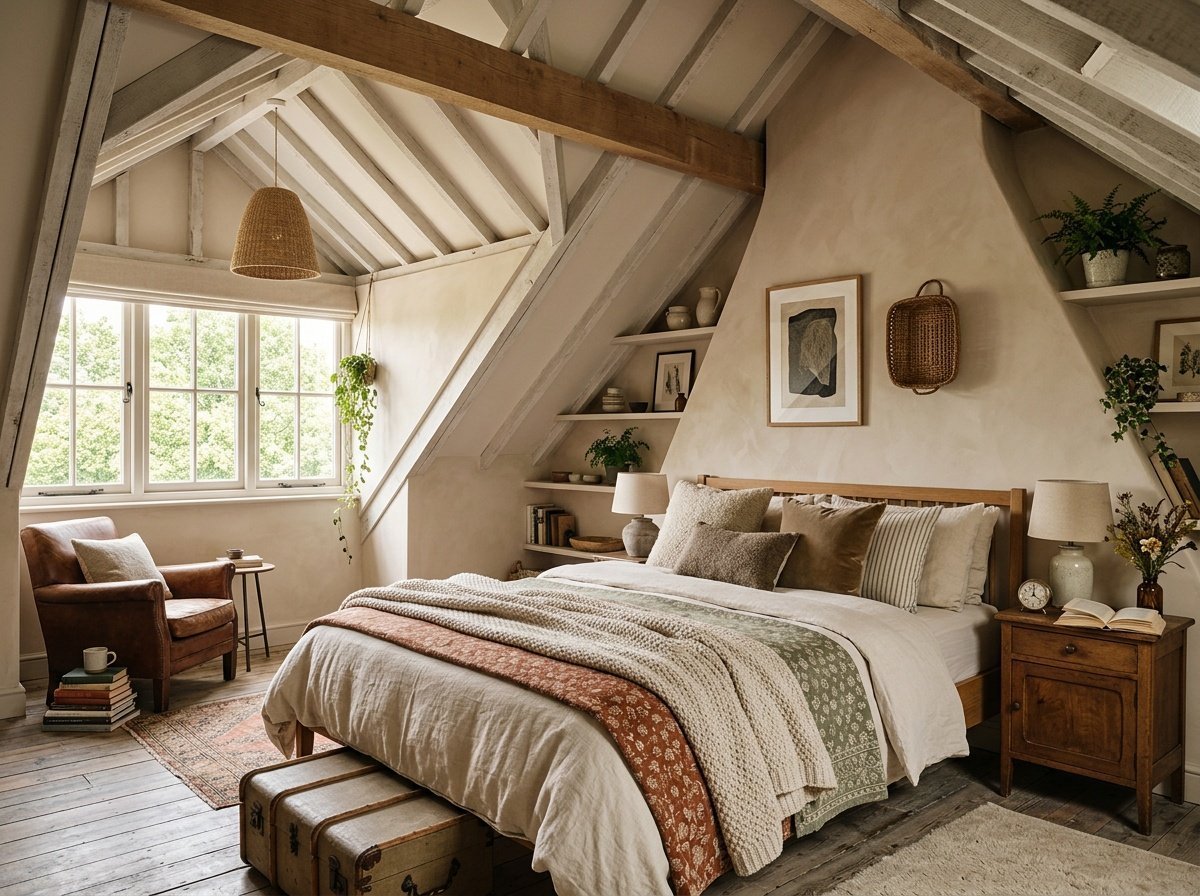
If your attic has beautiful structural bones — timber rafters, exposed ridge beams, original wood framing — consider leaving them visible. Exposed beams add warmth, texture, and a sense of honest craft that no wallpaper can replicate. Paint them a warm white to keep the room feeling light, or leave them in their natural wood tones for a more rustic, cabin-like atmosphere.
Lean Into a Monochromatic Color Palette
In rooms with irregular ceiling lines and multiple angles, a tonal, monochromatic palette is your most powerful design tool. Painting walls, ceiling, and even trim in the same or closely related shades creates visual continuity that minimizes the perceived complexity of the angles. Soft warm whites, pale greige, and dusty sage all work wonderfully in attic spaces.
The beauty of a restrained palette is that it lets texture do the heavy lifting — linen bedding, a jute rug, a chunky knit throw, and whitewashed wood all register as beautiful detail without adding visual noise. If you’re exploring calming color directions more broadly, the approach mirrors what I love about the earthy, calming color trends making their way into every room right now.
Layer Lighting at Multiple Heights
Overhead lighting alone feels harsh and exposes every awkward angle. Instead, layer your lighting: a skylight for daytime atmosphere, wall sconces at head height, a floor lamp tucked into a corner nook, and warm LED strip lighting tucked along the eave line for a soft ambient glow in the evening. The result is a room that looks intentionally cinematic after dark.
“The best attic bedrooms don’t fight their architecture — they celebrate it. Every slope, every beam, every tucked-away corner is an invitation to get creative.”
How to Make a Small Attic Bedroom Feel Luxurious
Luxury in a small space isn’t about square footage — it’s about intention, quality, and atmosphere. A thoughtfully designed attic bedroom can feel more special than a sprawling master suite if you get the details right.
Invest in High-Quality Bedding and Textiles
In a small room, the bed is everything. It fills most of your visual field the moment you walk in, so beautiful bedding has an outsized impact. Choose a linen duvet with a lived-in, relaxed drape, layer with a waffle-knit blanket, and pile on euro shams. The tactile richness of quality textiles reads as luxury immediately.
Use Mirrors to Amplify Light and Space
A large mirror positioned to reflect your skylight or dormer window essentially doubles your light source. Lean a full-length mirror against a low eave wall — it adds depth, brightens the room, and functions beautifully without requiring any wall mounting on an angled surface. This is one of those inexpensive updates that genuinely transform a room, regardless of size or budget.
Add Thoughtful, Personal Details
A curated stack of books on the eave shelf, a small ceramic vase with a single stem, a vintage rug with a story — these are the details that make a space feel genuinely inhabited rather than staged. Attic bedrooms reward this kind of curation because the intimate scale means every object is seen and felt. Don’t fill the space; edit it.
Practical Access: Stairs, Headroom, and Flow
The attic conversion that feels truly finished is one where the access feels considered, not like an afterthought. How you get to your attic bedroom matters just as much as what happens inside it.
Staircase Options and Space Efficiency
Pull-down attic ladders don’t belong in a bedroom conversion — a proper staircase is both a safety requirement and a design opportunity. In tight floor plans, alternating tread stairs (also called paddle stairs or ship’s ladder stairs) are a space-efficient solution that look intentional and modern. A straight run of stairs with open risers and a simple wood tread feels light and architectural rather than imposing.
Transition Spaces and Landings
If your stair lands in the middle of the room, consider creating a small landing zone — a place to remove shoes, hang a jacket, or set down a bag. Even a small bench and a wall-mounted hook rail transforms the entry into a functional, welcoming moment. It signals that this room was thought through from threshold to headboard.
Frequently Asked Questions
How much does an attic bedroom conversion typically cost?
Costs vary widely depending on the scope of structural work, insulation choices, and whether you’re adding a dormer. A basic attic conversion with existing headroom can run $15,000–$35,000, while a full dormer addition with new stairs and a bathroom can reach $60,000–$100,000 or more. Getting two or three detailed contractor quotes early in the process helps you understand your specific cost range.
Do I need a permit to convert my attic into a bedroom?
In most jurisdictions, yes — especially if you’re adding structural modifications, new electrical circuits, or HVAC. Permits exist to ensure safety compliance, and skipping them can cause significant problems when you sell your home. Always check with your local building department before beginning work.
What is the minimum ceiling height for an attic bedroom?
Most U.S. building codes require a minimum ceiling height of 7 feet 6 inches over at least 50% of the room’s floor area for it to qualify as a legal habitable bedroom. Heights vary by state and municipality, so confirm the exact requirement in your area with your local building authority.
How do I keep an attic bedroom cool in summer?
The most effective approach combines high-quality insulation (spray foam or rigid foam against the roof deck), a dedicated mini-split system for both cooling and heating, and operable skylights or windows for cross-ventilation. Blackout cellular shades on skylights also help block solar heat gain during peak afternoon hours.
Can I convert my attic into a bedroom myself, or do I need a contractor?
Some elements — like painting, installing built-in shelving, or laying flooring — are excellent DIY projects. However, structural reinforcement, electrical work, HVAC installation, and any work requiring permits should be handled by licensed professionals. Think of it as a hybrid project: hire the specialists for the technical work and personalize the finishing touches yourself.
What type of flooring works best in an attic bedroom?
Engineered hardwood or luxury vinyl plank (LVP) are ideal because they’re dimensionally stable in fluctuating temperatures and humidity levels — both common in attic environments. Solid hardwood can warp in the thermal swings an attic experiences seasonally. A soft area rug layered over your hard floor adds warmth and sound absorption.
How can I make a sloped ceiling bedroom feel less cramped?
Stick to a light, tonal color palette across walls and ceilings to visually unify the angles. Use low-profile furniture, especially near the sloped sections. Layer ambient lighting rather than relying on a single overhead fixture, and use mirrors to amplify light and depth. Keeping the room edited — fewer, better pieces — always makes a small space breathe better.
An attic bedroom conversion is one of those rare home projects that rewards you on multiple levels: it adds real square footage and value to your home, it gives you a space that feels genuinely unlike any other room in the house, and it’s the kind of project you’ll look back on with real satisfaction. Start with the structural basics, invest in good insulation and natural light, and let the architecture guide your design decisions. The sloped ceilings and cozy corners aren’t limitations — they’re the whole point. If you’re ready to start planning, I’d love to help you bring that space to life. Drop your questions in the comments or reach out directly — this is exactly the kind of project I live for. ✨