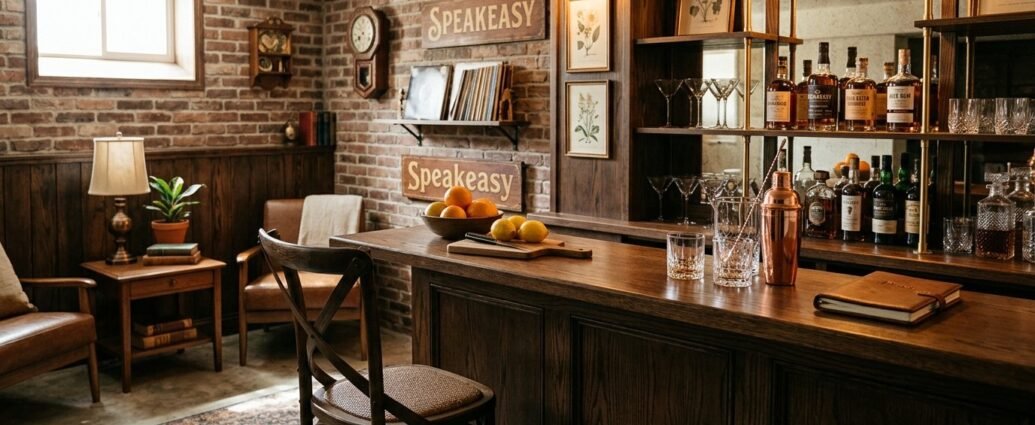
Do you ever wander into someone’s basement and feel that subtle pang of envy — not over their square footage, but over the fact that they’ve carved out the most inviting little bar you’ve ever seen? There’s something about a well-designed home bar that signals intentionality, like this person decided to build a life worth savoring.
In this post, we’re diving deep into everything you need to know to build or style your own basement bar — from the very first decision (wet bar or dry?) all the way through five complete design concepts you can steal right now. Whether you’re working with a tight budget or ready to go all in, you’ll find ideas that feel genuinely doable and genuinely beautiful.
Key Takeaways
- Choosing between a wet bar and dry bar is your first and most important structural decision — it shapes the entire project scope.
- Countertop material (butcher block, quartz, or concrete) sets the tone for both aesthetics and maintenance expectations.
- Cabinet configuration, under-counter appliances, and backsplash tile are where personality really enters the design.
- Lighting — especially pendant placement — can single-handedly elevate a basic bar into something that feels designed.
- Five design concepts from industrial loft to Art Deco glamour give you a complete creative roadmap to follow.
- Bar stool selection is the finishing touch that ties proportions, comfort, and style together seamlessly.
Wet Bar vs. Dry Bar: The First Decision That Shapes Everything
Before you pick a single tile or countertop slab, you need to settle this one foundational question: are you building a wet bar (with plumbing) or a dry bar (without)? It sounds simple, but this choice has cascading effects on your budget, timeline, and the kind of entertaining experience you’ll be able to create.
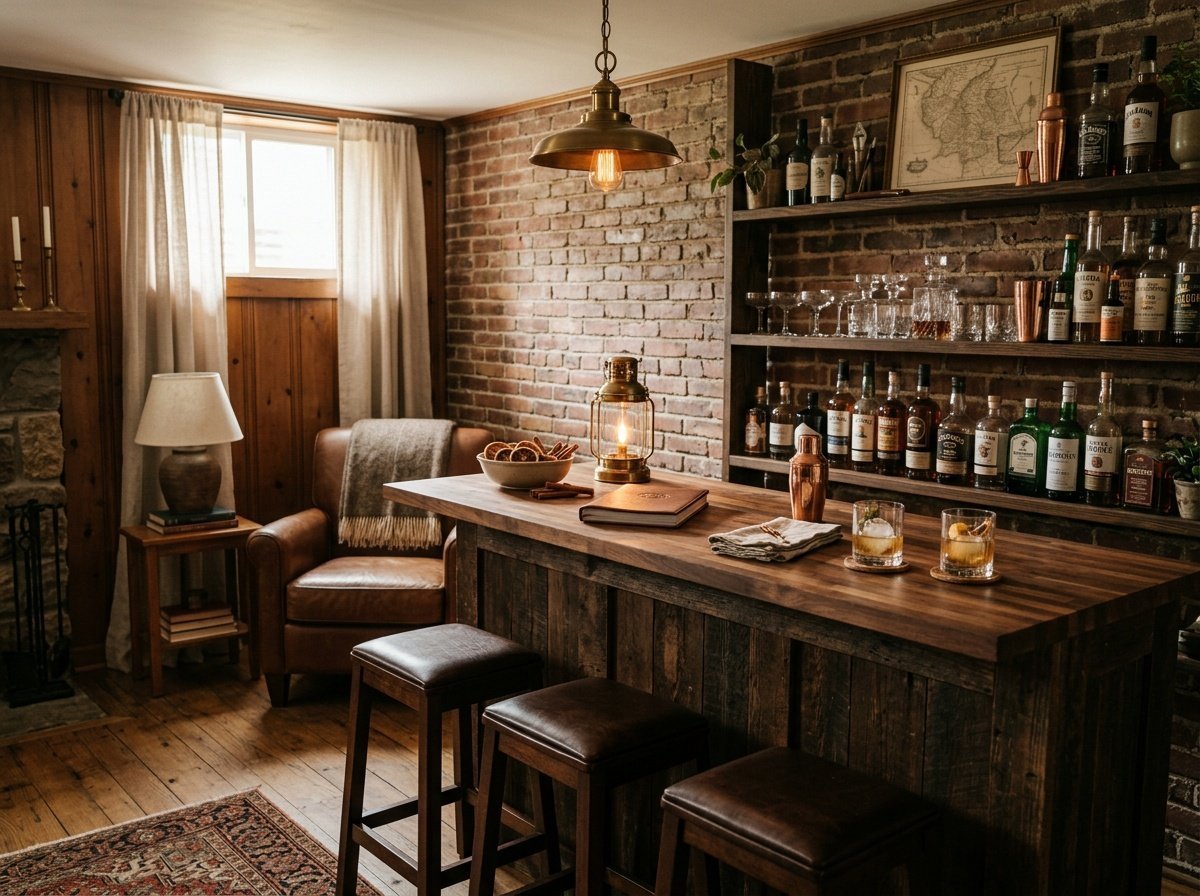
What Makes a Wet Bar Basement Worth the Investment
A wet bar includes a sink with running water, which means you’ll need to tap into your home’s existing plumbing lines — a project that typically requires a licensed plumber. It adds real functional value: rinsing glasses, filling ice buckets, and cleaning up without trekking upstairs all make hosting significantly easier.
The cost varies widely, but roughing in new drain and supply lines in a finished basement can run anywhere from $500 to $2,500 depending on proximity to existing pipes and local labor rates. If your basement already has a bathroom nearby, the lines are often close enough to keep costs lower.
When a Dry Bar Is Actually the Smarter Choice
A dry bar skips the plumbing entirely, relying instead on a small beverage fridge, ice bucket, and a well-stocked cabinet setup. For many homeowners, this is the better starting point — fewer permits, faster build time, and far less disruption to the existing space.
If you’re already thinking about other inexpensive home updates that deliver big visual impact, a dry bar build is exactly that kind of project. A thoughtfully styled dry bar with great lighting and beautiful cabinetry can look every bit as intentional as a plumbed wet bar.
Making the Call: A Quick Decision Framework
Ask yourself three questions: How often will you actually host? Is your basement plumbing-accessible without major demo? And are you planning to stay in this home long enough to recoup the investment? If you answered yes to hosting often and staying put for years, a wet bar usually earns its cost back in convenience alone. If plumbing access is a stretch or you host only occasionally, a dry bar gets you 90% of the look and function for a fraction of the price and hassle.
Choosing Your Countertop Material
Your countertop does more visual heavy lifting than almost any other single choice in the room — it’s what guests lean on, set drinks on, and photograph. Three materials come up again and again in basement bar builds, and each has a distinct personality.
Butcher Block
Butcher block brings warmth and a lived-in, gathered feel — it’s the most budget-friendly of the three, typically $40–$100 per linear foot installed, and it’s genuinely DIY-friendly if you’re comfortable sanding and sealing wood yourself. The tradeoff is maintenance: it needs periodic resealing and isn’t as forgiving of standing water as stone.
Quartz
Quartz is the low-maintenance workhorse: nonporous, stain-resistant, and available in finishes from bright white to dramatic dark tones with veining. It runs $70–$150 per linear foot installed and is the safest choice if the bar will see heavy daily use rather than occasional entertaining.
Concrete
Concrete countertops deliver that moody, industrial texture that photographs beautifully under pendant lighting. They can be poured as a DIY project for the adventurous, or ordered custom for $65–$135 per linear foot. Concrete does require periodic sealing to resist staining from wine and citrus, so factor that into your maintenance expectations.
Cabinets, Appliances & Backsplash
This is where a basement bar starts to feel like a real room rather than a folding table with bottles on it. Cabinet configuration should follow function first: open shelving for glassware you want on display, closed cabinets for bottles and bar tools, and a dedicated spot for your beverage fridge or wine cooler.
Under-counter appliances — a beverage fridge, ice maker, or wine cooler — typically run $200–$600 each and are worth prioritizing over extra cabinetry if your budget is tight; guests notice cold drinks far more than they notice cabinet count. For backsplash, a bold tile moment (Zellige, subway tile in an unexpected color, or a mirrored panel to bounce light) is one of the most cost-effective ways to make a small bar feel designed rather than assembled, often for $150–$400 in materials for a standard-size run.
Lighting That Elevates a Basic Bar
Nothing ages a home bar faster than a single overhead flush-mount fixture. Pendant lighting hung at 30–36 inches above the counter does more to elevate the space than almost any other single upgrade — it defines the bar as its own zone, flatters everyone standing at it, and photographs beautifully.
Layer in under-cabinet LED strip lighting to illuminate the counter and backsplash, and consider a dimmer switch so the space can shift from bright-and-functional during setup to warm-and-moody once the party starts. A basic two- or three-pendant setup with a dimmer typically runs $150–$400 including installation.
5 Design Concepts to Steal
Once the bones are decided, the aesthetic is where the fun starts. Here are five complete design directions, each built around materials and lighting choices covered above.
1. Industrial Loft
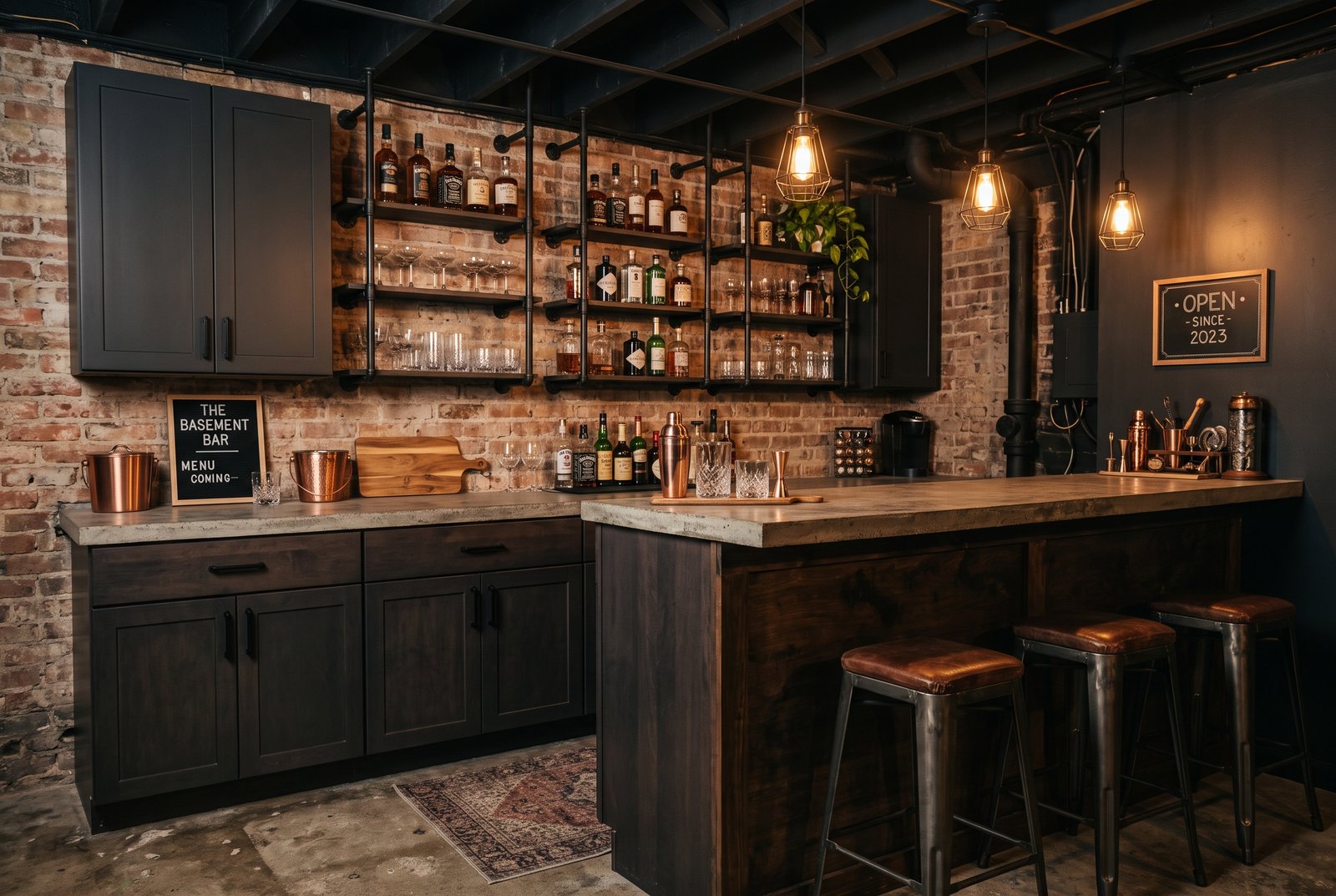
Dark matte cabinetry, a concrete countertop, exposed black pipe shelving for glassware, and warm Edison-bulb pendants. This is the most forgiving concept for a basement with exposed ductwork or low ceilings — it works with those features instead of hiding them.
2. Art Deco Glamour
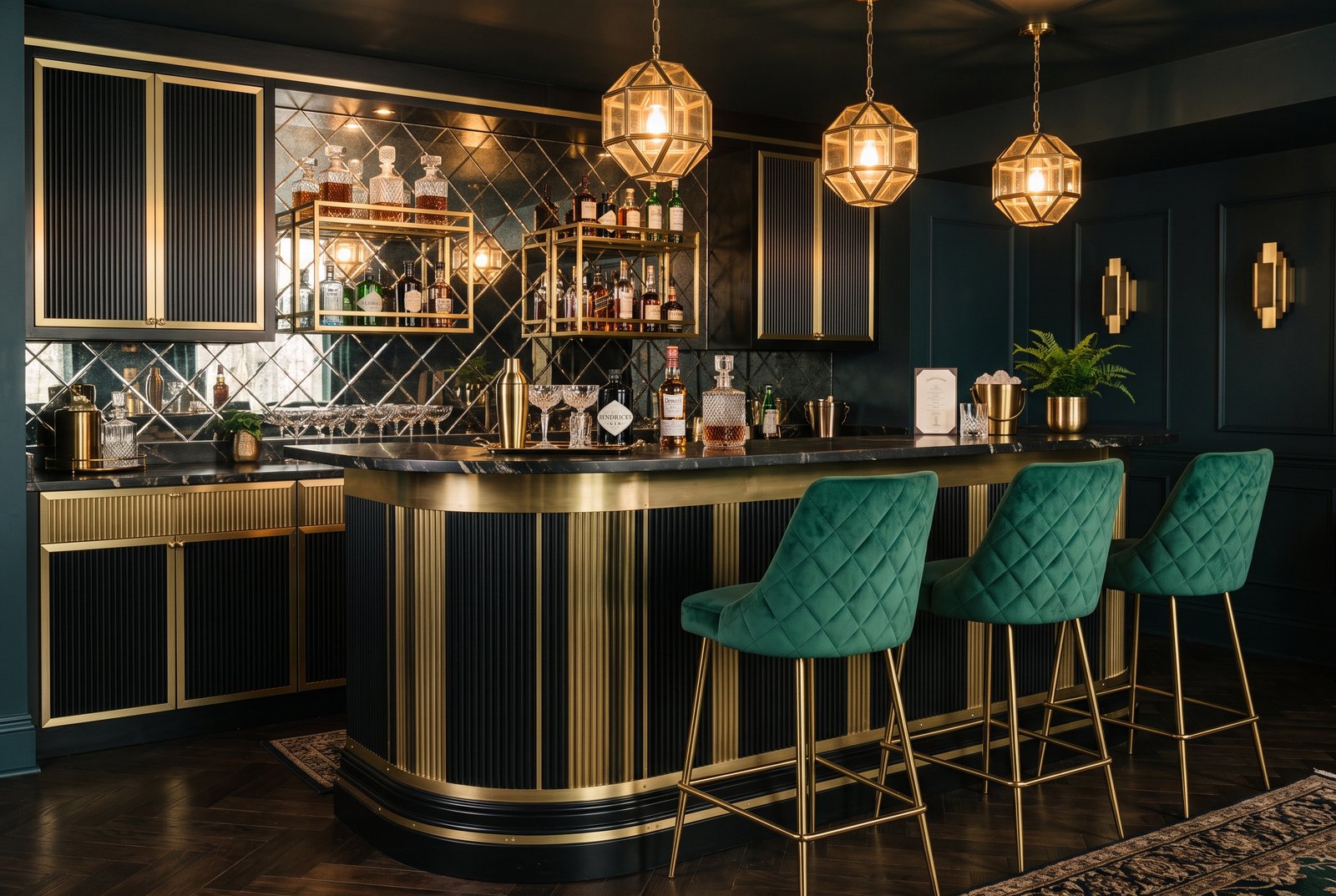
Black and brass fluted cabinet fronts, a mirrored backsplash to bounce light around a windowless room, and jewel-toned velvet bar stools. This concept punches well above its square footage — mirror and brass make a small basement bar feel like a proper cocktail lounge.
3. Coastal Easy
Whitewashed or light oak cabinetry, woven rattan pendant shades, and a butcher block counter in a pale wood tone. Pair with a few dried grasses or a piece of driftwood art for a relaxed, breezy feel that works especially well in a basement with any natural light.
4. Modern Minimalist
Flat-front white or graphite cabinets, a single slab of quartz with minimal veining, and one clean pendant fixture rather than a cluster. This concept relies on restraint — every object on the counter should earn its place, which also makes it the easiest to keep looking tidy day to day.
5. Rustic Farmhouse
Shiplap paneling behind open wood shelving, a butcher block counter, and a pair of black metal-and-wood stools. Galvanized metal accents and a vintage-style pendant finish the look. This is a natural pairing if the rest of your basement already leans farmhouse.
Choosing Your Bar Stools
Bar stools are the last decision, but they’re what actually gets sat in — get the proportions wrong and even the most beautiful bar feels uncomfortable. For a standard 42-inch-high bar counter, look for stools with a 28–30 inch seat height, leaving the standard 10–12 inches of clearance between seat and counter.
Beyond fit, prioritize a stool with some back support if guests will be sitting for a full evening — backless stools look sleeker in photos but get uncomfortable fast. Budget $60–$150 per stool for a solid, comfortable option; three or four stools is usually the right count for a basement bar without crowding the walkway behind them.
Frequently Asked Questions
Is a wet bar worth the extra cost over a dry bar?
If you host often and plan to stay in the home for years, a wet bar’s convenience usually justifies the extra $500–$2,500 in plumbing costs. If you host occasionally, a well-styled dry bar delivers most of the look and function for far less.
What’s the most budget-friendly basement bar countertop?
Butcher block is typically the least expensive at $40–$100 per linear foot, and it’s the most realistic material for a confident DIYer to install and seal themselves.
How much does a basic basement bar cost to build?
A simple dry bar with basic cabinetry, a butcher block counter, and a beverage fridge can come together for $1,500–$3,000. A fuller build with a wet bar, quartz counters, and a designed lighting plan can run $6,000–$15,000 or more depending on finishes.
Do I need a permit to build a basement bar?
Cabinetry and countertops generally don’t require a permit, but any new plumbing or significant electrical work for a wet bar usually does. Check with your local building department before starting demo, especially if you’re adding a sink or a dedicated electrical circuit.
A basement bar is one of those projects that pays you back every single time you host — start with the wet-versus-dry decision, pick a design concept that matches how the rest of your basement already feels, and let the details follow from there.