
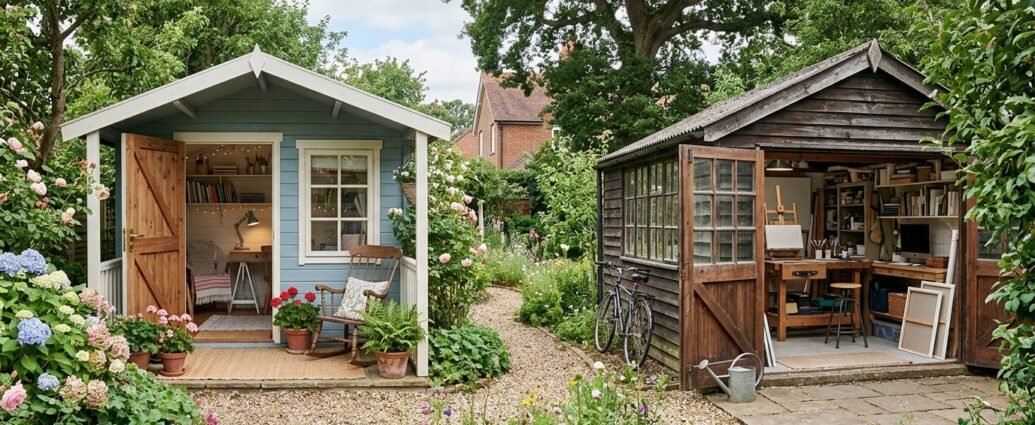
Do you ever find yourself daydreaming about a space that’s entirely yours — no interruptions, no shared desks, no dog toys underfoot — just a quiet corner of the world where you can actually think, create, or simply breathe? That fantasy has a very real address, and it lives somewhere in your backyard.
Whether you’re leaning toward a dreamy she shed tucked under a canopy of climbing roses or a polished garage studio conversion that pulls double duty as a professional workspace, we’re here to help you figure out which path makes the most sense for your life, your budget, and your vision. In this post, we’ll walk through the key differences — costs, permits, climate control, customization — and help you land on the option that truly fits.
Key Takeaways
- Garage conversions typically offer more square footage and better structural bones, making them ideal for professional studios or home offices.
- She sheds are highly customizable from the ground up and tend to have a lower entry-level cost for smaller builds.
- Both options require some level of permitting — don’t skip this step, even for prefab she sheds.
- Climate control is a bigger investment in a she shed; a garage already has insulation potential built into its walls.
- Your use case — art studio, home office, craft room, wellness retreat — should drive your decision more than aesthetics alone.
- With the right approach, either option can dramatically increase your home’s lifestyle value and resale appeal.
She Shed Ideas vs. Garage Studio Conversion: What’s the Real Difference?
At first glance, both options seem to answer the same question: where can I carve out a dedicated personal space? But the differences run deeper than square footage or aesthetics. Understanding what each path actually involves will save you from costly surprises down the road.
Defining the She Shed
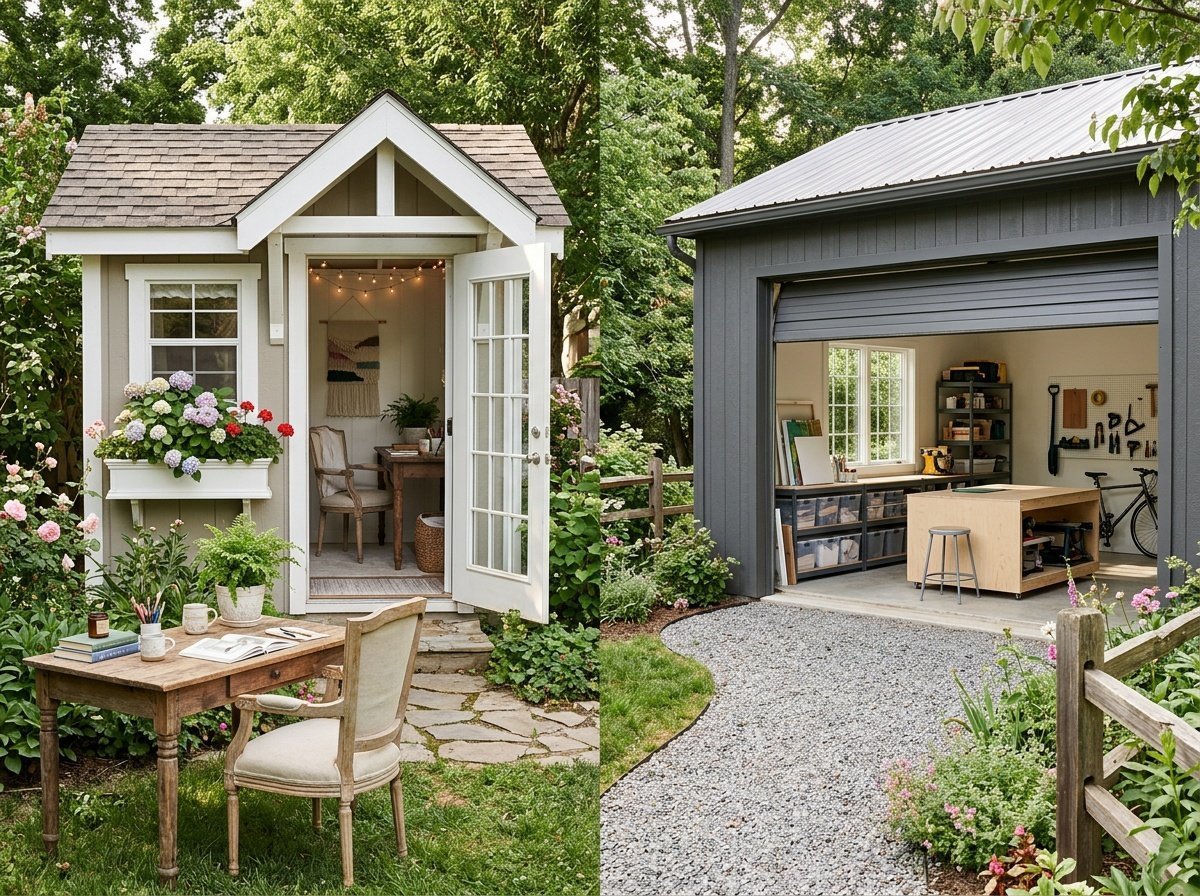
A she shed is essentially a freestanding backyard structure — either a repurposed garden shed, a prefab kit, or a custom-built cabin — made over into a personalized retreat. The term gets tossed around loosely, but the concept is beautifully simple: a private, purpose-built space that reflects the owner’s personality and needs.
She sheds can become art studios, reading nooks, yoga rooms, potting areas with style, or even miniature guesthouses. They range from charming 80-square-foot sheds draped in fairy lights to serious 400-square-foot structures with full electrical and plumbing. The form follows function — and the function is entirely up to you.
Defining the Garage Studio Conversion
A garage to studio conversion works with an existing structure. You’re taking a space that was already built — often with concrete floors, insulated walls, and electrical rough-in — and reimagining it as something livable and functional. This might mean converting a single-car garage into a light-filled art studio, or converting a two-car space into a professional home office with a separate recording nook.
The appeal here is efficiency: the bones are already there. You’re not starting from scratch — you’re rewriting the story of a space that already exists on your property. And if you’ve ever explored garage organization ideas as a starting point, you already know how much untapped potential these spaces hold.
Cost Comparison: What Will You Actually Spend?
Money matters, and this is where most backyard studio dreams either flourish or stall. Let’s look at real numbers — not aspirational ones — so you can plan with confidence.
She Shed Costs
Entry-level prefab she shed kits start around $1,500–$5,000 for a basic structure without insulation, electrical, or finishing. Once you add a foundation, HVAC or a mini-split unit, drywall, flooring, and decor, that number climbs quickly. A fully finished, functional she shed typically runs $10,000–$30,000 depending on size, finishes, and whether you’re hiring out labor or doing it yourself.
Custom-built she sheds — think tongue-and-groove cedar siding, French doors, reclaimed wood shelving — can easily exceed $40,000. But for a modest, well-styled retreat, many people land beautifully in the $12,000–$18,000 range with intentional choices and a little DIY spirit.
Garage Studio Conversion Costs
A basic garage conversion — insulation, drywall, flooring, and lighting — runs roughly $5,000–$15,000 for a single-car garage. A more polished build with HVAC, upgraded electrical, custom cabinetry, and soundproofing (ideal for podcasting or music) can reach $20,000–$50,000 for a full two-car conversion.
The key advantage? You’re not paying to build walls that already exist. The structural investment is already made. That said, if your garage needs serious electrical upgrades or weatherproofing, those costs add up fast.
| Factor | She Shed | Garage Studio Conversion |
|---|---|---|
| Entry-Level Cost | $1,500–$5,000 (shell only) | $5,000–$15,000 (basic finish) |
| Fully Finished Range | $10,000–$40,000+ | $15,000–$50,000+ |
| Structural Starting Point | Build from scratch or kit | Existing structure |
| DIY Potential | High (especially prefab kits) | Moderate (electrical/HVAC needs pros) |
| Permit Complexity | Varies by size and use | Usually required for habitable use |
| Resale Impact | Lifestyle appeal, varies by market | Can add significant square footage value |
Permit Requirements: Don’t Skip This Step
I know permits aren’t the most glamorous topic, but skipping this conversation is how people end up tearing down structures they spent months building. Let’s keep it real and practical.
Permits for She Sheds
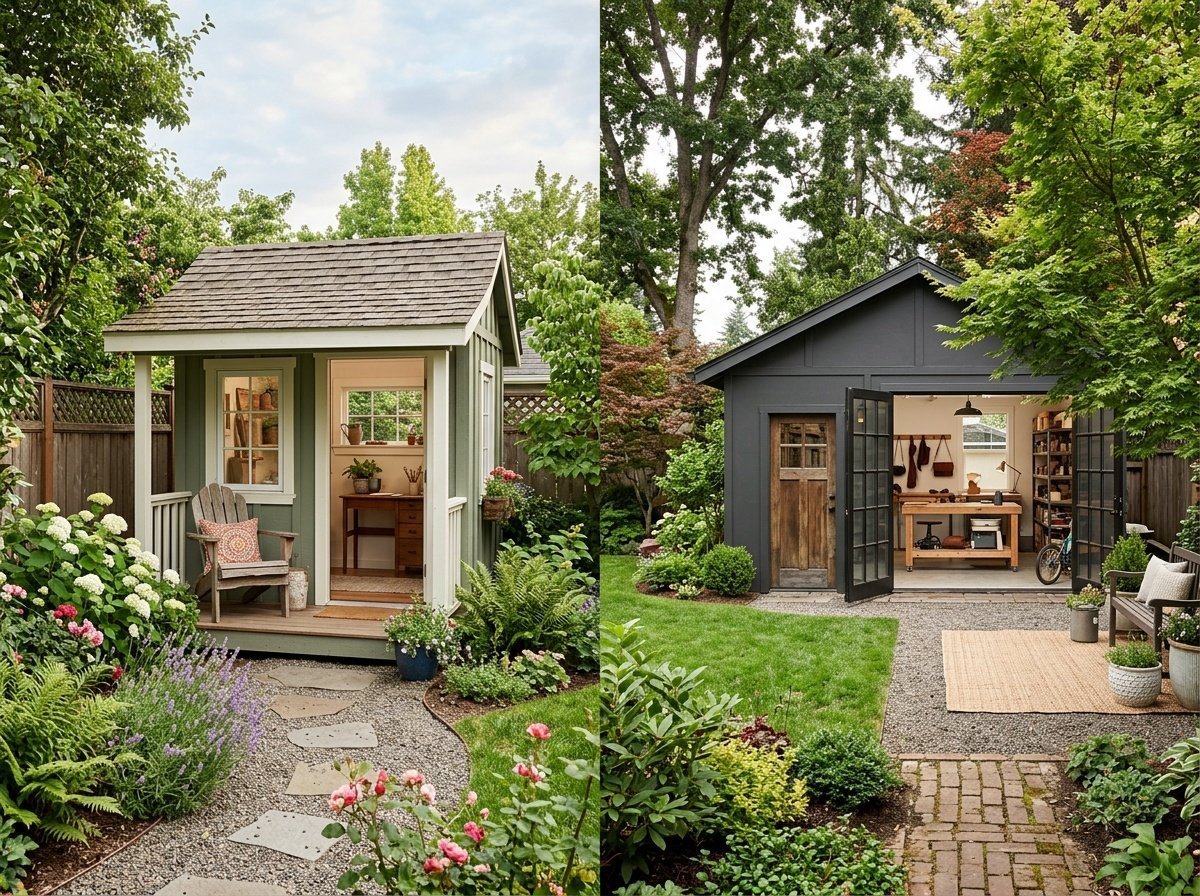
In most U.S. municipalities, structures under a certain square footage — typically 100–200 sq ft — may not require a building permit. But the moment you add electrical wiring, plumbing, or a heating and cooling system, permits almost always become mandatory regardless of size. If your she shed is intended as a habitable space (meaning someone spends extended time in it), it will likely be subject to residential codes.
Some HOAs have restrictions on freestanding structures entirely, so check your community guidelines before falling in love with a Pinterest-perfect layout. Always call your local building department before breaking ground — a quick conversation can save you months of headaches.
Permits for Garage Conversions
Converting a garage to a habitable studio or office almost universally requires permits in the United States, Canada, and most of Europe. You’ll typically need permits for structural changes, electrical upgrades, insulation, egress windows, and HVAC installation. The silver lining: going through the permit process protects your investment and ensures the space is legally recognized — which matters enormously at resale.
In many cities, a permitted garage conversion can be officially listed as additional living space, adding real, documentable square footage to your home’s value. That’s not something a she shed typically offers.
Climate Control: Staying Comfortable Year-Round
A beautiful backyard studio is only as good as the experience of being inside it. If you’re sweating through July or freezing in January, you won’t use the space — and that’s a waste of everything you’ve invested.
Heating and Cooling a She Shed
She sheds, especially prefab kits, are often built with minimal insulation. Adding a mini-split system is the gold standard — it provides both heating and cooling, operates quietly, and doesn’t require ductwork. Expect to spend $2,000–$5,000 for a single-zone mini-split including installation.
For smaller, lower-budget builds, a plug-in electric space heater and a window AC unit can get the job done seasonally. If you’re building from scratch, prioritize spray foam insulation in the walls and ceiling — it makes every other climate control investment work harder.
Heating and Cooling a Garage Studio
Garages have a natural head start here. Many already have insulated garage doors and exterior walls. A mini-split is still the most efficient solution, but in a well-insulated garage, you might find that a single unit handles a 400-square-foot space comfortably. If your home’s HVAC system is nearby, extending existing ductwork is another option — though typically more expensive and disruptive.
One thing worth noting: concrete garage floors hold cold in winter and can radiate heat in summer. Adding a vapor barrier and then floating hardwood, luxury vinyl plank, or rubber flooring helps significantly with comfort and temperature regulation — and changes the feel of the space entirely.
“The best backyard studio isn’t the most expensive one — it’s the one you actually want to spend time in, season after season.”
Customization Potential: Making It Truly Yours
This is where both options really shine — just in different ways. Customization is about more than aesthetics; it’s about designing a space that supports how you actually work, create, or unwind.
Personalizing a She Shed
Because you’re building from the ground up (or from a blank-slate prefab), a she shed can be shaped entirely around your vision. Want floor-to-ceiling windows on the south wall for natural light? Done. A Dutch door that opens onto a small deck? Absolutely. Built-in bookshelves running the full length of one wall? Yes, and make them arched.
The exterior is equally yours to define — board-and-batten siding, shiplap, cedar shingles, a living wall of climbing plants. She sheds have a romantic, organic quality that tends to feel deeply personal in a way that’s harder to achieve in a converted garage. For color inspiration that goes beyond the obvious, some of the earthy, calming tones trending in thoughtful interior design translate beautifully to a shed interior palette.
Personalizing a Garage Studio
A garage conversion’s customization starts with subtraction — removing what doesn’t serve the new vision — and then builds intentionally from there. Swap the garage door for a glass-panel wall or oversized French doors. Add a clerestory window for borrowed light without sacrificing wall space. Install a polished concrete finish or wide-plank oak flooring over the existing slab.
The larger footprint of most garages (typically 200–400 sq ft for a single car, 400–576 sq ft for a double) means you have room for dedicated zones — a workbench area, a client meeting corner, a lounge nook. It’s the kind of spatial flexibility that’s hard to replicate in a 120-square-foot she shed. If you love the idea of creating distinct functional areas within a single space, some of the same principles behind making low-ceiling spaces feel expansive and inviting apply beautifully here.
Use-Case Fit: Which One Is Right for Your Life?
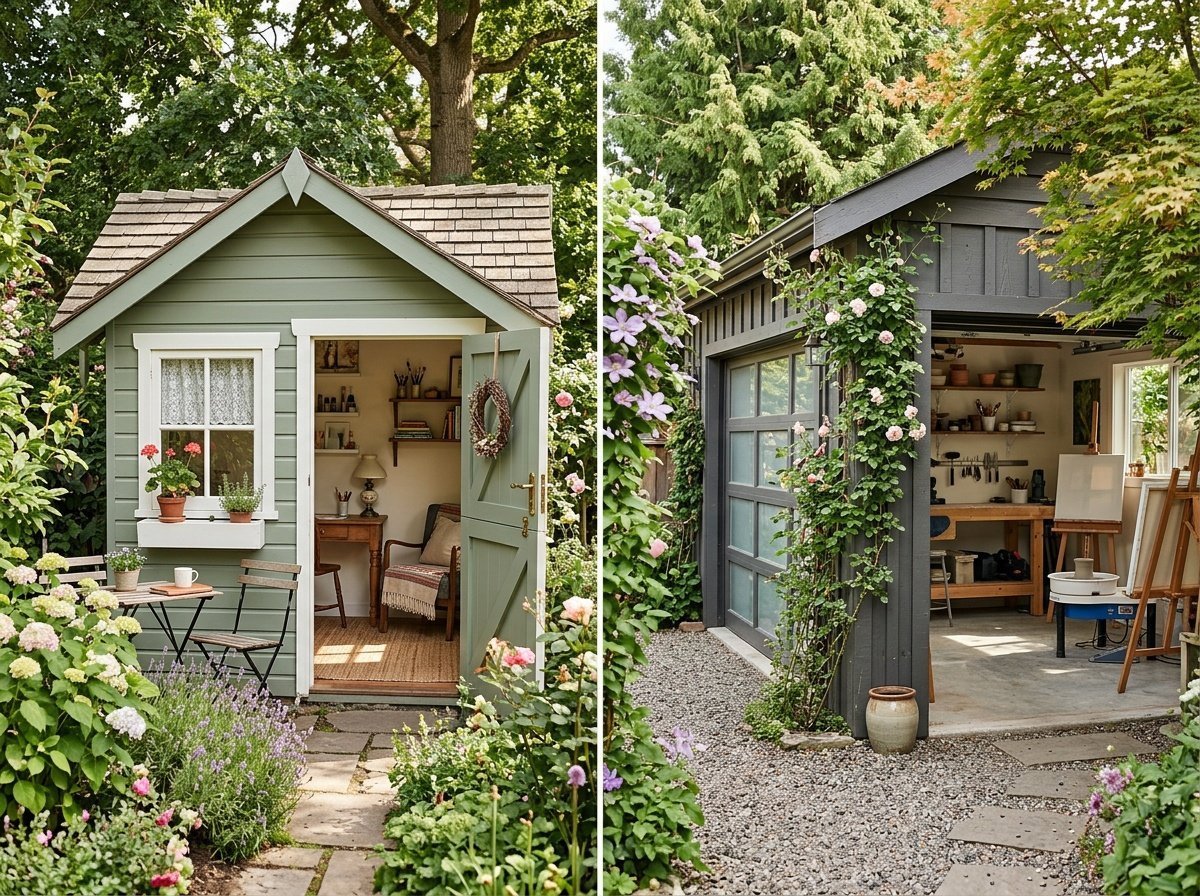
This is the question that matters most. Aesthetics and budgets aside — what are you actually trying to do in this space? Let’s match the options to real use cases.
Best Fits for a She Shed
She sheds tend to thrive when the goal is retreat, creativity, or a personal sanctuary with emotional warmth. Think:
- Art or watercolor studio — natural light, serene atmosphere, no heavy equipment
- Yoga or meditation space — intimate scale, peaceful aesthetic
- Reading room or personal library — cozy, quiet, disconnected from the main house
- Craft room or sewing studio — customizable storage, personal vibe
- Garden room or potting shed hybrid — close to outdoor access, earthy materials
The she shed ideal is a space that feels like an exhale — somewhere you retreat to, not commute to. If your work requires clients visiting, professional equipment, or dedicated broadband, a garage studio is a stronger call.
Best Fits for a Garage Studio Conversion
Garage conversions shine when function and professionalism are priorities. Consider this path if you need:
- A professional home office with client-facing polish
- A photography or videography studio with controlled lighting and backdrop space
- A music recording setup that benefits from concrete’s acoustic mass
- A pottery or ceramics studio with a kiln, utility sink, and easy cleanup
- A fitness studio or home gym with heavy equipment and rubber flooring
What These Projects Actually Cost
Budgets are the part everyone wants and almost nobody publishes. So rather than a tidy story about one person’s build, here are honest ranges you can price your own quotes against.
She shed from a prefab kit
A basic cedar or pine kit in the 8×10 to 10×12 range usually runs $2,500 to $5,000 delivered. Insulation and interior wall finish add roughly $800 to $2,000 if you do the labour yourself. A mini-split for year-round comfort is typically the biggest line after the shell, often $3,000 to $4,500 installed. Flooring, shelving and lighting can be a few hundred dollars if you shop secondhand. A finished, four-season she shed commonly lands somewhere between $8,000 and $14,000 all in.
The no-budget version: an uninsulated shed you already own, a cordless lamp, a secondhand table and a rug is a real workspace for three seasons of the year. A lot of people start exactly there and add insulation the following spring.
Garage conversion
Conversions vary far more, because the existing structure decides most of the cost. Replacing a garage door with a framed wall and window is commonly $4,000 to $12,000. Insulating and drywalling a two-car space runs $3,000 to $8,000. Electrical upgrades, flooring and heating are each their own line after that. A fully permitted conversion frequently totals $20,000 to $40,000.
The no-budget version: garage door insulation kits, a sealed concrete floor and a plug-in space heater will make a garage usable through much of the year for a few hundred dollars, which is a fair way to find out whether you would really use the space before committing to the full project.
The short of it: a she shed is usually cheaper and faster, and a garage conversion usually adds more to the house. Neither is the right answer for everyone, and the cheapest version of either one is the one you actually end up using.
Things to Consider Before You Decide
Before you commit either way, run through these practical checkpoints — they’ll help you avoid the most common regrets.
Evaluate Your Property
Do you have an existing garage in good structural condition? If yes, conversion deserves serious consideration before you build anything new. If your garage is actively used for vehicle storage and that can’t change, a she shed might be your only viable path. Also consider your yard — you’ll need level ground, adequate setback from property lines, and reasonable access to your home’s electrical panel.
Think About Timeline and Disruption
A she shed build — especially a prefab kit — can be completed in weeks. A permitted garage conversion is typically a 2–6 month project once you factor in permitting, demolition, and contractor scheduling. If you need a workspace soon, a she shed has a meaningful speed advantage. And if you’re in the mood for a project this season, some of the same weekend-warrior energy that goes into updating interior rooms on a budget applies beautifully to a she shed fit-out.
Consider Long-Term Value
A permitted garage conversion can officially add livable square footage to your home’s appraised value — a she shed typically doesn’t, though it certainly adds lifestyle appeal. If you plan to sell in the next 5–10 years, a conversion may yield stronger financial return. If this is your forever home and you’re building a sanctuary for yourself, the she shed’s emotional return on investment is very real.
Frequently Asked Questions
Do I need a permit for a she shed?
It depends on your local jurisdiction and the size and use of the structure. Many areas allow small accessory structures under 100–200 sq ft without a permit, but as soon as you add electrical, plumbing, or heating, permits are typically required. Always check with your local building department before starting — the rules vary significantly by city, county, and state.
Which is cheaper: a she shed or a garage conversion?
At the entry level, a basic prefab she shed shell is less expensive than a garage conversion. However, once you fully finish either space with insulation, climate control, flooring, and electrical, the costs converge significantly. A modest she shed runs $10,000–$18,000 fully finished; a basic garage conversion starts around $10,000–$15,000. Your specific situation — existing garage condition, size, finishes — will determine the final number.
Can a she shed be used year-round?
Absolutely, with the right investment in insulation and climate control. A well-insulated she shed with a mini-split system can be comfortable in both winter and summer. The key is not skimping on the building envelope — walls, roof, and floor insulation are what make year-round use practical and efficient.
Will a garage studio conversion increase my home’s value?
A permitted garage conversion that adds legally recognized livable square footage can meaningfully increase your home’s appraised value. In competitive real estate markets, a polished home studio or office is a strong selling point. However, converting a garage also eliminates parking — which can be a drawback in some markets, so weigh this carefully based on your neighborhood.
What’s the best climate control option for a backyard studio?
A ductless mini-split system is widely considered the best solution for both she sheds and garage conversions. It provides both heating and cooling, operates quietly, is energy-efficient, and doesn’t require existing ductwork. Single-zone systems typically run $1,800–$5,000 installed, depending on BTU size and contractor rates in your area.
How long does it take to build a she shed vs. convert a garage?
A prefab she shed kit can be assembled in a weekend, with finishing work taking another 4–8 weeks depending on the scope. A full garage conversion — especially a permitted one — typically takes 2–6 months from permit approval to final walkthrough. If speed matters, the she shed has a clear advantage.
Can a she shed be used as a home office for client meetings?
Yes, with the right design approach. A well-finished she shed with proper lighting, climate control, and a professional aesthetic can serve as a client-facing workspace. That said, for larger, more formal meetings or setups that require significant technology infrastructure, a garage conversion often provides more space, better sound isolation, and a more polished environment.
Wherever your backyard studio dreams land — whether it’s a rose-draped she shed with linen curtains and a vintage drafting table, or a polished garage conversion with glass walls and a standing desk — the most important thing is that you actually build it. Don’t let the decision-making phase become the destination. Pick the path that fits your budget, your property, and how you most want to feel when you step through that door. If you’re leaning shed, our she shed ideas walk through 18 ways to lay one out, from a quiet reading corner to a full working studio. Your creative sanctuary is closer than you think — and it might just be the best thing you ever do for yourself. If you’re ready to start dreaming in more detail, I’d love to hear which direction you’re leaning — drop a comment below or tag me in your inspiration boards.

1 Comment