
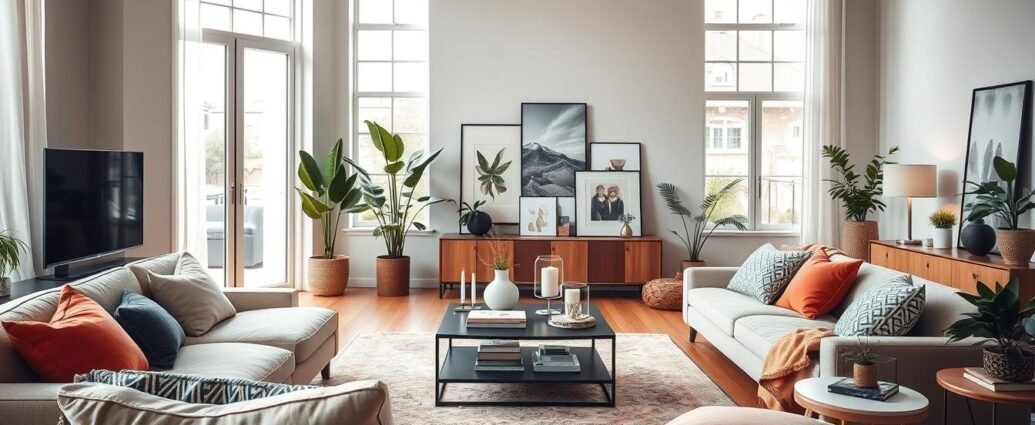
Remember that feeling of walking into a space that just feels like you? A place that wraps you in comfort and tells your unique story. We believe every room has that potential, and we’re thrilled to help you unlock it.
Whether you’re planning a full refresh or only want to sort out one dull corner, this guide will walk you through it. You don’t need a big budget or a design degree. You mostly need a willingness to move things around and see what happens.
We’ll walk with you through simple steps. We’ll explore color, texture, and how to make your spaces work beautifully for your life. Get ready to see how small changes create a huge impact. Let’s make your living space a true reflection of what you love.
Key Takeaways
- Rework any room with practical ideas you can finish in a weekend.
- Get beautiful results without a big budget or hiring a pro.
- Learn to trust your creative instincts and have fun with the process.
- Discover how to use what you already own in fresh, exciting ways.
- Create rooms that are both functional and a beautiful reflection of your personality.
Start With the Home Decorating Ideas You Already Own
Let’s press pause on shopping and start with the treasures you already own. The best way to create a fresh look is often by rediscovering items tucked away in other areas of your living space. This approach saves money and adds a layer of personal history to your design.
Understanding Your Current Space
Grab your phone and take a slow walk through each room. Look at your furniture and accessories from new angles. This simple act helps you see potential you might miss during your daily routine.
Snap pictures of corners and shelves. Reviewing these photos later can spark brilliant ideas for moving things around. It’s a powerful way to gain a new perspective on what you have.
Setting a Vision for a Home Refresh
Next, think about how you want each area to feel. Do you want more calm in the bedroom? More energy in the living room? Write down two or three specific goals for each room, in plain words, so you have something to check your decisions against later.
This vision becomes your roadmap. It guides every decision, ensuring the final result is a space that truly works for your life and brings you joy every day.
Establish a Cohesive Color Palette and Design Vision
Creating visual harmony throughout your living areas starts with a thoughtful color strategy. Pulling a few shared colors through every room is what makes a house feel like one place rather than a series of unrelated rooms.
The simplest way to achieve that balance is to repeat a textile in more than one place. A floral curtain pattern reappearing in the bedding, or one cushion fabric echoed in a lampshade, quietly ties rooms together without matching everything.
Harmonizing Colors with Patterns
When working with multiple patterns, look beyond the dominant hues. Pull accent colors from deeper within prints for unexpected combinations that feel fresh and intentional.
Think about the 80/20 rule for a balanced approach. Use neutral tones for about 80% of your space—walls and large furniture. Save bolder colors for that exciting 20% in accessories and artwork.
| Palette Approach | Color Count | Best For | Visual Effect |
|---|---|---|---|
| Monochromatic | 3-5 shades | Small spaces | Expansive, calm |
| Complementary | 2-3 colors | Living areas | Energetic, balanced |
| Analogous | 3-4 neighbors | Bedrooms | Soothing, flowing |
| Triadic | 3 colors | Creative spaces | Dynamic, vibrant |
This strategy gives you flexibility to change things seasonally without starting over. Here’s a practical way to lock it in: pick three colors, write them on a card, and keep the card in your bag. Every future purchase either fits or it doesn’t. For more on achieving a cohesive look throughout your home, it’s worth reading widely before you settle on a palette.
Your design vision becomes the roadmap guiding every decision. The result is a space that truly works for your life and brings daily joy.
Mix Natural and Manmade Elements for Balance
When materials from nature meet crafted finishes, something magical happens in your living environment. This approach to interior design creates spaces that feel both grounded and glamorous. It’s about finding that sweet spot where comfort meets sophistication.
The blend prevents rooms from feeling one-dimensional. Too much stone can feel cavernous, while excessive brass leans too glam. Together, they create personalized, multidimensional areas.
Finding the Perfect Texture Blend
Here’s a rule you can actually check: stand in the doorway and count the distinct textures you can see. If you find fewer than four, the room will feel flat no matter how good the colors are. Aim for one rough (jute, unglazed pottery, raw wood), one smooth (glass, painted wood), one soft (wool, linen, velvet), and one reflective (brass, mirror, glazed ceramic).
Natural elements like wood and linen bring warmth and organic feel. Manmade materials like brass and glass add contemporary edge. The magic happens when you thoughtfully combine them.
Integrating Stone, Brass, and Fabrics
Imagine a sleek brass light fixture above a reclaimed wood table. Or smooth marble countertops paired with woven basket storage. These combinations create beautiful contrast.
This layered approach makes rooms feel collected over time. It’s a wonderful way to add depth and interest to any design. The balance feels intentional and personal.
Create Functional Spaces with Clever Design Tricks
Let’s tackle those forgotten nooks and overlooked closets that hold so much untapped potential. Every inch of your living environment deserves thoughtful attention. We believe functional areas should spark joy just like your main rooms.
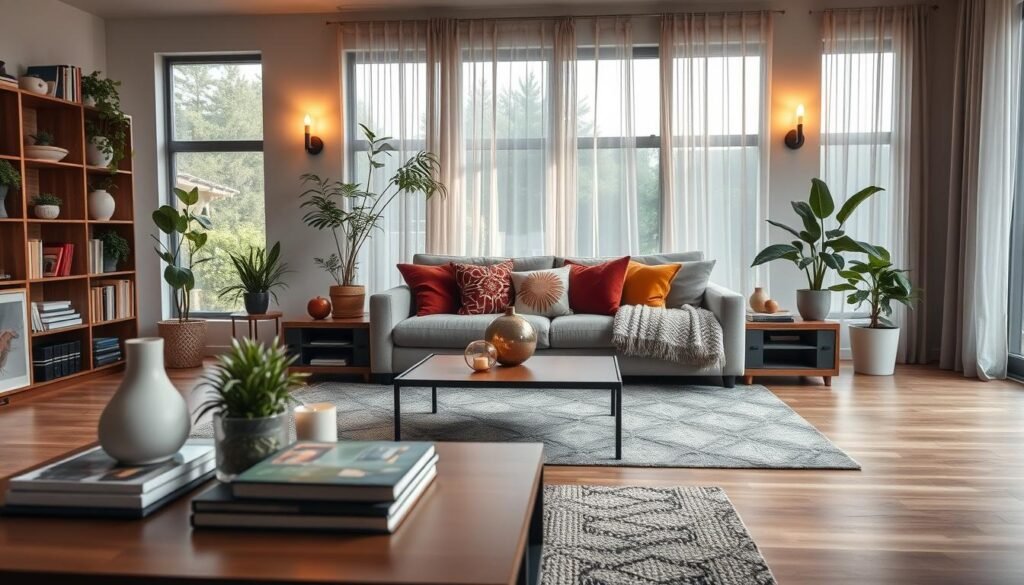
Revamping Closets and Corners
Even a small dressing area can lift your mood if you treat it like a room rather than storage. Playful paint inside and hardware chosen the way you’d choose jewellery does most of the work. Paint is the whole trick here: the inside of a closet is a small enough surface that a sample pot will cover it for under ten dollars.
Consider removing doors from shallow closets to create built-in displays. A shallow closet fitted with a few painted shelves makes a tidy bar nook or book alcove, and painting the back wall a deeper shade than the room is what stops it reading as makeshift. Keep the doors and hinges in the garage so you can put everything back if you rent.
Multipurpose Room Ideas for Home Efficiency
Modern living demands creative space solutions. A guest bedroom can double as an office if the desk is the kind you’d be happy to see from the bed. A dining table becomes a craft zone on weekends when the supplies live in a lidded box on a nearby shelf, so setup and cleanup take two minutes each.
The key is designing around your actual needs. Think about how you really use each room daily. This approach creates spaces that work beautifully for your lifestyle.
Apply Pattern Drenching to Soften Awkward Angles
Got a room with quirky angles or a sloped ceiling that’s always bothered you? Pattern drenching might be your perfect solution. This bold trend involves covering walls, ceiling, and sometimes trim in the same vibrant wallpaper or paint.
The technique works magic on challenging architecture. It camouflages odd elements while creating major visual impact. It is a one-and-done approach: because there is no contrast line for the eye to catch on, the awkward angle stops announcing itself.
Using Bold Patterns on Accent Walls
Not ready for full commitment? Start with a single accent wall in a dynamic print. This creates statement power without overwhelming the entire space. The focused approach lets you experiment safely.
Small areas like powder rooms or bathtub nooks are ideal testing grounds. An alcove is the ideal place to try it. You can be adventurous where pattern won’t dominate your whole living area.
The key is selecting a print you genuinely adore. It becomes the star of that particular room. This strategic use of pattern creates a cohesive look that turns architectural challenges into design triumphs.
Illuminate Your Home with Creative Lighting Solutions
Lighting does more than brighten a room; it sets the mood of the whole evening. We treat fixtures as functional art, partly because they’re often the only thing in a room hanging at eye level or above, where you can’t help looking at them.
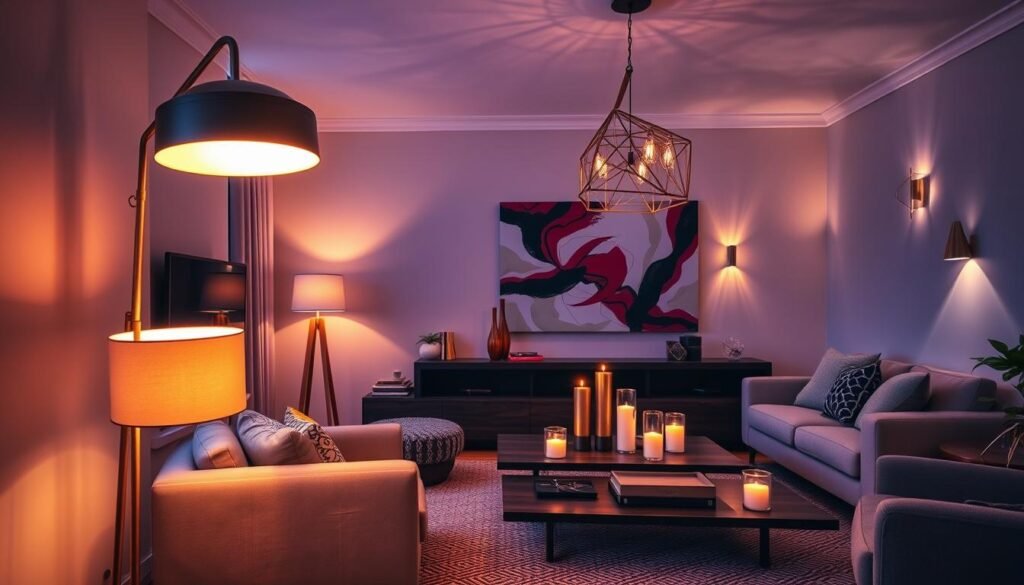
Lighting is easy to underestimate because you notice it least when it’s working. The right fixture changes how a room reads from morning to night, and the wrong one flattens everything under it.
Choosing Playful Geometric Fixtures
Geometric lighting is having a major moment for good reason. Angular pendants, starburst chandeliers, and globe clusters add personality and visual interest.
Playful shapes work especially well in a kids’ bathroom, where a little whimsy overhead makes an ordinary routine feel less like a chore.
Remember that lighting serves three key purposes. You need ambient light for overall illumination, task lighting for specific activities, and accent lighting to highlight favorite features.
| Lighting Type | Primary Function | Best Fixtures | Room Placement |
|---|---|---|---|
| Ambient | General illumination | Chandeliers, flush mounts | Ceiling center |
| Task | Specific activities | Pendants, desk lamps | Work areas |
| Accent | Highlight features | Track lights, wall sconces | Artwork, architectural elements |
Aim for at least three light sources in any room you sit in for long: one overhead, one at table height, one low. Then put them on separate switches so you can drop the overhead in the evening and leave the lamps on. If new fixtures aren’t in the budget, a dimmer switch costs about fifteen dollars and does more for a room after dark than any purchase you could make.
The same layering works with minimalist living room design ideas, where fewer fixtures means each one has to earn its spot. Warm bulbs, somewhere around 2700K, will do more for the mood than the shape of the shade.
Frame Alcoves and Create Focal Points
A focal point is what keeps a room from feeling like a collection of furniture. Every living area needs one spot your eye goes to first when you walk in, and if you don’t choose it deliberately, the television usually chooses for you.
Alcoves are the easiest place to make one. Painting or papering the inside of a recess in a contrasting color turns an awkward feature into a deliberate one, and it costs a sample pot. From there an alcove becomes a reading nook with a chair and a lamp, or a set of shelves with a few brackets.
Selecting the Perfect Accent Wall
If you’re hesitant about committing to pattern throughout an entire room, accent walls offer freedom to experiment. They let you make bolder choices in a contained way without overwhelming the space.
The key is choosing the wall you naturally notice first. This is usually the one behind your bed or sofa, or opposite the entrance. Creating a gallery wall with photographs, art, or collected treasures establishes a powerful focal point that tells your unique story.
This approach turns architectural challenges into design triumphs. Your eye-catching feature wall becomes the room’s centerpiece, creating visual interest and personality throughout the space.
Embrace Indoor Nature: Let Your Plants Shine
Plants change a room faster than almost anything else you can carry through the door. They bring in movement, softness, and a bit of life that furniture can’t. We think greenery deserves a real place in the plan rather than a spot on the windowsill at the end.
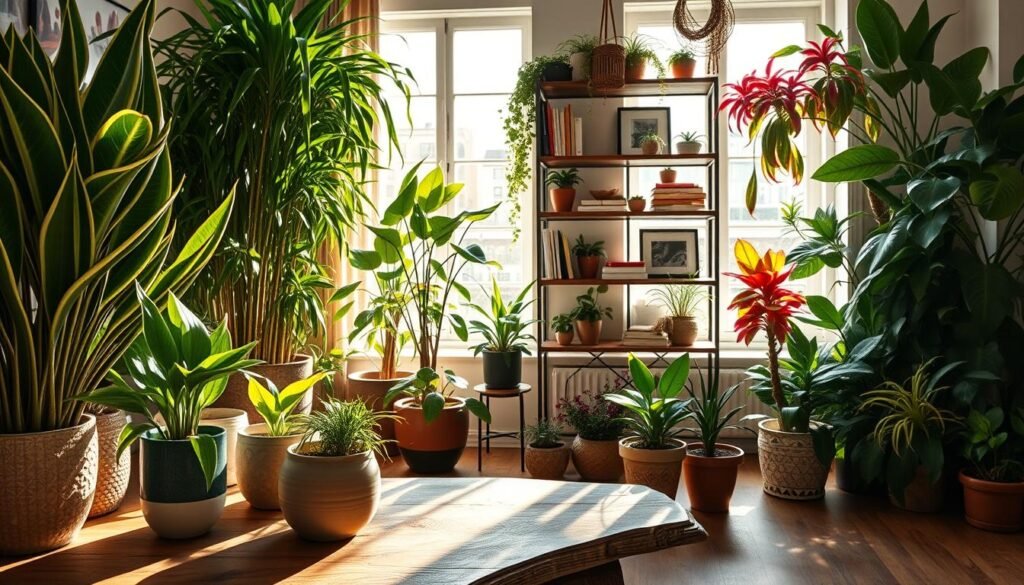
A tall plant in a living room corner does the work of a piece of furniture, and smaller pots staggered along the windowsill add a second layer at a different height. If a citrus tree is not in the budget, a $12 pothos on a stack of books reads at the same height for a while.
Treat plants as major elements rather than afterthoughts. They soften hard corners, fill the gap beside a sofa that no side table quite fits, and give a room a natural focal point.
Vary the heights so your eye moves: one tall plant on the floor, one at table height, one trailing from a shelf. Plant stands and hanging planters buy you height cheaply. If money is tight, cuttings from a friend’s pothos or spider plant root in a jar of water on the windowsill within a few weeks, and cost nothing at all.
| Plant Type | Visual Impact | Care Level | Room Placement |
|---|---|---|---|
| Fiddle Leaf Fig | Dramatic, sculptural | Moderate | Living room corner |
| Monstera | Tropical, lush | Easy | Bright indirect light |
| Bird of Paradise | Bold, architectural | Moderate | Statement focal point |
| Citrus Trees | Colorful, fragrant | Challenging | Sunny windows |
The beauty of plants is their living, changing nature. They grow and change with you, and that slow shift is what makes a room feel lived in rather than staged.
Update Your Space with a Bold Palette and Painted Floors
While walls and ceilings often steal the spotlight, your floors hold incredible potential for personal expression. A wash of color over tired hardwood changes the whole feel of a room for about the price of a gallon of paint.
The order matters if you want it to last. Clean the boards, sand lightly to dull the existing finish, vacuum the dust, then prime. Two thin coats of porch-and-floor enamel go on next, each one left to cure overnight, followed by a clear polyurethane topcoat. Work yourself toward the door rather than into a corner, and stay off the floor for a full day at the end. A coastal blue in a room with water views or a soft yellow in a dark entryway both give a house real character, and painted floors are far cheaper than refinishing.
Reviving Old Furniture with a Fresh Coat of Paint
Paint works absolute magic on tired furniture pieces. It’s the most budget-friendly way to give old items new life and avoid the expense of buying new. You can customize colors to perfectly match your vision.
Don’t stop at walls and large furniture. Picture frames, lampshades, chair legs, and even curtains can take on a fresh look with the right paint. This approach breaks up matchy-matchy sets and adds personality.
If you’re feeling nervous, start small with a picture frame or side table. Once you build confidence, you can tackle larger pieces. For more inspiration, check out these easy DIY paint projects that will refresh your space.
The right color choice and proper paint technique can make any item feel custom-designed. This approach lets you create a cohesive aesthetic without starting from scratch.
Layer Rugs for Texture and Warmth
Layering rugs makes a floor look considered rather than default, and it solves a common budget problem: a large rug in the size a room actually needs costs a fortune, while a big plain jute base under a smaller patterned rug gets you there for much less.
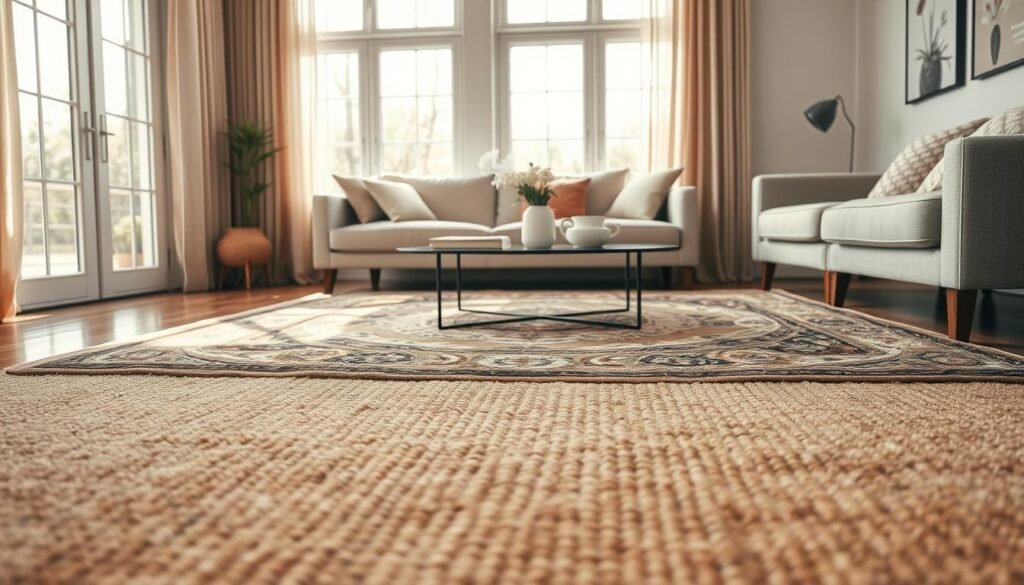
We love how this approach works beautifully throughout your house. It adds extra warmth and defines different zones with style.
Tips for Effective Rug Layering
The classic method places a smaller, patterned rug over a larger neutral base. Jute and sisal make the best foundations because they’re cheap by the square foot and their texture reads as neutral. A working rule: the base should extend at least eight inches past the top rug on every side so the layering looks deliberate, and it should reach under the front legs of your seating. Use a thin rug pad between the two so the top one doesn’t creep across the room.
Layering is worth the trouble in a bedroom in particular, where the extra softness underfoot is the first thing you feel in the morning.
Outdoor rugs work indoors too, and they’re worth a look because they cost less and survive spills. Bring one in for the colder months and it adds an unexpected bit of color to a neutral scheme.
| Base Rug Type | Top Rug Style | Best Room | Visual Effect |
|---|---|---|---|
| Natural Jute | Patterned Wool | Living Room | Warm, Inviting |
| Sisal | Colorful Kilim | Bedroom | Cozy, Personal |
| Neutral Seagrass | Geometric Print | Dining Area | Defined, Stylish |
The key is ensuring your bottom rug anchors the space properly. Your top rug should highlight specific zones like seating areas. For more creative rug layering ideas, explore different combinations.
This technique aligns perfectly with the art of layering for depth and texture. The right combination creates a sophisticated look that feels intentional.
Smart Storage Solutions for a Clutter-Free Home
Imagine opening your closet or cabinets and finding everything exactly where it belongs—that’s the magic of thoughtful organization. The right storage setup takes a room from cluttered to calm without you having to give up anything you actually love.
Combining Shelves, Drawers, and Baskets
We love mixing storage types throughout the house. In the kitchen especially, combining closed cabinets, open shelves, and drawer organizers creates a system that’s both functional and attractive.
Floating shelves showcase beautiful items while baskets corral everyday things. This layered approach keeps essentials accessible without visual clutter. Each storage type serves a specific purpose in your organizational system.
Decluttering Without Sacrificing Style
Here’s a truth we’ve discovered: sometimes the best room refresh involves removing items rather than adding new ones. Most of us accumulate a lot of decorative pieces over time.
Editing your spaces by removing a few things instantly creates more breathing room. The goal is finding that sweet spot where you have enough storage to stay organized without feeling overwhelmed.
| Storage Type | Best For | Visual Impact | Access Level |
|---|---|---|---|
| Open Shelves | Display items | Airy, accessible | High visibility |
| Closed Cabinets | Kitchen essentials | Clean, streamlined | Hidden but organized |
| Drawer Organizers | Small things | Neat, contained | Easy retrieval |
| Decorative Baskets | Everyday items | Warm, textured | Quick access |
This balanced approach creates spaces that feel both lived-in and meticulously cared for. Smart storage truly is the foundation of a peaceful, clutter-free environment.
Repurpose and Upcycle Existing Decor Items
Have you ever looked at a piece of furniture and wondered what else it could become? This creative mindset unlocks incredible potential throughout your space. Repurposing what you already own delivers both budget-friendly updates and deeply personal satisfaction.
We love breaking up matching sets for instant character. In your dining room, keep the table but mix chair styles. Paint mismatched chairs the same color for a custom, collected look that feels intentional rather than random.
Innovative Ideas to Reimagine Furniture
Sometimes the biggest change comes from one small alteration. Convert a china cabinet into a low buffet by unscrewing and removing the hutch on top. That long coffee table from your living area makes a perfect bedroom bench when you add a cushioned top.
Don’t limit pieces to their original rooms. End tables can move from living spaces to bedrooms as nightstands. A fresh coat of paint helps them blend seamlessly with your new color scheme.
The real magic happens when you ask “what else could this be?” rather than sticking to conventional uses. For more along these lines, our weekend DIY ideas to refresh any room covers a dozen more projects at this scale. The habit of asking the question is what turns ordinary pieces into ones that fit your house exactly.
Put Your Textiles to Work as Home Accents
Your collection of fabrics and soft goods might be the most versatile design tool you own. These soft, movable items instantly add color and comfort throughout any space. We love how they let you experiment without permanent changes.
DIY Projects Using Throw Pillows and Scarves
If you’ve collected beautiful textiles over the years, now’s the time to put them to work. That unworn scarf becomes a throw pillow cover: wrap it around the form like a parcel, tuck the ends under, and knot the corners or close the overlap with iron-on hem tape. A vintage tablecloth will recover a drop-in dining chair seat, which usually means four screws underneath, a staple gun, and twenty minutes per chair.
We’re loving the mismatched pillows trend for creating collected, personal looks. Intentionally mix patterns and textures on your sofa for perfectly imperfect style. Layer several throws over the back for extra coziness.
Don’t limit textiles to their usual roles. A decorative throw works as a casual table covering for a low-fuss dinner. Blankets draped over a vintage ladder store and display at the same time. Dishtowels clipped to a tension rod make cafe curtains for the price of a coffee.
The best thing about working with fabric is that nothing is permanent. If an arrangement doesn’t feel right, take it down and try another. This approach lets you refresh spaces with zero commitment or expense.
Incorporate Art and Books to Showcase Your Personality
Your personal library and art collection tell a story that no store-bought decor can match. These elements create spaces that feel deeply personal and truly lived-in.
Creating a Bookshelf Gallery
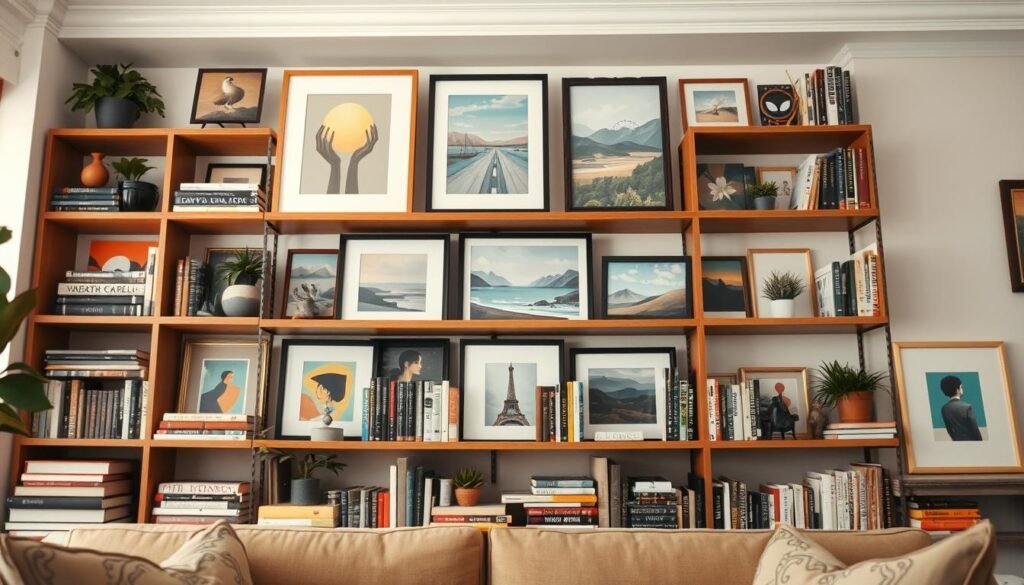
We love the concept of a bookshelf that doubles as a gallery wall. The English-library version of this works well: a colourful floor-to-ceiling bookshelf with comfortable seating pulled up close to it, so the books are something you sit among rather than walk past.
This approach creates wonderful contrast by offsetting books with artwork. Mix framed pieces with your favorite books for a layered, museum-quality display. The result feels both cozy and intellectually stimulating.
Don’t let your books sit around collecting dust. Put them to work as decorative elements. Stack them as risers under lamps or decorative objects. Arrange them both vertically and horizontally on shelves for visual interest.
Coffee table books deserve special attention. People can’t help leafing through beautiful volumes on a well-appointed surface. These become conversation starters and functional decor pieces.
If mismatched dust jackets feel chaotic, try covering some books with burlap or decorative napkins. A uniform look adds texture while letting your personality shine through your collection.
Mix Layouts for a Versatile and Inviting Home Design
What if your dining space could shift from a Tuesday-night family dinner to a table for ten without a fight? Flexible furniture arrangements are how a dining room works harder without getting bigger.
One approach worth trying is two smaller tables instead of one large dining surface. For daily family meals, these tables function separately creating intimate settings. When entertaining friends, they push together for a restaurant-style dinner party vibe.
Banquette seating adds another layer of versatility to your dining room. While commonly seen in breakfast nooks, bench seating makes meals feel more intimate and restaurant-inspired. This setup maximizes seating capacity when guest numbers fluctuate.
The real beauty lies in creating spaces that adapt to your life. Whether it’s quiet Tuesday dinners with just your family or bustling holiday gatherings, flexible design means you’re never locked into one way of using a room.
Consider applying this thinking to other areas too. Living rooms with movable seating groups or kitchen islands with removable stools create similar adaptability. The goal is designing for real life, not just special occasions.
Conclusion
That’s fifteen ways to change how a room feels, from color strategy to storage that keeps a house running smoothly. None of them require you to start over.
Remember that great interior design isn’t about perfect magazine spreads. It’s about creating spaces that reflect your personality and support your lifestyle. The best decor choices come from trusting your instincts.
Start with one small project that excites you. Maybe it’s rearranging furniture in your living room or adding plants to your bedroom. Build momentum as time and inspiration allow.
Your home should evolve with you. Give yourself permission to experiment, and to change your mind. These ideas are a starting point, not a checklist.


2 Comments