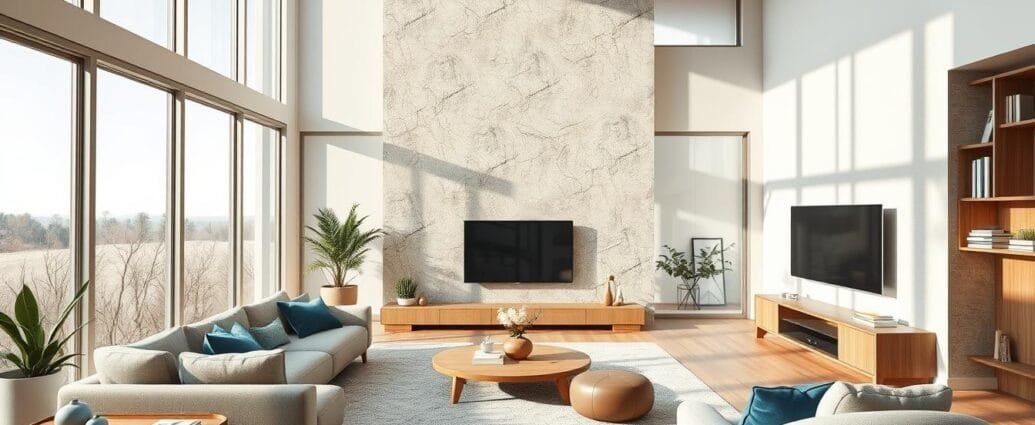
Remember when we thought smart homes meant clinical-looking spaces with gadgets sticking out everywhere? Well, I’m thrilled to tell you that 2026 is shaping up to be the year when technology and beautiful design finally make peace! As someone who’s spent years helping homeowners create spaces they love, I’ve watched smart home tech evolve from clunky afterthoughts to seamless design elements. The future of home design isn’t just about having the latest gadgets—it’s about creating spaces that feel warm and personal while quietly working harder for you behind the scenes.
The New Smart Home Design Philosophy for 2026
The biggest shift I’m seeing for 2026 is what I call “quiet luxury” in smart home design. It’s no longer about showing off your tech—it’s about how seamlessly it enhances your daily life while staying visually calm. The modern luxury home isn’t about how expensive it looks, but how effortlessly it supports your lifestyle.
Many homeowners tell me they’re frustrated with beautiful spaces that don’t actually work well for modern living. They want homes that are functional, flexible, and visually serene. That’s where smart home interior design for 2026 begins—with purpose, not excess.
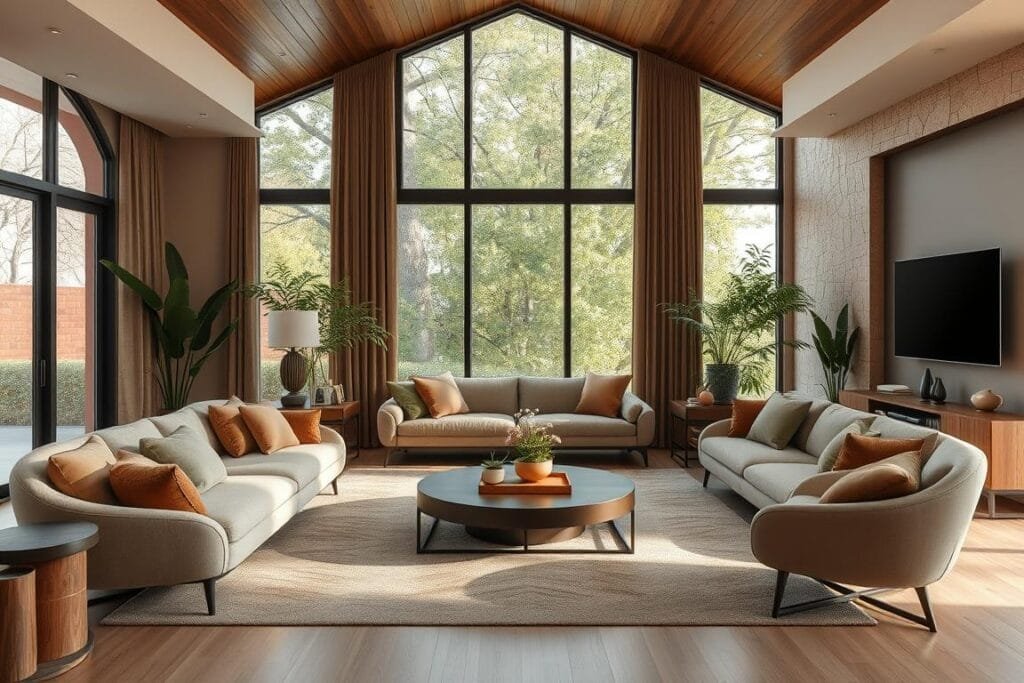
The three principles guiding smart home design in 2026 are:
- Technology that blends into the background
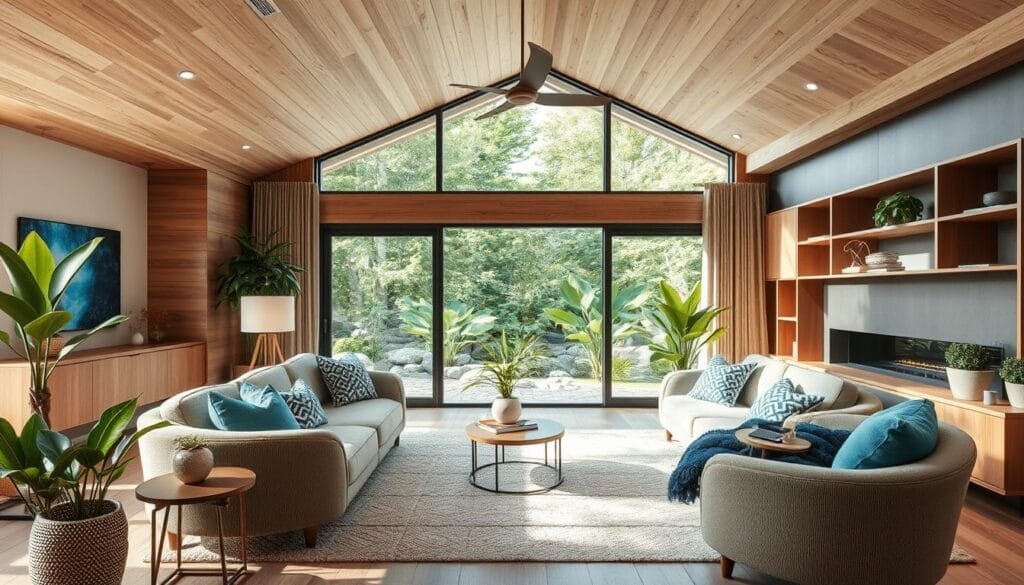
- Natural materials and textures that create warmth
- Flexible spaces that adapt to changing needs
Let’s explore how these principles translate into practical design choices for your home. Book a free design consultation to see how these trends could work in your specific space.
Seamless Technology Integration: The Art of Hiding in Plain Sight
The days of obvious tech are behind us. In 2026, the most sophisticated smart homes are the ones where you barely notice the technology. Think of it as tech that whispers rather than shouts.
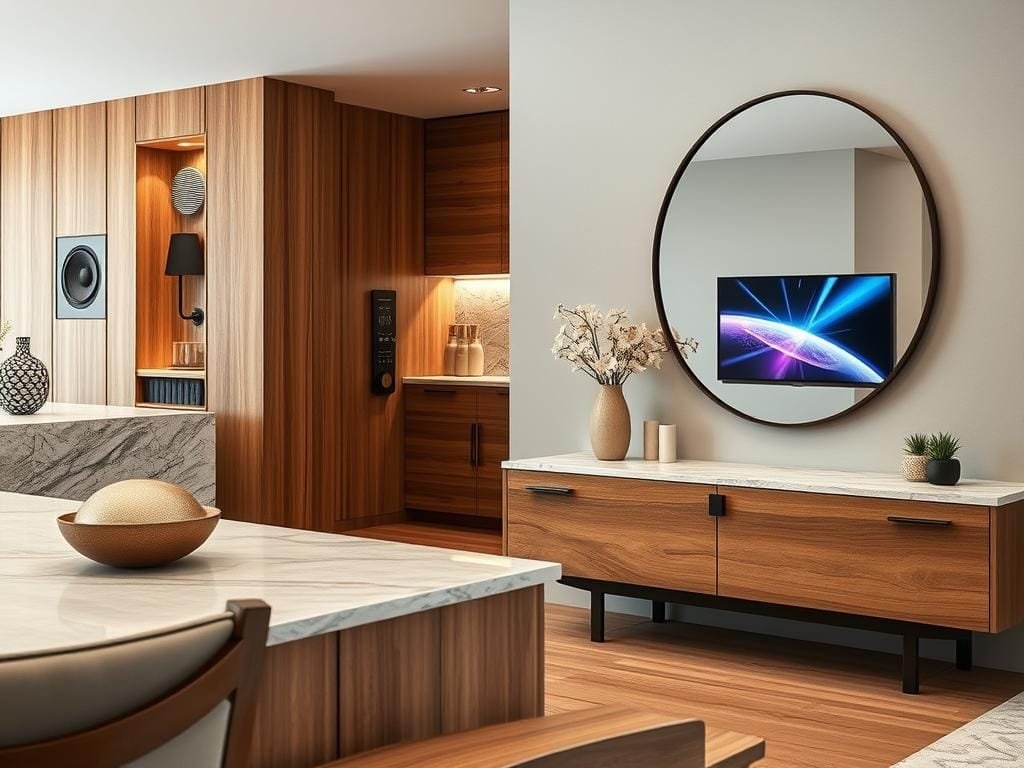
Tips for Invisible Tech Integration
For Living Spaces:
- Choose smart speakers disguised as decorative objects or built into walls
- Opt for motorized art frames that conceal TVs when not in use
- Install smart lighting that mimics natural daylight patterns
- Use furniture with built-in charging stations and hidden cable management
For Kitchens and Bathrooms:
- Select appliances with touch controls integrated into countertop materials
- Install voice-activated faucets that blend with your fixture style
- Choose smart mirrors with hidden displays that only appear when activated
- Opt for cabinet lighting that responds to motion or voice commands
“The best technology is invisible until you need it. Your home should feel like a home, not a spaceship.”
The trick is thinking about technology integration from the beginning of your design process, not as an afterthought. This approach allows for proper planning of power sources, connectivity needs, and visual harmony. Download our free Smart Home Planning Guide to get started.
Materials and Color Trends for Smart Homes in 2026
The materials we’re seeing dominate smart home design in 2026 create a perfect backdrop for technology while maintaining warmth and character. The key is balance—natural elements that soften the tech-forward features of your home.
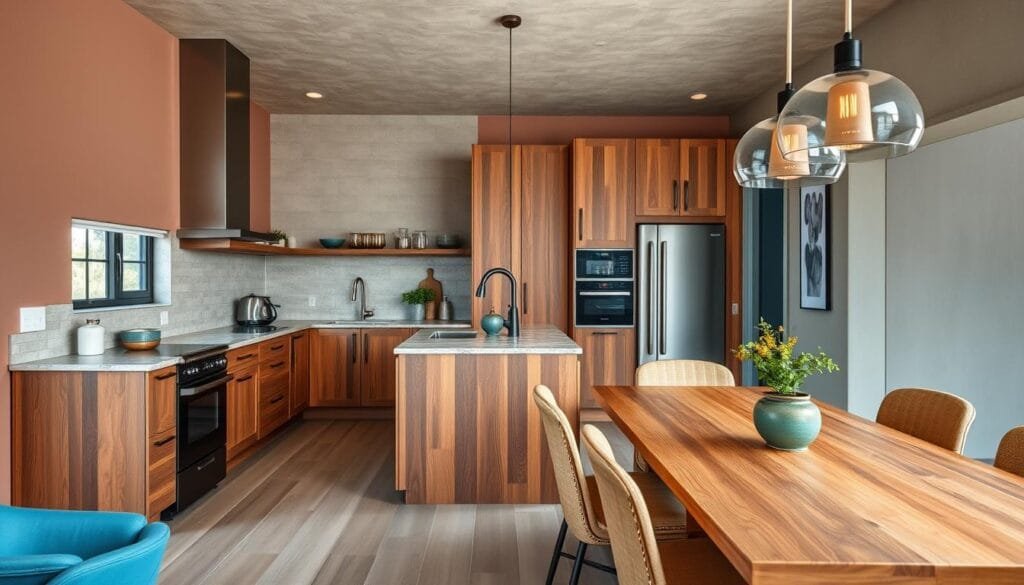
Leading Materials for 2026
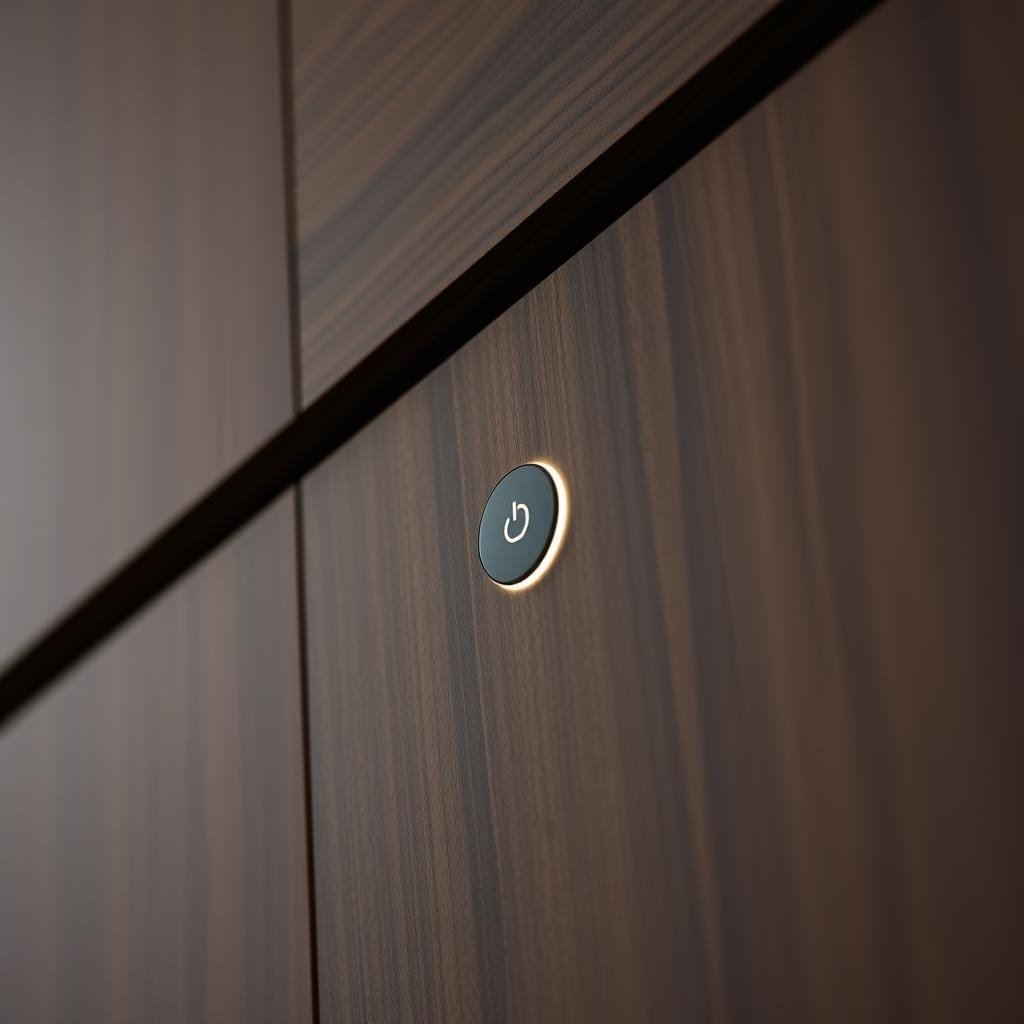
Natural Woods
Reclaimed and character-rich woods with visible grain and knots add authenticity. Look for darker tones making a comeback, especially in oak, walnut, and elm.
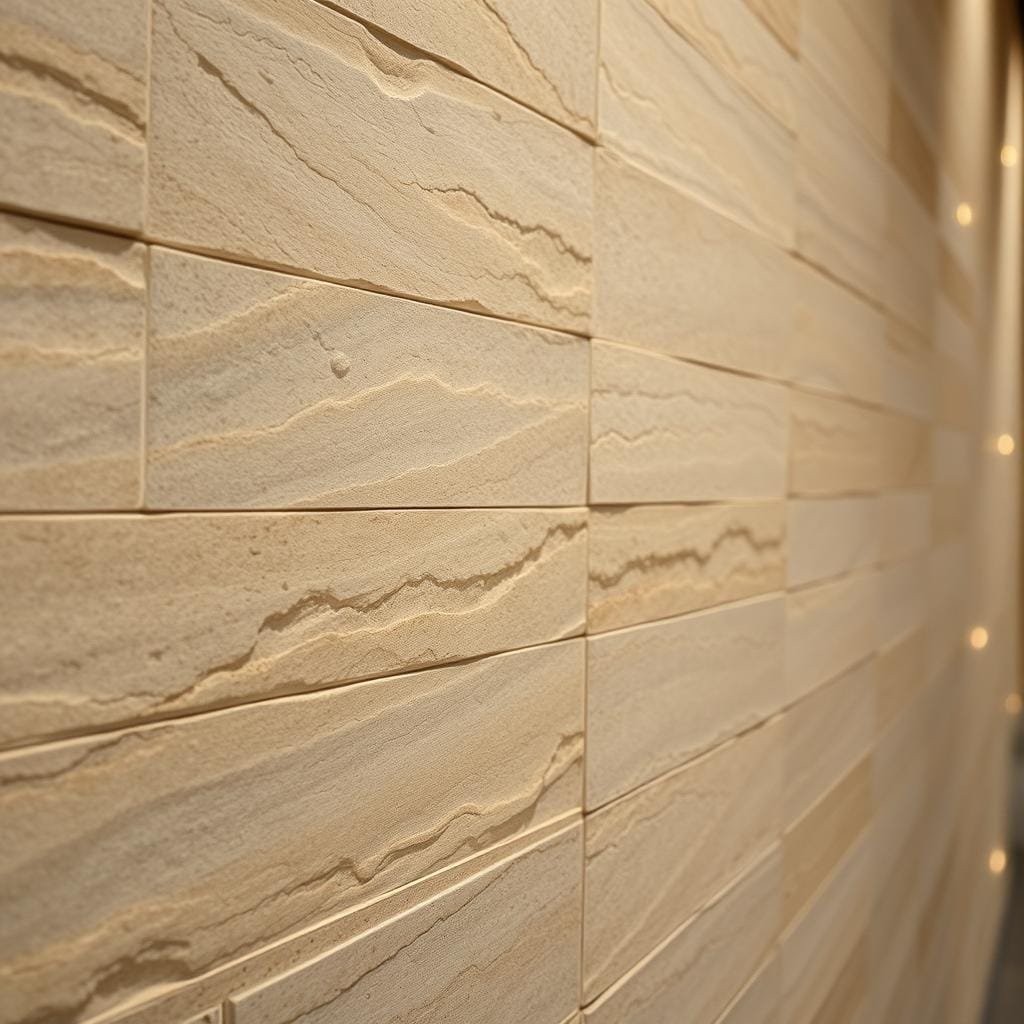
Textured Stone
Natural stone with tactile surfaces—think honed marble, textured granite, and limestone—creates contrast with sleek technology surfaces.
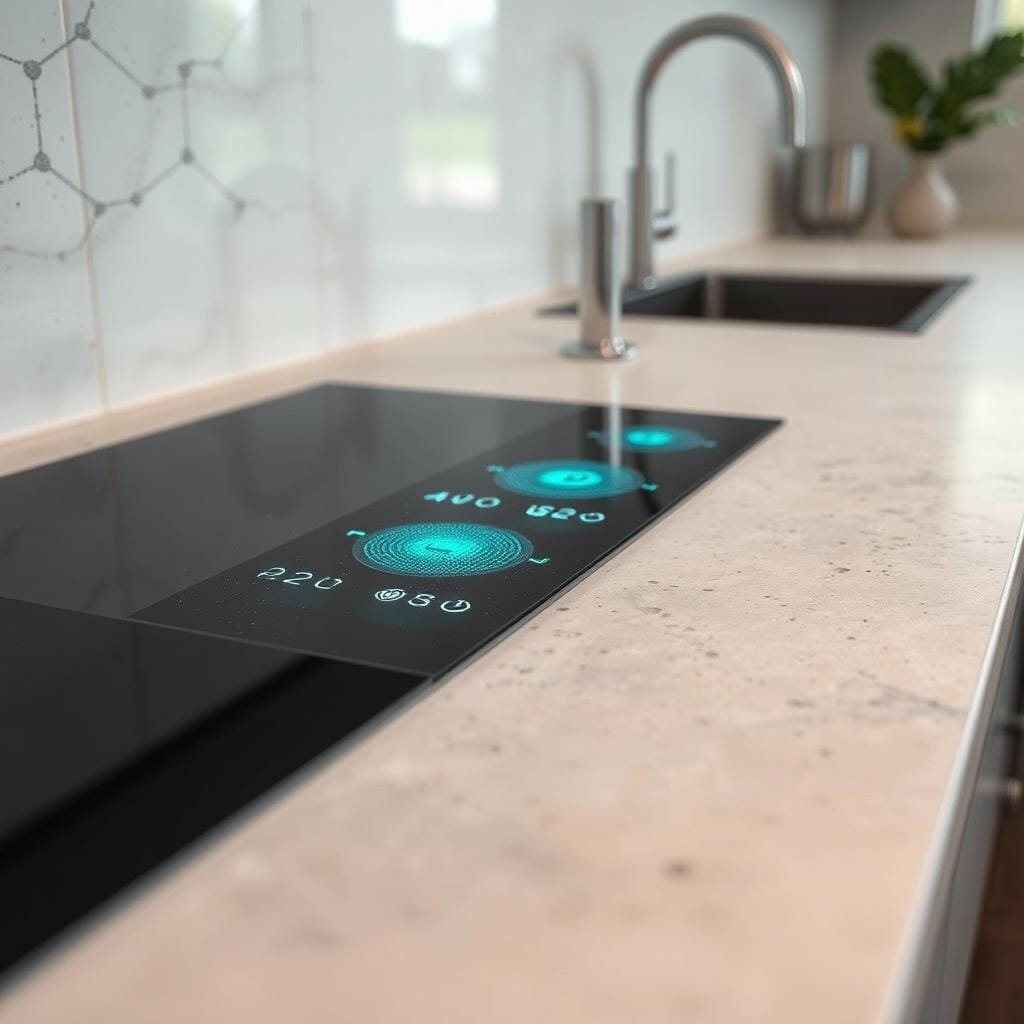
Sustainable Composites
Recycled materials and innovative composites that combine beauty with environmental responsibility are gaining prominence.
Color Palette for 2026 Smart Homes
The colors defining next year’s smart homes create a sense of calm while providing enough visual interest to keep spaces from feeling sterile:
Primary Colors:
- Earthy neutrals (warm taupe, soft terracotta)
- Muted greens (sage, artichoke, olive)
- Dusty blues as accent colors
- Chocolate brown paired with powdery blue
Accent Elements:
- Brushed brass and bronze hardware
- Matte black tech elements
- Tactile metalwork with developing patina
- Jewel tones for small decorative pieces
These colors and materials create a perfect foundation for technology integration—they’re visually rich enough to draw attention away from tech elements while creating a cohesive look. Want personalized color recommendations? Schedule a color consultation tailored to your home’s lighting and architecture.
Smart Zones: Designing Functional Areas for Modern Living
One of the biggest shifts I’m seeing for 2026 is the move away from traditional room designations toward flexible “smart zones” that adapt to how we actually live. These spaces transform based on time of day, who’s using them, and what activities are happening.
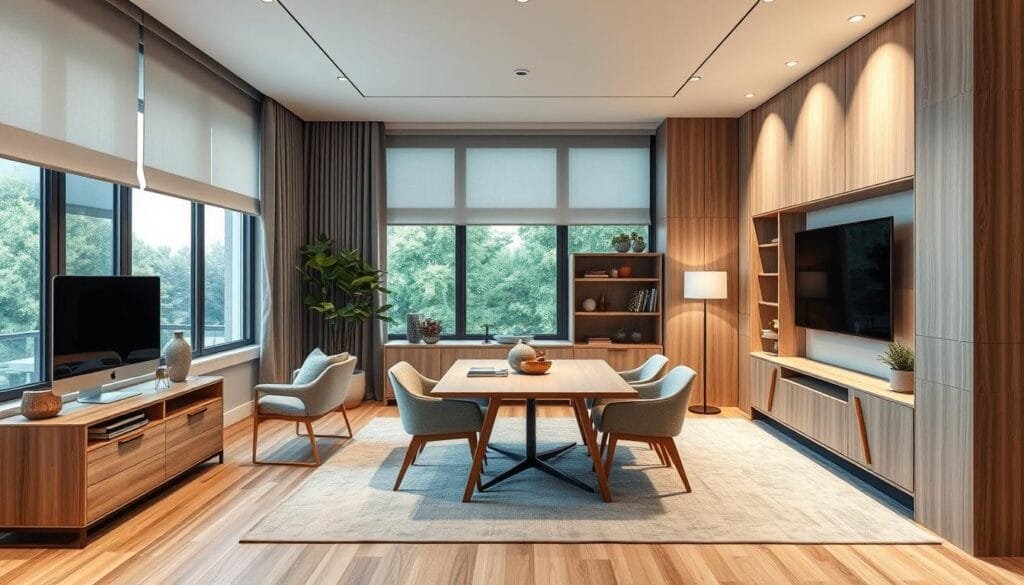
Key Smart Zones for 2026 Homes
Command Center Kitchen
The kitchen is evolving beyond cooking to become the true heart of the smart home—a command center that manages schedules, shopping, communication, and entertainment while still creating beautiful meals.
- Smart surfaces that display recipes, calendars, and video calls
- Voice-activated appliances with minimal visual footprint
- Modular islands that adapt for cooking, dining, or working
- Ambient lighting that shifts based on time and activity
Wellness Retreat
Dedicated spaces for physical and mental wellbeing are becoming standard, with technology that supports health goals while maintaining a serene atmosphere.
- Circadian lighting that adjusts to support natural sleep cycles
- Air quality monitoring and purification systems
- Smart mirrors with fitness guidance and health metrics
- Sound systems for guided meditation or immersive nature sounds
Flex Work/Social Space
The home office is transforming into a multi-purpose area that shifts from productivity center to entertainment space with minimal effort.
- Acoustic management systems for privacy during calls
- Furniture with integrated charging and connectivity
- Modular elements that transform from workspace to social setting
- Automated lighting scenes for different activities
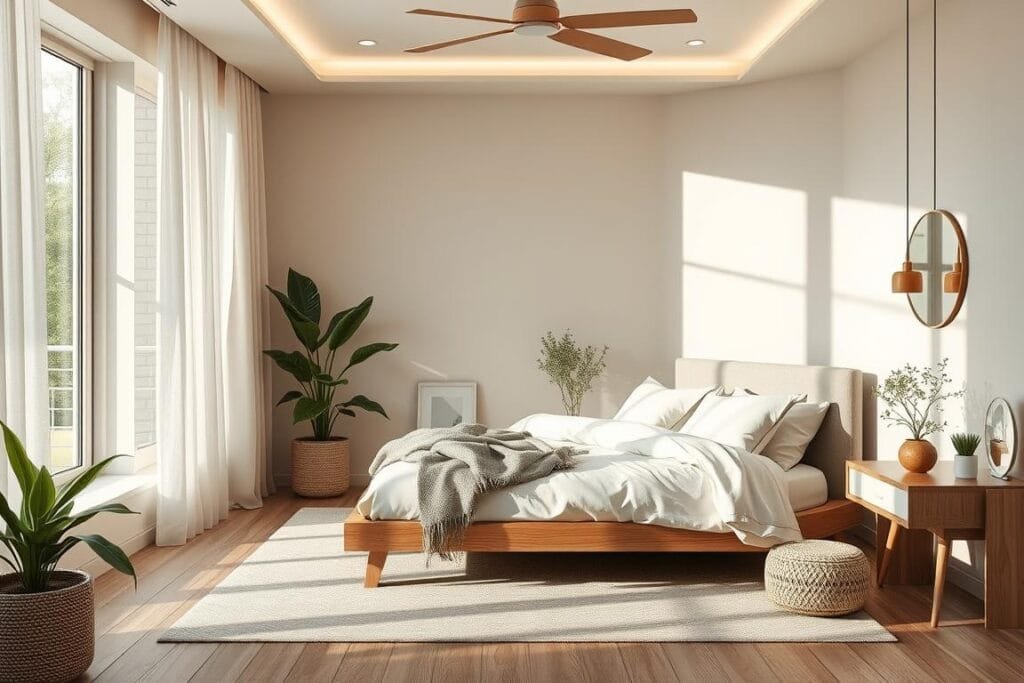
The trick to successful smart zones is thoughtful planning of power, connectivity, and lighting. Each zone should be able to transform quickly while maintaining visual harmony with the rest of your home. Book a zoning consultation to maximize your home’s flexibility.
Practical Tricks for Hiding Technology in Plain Sight
The biggest challenge in smart home design is managing all the “stuff” that comes with technology—cables, hubs, routers, and charging stations. Here are my favorite tricks for keeping tech functional but visually minimal:
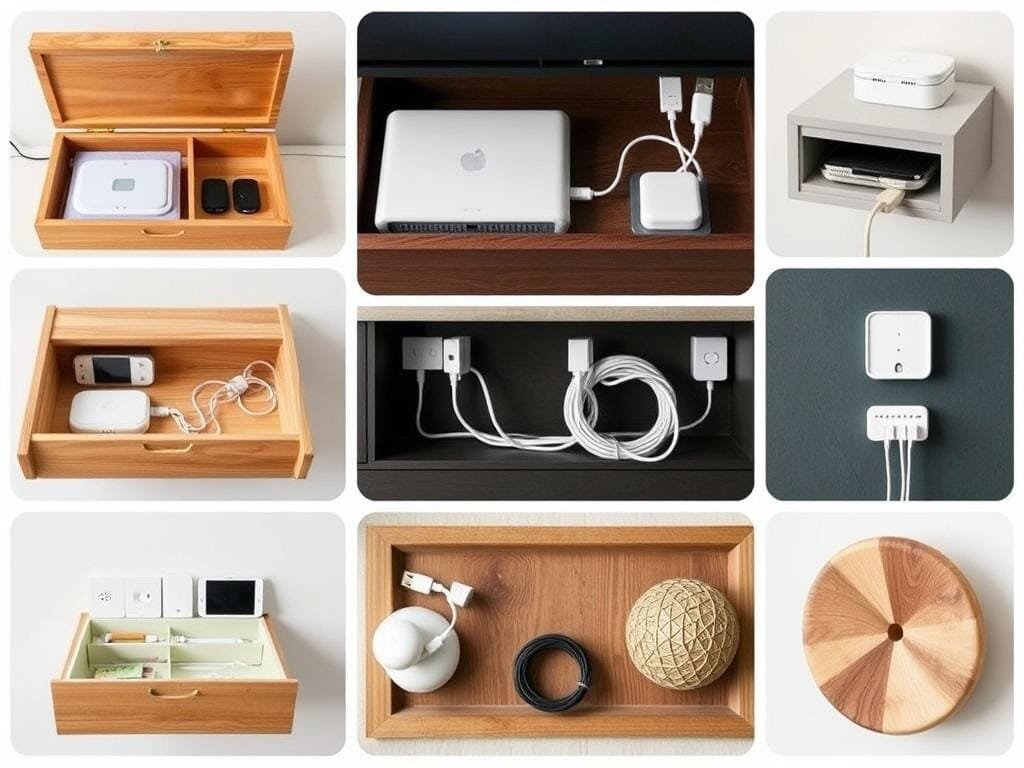
Cable Management Solutions
- Custom millwork with integrated cable channels
- Furniture with built-in wire management systems
- Decorative cord covers that complement your color scheme
- Strategic outlet placement during renovation planning
- Wireless charging surfaces integrated into tables and counters
Hub and Device Concealment
- Decorative boxes that hide routers and hubs
- Ventilated cabinet spaces for equipment that needs airflow
- Wall-mounted art that slides to reveal control panels
- Floating shelves with hidden compartments for small devices
- Furniture pieces designed specifically for tech storage
“The most successful smart home is one where you enjoy the benefits of technology without seeing the technology itself.”
These solutions work best when planned early in your design process. If you’re building or renovating, consider working with a designer who understands both technology and aesthetics. Download our Smart Home Wiring Guide for renovation planning.
Room-by-Room Smart Design Guide for 2026
Each room in your home presents unique opportunities for smart technology integration. Here’s how to approach each space for maximum functionality and beauty:
Living Room
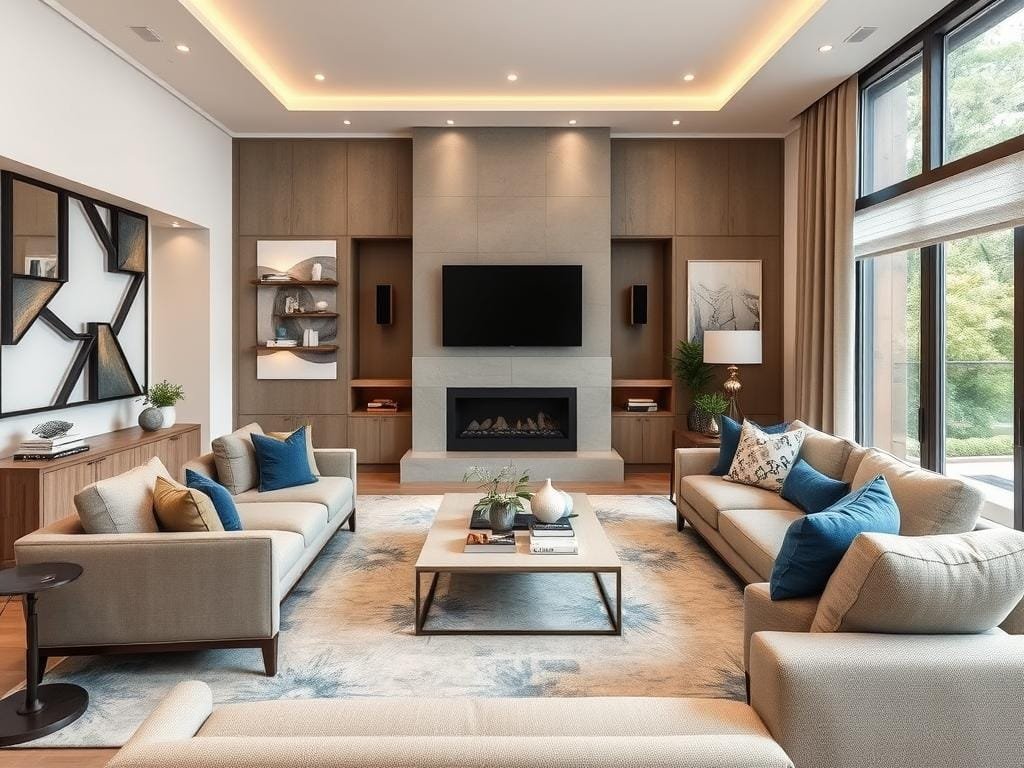
- Motorized art frames to conceal TVs
- Architectural lighting that eliminates the need for lamps
- Voice-controlled window treatments
- Furniture with built-in charging and heating elements
- Hidden speakers integrated into wall treatments
Kitchen
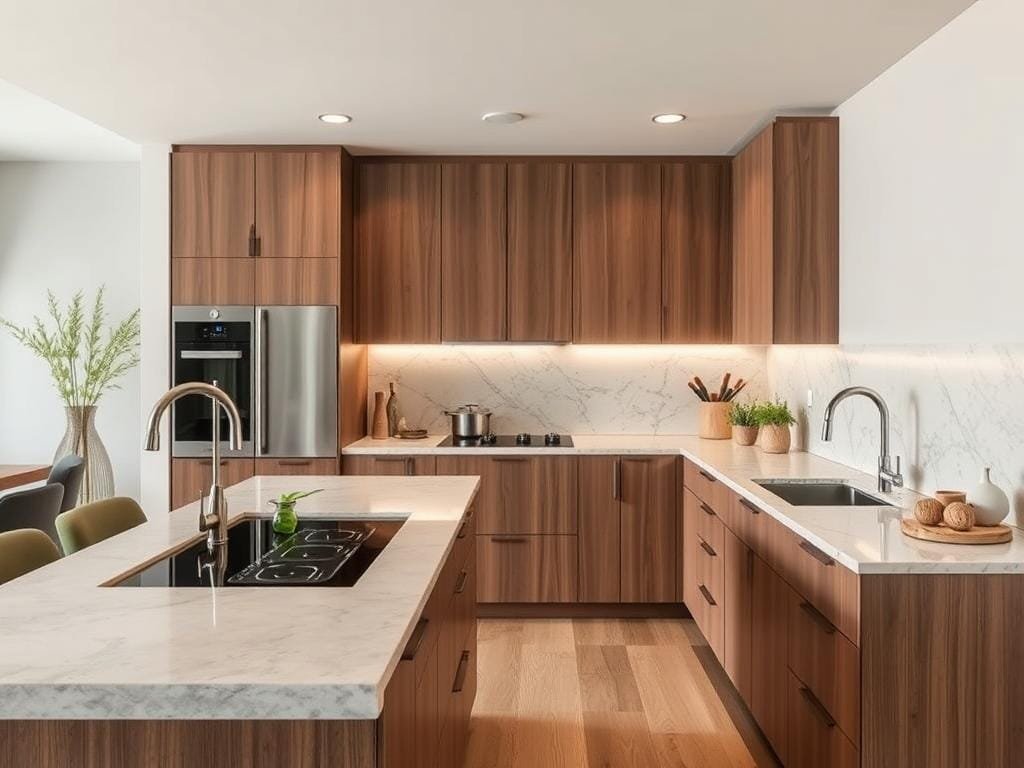
- Countertops with integrated display and control surfaces
- Cabinet lighting that responds to presence
- Appliances concealed behind cabinet panels
- Voice-activated faucets and dispensers
- Smart ventilation that responds to cooking activities
Bedroom
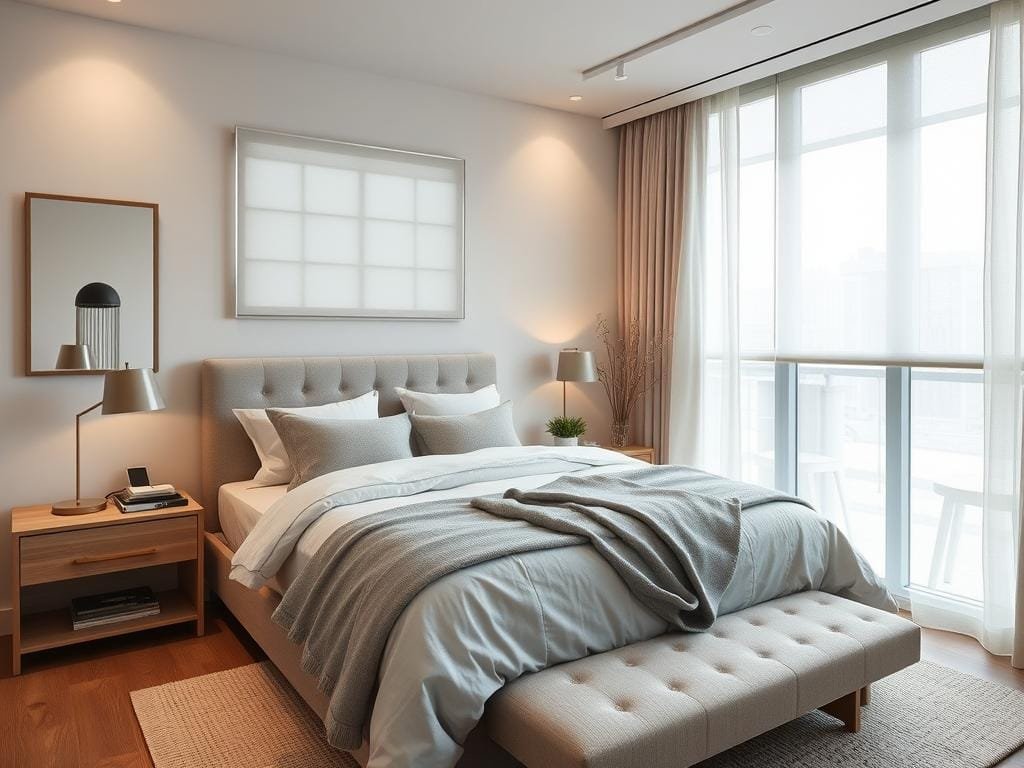
- Circadian lighting systems that support healthy sleep
- Climate zones that adjust based on occupancy
- Smart mattresses that track sleep quality
- Automated window treatments programmed to natural rhythms
- Hidden charging stations in nightstands
Bathroom
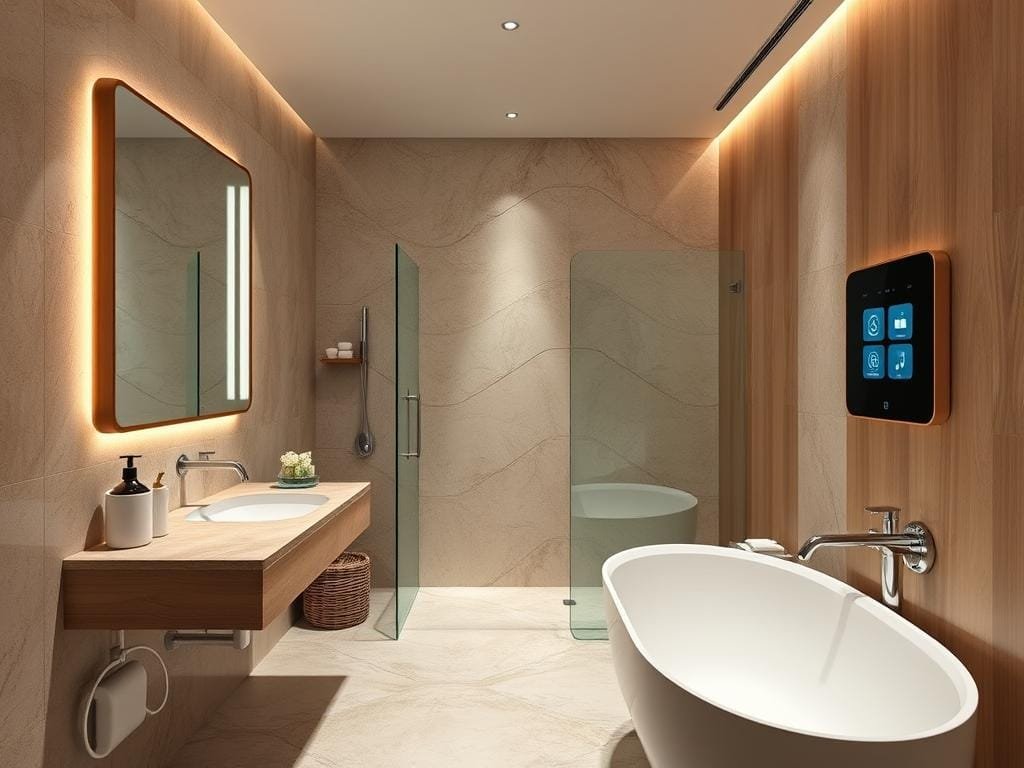
- Smart mirrors with hidden display capabilities
- Voice-activated shower controls
- Programmable lighting for different routines
- Heated flooring with time-based programming
- Water conservation systems with usage tracking
Home Office
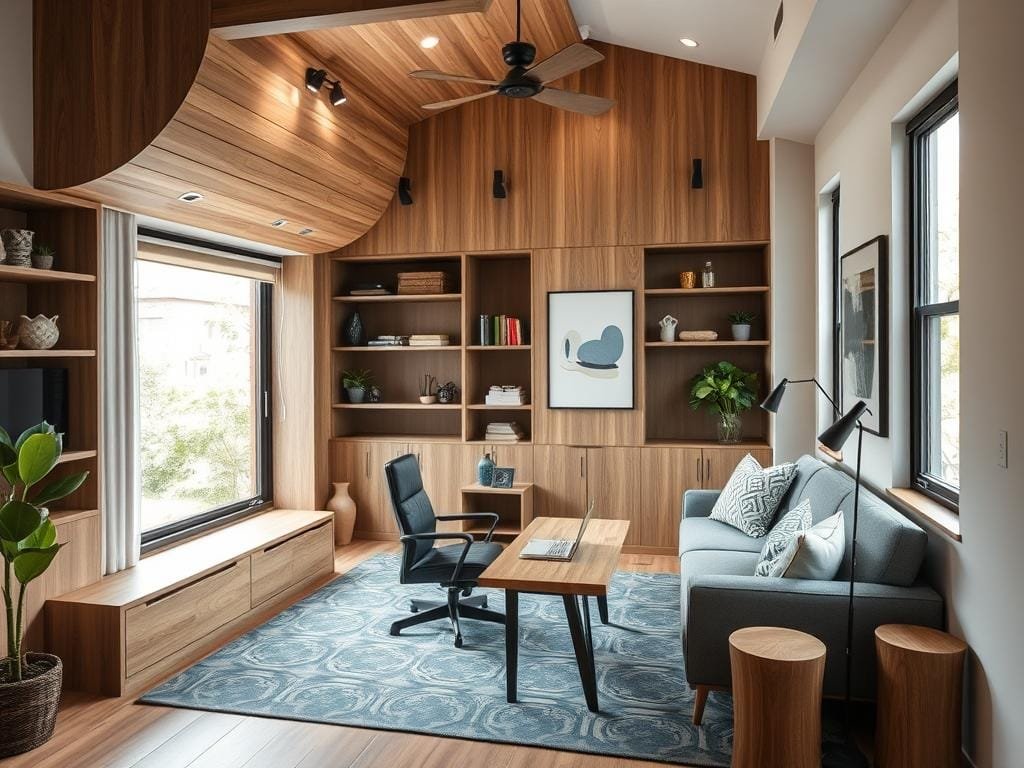
- Acoustic management systems for video calls
- Automated lighting optimized for video conferencing
- Furniture that adapts to different working positions
- Air quality monitoring and optimization
- Integrated charging and connectivity solutions
The key to successful room-by-room implementation is creating a cohesive system where all elements work together seamlessly. Book a whole-home smart design consultation to create a comprehensive plan.
Sustainable Smart Home Design for 2026
Sustainability isn’t just a trend—it’s becoming the foundation of smart home design. In 2026, the most advanced homes are also the most responsible, treating the entire home as a living system.
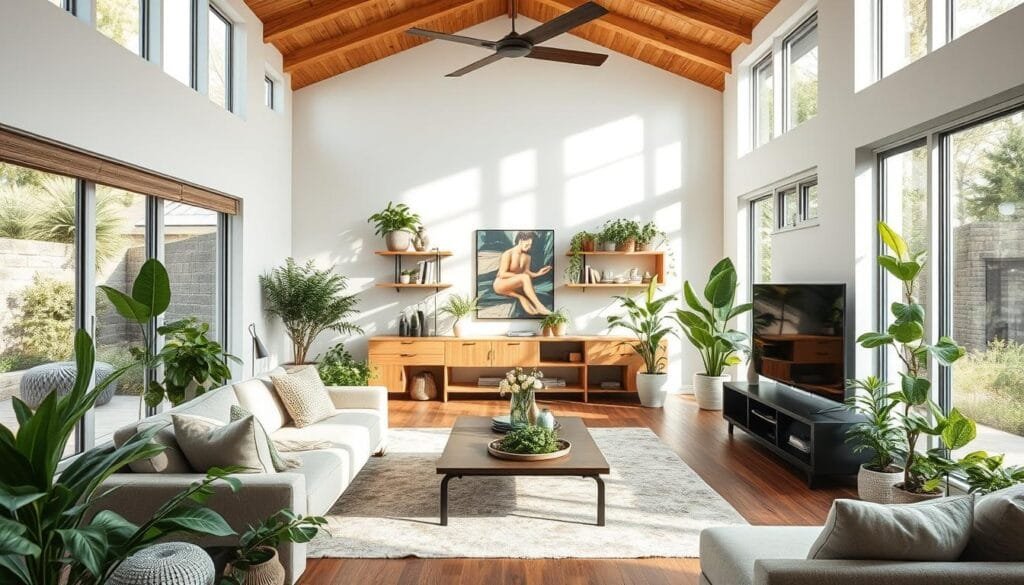
Key Sustainable Smart Home Features
Energy Management
- Solar integration with battery storage
- Automated energy management systems
- Smart appliances that run during off-peak hours
- Zoned climate control to reduce waste
- Energy usage displays integrated into home design
Resource Conservation
- Water recycling systems for irrigation
- Smart irrigation based on weather forecasts
- Low-flow fixtures with usage tracking
- Composting systems integrated into kitchen design
- Smart glass that adjusts tint based on sunlight
The beauty of sustainable smart home design is that it can save you money while reducing environmental impact. Many homeowners see utility savings of 30-40% after implementing comprehensive smart systems. Schedule a sustainability assessment to identify the best opportunities for your home.
Creating Your 2026-Ready Smart Home
As we look toward 2026, smart home interior design is entering an exciting new phase where technology and beautiful design work in harmony. The most successful homes will be those that thoughtfully integrate technology to enhance daily life while maintaining warmth, character, and personal expression.
Whether you’re building new, renovating, or simply updating your existing space, the key is thoughtful planning that considers both current and future needs. Start by identifying your priorities—energy efficiency, convenience, wellness, or entertainment—and build your plan from there.
Remember that the best smart home is one that reflects your unique lifestyle and preferences. Technology should serve your needs, not dictate your choices. With thoughtful planning and design, you can create a home that’s both cutting-edge and timeless.
Ready to Create Your Future-Ready Smart Home?
Tell us what you’re hoping to automate and roughly what you want to spend, and we’re happy to point you toward the pieces worth doing first. Still working out your overall direction? The style quiz is a good place to begin.