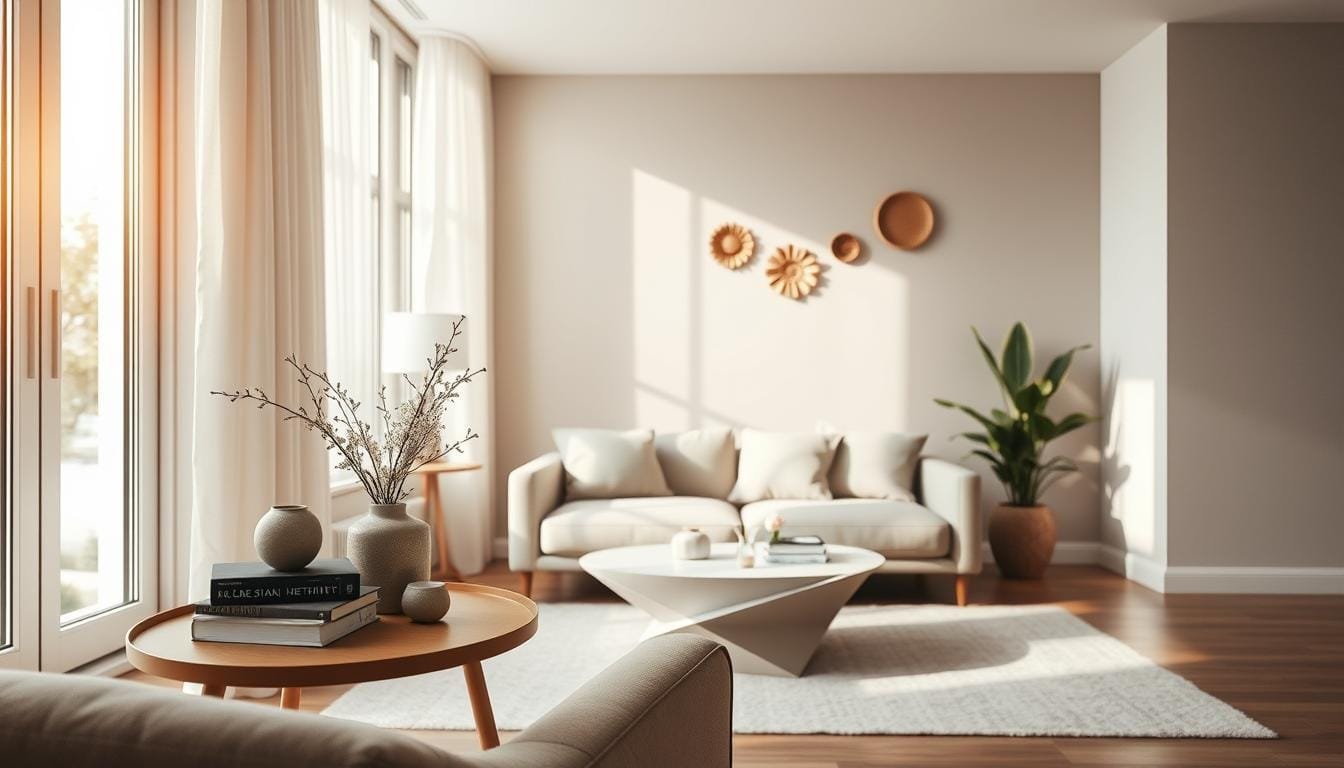
One weekend, in a cozy Brooklyn bookstore, I found a design book. It showed how to make tiny spaces feel like paradise. The ideas were smart, using every inch without making it feel crowded.
A small room is not a problem to be solved so much as a set of constraints to work with. Changing how we see them makes them both useful and good to look at. The trick is smart storage and furniture that earns its footprint twice over. Here is how to make a room feel bigger without knocking a wall down.
Understanding the Basics of Small Space Design
A lot of people who live in cities have small living spaces, and plenty of us are working with well under 1,000 square feet. Knowing how to design these small spaces is key. It helps make them both useful and beautiful without feeling too tight. Let’s look at the main things that can really make a difference.
The role of scale and proportion is very important in small space design. It’s vital to pick furniture that fits well to keep things balanced and not too crowded. Furniture that serves more than one purpose is what makes a small room work: sofa beds, extendable tables, storage ottomans. If new versions are out of reach, an old blanket box with a cushion on top is the same idea for the price of the cushion.
The colors you choose change how big a room reads. Light shades like white, beige and soft pastels bounce what light there is around the room instead of swallowing it. Mirrors do the same job, which is why a reflective surface is worth nearly as much as a window in a small room, and a secondhand mirror works exactly as well as a new one.
Good lighting is crucial in small spaces and is the thing most often forgotten. Clean windows and light curtains cost almost nothing and do more for a room than new furniture would. Also, using different types of lighting can change small rooms into places that feel larger and welcoming.
Finding new ways to use space up high, like with tall shelves and wall storage, helps free up the floor. Getting things up off the floor is usually the single biggest change available in a small room.
Choosing the Right Furniture
Choosing the right furniture is key for small spaces. Think about multi-functional pieces like storage ottomans and Murphy beds. These save space while adding value. It’s important to pick furniture that fits your room’s size. The right size enhances your space, while big pieces can make it feel tight.
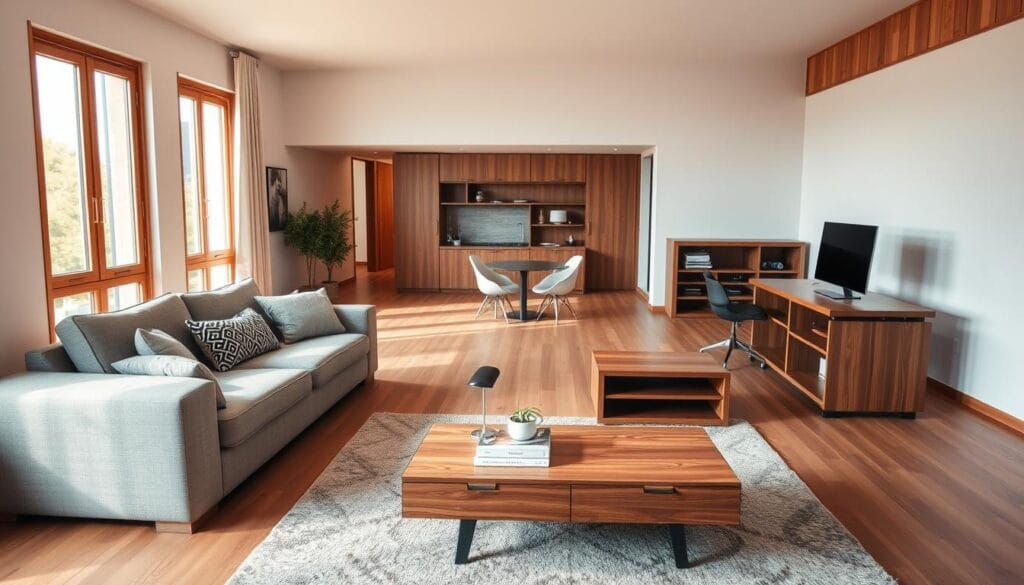
Think up, not just around, when arranging furniture. Tall bookcases use vertical space well, making ceilings seem higher. Choose light-colored or leggy furniture to make spaces feel open. This way, your room will look and feel more spacious.
Putting furniture in the center can make a cozy spot for talks. This challenges the idea that open middle space looks bigger. Items like a versatile ottoman are great—they’re seats, tables, and more. Using light colors all around also helps the room feel bigger and brighter.
Using floating shelves and wall-mounted TVs can make more floor space. This makes rooms feel more open. Modular furniture can change with your needs, keeping spaces fresh. These efficient furniture choices help make any small area feel big and welcoming.
The Power of Color in Small Spaces
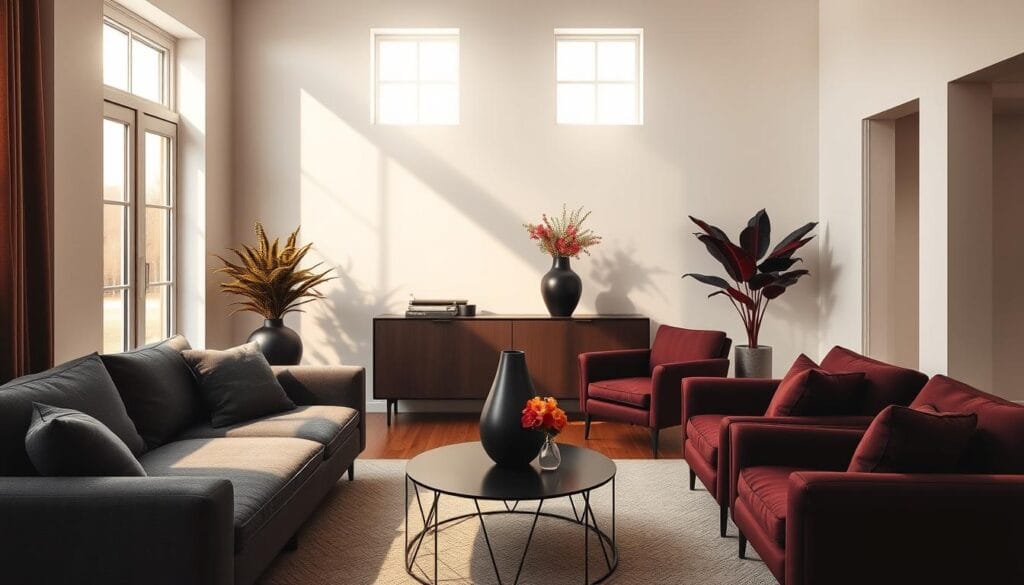
Choosing the right colors for a small space can change its entire vibe. Knowing how light vs. dark colors interact is crucial. Light colors, like soft blues, greens, and yellows, make a room feel bigger and more welcoming. They bounce light around, offering a breezy feel. Meanwhile, dark colors bring depth and elegance, ideal for feature walls that suggest depth without making the room feel tight.
Balance is key in small areas. Using different shades of the same color can make the room seem larger. This approach pulls everything together, making the space look wider and more in tune. Light neutrals such as white, cream, and taupe also help make a room feel open and light.
Accent walls can be a smart choice. They draw the eye and make the room’s size less obvious. Choose a contrasting color or a lighter tint of the main color for both unity and interest. One wall of colour is also the cheapest decorating decision in the house: a single tin of paint rather than a whole room’s worth.
Mixing your colors wisely with good design choices can boost the effect. Furniture that’s up on legs lets air and light move around, which helps a small space feel bigger. Mirrors bounce the light back and give the eye somewhere further to travel.
Choosing colors isn’t just about the hue but also about creating a cohesive look. A unified colour scheme carried from room to room stops a small home feeling chopped into compartments.
Thinking about light vs. dark colors in a practical way is smart. Light colors are best for a spacious feel, but dark colors are great for adding contrast without clutter. Avoid using too many bright or dark shades. Stick to two or three main colors along with light neutrals to keep things open.
Here’s a quick comparison:
| Aspect | Light Colors | Dark Colors |
|---|---|---|
| Space Perception | Creates openness and airiness | Adds depth and sophistication |
| Best Used For | Walls, ceilings, large furniture | Accent walls, small furnishings |
| Combining Options | Works well with light neutrals and pastels | Pairs with light colors and bold accents |
| Visual Effects | Expands visual space | Creates visual interest |
Colors have amazing power to reshape small spaces. Picking between light vs. dark colors depends on what you need and your room’s characteristics. Try out various shades, use accent walls, and ensure your colors match well. You have everything you need to get this right.
Smart Storage Solutions
Living in a small space requires smart storage methods. By exploring Creative Storage Ideas for Small Spaces, we can make the most out of our homes. A key approach is to use vertical space smartly. This may mean installing shelves from floor to ceiling. This trick not only saves floor room but also makes our spaces neater.
It’s also smart to use spaces we often overlook. Think about storage under furniture like beds with drawers or sofas with secret spots. These pieces serve two purposes, especially useful in tight places. They earn their place twice over, which is exactly what a small room needs.
We can also employ custom-made units to better use our space. Building in cabinets or storage into alcoves are great for keeping things while making the room look good. Cabinets run to the ceiling gain a whole extra shelf over the standard height, and a bed with drawers underneath removes the need for a chest of drawers entirely. Neither has to be built in: a set of bed risers and some under-bed boxes get you most of the way for very little.
Sliding doors on cabinets help save space that regular doors use, perfect for compact areas. Having shelves that fold out gives us extra room when we need it without cluttering our space. These Creative Storage Ideas for Small Spaces not only reduce clutter but also make our homes feel bigger and more inviting.
For the best storage system, staying organized is key. Clearing out clutter and sorting items by type—like kitchen stuff, clothes, and books—makes a big difference. Getting advice from storage experts can give us custom tips for our homes. This way, we can use every bit of space we have. Let’s use these smart storage ways to make our homes both beautiful and orderly!
Incorporating Decorative Elements
Adding decorative pieces to small areas can change a room and make it more charming. It’s important to pick Artwork wisely. Choose art that adds to your room’s design without taking over. Pick pieces that match your room’s colors and vibe well.
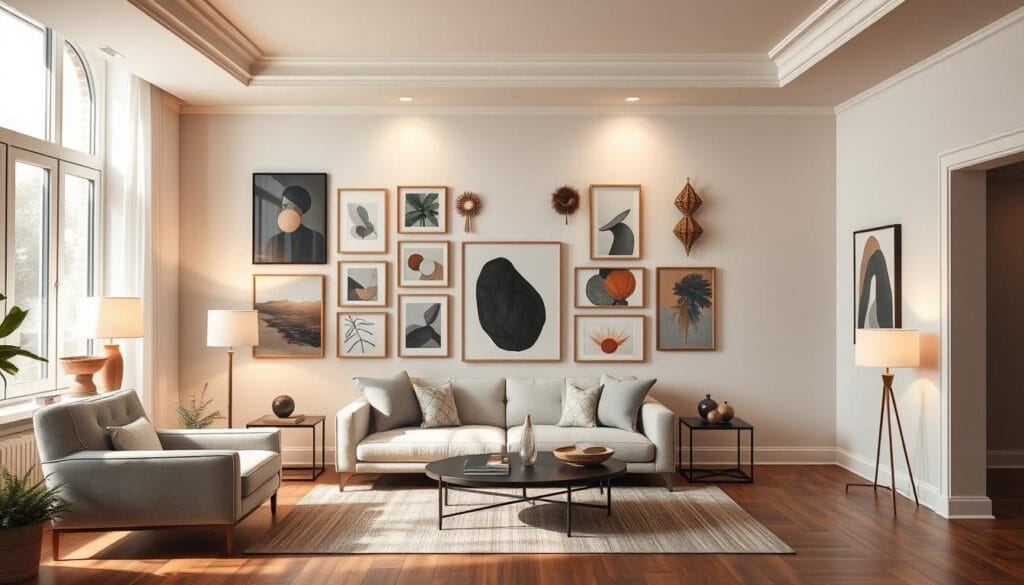
Plants are a great way to make a small room feel lively. They add a fresh, natural touch. Whether it’s tiny herbs on your windowsill or a big fiddle-leaf fig, plants add color and texture.
Using textiles and patterns wisely is key in small spaces. Throws, cushions, and rugs add warmth and texture but don’t overdo it. Go for light fabrics and patterns like vertical stripes to make the room seem bigger.
| Decorative Element | Impact |
|---|---|
| Art | Enhances visual appeal without overwhelming |
| Plants | Introduces a natural, fresh ambiance |
| Textiles | Adds warmth and texture while maintaining minimal clutter |
| Patterns | Creates illusions of space through strategic design |
In small areas, choosing fewer decorative items can be better. By carefully selecting artwork and adding plants and textiles, you make your space welcoming. Every piece should add personality and coziness without crowding the room.
Utilizing Mirrors to Expand Perception
Mirrors do wonders in decorating small areas. They are more than just for checking your appearance; they can make spaces feel bigger. Let’s dive into which mirrors work best for tiny rooms and share tips for where to put them for the biggest effect.
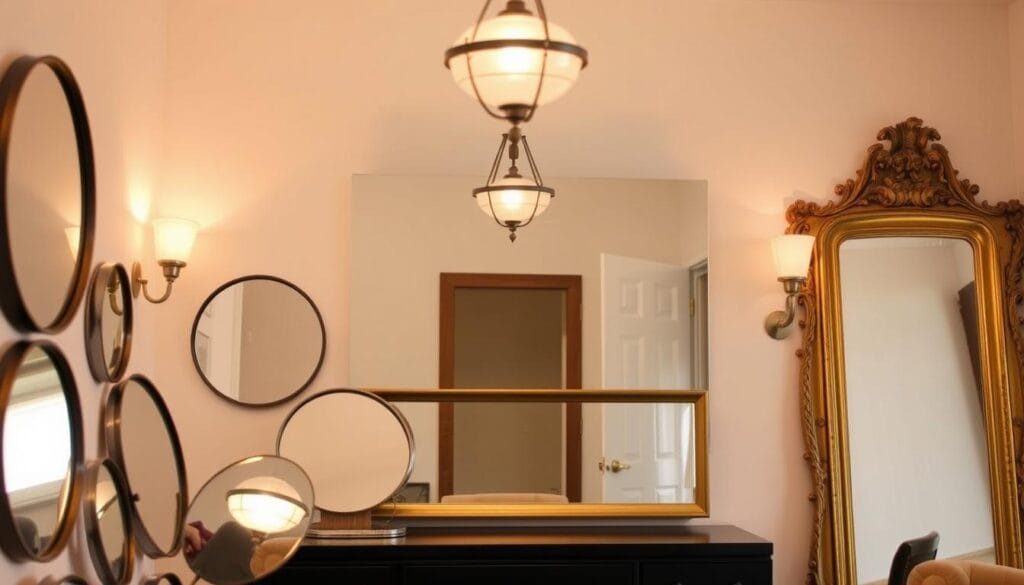
Full-length mirrors work wonders in making narrow places look wider and more open. Place them to catch and spread light around, and your room will instantly feel more welcoming. This trick is perfect for dark areas, as mirrors can lessen shadows and make lighting more even.
Tall mirrors make the ceilings in a room seem higher, which is great for spaces with low ceilings. Putting mirrors on opposite walls also makes a room look endless, giving a spacious vibe.
Using mirrors on furniture, like cabinets or tables, is another smart move to brighten a room. But, it’s key not to use too many mirrors. Too many can make a place feel cluttered and overwhelming.
Putting a mirror across from a window is the highest-value placement there is: it bounces daylight back into the room rather than reflecting a blank wall. A large mirror can work as the focal point of a wall in its own right.
Narrow hallways benefit most of all, because a mirror gives a corridor somewhere to go. Bathrooms are the other easy win. What matters is what the mirror is pointed at — reflect a window, a doorway or a view, never a blank wall or a cluttered worktop.
Mirrors help us make the most of every inch in small spaces. With these strategic touches, even the smallest spots can seem vast and welcoming.
For more inspiration on making the most of your space, check out these helpful tips.
The Role of Lighting in Small Spaces
Good lighting can make a small space feel bigger and more welcoming. A smart approach is layering different lighting sources. Combine ambient, task, and accent lighting for a well-lit and attractive area.
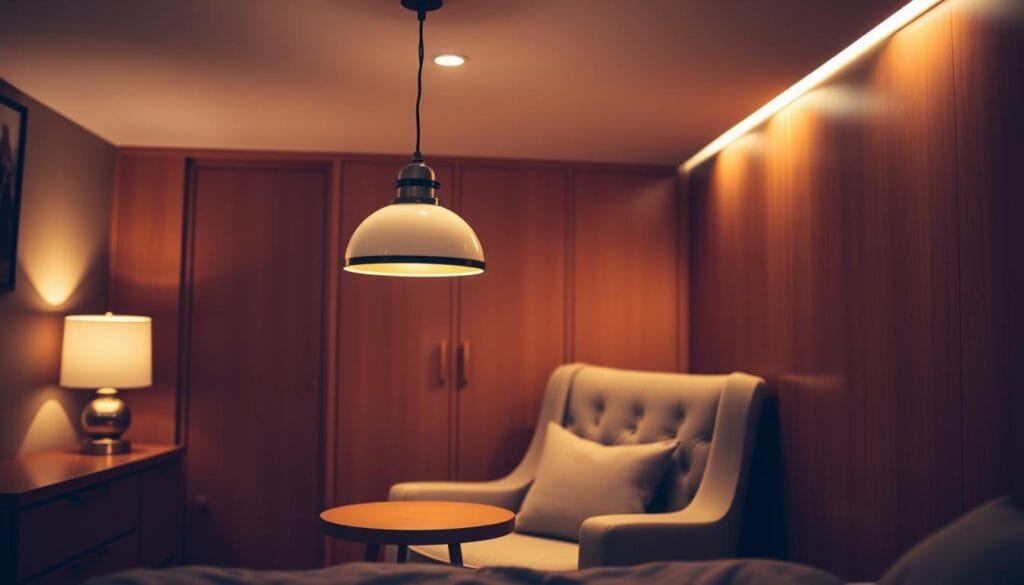
Natural light is key in small areas. Keep your windows clear and use light curtains or blinds. This lets in lots of natural light, making the space seem larger and more open.
Smart bulbs are amazing because they let you change brightness and color. With smart lights, you can control the light easily. This helps set different moods during the day.
Ceiling lights work great in small rooms since they use the space above. Go for flush mounts or recessed lights, especially if your ceiling is low. This helps the room look bigger.
Wall sconces and floor lamps are also great. Wall sconces save floor space and offer good lighting. Floor lamps light up dark corners and make the space feel more open. They also let you add a personal touch without taking up too much room.
LED strip lights can be placed under furniture or around the room for soft light. String lights also add a cozy atmosphere without making the space feel crowded.
Consider using mini chandeliers or pendant lights as main features. These don’t take up much space and look great. Picking designs that don’t block light or air flow is smart for maximum light.
By using different kinds of lights, your small space will not just look good but be more useful. It will also feel more open and welcoming.
Making the Most of Small Outdoor Areas
A small patio or balcony is both a challenge and a chance for creativity. With smart Patio and Balcony Styling Tips, tiny spaces can become beautiful and useful escapes.
Start with multipurpose furniture. Foldable chairs and tables give you the floor back the moment you are finished with them. Include compact seating to keep the area open and welcoming.
Container gardening is perfect for adding greenery to small spaces. Growing upwards keeps the floor clear. This lets you have herbs, flowers, or veggies. Arranging plants at different heights makes your space seem bigger.
Choosing the right flooring can make your small area feel larger. Different materials mark out zones, which makes a small area read as more than one place. It looks better and it organises how people move through.
Effective lighting can make your outdoor area feel much cozier. Adding elements like hanging plants or canopies above can make it seem taller. Where the floor is already spoken for, plant the walls instead.
Add personal touches to make your outdoor area special. Use seasonal plants and various textures to enhance the mood. Choosing durable materials keeps your space welcoming all year.
By using these Patio and Balcony Styling Tips, you can create a beautiful outdoor spot, no matter its size.
Personalizing Your Small Space
Personalizing your small space means making it fit your style and using the space well. We want your home to show who you are and match how you live. By using smart furniture, adding your own touch, and planning a good layout, you can make any small space feel welcoming.
Start with the layout. A smart design helps your daily life run smoothly. Choose furniture that has more than one use. Sofa beds and folding tables save room without looking like a compromise. Going up the wall rather than out across the floor is where the storage is hiding in most small homes.
Adding your own touch is very important in making a space feel like yours. Plants are the cheapest way to make a room feel looked after, and cuttings from friends cost nothing at all. We can take this idea and add things like unique ways to show off jewelry, which makes the space special and more fun.
Looking at advice from the pros at Jane Barnes Interiors, we see the value of keeping interiors light and bright. Light shades keep a room feeling open and welcoming.
Our aim is to make your space both useful and uniquely yours without making it feel crowded. By choosing decor that suits your life, your home becomes more than just a place to live; it becomes a place you love. Small spaces have a charm of their own, and they are quicker and cheaper to change your mind about.
Maintaining a Clutter-Free Environment
Keeping your small space free of clutter is crucial for a welcoming and useful home. Everyday organization habits are key. Doing simple things like putting items away right after use and sorting mail regularly can make a big impact. Opening the mail standing beside the recycling bin, rather than carrying it to a surface, is most of the trick with paper. It is the small steps that add up.
Seasonal cleaning tips are also important. Rotating seasonal clothes out of the wardrobe frees up the rail you actually use every day, and a suitcase under the bed is as good a place to put the rest as anything you could buy. Slimline hangers fit noticeably more into the same run than the bulky ones that come home with new clothes, and they cost a few dollars for a pack. Furniture that does two jobs keeps things working without crowding the room.
Using drawer dividers and shelves that hang on walls are clever ways to boost organization. Drawer dividers turn a drawer into something usable rather than a place things disappear into, and cut-down cereal boxes do the job perfectly well before you buy anything. Wall shelves hand the floor back. With these choices you can lessen the clutter and make your living space calm.
A clear-out every few months stops clutter creeping back to where it started. Follow these and your space stays workable: good to look at, useful, and low-stress.