The coastal interior design landscape is evolving beyond the expected blues and whites into something more nuanced, organic, and deeply connected to nature. As we look toward 2026, coastal homes are embracing a sophisticated blend of earthy neutrals, natural textures, and sustainable materials that honor both the environment and the serene essence of seaside living. Join me, Quinn Parker, as we explore how the next wave of coastal design balances timeless elements with forward-thinking approaches to create spaces that feel both grounded and effortlessly elegant.
The Evolution of Coastal Design: From Nautical to Natural
The coastal aesthetic has matured significantly over recent years. What was once characterized by obvious nautical motifs and bright blue-and-white color schemes has transformed into a more sophisticated interpretation of seaside living. In 2026, we’re seeing a definitive shift toward what I call “Organic Coastal” – a style that draws inspiration from the natural elements of coastal environments rather than literal interpretations.
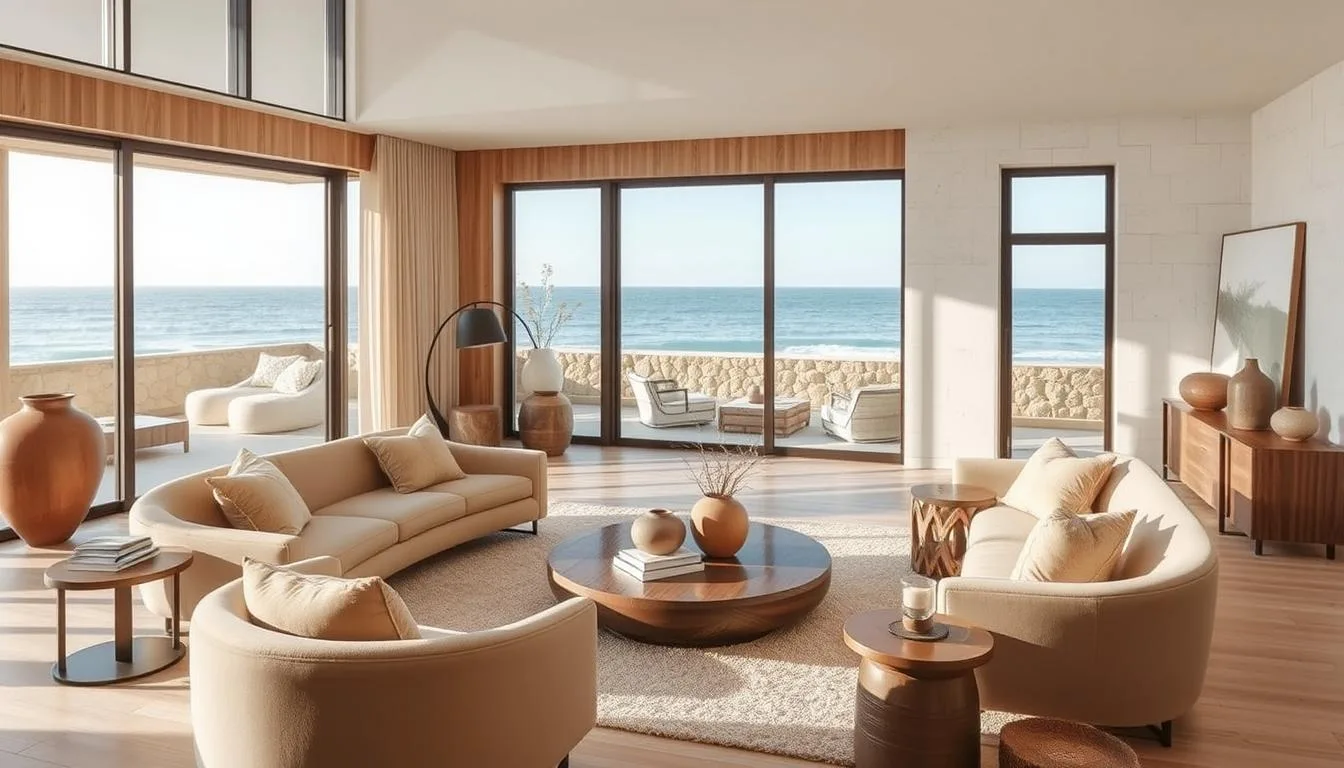
The 2026 coastal living room embraces organic forms, textural depth, and a connection to nature
This evolution reflects a broader cultural shift toward authenticity and sustainability. Homeowners are increasingly drawn to spaces that tell a story and connect meaningfully with their surroundings. The new coastal aesthetic honors the environment through thoughtful material choices and a design approach that prioritizes longevity over trends.
2026 Coastal Color Palettes: Beyond the Blues
While blues will always have their place in coastal design, the 2026 palette expands significantly to embrace a more nuanced spectrum inspired by all aspects of coastal environments – not just the water.
Warm Neutrals & Earthy Foundations
The foundation of 2026 coastal interiors starts with warm, grounding neutrals. Think soft taupes, sandy beiges, and warm whites that create a sense of calm while reflecting the natural light that coastal homes often enjoy in abundance. These hues provide the perfect backdrop for layering textures and subtle color accents.
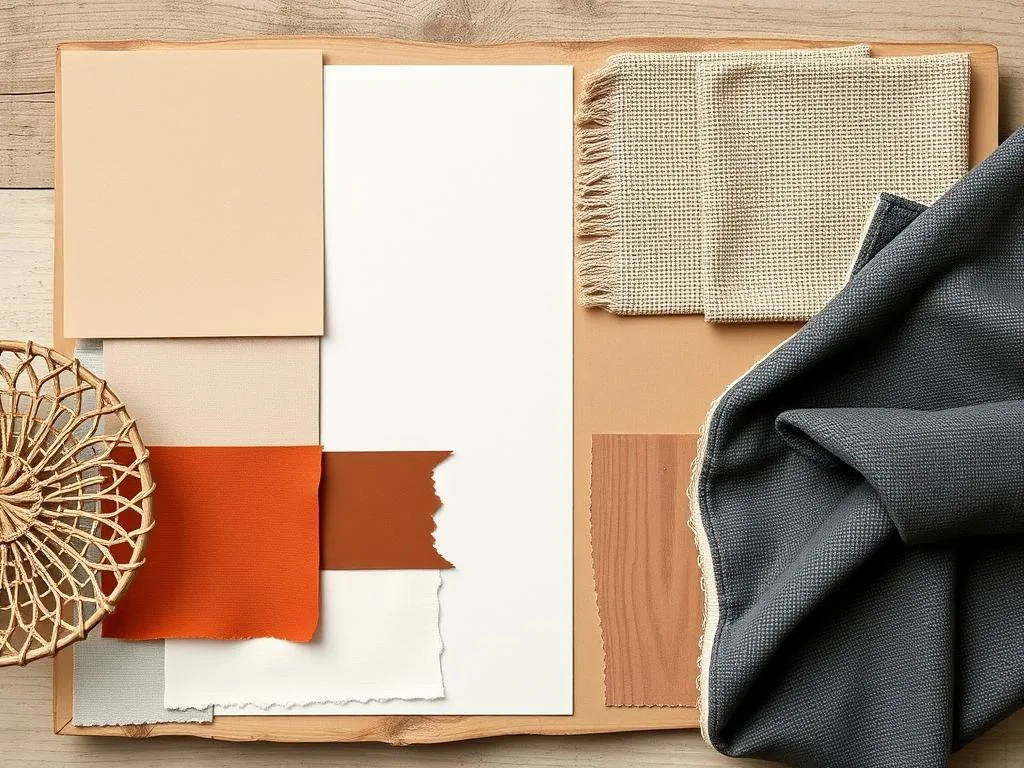
The 2026 coastal color palette emphasizes warm neutrals with accents of sea glass green and muted blues
Sea Glass Greens & Muted Blues
Moving beyond bright aquas, 2026 brings softer, more complex blues and greens to coastal interiors. Sea glass greens, misty slate blues, and soft sage tones evoke the varied hues of coastal waters and vegetation. These colors add depth without overwhelming the space and pair beautifully with natural wood tones.
Earthy Accents
Complementing the neutral base and water-inspired hues are earthy accent colors drawn from coastal landscapes. Sun-bleached terracottas, warm ochres, and soft charcoals add dimension and warmth, creating spaces that feel connected to the land as much as the sea.
“The 2026 coastal palette is about capturing the full spectrum of the shore – from sand to sea grass, from shallow waters to deep horizons. It’s a more holistic and sophisticated interpretation of coastal living.”
Materials & Textures: The Tactile Coastal Experience
Perhaps the most defining characteristic of 2026 coastal design is its emphasis on rich, tactile experiences. The new coastal home engages all senses through thoughtfully layered textures and natural materials.
Organic Textural Elements
Texture is taking center stage in coastal interiors, with designers embracing materials that add depth and interest. Limewash walls, microcement surfaces, slubby linens, and handwoven textiles create a multi-sensory experience that invites touch and creates visual interest without relying on bold patterns or colors.
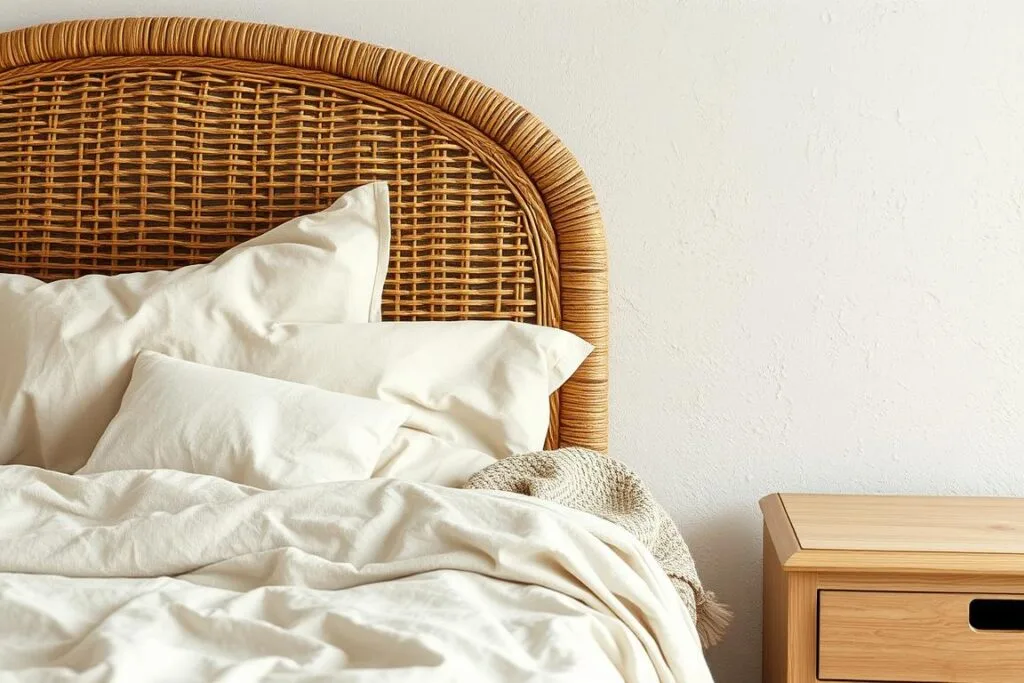
Textural layering creates depth and interest in 2026 coastal bedrooms
Sustainable & Weathered Woods
Wood remains essential to coastal design, but 2026 brings a preference for woods with character and history. Reclaimed timber, driftwood-inspired finishes, and FSC-certified options reflect both environmental consciousness and the natural weathering processes of coastal environments. Light to medium wood tones dominate, with an emphasis on visible grain and natural imperfections.
Natural Stone & Handcrafted Ceramics
Stone and ceramic elements add earthy authenticity to coastal spaces. Travertine, limestone, and tumbled marble bring organic pattern and subtle color variation. Handcrafted ceramics with organic shapes and textural glazes add artisanal character while connecting to the earthen elements of the shore.
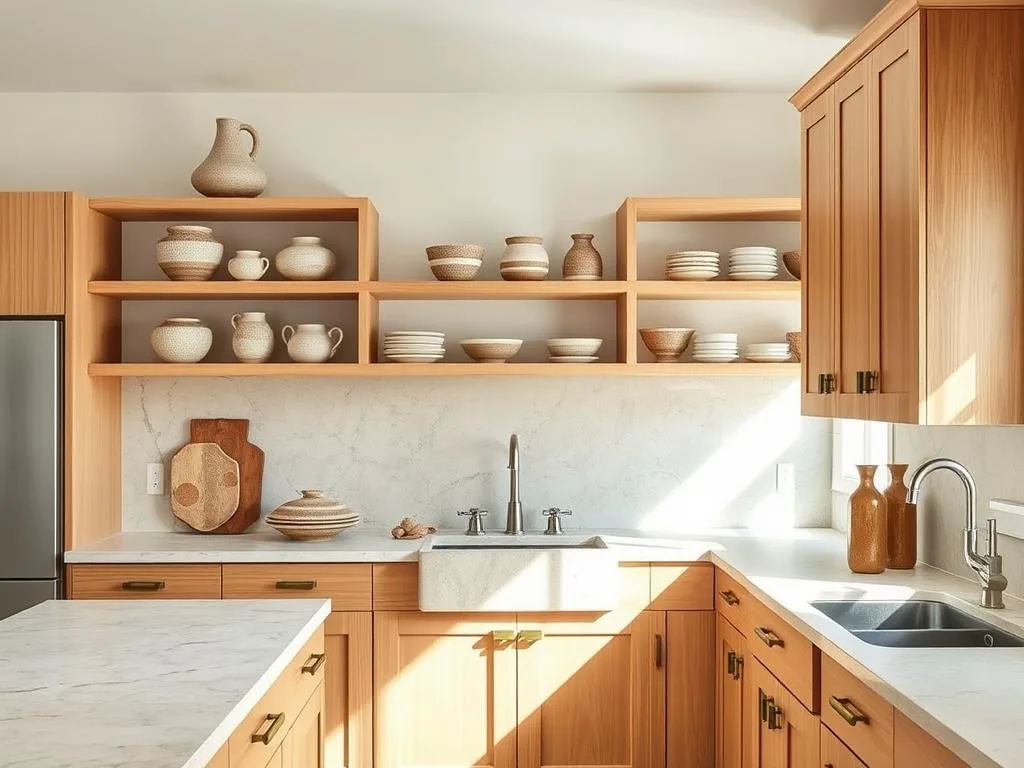
Natural stone and handcrafted ceramics bring organic authenticity to coastal kitchens
Furniture & Spatial Flow: Curves, Comfort & Connection
The rigid, angular furniture of minimalist design is giving way to softer, more organic forms in coastal interiors. This shift reflects both the fluid nature of coastal environments and a growing emphasis on comfort and emotional wellbeing in our living spaces.
Curved & Sculptural Forms
Furniture with gentle curves and organic silhouettes is defining the 2026 coastal aesthetic. Rounded sofas, curved-back chairs, and sculptural tables echo the natural shapes found in coastal landscapes – from rolling dunes to smooth beach stones. These softer forms create a sense of flow and visual comfort.
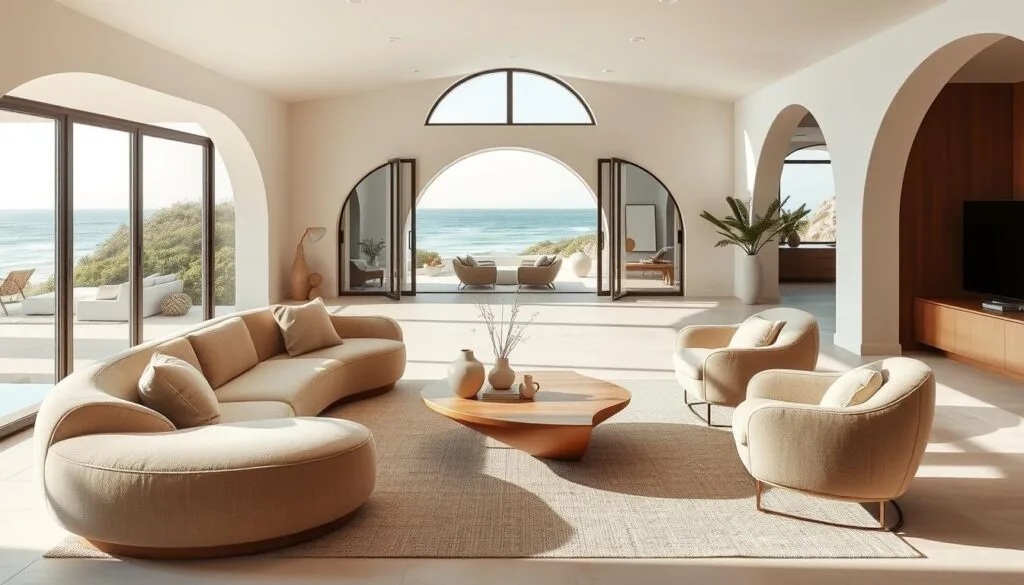
Curved furniture creates flow and comfort in 2026 coastal living spaces
Indoor-Outdoor Harmony
The boundary between indoor and outdoor living continues to blur in coastal design. In 2026, this manifests through thoughtful architectural elements like pocket doors, covered outdoor rooms, and furniture arrangements that embrace views and natural light. Materials that transition well between indoors and out – such as performance fabrics and weather-resistant woods – further enhance this seamless flow.
Multifunctional & Adaptable Spaces
Coastal homes often serve multiple purposes – from primary residences to vacation properties to rental investments. The 2026 approach acknowledges this reality with flexible furniture arrangements, modular pieces, and thoughtful space planning that allows rooms to adapt to changing needs while maintaining their aesthetic integrity.
Lighting & Décor: Artisanal Statements & Natural Accents
Lighting and decorative elements in 2026 coastal homes strike a balance between making a statement and maintaining the serene, uncluttered aesthetic that defines the style.
Statement Lighting with Natural Elements
Lighting fixtures are becoming sculptural focal points in coastal interiors, often incorporating natural materials like rattan, woven seagrass, ceramic, and handblown glass. These pieces add artistic interest while maintaining the organic, nature-inspired theme that runs throughout the home.
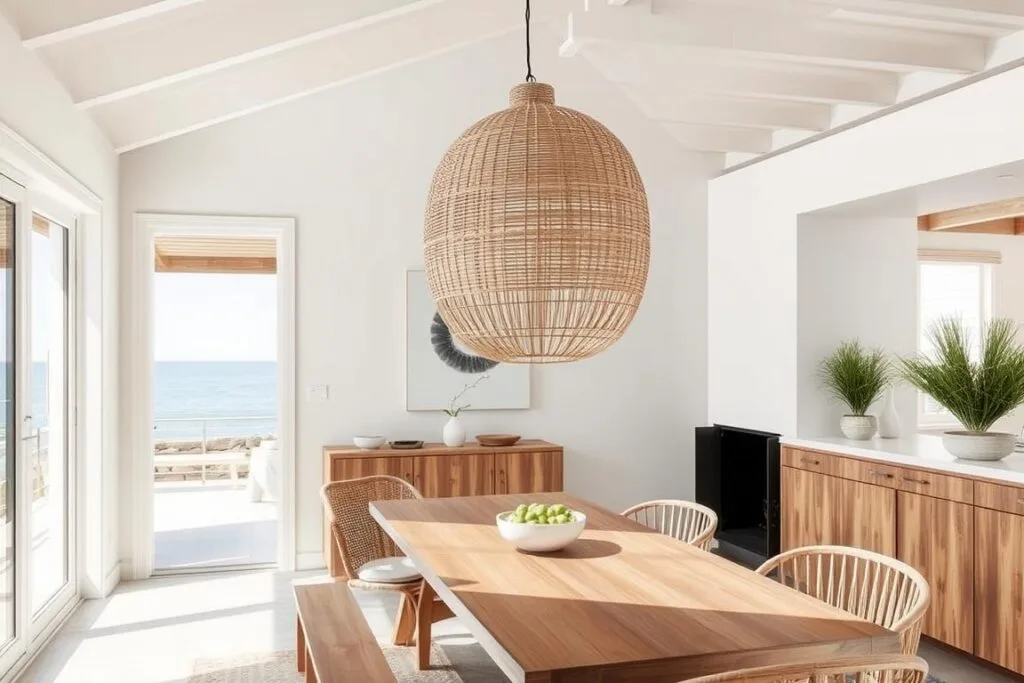
Statement lighting incorporating natural materials adds artistic dimension to coastal spaces
Curated & Meaningful Accessories
The era of generic coastal décor is firmly behind us. In 2026, coastal homes feature thoughtfully curated accessories that tell a personal story. Handcrafted ceramics, locally sourced art, and objects collected from travels create spaces with soul and authenticity. The approach is quality over quantity, with each piece earning its place.
Biophilic Elements
Living elements remain essential to coastal design, connecting interiors to the natural world. In 2026, this goes beyond basic houseplants to include more considered biophilic design – from statement trees in oversized vessels to living walls in bathrooms to carefully positioned plants that frame views and architectural features.
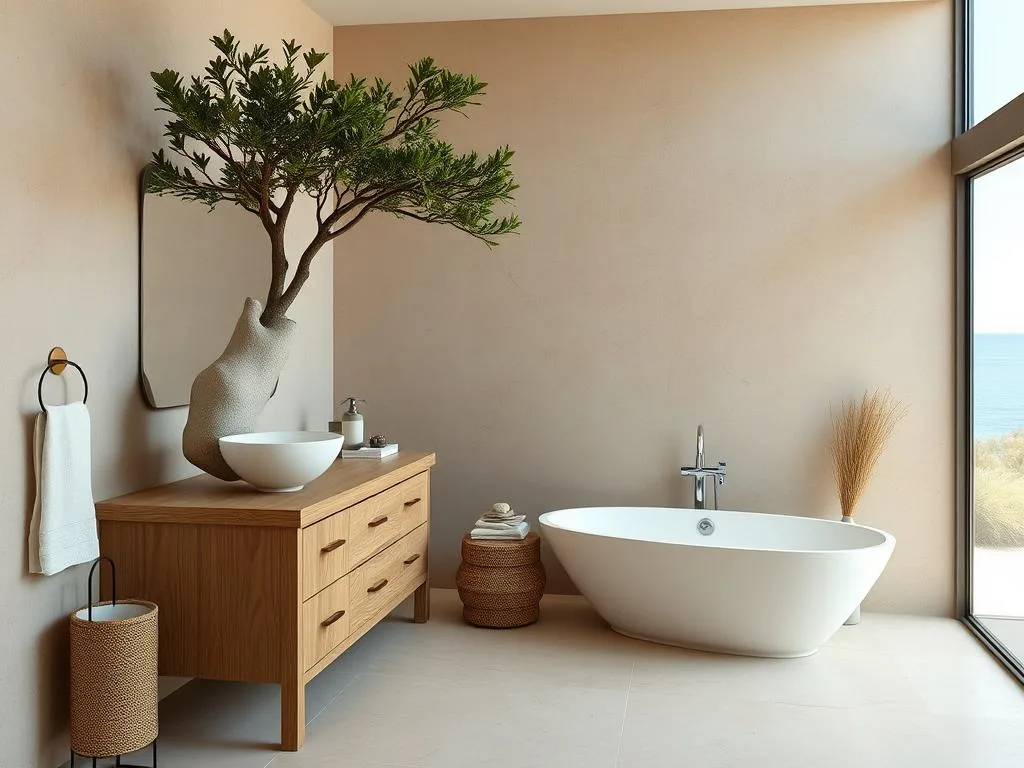
Biophilic elements create a sense of sanctuary in coastal bathrooms
Sustainability & Conscious Design: The Ethical Coastal Home
Environmental consciousness is no longer optional in coastal design – it’s fundamental. The 2026 approach recognizes both the fragility of coastal ecosystems and the responsibility of designers and homeowners to make choices that protect these environments.
Eco-Conscious Materials
Sustainable sourcing is a priority for 2026 coastal interiors. This includes FSC-certified woods, reclaimed materials, organic textiles, and locally produced items that reduce carbon footprints. These choices not only benefit the environment but often result in more characterful, unique interiors.
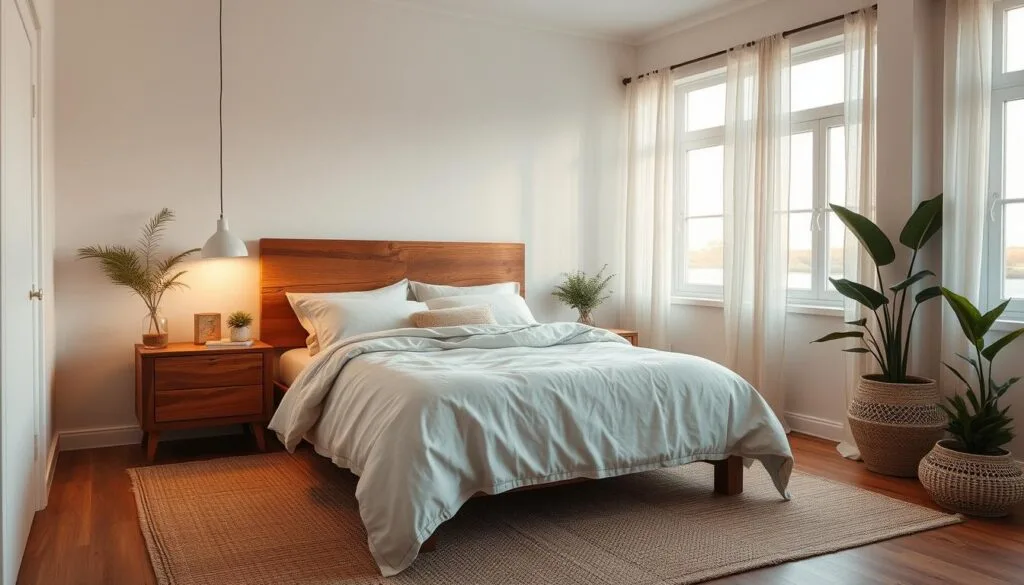
Sustainable materials create responsible yet beautiful coastal bedrooms
Energy Efficiency & Climate Resilience
Coastal homes face unique environmental challenges, from intense sunlight to humidity to rising sea levels. The 2026 approach integrates practical solutions like energy-efficient windows, natural ventilation systems, and durable materials that can withstand coastal conditions while reducing environmental impact.
Circular Design Thinking
The most sustainable item is often one that already exists. In 2026, coastal design embraces circular thinking – from incorporating vintage and antique pieces to selecting new items designed for longevity and eventual recycling or biodegradation. This approach reduces waste while adding character and history to interiors.
Regional Variations: Coastal Design Across Shorelines
While the broader trends of organic materials and sustainability apply universally, coastal design in 2026 acknowledges the distinct character of different shorelines. From the moody Pacific Northwest to the tropical Florida Keys, regional interpretations bring unique flavor to the overarching coastal aesthetic.
Atlantic Northeast
Characterized by a refined take on traditional coastal elements, Northeastern coastal homes in 2026 feature deeper blues, charcoal accents, and more substantial furniture pieces that create cozy retreats from harsh weather. Weathered woods and natural stone reference the rugged shoreline.
Southern Atlantic & Gulf
Warmer climates inspire lighter materials and more emphasis on indoor-outdoor flow. The 2026 Southern coastal home balances traditional architectural elements with fresh, contemporary furnishings in pale neutrals and soft blues, creating breezy spaces that feel both timeless and current.
Pacific Coast
West Coast coastal design embraces a more modern, minimalist approach with Japanese and Scandinavian influences. Earth tones, concrete elements, and architectural details that frame dramatic views define the 2026 Pacific coastal aesthetic.
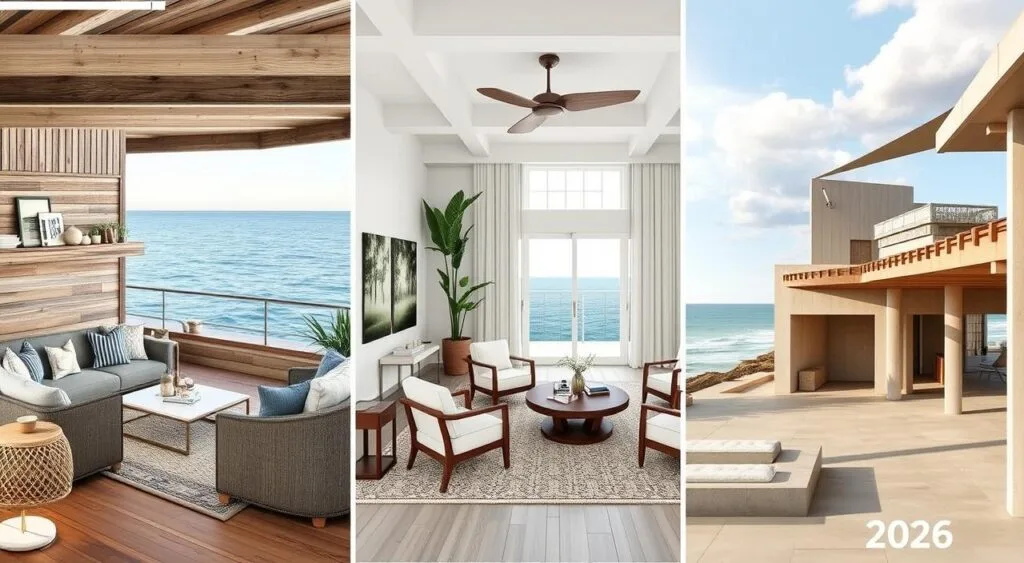
Regional variations in 2026 coastal design reflect the unique character of different shorelines
Implementing 2026 Coastal Trends: Practical Approaches
Embracing new design trends doesn’t necessarily mean a complete overhaul of your coastal home. Here are practical ways to incorporate 2026 coastal design elements while respecting your existing space and budget.
Start with Texture
One of the most impactful and accessible ways to update your coastal interior is through textural elements. Consider adding slubby linen throw pillows, a handwoven jute rug, or textured ceramic vessels to bring immediate depth to your space without major renovations.
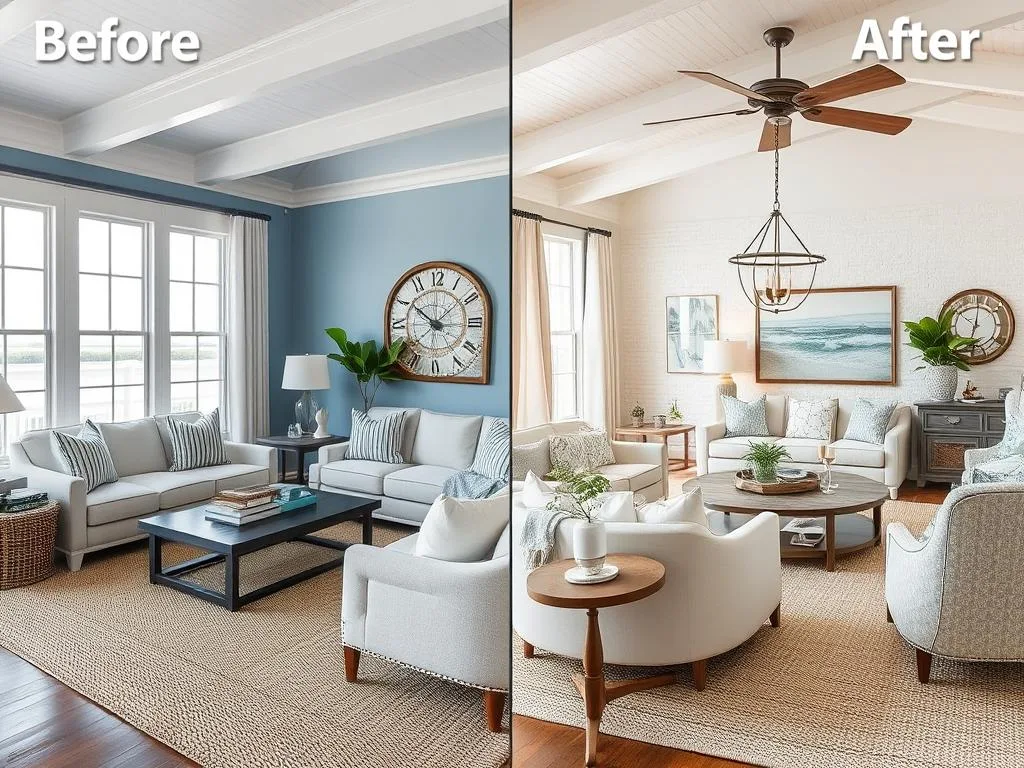
Before and after: Updating a coastal living room with 2026 textural elements and a refined palette
Evolve Your Color Palette
If your coastal home currently features bright blues and whites, consider gradually shifting toward the warmer neutrals and more complex blues and greens of the 2026 palette. Start with larger textiles like rugs and curtains, then gradually extend to wall colors and furniture as budget allows.
Invest in Statement Pieces
Rather than replacing everything at once, select a few key pieces that embody the 2026 coastal aesthetic – perhaps a sculptural lighting fixture, an organically shaped coffee table, or a piece of local art. These focal points can transform the feel of your space while allowing you to retain existing elements.
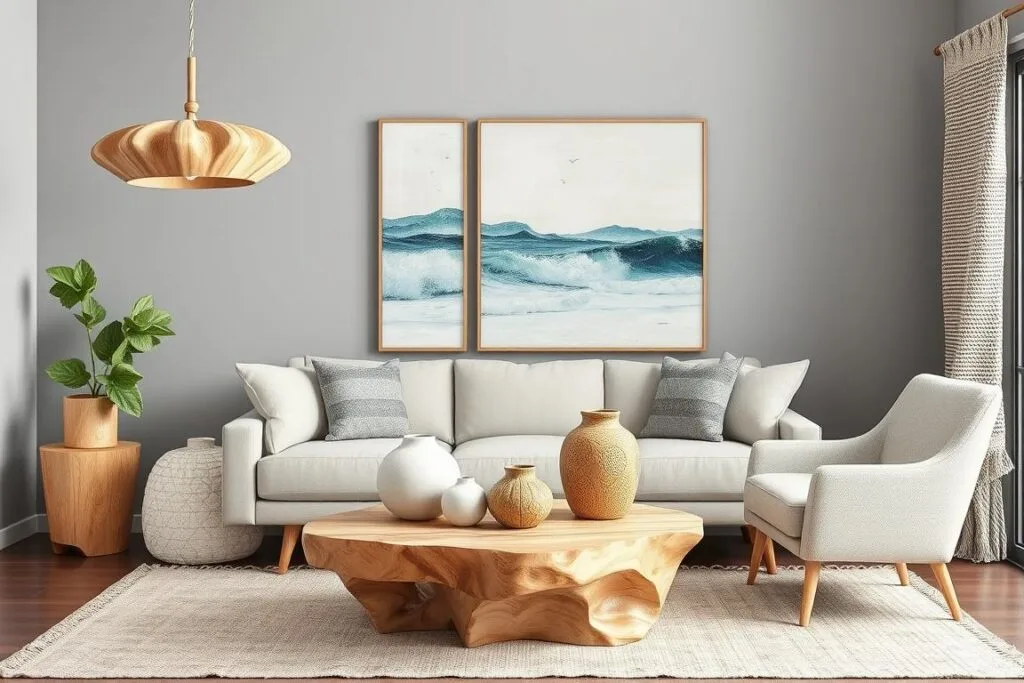
Key statement pieces can transform your coastal space without a complete redesign
The Essence of 2026 Coastal Design: Authentic Connection
As we look toward 2026, coastal interior design is evolving into something more thoughtful, sustainable, and deeply connected to the natural world. Moving beyond surface-level beach motifs, the new coastal aesthetic honors the full sensory experience of shoreline living – from the tactile pleasure of natural materials to the visual calm of organic forms and earthy colors.
What makes this evolution particularly compelling is its emphasis on authenticity and personal meaning. The most successful coastal interiors of 2026 won’t be those that rigidly follow trends, but rather those that thoughtfully interpret these principles through the lens of their specific location, architecture, and the lives of those who inhabit them.
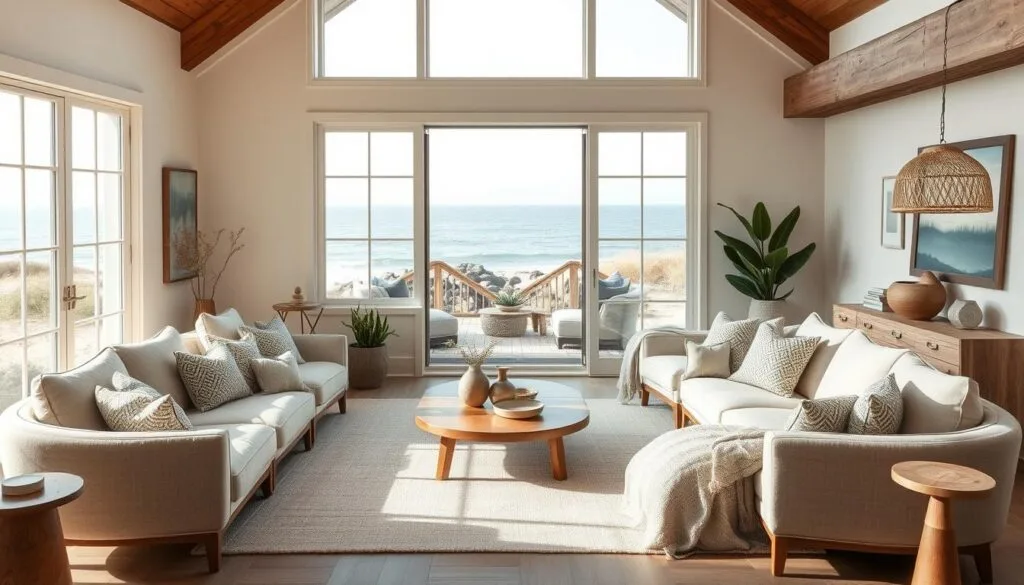
The essence of 2026 coastal design: authentic connection to place, materials, and meaning
Whether you’re designing a new coastal home, renovating an existing space, or simply refreshing your beach house for the coming years, I hope these insights inspire you to create interiors that not only look beautiful but feel deeply right – spaces that honor both the timeless appeal of coastal living and the evolving understanding of how our homes can better serve us and our planet.
Ready to Transform Your Coastal Home?
Download our free “2026 Coastal Design Implementation Guide” with room-by-room checklists, sourcing directories for sustainable materials, and exclusive tips not covered in this article. Create a coastal home that’s both on-trend and timeless.