Do you ever scroll through a perfectly minimal, white-on-white living room and think — that’s beautiful, but it doesn’t feel like me? Like you’re looking at a gallery installation instead of somewhere you’d actually kick your shoes off and settle in for the evening? If more is more in your world, you’re in very good company.
Maximalist living rooms are having a full-blown renaissance, and honestly, it couldn’t come at a better time. We’re going to explore ten wildly distinct takes on bold, layered, unapologetically rich living spaces — from jewel-toned velvet drama to globe-trotting eclectic collections — and for each one, we’ll unpack the anchor element that holds it all together and the one decorating rule it breaks with complete confidence.
Key Takeaways
- Every maximalist living room needs one anchor element — a piece or palette that ties the chaos together.
- Bold decor doesn’t mean buying everything at once — layering over time creates richer, more authentic spaces.
- Breaking one conventional rule intentionally is what separates a curated eclectic room from visual clutter.
- Jewel tones, global textiles, dark paint, and brass accents are maximalism’s most powerful tools.
- Pattern mixing, gallery walls, and statement furniture can all coexist when unified by color or material.
- Maximalism works on any budget — thrift stores, vintage markets, and DIY all play beautifully here.
What Makes a Maximalist Living Room Actually Work
Before we dive into the ten rooms, let’s talk about the foundation. Maximalism gets a bad reputation for looking chaotic or overwhelming, but the spaces that truly sing have one thing in common — intention. Every layer has been chosen, not just accumulated.
The Anchor Element Rule
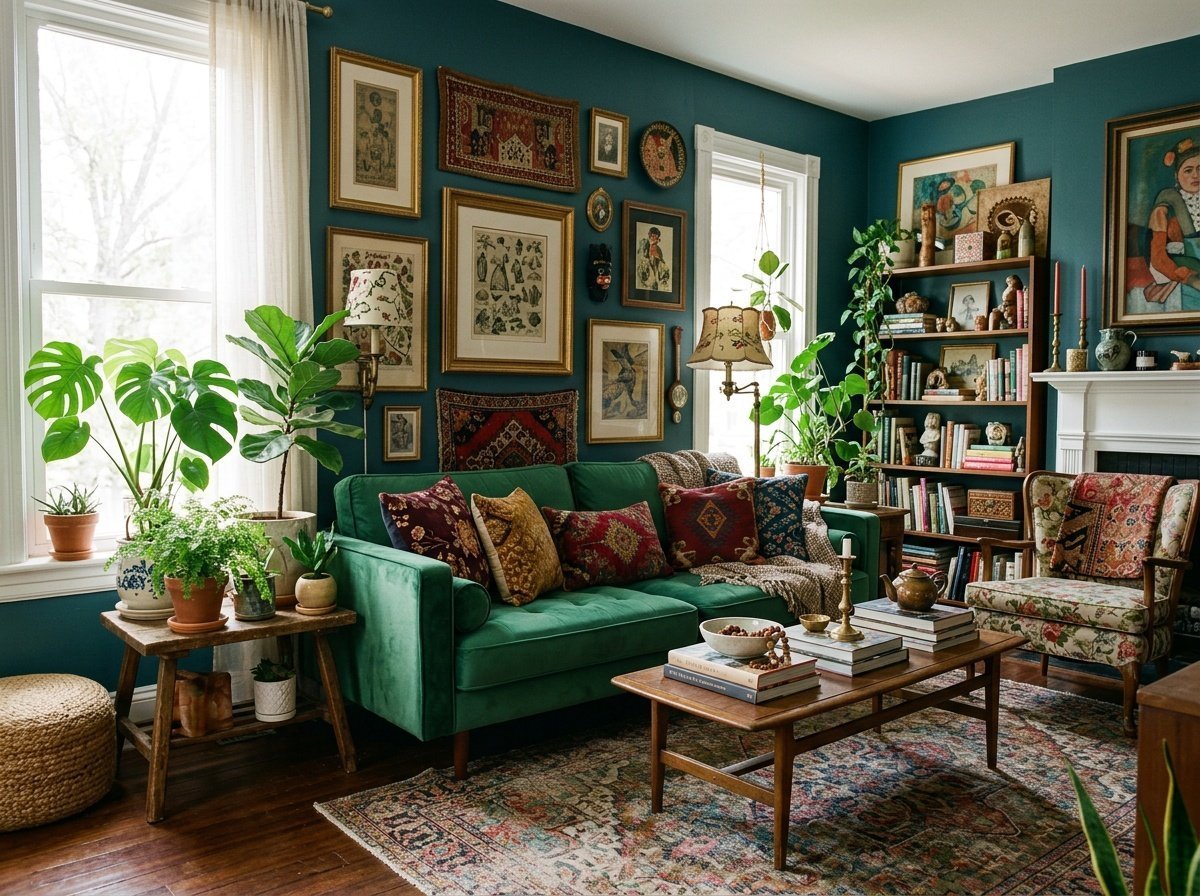
Every room in this list has what I call an anchor element — a dominant piece, palette, or architectural feature that all the other decisions orbit around. It might be a jewel-toned sofa, a moody wallpaper, or a vintage rug that came home from a trip abroad. Without an anchor, bold rooms tip from maximalist into messy.
Think of the anchor as your north star. Every new addition should either echo it, contrast it deliberately, or deepen it. Once you have that, you have permission to go beautifully, confidently overboard.
Breaking Rules With Purpose
Each of these ten living rooms also breaks at least one traditional design rule — and not by accident. Intentional rule-breaking is what gives a maximalist space its personality. It’s the thing that makes a room feel curated by a person rather than assembled by a mood board.
If you’re working with a tighter budget and wondering how to start layering in this direction, some of the inexpensive family room updates that actually work are a perfect launching pad — even for maximalist ambitions.
1. The Jewel-Toned Velvet Salon
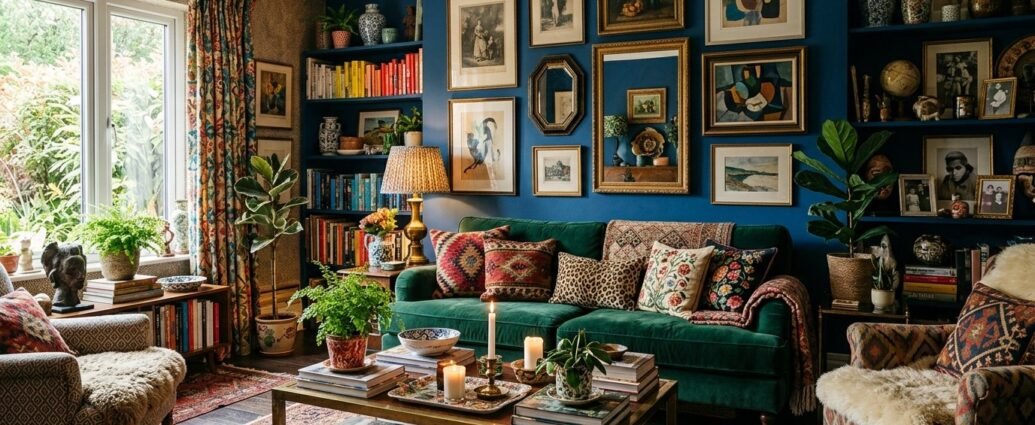
This is the living room that makes you gasp a little when you walk in. Deep sapphire blue velvet sofas, burnished brass coffee table legs, emerald throw pillows, and curtains that puddle onto the floor. It’s theatrical and intentional in the best possible way.
Anchor Element: The Velvet Sofa
A jewel-toned velvet sofa in a deep blue or forest green is the undisputed queen of this room. Everything else — the brass accents, the layered rugs, the gilded mirror — is in conversation with her. When you have a statement sofa this strong, the room practically styles itself.
The Rule It Breaks
This room ignores the conventional wisdom that you should only use one or two metallic finishes. It layers gold, brass, and aged bronze freely — and it works because all three sit in the same warm tonal family. The rule isn’t “use one metal.” The rule is “know your metal temperature.”
2. The Global Collector’s Lounge
Imagine a room that tells the story of a life well-traveled. Moroccan wedding blankets draped over a rattan loveseat, a Guatemalan textile runner on a distressed wood floor, Japanese indigo pillows beside a Peruvian ceramic lamp. This room doesn’t match — it converses.
Anchor Element: The Layered Textile Story
What holds a globally eclectic space together is a consistent textile thread — often a shared warmth of tone (saffron, rust, indigo, and ivory tend to be universal travelers). The fabrics aren’t matchy, but they’re harmonious. Each one is a souvenir with a story.
The Rule It Breaks
It abandons the idea that a room needs a cohesive style period or country of origin. Design traditions from multiple continents coexist not in spite of their differences but because of them. The eclectic living room thrives on contrast and cultural conversation.
3. The Dark and Moody Library
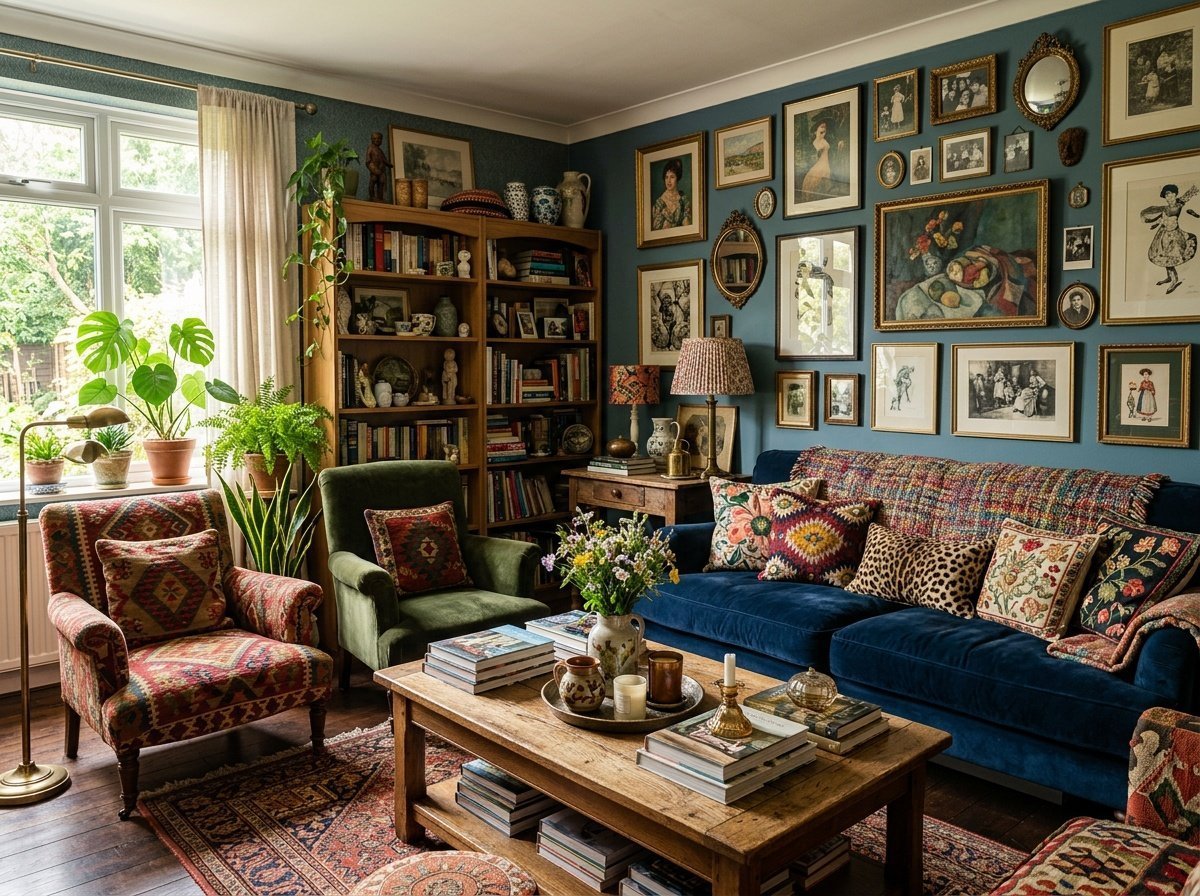
Walls painted in a deep midnight navy or forest-green lacquer. Floor-to-ceiling bookshelves stuffed to the point of overflowing. A chesterfield sofa in worn cognac leather. Antique brass reading lamps and a Persian rug underfoot that’s older than your grandmother. This room whispers: stay a while.
Anchor Element: The Dark Wall Color
A deeply saturated wall color — think Benjamin Moore’s “Black Ink” or Farrow & Ball’s “Hague Blue” — is the architectural backbone of the dark library living room. Rather than shrinking a space, these colors create a cocoon effect that feels luxurious and deeply considered. Every piece of furniture seems to glow against it.
The Rule It Breaks
Dark rooms are conventionally reserved for dining rooms or studies. This maximalist approach brings that drama into the main living space and refuses to “lighten it up” with white trim or pale accents. The darkness is the feature, not a problem to solve.
“A truly maximalist room isn’t decorated — it’s assembled over a lifetime, layered with objects that mean something, and lit in a way that makes every corner feel like a discovery.”
4. The Pattern-on-Pattern Bohemian
Florals with stripes. Ikat with toile. A kilim rug under a floral sofa beneath a geometric wallpaper. For a lot of decorators, this is the nightmare scenario. For the confident bohemian maximalist, it’s Tuesday.
Anchor Element: A Unified Color Palette
When you’re mixing patterns boldly, the one non-negotiable is a shared color story. Even if every pattern is different, pulling from the same three or four hues — say, terracotta, dusty rose, and cream — creates visual coherence. The patterns clash. The colors don’t.
The Rule It Breaks
Traditional styling rules say to limit a room to one or two patterns, varying scale to avoid chaos. This room throws that playbook out entirely and instead proves that bold color discipline is all you actually need to make pattern mixing feel like artistry rather than accident.
5. The Maximalist Neutral: Warm Layers on Warm Layers
Here’s the plot twist — maximalism doesn’t require loud color. This room works in cream, caramel, warm white, sand, oat, and taupe. But there are fifteen different textures, seven different materials, and more throw pillows than any minimal designer would sanction. It’s a quiet maximalism. A whispered riot.
Anchor Element: Texture as the Star
In a tonal maximalist space, texture is doing all the work that color usually does. Chunky boucle beside smooth linen beside aged rattan beside rough jute — the eye travels across the room just as actively as it would in a jewel-toned salon. It’s sensory richness through material rather than pigment.
The Rule It Breaks
Neutrals are almost always associated with minimalism. This room obliterates that assumption. More is more, even when the palette stays quiet. The rule broken here: restraint isn’t a neutral’s only mode.
| Room Style | Anchor Element | Rule Broken |
|---|---|---|
| Jewel-Toned Velvet Salon | Sapphire velvet sofa | One metallic finish only |
| Global Collector’s Lounge | Unified textile warmth | Cohesive style period |
| Dark & Moody Library | Deep saturated wall color | Dark paint in main living areas |
| Pattern-on-Pattern Bohemian | Shared color palette | Limit to two patterns |
| Maximalist Neutral | Layered textures | Neutrals must be minimal |
| Art Collector’s Gallery | Floor-to-ceiling gallery wall | Art needs breathing room |
| Hollywood Regency | Mirrored and lacquered surfaces | Avoid shiny in main rooms |
| Cottage Maximalism | Floral abundance | Florals feel dated |
| Sculptural & Eclectic | Statement sculptural furniture | One statement piece per room |
| Warm Terracotta Maximalism | Terracotta as dominant hue | Warm colors make rooms feel small |
6. The Art Collector’s Gallery Living Room
Every inch of wall space is spoken for. Paintings lean against sculptures. A gallery wall of mismatched frames covers an entire wall from baseboard to crown molding. The sofa is deliberately understated — a simple linen sectional — because the art is doing all the talking.
Anchor Element: The Floor-to-Ceiling Gallery Wall
A gallery wall that runs fully from floor to ceiling, edge to edge, is the architectural statement this room is built around. It’s not a collection of art hung on a wall — it is the wall. The deliberate density makes it feel like a living installation rather than decoration.
The Rule It Breaks
Design tradition says art needs space to breathe — white wall around each piece to give it room. This approach says the opposite: proximity creates dialogue between pieces, and abundance creates impact. It’s a museum approach with a deeply personal, collected spirit.
7. Hollywood Regency: More is More and Then Some
Lacquered walls in deep peacock teal. A mirrored console table. Velvet accent chairs in marigold. A chandelier dripping with crystal. Zebra-print ottomans. This room doesn’t walk into a space — it makes an entrance.
Anchor Element: Mirrored and Lacquered Surfaces
Hollywood Regency maximalism lives and dies by its reflective surfaces. Lacquered walls catch the light. Mirrored furniture bounces it across the room. The result is a space that feels larger and simultaneously more opulent — a dazzling optical trick wrapped in unabashed glamour.
The Rule It Breaks
Most design guidance warns against too many shiny surfaces in a living room — they can feel cold, harsh, or dated. This approach leans in so hard and so deliberately that the shininess becomes the aesthetic itself. The rule isn’t broken accidentally; it’s the whole point.
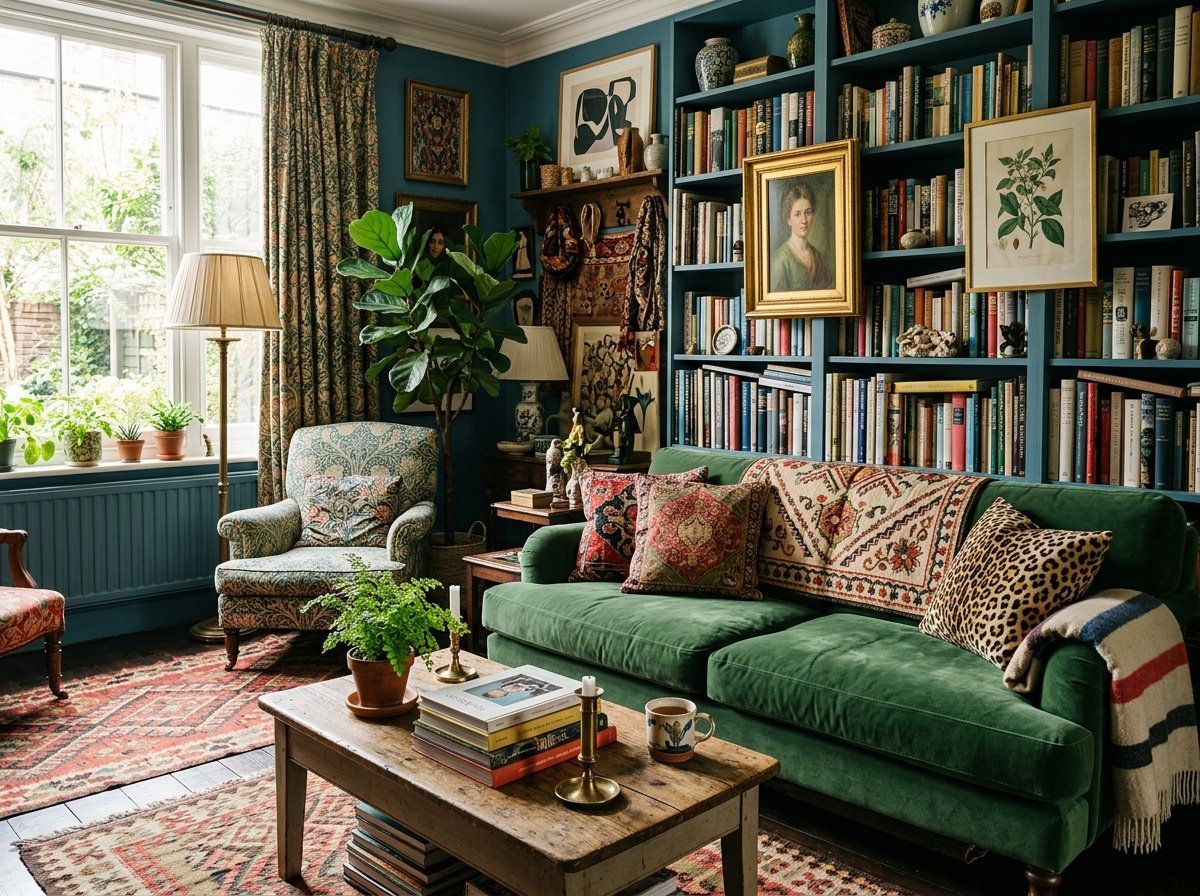
8. English Cottage Maximalism: Florals, Faded Rugs, and Absolute Charm
Chintz curtains. A faded Persian rug in blush and sage. Bookshelves crammed with novels and ceramic dogs. A fireplace surrounded by mismatched blue-and-white pottery. Hydrangeas in every corner. This room smells like Earl Grey and it’s perfect.
Anchor Element: Floral Abundance
English cottage maximalism is anchored by floral pattern in all its forms — on the curtains, in the upholstery, in the actual garden flowers brought inside. Rather than feeling fussy, the commitment to botanical abundance makes the space feel genuinely romantic and alive.
The Rule It Breaks
Florals have long been considered passé in modern design circles — old-fashioned, grandmotherly, difficult to update. This room wears that label as a compliment and proves that the most timeless spaces don’t chase trends. They commit to a feeling, and this feeling is deeply, wonderfully human.
9. The Sculptural and Eclectic Statement Room
A sofa shaped like a cloud. A chair that looks like a giant tulip. A coffee table carved from a single piece of travertine. An enormous papier-mâché floor lamp and walls covered in woven fiber art. This room isn’t just decorated — it’s curated like an exhibition.
Anchor Element: Sculptural Statement Furniture
In a room built around sculptural maximalism, every furniture piece is a design object in its own right. There is no “supporting cast” — even the side table is a conversation piece. The art and the furniture blur into each other until you’re not entirely sure where the décor ends and the installations begin.
The Rule It Breaks
Most rooms follow the unspoken rule of one statement piece per space — the one hero the eye is meant to land on. The sculptural eclectic room says: every single object is the hero. It’s an act of confident curation that requires strong visual editing to avoid tipping into chaos.
10. Warm Terracotta Maximalism: The Sun-Soaked Desert Room
Burnt terracotta walls. Sienna and saffron cushions. Woven baskets stacked three high. Cacti in hand-thrown clay pots. Hammered copper lanterns. A room that feels like golden hour in Santa Fe or a riad in Marrakech, even if you’re currently in suburban Ohio.
Anchor Element: Terracotta as the Dominant Hue
Terracotta maximalism succeeds because the dominant hue — that warm, burnt orange-red of sun-dried clay — is so grounding and so earthy that it can hold an enormous amount of visual weight without feeling garish. It’s a color that absorbs other warm tones (copper, gold, amber, rust) and only gets richer. For a look at how warm, earthy tones are shaping other areas of the home, the 2026 nursery color trends leaning toward earthy and calming palettes show just how universally versatile these hues have become.
The Rule It Breaks
Warm, saturated colors on walls are frequently warned against in small or medium spaces — the conventional wisdom says they’ll make rooms feel smaller and more closed-in. The terracotta maximalist room proves that when you commit fully to a warm palette and let it envelop you completely, the result isn’t claustrophobic. It’s cocooning. It’s a hug you can live in.
Frequently Asked Questions
How do I start decorating a maximalist living room without it looking cluttered?
Start with your anchor element — one dominant piece, color, or pattern that everything else will respond to. Layer in slowly over time rather than all at once. Intentional curation is what separates a maximalist space from a cluttered one, and the more deliberately you add each piece, the more cohesive the room becomes.
Can maximalist living room ideas work in a small space?
Absolutely. In fact, small rooms can handle bold decor beautifully because every square foot gets to be impactful. Dark paint, layered textiles, and gallery walls can all make a compact room feel richer and more intentional rather than cramped. Scale your furniture appropriately and let the decor do the heavy lifting.
What’s the difference between maximalist and eclectic interior design?
Eclectic design mixes styles, periods, and influences freely — and a room can be eclectic without being maximalist (think one piece from each era, cleanly spaced). Maximalism is about abundance and layering, leaning into the philosophy that more is more. Many maximalist rooms are also eclectic, but not all eclectic rooms are maximalist.
What are the best colors for a bold, colorful living room?
Jewel tones — sapphire, emerald, amethyst, and deep ruby — are classics for a reason: they’re rich, confident, and beautiful against both light and dark backdrops. Terracotta, saffron, peacock teal, and deep forest green are all excellent maximalist anchors. The key is choosing a dominant hue and then layering around it with tones from the same warmth family.
How do I mix patterns without the room looking chaotic?
The number-one rule for successful pattern mixing is a shared color story. Even if every pattern is completely different in scale and motif, pulling them from the same three or four colors creates visual harmony. Varying scale — a large floral with a small geometric, for example — also helps your eye move across the room without getting overwhelmed.
Is maximalist decor expensive to achieve?
Not at all. Some of the most beautiful maximalist rooms I’ve ever seen were built almost entirely from vintage markets, thrift stores, and DIY projects. The layered, collected quality of great maximalist spaces actually benefits from slow, budget-conscious accumulation — it looks more authentic and personal than a room bought all at once from a single store. If you’re looking for affordable ways to start transforming your living space, exploring budget-friendly family room updates is a wonderful place to begin.
How do I know when a maximalist room has gone too far?
When you can no longer identify your anchor element — when nothing reads as intentional and everything competes at the same volume — that’s when a room has tipped past maximalism into overwhelm. The fix is usually editing rather than adding: remove a few pieces, let the anchor breathe, and reassess. Less editing, more curating.
Whether your soul lives in a dark, bookshelf-lined library or a sun-drenched terracotta sanctuary, the most important thing any of these ten maximalist living rooms proves is this: bold, layered, expressive spaces are not mistakes waiting to be corrected. They’re some of the most alive, most human rooms that exist. Start with your anchor. Break one rule on purpose. And let your space tell the story only you could tell. I’d genuinely love to see what you create — share it with me over on Instagram, or drop your questions in the comments below. ☕