
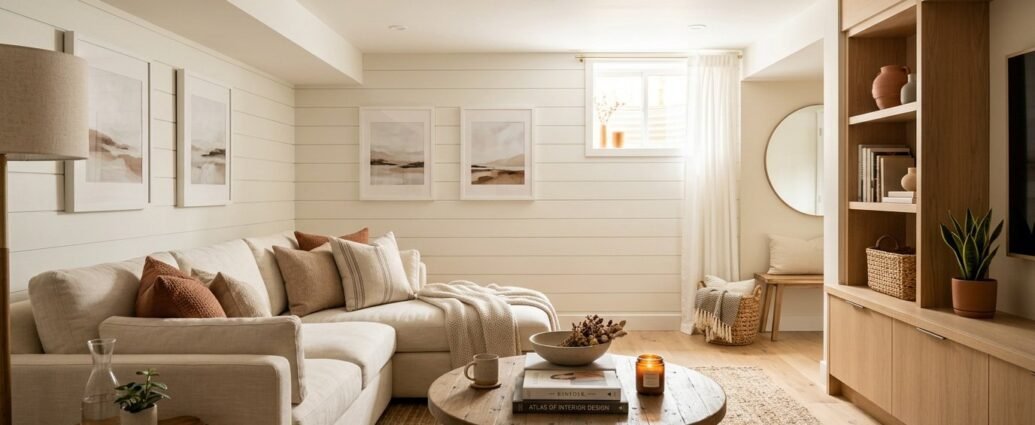
Do you ever walk down the stairs into your basement and immediately feel like the walls — and ceiling — are closing in on you? That low, pressing overhead space has a way of draining all the potential out of what could genuinely be one of the most useful rooms in your home. It doesn’t have to stay that way.
In this post, we’re diving deep into the world of low ceiling basement ideas — the design tricks, structural realities, and styling moves that can transform a cramped, underestimated space into something that actually feels intentional. You’ll walk away with specific strategies you can start planning today, whether you’re working with 7 feet of clearance or just barely scraping 6’8″.
Key Takeaways
- Most building codes require a minimum finished ceiling height of 7 feet for habitable basement space — know your numbers before you plan.
- Painting an exposed ceiling dark (or light) can make it recede visually and add industrial character instead of hiding square footage.
- Strategic lighting — especially recessed or wall-mounted fixtures — draws the eye horizontally and avoids eating into precious headroom.
- Horizontal stripes, low-profile furniture, and large mirrors are three of the most powerful visual tools for a low-ceiling basement.
- Zoning your basement thoughtfully — separating function areas by rug, lighting, or furniture grouping — prevents the space from feeling compressed.
- With the right approach, finishing a basement with low ceilings is absolutely achievable and can add significant livable square footage to your home.
Understanding Ceiling Height Codes for Finished Basements
Before any paint brush touches a joist or any drywall goes up, you need to understand what’s legally required for your basement to qualify as habitable space. This isn’t just bureaucratic fine print — it shapes every design decision you’ll make.
The 7-Foot Rule and What It Actually Means
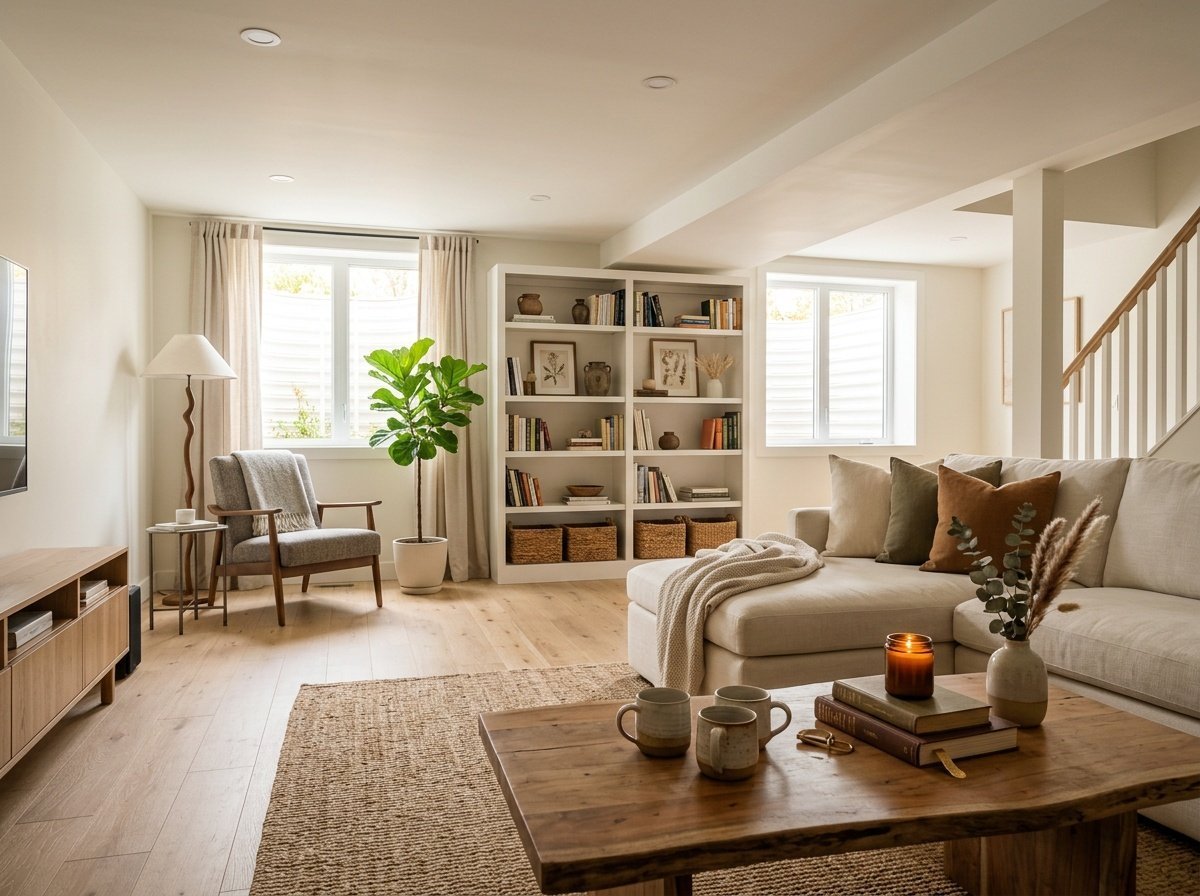
According to the International Residential Code (IRC), habitable basement rooms must have a minimum ceiling height of 7 feet across at least 50% of the floor area. The remaining floor area can drop to a minimum of 5 feet — but that lower-height zone doesn’t count toward your habitable square footage.
In practical terms, if your unfinished basement sits at 6’10” from concrete floor to the bottom of the joists, you’re actually in workable territory. You just need to be mindful that any framed ceiling — even a thin drywall option — will eat into that measurement. Drywall hung directly on furring strips can cost you as little as 1.5 to 2 inches, which is often worth it to keep things code-compliant.
When You’re Working with Less Than 7 Feet
If your basement sits below that 7-foot threshold, all is not lost. Spaces under 7 feet can still be finished and used — they just can’t be legally classified as habitable rooms in most jurisdictions. This means they can work beautifully as utility rooms, home gyms, storage zones, or hobby spaces, but they typically can’t be counted toward your home’s square footage for appraisal or resale purposes.
Some municipalities do allow variances, especially for older homes where raising the floor isn’t feasible. Always check with your local building department before committing to a plan.
Ceiling Height Quick Reference
| Basement Ceiling Height | Code Status | Best Use |
|---|---|---|
| 8 feet and above | Fully compliant | Any habitable use, bedroom, office, family room |
| 7 to 7’11” | Compliant (most IRC regions) | Living areas, playrooms, home offices |
| 6’4″ to 6’11” | Often non-habitable; varies by local code | Gym, laundry, hobby room, storage |
| Under 6’4″ | Non-habitable in most jurisdictions | Storage, mechanical access only |
The Exposed Ceiling Look: Embracing What You Have
One of the most transformative shifts in finishing basement low ceilings is the decision to stop hiding the structure and start celebrating it. The exposed ceiling trend — borrowing heavily from industrial loft design — is one of the smartest moves you can make when headroom is tight.
Why Exposed Ceilings Actually Add Height
When you install a drop ceiling or even drywall, you’re physically lowering the room by several inches to a foot or more. Leaving the joists, pipes, and ductwork exposed preserves every single inch of clearance you have. That distinction between, say, 7’2″ and 6’8″ is enormous when you’re standing in the space.
Beyond the inches, an exposed ceiling creates a sense of depth. The eye travels upward into the structure rather than being stopped by a flat surface. Done well, it reads as deliberate, not unfinished.
Choosing the Right Paint Color for an Exposed Ceiling Basement
The most popular approach for an exposed ceiling basement is to paint everything — joists, pipes, ductwork, electrical conduit — in one uniform color. This visual unification is what makes the space feel designed rather than abandoned.
- Matte black: The classic industrial choice. It makes the ceiling visually recede, especially in spaces with good artificial lighting.
- Deep charcoal or navy: Slightly softer than black, with the same receding effect. Works beautifully with warm wood tones and textured rugs.
- Warm white or soft greige: Keeps the space light and airy. Best in basements with egress windows or good ambient lighting.
- Sage green or dusty teal: An unexpected but gorgeous choice, especially in a basement bar, craft room, or creative studio.
The key rule: everything gets painted the same color. The moment you leave one pipe unpainted, the whole look reads as unfinished rather than intentional.
Managing the Visual Complexity
In older homes especially, basement ceilings can be a tangle of pipes, wires, and structural elements. Before you paint, do a pass to organize and secure any loose wiring, bundle cables neatly, and — if budget allows — reroute any oddly placed elements that would look better consolidated. A little prep work here makes the painted result look polished rather than chaotic.
Strategic Lighting That Works With Low Ceilings
Lighting in a low-ceiling basement deserves its own conversation because the wrong fixture choice can make an already snug space feel genuinely oppressive. The right choices, though, do something almost magical — they make you forget the ceiling is even there.
Recessed Lighting: The Gold Standard
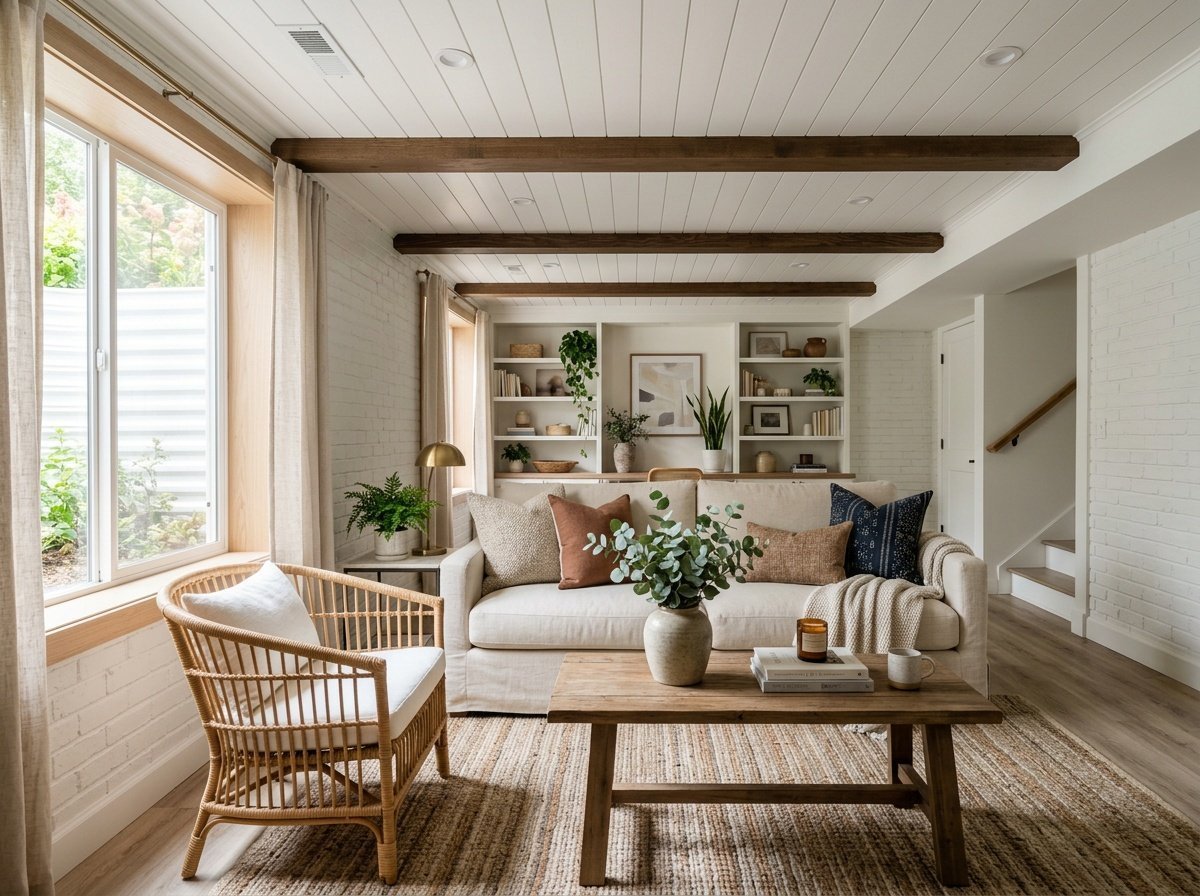
Recessed lighting (also called can lights or downlights) sits flush with the ceiling surface, which means zero visual intrusion on your headroom. In a low-ceiling basement, they’re often the single most impactful upgrade you can make. LED recessed fixtures also run cool and energy-efficiently, which matters in an enclosed space.
Aim to space recessed lights roughly 4 feet apart in a grid pattern, or cluster them over specific functional zones — a seating area, a workspace, a bar counter. Avoid the temptation to install them in a single center line, which creates a runway effect rather than even illumination.
Wall Sconces and Horizontal Light Placement
Wall-mounted sconces are a low-ceiling basement’s secret weapon. By placing light sources on the walls rather than the ceiling, you draw the eye horizontally — which naturally makes the room feel wider and less compressed. Pair them with warm-toned bulbs (2700K–3000K) to create the kind of ambient glow that makes basements feel like cozy retreats rather than utility rooms.
Track lighting mounted directly to joists (in an exposed ceiling setup) also works well, giving you directional control without sacrificing inches of clearance. Just make sure the fixtures sit as close to the ceiling surface as possible.
What to Avoid
Pendant lights and chandeliers are generally not your friends here — unless your ceilings are at or above 8 feet. Hanging fixtures that dangle down into the room make the ceiling feel lower than it actually is. If you love the look of pendants, mini pendants hung very close to the ceiling over a bar or island can work in specific zones, but keep them out of main traffic areas.
The Power of Horizontal Stripes and Visual Tricks
Interior design has a long history of using pattern and proportion to reshape how we perceive space. For basement low ceiling solutions, horizontal movement is your best friend.
Horizontal Stripes on Walls
Painting wide horizontal stripes on basement walls — or using board and batten, shiplap, or horizontal wood paneling — creates a powerful optical illusion. The eye reads the horizontal lines and interprets them as width, which counterbalances the compressed vertical space above.
Keep stripes wide (at least 10–12 inches per stripe) and in low-contrast tones for a sophisticated look. High-contrast black and white stripes work in playrooms or game rooms, but can feel dizzying in a living space. A tone-on-tone stripe in two shades of the same warm neutral is endlessly elegant.
Mirrors and Reflective Surfaces
A large, well-placed mirror in a basement does two things simultaneously: it visually doubles the apparent depth of the room, and it bounces light into corners that natural light may not reach. Lean a tall mirror against a wall rather than hanging it centered — the leaning effect adds a casual, layered quality while also reflecting ceiling light in a way that makes the overhead space feel taller.
Glossy subway tile, mirrored cabinet fronts, and metallic accents in light fixtures all contribute to this same reflective quality without the overtness of a large mirror. Layer these elements thoughtfully for a basement that feels luminous from every angle.
“A basement doesn’t need more ceiling height — it needs more intention. The right light, the right line, the right scale, and suddenly you stop noticing what’s missing.”
Furniture Scale: Choosing What Belongs in a Low-Ceiling Space
Scale is everything when you’re working with limited vertical clearance. The furniture you choose either harmonizes with the architecture or fights against it — and in a low-ceiling basement, that tension is immediately visible.
Low-Profile Furniture Is Your Starting Point
Low-profile seating — sofas with seat heights around 15–17 inches rather than the standard 18–20 inches — keeps the visual center of gravity down in the room, which actually makes the ceiling feel relatively higher by comparison. Look for streamlined sofas without high backs, armless accent chairs, and floor cushions or poufs that add flexible seating without height.
Coffee tables should sit low and flat. Bookcases and shelving units should be kept below the 6-foot mark wherever possible — tall, towering shelving units only emphasize the compressed ceiling above them. For storage ideas that work across multiple rooms and budgets, the principles behind inexpensive family room updates translate beautifully to basement spaces too.
The Right Rugs and Floor Anchors
A large, well-chosen area rug does something counterintuitive in a low-ceiling space: it grounds the furniture grouping so firmly that the ceiling becomes secondary to the experience of the floor plane. Go larger than you think you need — in a basement living area, a 9×12 or even 10×14 rug that extends under the front legs of all the seating makes the whole zone feel expansive.
Avoid overly busy patterns or very dark rugs in small basement spaces. A soft, textured neutral — think a flat-weave wool, a jute blend, or a Moroccan-style low pile — keeps the floor from competing with everything else happening in the room.
Zoning a Low-Ceiling Basement for Different Functions
One of the smartest things you can do with a low-ceiling basement is to embrace its intimate scale as an asset for creating defined, cozy zones rather than trying to make it feel like one big open room.
Using Furniture Arrangement to Define Areas
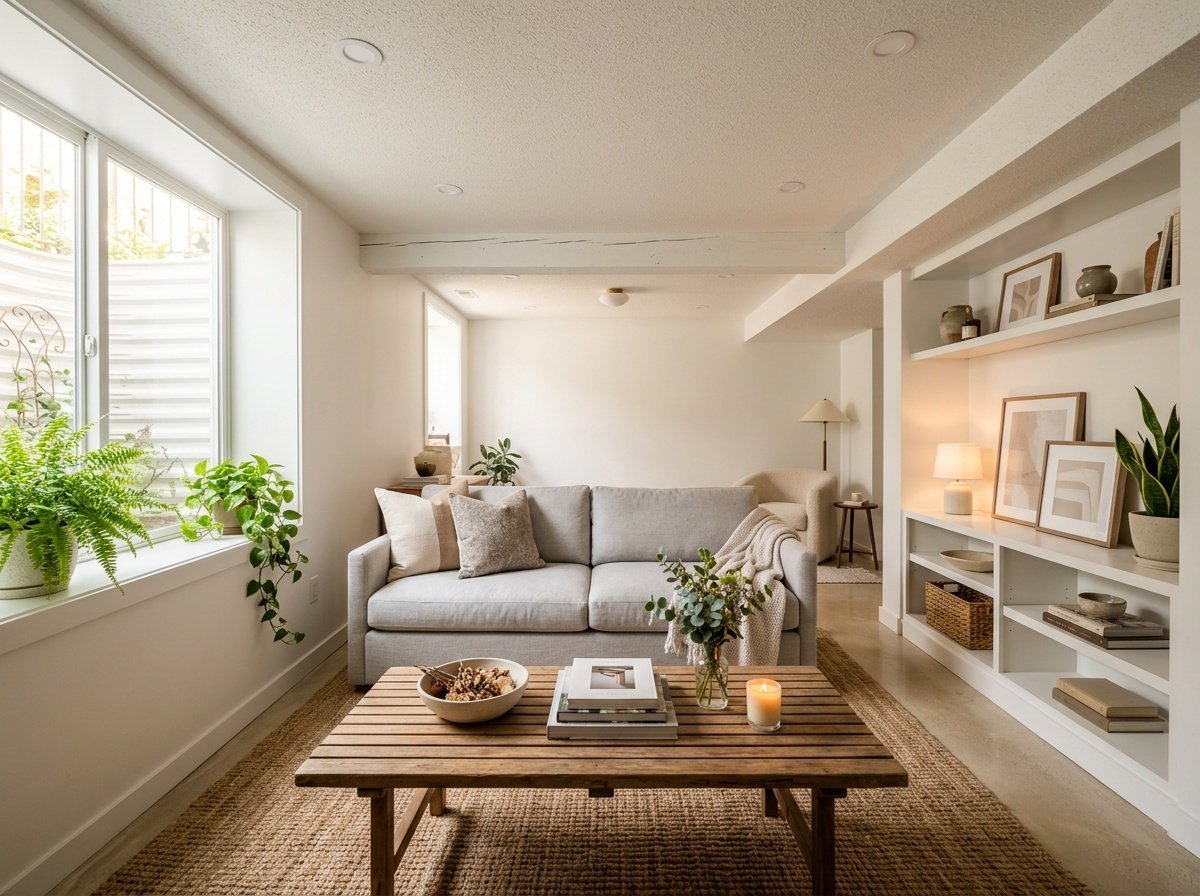
In a basement with 7-foot ceilings and an open floor plan, you can create distinct living zones — a TV area, a reading nook, a small home bar — entirely through furniture placement. Two sofas facing each other with a coffee table between them creates a self-contained conversation area that feels intentional and snug rather than cramped.
A bookshelf or open shelving unit used as a partial room divider adds architectural interest without closing off the space or touching the ceiling. Keep dividers at 4–5 feet high so they define zones visually without chopping up the overhead plane.
Color and Texture Zoning
Paint is one of the most cost-effective zoning tools available. Consider painting one wall or alcove a slightly deeper shade to anchor a specific area — a reading corner in a moody dusty blue, a media wall in a warm charcoal, a bar nook in aged sage. This kind of thoughtful color approach, similar to the earthy and calming palette philosophy explored in 2026’s most resonant color trends, helps spaces feel layered and considered rather than rushed.
Flooring That Makes Low Ceilings Feel Higher
Your flooring choice has a direct relationship with how tall your basement feels — and it’s a detail that’s easy to overlook when you’re focused on the ceiling itself.
Plank Direction Matters
If you’re installing LVP, engineered hardwood, or laminate plank flooring, run the planks lengthwise in the direction of the longest wall rather than perpendicular to it. This creates a strong horizontal line that draws the eye along the floor plane, adding a sense of length and — by extension — spaciousness.
Avoid very small or busy tile patterns on basement floors. Large-format tiles (18×18 or 24×24) or wide plank flooring (at least 5 inches wide) both contribute to that open, expansive feel that makes low ceilings less noticeable.
Keep Flooring Warm and Grounded
Basements can feel cold and institutional if the flooring choice runs too pale or too industrial. Warm wood tones, honey-toned LVP, or even a warm greige tile keep the floor feeling inviting. A basement that feels warm at foot level is a basement people actually want to spend time in — regardless of the ceiling height.
Common Mistakes to Avoid When Finishing a Low-Ceiling Basement
Even with the best intentions, a few common missteps can undermine all the thoughtful design work you’ve done. Knowing what to avoid is just as valuable as knowing what to do.
Installing a Drop Ceiling When You Don’t Have To
Drop ceilings — those suspended grid-and-tile systems — can cost you 4 to 6 inches of clearance and often make a low-ceiling basement feel definitively unfinished rather than intentionally designed. Unless you need constant access to plumbing or mechanical systems above, consider drywall on furring strips (which costs only 1.5–2 inches) or the exposed ceiling approach instead.
If you truly need access panels, you can install individual flush access doors in specific locations without committing the entire ceiling to a drop grid.
Overcrowding the Space
It’s tempting to fill basement square footage efficiently because it’s often the most “flexible” space in the house. But in a low-ceiling room, every extra piece of furniture registers more heavily. Edit ruthlessly. A basement with breathing room between pieces feels calm and curated; one that’s packed feels like a storage unit with a TV.
Neglecting the Stairwell
The stairwell is the entry experience for your basement, and it sets the tone for everything below. Paint the stairwell walls a lighter shade than the basement itself, add a runner if the stairs are wood, and make sure the lighting at the base of the stairs is warm and welcoming. The transition from upstairs to downstairs should feel like an invitation, not a descent.
Frequently Asked Questions
What is the minimum ceiling height for a finished basement to be considered habitable?
Most jurisdictions following the International Residential Code (IRC) require a minimum ceiling height of 7 feet across at least 50% of the floor area for a room to qualify as habitable space. Areas with lower clearance can exist but won’t count toward your home’s official square footage. Always verify with your local building department, as codes do vary.
Is an exposed ceiling a good idea for a basement with only 7-foot ceilings?
Absolutely — in fact, it’s one of the best choices for that clearance range. Leaving the structure exposed and painting everything one uniform color (matte black is the most popular) preserves every inch of headroom you have while creating a deliberate, industrial-chic aesthetic. It’s both practical and stylish.
What paint colors make a low-ceiling basement feel taller?
Counterintuitively, dark colors on the ceiling (like matte black or deep charcoal) can make it feel like it recedes rather than presses down. For walls, lighter neutrals — warm whites, soft greiges, pale sage — keep the overall room feeling airy. The key is keeping the ceiling color intentional rather than leaving it bare concrete or unpainted drywall.
Can I put a bedroom in a basement with low ceilings?
A basement bedroom needs to meet both the minimum ceiling height code (typically 7 feet) and egress window requirements for it to be considered a legal bedroom. Egress windows must be large enough to allow exit in an emergency — your local code will specify exact dimensions. Without proper egress, the space can function as a sleeping area but cannot be legally listed as a bedroom.
What type of flooring works best in a low-ceiling basement?
Wide-plank luxury vinyl plank (LVP) or engineered hardwood in warm, medium tones work exceptionally well. Run the planks lengthwise along the longest wall to maximize the sense of depth. Avoid very small tiles, very dark floors, or thick area rugs that compete visually with an already compressed vertical space.
Do mirrors actually make a basement feel bigger?
Yes — a large mirror placed strategically (especially opposite a light source or window) visually doubles the perceived depth of the room and bounces light into dim corners. Leaning a tall mirror rather than centering it on a wall adds a layered, styled quality. Even smaller mirrored accents — cabinet fronts, decorative frames, metallic fixtures — contribute to the effect cumulatively.
How do I make my basement feel less like a basement?
Focus on warmth at every layer: warm-toned lighting (2700K–3000K bulbs), warm flooring, textured soft furnishings, and intentional color on at least one wall. Avoid the cold, utility-room look by choosing fixtures and finishes that match your above-ground living spaces in quality and intention. The goal is continuity — your basement should feel like a natural extension of your home, not a separate, lesser zone.
A low-ceiling basement isn’t a design problem — it’s a design prompt. With the right combination of exposed structure, intentional lighting, scaled furniture, and strategic visual tricks, you can create a space that’s genuinely inviting, functional, and completely your own. Start with what you have, respect the bones, and layer in the warmth. That’s the whole philosophy. If you’re ready to take the next step, I’d love to see what you’re working with — drop a photo in the comments or send me a message. Let’s figure this out together. 🖤


2 Comments