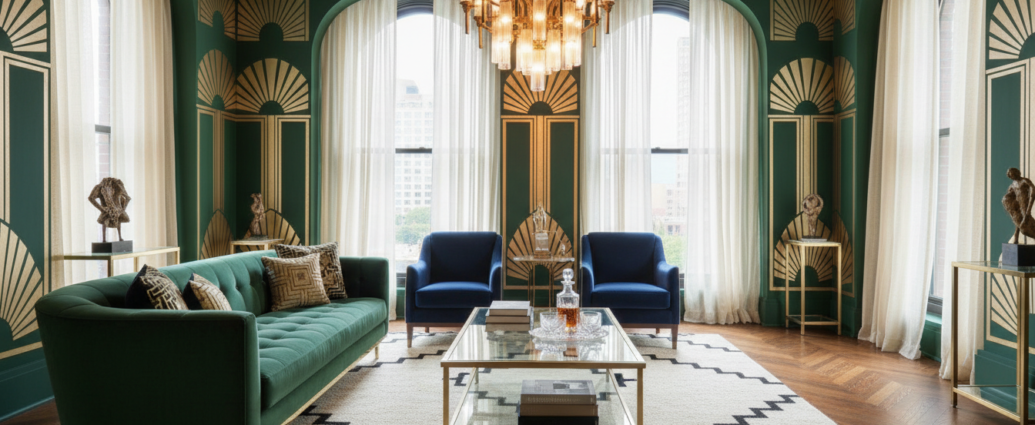
We were scrolling through TikTok the other day, and something caught our eye. A creator was transforming her bland apartment with bold geometric patterns and shimmering gold accents. Her caption? “Bringing back the roaring twenties, one room at a time!” It struck a chord. That feeling of confident, sophisticated style is exactly what so many of us are craving for our homes right now.
Turns out, we’re not alone in noticing this shift. Searches for this stunning aesthetic jumped a whopping 38% last year! This isn’t a fleeting trend; it’s a full-blown revival of a classic look. People are embracing that unique blend of elegance and excitement.
What makes this movement so special is its modern twist. We’re seeing those iconic symmetrical shapes and rich, contrasting colors used in fresh, livable ways. It’s glamorous without being intimidating. This design philosophy brings a touch of cinematic luxury into everyday life.
Ready to explore how you can capture this timeless elegance? Let’s dive into the world of sleek lines, luxurious metals, and bold statements. We’ll show you how to infuse your space with a dose of classic charm, perfectly suited for life today.
Exploring The Return of Glamour: Modern Art Deco in Today’s Interiors
Many of us are feeling that minimalist spaces have become a bit too sterile and impersonal lately. After years of white walls and sleek grays, people are craving warmth and personality in their homes. This “minimalism burnout” explains why this elegant aesthetic is making such a strong comeback.
Understanding the Current Trend
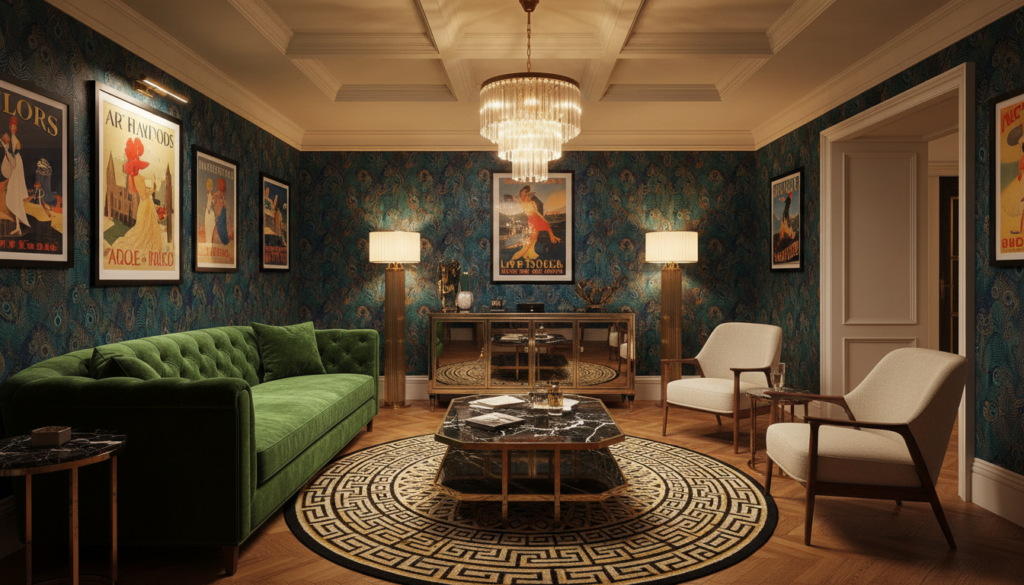
Art deco-inspired choices keep turning up in city apartments, and it makes sense: bold pattern and a little metallic do a lot of work in a small footprint, without needing more square footage or a bigger budget.
Relevance in Contemporary Interiors
This isn’t about recreating a 1920s museum piece. Today’s interpretation borrows that era’s optimism and craftsmanship while filtering it through our need for comfort. The style adds layers of visual interest that make spaces feel intentional rather than generic.
Whether you’re drawn to geometric patterns or metallic accents, there’s something incredibly satisfying about incorporating these elements. They create rooms that tell a story while offering that sweet spot between nostalgia and modern sophistication.
Historical Evolution of Art Deco: From the 1920s to Today
Picture this: Paris, 1925, and a world-changing design exhibition is about to launch a new era. The Exposition Internationale des Arts Décoratifs et Industriels Modernes introduced a bold aesthetic that would shape design for decades. This spectacular event gave us the name we know today.
Origins and Influences from Early 20th-Century Movements
This movement didn’t appear out of nowhere. It drew inspiration from groundbreaking art styles like cubism and futurism. Design schools like Bauhaus also left their mark on this emerging aesthetic.
The period between 1919 and 1939 created the perfect environment for innovation. Society was hungry for progress after difficult times. This optimism fueled the creative explosion.
| Time Period | Key Development | Cultural Influence |
|---|---|---|
| 1919-1925 | Early experimentation | Post-WWI optimism |
| 1925-1929 | Paris exhibition peak | Roaring Twenties luxury |
| 1929-1939 | Streamlined adaptation | Great Depression practicality |
The Roaring Twenties and the Birth of Deco
The Jazz Age provided the perfect backdrop for this style’s growth. Think speakeasies, flappers, and new technologies. There was an incredible sense that the future had arrived!
Legendary architects like William Van Alen embraced this forward-thinking spirit. His famous declaration captures the era’s confidence perfectly.
Economic Shifts and the Enduring Legacy of Art Deco
The 1929 stock market crash changed everything. Elaborate projects became less practical during the Depression. But the core principles survived.
Great design doesn’t disappear—it evolves. The enduring appeal of this aesthetic proves its timeless quality. That’s why we’re seeing such a strong revival today!
Key Characteristics and Geometric Elements
When we talk about what makes a space truly captivating, it often comes down to the dance between structure and flow. This aesthetic celebrates geometric harmony in ways that feel both intentional and inviting.

Symmetry, Patterns, and Bold Lines
At the heart of this design approach lies a love for balanced arrangements. Think chevron patterns marching across floors, sunburst motifs radiating from lighting fixtures, and elegant fan shapes framing mirrors.
These repeating elements create visual rhythm that guides your eye naturally through a room. The symmetry isn’t rigid—it’s a framework that allows for creative expression within organized boundaries.
Modern Reinterpretations of Classic Shapes
Today’s designers play beautifully with scale and simplification. They might enlarge a geometric pattern for dramatic effect or streamline classic forms for contemporary open layouts.
What makes current interpretations so appealing is the blend of angular precision with soft curves. Imagine a velvet sofa with rounded edges beside a brass table with sharp geometric legs. This creates wonderful tension between discipline and desire.
The beauty of these elements is their accessibility. Even a single faceted vase or angular lamp can introduce that signature visual interest to your home.
Modern Materiality and Sustainable Practices
What if we told you that today’s most glamorous interiors are also the most sustainable? The current revival beautifully merges luxury with conscious choices.
Designers are reimagining classic materials through an ethical lens. Recycled metals and responsibly sourced stones create stunning furniture and finishes without environmental guilt.
Recycled Metals and Ethical Stone Sourcing
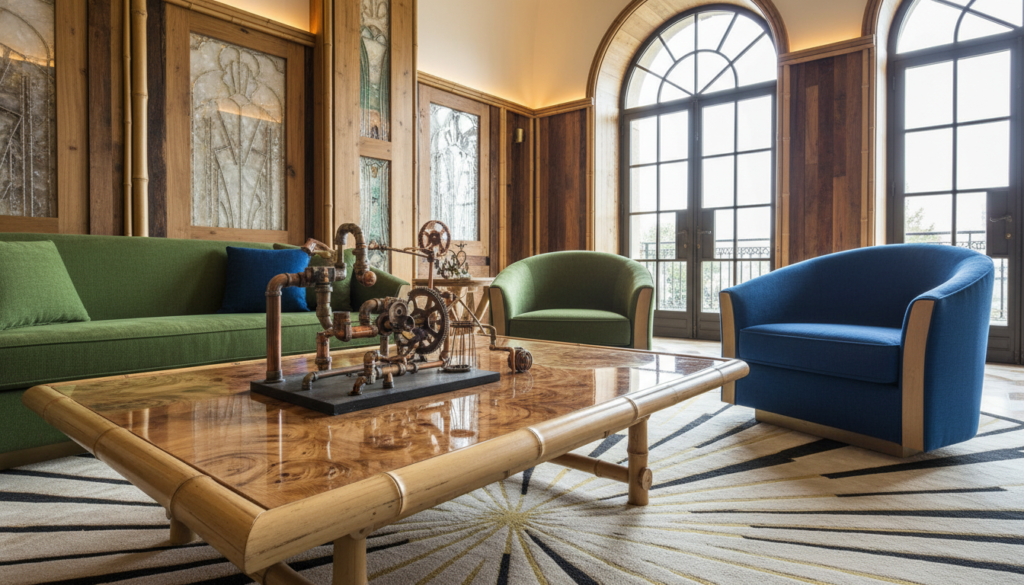
Brass has made a spectacular comeback as the signature metallic accent. It brings warmth that chrome sometimes lacks. This versatile finish works beautifully with both vintage finds and new pieces.
Marble is now used more thoughtfully as statement moments. Think curved table bases or geometric floor inlays rather than covering every surface. New cutting techniques create thinner slabs that use less material.
Rich wood tones like walnut and mahogany provide grounding contrast. These warm finishes balance the shiny metallic and stone surfaces throughout your space.
Sustainable Fabrics and Vintage Restoration Techniques
Velvet in deep jewel tones creates instant drama against neutral backgrounds. Sapphire blue and emerald green fabrics add tactile luxury while being sustainably produced.
Vintage restoration fits perfectly into this aesthetic. Restored antique furniture and handwoven textiles add authenticity while reducing environmental impact.
Modern technology supports these sustainable practices. 3D printing allows for intricate brass details without excessive waste. This synergy between past and present creates spaces that honor both art deco architecture and modern design principles.
By choosing quality materials built to last, you’re investing in pieces that can be treasured for generations. That’s the true luxury of modern design thinking.
Incorporating Art Deco in Contemporary Home Design
Bringing art deco into your space doesn’t have to be overwhelming. Let’s start with simple steps that create big impact. Many designers begin with architectural foundations, just like Bradley Stephens who draws inspiration from grand public buildings.
Practical Tips for Integrating Deco Elements
Start with your floors and ceilings. Geometric patterns create instant drama. Terrazzo floors and tray ceilings establish that classic foundation. Then layer in furniture with curved edges and stepped silhouettes.
For your living areas, focus on symmetry. Matching side tables and paired lamps create balanced arrangements. This approach works beautifully in bedrooms too. Designers like Dorothy Berwin preserve original features while adding modern comfort.
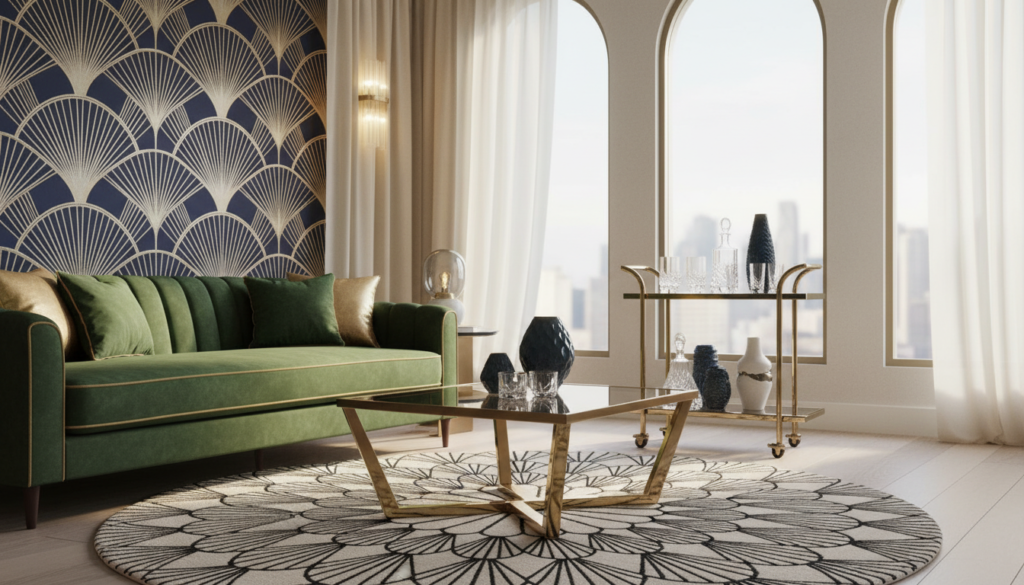
Color strategy is key. Use neutral walls as your canvas. Then add jewel tones through accent pieces and artwork. Steven Gambrel’s two-tone inlays show how contrast creates depth.
Mix vintage finds with contemporary decor. A single statement chair or brass mirror can transform a room. Textiles with geometric patterns add affordable sophistication. The goal is creating spaces that feel both glamorous and livable.
Remember, successful incorporating art deco style means balancing bold elements with everyday comfort. Your home should reflect your personality while embracing timeless elegance.
Art Deco Inspiration: Notable References and Iconic Pieces
Let’s take a journey through the landmarks and artists who defined this glamorous aesthetic movement. Understanding these original sources helps you create authentic spaces with real character.
Iconic Structures and Landmark Buildings
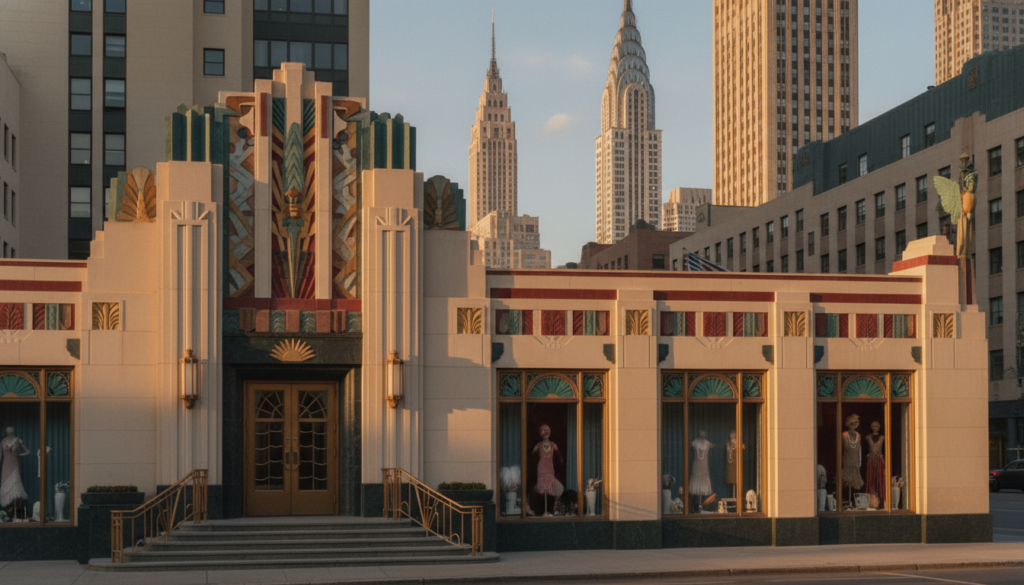
The Chrysler Building in New York stands as the ultimate masterpiece of this era. Its nesting crown spires represent hubcaps, celebrating automotive innovation with breathtaking confidence.
Beyond New York, Miami’s famous district and Paris’s Théâtre des Champs-Élysées showcase incredible deco architecture. These buildings prove how this style captured the world’s imagination during the 1920s.
Influential Designers and Artists
Tamara de Lempicka’s paintings feature heavily outlined figures in luxurious fabrics. Her work captures the bold colors and sophisticated mood that define this artistic period.
Other essential creators include Aaron Douglass, Sonia Delaunay, and René Lalique. Even performers like Josephine Baker and designers like Erté contributed to this rich history.
Statement Home Decor Items Driving the Trend
Today’s trend features accessible pieces that echo this glorious past. Geometric block-printed pillow covers in dramatic black and teal make bold statements.
Curtains with metallic threads, vibrant table runners, and angular lampshades bring this aesthetic into your space. These decor items let you tastefully incorporate art deco influences without overwhelming your rooms.
Choosing pieces that resonate with you creates personal connections to this timeless design history. Your home becomes a curated collection of inspiration from across time.
Designing Spaces with Art Deco Accents and Lighting
There’s something magical about how the right combination of reflective surfaces and strategic lighting can transform an ordinary space. This approach creates rooms that feel both expansive and intimate at the same time.
Creating Drama with Mirrors, Chrome, and Metallics
Mirrors and metallic finishes do more than just decorate—they actively shape your environment. Chrome accents catch and multiply light, making compact areas feel luxurious and spacious.
Think about placing a large arched mirror opposite a window. It will bounce natural light throughout your room. Metallic furniture legs or chrome table bases add subtle sparkle without overwhelming your space.
Lighting Techniques for Bold and Subtle Effects
Layered lighting creates depth and mood in art deco design. Start with a statement chandelier featuring geometric forms for ambient glow.
Add ribbed sconces for task lighting that casts beautiful shadows. Use accent lights to highlight architectural details or favorite art pieces. This approach gives you control over the room’s atmosphere throughout the day.
Remember, you’re orchestrating light and shadow to create that cinematic quality. The interplay between shiny surfaces and soft textures makes your space feel special and inviting.
Conclusion
What an incredible exploration we’ve shared of this timeless aesthetic! Our journey through the art deco revival reveals how classic elegance adapts beautifully to contemporary life.
At heart this movement is a statement of confidence and elegance. That spirit comes through whether you embrace bold geometric patterns or subtle metallic accents.
The beauty of today’s approach lies in its versatility. You can transform your home with sustainable materials and vintage finds while maintaining that irresistible glamour. This isn’t about recreating the past—it’s about reimagining timeless principles for how we live now.
Start with a single statement piece and let the magic unfold. Your living spaces deserve that touch of sophisticated style that makes every day feel special. ✨