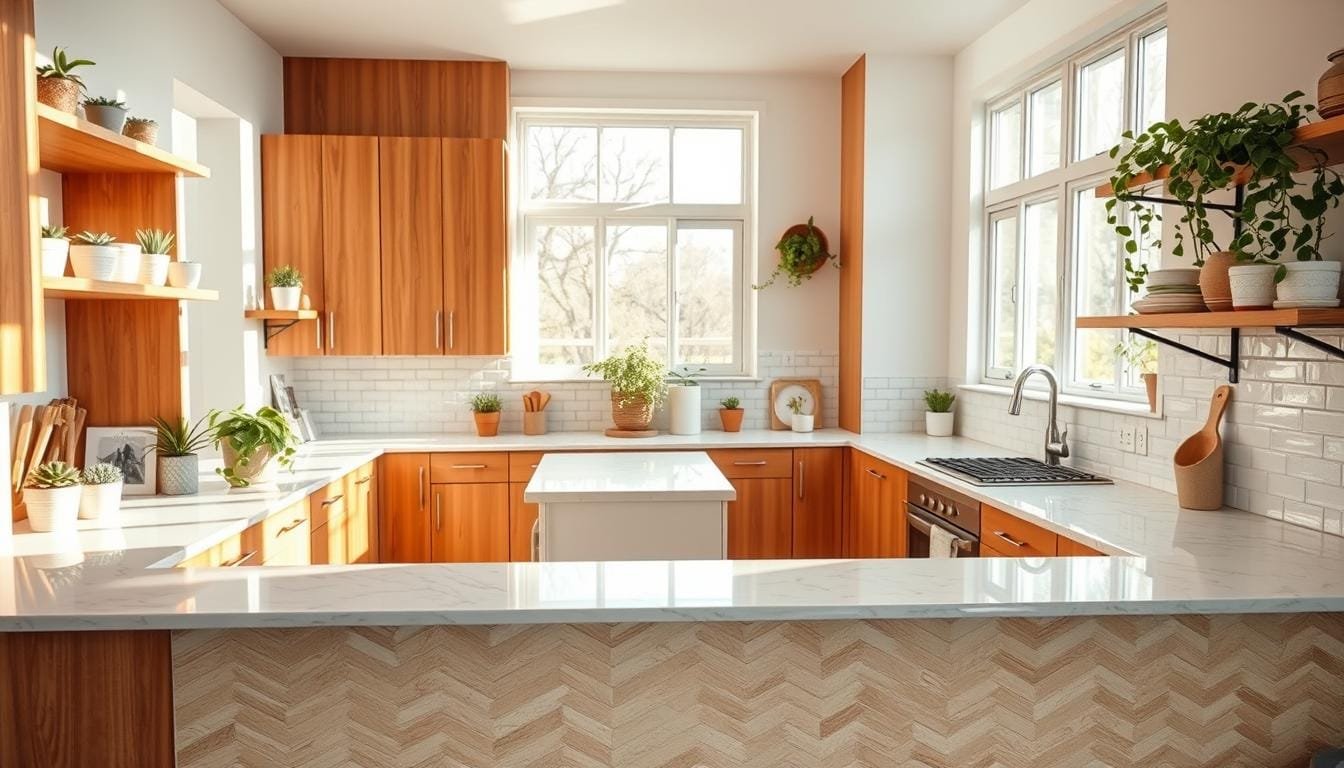
Ever notice how one small change can make a whole room feel different? Ours came right after the holidays, when the living room looked tired and there was almost nothing left in the budget to spend on it. A quart of paint, a new shade on an old lamp, and an afternoon of moving furniture did more than we expected.
That is the honest version of a home refresh. Not a remodel, not a reveal, just a handful of small jobs that add up. Renovation budgets have a way of drifting past whatever number you started with, so the projects below are the ones that stay small on purpose.
Here is what actually changes how a room feels, with a free or nearly-free version of each idea sitting next to the version that costs something.
Refresh Your Paint: Bold Colors and Accents
Paint is still the biggest change you can make for the least money. A gallon covers a small room, you can finish in a weekend, and nothing about it requires a skill you do not already have. If you only have the budget or the energy for one job on this page, make it this one.
Choosing the Right Shade
Color changes how a room feels more than how it measures. Soft greens and muted blues tend to read as calm, which is why they end up in bedrooms and bathrooms so often. Warm whites bounce light around and make a small room feel more open than a dark, flat color will. None of that is a rule, though. It depends entirely on which way your windows face and what time of day you are actually in the room.
So test before you commit. Paint two coats onto a piece of poster board, tape it to the wall, and look at it in morning light, afternoon light, and lamplight before you buy a gallon. Sample pots cost a few dollars, and most paint counters will hand you a fan deck to borrow for nothing. If you want a starting point organized by room, our guide to bedroom color schemes for every style walks through twelve combinations and where each one works.
Areas to Target
You do not have to paint a whole room. One wall behind a bed or a sofa gives you most of the effect for a quarter of the work. Entryways, the inside of a bookcase, the back of a hutch, and the risers on a staircase are all small surfaces where a bold color reads as deliberate rather than overwhelming.
Tips Before You Open the Can
- Test colors on the wall itself, in the light you actually live in.
- Clean and prime first. Most disappointing paint jobs are prep problems, not paint problems.
- Let each coat dry fully. Rushing the second coat is what pulls the first one back off the wall.
- A good brush and a decent roller cover make more difference than expensive paint does.
- Free version: ask the paint counter about mis-tinted returns. They usually sell for a few dollars a gallon, and a bookcase interior or an accent wall does not need one specific color.
A fresh coat is the rare project that pays you back in how the room feels every single day, not just on the day you finish it.
| Project | What it changes | Rough cost if you do it yourself |
|---|---|---|
| Painting a room | The biggest visible change per dollar; a tired room starts reading as cared-for | $50 to $150 in materials |
| Accent wall | Adds depth without committing the whole room | One quart plus supplies |
| New cabinet hardware | Brings a dated kitchen forward, and it is completely reversible | $2 to $8 per pull |
Upgrade Lighting Fixtures: The Fastest Change in the House
Swapping a builder-grade ceiling fixture is usually a twenty-minute job with the breaker off and a screwdriver. If wiring makes you nervous, skip it and change the bulbs and lamps instead. You will get most of the same effect.
LEDs are the easy win. They use about 75% less energy than incandescent bulbs and last in the neighborhood of 25,000 hours, so the bulb you put in this weekend may well outlast the fixture holding it. Pair one with a dimmer and a single room can handle both a working afternoon and a quiet evening.
Fixtures themselves do not have to be expensive. Thrift stores, estate sales, and the clearance aisle turn up perfectly good pendants and lamps, and a can of spray paint fixes a dated finish. Rechargeable picture lamps and cordless table lamps are worth knowing about too, because they let you put light exactly where there is no outlet.
Think beyond the ceiling. Three light sources at different heights, roughly ceiling, table, and floor, make a room feel finished in a way one overhead bulb never will. Lamps also let you add color, pattern, and texture without buying furniture.
Free version: move the lamps you already own. Most of us have three lights in the living room and none in the corner that is actually dark. Rearranging costs nothing and takes ten minutes.
In the kitchen, under-cabinet strips are the one upgrade people consistently say they wish they had done sooner. Stick-on rechargeable bars work in rentals where you cannot hardwire anything.
For more simple renovation ideas, start with lighting. Outdoors, string lights or a pair of lanterns stretch the evening well past sunset for very little money.
Creative Storage Solutions for Every Room
In a smaller home, storage is the difference between cozy and cramped. The ideas below add places to put things without eating the floor.
Built-in Shelving
Built-ins give you storage that does not consume floor space. A shelf above a doorway, a run of shelves over a window, or a bench with cubbies underneath all use space that was doing nothing. In kitchens, swapping a couple of upper cabinets for open shelves costs far less than new cabinetry and makes everyday dishes easier to reach.
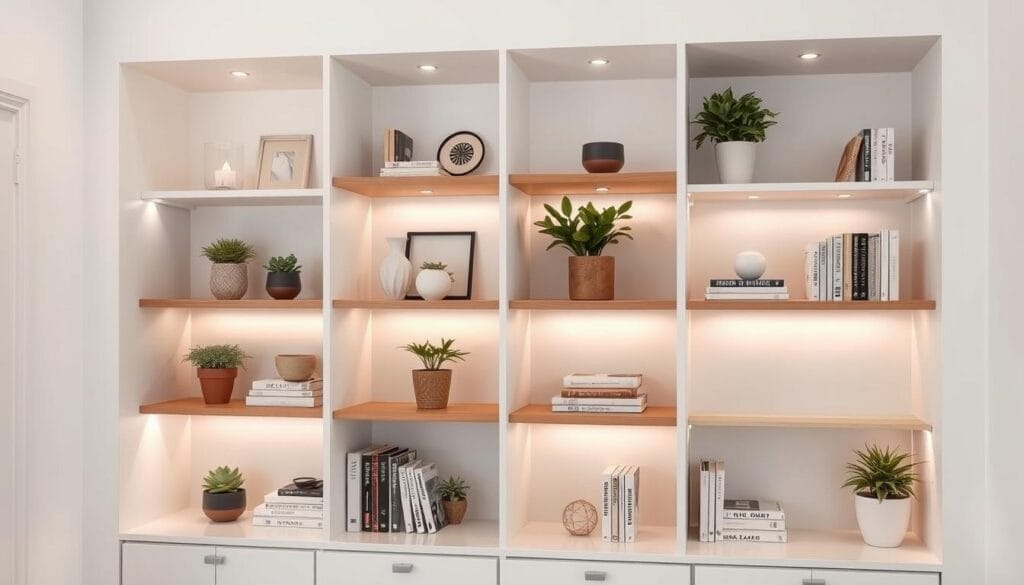
Painting shelves the same color as the wall makes them read as part of the room rather than as furniture parked against it.
Custom Closet Organizers
An organized closet is mostly about dividing the vertical space you already have. A second hanging rod under a row of short items doubles your hanging capacity. Baskets on the shelf keep the things that will not stack from falling over. Under-bed bins hold off-season clothes and bedding that have no business taking up closet room in July.
Free version: shoeboxes as drawer dividers, and hooks on the inside of the closet door for bags and belts.
Multifunctional Furniture
Furniture that does two jobs earns its footprint. Ottomans and bed frames with storage inside, a drop-leaf table that folds flat against a wall, a kitchen island with shelves on the back, the space under a staircase fitted with drawers. In a small apartment these choices are the difference between a room you can move through and one you edge around.
| Storage idea | What it is good for |
|---|---|
| Built-in shelving | Storage without losing floor space; doubles as display |
| Closet organizers | Divides vertical space you are already paying for |
| Multifunctional furniture | Two jobs, one footprint, which matters most in small rooms |
Modernize Your Entryway
The entry is the first thing you see coming home and the first thing a guest sees at all, and it is usually the smallest project on this list.
Doormats and Lighting
A good doormat does real work keeping grit out of the house, and it is one of the few decor items that is genuinely cheap. A porch light that matches the age and style of the house does more than a fancier fixture that fights it. Better Homes & Gardens has a useful roundup of low-cost changes that read as more expensive than they are, and lighting sits near the top of it.
Updating Door Hardware
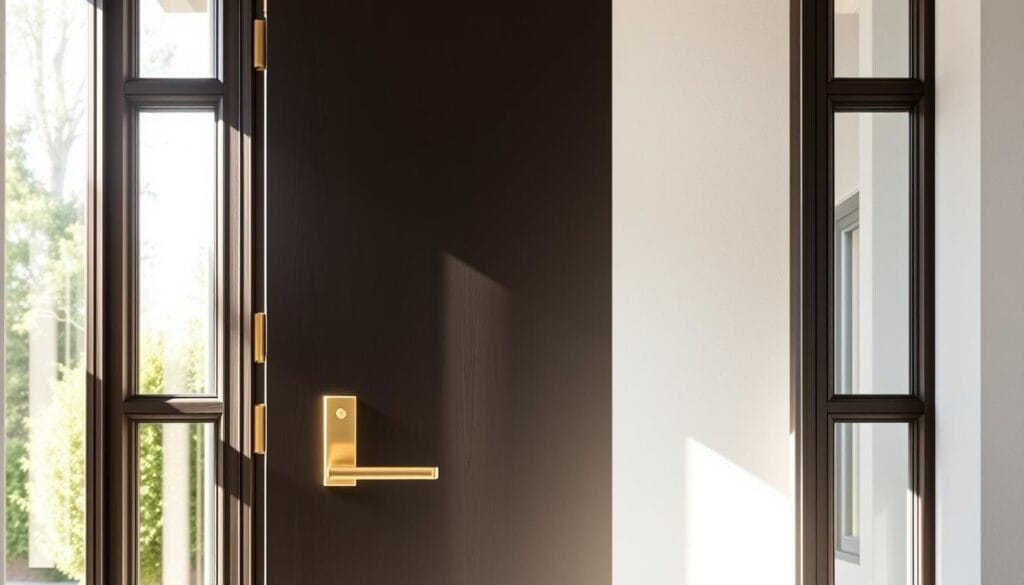
Swapping a worn knob and deadbolt for something current changes the entry more than the price suggests, and a modern deadbolt is a security upgrade at the same time. Matte black, brushed brass, and satin nickel all wear well. Pick one finish and repeat it on the handle, the knocker, and the house numbers so the door looks composed instead of collected.
None of this is expensive. Cabinet-style hardware starts around $2 a piece, and a decent exterior light fixture tops out near $200. That is the whole entry, done.
Free version: take everything off the porch, sweep it, and put back only what belongs there. An uncluttered entry reads as cared-for before you have spent a cent.
Crown Molding and Trim: Adding Elegance
Trim is what makes a plain builder box feel like it was designed. Crown molding, wainscoting, and taller baseboards all do the same thing: they give a room edges to read, so the eye stops at a finished line instead of a bare corner.
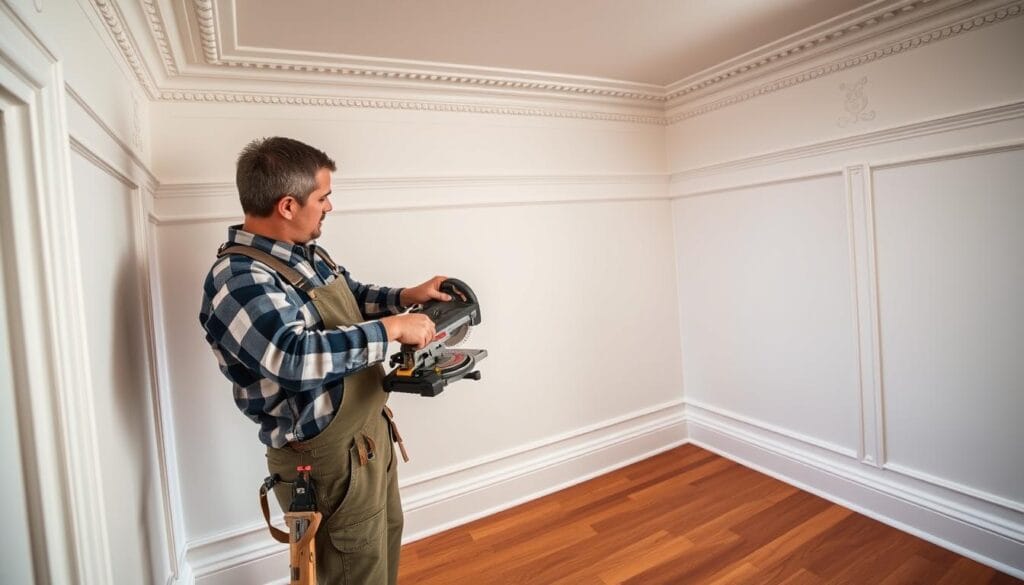
Scale matters more than the profile you choose. A single thin strip disappears in a room with nine-foot ceilings, while a three-piece build-up holds its own. In a standard eight-foot room, keep it modest or it will feel like the walls are closing in.
Cutting crown is genuinely the hardest part, because the cuts are compound and no corner in a real house is square. Lightweight foam and polystyrene systems get around this with pre-made corner blocks, which turns the job into straight cuts and adhesive. If you have never cut crown before, that is the version to start with.
Wainscoting and beadboard earn their keep in hallways, mudrooms, and stairwells, where the lower wall takes a beating. A scuffed panel is far cheaper to repaint or replace than a gouged wall.
On cost: materials generally run a few dollars per linear foot for basic profiles and more for hardwood, and hiring out the installation typically costs several times the material price. Doing one room yourself is the cheapest way to find out whether you like the look before committing to the whole house.
Free version: paint the trim you already have. Crisp white trim against a colored wall, or trim painted the same color as the wall for a quieter effect, both make existing molding look deliberate.
Small Changes, Big Impact: Simple DIY Upgrades to Refresh Your Home
You do not need a remodel to change how a room works. Here is where a single afternoon goes furthest in the three rooms people ask about most.
Quick Kitchen Makeovers
Cabinet hardware is the highest-value hour in the kitchen. New pulls on old doors make the whole room read as updated, and you can put the originals back if you move out of a rental. Painting the cabinets is a bigger job but still costs a fraction of replacing them, as long as you degrease and prime properly. A new backsplash comes next, and peel-and-stick tile is a real option for renters.
Living Room Revamps
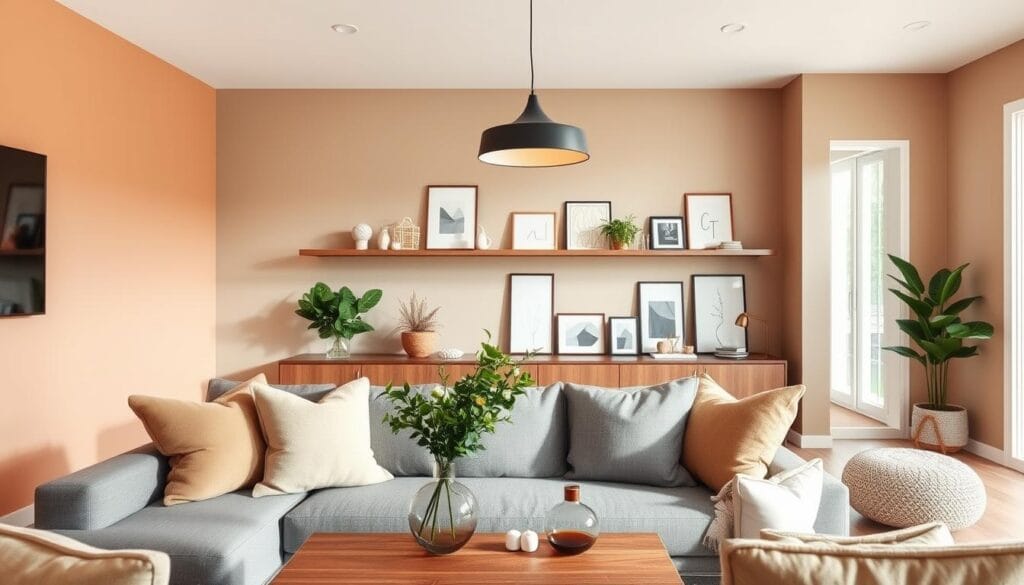
The living room usually needs less furniture and better lighting, not more of either. Pull the seating a few inches off the walls, add a lamp in the dark corner, and swap harsh overhead bulbs for warmer ones. Storage furniture, an ottoman that opens or a console with doors, quietly absorbs the clutter that makes the room feel small.
Bathroom Updates
Faucets and showerheads are straightforward to change with a wrench and a roll of thread tape, and a low-flow showerhead lowers the water bill while you are at it. A comfort-height toilet is easier on knees and backs, which matters more than style if anyone in the house is aging or recovering from something. A framed mirror and a brighter light at face height do more for how the room feels than anything else on the list.
These are small jobs. They are worth doing because the rooms are better to live in afterward, which is a more reliable payoff than any resale number.
DIY Wall Decor: Personalize Your Space
Bare walls are what make a furnished room still feel unfinished. Handmade art and a little creative wallpaper solve it without much money.
Handmade Art Pieces
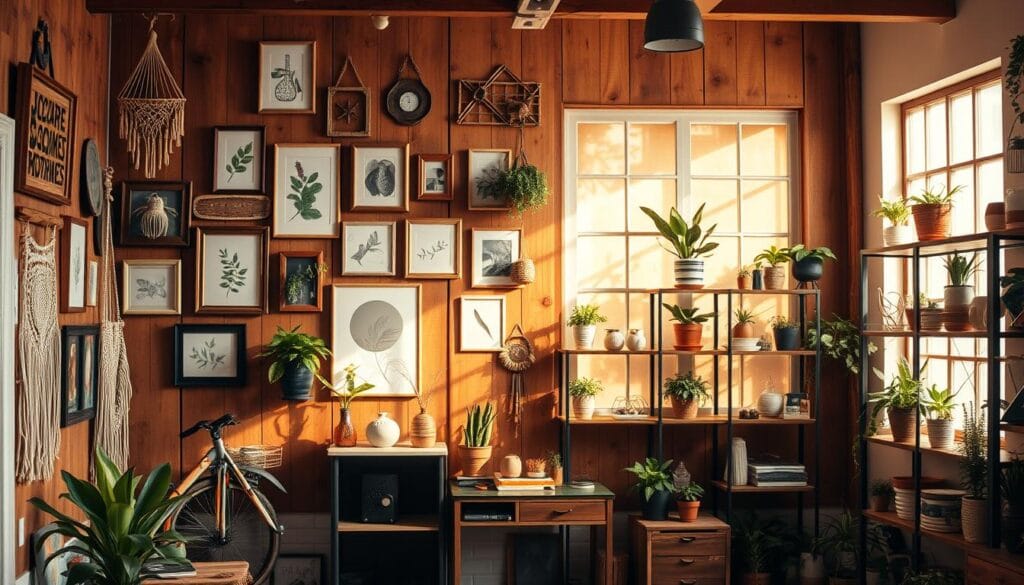
Making the art yourself means it fits your wall and your colors, which is more than most store-bought prints can manage. A few places to start:
- Oversized pieces: one big canvas anchors a wall better than five small ones.
- Gallery walls: lay the arrangement out on the floor first, and keep the gaps between frames even.
- Wall sconces: they add light and shape at once, and cordless versions need no wiring.
- Macrame and textiles: softens a hard wall and absorbs echo in an empty room.
- Mirrors: the reliable trick for a dark room, because they bounce whatever light you have back into it.
Free version: frame what you already have. Children’s paintings, a page from an old calendar, pressed leaves, fabric scraps, a good photo printed at the drugstore. Matching frames from a thrift store, spray-painted one color, will make a mismatched set look like a collection.
Creative Uses of Wallpaper
Wallpaper does not have to mean papering a whole room. A single roll goes a long way when you put it somewhere unexpected:
- Accent walls: one wall, usually the one behind the bed or sofa.
- Panoramic scenes: they give a windowless room something to look at.
- Grasscloth and textured papers: warmth and texture in a room that feels flat.
- The back of a bookcase: a small amount of paper, a surprising amount of effect.
- Removable paper: the renter’s answer. It comes off cleanly, and the choice available now is enormous.
Refreshing Your Outdoor Spaces
Outdoor projects tend to be cheaper than indoor ones, because plants and paint do most of the work.
New or repainted planters, cushions that are not sun-bleached, and a coat of stain on a gray deck will change the whole back of the house. Perennials cost more per plant than annuals but come back every year, so the second season is free. Mulch holds moisture in the soil, which means less watering and fewer plants lost in August.
Small things matter out here too. House numbers people can actually read from the street are genuinely useful for deliveries and for anyone visiting the first time. A light by the door makes the walk from the car safer after dark.
Free and low-cost version: renting a pressure washer for a day gets a driveway, siding, and a patio back to their original color for the price of a takeaway dinner. A fire pit ring is an inexpensive weekend build. Trellises give climbing plants somewhere to go and hide a fence you do not love. A potting station out of reclaimed boards costs nothing but an afternoon.
| Project | Rough cost | Why it is worth it |
|---|---|---|
| Pressure washing | $30 to $100 per day to rent | Returns siding, deck, and concrete to their actual color |
| Perennials | $5 to $10 per plant | Comes back each year instead of being re-bought |
| Trellises | Around $20 each | Growing space upward; screens a tired fence |
| Outdoor lighting | $20 to $100 each | Safer approach after dark, longer evenings outside |
| Mulch | $3 to $7 per bag | Holds moisture, so less watering |
| House numbers | $10 to $50 | Deliveries and visitors find you |
| DIY fire pit | $50 to $150 | One weekend, years of use |
Bathroom Upgrades: Fixtures and Features
Bathrooms are small, which cuts both ways. Everything costs less because there is less of it, and everything shows because you are standing close to it.
Modern Faucets and Showerheads
A faucet swap is a beginner plumbing job: shut off the supply, unhook the old one, seat the new one, tighten. Newer fixtures use noticeably less water than older ones, so the change shows up on the bill as well as on the counter. A showerhead is easier still and needs nothing but a wrench and thread tape.
Mirrors and Lighting
Most bathroom lighting is one fixture directly overhead, which throws shadows down your face. A pair of sconces at eye height on either side of the mirror fixes that, and a lit mirror does the same job in one piece. If you cannot change the wiring, swap in a warmer, brighter bulb and add a small plug-in light on the counter.
Free and low-cost version: a stick-on frame kit around a builder-grade mirror costs very little and makes it look installed rather than glued up. A wooden ladder for towels, a tray for the things that live on the counter, and one plant do the rest.
Conclusion
None of this needs to happen at once. Pick the room that bothers you most, do the smallest job in it, and see how the room feels a week later. Clearing surfaces costs nothing and is usually the fastest improvement available in any house. Paint is next. Lighting after that.
Making things yourself, framing what you have, and shopping secondhand are how most of the homes we admire actually came together, one piece at a time. A house that reflects the people in it is not a budget outcome. It is a patience outcome.