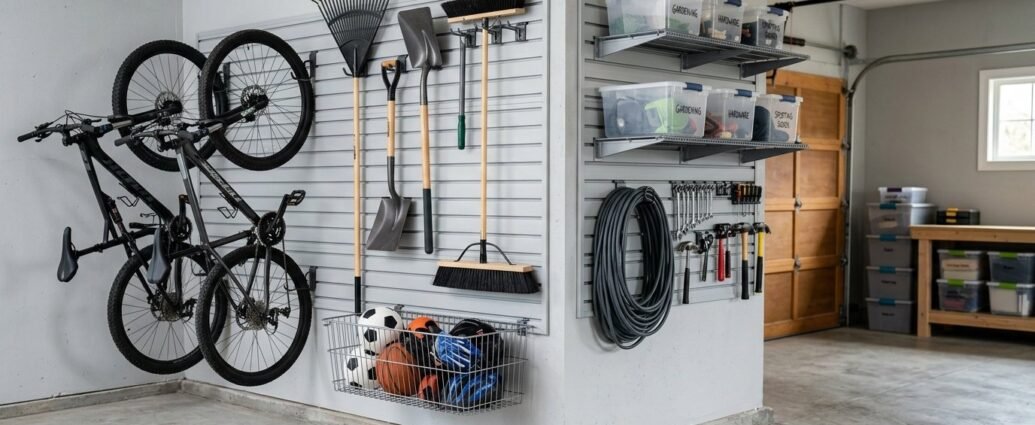
Do you ever open your garage door and feel that immediate wave of mild dread — the bikes leaning against the wall, the tangled extension cords, the bins stacked so high you can’t find anything without a small excavation? I’ve been there, and I know how quickly a garage goes from tidy to unusable once you stop looking at it. The garage is almost always the last space we think about designing, and yet it’s the one that quietly affects our daily stress levels more than we’d like to admit.
In this post, we’re going to break down the four most popular garage wall storage systems on the market — pegboards, slatwall panels, track and rail systems, and modular cabinets — so you can choose the one that actually fits your life, your tools, and your budget. Whether you’re working with $50 or $5,000, there’s a solution that will make your garage feel intentional instead of overwhelming.
Key Takeaways
- Pegboards are the most budget-friendly and beginner-friendly garage storage option, ideal for tool walls and craft areas.
- Slatwall panels offer superior weight capacity and versatility over pegboards, with a more polished, showroom-style finish.
- Track and rail systems (like Gladiator and Rubbermaid FastTrack) are the most flexible option for heavy loads and frequent reorganization.
- Modular cabinets are the premium choice for a clean, finished look — best for garages doubling as a workshop or home gym.
- Budget tier matters: you can build an effective garage storage system at every price point from $ to $$$.
- Combining two system types — e.g., slatwall for tools and cabinets for bulk storage — often delivers the best results.
Why Garage Wall Storage Systems Actually Matter
Before we dive into the specific systems, it’s worth understanding why garage storage systems are worth investing in thoughtfully rather than just grabbing the first set of wire shelves you find at a big-box store. Your garage walls are prime real estate. Done right, they free up floor space, protect your tools and equipment, and transform a chaotic catch-all room into a space that actually supports how you live.
The Floor Space Problem
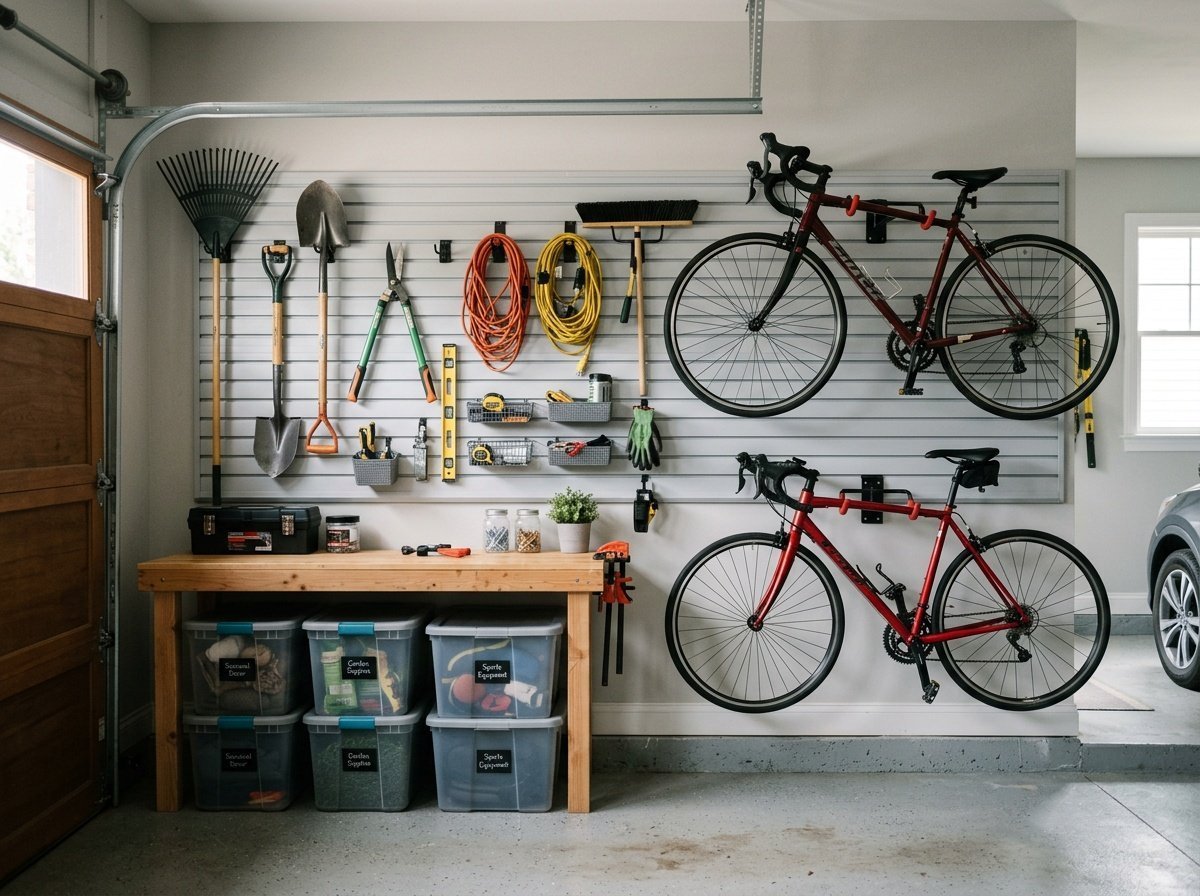
Most garages lose 40–60% of their usable floor space to things that could easily live on a wall. Bikes, rakes, ladders, sports gear — all of it can be mounted vertically, which means more room for your car, your workbench, or that treadmill you keep meaning to use.
When I help clients rethink cluttered spaces — from low-ceiling basements to garages — the vertical wall is always the first thing we address. It’s the fastest return on your investment of time and money.
One System Rarely Does Everything
Here’s the thing most product ads won’t tell you: no single storage system is perfect for every need. Heavy power tools have different requirements than garden hoses. Seasonal bins need different access than daily-use hand tools. Understanding what each system does best is the key to building a garage that actually works.
Pegboard Garage Storage: The Classic Starter System
Pegboard is the OG of garage wall storage — it’s been organizing workshops since the 1950s, and for good reason. It’s affordable, widely available, and endlessly customizable with hooks and accessories. If you’re new to garage organization, this is almost always where I suggest starting.
What Pegboard Does Best
Pegboard excels at displaying hand tools, craft supplies, and lightweight sporting gear. The grid of holes accepts a wide range of hooks, bins, and shelves, letting you reconfigure your layout anytime without tools. It’s a great visual system — everything is in sight, which means you’ll actually put things back where they belong.
Standard hardboard pegboard runs about $0.50–$1.00 per square foot. Metal and polypropylene versions cost more but hold heavier loads and resist moisture better in humid garages.
Pegboard Limitations to Know
Standard pegboard has a weight limit of around 50–75 lbs total for a 4×8 panel, and hooks can pop out under heavy loads. It also requires a 1–2 inch standoff from the wall so hooks can insert properly, which means a bit of extra framing on installation. Not a dealbreaker, but worth knowing going in.
Budget Tier: Pegboard Recommendations
- $ (Under $80): Triton Products LocBoard 24″×48″ Steel Pegboard — durable, hook-friendly, great starter panel.
- $$ ($80–$200): DEWALT DXST25000 Metal Pegboard Kit — includes panel plus a solid accessory set of hooks and bins.
- $$$ ($200+): Flow Wall Pegboard Panel System — modular, polished finish, connects seamlessly for full wall coverage.
Slatwall Garage Panels: The Upgrade You’ll Never Regret
If pegboard is the reliable compact car, slatwall is the SUV. It looks cleaner, holds significantly more weight, and accepts a wider range of specialized accessories. I’ve installed slatwall in everything from two-car garages to converted workshop spaces, and it consistently gets the most compliments.
Why Slatwall Outperforms Pegboard
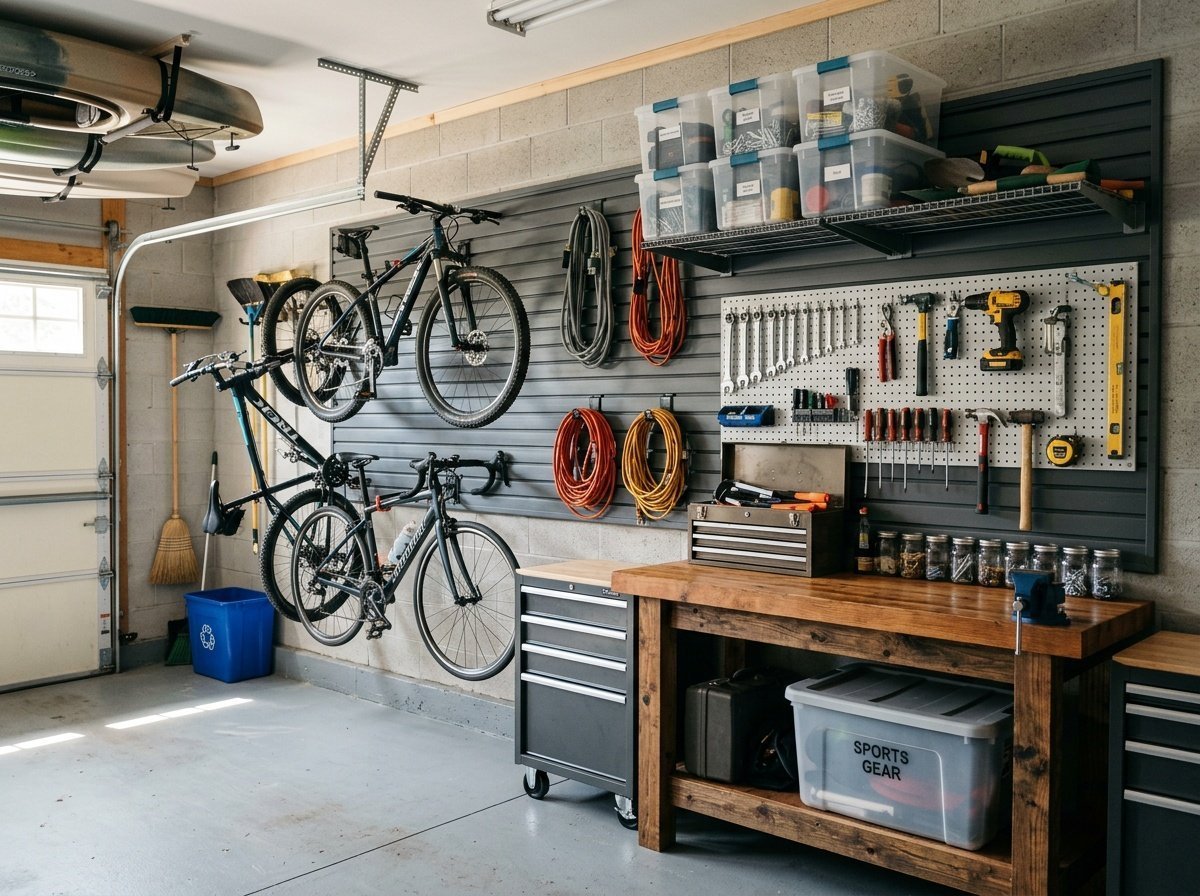
Slatwall panels feature horizontal grooves (channels) that accept hooks, brackets, bins, and shelves via a friction-lock system — no tools needed to rearrange, and accessories don’t pop out the way pegboard hooks do. Weight capacity is typically 75–150 lbs per panel depending on material, and the overall look is dramatically more finished and intentional.
PVC slatwall is moisture-resistant and ideal for garages; MDF slatwall is cheaper but can swell in humid environments. Always go PVC for garage use.
The Slatwall Garage Aesthetic
One of the things I love most about slatwall is that it transforms the garage wall into something you’d actually want to show off. Pair it with a clean epoxy floor and some LED shop lighting, and suddenly your garage looks like a feature on a home improvement show rather than a storage room you’re hiding from guests.
Budget Tier: Slatwall Recommendations
- $ (Under $100): Muscle Rack PVC Slatwall Panel 4×4 — entry-level but solid, good for a single tool wall section.
- $$ ($100–$300): NewAge Products Slatwall Panel Set — 4-panel kit, great accessory compatibility, clean finish.
- $$$ ($300+): Proslat 8×4 Heavy-Duty PVC Slatwall — the gold standard; used in professional workshops, holds up to 100 lbs per hook location.
Track and Rail Systems: Maximum Flexibility, Serious Strength
Track and rail storage systems are the choice for people who move things around often, need to hang truly heavy items (think: full bike fleet, kayaks, heavy shelving), or want a system that can grow with their needs over time. Brands like Gladiator, Rubbermaid FastTrack, and Organized Living have turned this category into something genuinely impressive.
How Track Systems Work
Horizontal rails anchor directly into wall studs — that’s their key structural advantage. Accessories like hooks, baskets, and shelf brackets then click or slot into the rail and can be repositioned in seconds. Because the weight transfers directly to studs, these systems can handle hundreds of pounds when properly installed.
This is the system I recommend most often to clients who are doing a full garage organization overhaul, because it gives them room to evolve the layout as their needs change.
Rubbermaid FastTrack vs. Gladiator GearTrack
| Feature | Rubbermaid FastTrack | Gladiator GearTrack |
|---|---|---|
| Rail Material | Steel | Steel |
| Weight Capacity (per hook) | Up to 200 lbs | Up to 300 lbs |
| Accessory Ecosystem | Good — widely available | Excellent — extensive range |
| Price Range (starter kit) | $40–$120 | $80–$200 |
| Ease of Installation | Very easy, beginner-friendly | Easy, stud-finding required |
| Best For | General garage storage | Heavy-duty workshop use |
Budget Tier: Track System Recommendations
- $ (Under $100): Rubbermaid FastTrack Rail & Hook Starter Kit — everything you need to get a section of wall organized in an afternoon.
- $$ ($100–$350): Gladiator GearTrack 4-Channel Wall Kit — stud-mount strength, great hook variety, expandable.
- $$$ ($350+): Organized Living freedomRail Garage System — fully adjustable vertical and horizontal rails, commercial-grade capacity.
Modular Garage Cabinets: The Premium Clean-Look Option
Modular garage cabinets are the closest thing to bringing your kitchen or mudroom aesthetic into the garage. They hide everything behind closed doors, protect tools and equipment from dust and moisture, and create a finished, cohesive look that makes the whole space feel elevated. They’re also the most significant investment of the four systems we’re covering.
“A well-designed garage isn’t just functional — it’s the difference between a house that feels managed and a home that feels mastered.”
Who Modular Cabinets Are Really For
If your garage doubles as a workshop, a home gym, a hobby space, or simply a room you spend real time in, cabinets make sense. They keep dust off your tools, protect chemicals and paints from temperature fluctuations, and create a space that feels intentional rather than improvised. The upfront cost is higher, but the longevity and usability are hard to match.
Materials Matter: Steel vs. Polymer
Steel cabinets (think Gladiator, Husky, Kobalt) are the most durable and moisture-resistant. Polymer or resin cabinets (like Suncast) are lightweight and rust-proof, though they can flex under very heavy loads. For a true workshop setup, steel is always my recommendation. For a lighter-use garage, polymer is a solid budget-conscious choice.
Budget Tier: Cabinet Recommendations
- $ (Under $200): Suncast Freestanding Garage Cabinet — polymer, rust-free, easy assembly, good for seasonal storage.
- $$ ($200–$800): Husky Ready-to-Assemble Steel Cabinet Set — solid steel, lockable doors, great value for the quality.
- $$$ ($800+): Gladiator Premier Series Cabinet Suite — full wall cabinet systems, adjustable shelving, handles up to 400 lbs per cabinet.
How to Choose the Right Garage Storage System for Your Needs
Now that we’ve walked through all four systems, the real question is: which one is right for your garage specifically? The honest answer is that most well-organized garages use a combination — and understanding your priorities makes that combination obvious.
Start With What You’re Storing
Make a quick inventory of the heaviest and most frequently accessed items in your garage. Heavy power tools and bikes lean toward track systems or cabinets. Lightweight hand tools and craft supplies are perfect for pegboard or slatwall. Bulk seasonal storage (holiday bins, camping gear) is best hidden in cabinets. Map your wall zones by use before you buy anything.
Factor in Your Budget Honestly
If you’re working with under $150, start with pegboard or a Rubbermaid FastTrack starter kit and expand from there. If you have $300–$600, a slatwall panel system or mid-range track system will transform your wall dramatically. Over $1,000? A hybrid approach — cabinets for the base, slatwall or track above — gives you the most complete and satisfying result. The same principle applies when tackling budget-conscious updates in other rooms of your home: phased investment beats doing nothing while you wait for the perfect moment.
Consider Installation Realistically
Pegboard and slatwall are genuinely DIY-friendly — I’ve seen first-timers do a great job with just a stud finder, drill, and level. Track systems require stud mounting but are still very approachable. Full cabinet suites can get complicated and sometimes benefit from a second set of hands or a handyman for the installation day.
Mixing Systems: The Hybrid Garage Wall Strategy
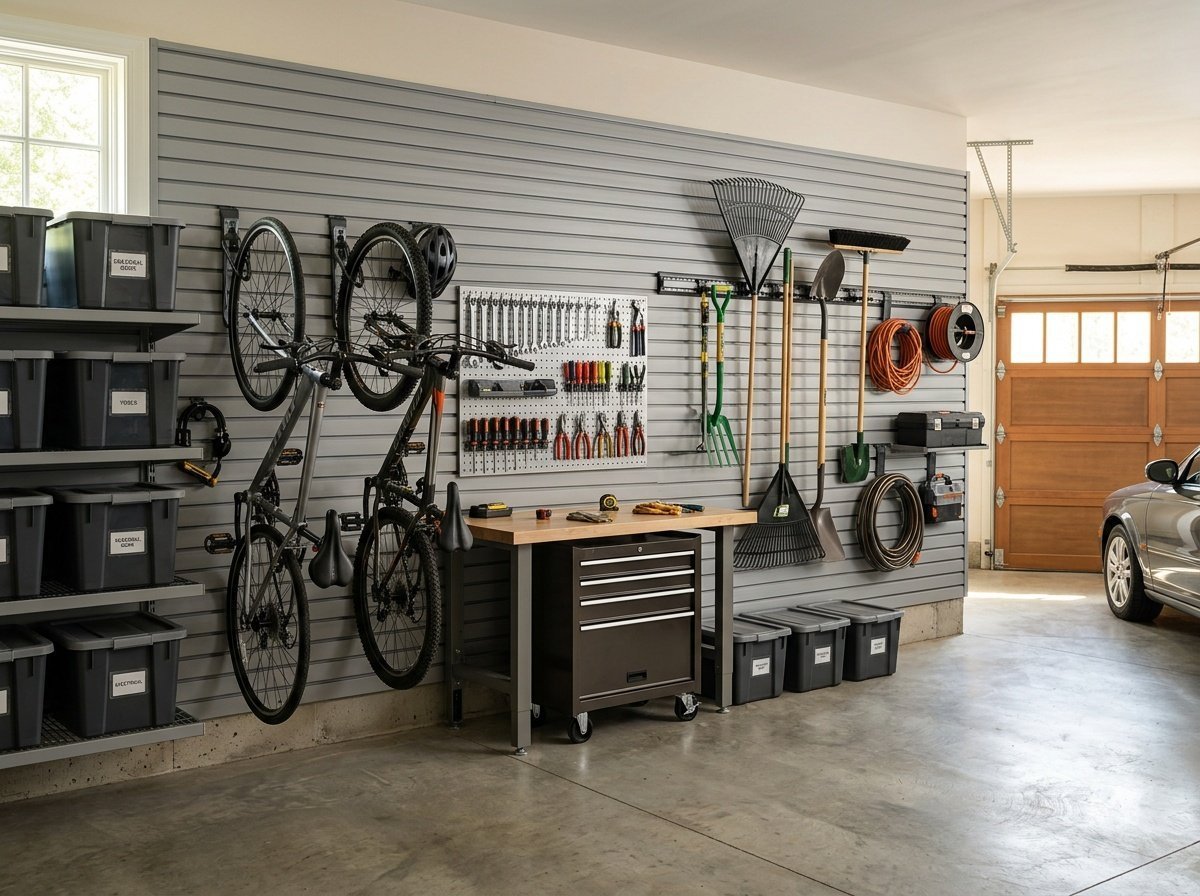
Here’s my professional recommendation for most garages: don’t pick just one. A hybrid wall strategy gives you the visual variety, functional flexibility, and storage capacity that no single system can match on its own. Think of it the same way you’d approach layering in any other room of your home — different elements serving different purposes, but cohesive as a whole.
A Sample Hybrid Layout
- Upper wall zone (above 5 feet): Track rail system for bikes, ladders, and bulky seasonal items.
- Mid wall zone (waist to eye level): Slatwall panels for hand tools, cords, and frequently grabbed accessories.
- Lower zone (floor to waist): Modular base cabinets for bulk storage, chemicals, and anything you want locked away.
This approach covers every storage need, keeps your most-used items at arm’s reach, and creates a garage wall that looks intentional from floor to ceiling. It’s also scalable — you can start with just one zone and add the others over time as budget allows.
Installation Tips to Get It Right the First Time
Even the best garage storage system will underperform if it’s installed poorly. A few simple rules will save you from frustration — and from holes in the wrong places.
Always Find Your Studs First
Every system that needs to bear real weight — slatwall, track rails, cabinet mounting strips — must be anchored into wall studs, not just drywall. Use a reliable stud finder and mark your studs lightly with painter’s tape before you start. Standard garage studs are 16″ on center, but older homes sometimes vary.
Level Is Everything
A slightly crooked slatwall panel or a rail that’s off by half an inch will drive you absolutely crazy every time you look at it. Use a 4-foot level for all horizontal installations. For vertical track systems, a laser level saves significant time and is worth borrowing or renting if you don’t own one.
Leave Expansion Room
Whatever system you choose, don’t fill every inch of available wall space on day one. Leave room to expand — you’ll inevitably acquire new gear, change hobbies, or find that you want a dedicated section for something you hadn’t thought of. The best garage storage systems are the ones that can grow with you.
Frequently Asked Questions
What is the best garage wall storage system overall?
There’s no single “best” system — it depends on your budget, what you’re storing, and how often you reorganize. For most homeowners, a track or rail system offers the best balance of weight capacity, flexibility, and ease of installation. If you want a polished look and have the budget, pairing slatwall with base cabinets is hard to beat.
Is pegboard or slatwall better for a garage?
Slatwall wins on almost every metric except price. It holds more weight, accepts more accessories, looks more finished, and its hooks don’t pop out under load the way pegboard hooks can. That said, pegboard is a perfectly solid choice for lighter tool storage and anyone working with a tight budget. Start with pegboard, upgrade to slatwall later if needed.
How much weight can slatwall hold?
A quality PVC slatwall panel typically holds 75–150 lbs per panel in total, with individual hook locations rated at 20–100 lbs depending on the bracket type and how well the panel is anchored to studs. Always check the manufacturer’s specs and make sure you’re mounting into studs — not just drywall — for maximum capacity.
Can I install garage wall storage systems myself?
Absolutely. Pegboard, slatwall, and most track systems are genuinely DIY-friendly with basic tools: a drill, stud finder, level, and measuring tape. Modular cabinet suites are the most complex to install, particularly if you’re running a full wall, but most come with clear instructions and can be tackled in a weekend. When in doubt, having a second person on hand makes the job significantly easier.
What’s the cheapest way to organize a garage wall?
A 4×8 sheet of hardboard pegboard costs under $20, and a basic hook assortment runs another $15–$30. With a stud finder and a drill, you can get a full tool wall organized for under $60. Add a Rubbermaid FastTrack starter kit for around $40–$80 to handle heavier items like bikes or ladders, and you have a genuinely functional garage storage setup for well under $150.
Are modular garage cabinets worth the cost?
If you spend real time in your garage — whether for hobbies, working on vehicles, or fitness — yes, absolutely. Cabinets protect your tools, create a finished aesthetic, and make the space significantly more pleasant to use. If your garage is purely utilitarian and you rarely spend more than a few minutes in it, a track system or slatwall setup at a fraction of the cost will serve you just as well.
How do I combine different garage storage systems effectively?
The key is to zone your wall by use and frequency. Mount track rails high for bulky, infrequently accessed items; use slatwall or pegboard at eye and waist level for daily-use tools; and place cabinets at the base for bulk or concealed storage. Keep your layout flexible — don’t mount anything permanently until you’ve lived with the placement for a few days and confirmed it works with how you actually move through the space.
The garage deserves the same intentionality you’d give any other room in your home. Whether you’re starting with a $50 pegboard panel or investing in a full modular cabinet suite, the act of choosing a system — and committing to a layout — is what transforms a dumping ground into a space that genuinely supports your life. Start with one wall, one zone, one system. You’ll be surprised how quickly the momentum builds. And if you ever want to go deeper on the full organization process, my complete beginner’s guide to garage organization is a great next step. You’ve got this. ☕