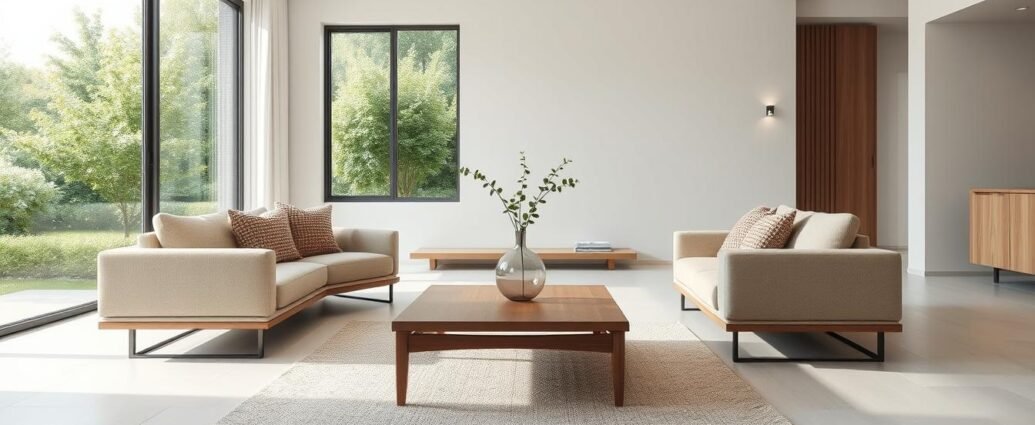
Does your home feel a little cluttered or chaotic? We believe your living space should be a peaceful retreat. This guide will show you how a thoughtful design approach can turn any room into a calm, functional haven.
Many people think this style means empty, cold rooms. That’s not true at all! It’s about making intentional choices that highlight what you truly love. You create a home that feels both beautiful and deeply personal.
We’ll walk you through the entire process. You’ll discover the history of this look and see how it has evolved into today’s warm, textured aesthetic. We provide practical tips and real-world examples for any budget.
Get ready to learn how less can truly be more. You can create a living environment where every item has a purpose and brings you joy. Let’s build a home that balances simplicity with sophistication together!
Introduction to Modern Minimalist Design
Have you ever wondered how a design movement born from stark simplicity became so inviting? It started as a clear reaction to post-war excess. The early look was certainly clean, but it could feel a bit cold.
Thankfully, that’s not the case today! Designers have beautifully evolved this aesthetic. They now weave in warmth and rich texture. This creates a space that feels both refined and wonderfully livable.
This style is far more than just having fewer things. It’s about making intentional choices. Every single piece in your home should have a purpose and bring you joy. This approach builds a sense of calm harmony.
We see modern minimalist design as a powerful lifestyle statement. It helps people create efficient, calming environments that reduce daily stress. Your home becomes a peaceful retreat that balances sophistication with genuine comfort.
The Foundations of Minimalist Interior Design
Creating a peaceful home starts with understanding what truly matters in your space. We’re excited to break down the core elements that make this approach so effective!
You’ll discover that “less is more” isn’t just a phrase—it’s your guiding light. This principle helps you make intentional choices about every item in your room.
Reducing your color palette creates instant harmony. Sticking to sleek designs and neutral tones lets your space’s natural beauty shine through.
Open areas become your home’s breathing room. They make your interior feel larger and more peaceful. Each element gets the attention it deserves!
Contrary to popular belief, this design isn’t about removing character. It’s about adding depth through quality materials and interesting textures. Understanding these minimalist design principles empowers you to create a space that feels uniquely yours.
This approach to simplicity brings wonderful clarity to your home. You’ll create an environment where every piece has purpose and brings you joy.
Exploring the Modern Minimalist Approach to Home Decor
The secret to a truly comfortable home lies in balancing aesthetic appeal with real-world usability. We believe your space should work as beautifully as it looks!
Today’s approach focuses on usability and functionality rather than extreme reduction. It’s about creating a house that supports your actual lifestyle, not just looking perfect in photos.
This way of thinking emphasizes adaptability. Your interior design should flex to meet your changing needs while maintaining that clean, organized feel you love.
You’ll discover how to blend simplicity with genuine comfort. The goal is a living environment that feels both beautiful and practical for everyday life.
Modern minimalist decor isn’t about rigid rules. It’s about curating a space that feels calm, intentional, and perfectly suited to how you use your home. This style empowers you to create a look that’s uniquely yours!
Historical Influences: Bauhaus and Eastern Inspirations
The roots of today’s serene interior design stretch back through fascinating cultural traditions. We’re excited to explore how different philosophies shaped the peaceful spaces we love today!
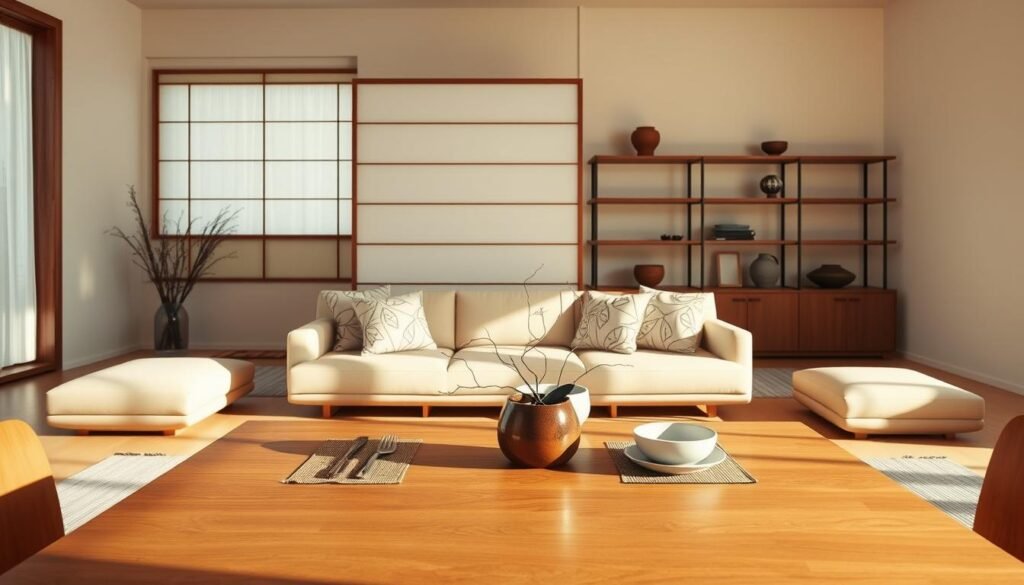
Cultural Origins and Evolution
The Bauhaus movement of the early 20th century revolutionized Western design. This approach stripped everything down to essential forms, focusing on materiality and texture.
Designer Katie Harbison notes how Japanese culture emphasizes restraint and natural materials. This Eastern philosophy creates harmony where every element feels intentional and integrated.
The Role of Simplicity in Design History
Both traditions teach us that less can communicate more when done with care. This historical approach to simplicity laid the foundation for how people design homes today.
Understanding these origins helps you appreciate why this style creates such peace and beauty in interior spaces. The table below shows key differences between these influential movements:
| Influence | Key Principles | Design Focus | Material Approach |
|---|---|---|---|
| Bauhaus Movement | Form follows function | Industrial efficiency | Manufactured materials |
| Japanese Tradition | Harmony with nature | Spiritual balance | Natural elements |
| Modern Synthesis | Intentional living | Personal well-being | Quality craftsmanship |
These rich traditions show how simplicity became a powerful force in design architecture. They remind us that great design stands the test of time!
Defining the Essence of Minimalism in Architecture
The true power of great architecture lies in what it chooses not to say. We believe the most impactful spaces speak through their quiet confidence rather than loud decoration.
This approach to design strips away unnecessary elements to reveal the inherent beauty of materials and spatial relationships. Every line and surface serves a clear purpose, creating harmony throughout your living environment.
Architectural minimalism focuses on clean forms and essential elements that work together seamlessly. The result is a foundation for interior spaces that feel open, calming, and deeply intentional.
Understanding this aesthetic helps you appreciate how building design and interior spaces work together. The table below shows how this approach differs from traditional architecture:
| Approach | Design Philosophy | Material Focus | Spatial Experience |
|---|---|---|---|
| Traditional Architecture | Ornamentation and detail | Decorative surfaces | Compartmentalized rooms |
| Minimalist Architecture | Essential forms only | Raw material beauty | Flowing, open spaces |
| Resulting Atmosphere | Formal and detailed | Authentic and textured | Calm and expansive |
This design philosophy creates visual interest through materiality and texture rather than clutter. You’ll discover spaces where quality craftsmanship and thoughtful proportions create lasting beauty that feels both personal and peaceful.
Design Principles: Less is More
What if we told you that creating a calm home comes down to mastering a few key principles? We’re excited to break down the core ideas that make this approach work beautifully in any space!
You’ll discover that “less is more” isn’t just a phrase—it’s your guiding light for intentional living. This philosophy helps you make thoughtful choices about every item in your home.
Clean Lines and Open Spaces
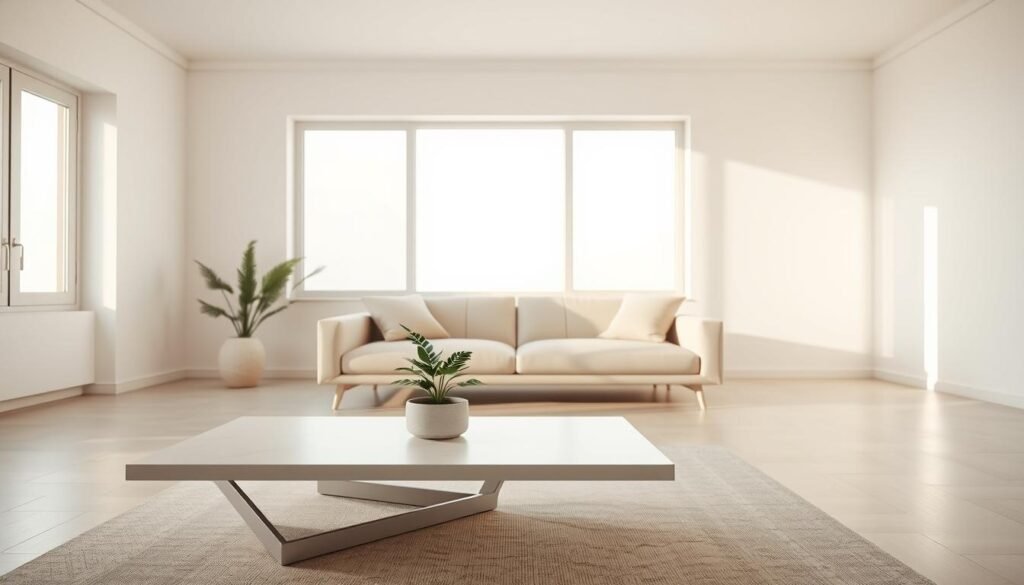
Strategic use of clean lines creates immediate visual clarity in your living room. These straight elements work with open areas to make your space feel larger and more peaceful.
Designer Katie Harbison emphasizes balancing straight lines with gentle curves. “Contrasting curvature with straight lines creates a fresh take on clean silhouettes,” she notes. This combination prevents spaces from feeling too rigid.
Functional Elegance and Simplicity
Functional elegance means choosing elements that serve a purpose while looking absolutely stunning. Every piece should contribute to your daily life while enhancing your space’s beauty.
A well-considered palette combined with natural light makes your design feel cohesive and airy. Incorporating natural materials adds warmth and texture while maintaining that signature look.
This way of approaching simplicity creates spaces that feel both elegant and livable. You’re not creating emptiness—you’re carefully curating every line and element to work in harmony!
Choosing the Perfect Color Palette for Minimalist Spaces
Ready to discover how the right colors can transform your entire living space? We believe your color palette sets the foundation for a home that feels both calm and intentional.
Designer Katie Harbison emphasizes this approach:
“A restrained, well-considered palette is the cornerstone of great interior design. It creates the serene canvas that allows your favorite pieces to shine.”
The best spaces often begin with a calm color story using neutrals, whites, and natural tones. This thoughtful approach creates visual harmony throughout your home.
Different color strategies create distinct atmospheres. The table below shows how various approaches work in different settings:
| Color Approach | Primary Tones | Room Application | Resulting Atmosphere |
|---|---|---|---|
| Neutral Foundation | Whites, beiges, greys | Living areas, bedrooms | Calm and expansive |
| Natural Accents | Wood tones, stone colors | Dining spaces, studies | Warm and grounded |
| Graphic Contrast | Black, white, bold accents | Entryways, bathrooms | Dynamic and focused |
Limiting your color choices actually gives you more freedom! You can play with texture and form without visual competition.
A cohesive color scheme creates beautiful flow from room to room. Each space feels connected yet maintains its unique character.
This thoughtful way of selecting colors establishes a peaceful foundation. Your furniture and decor become the stars of your personal aesthetic.
Maximizing Natural Light and Its Impact
What if we told you that one simple element could make your entire home feel more spacious and peaceful? Natural light truly transforms any space, creating an beautiful exchange between indoors and outdoors.
We’re excited to show you how strategic furniture placement allows light to flow freely. Keep larger pieces away from windows and choose lower-profile seating. This simple adjustment makes your living room feel larger and more open.
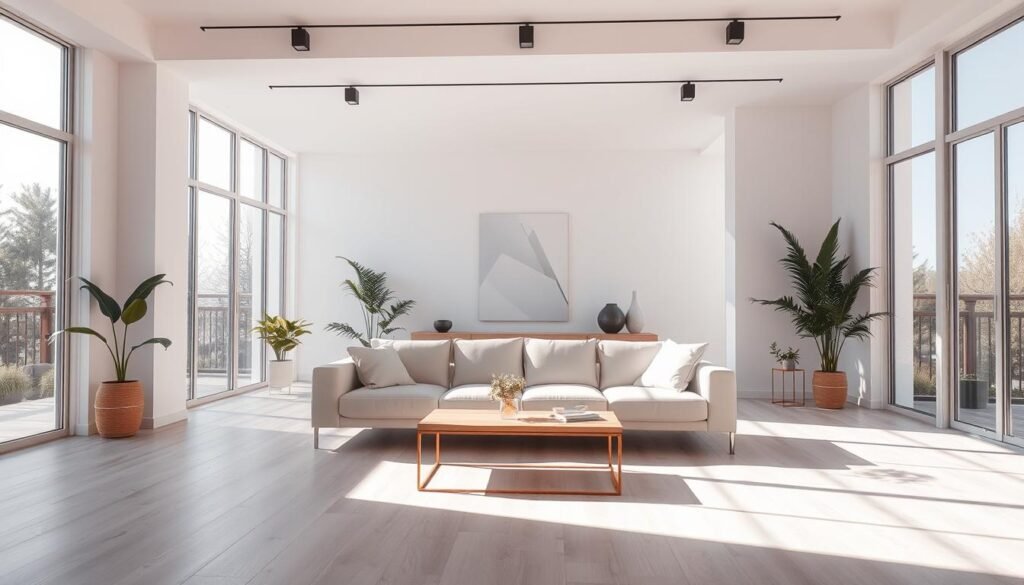
You’ll discover that sunlight enhances colors and highlights textures beautifully. It creates visual interest without adding a single decorative item! Remove barriers like heavy curtains or oversized furniture blocking windows.
The calming impact of light combined with clean lines creates an atmosphere that feels both peaceful and energizing. Prioritizing sunlight in your space is one of the easiest ways to embrace design principles while improving your daily wellbeing.
Every room benefits from this approach. Your home becomes a brighter, more inviting place where natural light becomes your favorite design element.
Smart Furniture Choices for Minimalist Living
Your furniture selections create the foundation for peaceful, intentional living. We’re excited to help you choose pieces that maximize both style and function in your space!
Every item in your minimalist interior should serve a clear purpose. This approach ensures nothing is wasted and everything works beautifully for your daily life.
Selecting Multi-Functional Pieces
Look for furniture that solves multiple problems at once. Storage ottomans, extendable tables, and built-in bookshelves keep clutter off your floor and wall while looking gorgeous.
Essentials like comfortable seating and coffee tables should work hard for your living space. Choose pieces with clean silhouettes and interesting texture that create visual interest without overwhelming your room.
Curated Decor for a Cohesive Look
Curated decor means choosing fewer, higher-quality items that enhance your overall look. Simple wall art, a beautiful rug, or a statement plant can transform your space.
This thoughtful approach to interior design isn’t about filling rooms. It’s about selecting pieces that work together to create a cohesive, intentional environment where every item brings you joy.
Your furniture choices should support both functionality and aesthetic appeal. When each piece has purpose, your entire home feels more organized and peaceful.
Creating a Serene and Balanced Interior
The magic of a truly balanced interior lies in how it makes you feel the moment you step inside. We want to help you create a personal sanctuary where simplicity and comfort work together beautifully.
Eliminating clutter transforms your space into a tranquil environment that promotes relaxation. This approach to minimalist interior design creates an atmosphere where mindfulness comes naturally.
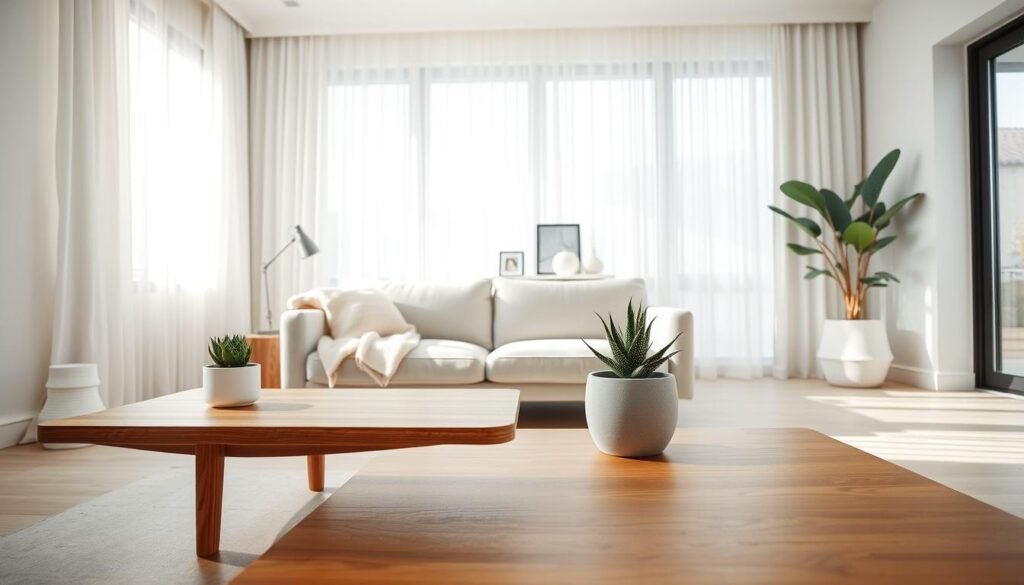
A limited color palette ensures every element complements each other perfectly. Your living room or any room benefits from this cohesive color scheme that creates visual harmony.
Natural light streaming through windows combined with neutral wall colors establishes a peaceful foundation. The beauty of this aesthetic lies in how each carefully chosen piece contributes to the overall calm.
Different approaches can help you achieve this balance in your home. The table below shows how various strategies create distinct yet equally peaceful environments:
| Approach | Key Elements | Room Focus | Atmosphere Created |
|---|---|---|---|
| Monochromatic Harmony | Single color family variations | Bedrooms, meditation spaces | Deep tranquility |
| Natural Integration | Organic materials, plants | Living areas, sunrooms | Grounding connection |
| Textural Balance | Varied surfaces and fabrics | Any room in the home | Layered comfort |
When you prioritize balance, your home becomes a place where you can truly breathe and recharge. Explore our guide to organic color palettes for more inspiration on creating your perfect sanctuary.
Accent Pieces and Subtle Textural Finishes
What if we told you that adding depth to your space doesn’t require adding more stuff? We’re thrilled to show you how subtle texture can transform your rooms from stark to stunning!
Designer Susana Simonpietri demonstrates how plastered walls and quality materials create richness while maintaining those beloved clean lines. These things add incredible warmth and visual interest without clutter.
Natural fabrics like linen and mohair bring cozy texture to your space. Earthy paint colors maintain that airy feeling while adding depth. Layering different finishes makes light dance beautifully across surfaces.
Your accent pieces should tell a story. A nubby throw on a smooth sofa creates wonderful contrast. Subtle wall treatments add personality that makes your decor feel lived-in rather than sterile.
Different textural approaches create distinct atmospheres. The table below shows how various combinations work:
| Texture Type | Materials Used | Room Application | Visual Effect |
|---|---|---|---|
| Smooth & Refined | Polished plaster, glass | Living areas, bathrooms | Clean and expansive |
| Natural & Textured | Linen, wool, raw wood | Bedrooms, cozy spaces | Warm and inviting |
| Layered & Complex | Mixed fabrics, varied finishes | Entryways, feature walls | Dynamic and rich |
Quality-crafted natural materials elevate your entire look. These carefully chosen pieces create visual interest through the interplay of lines, materials, and shadow. Your space becomes a beautiful balance of simplicity and sophistication!
Sustainable and Functional Design Solutions
What if creating a beautiful home could also be a powerful statement about sustainability? We’re passionate about showing you how thoughtful design naturally supports environmental responsibility in your house!
An uncluttered approach to your living spaces makes them easier to clean and maintain. You’ll save time and energy while reducing your environmental footprint. This philosophy encourages buying fewer, better things that last longer.
Promoting quality over quantity means investing in well-crafted materials and pieces. These won’t end up in landfills quickly. Functional design solutions ensure every element serves a purpose, eliminating waste.
Sustainable choices like reclaimed wood, natural fibers, and low-VOC wall paints align perfectly with minimalist design principles. This approach creates spaces that are better for you, your budget, and our planet.
Your home becomes both beautiful and responsible when you embrace this mindful way of living!
Case Studies: Minimalist Decor in Action
We’re taking you inside actual homes where minimalist interior design creates comfortable, lived-in spaces. These real-world examples show how professional designers balance simplicity with warmth.
Warm Minimalist Living Room Examples
Designer Chango’s Hamptons living room demonstrates beautiful balance. They contrast curvature with straight lines for a fresh take on clean silhouettes.
Instead of sterile white schemes, they layer creamy ivories and alabaster tones. This approach creates an inviting aesthetic that feels both elegant and comfortable.
Designer Katie Harbison creates serene bedrooms using natural materials and calming palettes. Her spaces prove that minimalist style can be wonderfully warm and personal.
Functional Minimalist Workspace Ideas
Studio Dorion’s Brooklyn Heights workspace shows how tonal accents create visual depth. They weave similar hues from artwork to upholstery, with flooring continuing the color scheme.
This cohesive approach makes the room feel intentional and organized. Every element works together to support productivity while maintaining beautiful design principles.
The table below compares how different designers approach various spaces:
| Designer | Space Type | Key Technique | Resulting Atmosphere |
|---|---|---|---|
| Chango | Living Room | Curve & line contrast | Balanced and lived-in |
| Studio Dorion | Workspace | Tonal accent weaving | Cohesive and focused |
| Katie Harbison | Bedroom | Natural material focus | Serene and comforting |
These case studies demonstrate that successful minimalist house design isn’t about perfection. It’s about creating space where every element works together to create both warmth and functionality.
Modern Minimalist Tips for Every Room
Discover practical approaches that make every room in your house feel more organized and peaceful. We’re excited to share strategies tailored to each space in your home!
Your living room deserves comfortable seating and smart storage solutions. Built-in bookshelves keep things tidy while maintaining that clean aesthetic people love.
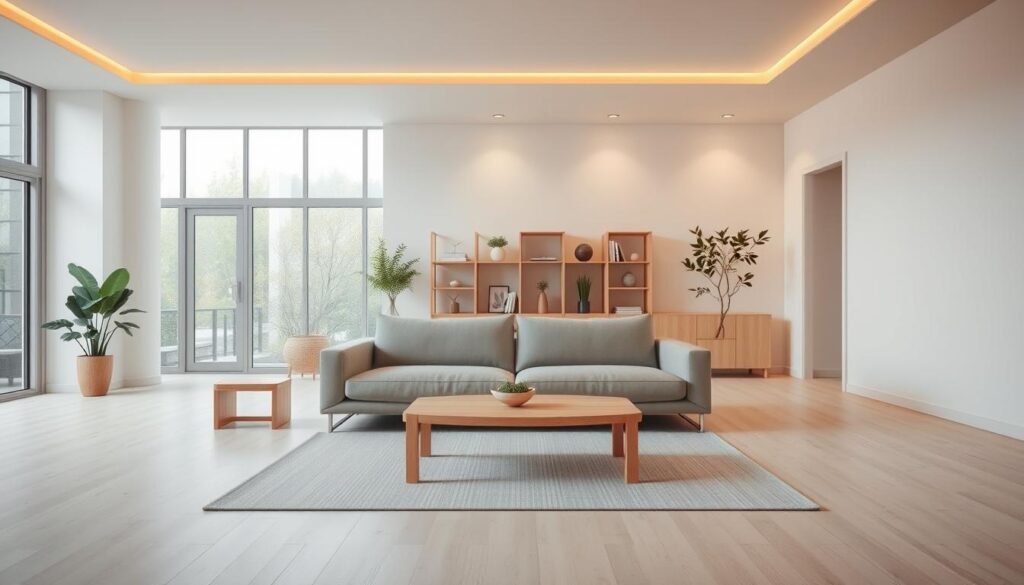
Bedrooms benefit from minimal decor and calming color choices. Keeping items off the floor creates a serene sleeping environment that promotes relaxation.
“The beauty of this approach lies in how each room supports your daily life while maintaining visual harmony throughout your home.”
Different spaces require unique strategies. This table shows how to adapt the style for various rooms:
| Room Type | Key Elements | Storage Focus | Atmosphere Goal |
|---|---|---|---|
| Living Room | Comfortable seating, natural light | Built-in shelving | Welcoming and functional |
| Bedroom | Calming colors, minimal decor | Under-bed storage | Serene and restful |
| Kitchen | Streamlined counters, simple settings | Hidden organizers | Efficient and clean |
| Bathroom | Neutral palette, spa-like feel | Minimal product display | Relaxing retreat |
Home offices need functional furniture and organized systems. This interior design approach reduces visual distractions to boost productivity.
We believe people can apply these principles throughout their entire house. Explore our guide to creating a minimalist home for more inspiration!
Designing with Simplicity and Versatility
What if your home could effortlessly adapt to your changing lifestyle? We believe the best minimalist design balances beautiful simplicity with smart versatility. This approach creates an interior that works for real life, not just photographs.
Versatile pieces like modular furniture or neutral wall colors give you flexibility. You can refresh your aesthetic without starting from scratch. This makes your home feel timeless rather than temporary.
You’ll discover that design simplicity doesn’t mean sacrificing warmth. It means being intentional about the things you bring into your space. Quality materials and thoughtful light create visual interest while maintaining clean lines.
We’ll guide you in selecting decor and furniture that work across different rooms. Your living room pieces might adapt as your needs evolve. This creates a personal style that grows with you rather than limiting your choices.
The true magic happens when your interior supports your daily life beautifully. Your space becomes a canvas for living, not just looking. This minimalist design philosophy ensures your home remains both functional and deeply personal for years to come.
Conclusion
As we wrap up our journey through intentional home design, we hope you feel empowered to create spaces that truly reflect your lifestyle. You’ve discovered how minimalist interior design focuses on purpose-driven choices that bring beauty to your daily living experience.
This modern minimalist approach isn’t about empty rooms—it’s about selecting quality elements that serve you well. You now have the inspiration to transform your home using principles of simplicity and thoughtful curation.
Remember that great minimalist design works beautifully in every room, from living areas to workspaces. Each space can become more functional while maintaining visual harmony.
We’re confident you can apply these concepts to design a home that’s uniquely yours—spaces where you’ll love spending time every day. Your journey toward more intentional minimalist interior design starts now!