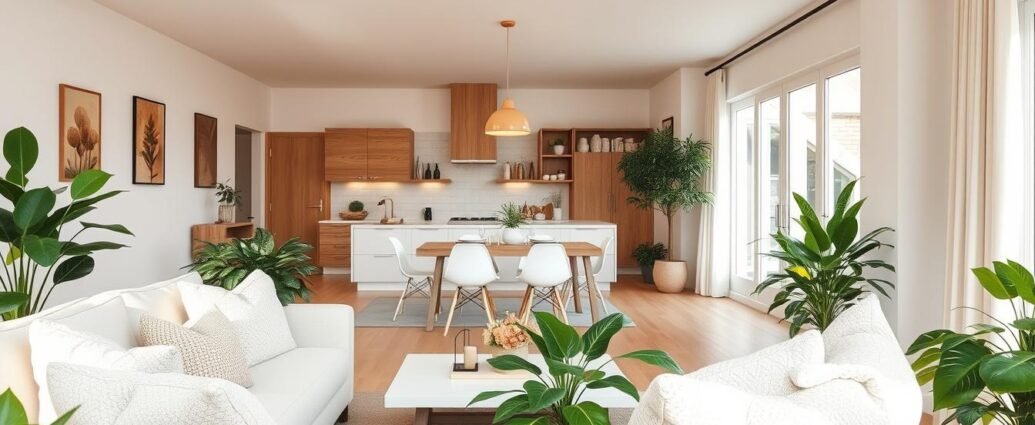
Remember that feeling of walking into a room that just feels… right? It wraps you in a sense of calm and makes you smile. That’s the magic we want to help you create. Your personal sanctuary should be a direct reflection of you, a place that offers comfort and joy at the end of every day.
You don’t need a professional degree or a giant budget to make it happen. Whether you’re giving one room a quick refresh or dreaming up a whole-house makeover, we’re here to walk alongside you. Great design has become so much more accessible, and we believe everyone deserves a beautiful, functional living area.
This guide is packed with the same techniques the pros use to craft those stunning magazine spreads. We’ll start with the basics, like choosing a color scheme that sings to you, and build from there. You’ll learn how to play with light and texture to add depth and warmth.
Our goal is to help you blend looks with livability. Your haven shouldn’t just be pretty; it should support your daily routine effortlessly. So, are you ready to dive in? Let’s unlock your creativity and build a space you’ll absolutely love. ✨
Key Takeaways
- Your living environment should be a personal retreat that brings you happiness.
- Achieving a beautiful look does not require a large budget or formal training.
- Professional design methods are broken down into easy-to-follow steps.
- Learning to combine colors, lighting, and textures is key to a layered look.
- The ultimate goal is a room that is both aesthetically pleasing and highly functional.
- This process is meant to be an enjoyable and inspiring creative journey.
Start with a Fresh Canvas: Declutter and Curate Your Space
The secret to a magazine-worthy display often begins with what you remove, not what you add. Before you bring in new decor, let’s create a blank slate. This is the most important first step for any design project.
Start by clearing everything off your surfaces—shelves, tables, and sideboards. This gives you a clean perspective. Now, look at all your items. Be thoughtful and only put back the objects that you truly love or that add beauty.
A fantastic way to edit is to aim for a 50% reduction. This creates breathing room and lets your favorite pieces shine. Take your time with this process. It’s not a race!
When you arrange your objects back, use groups of three or five. Vary their heights for visual interest. This simple trick makes a big difference.
Remember the wise words of Coco Chanel: “Before you leave the house, look in the mirror and take one thing off.” The same idea works perfectly here. Before you call a room finished, step back and remove one item. This final edit is a pro secret.
For items you need but don’t want to see, consider smart storage. Ottomans with hidden space or beautiful baskets keep your area tidy. A clear space is a calm space, ready for your personal touch. ✨
Practical Home Interior Styling Tips for Every Room
Have you ever noticed how some rooms just feel instantly calm and put-together? That harmonious feeling doesn’t happen by accident. It starts with two fundamental elements working together beautifully.
Selecting a Cohesive Color Palette
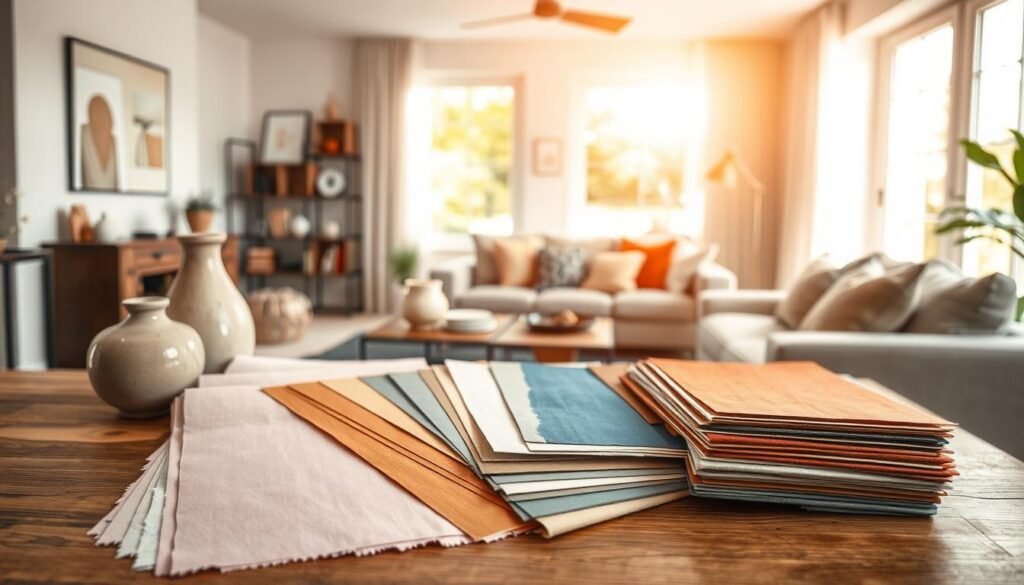
Choosing your colors is like setting the mood for your entire space. We recommend beginning with a neutral base for walls and large furniture. Then layer in 2-3 accent colors that complement each other.
Use a color wheel to understand relationships. Complementary colors create energy. Analogous colors feel more serene. If your space feels too cool, warm accents can balance the energy perfectly.
Balancing Furniture and Accents
Scale matters tremendously when selecting furniture. Oversized pieces can overwhelm a small area. Too-small items might get lost in a spacious layout.
Here’s a pro tip: use painter’s tape to outline furniture dimensions on your floor before buying. This visual trick helps ensure each piece fits perfectly.
Balance is the secret to great interior design. Distribute visual weight by mixing heavy furniture with lighter pieces. Pair bold colors with softer neutrals. This approach creates a grounded, welcoming environment where nothing fights for attention.
Remember, every choice should feel purposeful. For more inspiration on blending elements, explore our guide on mixing modern and handmade pieces. Your vision for a harmonious space is within reach!
Enhance with Natural Elements: Fresh Flowers and Greenery
One of the fastest ways to add energy to your living area is through nature’s touch. Fresh flowers and greenery instantly transform any room, creating a vibrant atmosphere that feels both alive and welcoming.
Seasonal Florals for Instant Life
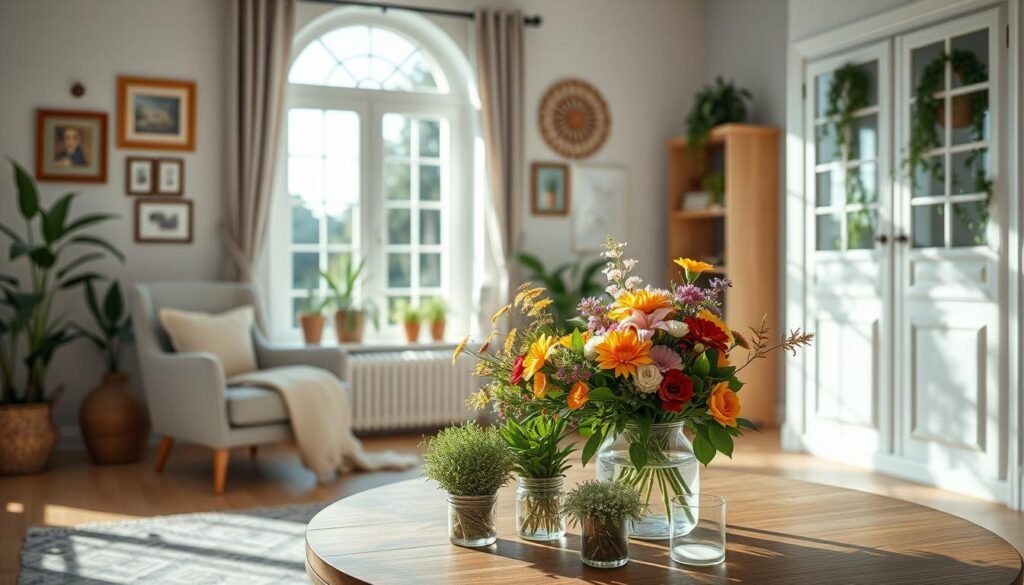
We love using flowers that are in season. They connect your space to the natural world outside. Seasonal blooms always feel fresh and appropriate for the time of year.
Don’t overthink your arrangements! Loose, wild displays often look more beautiful than perfect ones. They bring wonderful movement and sculptural interest to your rooms.
Mixing Vases and Natural Textures
Playing with different vessels is such a fun way to express personality. Mix glass vases with ceramic pots or vintage finds. Designer Sean Symington shares: “We prefer using things like old French comfit pots because they add texture and bring a sense of history.”
Place arrangements at varying heights throughout your room. Try your dining table, mantelpiece, or coffee table. Stick to no more than three arrangements to avoid a cluttered look.
Even a few simple stems can make a dramatic impact. This approach creates visual interest at different levels while maintaining that designer aesthetic you love!
Layer Cozy Fabrics and Textures for a Warm Ambience
What’s the secret ingredient that makes a room feel instantly inviting and lived-in? It’s all about touchable layers! We believe cozy fabrics transform any area into a sanctuary.
Start by mixing different materials for depth. Combine slubby linen with soft cashmere or chunky knits. Plush velvet adds wonderful contrast. This approach creates visual interest in your spaces.
Combining Cushions, Throws, and Patterns
Don’t be shy with cushions and throws! Pile them on sofas and beds. Mix plain designs with patterned ones. Try geometric prints alongside florals.
Balance smooth fabrics with textured weaves. This creates a sophisticated look that feels collected over time. Your room should whisper “curl up here!”
We love switching fabrics seasonally. Heavy chenille works beautifully in winter. Lighter linen and cotton keep your design fresh during summer months. For more detailed guidance, explore our cozy fabrics and textures resource.
Chrissie Rucker, founder of The White Company, shares: “Your bed is a key focal point. Dress it beautifully with layered textures.” This simple advice elevates any bedroom’s style instantly.
The key is creating contrast. Pair rough textures with smooth ones. Matte finishes alongside subtle sheen. This designer approach makes your space feel complete and welcoming!
Curate Books and Decorative Items to Add Personal Character
Nothing adds soul to a space quite like the thoughtful arrangement of books and meaningful objects. They instantly make your area feel collected and genuinely personal rather than staged.
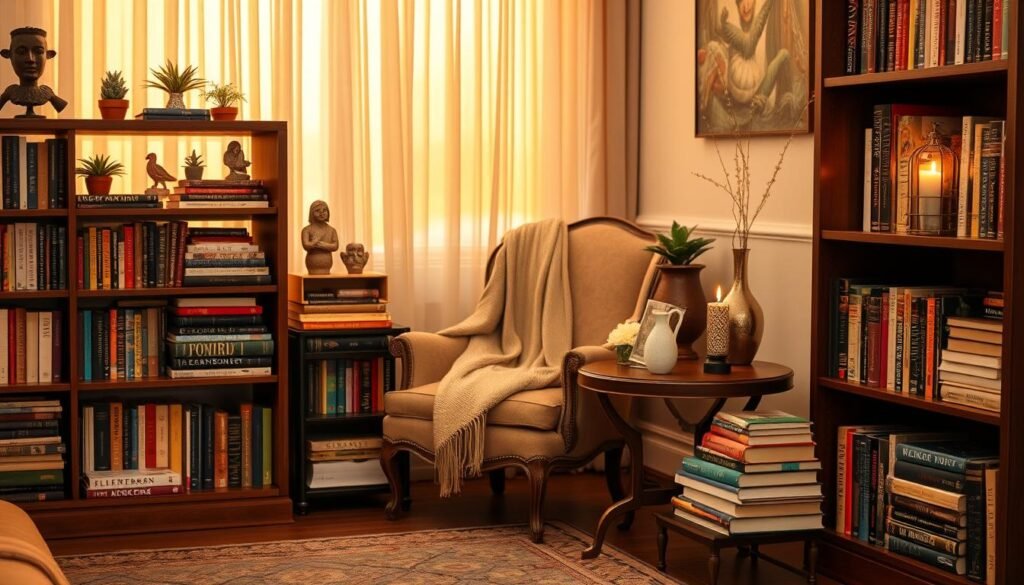
We love hunting for vintage books with beautiful, colorful covers at flea markets. Those aged spines add wonderful character and charm! When styling shelves, try stacking books horizontally to create little platforms.
This technique works perfectly for displaying your favorite ceramics or small art pieces. Don’t overcrowd your shelves—leave breathing room so each item can shine.
Coffee table books are essential for any well-styled living area. Choose oversized inspiration books on topics you love. They create fantastic visual impact while reflecting your interests.
Mix your arrangements by organizing some books by color for a cohesive look. Group others by subject for a more organic feel. Think like a designer and curate thoughtfully, showing only your most beautiful copies.
For incredible inspiration on creating beautiful displays, explore these designer libraries. Remember, your displayed books tell your story—let your personality shine through!
Elevate Your Space with Luxury Bedding
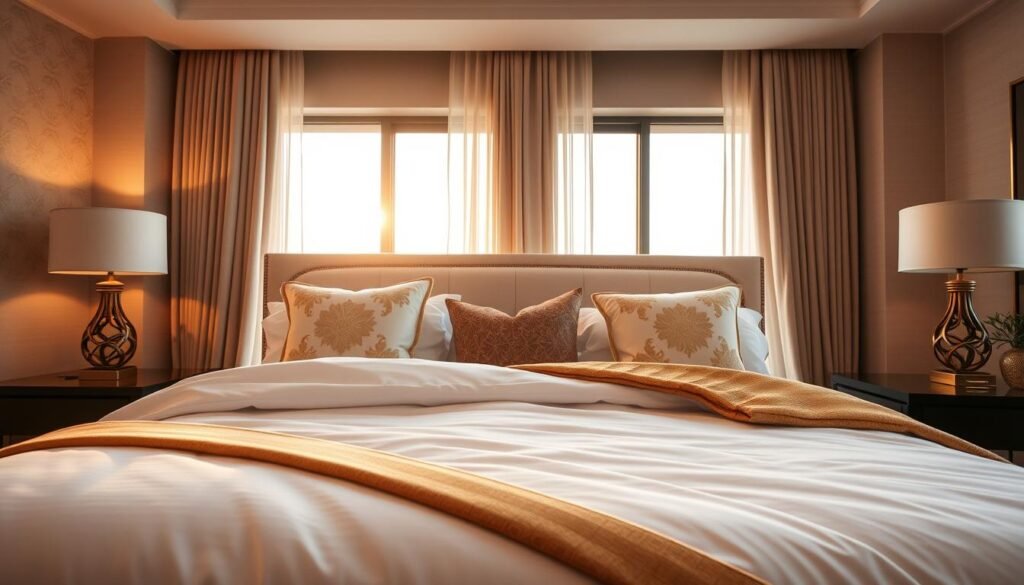
Imagine sinking into a bed that feels like a five-star hotel experience every single night. Your bedroom deserves this level of comfort and sophistication. Quality bedding transforms your entire room’s atmosphere.
Choosing High-Quality Cotton and Linen
We always recommend starting with natural fibers like cotton or linen. They breathe beautifully and become softer with each wash. Don’t fall for the thread count myth!
Designer Rebecca Udall explains: “I don’t believe more is always better. The quality of the cotton fibers matters most for super soft, long-lasting sheets.” Her favorite set is 300 thread count.
Creating a Boutique Hotel-Style Bed
Start with crisp white sheets—they work with every design scheme. Layer with a plush duvet and four pillows mixing rectangular and square ones.
Add textured cushions and a throw for depth. This approach creates that sumptuous look you love.
Consider finishing details like Oxford borders for traditional spaces. Scalloped edges suit various styles. Switching bedding shades seasonally keeps your home feeling fresh.
For more professional techniques, explore our guide on bed styling methods. Your luxurious sanctuary awaits! ✨
Illuminate with Ambient and Accent Lighting
The right lighting can completely transform how a space feels and functions. It’s the secret ingredient that sets the perfect mood in every room.
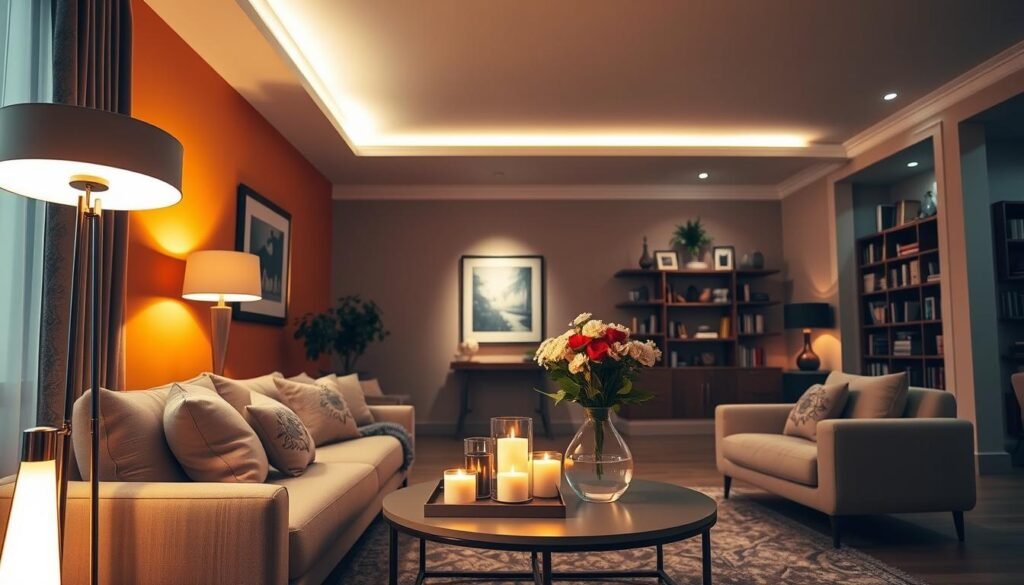
We believe great lighting design involves layering different sources. This approach creates depth and flexibility throughout your day.
Mixing Table, Floor, and Wall Lights
Every room deserves three types of illumination. Each serves a distinct purpose for creating the perfect atmosphere.
| Lighting Type | Primary Function | Common Locations | Best For |
|---|---|---|---|
| Ambient Lighting | Overall room illumination | Ceiling fixtures, chandeliers | General visibility and base mood |
| Task Lighting | Focused work areas | Kitchen islands, reading nooks | Specific activities like cooking |
| Accent Lighting | Highlighting features | Wall sconces, picture lights | Artwork and architectural details |
Professional stager Christopher Breining shares a brilliant trick: “Placing a canister uplight in the corner casts a glow on the ceiling, making a room seem bigger.” This technique works wonders in smaller areas.
Portable wireless table lamps offer incredible flexibility. They create warm pools of light anywhere without outlet constraints. Charlie Bowles from Original BTC recommends: “You need both shadow-free task lighting for cooking and dimmable ambient lighting for relaxing.”
Statement table lamps serve double duty as functional lighting and sculptural art. They add personality and color while providing essential illumination. For more inspiration on creating focal points, explore our guide on accent walls that wow.
Candles provide the final layer of warm, flickering light. They add intimacy and subtle fragrance to complete your lighting scheme perfectly.
Integrate Color Theory and Furniture Balance
Creating visual harmony in your living environment starts with mastering the relationships between different hues. Color theory gives you the tools to make intentional choices that shape how you experience every space.
Using Complementary Shades and Accents
We recommend starting with neutral base colors like warm beiges or soft grays. These create a calm foundation that won’t overwhelm the eye. Then layer in 2-3 accent colors for personality.
Use a color wheel to understand relationships. Complementary colors create vibrant energy. Analogous shades feel more harmonious. If your room has cool tones, add warm accents to balance the energy.
When designing connected rooms, use variations of the same neutral family. Move up or down a shade on the paint strip for subtle variation. This creates seamless flow between spaces.
Apply the rule of thirds to your layout. Divide walls into thirds both vertically and horizontally. Position key furniture pieces within these zones for dynamic interest.
Balance is everything in good design. Distribute visual weight evenly so no single area dominates. This approach creates depth and prevents any part of the room from overshadowing others.
Trust your eye and adjust as you go. If something feels off, it probably is. Often the solution is adding a complementary accent shade. For more advanced techniques, explore our guide on mastering color blending.
Incorporate Art, Mirrors, and Statement Pieces
Have you ever walked into a space that felt complete, where every element seemed perfectly placed and thoughtfully curated? That final layer of polish often comes from art, mirrors, and statement pieces working together beautifully.
These elements are like the jewelry of your room—they add personality and drama while making your design feel finished. Getting the placement right makes all the difference between amateur and professional results.
Scaling Artwork for Impact
When hanging artwork, scale is everything. Professional stager Christopher Breining warns: “There are few things more ridiculous-looking than hanging dinky little art too high on the wall.”
The middle of your picture should hang at eye level—about 57-60 inches from the floor. If household members have different heights, average them out.
For large walls, go bold with one oversized statement piece. Or create a gallery wall with multiple smaller pieces spaced 2-4 inches apart. This creates cohesive impact.
Mirrors work magic in every room by bouncing light and creating the illusion of more space. But placement matters tremendously.
Hang mirrors on walls perpendicular to windows, not directly opposite. This bounces light into the room rather than back outside. We recommend including at least one mirror in every room.
Mix different types of statement pieces throughout your space. For example, an oversized mirror above a dining room sideboard creates stunning depth. In an entryway, bold art sets the tone for your entire environment.
Optimize Furniture Layout and Room Flow
The way you position your furniture can either invite conversation or create awkward silences. Great arrangement transforms how your room functions daily.
Create conversation-friendly zones with U-shape or H-shape layouts. “A U-shape has a sofa with two chairs facing each other at the coffee table ends,” says Michelle Lynne, a Dallas-based stager. “An H-shape positions a sofa directly across from two chairs.”
Floating furniture away from walls makes your space feel larger and more intimate. People often push everything against walls thinking it expands the room, but this actually creates distance.
Before buying new pieces, use painter’s tape to outline dimensions on your floor. This visual trick helps ensure proper scale for your living area.
Rug sizing defines your seating arrangement beautifully. Christopher Breining advises: “All four legs of sofa and chairs should fit on the rug, or at minimum the front two legs.” Most living rooms need 8×10 or 9×12-foot rugs.
| Furniture Element | Ideal Placement | Purpose | Measurement Guide |
|---|---|---|---|
| Sofa Positioning | Floated from walls | Create intimate conversation area | 12-18 inches from wall |
| Coffee Table | Central to seating | Accessible surface area | 14-18 inches from sofa |
| Traffic Pathways | Clear walkways | Comfortable movement | 30-36 inches wide |
| Area Rug | Under furniture grouping | Define seating zone | All legs or front legs on rug |
Think about how you actually use your living room. Your furniture arrangement should support movie nights, reading, and entertaining. For more universal layout tricks, explore this furniture layout guide.
Make sure your space flows effortlessly. Proper furniture placement creates harmony where people naturally connect.
Budget-Friendly Home Decor Ideas and DIY Projects
Transform your rooms without breaking the bank using these proven DIY techniques that deliver big impact. We believe beautiful spaces should be accessible to everyone, regardless of your decorating budget.
Revamping with Paint and Updated Fixtures
Paint is your secret weapon for dramatic changes. A fresh coat on cabinets or an accent wall creates instant transformation. Designer Lara Allen-Brett shares: “Red is a lucky color in many cultures. A red door meant ‘welcome’ to weary travelers in early America.”
Orange and yellow hues also bring joyful energy. Match new colors to existing decor to avoid buying accessories.
Outdated fixtures get new life with spray paint. Christopher Breining advises: “A 1980s brass chandelier can get a new lease on life with a quick coat of hammered-bronze or satin-nickel spray paint.”
Kitchen updates become affordable with white cabinet paint and new hardware. Rust-Oleum Countertop Transformations mimic stone on dated surfaces. Don’t forget small details like matching switch plates!
Window treatments add style at low cost. Choose curtains or roller shades in neutral colors. These smart projects prove you can achieve designer looks on any budget.
Conclusion
You’ve just collected a powerful toolkit of design knowledge that will serve you for years to come. Throughout our journey, we’ve explored everything from foundational decluttering to advanced pro techniques that bring depth and mood to every room.
Remember that great style isn’t about rigid rules. It’s about understanding core principles and adapting them to your unique space and personality. Your environment should support how you actually live.
Trust your eye as you arrange pieces and experiment with different layouts. Beautiful spaces evolve over time as you layer in items that truly speak to you.
The most rewarding part is seeing your vision come together. Keep playing with arrangements, colors, and lighting. Your house should welcome you daily as a true sanctuary.
We hope this guide gives you the confidence to create spaces that reflect who you are. Now go make some design magic! ✨