Remember that feeling of walking into a place that instantly feels like home? That warm embrace that makes you want to kick off your shoes and stay awhile? We believe every space should give you that same comforting welcome.
That’s exactly what draws people to the farmhouse aesthetic. It’s more than just a trend—it’s about creating rooms that tell your story while wrapping you in cozy comfort.
This approach has evolved beautifully from its roots. Today’s interpretation blends rustic charm with modern livability. Whether you love weathered wood or prefer cleaner lines, this versatile style adapts to your life.
We’re excited to guide you through transforming your space into a sanctuary you’ll love coming home to. You’ll discover how to create a look that feels authentically yours, not like something from a catalog.
Get ready for practical ideas and insider tips we’ve gathered from real projects. Together, we’ll help you avoid common mistakes and build confidence in your choices.
Key Takeaways
- Farmhouse style creates warm, welcoming spaces that feel like home
- This aesthetic blends rustic charm with modern comfort and functionality
- The approach is versatile and adapts to different personal preferences
- You can achieve this look whether you prefer traditional or modern elements
- Practical guidance helps you avoid common design mistakes
- Your space should reflect your unique story and personality
- Creating a cozy sanctuary is achievable on various budgets
The Roots and Evolution of Farmhouse Interior Design
Long before it became a popular aesthetic, farmhouse style served practical purposes. It emerged from the daily needs of working families centuries ago.
Historical Origins and Influences
This approach began in 1700s Germany and Scandinavia. Settlers brought these ideas to America, building spacious homes for extended family and farm workers.
They used abundant local wood for everything. Floors, tables, and cabinetry all featured natural materials. This created the warm, cohesive look we love today.
| Time Period | Key Development | Primary Influence |
|---|---|---|
| 1700s | Origins in Europe | Practical farm life needs |
| Early America | Wood-based construction | Local material availability |
| 1930s Revival | Sister Parish’s “Country Style” | Designer interpretation |
| Modern Era | Adaptation for contemporary living | Comfort and functionality |
From Practical Farmhouses to Trendy Living Spaces
Designer Sister Parish revived this style in the 1930s. She introduced painted furniture and neutral colors. This elevated rustic charm into intentional design.
What began as pure function evolved into beloved aesthetic. People sought that comforting, lived-in feeling. Today’s approach honors history while adapting to modern life.
Key Characteristics That Define Farmhouse Style
Certain elements instantly signal that warm, welcoming farmhouse feel we all love. These components work together to create spaces that feel both timeless and personal.
The foundation of this aesthetic celebrates natural materials and authentic textures. Weathered finishes and aged surfaces aren’t flaws—they’re beautiful features that add character.
Essential Elements and Materials
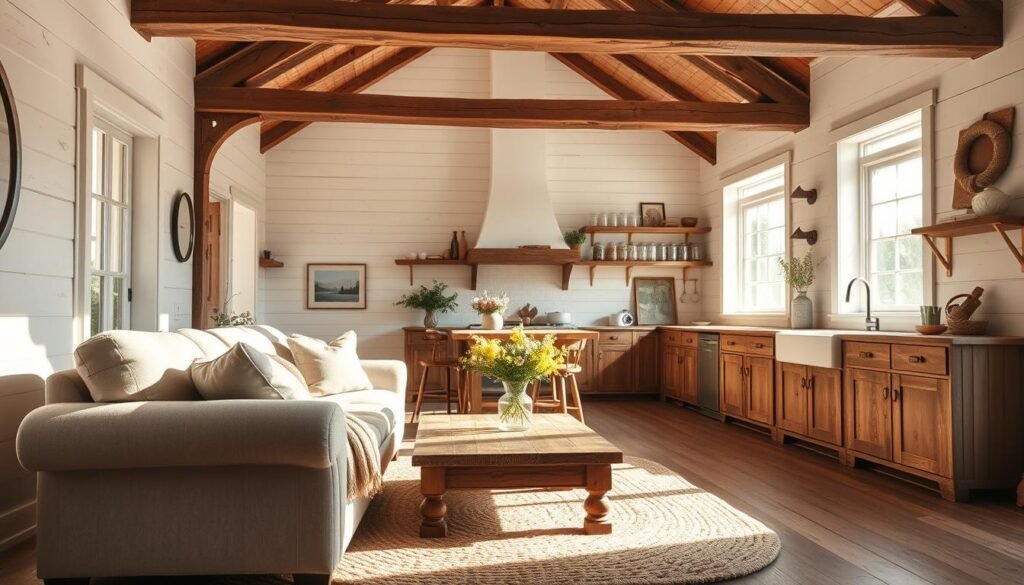
Natural wood forms the backbone of authentic farmhouse style. Reclaimed barn wood and stained cabinetry bring instant warmth and history to any room.
Metal accents provide essential contrast against all that gorgeous wood. Wrought iron light fixtures and vintage hardware create visual interest.
Texture plays a huge role in achieving that collected-over-time feel. Layering rough-hewn wood with smooth painted surfaces creates depth.
| Element | Key Feature | Common Applications | Creates This Feeling |
|---|---|---|---|
| Reclaimed Wood | Weathered texture | Floors, beams, furniture | Authentic warmth |
| Apron Sink | Deep, exposed front | Kitchen centerpiece | Functional charm |
| Open Shelving | Display space | Kitchens, living areas | Spaciousness |
| Metal Accents | Industrial contrast | Lighting, hardware | Visual balance |
| Antique Pieces | Timeworn character | Furniture, decor | Storytelling charm |
These elements combine to create that signature cozy yet refined atmosphere. For deeper insights into farmhouse style foundations, we recommend exploring established resources.
Even on a budget, you can achieve this look through creative choices. Check out these budget-friendly farmhouse decor ideas to start your transformation today.
A Step-by-Step Guide to Implementing Farmhouse Interior Design
Ready to roll up your sleeves and create a space that truly feels like your own? This practical approach ensures your vision comes together beautifully. We’ll guide you through planning and execution phases.
Planning Your Space and Setting Objectives
Before shopping, identify which farmhouse style speaks to you. Do you prefer traditional rustic elements or cleaner modern lines? Your choice sets the foundation.
Assess your existing rooms honestly. Work with your home’s natural architecture rather than fighting it. The best results enhance what’s already there.
Set clear objectives for each area. Should your living space accommodate large gatherings or provide quiet retreat? Understanding function guides smart decisions.
- Create a realistic budget prioritizing key rooms first
- Remember this style evolves over time, not overnight
- Measure carefully and consider daily traffic patterns
Executing Your Design with Purpose
Source materials strategically. Mix affordable finds with vintage treasures for authentic character. This approach creates depth without straining your budget.
Begin with foundational elements like paint colors and major furniture. Then layer in decorative details that bring warmth and personality.
These practical tips help you build confidence. Your journey should reflect your lifestyle and bring genuine joy every day!
Modern vs. Traditional Farmhouse Aesthetics
Farmhouse design isn’t one-size-fits-all – it comes in two beautiful variations with unique characteristics. Understanding these differences helps you create a space that truly reflects your personality.
Distinct Styles and Material Selections
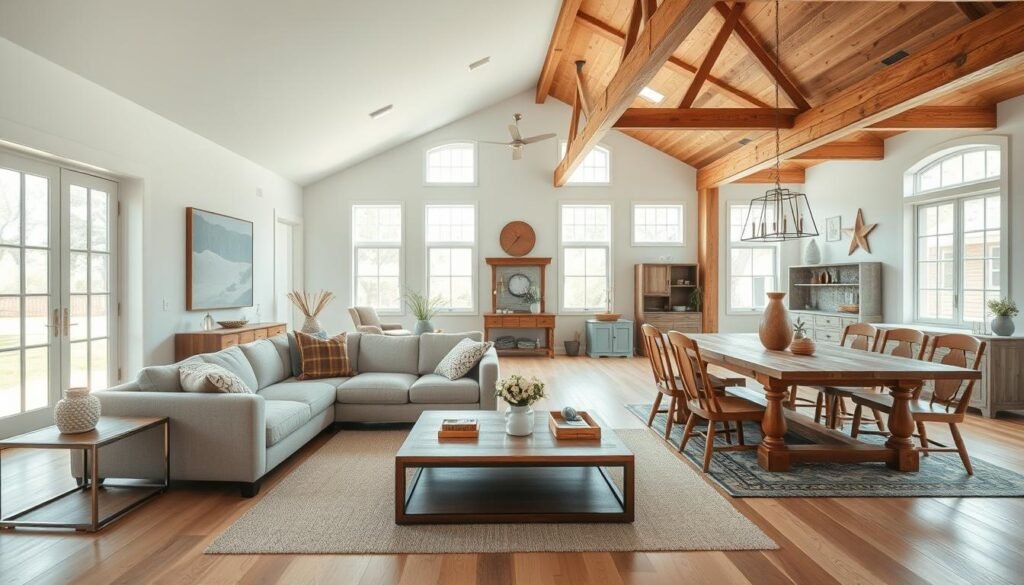
The traditional approach embraces rustic charm with live-edge furniture and visible wood grain. It celebrates imperfections that tell a story of generations past.
Modern farmhouse style brings geometric shapes and polished finishes into the mix. This contemporary twist keeps the warmth while feeling fresh and current.
Contrasting Color Palettes and Furniture Choices
Color choices really define each aesthetic. Traditional leans toward warm creams and soft whites with natural wood tones.
The modern look confidently adds blacks, grays, and richer browns for dramatic depth. Furniture selections highlight this contrast beautifully.
Traditional spaces often feature white slipcovered sofas or beige upholstery. Modern interpretations might choose leather sofas in deeper, saturated tones.
Neither approach is “better” – it’s about what makes your heart happy! You can even blend elements to create your perfect look.
Incorporating Natural Wood and Reclaimed Materials
When it comes to creating that authentic, grounded feeling in your home, nothing compares to the warmth of real wood. This material forms the absolute soul of the farmhouse aesthetic, bringing irreplaceable texture and connection to nature.
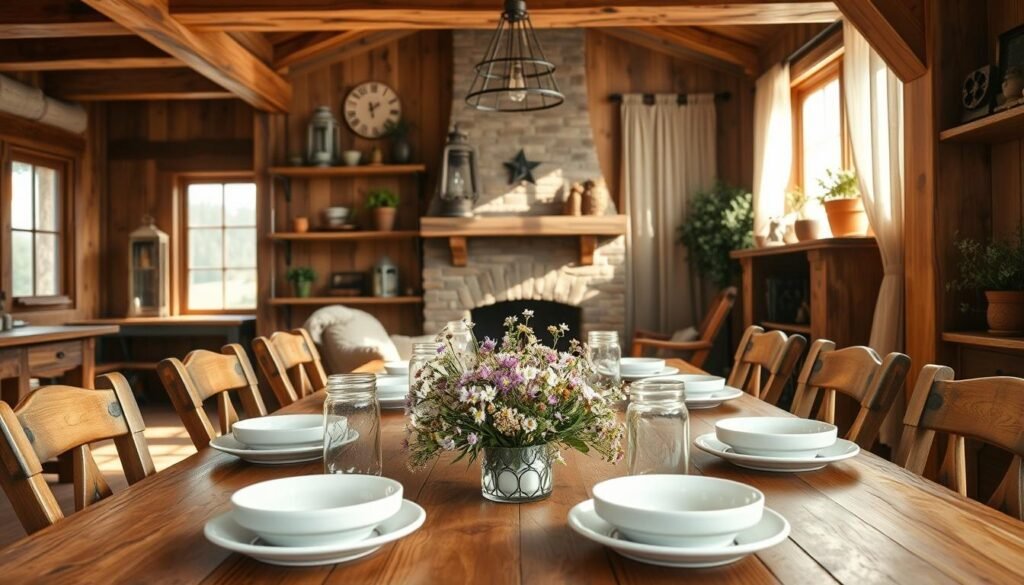
Reclaimed wood from old barns or weathered structures carries history in every grain. Those natural edges and organic contours create a laid-back, outdoor-inspired atmosphere indoors. We love using these pieces for coffee tables and wall shelves where their character truly shines.
Wide planks are a signature element of this style. Aim for boards at least 7 inches wide in rich brown finishes. They showcase the wood‘s natural beauty while making rooms feel more spacious.
Shiplap walls bring incredible charm to any room. Install them horizontally for classic appeal or vertically for a fresh twist. Don’t limit natural wood to just floors and walls—exposed beams and rustic mantels layer in warmth throughout your space.
Mix different wood tones confidently! This style actually looks more authentic when you combine various aged woods rather than matching everything perfectly. Balance all that gorgeous wood with painted surfaces and metal accents.
Your decor should feel intentionally layered rather than overwhelming. For inspiration on how wood elements transform key spaces, explore these stunning farmhouse kitchen designs that beautifully incorporate natural materials.
Designing Your Farmhouse Living Room and Dining Area
Picture your living room as the cozy heart of your home, where everyone naturally gathers to share stories and laughter. These spaces deserve special attention since they’re where life’s most cherished moments unfold.
Living Room Layout Ideas and Focal Points
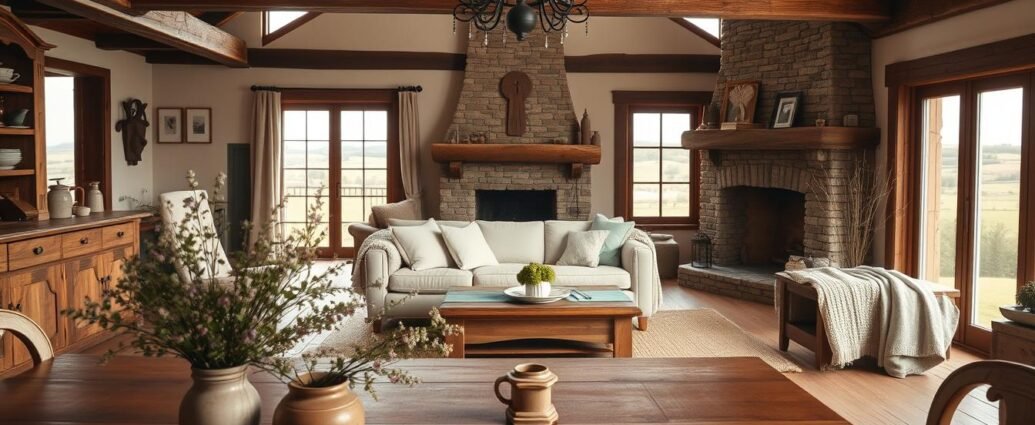
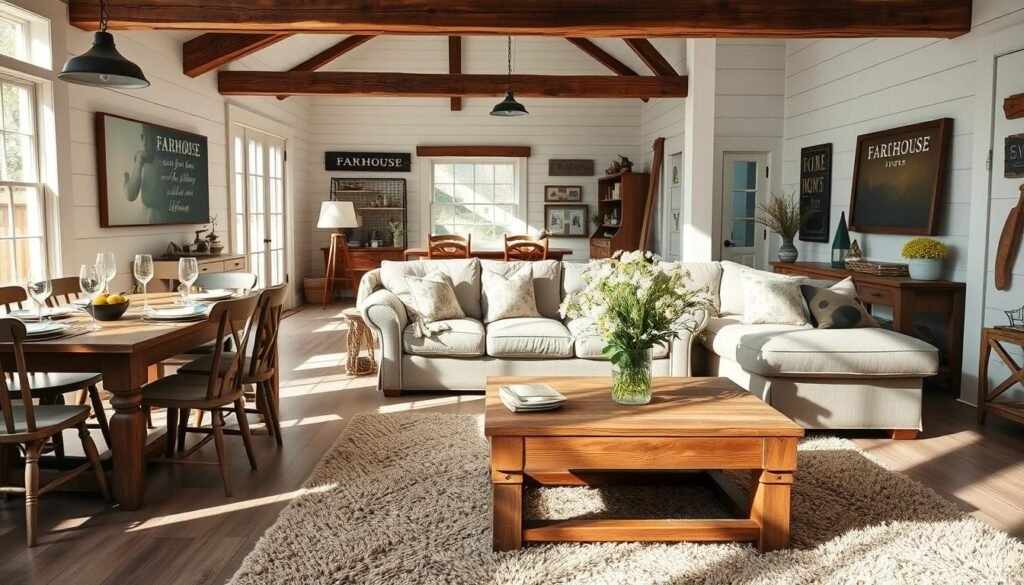
Start by identifying a natural focal point in your farmhouse living room. This could be a fireplace, large windows with a beautiful view, or an accent wall featuring shiplap or reclaimed wood.
Arrange seating to encourage conversation and connection. Slipcovered sofas in neutral tones create that relaxed, welcoming feel. Pair them with vintage leather chairs for character and comfort.
| Area | Key Layout Element | Recommended Seating | Focal Point Ideas |
|---|---|---|---|
| Living Room | Conversation-friendly arrangement | Linen sofas, wingback chairs | Fireplace, accent wall, large windows |
| Dining Area | Centered around table | Mix of chairs and bench | Statement light fixture, centerpiece |
Creating a Welcoming Dining Space with a Farmhouse Table
Your dining table becomes the centerpiece of gatherings and meals. Choose a substantial trestle or pedestal base table that invites people to sit and stay awhile.
Mix Windsor chairs with upholstered end chairs or a bench on one side. This combination offers both comfort and that collected-over-time charm. Keep your dining table decor simple and functional.
Consider an open floor plan connecting both areas. This creates better flow and makes your spaces feel more spacious while honoring traditional layouts.
Farmhouse Interior Design: Trends, Styles, and Variations
What if we told you farmhouse design isn’t a single look but a whole family of styles waiting to be explored? Each variation brings unique personality while keeping that cozy foundation we all love.
Modern Farmhouse Interior and Contemporary Twists
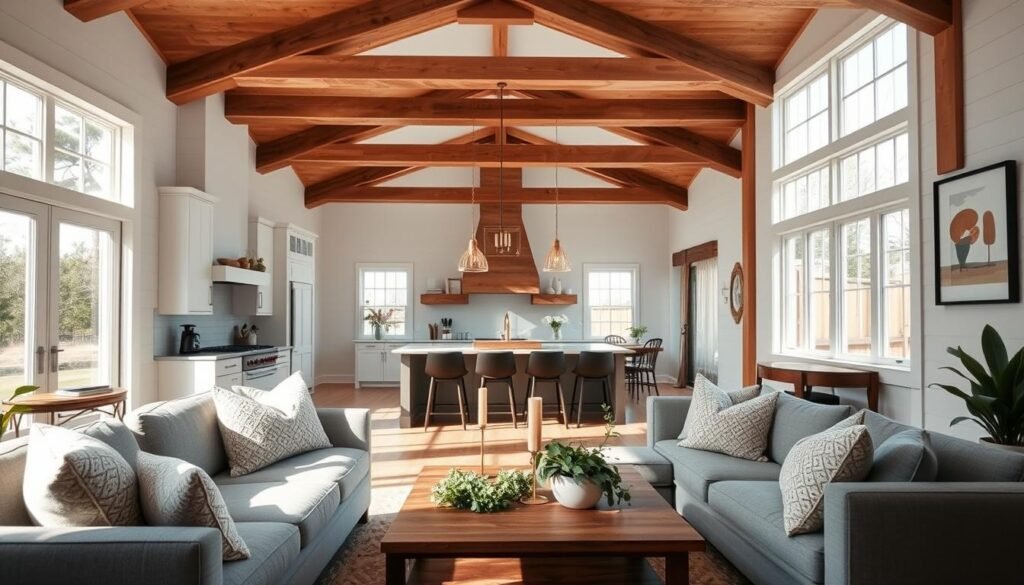
The modern farmhouse interior remains incredibly popular. It blends rustic charm with contemporary elements like velvet sofas and sleek lighting.
Contemporary twists might include bold accent walls or mixed metals. These updates keep the style interior design feeling fresh and relevant to today’s homes.
Exploring French and Industrial Farmhouse Elements
French farmhouse styles bring European elegance with soft whites and refined furniture. Think grand pedestal tables with tufted upholstery.
Industrial farmhouse style interior creates dramatic impact where urban edge meets country charm. Exposed brick and metal beams create rugged character.
| Style | Key Features | Color Palette | Best For |
|---|---|---|---|
| Modern Farmhouse | Clean lines, mixed materials | Neutrals with black accents | Contemporary living spaces |
| French Farmhouse | Curved legs, ornate details | Soft whites, natural wood | Elegant dining areas |
| Industrial Farmhouse | Exposed elements, metal frames | Black, warm browns | Urban lofts, bold statements |
Don’t feel locked into one approach! The most authentic homes blend elements from different farmhouse styles. For inspiration on mixing these looks in key areas, check out these stunning farmhouse kitchen designs.
Tips for Creating a Warm and Inviting Atmosphere
Have you ever stepped into a room that immediately wraps you in comfort? That feeling doesn’t happen by accident. It’s carefully crafted by layering light, color, and texture.
Lighting sets the entire mood for your room. Choose fixtures that match your preferred style. A rustic metal chandelier creates an industrial vibe. A gold pendant light adds French elegance.
Lighting, Color, and Texture Accents
Don’t forget the magic of real candlelight! Cluster thick candles in vintage holders on your table or mantel. The flickering glow adds instant warmth and intimacy.
Your color palette forms the foundation. Stick with soft whites, beiges, and warm browns. Then, add depth with deeper accent colors in textiles and decor.
Architectural details build character. Exposed wood ceiling beams and shiplap walls add authentic texture. Shiplap planks can run horizontally or vertically for different effects.
Bring life into your space with unique plants. Skip common faux options. Choose fiddle leaf figs or olive trees in textured pots. Woven baskets are both stylish and practical for storage.
| Element | Creates This Feeling | Best Placement | Pro Tip |
|---|---|---|---|
| Vintage Chandelier | Rustic, industrial charm | Dining area, entryway | Choose one with visible metal details |
| Candle Clusters | Intimate, flickering warmth | Mantel, console table | Use varying heights for visual interest |
| Shiplap Walls | Authentic, textured character | Accent wall, entire room | Horizontal planks make rooms feel wider |
| Woven Baskets | Organic, collected-over-time | Beside fireplace, under console | Stack different sizes for a layered look |
| Statement Plants | Fresh, lively energy | Empty corners, near windows | Choose plants with large, dramatic leaves |
These tips work together to create that welcoming sense of home. Soft lighting, calm colors, and natural textures combine in the perfect way. Your space will feel like a genuine hug!
Virtual Staging and Innovative Farmhouse Styling Techniques
Imagine seeing your perfect room before you even buy a single piece of furniture. Virtual staging makes this possible! This digital magic transforms empty spaces into welcoming rooms filled with rustic charm.
This technology helps you visualize different layouts and decor choices. You can test that large dining table or try various color schemes. All without spending a dime on actual furniture.
Benefits of Virtual Staging for Your Home
Virtual staging offers incredible advantages for homeowners and sellers alike. It helps potential buyers envision the warm atmosphere your space can offer.
Even if you’re not selling, these tools let you experiment risk-free. Try multiple style variations quickly. Discover what truly resonates with your personal taste.
Digital Tools to Bring Your Vision to Life
Modern staging services provide access to diverse farmhouse interior design options. They create lifelike images that help you make confident decisions.
Use these innovative tools alongside our practical tips. See how furniture actually fits in your room. Avoid costly mistakes that don’t match your vision.
These digital solutions bridge the gap between inspiration and reality. Your farmhouse dreams become tangible and achievable!
Conclusion
Your path to creating a home filled with character and warmth is now clear! We’ve journeyed through centuries of style evolution to modern design techniques that make this aesthetic accessible to everyone.
Remember the key elements that create that authentic welcoming feel: natural wood, thoughtful color choices, and meaningful decor. Whether you prefer a modern farmhouse style or traditional charm, your space should reflect your unique story.
The most successful rooms blend functionality with beauty. Your dining table becomes a gathering place, while your living room offers comfort for daily life. Trust your instincts as you layer in vintage finds and personal touches.
Your house transformation awaits! Take your time, enjoy the process, and create a sanctuary that truly feels like home. We can’t wait to see what beautiful designs you bring to life!