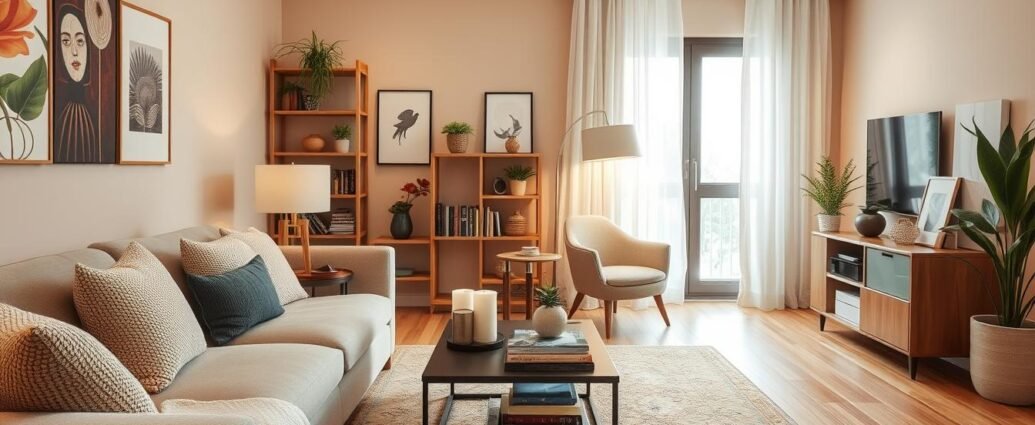
Remember that feeling of walking into a friend’s home and it just feels like *them*? That cozy, welcoming vibe that makes you want to stay awhile? We believe your home should give you that exact same feeling every single day. It’s more than just a place to sleep; it’s your personal sanctuary.
Your main gathering area is the heart of your home. It’s where life happens—from quiet mornings with coffee to laughter-filled evenings with friends. We’re here to help you make this special spot both beautiful and perfectly functional, no matter its size or shape.
This guide is packed with inspiring and practical tips used by top designers. We’ll show you how to overcome common challenges and create a look you’ll absolutely love. Let’s start this creative journey together!
Key Takeaways
- Your living area should be a true reflection of your personality and lifestyle.
- Smart design can make even the coziest spaces feel open and inviting.
- You can achieve a high-end look without a professional decorator’s budget.
- Learn to work with rental rules and awkward layouts creatively.
- Small changes in color, lighting, and furniture arrangement have a huge impact.
- Functional design supports your daily life and makes your home more enjoyable.
Introduction to Modern Living Room Transformations
What if your primary gathering spot could be both stylish and genuinely comfortable? Today’s approach to modern living room design has evolved dramatically from the formal spaces of the past.
“I love the chairs because they bring in an element of casualness that my client was looking for as a younger person who enjoys having people over to watch movies and hang out. It doesn’t have to feel so sophisticated all the time.”
The beauty of contemporary transformations lies in their versatility. You can embrace bold maximalist energy or lean into serene minimalism—there’s no single “right” way to design your space!
Today’s approach celebrates personality over rigid rules. Mix vintage finds with contemporary pieces. Blend different textures and patterns. Create an environment that tells your unique story.
We’re seeing exciting trends like curved furniture, multifunctional pieces, and bold color choices. These innovations show that modern design supports your lifestyle rather than dictating it.
Whether starting fresh or refreshing your existing area, these transformations offer endless possibilities. The key is understanding fundamental principles while giving yourself permission to experiment and create a space that genuinely feels like home.
Inspiring Small Living Room Layouts
Ever feel like your cozy gathering spot could use a layout that maximizes every square inch? We believe even the most compact areas can feel spacious and inviting with the right approach. Strategic planning turns limitations into opportunities for creative design.
The secret lies in choosing pieces that serve multiple purposes while maintaining clear walking paths. Every element should contribute to both function and flow.
Space-Saving Furniture Solutions
Multifunctional furniture is your best friend in a compact area. Think nesting tables that tuck away neatly or ottomans with hidden storage compartments. These clever pieces help free up precious floor space while maintaining style.
Designer Liz Dutton demonstrates this beautifully by using a low-profile antique coffee table with built-in book storage. Modern designers are creating slim-profile pieces specifically for compact homes. A sofa with hidden storage or a lift-top coffee table can transform your daily routine.
Smart Storage and Organization
Effective storage solutions maintain that clean, uncluttered look that makes small living room areas feel more expansive. The key is giving everything a designated home while keeping essentials accessible.
Use attractive baskets for throws and install floating shelves for display items. For more small living room ideas, consider how these strategies can work together. The goal is to maximize space without sacrificing personality.
Thoughtful organization creates a harmonious environment where every item has its place. Your compact area will feel both functional and beautifully curated.
Maximizing Floor Space in Your Apartment
The secret to making any compact area feel larger lies in one simple principle: maximizing what you already have. Strategic planning can transform even the coziest spaces into functional, breathable environments that work beautifully for your lifestyle.
We’ve seen incredible transformations where simply rethinking furniture placement creates dramatic improvements. The key is understanding your room’s natural focal point and arranging pieces to enhance it.
Layout Planning and Furniture Arrangement
Designer Amanda Jacobs demonstrates brilliant layout planning by facing chairs toward a couch rather than a television. This approach prioritizes human connection while maximizing flow.
Wall-mounting elements can free up incredible amounts of floor space. Designer Rasheeda Gray mounted a large television flush to the wall, proving you don’t need to sacrifice screen size.
“Floating furniture creates visual lightness that makes rooms feel larger because you see more floor surface. It’s a simple trick with dramatic results.”
Sarah Solis used a floating desk that seemingly levitates, taking up less visual square footage than traditional pieces. A backless stool keeps the look streamlined and airy.
Don’t be afraid to float furniture away from walls. Pulling a sofa a few inches creates space for a narrow console table behind it. This adds storage without consuming additional square footage.
| Strategy | Space Saved | Visual Impact | Best For |
|---|---|---|---|
| Wall-mounted TV | High | Sleek, modern | Entertainment areas |
| Floating furniture | Medium-High | Airy, spacious | Compact rooms |
| Multi-functional pieces | Medium | Organized, efficient | Small living areas |
| Furniture away from walls | Low-Medium | Improved flow | Traffic patterns |
Creating a scaled floor plan before moving heavy pieces helps you experiment safely. Consider your daily routines rather than traditional rules. For more inspiration, explore these small living room decorating ideas that maximize every inch.
Color and Decor: Infusing Personality into Your Living Room
Ready to see how a simple can of paint can completely redefine your space? Color is your most powerful and affordable tool for creating a room that feels uniquely yours. It sets the mood and tells your story without a major renovation.
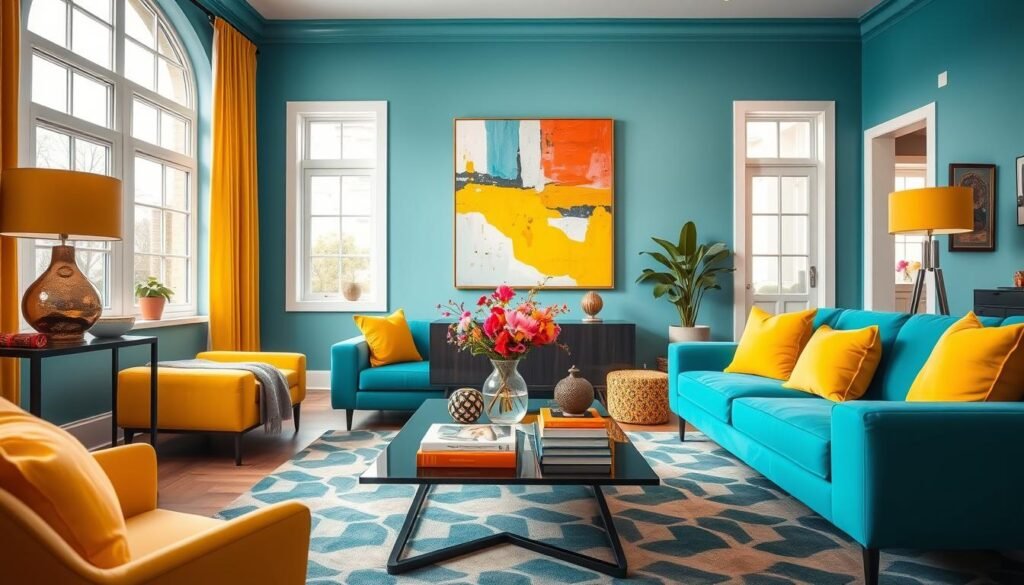
We love helping you explore beyond safe neutrals. Strategic color choices bring incredible energy and emotional resonance to your home.
Using Bold Accent Colors and Trim
You don’t need to paint every wall to make a statement. Designer Alexander Reid brilliantly painted only the trim in a striking hue. This adds personality while keeping the space feeling open and bright.
It’s a perfect solution for renters or anyone hesitant about full commitment. This approach focuses on architectural details for maximum impact.
“Color is the one tool that can instantly change the entire feeling of a room. It’s the quickest and most dramatic transformation you can make.”
For a bolder look, consider a single statement wall. Designer Srila Chatterjee used vibrant purple walls paired with unique finds. This created a visually stunning and deeply personal environment.
Jewel tones like emerald and sapphire bring sophisticated richness. Designer Summer Thornton used jewel-toned seating for a luxurious feel. These deep, saturated colors make a confident statement.
| Color Strategy | Commitment Level | Visual Impact | Best For |
|---|---|---|---|
| Accent Trim | Low | High Detail | Renters, Small Spaces |
| Statement Wall | Medium | Dramatic Focus | Creating Focal Points |
| Jewel Tones | High | Luxurious & Rich | Confident, Timeless Looks |
Remember, warm colors energize, while cool colors promote calm. Choose hues that support how you want to feel in your home. Your decor choices, from pillows to art, continue your color story beautifully.
Creative Wall Treatments and Art Displays
Your walls are more than just boundaries—they’re canvases waiting for your creative touch! We love helping you transform these surfaces into stunning focal points that reflect your personality.
Mural wallpaper creates incredible impact without covering every surface. Designer Sarah Stacey used a crane mural that layers beautifully with tall curtains. This approach adds artistic flair while maintaining sophistication.
Ombré walls offer magical depth and dimension. The Parisian firm Uchronia created a jewel-box effect using gradient techniques. This treatment shifts beautifully throughout the day with natural light.
Patterned wallpaper can actually make small spaces feel larger. Patrick Gallagher used subtle diamond patterns to visually heighten a ceiling. The right scale creates an illusion of expansive space.
When displaying art, sometimes one statement piece makes the strongest impact. Architect Lee Mindel showcased a spherical artwork that defined an entire room’s aesthetic. Less can truly be more when you choose wisely.
| Treatment Type | Visual Effect | Commitment Level | Best Room Size |
|---|---|---|---|
| Mural Wallpaper | Dramatic focal point | Medium (removable options) | All sizes |
| Ombré/Gradient | Depth and movement | High (paint commitment) | Medium to large |
| Patterned Wallpaper | Space-enhancing | Medium to high | Small to medium |
| Statement Art | Personal expression | Low (easily changed) | All sizes |
Gallery walls tell your personal story through curated collections. Plan your layout on the floor first. Maintain consistent spacing and anchor at eye level for a cohesive display that feels intentional.
Elevating Your Living Room with Statement Furniture
Have you ever walked into a room where one piece of furniture immediately captured your attention? That’s the power of statement pieces! We believe investing in one or two special items creates more impact than filling your area with multiple ordinary pieces.
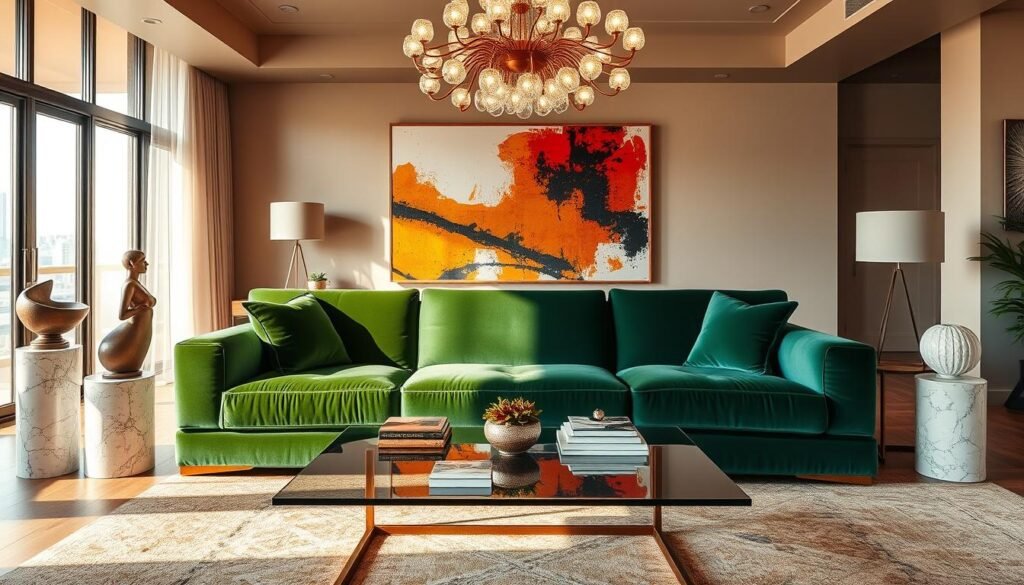
Professional designers know this secret well. Their choices transform spaces from basic to breathtaking.
Curved and Unique Sofas
Curved sofas bring organic softness that traditional boxy designs can’t match. Interior designer Nicole Hollis demonstrated this beautifully with a Vladimir Kagan sofa in a California desert retreat.
These pieces work wonderfully in various room sizes. Designer Sarah Stacey created a welcoming corner with a curved sofa that facilitates better traffic flow. The rounded edges soften architectural lines naturally.
Upholstery choices can transform simple sofas into focal points. Alexandra Hayden used bold Kuba textile for Marisa Tomei’s New York home. Don’t be afraid to choose rich textures or vibrant patterns!
Designer Chairs That Define the Space
Unique chairs create layered, interesting seating arrangements. The Ashe Leandro design duo mixed a curvy lounge chair with a custom sofa in a Park Avenue apartment.
Swivel chairs offer flexibility that stationary options lack. Augusta Hoffman chose Blasco Clichy swivel chairs for casual comfort perfect for hosting gatherings. The rotation feature adds functional versatility.
When selecting statement furniture, consider both form and function. Test pieces in person whenever possible. Imagine how each item will support your daily routines. For more inspiration, explore these best living rooms featuring exceptional designer choices.
The most successful pieces look stunning while genuinely working for your lifestyle. They become the heart of your home’s story!
Lighting Ideas for a Welcoming Living Space
Lighting is the secret ingredient that turns a house into a home—let’s explore how to master it! We believe proper illumination does more than just brighten your area; it creates ambiance and highlights your favorite features.
Natural light is your most valuable asset. Designer Sam Sacks brilliantly made a standout window the focal point, allowing sunshine to flood the space. He kept colors neutral and added texture with elements like faux fur throws.
Statement fixtures can define your entire aesthetic. James Williams and Jonno Burden installed custom pendant clusters that draw the eye upward. This creates an airy environment that celebrates vertical dimensions.
Layering different types of illumination creates depth and flexibility. Start with overhead ambient lighting for general brightness. Add task lighting near seating areas and accent lights to highlight artwork.
Pendant lights offer wonderful opportunities for personality. Designer Summer Thornton used matching fixtures from Urban Electric Co. These create symmetry and visual balance over specific zones.
We always recommend dimmer switches! They give you complete control over ambiance. Your area transitions seamlessly from energizing mornings to cozy evenings.
Choosing the Perfect Sofa and Seating Options
Your sofa isn’t just furniture—it’s the centerpiece that defines your daily comfort and social interactions. We want to help you make this important decision with confidence!
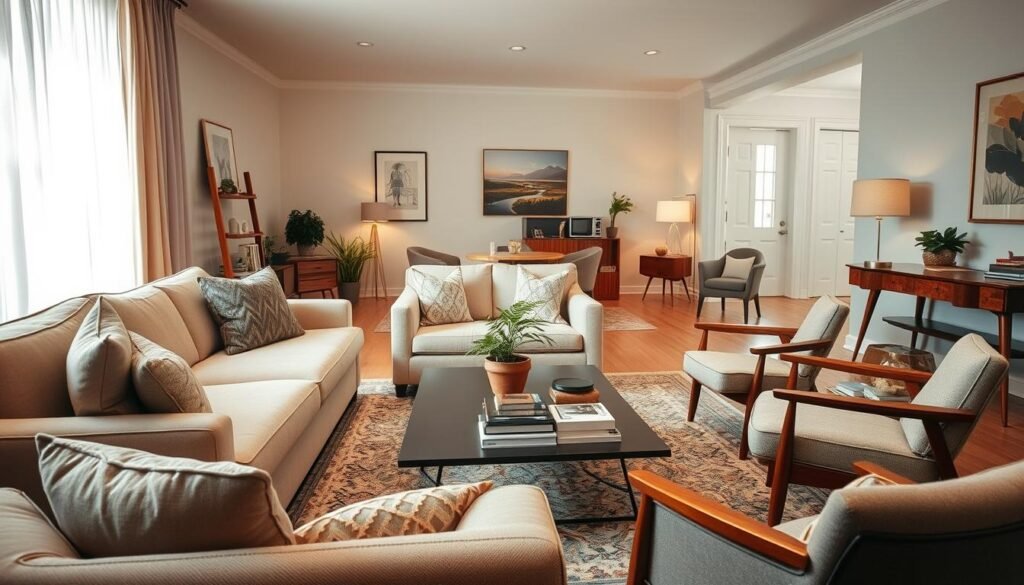
This choice represents your biggest investment in your main gathering area. It shapes how you’ll use the space every day.
Oversized Sectionals vs. Compact Seating
The debate between large sectionals and compact arrangements depends on your room size and lifestyle. Designer Alexander Reid proved that even substantial pieces can work beautifully in smaller areas with high ceilings.
Oversized sectionals offer incredible seating capacity for entertaining. They create a cozy cocoon for everyday lounging too.
Compact seating with separate chairs provides more flexibility. Designer Amanda Jacobs turned chairs toward a couch to prioritize conversation. This thoughtful arrangement shapes how families connect.
Don’t forget creative alternatives! Designer Lichelle Silvestry chose a daybed-style piece instead of a traditional sofa. This maintained sightlines in a compact Parisian room.
When testing furniture, pay attention to seat depth and cushion firmness. Sit for 10-15 minutes to ensure long-term comfort. Your perfect seating should support both your body and your lifestyle!
Designing with Textures and Patterns for Visual Interest
Have you ever noticed how some spaces feel rich and layered while others seem flat? That magical depth comes from thoughtful use of textures and patterns. They create the visual interest that transforms a basic room into something extraordinary.
We believe texture is just as important as color in great design. Designer Sam Sacks shows this beautifully with faux fur throws and structured lantern pendants. Mixing soft and hard elements creates that comforting, layered feel we all love.
Don’t be afraid to combine different textures throughout your space. Think chunky knits against smooth leather or rough wood beside sleek metal. These contrasts engage your senses and make areas feel more inviting.
When mixing patterns, French & French Interiors proved busy prints can work wonderfully. They layered multiple blue patterns in a compact space, creating a jewel-box effect. The secret? Choose patterns with shared colors or similar scales.
Start with one bold pattern you love as your anchor. Then add smaller doses of secondary patterns. Always include solid colors to give the eye resting spots. This approach works beautifully in any living room.
Remember Raëd Abillama’s wool and silk rug in an industrial space? A single textured element can soften hard edges and add hominess. Think beyond fabrics to ceramics, plants, and natural materials. These catch light differently, making your living area feel dynamic all day.
Incorporating Multifunctional and Floating Furniture
Imagine furniture that works as hard as you do, serving multiple purposes while keeping your space feeling open and airy! We’re excited to show you how these clever solutions maximize both physical area and functionality.
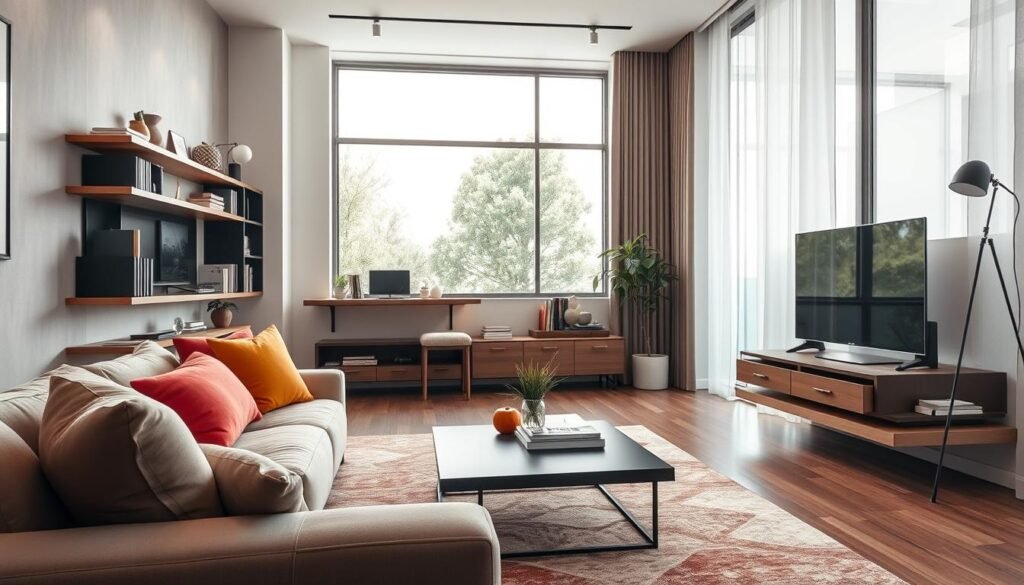
Floating furniture creates visual lightness by revealing more floor surface. Designer Sarah Solis used a desk that seemingly levitates in a Los Angeles family’s den. This approach takes up much less visual square footage than traditional designs.
Multifunctional pieces are absolute game-changers for compact areas. Look for ottomans with hidden storage or coffee tables that lift to dining height. Each piece should serve multiple purposes to justify its footprint.
Even your coffee table can work smarter! Designer Liz Dutton stored books under a low antique table while using a small side table for drinks. This thoughtful arrangement maximizes utility without clutter.
We encourage creative thinking about furniture placement. A narrow console behind your sofa might serve as a desk or bar. The most successful spaces are those where furniture pulls triple duty without sacrificing comfort.
Enhancing Small Living with Minimalist Design
What if your small living area could feel both spacious and deeply personal? Minimalist design creates calm, organized environments that make compact spaces feel more expansive. It’s about intentional curation rather than deprivation.
Designer Brian Paquette demonstrates this beautifully with elegant Nordic-style rooms. He proves minimalist design doesn’t need to feel stark. Warmth comes from careful element selection.
Neutral Palettes and Clean Lines
Neutral foundations create sophisticated backdrops. Think warm whites, soft grays, and natural wood tones. These allow architectural features to shine without overwhelming senses.
“Minimalism means editing until what remains feels essential. Each piece should serve a purpose while bringing joy.”
Clean-lined furniture helps small living spaces feel organized. Choose straightforward designs free from excessive ornamentation. Focus on beautiful proportions and quality craftsmanship.
| Design Element | Visual Impact | Space Effect |
|---|---|---|
| Neutral Color Palette | Calm, Cohesive | Expansive |
| Clean-Line Furniture | Organized, Intentional | Uncluttered |
| Strategic Negative Space | Breathable, Balanced | Open |
Hannah Ozburn’s patterned Roman shades show how texture adds warmth. The pattern provides interest while neutral colors maintain calm. Your small living area becomes serene yet inviting.
apartment decorating ideas living room: Expert Tips and Tricks
What if you could access the same insider knowledge that top designers use to create stunning interiors? We’re sharing professional secrets that transform your space from basic to breathtaking.
Always begin with a clear vision. Create an inspiration board before shopping. This prevents costly mistakes and ensures cohesive results.
Scale and proportion matter tremendously. Measure carefully and use painter’s tape to map furniture footprints. Proper sizing makes your area feel intentional.
Consider sightlines from every angle. Walk through your home and notice views from doorways and seating positions. Arrange to highlight beautiful elements.
| Expert Strategy | Key Benefit | Difficulty Level |
|---|---|---|
| Inspiration Board | Cohesive Vision | Easy |
| Proper Scaling | Balanced Look | Medium |
| Sightline Planning | 360° Beauty | Medium |
| Layered Approach | Collected Feel | Easy |
| Quality Window Treatments | Elevated Style | Hard |
Layer elements gradually for a collected-over-time feel. Start with foundational pieces, then add textiles and personal treasures.
Don’t underestimate editing’s power. Remove items that don’t serve function or bring joy. Your remaining pieces will shine brighter.
Maximalist vs. Minimalist: Finding Your Personal Style
Have you ever felt torn between wanting a calm sanctuary and a vibrant space full of personality? The maximalist versus minimalist debate isn’t about choosing extremes. It’s about discovering where you fall on the spectrum based on how you actually live!
Understanding both approaches helps you make intentional choices that reflect your authentic self. This creates a home that supports your wellbeing rather than following trends that might not suit your lifestyle.
Embracing Bold Details
Maximalism celebrates abundance and visual richness. Designer Alexandra Hayden captured this beautifully in Marisa Tomei’s New York home. She used a sofa upholstered in Kuba textile with an amorphic floor lamp and velvet cushions.
Minimalism prioritizes essentialism and calm curation. This doesn’t mean your space needs to feel cold. Warm minimalism incorporates natural materials while maintaining that breathable, organized aesthetic.
Modern maximalism balances irreverence with intentional design principles. Parisian firm Uchronia mixed vintage moldings with bright colors in a law office conversion. They proved maximalism means abundantly layered with purpose.
Even minimalist spaces benefit from one bold statement piece. The difference? Maximalists layer multiple dramatic elements. Minimalists let one special item shine against a simplified backdrop.
We encourage experimenting with both approaches in different areas. Your main gathering area might lean maximalist with collected treasures. Another room could embrace minimalist serenity. The most successful spaces often blend elements from both philosophies!
Finding your personal style means honestly assessing what brings you joy. If visual abundance energizes you, embrace maximalism. If empty surfaces feel peaceful, lean minimalist. Your home should reflect your authentic self.
Unique Ways to Use Rugs and Carpets for Style
Your floor covering isn’t just a practical necessity—it’s a powerful design tool waiting to transform your space. We believe the right rug can completely change how your entire room looks and feels.
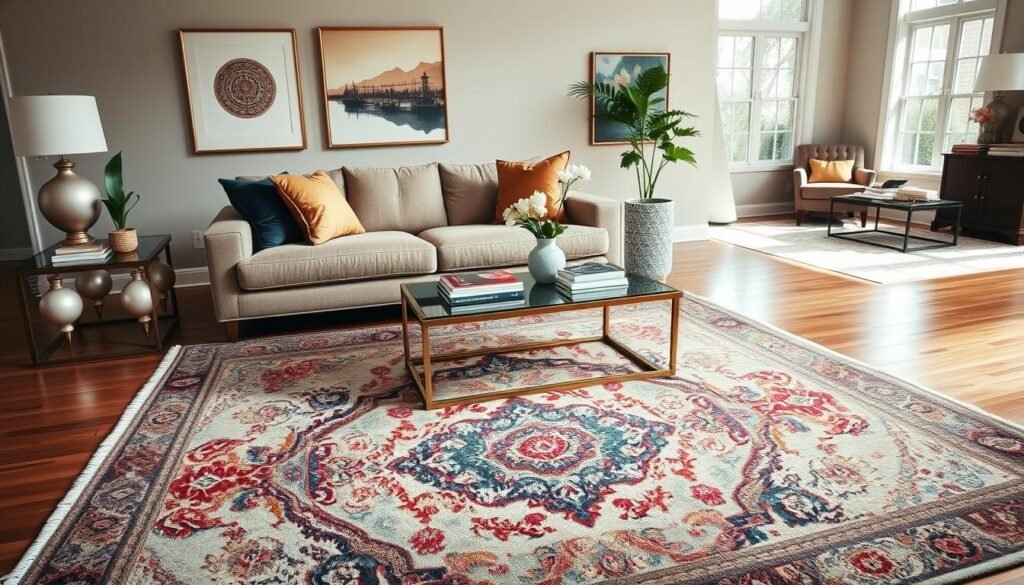
Designer Raëd Abillama demonstrated this beautifully by adding a luxurious wool and silk area rug to balance industrial elements. This creates that essential homey feeling that makes spaces more welcoming.
The shape of your rug offers creative opportunities beyond traditional rectangles. Designer Noz Nozawa used a curvy rug that enlivens the room both tonally and texturally. This creates refined yet comfortable informal living.
Layering rugs is a designer trick that adds incredible depth and texture. Try placing a smaller patterned area rug over a larger natural fiber base. This creates dimension and allows seasonal style changes.
Proper sizing makes your seating arrangement feel cohesive and intentional. We recommend rugs large enough for furniture legs to rest on them. This anchors your space with professional polish.
Don’t be afraid to use a bold carpet as your color starting point. A beautiful pattern can inspire your entire palette and tie elements together harmoniously. These decor pieces work wonderfully with strategic floor coverings.
The Role of Accessories in Creating a Cozy Atmosphere
Those final touches you add to your space are what truly make it feel like home. While furniture provides structure, accessories infuse soul and personality into your environment.
Ishka Designs demonstrated this beautifully in a Brooklyn townhouse. They layered intriguing ceramics and eye-catching artwork to create that perfect balance between luxury and lived-in comfort.
Artwork and Sculptural Pieces
Statement art creates instant focal points that reveal your aesthetic sensibilities. Architect Lee Mindel showcased how one spherical piece by Jose Dávila can define an entire room’s character.
Sculptural elements add dimensional interest that flat artwork cannot provide. Designer Srila Chatterjee included a tiger sculpture from Kerala alongside flea-market finds. These decor items catch light differently throughout the day.
Decorative Ceramics and Textiles
Handmade ceramics bring artisanal beauty and textural warmth to your space. Group pieces in varying heights on shelves or consoles for visual impact.
Textiles like throw pillows and blankets are the easiest way to create cozy atmosphere. Layer different textures—chunky knits against smooth velvets—for tactile comfort.
| Accessory Type | Visual Impact | Cozy Factor | Best Placement |
|---|---|---|---|
| Statement Artwork | High | Medium | Focal Wall |
| Sculptural Pieces | Medium-High | High | Tables, Shelves |
| Handmade Ceramics | Medium | High | Grouped Displays |
| Layered Textiles | Medium | Very High | Seating Areas |
Choose accessories that tell your personal story. Your home should reflect your authentic life, not just look like a magazine spread.
Conclusion
As we wrap up this design journey together, remember that the most meaningful transformations happen when you trust your instincts. Your living room should reflect your personality, not follow strict rules.
The best space evolves gradually. Start with foundational changes, then add personal touches over time. For budget-friendly transformations, focus on what brings you joy.
Your apartment is your canvas. Every constraint is an opportunity to create something uniquely yours. This room will grow with you as your life changes.
We’re honored to be part of your design adventure. Now go create a home that feels authentically, wonderfully you!