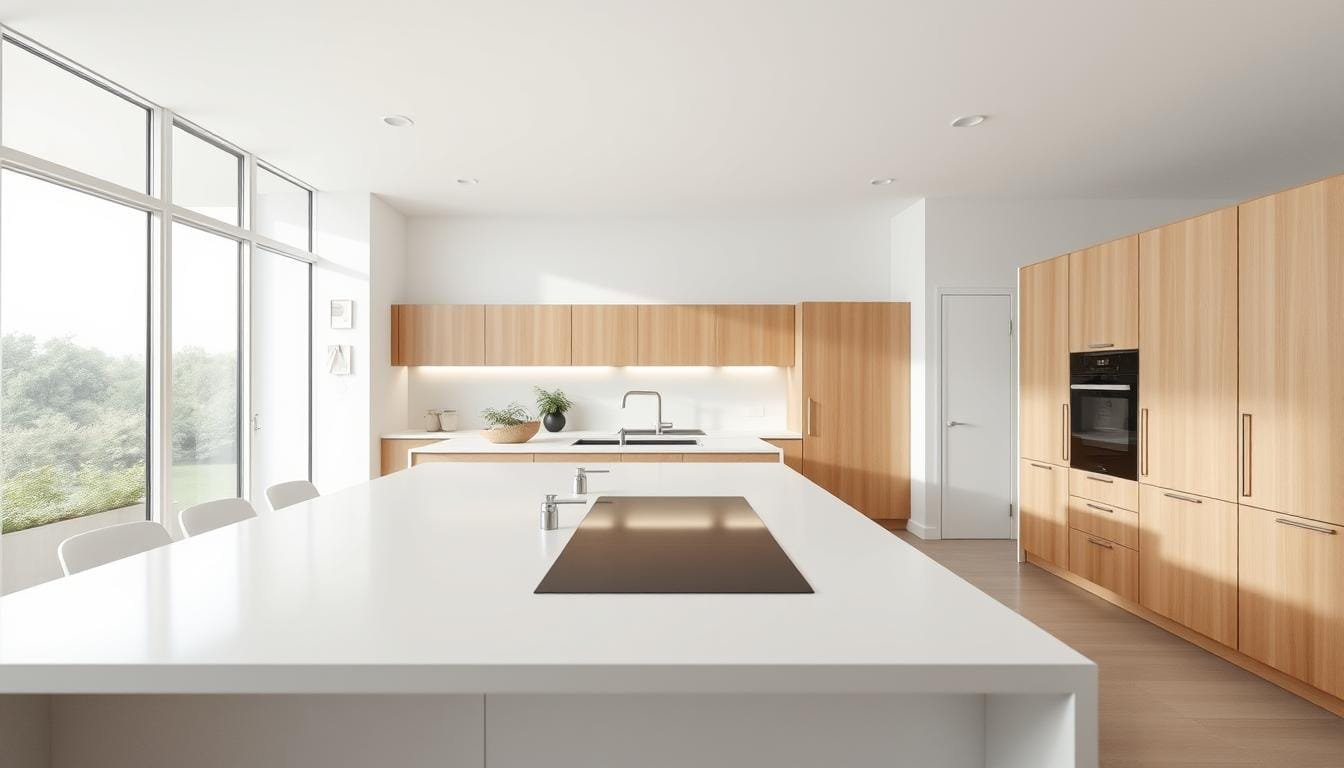
What if your kitchen could do more than just look beautiful? What if it actively supported your daily life, making every moment feel calmer and more intentional?
We’re opening the door to a whole new way of thinking about this vital room. The focus is shifting from a simple visual update to creating a space that truly works for you. It’s about building a room around your habits, not just the latest trends.
Gone are the days of cold, sterile surfaces. The movement for 2026 embraces warm minimalism. Think natural textures and thoughtful layouts that create a sense of harmony. This approach feels comfortable and welcoming for everyday life.
Imagine a room where every corner and detail works together effortlessly. Cooking, cleaning, and gathering become simpler and more enjoyable. This isn’t about a fleeting statement; it’s about creating a functional, beautiful heart of your home that will feel fresh for years to come.
Whether you’re planning a full renovation or just seeking inspiration, we’re here to guide you. Let’s explore how to transform your space with smart storage and cohesive visual ideas.
Key Takeaways
- The focus for 2026 is on kitchens that support your habits, not just aesthetics.
- “Warm minimalism” replaces cold, sterile designs with comfort and natural textures.
- Thoughtful layouts create a harmonious space that makes daily tasks feel effortless.
- This approach aims for long-lasting functionality and beauty, beyond short-lived trends.
- Transforming your space is about balancing minimalist elegance with real-life needs.
Introduction: Exploring the Future of Minimal Kitchen Design
The secret to a space that never goes out of style lies in its ability to evolve with you. It’s not about chasing every new look, but building a foundation that works beautifully for years.
We’re moving towards rooms that support your daily life with quiet intention. This means every choice, from the layout to the lighting, serves a real purpose. The goal is a room that feels like a natural extension of your habits.
The smartest approach follows a logical sequence. First, consider how you move through the room. Then, plan storage, select materials, choose colors, and finalize lighting. This order ensures everything works together effortlessly.
This thoughtful method creates a harmonious environment. Your experience cooking and gathering becomes simpler and more enjoyable. You’ll have a room that balances clean lines with genuine comfort and personality.
Evolving Kitchen Design: Trends Shaping 2026
The most exciting transformations are happening right beneath the surface. We’re watching spaces mature from flashy to sophisticated.
Global philosophies are beautifully converging. Japandi brings serene simplicity. Wabi-Sabi celebrates natural imperfection. Together, they create a deeply calming mood.
Sustainability is now the foundation of smart kitchen design. It pushes us toward materials and solutions that truly last. This aligns perfectly with core minimalist design principles.
“Quiet luxury” transforms these rooms. High-end craftsmanship speaks softly through quality. Ornate details are replaced by artisanal craft.
The best kitchens blend seamlessly with living areas. This creates a cohesive, open flow throughout your home.
- Technology stays invisible with flush cooktops and hidden appliances.
- Storage remains ready but completely out of view.
- Layouts tighten efficiently around your actual workflow.
These trends aren’t about following one movement. They work together to create kitchens that are both beautiful and deeply functional. This approach ensures your space feels current without ever becoming dated.
Key Elements of Minimal Kitchen Design
Let’s build a room that truly understands your daily rhythm. The magic happens when you get the fundamentals right. It all starts with how you actually move and use the area every single day.
Streamlined Layouts and Functional Zones
Think about your morning coffee routine. Consider your dinner prep flow and cleanup process. These real-life patterns should dictate where everything belongs.
Smart layouts make every square inch work harder for you. They aren’t about shrinking the room. They are about creating intelligent, purpose-driven zones.
Functional zones act like invisible helpers. They keep everything perfectly organized and within reach.
The most efficient spaces are built around tasks, not just appliances.
| Zone | Core Purpose | Key Components |
|---|---|---|
| Prep Zone | Chopping, mixing, assembling | Clear counter space near sink, cutting boards, utensils |
| Cooking Zone | Heating, sautéing, baking | Stove, oven, pots, pans, spices |
| Cleanup Zone | Washing, drying, trash | Sink, dishwasher, drying rack, cleaning supplies |
Clutter-Free Aesthetics and Purposeful Details
The secret to a clean look is simple. Give every item a dedicated home. This prevents things from collecting dust on your counters.
We love the idea of a single “clutter zone.” It’s a spot with closing doors for your toaster, coffee maker, and charging cables. This contains daily items that would otherwise create visual noise.
Purposeful details mean every element earns its place. It must serve a real function, while also contributing to the beautiful whole. By focusing on these key elements first, you build a foundation that ensures your space works as wonderfully as it looks.
Warm Minimalism: Bringing Comfort and Cohesion
Have you ever walked into a room that instantly makes you feel at ease? That’s the power of warm minimalism. It combines clean lines with genuine comfort.
This approach creates spaces that welcome you home. They feel intentional without being cold or sterile.
Subtle Color Palettes and Warm Neutrals
Instead of stark whites, we’re embracing softer warm neutrals. Think cream, sand, clay, and soft taupe. These tones create a cozy atmosphere.
The right color choices make your kitchen feel inviting throughout the day. They glow beautifully in both morning light and evening ambiance.
Natural Textures and Matte Finishes
Natural textures add depth without visual clutter. Visible wood grain and subtle stone patterns reveal more detail up close.
Matte finishes are practical superstars. They soften harsh glare and hide fingerprints easily. These finishes make warm colors appear richer.
The secret lies in how surfaces interact with light. Consistent material choices create harmony. Your space maintains clarity while wrapping you in comfort.
Integration of Natural Materials and Sustainability
The true character of a space is revealed through the deliberate pairing of contrasting textures and origins. This creates a pleasant visual friction that feels both modern and deeply grounded.
We love seeing rich cherry wood elements positioned next to composite cabinets made from recycled materials. This combination starts a welcome dialogue. It blends traditional craftsmanship with industrial sustainability.
This thoughtful approach to materials brings incredible warmth and authenticity to your room. These natural materials age beautifully, developing a unique patina over time.
| Material Pairing | Visual Effect | Sustainability Benefit |
|---|---|---|
| Recycled PET Composite & Walnut | Sleek, modern panels meet timeless wood grain. | Diverts plastic waste while using a renewable resource. |
| Unfinished Wood & Chrome Framework | Organic texture contrasts with a cool, polished finish. | Reduces finishing chemicals; chrome is highly durable. |
| Granite & Innovative Composites | Classic stone strength paired with lightweight, versatile surfaces. | Utilizes durable natural stone with man-made recycled material. |
Choosing these materials is no longer about sacrifice. It’s about making a thoughtful decision for a gorgeous result. Your space becomes a stunning showcase of eco-friendly design.
By integrating these natural materials, you build a room that feels amazing today. It also represents values you can feel good about for years to come in your kitchen.
Role of Technology in Modern Kitchen Design
Technology has become the invisible assistant that makes daily routines feel effortless. We’re moving beyond gadgets to create spaces that respond to your needs intuitively.
These innovations work quietly in the background. They support your habits without creating visual clutter or complexity.
Smart Appliances and Integrated Systems
Today’s smart appliances learn from your cooking patterns. They adjust temperatures and timings automatically based on your preferences.
Integrated systems connect everything seamlessly. Your lighting, temperature, and entertainment work together through simple voice commands.
| Smart Feature | Daily Benefit | Integration Level |
|---|---|---|
| AI-Powered Ovens | Automatic temperature adjustment | Learns your cooking style |
| Voice Control Systems | Hands-free operation | Connects with smart home |
| Inventory Sensors | Automatic shopping lists | Monitors pantry items |
Touch-to-Open Cabinetry and Sensor Innovations
Touch-sensitive cabinetry creates beautifully clean surfaces. A gentle press opens doors without visible handles or hardware.
Sensor technology brings subtle conveniences to life. Drawer lights activate when opened, and soft-close mechanisms ensure quiet operation.
These technological touches make your space feel both advanced and accessible. They enhance functionality while maintaining that clean aesthetic we love.
Innovative Lighting Solutions for Functional Ambiance
Good lighting does more than just help you see—it transforms how you experience your entire kitchen. The right approach turns functional fixtures into artistic statements that enhance your space.
We’re seeing fixtures become sculptural installations with architectural presence. Oversized pendants above islands create stunning focal points. They command attention while providing essential task illumination.
The secret lies in strategic layering. Combine three types for perfect results:
- Ambient lighting for overall brightness
- Task lighting for specific work areas
- Feature lighting for visual interest
This layered approach ensures your beautiful materials maintain depth at night. Wood grains and stone textures won’t appear flat or washed out.
Asymmetrical arrangements are gaining popularity for their dynamic energy. Multiple pendants hung at varying heights create visual movement. They make your space feel intentionally curated rather than perfectly matched.
Smart controls let you customize the mood instantly. Create bright settings for morning prep and warm, cozy scenes for evening gatherings. Your lighting adapts to every moment beautifully.
Embracing Artisanal Craft and Quiet Luxury
The most memorable rooms aren’t the loudest ones, but those that speak in quiet, confident whispers. This approach to luxury focuses on quality that you feel rather than features that shout for attention.
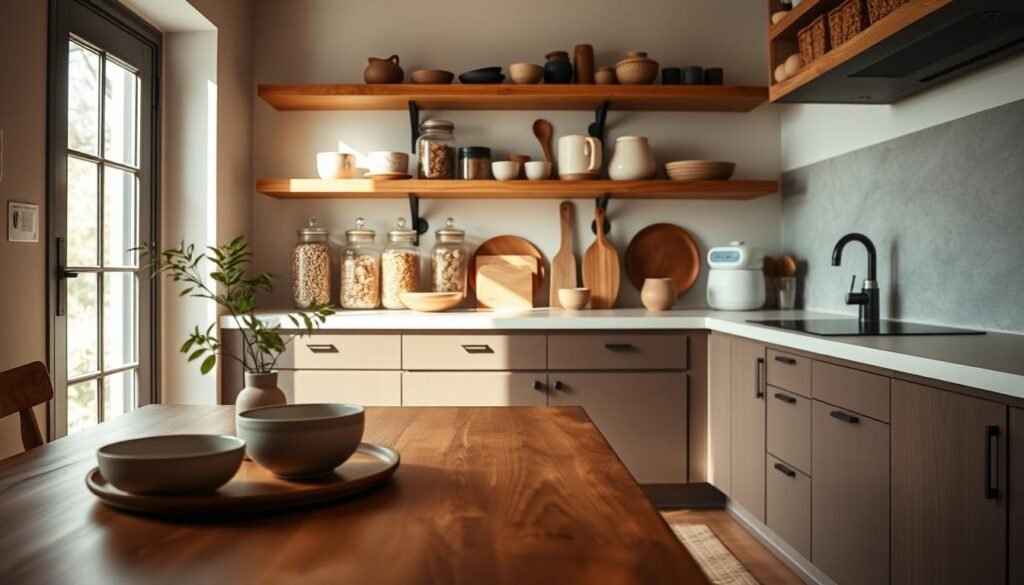
Artisanal craft brings soul to your space through handmade elements. Think custom woodwork with visible grain patterns or ceramic tiles with subtle variations. These details reveal the human touch behind your room’s creation.
This style celebrates beautiful imperfection. It embraces the Wabi-Sabi philosophy where natural wear adds character. The fusion of minimalist form with handmade craft creates spaces that feel both refined and approachable.
| Approach | Focus | Result |
|---|---|---|
| Traditional Luxury | Ornamentation and brand recognition | Often feels formal and imposing |
| Quiet Luxury | Material quality and craftsmanship | Feels sophisticated yet welcoming |
| Mass-Produced | Uniform perfection and low cost | Can feel sterile and impersonal |
Japandi influence brings serene silence through clean lines and restrained palettes. Instead of trendy decorations, atmosphere comes from premium materials and expert craft. Your space makes a lasting impression through timeless quality that feels special for years.
Creative Storage Solutions: Concealed and Modular Designs
Imagine opening what looks like a simple cabinet door and discovering an entire organized world behind it. This is the magic of modern storage solutions that keep your space looking pristine while making everything accessible.
We’re seeing incredible innovations that transform how you interact with your space. These clever approaches eliminate counter clutter while keeping your daily essentials within easy reach.
Hidden Pantries and Appliance Garages
Hidden pantries are the ultimate organizational dream. What appears to be standard cabinets can open to reveal full walk-in spaces with countertops and outlets.
Appliance garages give your coffee maker and blender a dedicated home. They hide behind seamless doors when not in use, keeping counters completely clear. This approach concentrates mess-heavy tasks into one concealed zone.
Modular Components and Flexible Storage Units
Modular storage components offer incredible flexibility. They can stack, slide, and reconfigure as your needs change without major renovation work.
Smart drawers with custom dividers mean no more digging through messy cabinets. Everything has a logical home, making daily routines smoother and more efficient.
The planning rule is simple: store daily-use items at arm height and occasional items higher up. These creative solutions create spaces that work beautifully for your real life.
The Impact of Curves in Kitchen Layout for Flow and Comfort
Have you noticed how much more comfortable a room feels when the corners aren’t so sharp? We’re seeing a beautiful shift toward organic shapes that make your cooking area feel more inviting.
These gentle curves aren’t just for looks—they actually improve how you move through the space. They create natural pathways that guide traffic smoothly.
Curved Countertops and Islands
Rounded island ends are a game-changer for both safety and daily flow. They eliminate those sharp corners everyone bumps into while creating softer gathering spots.
Waterfall countertops with curved profiles bring sculptural beauty to your cooking zone. They create a monolithic stone presence that feels both modern and timeless.
Softened Edges and Ergonomic Transitions
Softened edges aren’t just prettier—they’re more ergonomic and safer. This is especially helpful in tight spaces where sharp corners can be hazards.
The key is consistency. If you introduce curves, repeat the same radius throughout. This keeps the aesthetic intentional rather than random.
| Design Element | Angular Approach | Curved Solution |
|---|---|---|
| Island Ends | Sharp 90-degree corners | Gentle rounded edges |
| Countertop Transitions | Hard geometric lines | Flowing organic shapes |
| Walkway Corners | Potential collision points | Natural traffic flow |
Focus curves where they matter most—island ends, peninsula corners, and walkway pinch points. This strategic approach complements other essential features for a functional space beautifully.
Color Trends: Warm Neutrals with Strategic Accent Blocks
We’re seeing a beautiful shift away from sterile whites toward colors that actually feel like home. The new approach embraces warmth and intention in every choice.
Sherwin-Williams’ latest collections showcase this evolution perfectly. Their palettes range from soft Frosted Tints to rich Sunbaked Hues and deep Restorative Darks.
These aren’t just accent colors for backsplashes. They’re sophisticated enough to cover entire walls of drawers or islands. The overall look remains calm and cohesive.
Monochromatic Schemes and Single-Block Accents
The smartest strategy assigns clear roles to your colors. Use a neutral for main cabinetry, a supporting tone for contrast, and one bold “block” for personality.
This block works best when it’s architectural rather than decorative. Think a full island, pantry wall, or built-in niche. It creates character without fragmenting the room.
| Color Strategy | Main Cabinetry | Accent Block | Visual Effect |
|---|---|---|---|
| Monochromatic | Light warm greige | Darker cocoa tone | Sophisticated depth |
| Complementary | Cream cabinets | Sage green island | Fresh contrast |
| Tonal Variation | Sand-colored units | Clay-toned pantry | Harmonious transition |
Warm neutrals like cream, sand, and clay create cozy atmospheres. They photograph beautifully and make your space feel welcoming every day.
This approach gives you personality while keeping the overall look clean. Your cooking area becomes a place you genuinely love spending time in.
Minimal Kitchen Design in 2026: Practical Implementation Tips
Ready to transform your cooking area with a practical approach that actually works? We’ll guide you through a logical sequence that sets you up for success from day one.
Start by mapping your real workflow. Grab a notebook and track how you use the space throughout the day. Document your coffee routine, meal prep, cooking process, and cleanup patterns.
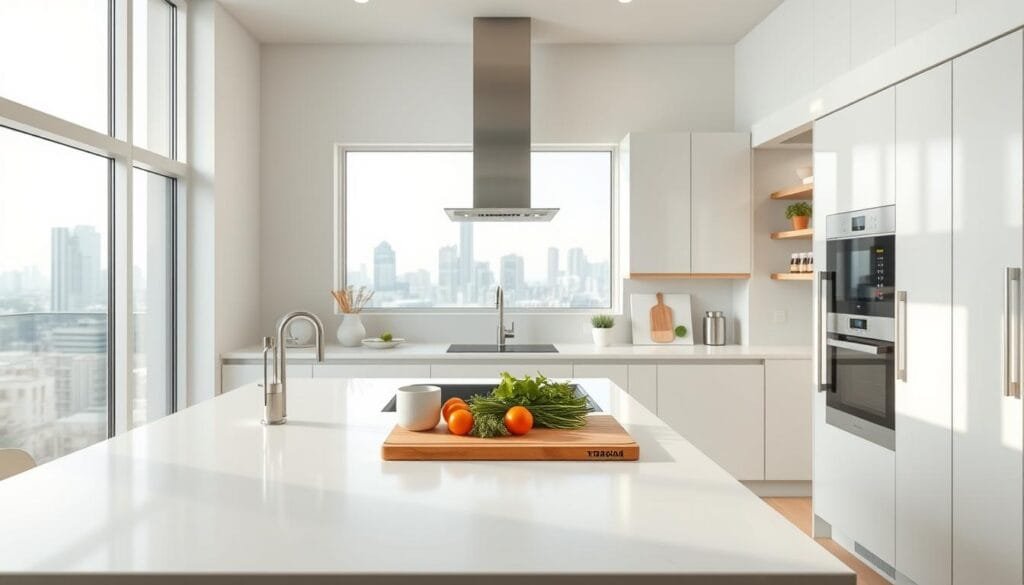
Once you understand your habits, lock in the layout early. Confirm main paths and spacing, especially work aisles (36-42 inches) and traffic zones (42-48 inches). This prevents daily frustration and ensures smooth movement.
Design storage by zone so everything lives where you’ll use it. Plan drawers and pull-outs around prep, cooking, cleaning, pantry, and trash areas. Each task gets its own dedicated home.
Choose one cabinet style and handle strategy, then apply it consistently. This creates the calm, cohesive look we’re after. Commit to one wood tone, one matte finish, and one countertop material for intentional harmony.
Add concealed function where clutter collects. Use appliance garages or pocket doors to hide small appliances. This keeps counters visually quiet while maintaining accessibility.
Finally, layer your lighting thoughtfully. Combine ambient, task, and one feature light. This ensures your warm materials have depth and dimension both day and night.
Materials and Finishes: Wood, Matte, and Stone Accents
Your daily experience is shaped by the surfaces you touch and the finishes you see every time you enter the room. These elements create the tactile foundation that makes your space feel both beautiful and functional.
Wood takes center stage as the primary character in your story. Choose one consistent tone and repeat it in the most visually dominant areas like islands or tall cabinet runs. This creates impact without feeling scattered.
White oak remains a favorite with its beautiful visible grain. Light to mid-tones bring warmth without going too rustic. Use wider panels with clean joins for a substantial feel.
Matte finishes are the practical heroes that keep your space looking composed. They hide fingerprints beautifully and reduce glare. These surfaces make warm palettes appear richer, especially under evening lighting.
Stone continuity creates architectural elegance. Treat your countertop and backsplash as one continuous plane. Look for warm undertones and subtle movement rather than dramatic veining.
The texture you choose matters as much as the material itself. Visible wood grain, soft-touch matte surfaces, and natural stone variations add depth. This makes your space feel layered rather than flat.
High-quality materials in restrained combinations create that premium feel. The beauty comes from the wood, stone, and finishes themselves—no ornate details needed.
Insights from Leading Interior Experts and Designers
When top interior minds gather, they’re not debating colors or finishes—they’re focused on how spaces truly serve our lives. The consensus is clear: personalization drives the best results.
European influence brings smart modular systems that adapt to your specific needs. These flexible components treat cooking areas more like furniture than fixed installations.
Semi-custom manufacturing bridges luxury pricing and accessible budgets. This approach creates solutions scaled for specific households and cooking habits.
Design exhibitions showcase how everyday elements become sculptural focal points. Lighting transforms into functional art that serves both purpose and beauty.
| Design Approach | Traditional Method | Expert Recommendation |
|---|---|---|
| Planning Focus | Aesthetic trends first | Real lifestyle habits first |
| Storage Solutions | Standard cabinet sizes | Modular, flexible systems |
| Customization Level | One-size-fits-all | Semi-custom with bespoke details |
The movement rejects rigid rules in favor of adaptable style. Top designers emphasize building spaces around how you actually live.
These insights reveal that successful rooms balance function with personal expression. The future belongs to spaces that evolve with their owners.
Real-World Inspirations: Client Transformations and Reviews
There’s nothing more inspiring than seeing how real families are transforming their living spaces with thoughtful design. Across the country, homeowners are sharing their experiences with spaces that genuinely improve their daily routines.
Hannah in Bangalore calls her space a “dream home” that garners constant compliments. Rashmi Shinde’s Navi Mumbai transformation showcases sophisticated neutral themes with elegant details. Samiksha Yadav’s Noida home demonstrates the power of neutral palettes with strategic accents.
What’s consistent across all these stories is the focus on personalization. Each space was designed around how that specific family actually lives and cooks. Mr. Shareek Ahmed felt everything was “just right” with his thoughtful, personalized design.
These aren’t just pretty pictures—they’re real homes where families cook dinner, gather with friends, and make memories. The transformations prove that great design isn’t about sacrifice. It’s about creating spaces that are both stunningly beautiful and incredibly functional.
From modern modular solutions to warm wood accents, each client’s story reinforces how thoughtful planning elevates your experience. Whether working with small spaces or large ones, these principles can create a home you’ll absolutely love!
Conclusion
Creating a space that truly supports your life is the ultimate goal of thoughtful home planning. We’ve explored how intentional choices can transform the most important room in your house into a sanctuary that works beautifully for you every day.
The principles we’ve discussed—warm minimalism, natural materials, and smart storage—aren’t just passing trends. They’re timeless approaches that create rooms which feel both current and enduring. For more inspiration on creating your ideal space, explore the latest kitchen design trends for 2026.
Remember to start with your actual workflow and build from there. Your home deserves a heart that feels both functional and welcoming. We’re excited to see how you’ll make these ideas your own!