What if the most stylish room in your home could also be the most comfortable? The design world is buzzing with a refreshing shift for the upcoming year. We’re moving beyond cold, perfect-looking spaces toward something much more personal.
Forget the pressure of a flawless, magazine-ready look. The future is all about creating a space that feels authentically yours. This new approach blends clean lines with warmth and character. It’s a welcome change for many homeowners.
This year’s aesthetic celebrates comfort and authenticity. Think of it as “warm minimalism.” It’s a space that breathes and welcomes you in. We’ll show you how to balance simple principles with bold, characterful details.
These ideas are practical and achievable. Whether you’re planning a big change or a small refresh, you can elevate your space. Get ready to explore texture-rich materials and moody color palettes. Let’s create a sanctuary that truly reflects how you live.
Key Takeaways
- The focus for 2026 is on “warm minimalism,” which prioritizes comfort and personal character over stark perfection.
- Design is shifting toward spaces that feel lived-in and loved, moving away from overly polished looks.
- Bold details and layered textures are key to adding warmth without creating clutter.
- Embracing imperfection and personalized touches makes a space uniquely yours.
- These trends are practical and achievable for various budgets, whether for a full overhaul or simple updates.
- The overall goal is to create a functional, comfortable room that is a true reflection of your lifestyle.
Introduction to 2026 Living Room Trends
Forget the pressure to keep your home camera-ready at all times. The future is all about creating an environment that feels genuinely lived-in and loved. This incredible shift celebrates real life over perfect staging.
Leading designers are noticing this change. Lucy Hammond Giles observes a growing awareness that decorating isn’t just for a photo. There’s a real desire to show rooms as they’re actually used.
Shifting Designs for a Lived-In Feel
This trend is often called “lived-in luxury.” Your space can be both beautiful and functional. It welcomes gentle clutter and pieces collected over time.
“Living rooms are moving towards a more layered, lived-in feel rather than overly curated.”
The keyword for this approach is eclectica. Furnishings harmonize but don’t need to match perfectly. This creates a visual conversation full of character.
What Sets 2026 Apart for U.S. Homeowners
This movement aligns perfectly with the needs of American homeowners. Our living spaces must accommodate busy family life and remote work.
We crave interiors that offer genuine relaxation. The goal is a personal sanctuary that reflects authenticity. It’s a welcoming sense of home that truly sets the trends for 2026 apart.
Minimal living room design in 2026: Fundamentals
Creating a sanctuary that speaks to all your senses is the true goal of contemporary home arrangement. This approach transforms your space into a complete environment that feels harmonious and balanced.
Core Principles of Minimalism
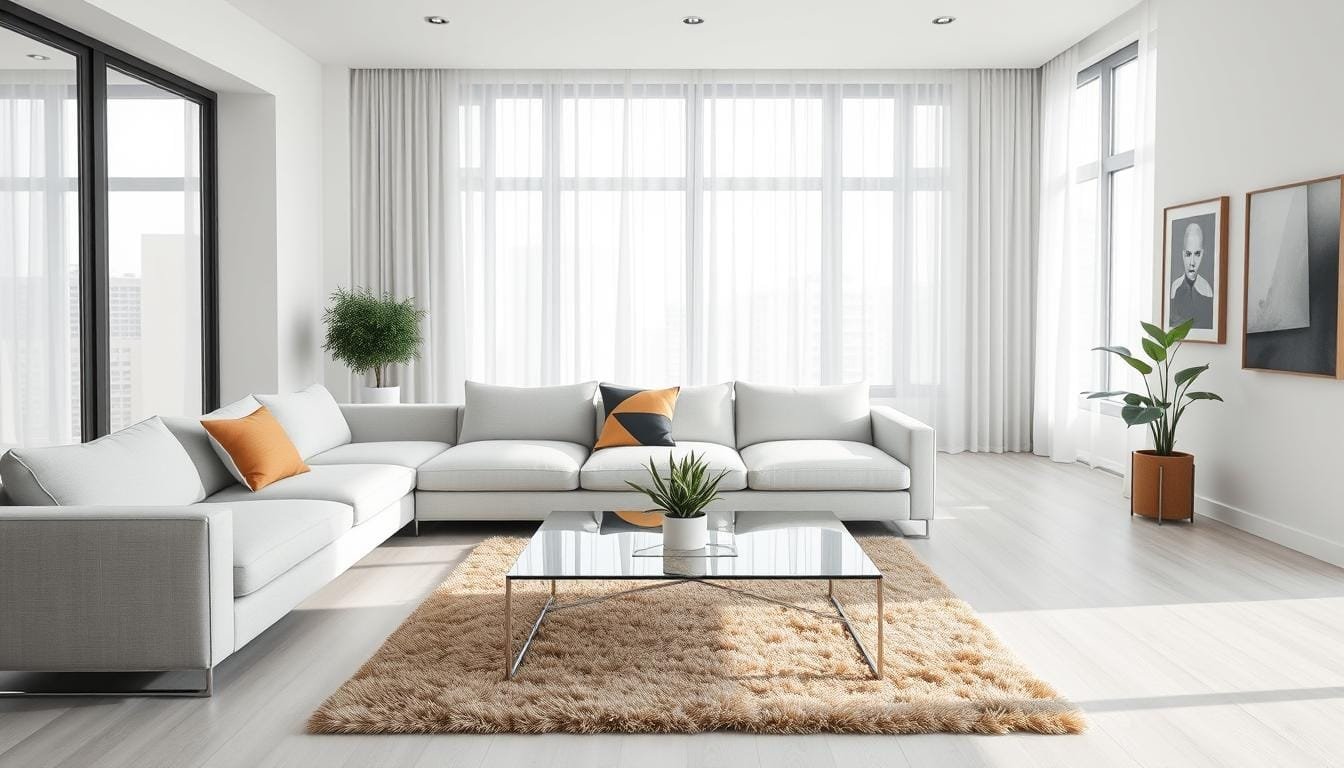
The modern interpretation goes way beyond simply having less stuff. Every piece should serve a clear purpose—functional, emotional, or aesthetic. This intentionality creates spaces that feel both curated and comfortable.
We’re seeing a beautiful integration where form, color, and texture work together as equal partners. Think about how materials feel to the touch and how light moves through your room throughout the day. This holistic approach engages all your senses for true wellbeing.
Focus on quality over quantity with your selections. Choose fewer pieces that are beautifully crafted and personally meaningful. This style embraces clean lines softened with organic textures and natural materials.
The result is a calm, spacious environment that supports your actual lifestyle. These fundamental ideas help create a room that’s both serene and completely livable. It’s about designing a space that works brilliantly for real life.
Layering Materials and Textures for Dynamic Spaces
The secret to a truly inviting room isn’t just what you see—it’s what you feel. Texture-maxxing creates incredible depth by combining different materials. This approach makes your spaces feel rich and welcoming.
We love how this trend engages your senses. Think plush velvet against rough wood or smooth leather beside nubby linen. These combinations create visual rhythm and tactile interest.
Exploring Texture-Maxxing Techniques
Start by pairing contrasting surfaces. Combine hard with soft, shiny with matte. This interplay prevents flat, one-dimensional areas.
Rugs become superstars in this approach. Lizzie Mosley from Hug Rug explains their power:
“Layering rugs adds warmth and defines zones beautifully.”
You can layer rugs over carpet or hard floors. This technique introduces multiple textures at different levels. It’s an easy way to add comfort and visual interest.
Incorporating Antique and Modern Elements
Mix contemporary furniture with vintage finds. Darker-toned woods with visible grain are making a comeback. Reclaimed pieces add character through natural imperfections.
Burnished metals pair wonderfully with softer materials. This creates beautiful contrast that feels both modern and timeless.
Here’s a quick guide to successful texture combinations:
| Material Type | Modern Pairing | Vintage Pairing | Effect Created |
|---|---|---|---|
| Velvet upholstery | Glossy metal accents | Distressed leather | Luxurious contrast |
| Rough-hewn wood | Matte ceramics | Reclaimed piece | Organic warmth |
| Chunky knit throws | Sleek surfaces | Patina finishes | Tactile comfort |
Begin with small additions like a leather pouf or wood accessories. Build as you discover which combinations speak to you. Texture adds warmth without clutter—it’s substance over stuff!
Bold Patterns and Organic Prints
Ready to add some personality to your space without creating visual chaos? Strategic pattern use creates incredible depth and character. We’re seeing a beautiful shift toward organic patterns that feel timeless.
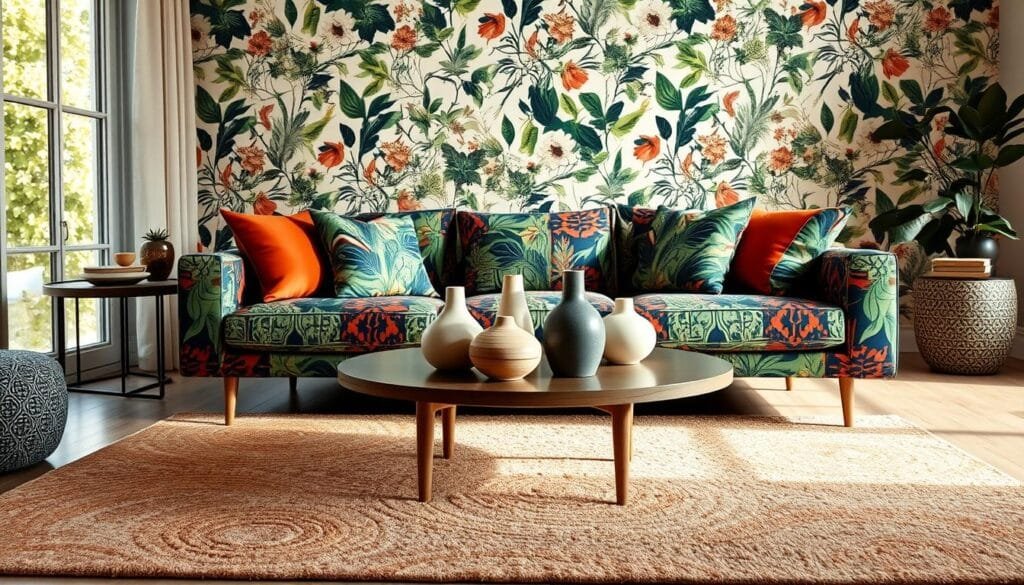
These trends bring life to your space while maintaining balance. The key is choosing pieces that speak to you personally.
Leopard Print as a Neutral Accent
Think of leopard print as your new favorite neutral! Designers Liz and Sarah Hellmers call it “a neutral with personality.” The secret is confidence and intention.
Use it in soft furnishings like cushions or lampshades. This adds flair without overwhelming your overall look. One bold armchair can create visual rhythm throughout your room.
Embracing Botanical and Tapestry Trends
Nature-inspired patterns are absolutely exploding right now. Designer Kathy Kuo notes their resurgence:
“I’ve noticed a resurgence of tapestry fabrics that feature layered botanical patterns and rich, earthy tones.”
These verdant prints work beautifully on throw pillows and upholstery. They bring organic beauty into your space through fabric and wall coverings.
Start with one patterned piece you love. Build around it with complementary solids. This approach lets your patterns shine while maintaining a cohesive style.
Innovative Cabinetry and Storage Solutions
Your storage solutions are about to become the star of the show. Built-in cabinetry is stepping out from the background to become a defining feature. This exciting shift turns practical storage into beautiful design elements.
Leading designers are embracing decorative millwork and statement trims. These special details add personality to your space. Sabrina Ramkhelawan of Yorkville Studio explains the philosophy behind this approach.
“What’s especially exciting is seeing designers play up a home’s unique attributes instead of erasing them. There are so many ways to add interest beyond traditional applications.”
Extra-Special Cabinetry Details
Fabric-lined panels create wonderful softness in your interior. Consider using curtains behind glass cabinet doors. This clever way to conceal electronics maintains clean lines.
The trend celebrates your home’s architectural character. If you have original moldings or vintage hardware, highlight them! For newer rooms, upgrade with statement knobs or integrated lighting.
These innovative details solve a common challenge. They let you hide everyday items while enhancing your living area’s aesthetic. Your storage becomes part of the design story.
Curved Furniture and Fluid Layouts
There’s a gentle revolution happening in furniture design that’s all about curves and comfort. We’re seeing a major shift away from harsh, boxy silhouettes toward organic forms that feel more natural and inviting.
This isn’t just a passing trend—43% of designers identified curvy furniture as a top movement for the coming year. The magic lies in how these pieces soften your space both visually and functionally.
Designing with Organic Shapes
Interior designer Jennifer Davis spotted this strong movement at High Point Market. She explains, “Curved furniture continues to play a key role, softening spaces both visually and functionally. Rounded sofas, sculptural chairs, and organic tables encourage conversation.”
Think of pieces that look shaped by hand rather than cut with a ruler. A sofa might sink low at the center, then tilt upward in a graceful curve. These forms create intimate conversation areas that naturally draw people together.
Alexis Vitale of the Vitale Design Group advises bringing more sculptural pieces into your home. “Replace bulky sectionals with curved architectural profiles. Furniture becomes true conversational pieces, prioritizing connection.”
You don’t need a complete curved sofa to embrace this style. Start with a rounded armchair or oval coffee table. The upholstery on curved pieces highlights texture beautifully as light plays across dimensional surfaces.
This approach works wonderfully with minimalist design principles. Curved furniture makes a strong statement through form alone. Your living area becomes a true gathering place that prioritizes human comfort over rigid rules.
Moody Color Washing and Color Capping
The era of sterile white walls is officially over, replaced by something much more inviting. We’re embracing deep, saturated hues that create instant warmth and intimacy. This approach transforms your space into a personal sanctuary.
Deep, Saturated Hues for Intimacy
Color washing creates a cocooning effect that makes spaces feel deeply comfortable. Designer Jennifer Davis explains the shift: “I predict we will see more color washing in rich, saturated hues. Deep olives, moody blues, warm browns, and softened plums are replacing flat neutrals.”
This technique extends one bold color across all surfaces, including ceilings. The result is a room that feels wrapped in personality. It adds depth without overwhelming your space.
Techniques to Enhance Architectural Features
Color capping offers a more nuanced approach. Benjamin Moore’s Helen Shaw describes it: “Color capping introduces subtle depth by enveloping the room in a tonal gradient that intensifies toward the ceiling.”
This method beautifully highlights architectural details in older homes. In contemporary spaces, it adds visual interest to flat walls. The technique uses varying tones from the same family.
We’re loving current palettes like dusty blue with chocolate brown. Artichoke green brings calming biophilic energy. These jewel tones create sophisticated yet approachable interiors.
Mixing Modern Minimalism with Antique Accents
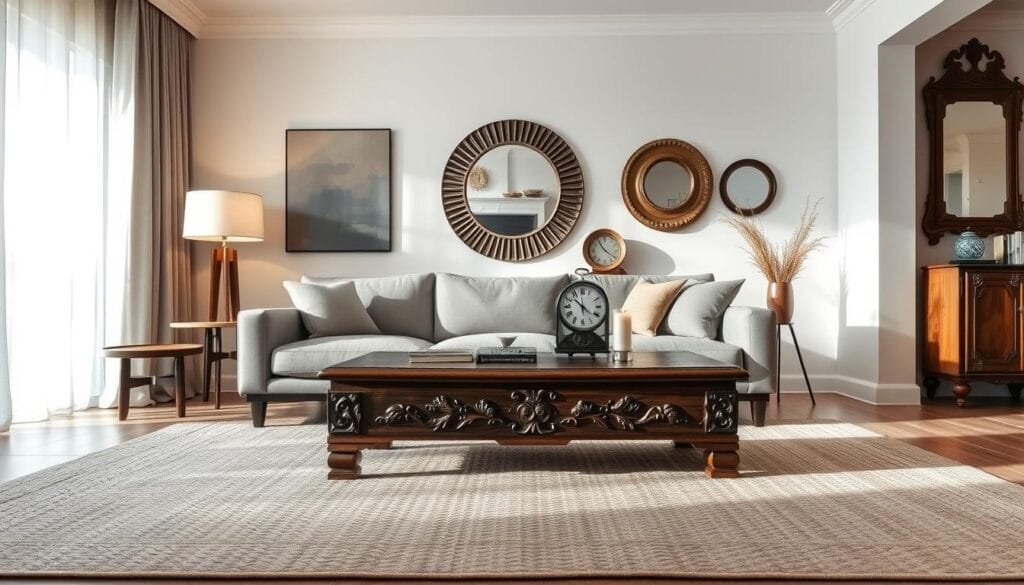
Your space is about to get a whole lot more interesting when you start blending contemporary pieces with vintage treasures. This exciting shift celebrates individuality over perfect matching.
We love how this approach creates a sense of history in your home. It makes your interior feel truly personal and lived-in.
Curated Vintage Finds
Lauren Andersen, interiors photographer, explains why this trend resonates: “A pre-loved, patinated piece adds instant depth and warmth to a space that you can’t pull out fresh from a box.”
This style of decorating focuses on collecting pieces over time. Think of your room as a visual autobiography.
Jennifer Davis highlights the emotional value: “Antiques bring soul into living rooms. These elements add contrast and authenticity, creating interiors that feel storied.”
Here’s how to successfully combine different eras in your space:
| Modern Element | Vintage Pairing | Design Effect |
|---|---|---|
| Sleek sofa | Antique wood coffee table | Textural contrast |
| Minimalist shelving | Vintage art objects | Visual interest |
| Contemporary upholstery | Distressed leather chair | Layered look |
Designer Benji Lewis calls this approach “eclectica”—where furniture harmonizes without matching perfectly. Start with one vintage piece you love and build around it.
This style creates rooms full of character and unique details. Your home becomes a true reflection of your journey.
Eco-friendly and Sustainable Design Choices
The most meaningful design choices often come from supporting local makers and choosing materials with purpose. Sustainability is genuinely shaping how we approach interior design, creating spaces that feel good for both you and the planet.
Lucy Hammond Giles of Sibyl Colefax & Fowler explains this shift perfectly: “We’re thinking more about smaller makers who work closer to home, as well as antiques—which are arguably the most sustainable way to buy furniture. Reuse, remake, repurpose—it gives pieces a completely new lease of life.”
Using Local Materials and Artisanal Pieces
This approach celebrates craftsmanship in everyday objects. Furniture becomes investment pieces with real soul and story. Each hand-carved detail represents hours of skilled human labor.
Patrick Williams of Berdoulat advocates for unique furniture with “living finishes” that improve with age. Materials like oak and walnut develop beautiful patina over time. This changes how we think about longevity in our homes.
Here’s how to make sustainable choices work for your space:
| Material Type | Sustainable Source | Design Benefit |
|---|---|---|
| Reclaimed wood | Local salvaged materials | Adds character and history |
| Responsibly sourced metals | Regional artisans | Develops unique patina |
| Natural textiles | Smaller makers | Supports local economy |
Marta de la Rica notes about metal’s emotional quality: “Metal records the passage of time, and I think that’s what makes it feel so relevant now.” This creates a wonderful sense of permanence in your interior.
Choosing sustainable materials isn’t just good for the planet. It creates spaces with genuine character that mass-produced furniture cannot replicate. Your home becomes a true reflection of values and craftsmanship.
Conclusion
The journey through upcoming home aesthetics reveals a beautiful truth: your personal sanctuary should be as unique as your story. The trends for 2026 celebrate spaces that feel genuinely lived-in and deeply personal.
Whether you’re drawn to moody color palettes or prefer mixing vintage finds with contemporary pieces, the key is choosing what resonates with your lifestyle. These ideas aren’t about rigid rules but creating environments that support how you actually live.
Remember that successful interior design balances beauty with comfort. As explored in these seven key trends, the focus is on sensory experience and authentic materials.
Your home should be a reflection of your journey. Trust your instincts and build a space that tells your story beautifully. ✨